 Add to Chrome
 Add to Firefox
 Add to Edge
Efficient Federated Learning Using Dynamic Update and Adaptive Pruning with Momentum on Shared Server Data
Aug 11, 2024
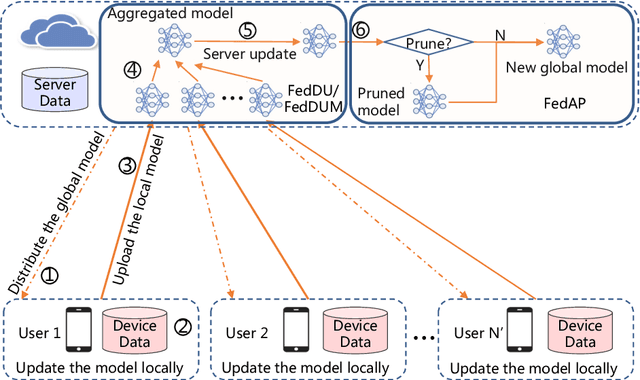
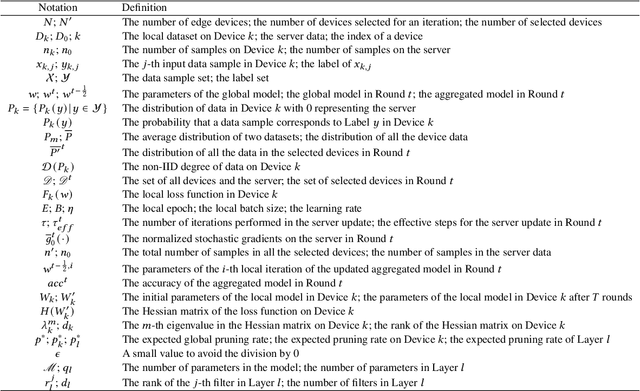
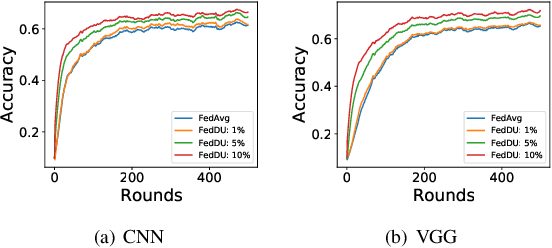
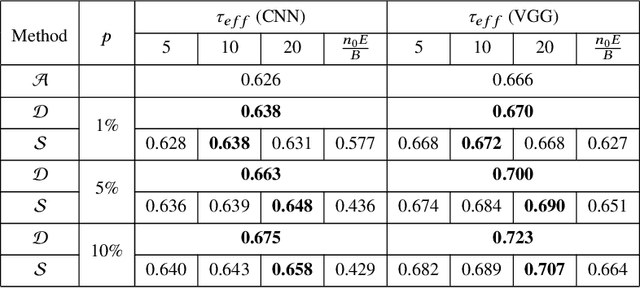
Despite achieving remarkable performance, Federated Learning (FL) encounters two important problems, i.e., low training efficiency and limited computational resources. In this paper, we propose a new FL framework, i.e., FedDUMAP, with three original contributions, to leverage the shared insensitive data on the server in addition to the distributed data in edge devices so as to efficiently train a global model. First, we propose a simple dynamic server update algorithm, which takes advantage of the shared insensitive data on the server while dynamically adjusting the update steps on the server in order to speed up the convergence and improve the accuracy. Second, we propose an adaptive optimization method with the dynamic server update algorithm to exploit the global momentum on the server and each local device for superior accuracy. Third, we develop a layer-adaptive model pruning method to carry out specific pruning operations, which is adapted to the diverse features of each layer so as to attain an excellent trade-off between effectiveness and efficiency. Our proposed FL model, FedDUMAP, combines the three original techniques and has a significantly better performance compared with baseline approaches in terms of efficiency (up to 16.9 times faster), accuracy (up to 20.4% higher), and computational cost (up to 62.6% smaller).

Conversational Dueling Bandits in Generalized Linear Models
Jul 26, 2024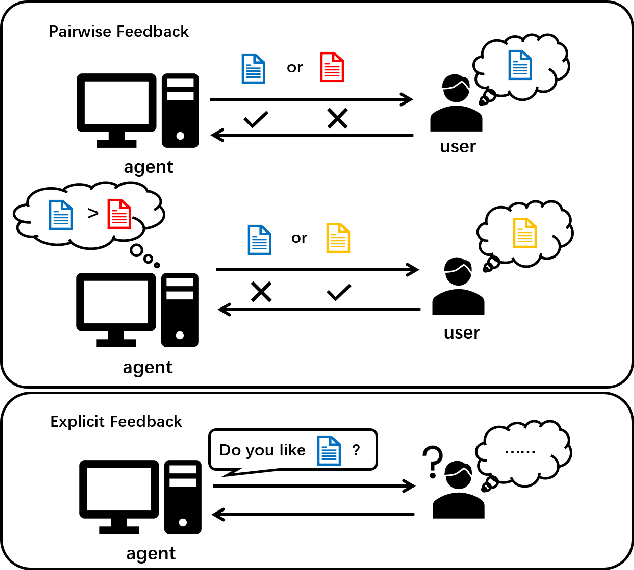
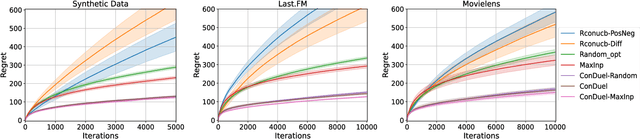
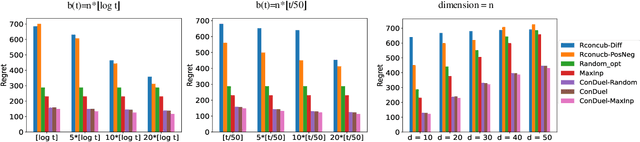
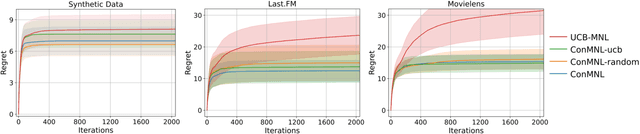
Conversational recommendation systems elicit user preferences by interacting with users to obtain their feedback on recommended commodities. Such systems utilize a multi-armed bandit framework to learn user preferences in an online manner and have received great success in recent years. However, existing conversational bandit methods have several limitations. First, they only enable users to provide explicit binary feedback on the recommended items or categories, leading to ambiguity in interpretation. In practice, users are usually faced with more than one choice. Relative feedback, known for its informativeness, has gained increasing popularity in recommendation system design. Moreover, current contextual bandit methods mainly work under linear reward assumptions, ignoring practical non-linear reward structures in generalized linear models. Therefore, in this paper, we introduce relative feedback-based conversations into conversational recommendation systems through the integration of dueling bandits in generalized linear models (GLM) and propose a novel conversational dueling bandit algorithm called ConDuel. Theoretical analyses of regret upper bounds and empirical validations on synthetic and real-world data underscore ConDuel's efficacy. We also demonstrate the potential to extend our algorithm to multinomial logit bandits with theoretical and experimental guarantees, which further proves the applicability of the proposed framework.
GV-Bench: Benchmarking Local Feature Matching for Geometric Verification of Long-term Loop Closure Detection
Jul 16, 2024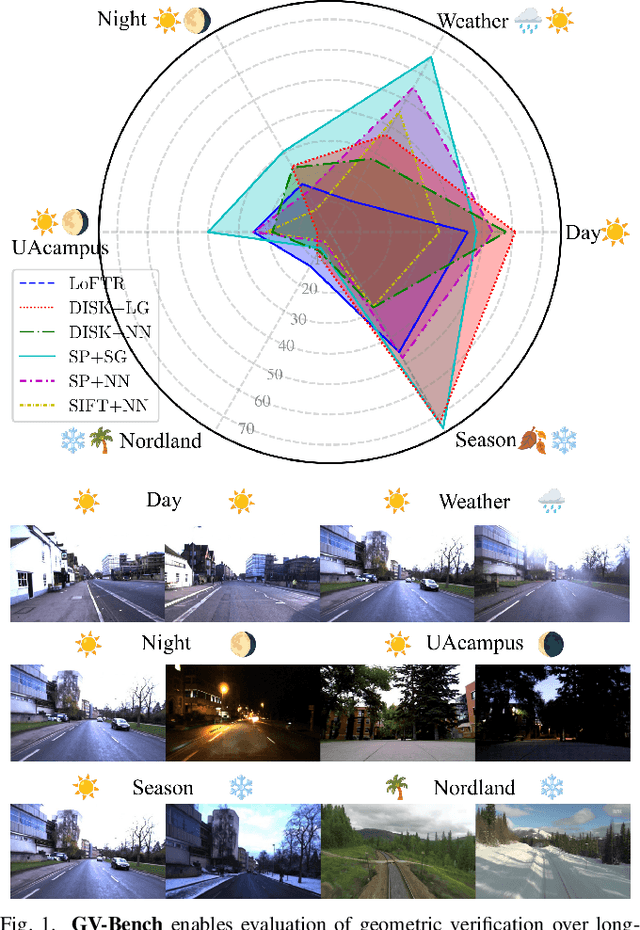
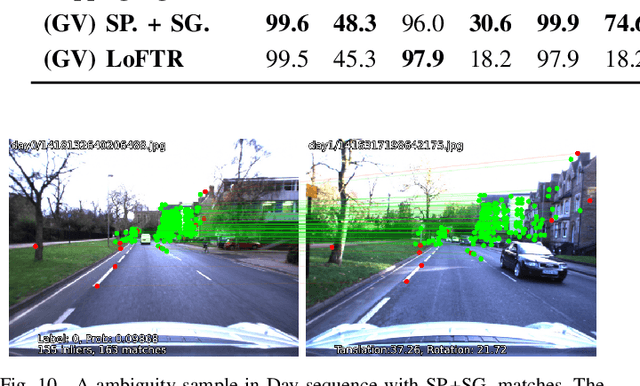
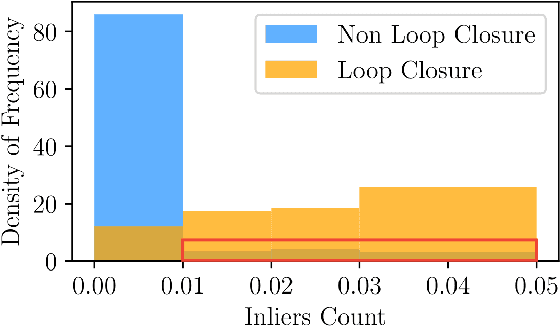
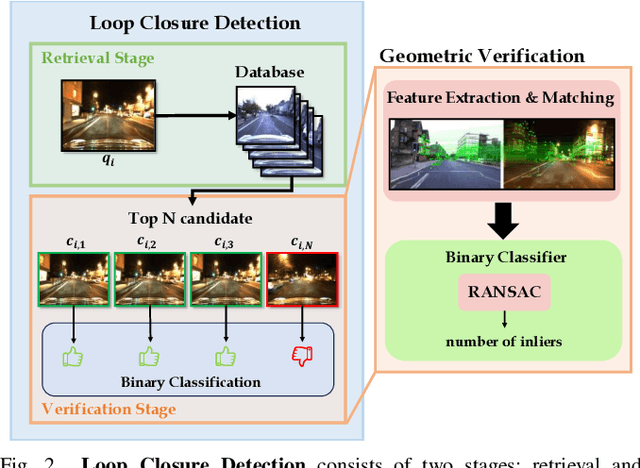
Visual loop closure detection is an important module in visual simultaneous localization and mapping (SLAM), which associates current camera observation with previously visited places. Loop closures correct drifts in trajectory estimation to build a globally consistent map. However, a false loop closure can be fatal, so verification is required as an additional step to ensure robustness by rejecting the false positive loops. Geometric verification has been a well-acknowledged solution that leverages spatial clues provided by local feature matching to find true positives. Existing feature matching methods focus on homography and pose estimation in long-term visual localization, lacking references for geometric verification. To fill the gap, this paper proposes a unified benchmark targeting geometric verification of loop closure detection under long-term conditional variations. Furthermore, we evaluate six representative local feature matching methods (handcrafted and learning-based) under the benchmark, with in-depth analysis for limitations and future directions.
SWCF-Net: Similarity-weighted Convolution and Local-global Fusion for Efficient Large-scale Point Cloud Semantic Segmentation
Jun 17, 2024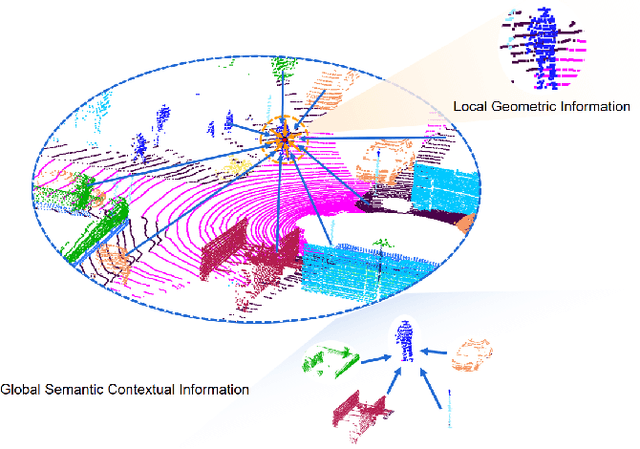
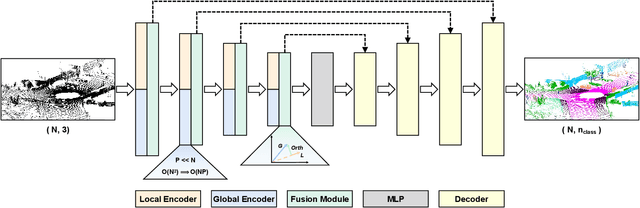
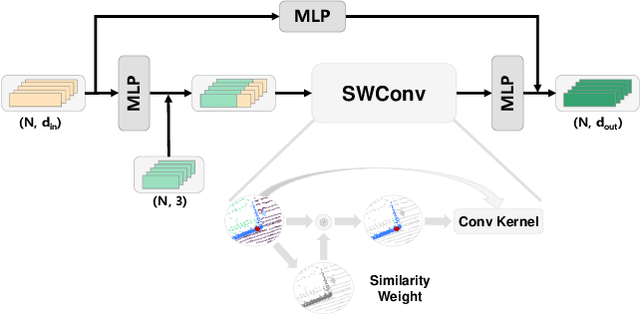
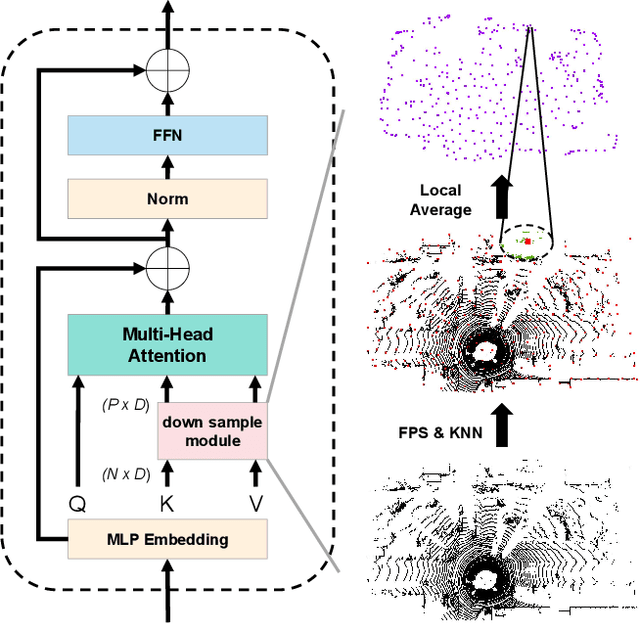
Large-scale point cloud consists of a multitude of individual objects, thereby encompassing rich structural and underlying semantic contextual information, resulting in a challenging problem in efficiently segmenting a point cloud. Most existing researches mainly focus on capturing intricate local features without giving due consideration to global ones, thus failing to leverage semantic context. In this paper, we propose a Similarity-Weighted Convolution and local-global Fusion Network, named SWCF-Net, which takes into account both local and global features. We propose a Similarity-Weighted Convolution (SWConv) to effectively extract local features, where similarity weights are incorporated into the convolution operation to enhance the generalization capabilities. Then, we employ a downsampling operation on the K and V channels within the attention module, thereby reducing the quadratic complexity to linear, enabling the Transformer to deal with large-scale point clouds. At last, orthogonal components are extracted in the global features and then aggregated with local features, thereby eliminating redundant information between local and global features and consequently promoting efficiency. We evaluate SWCF-Net on large-scale outdoor datasets SemanticKITTI and Toronto3D. Our experimental results demonstrate the effectiveness of the proposed network. Our method achieves a competitive result with less computational cost, and is able to handle large-scale point clouds efficiently.
A note on the error analysis of data-driven closure models for large eddy simulations of turbulence
May 29, 2024In this work, we provide a mathematical formulation for error propagation in flow trajectory prediction using data-driven turbulence closure modeling. Under the assumption that the predicted state of a large eddy simulation prediction must be close to that of a subsampled direct numerical simulation, we retrieve an upper bound for the prediction error when utilizing a data-driven closure model. We also demonstrate that this error is significantly affected by the time step size and the Jacobian which play a role in amplifying the initial one-step error made by using the closure. Our analysis also shows that the error propagates exponentially with rollout time and the upper bound of the system Jacobian which is itself influenced by the Jacobian of the closure formulation. These findings could enable the development of new regularization techniques for ML models based on the identified error-bound terms, improving their robustness and reducing error propagation.
Timbre Perception, Representation, and its Neuroscientific Exploration: A Comprehensive Review
May 22, 2024Timbre, the sound's unique "color", is fundamental to how we perceive and appreciate music. This review explores the multifaceted world of timbre perception and representation. It begins by tracing the word's origin, offering an intuitive grasp of the concept. Building upon this foundation, the article delves into the complexities of defining and measuring timbre. It then explores the concept and techniques of timbre space, a powerful tool for visualizing how we perceive different timbres. The review further examines recent advancements in timbre manipulation and representation, including the increasingly utilized machine learning techniques. While the underlying neural mechanisms remain partially understood, the article discusses current neuroimaging techniques used to investigate this aspect of perception. Finally, it summarizes key takeaways, identifies promising future research directions, and emphasizes the potential applications of timbre research in music technology, assistive technologies, and our overall understanding of auditory perception.
Redefining Information Retrieval of Structured Database via Large Language Models
May 09, 2024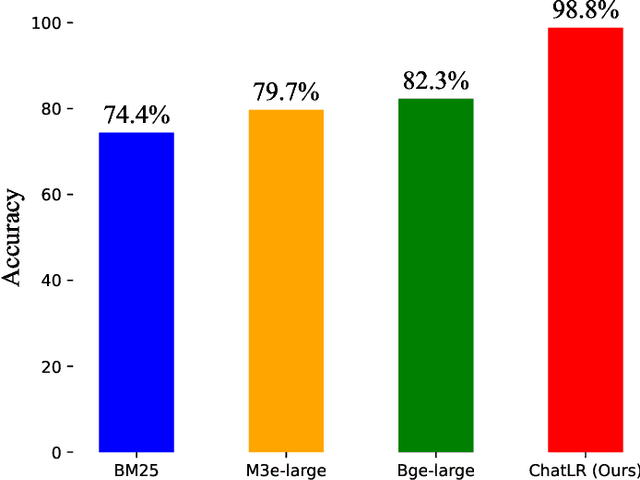
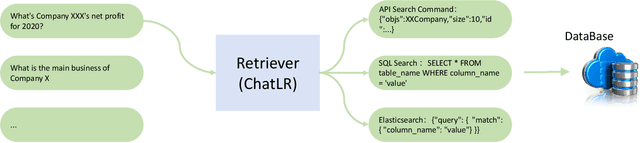
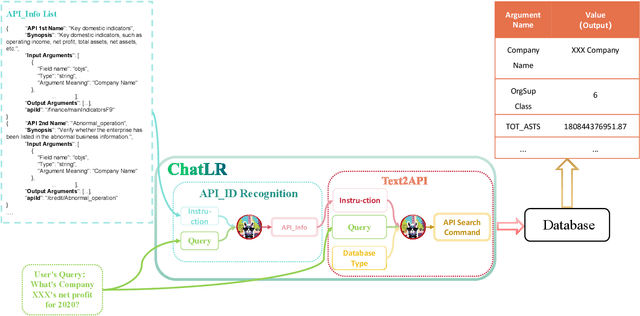
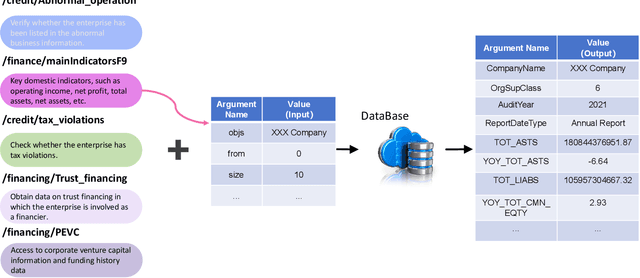
Retrieval augmentation is critical when Language Models (LMs) exploit non-parametric knowledge related to the query through external knowledge bases before reasoning. The retrieved information is incorporated into LMs as context alongside the query, enhancing the reliability of responses towards factual questions. Prior researches in retrieval augmentation typically follow a retriever-generator paradigm. In this context, traditional retrievers encounter challenges in precisely and seamlessly extracting query-relevant information from knowledge bases. To address this issue, this paper introduces a novel retrieval augmentation framework called ChatLR that primarily employs the powerful semantic understanding ability of Large Language Models (LLMs) as retrievers to achieve precise and concise information retrieval. Additionally, we construct an LLM-based search and question answering system tailored for the financial domain by fine-tuning LLM on two tasks including Text2API and API-ID recognition. Experimental results demonstrate the effectiveness of ChatLR in addressing user queries, achieving an overall information retrieval accuracy exceeding 98.8\%.
Human Orientation Estimation under Partial Observation
Apr 22, 2024Reliable human orientation estimation (HOE) is critical for autonomous agents to understand human intention and perform human-robot interaction (HRI) tasks. Great progress has been made in HOE under full observation. However, the existing methods easily make a wrong prediction under partial observation and give it an unexpectedly high probability. To solve the above problems, this study first develops a method that estimates orientation from the visible joints of a target person so that it is able to handle partial observation. Subsequently, we introduce a confidence-aware orientation estimation method, enabling more accurate orientation estimation and reasonable confidence estimation under partial observation. The effectiveness of our method is validated on both public and custom-built datasets, and it showed great accuracy and reliability improvement in partial observation scenarios. In particular, we show in real experiments that our method can benefit the robustness and consistency of the robot person following (RPF) task.
FoundationGrasp: Generalizable Task-Oriented Grasping with Foundation Models
Apr 16, 2024Task-oriented grasping (TOG), which refers to the problem of synthesizing grasps on an object that are configurationally compatible with the downstream manipulation task, is the first milestone towards tool manipulation. Analogous to the activation of two brain regions responsible for semantic and geometric reasoning during cognitive processes, modeling the complex relationship between objects, tasks, and grasps requires rich prior knowledge about objects and tasks. Existing methods typically limit the prior knowledge to a closed-set scope and cannot support the generalization to novel objects and tasks out of the training set. To address such a limitation, we propose FoundationGrasp, a foundation model-based TOG framework that leverages the open-ended knowledge from foundation models to learn generalizable TOG skills. Comprehensive experiments are conducted on the contributed Language and Vision Augmented TaskGrasp (LaViA-TaskGrasp) dataset, demonstrating the superiority of FoudationGrasp over existing methods when generalizing to novel object instances, object classes, and tasks out of the training set. Furthermore, the effectiveness of FoudationGrasp is validated in real-robot grasping and manipulation experiments on a 7 DoF robotic arm. Our code, data, appendix, and video are publicly available at https://sites.google.com/view/foundationgrasp.
Prompt Learning for Oriented Power Transmission Tower Detection in High-Resolution SAR Images
Apr 01, 2024
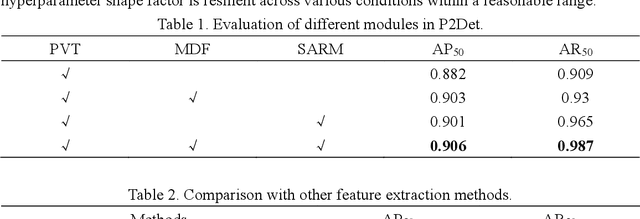
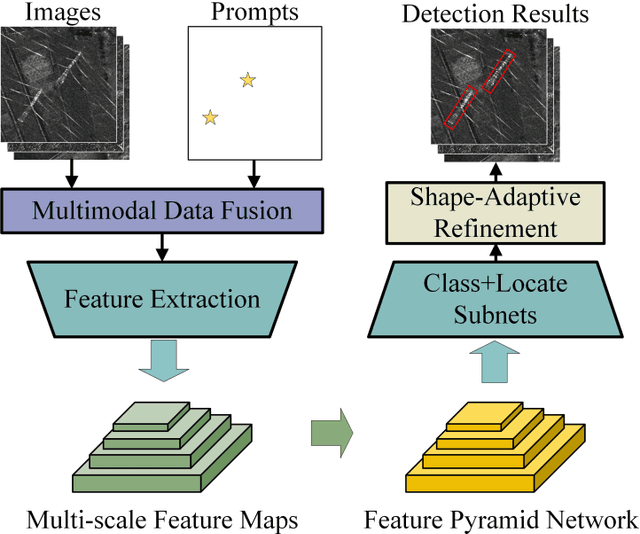
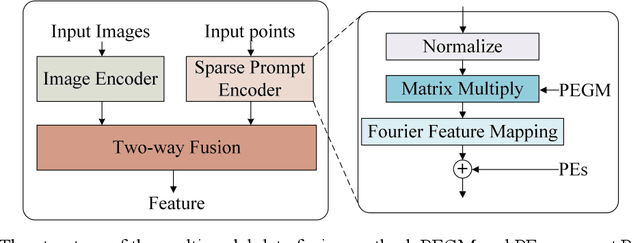
Detecting transmission towers from synthetic aperture radar (SAR) images remains a challenging task due to the comparatively small size and side-looking geometry, with background clutter interference frequently hindering tower identification. A large number of interfering signals superimposes the return signal from the tower. We found that localizing or prompting positions of power transmission towers is beneficial to address this obstacle. Based on this revelation, this paper introduces prompt learning into the oriented object detector (P2Det) for multimodal information learning. P2Det contains the sparse prompt coding and cross-attention between the multimodal data. Specifically, the sparse prompt encoder (SPE) is proposed to represent point locations, converting prompts into sparse embeddings. The image embeddings are generated through the Transformer layers. Then a two-way fusion module (TWFM) is proposed to calculate the cross-attention of the two different embeddings. The interaction of image-level and prompt-level features is utilized to address the clutter interference. A shape-adaptive refinement module (SARM) is proposed to reduce the effect of aspect ratio. Extensive experiments demonstrated the effectiveness of the proposed model on high-resolution SAR images. P2Det provides a novel insight for multimodal object detection due to its competitive performance.