 Add to Chrome
 Add to Firefox
 Add to Edge
Revisiting Catastrophic Forgetting in Large Language Model Tuning
Jun 07, 2024
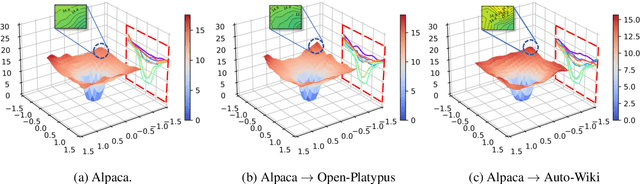
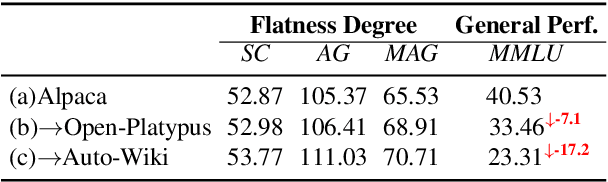
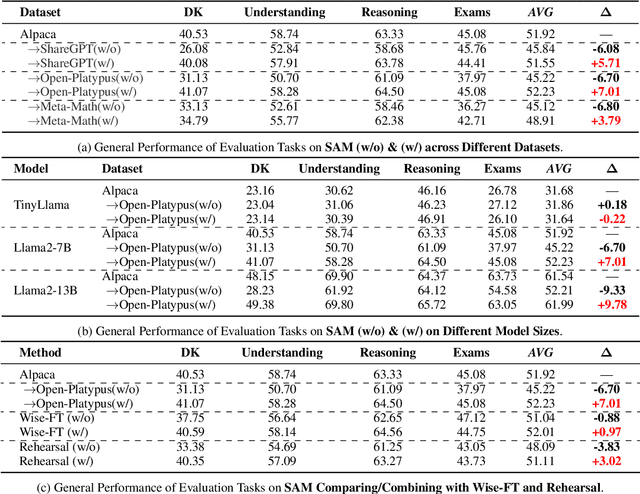
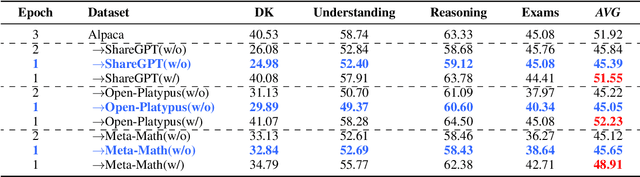
Catastrophic Forgetting (CF) means models forgetting previously acquired knowledge when learning new data. It compromises the effectiveness of large language models (LLMs) during fine-tuning, yet the underlying causes have not been thoroughly investigated. This paper takes the first step to reveal the direct link between the flatness of the model loss landscape and the extent of CF in the field of LLMs. Based on this, we introduce the sharpness-aware minimization to mitigate CF by flattening the loss landscape. Experiments on three widely-used fine-tuning datasets, spanning different model scales, demonstrate the effectiveness of our method in alleviating CF. Analyses show that we nicely complement the existing anti-forgetting strategies, further enhancing the resistance of LLMs to CF.

Jailbreak Vision Language Models via Bi-Modal Adversarial Prompt
Jun 06, 2024In the realm of large vision language models (LVLMs), jailbreak attacks serve as a red-teaming approach to bypass guardrails and uncover safety implications. Existing jailbreaks predominantly focus on the visual modality, perturbing solely visual inputs in the prompt for attacks. However, they fall short when confronted with aligned models that fuse visual and textual features simultaneously for generation. To address this limitation, this paper introduces the Bi-Modal Adversarial Prompt Attack (BAP), which executes jailbreaks by optimizing textual and visual prompts cohesively. Initially, we adversarially embed universally harmful perturbations in an image, guided by a few-shot query-agnostic corpus (e.g., affirmative prefixes and negative inhibitions). This process ensures that image prompt LVLMs to respond positively to any harmful queries. Subsequently, leveraging the adversarial image, we optimize textual prompts with specific harmful intent. In particular, we utilize a large language model to analyze jailbreak failures and employ chain-of-thought reasoning to refine textual prompts through a feedback-iteration manner. To validate the efficacy of our approach, we conducted extensive evaluations on various datasets and LVLMs, demonstrating that our method significantly outperforms other methods by large margins (+29.03% in attack success rate on average). Additionally, we showcase the potential of our attacks on black-box commercial LVLMs, such as Gemini and ChatGLM.
LanEvil: Benchmarking the Robustness of Lane Detection to Environmental Illusions
Jun 04, 2024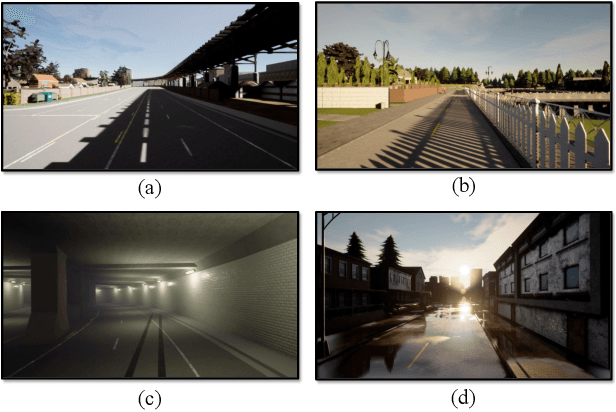
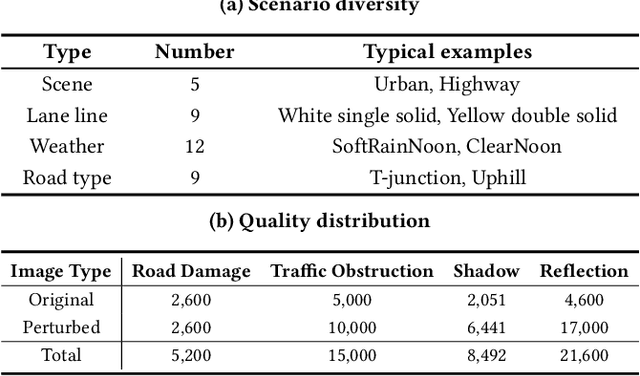
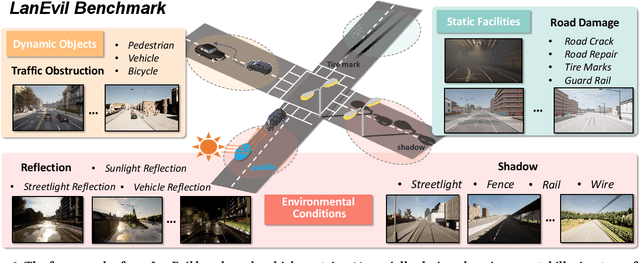
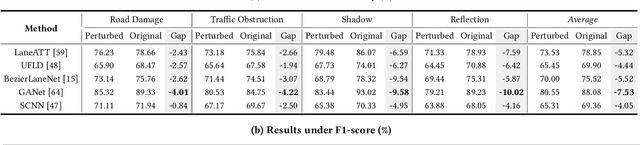
Lane detection (LD) is an essential component of autonomous driving systems, providing fundamental functionalities like adaptive cruise control and automated lane centering. Existing LD benchmarks primarily focus on evaluating common cases, neglecting the robustness of LD models against environmental illusions such as shadows and tire marks on the road. This research gap poses significant safety challenges since these illusions exist naturally in real-world traffic situations. For the first time, this paper studies the potential threats caused by these environmental illusions to LD and establishes the first comprehensive benchmark LanEvil for evaluating the robustness of LD against this natural corruption. We systematically design 14 prevalent yet critical types of environmental illusions (e.g., shadow, reflection) that cover a wide spectrum of real-world influencing factors in LD tasks. Based on real-world environments, we create 94 realistic and customizable 3D cases using the widely used CARLA simulator, resulting in a dataset comprising 90,292 sampled images. Through extensive experiments, we benchmark the robustness of popular LD methods using LanEvil, revealing substantial performance degradation (-5.37% Accuracy and -10.70% F1-Score on average), with shadow effects posing the greatest risk (-7.39% Accuracy). Additionally, we assess the performance of commercial auto-driving systems OpenPilot and Apollo through collaborative simulations, demonstrating that proposed environmental illusions can lead to incorrect decisions and potential traffic accidents. To defend against environmental illusions, we propose the Attention Area Mixing (AAM) approach using hard examples, which witness significant robustness improvement (+3.76%) under illumination effects. We hope our paper can contribute to advancing more robust auto-driving systems in the future. Website: https://lanevil.github.io/.
A Comprehensive Survey on Underwater Image Enhancement Based on Deep Learning
May 30, 2024Underwater image enhancement (UIE) is a challenging research task in the field of computer vision. Although hundreds of UIE algorithms have been proposed, a comprehensive and systematic review is still lacking. To promote future research, we summarize the UIE task from multiple perspectives. First, the physical models, data construction processes, evaluation metrics, and loss functions are introduced. Second, according to the contributions brought by different literatures, recent proposed algorithms are discussed and classified from six perspectives, namely network architecture, learning strategy, learning stage, assistance task, domain perspective and disentanglement fusion, respectively. Third, considering the inconsistencies in experimental settings in different literatures, a comprehensive and fair comparison does not yet exist. To this end, we quantitatively and qualitatively evaluate state-of-the-art algorithms on multiple benchmark datasets. Finally, issues worthy of further research in the UIE task are raised. A collection of useful materials is available at https://github.com/YuZhao1999/UIE.
HarmoDT: Harmony Multi-Task Decision Transformer for Offline Reinforcement Learning
May 28, 2024The purpose of offline multi-task reinforcement learning (MTRL) is to develop a unified policy applicable to diverse tasks without the need for online environmental interaction. Recent advancements approach this through sequence modeling, leveraging the Transformer architecture's scalability and the benefits of parameter sharing to exploit task similarities. However, variations in task content and complexity pose significant challenges in policy formulation, necessitating judicious parameter sharing and management of conflicting gradients for optimal policy performance. In this work, we introduce the Harmony Multi-Task Decision Transformer (HarmoDT), a novel solution designed to identify an optimal harmony subspace of parameters for each task. We approach this as a bi-level optimization problem, employing a meta-learning framework that leverages gradient-based techniques. The upper level of this framework is dedicated to learning a task-specific mask that delineates the harmony subspace, while the inner level focuses on updating parameters to enhance the overall performance of the unified policy. Empirical evaluations on a series of benchmarks demonstrate the superiority of HarmoDT, verifying the effectiveness of our approach.
Q-value Regularized Transformer for Offline Reinforcement Learning
May 27, 2024Recent advancements in offline reinforcement learning (RL) have underscored the capabilities of Conditional Sequence Modeling (CSM), a paradigm that learns the action distribution based on history trajectory and target returns for each state. However, these methods often struggle with stitching together optimal trajectories from sub-optimal ones due to the inconsistency between the sampled returns within individual trajectories and the optimal returns across multiple trajectories. Fortunately, Dynamic Programming (DP) methods offer a solution by leveraging a value function to approximate optimal future returns for each state, while these techniques are prone to unstable learning behaviors, particularly in long-horizon and sparse-reward scenarios. Building upon these insights, we propose the Q-value regularized Transformer (QT), which combines the trajectory modeling ability of the Transformer with the predictability of optimal future returns from DP methods. QT learns an action-value function and integrates a term maximizing action-values into the training loss of CSM, which aims to seek optimal actions that align closely with the behavior policy. Empirical evaluations on D4RL benchmark datasets demonstrate the superiority of QT over traditional DP and CSM methods, highlighting the potential of QT to enhance the state-of-the-art in offline RL.
Task Groupings Regularization: Data-Free Meta-Learning with Heterogeneous Pre-trained Models
May 26, 2024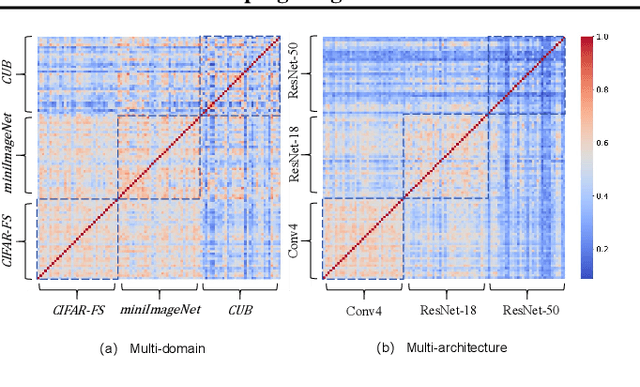


Data-Free Meta-Learning (DFML) aims to derive knowledge from a collection of pre-trained models without accessing their original data, enabling the rapid adaptation to new unseen tasks. Current methods often overlook the heterogeneity among pre-trained models, which leads to performance degradation due to task conflicts. In this paper, we empirically and theoretically identify and analyze the model heterogeneity in DFML. We find that model heterogeneity introduces a heterogeneity-homogeneity trade-off, where homogeneous models reduce task conflicts but also increase the overfitting risk. Balancing this trade-off is crucial for learning shared representations across tasks. Based on our findings, we propose Task Groupings Regularization, a novel approach that benefits from model heterogeneity by grouping and aligning conflicting tasks. Specifically, we embed pre-trained models into a task space to compute dissimilarity, and group heterogeneous models together based on this measure. Then, we introduce implicit gradient regularization within each group to mitigate potential conflicts. By encouraging a gradient direction suitable for all tasks, the meta-model captures shared representations that generalize across tasks. Comprehensive experiments showcase the superiority of our approach in multiple benchmarks, effectively tackling the model heterogeneity in challenging multi-domain and multi-architecture scenarios.
Learning Multi-Agent Communication from Graph Modeling Perspective
May 14, 2024In numerous artificial intelligence applications, the collaborative efforts of multiple intelligent agents are imperative for the successful attainment of target objectives. To enhance coordination among these agents, a distributed communication framework is often employed. However, information sharing among all agents proves to be resource-intensive, while the adoption of a manually pre-defined communication architecture imposes limitations on inter-agent communication, thereby constraining the potential for collaborative efforts. In this study, we introduce a novel approach wherein we conceptualize the communication architecture among agents as a learnable graph. We formulate this problem as the task of determining the communication graph while enabling the architecture parameters to update normally, thus necessitating a bi-level optimization process. Utilizing continuous relaxation of the graph representation and incorporating attention units, our proposed approach, CommFormer, efficiently optimizes the communication graph and concurrently refines architectural parameters through gradient descent in an end-to-end manner. Extensive experiments on a variety of cooperative tasks substantiate the robustness of our model across diverse cooperative scenarios, where agents are able to develop more coordinated and sophisticated strategies regardless of changes in the number of agents.
Separable Power of Classical and Quantum Learning Protocols Through the Lens of No-Free-Lunch Theorem
May 12, 2024


The No-Free-Lunch (NFL) theorem, which quantifies problem- and data-independent generalization errors regardless of the optimization process, provides a foundational framework for comprehending diverse learning protocols' potential. Despite its significance, the establishment of the NFL theorem for quantum machine learning models remains largely unexplored, thereby overlooking broader insights into the fundamental relationship between quantum and classical learning protocols. To address this gap, we categorize a diverse array of quantum learning algorithms into three learning protocols designed for learning quantum dynamics under a specified observable and establish their NFL theorem. The exploited protocols, namely Classical Learning Protocols (CLC-LPs), Restricted Quantum Learning Protocols (ReQu-LPs), and Quantum Learning Protocols (Qu-LPs), offer varying levels of access to quantum resources. Our derived NFL theorems demonstrate quadratic reductions in sample complexity across CLC-LPs, ReQu-LPs, and Qu-LPs, contingent upon the orthogonality of quantum states and the diagonality of observables. We attribute this performance discrepancy to the unique capacity of quantum-related learning protocols to indirectly utilize information concerning the global phases of non-orthogonal quantum states, a distinctive physical feature inherent in quantum mechanics. Our findings not only deepen our understanding of quantum learning protocols' capabilities but also provide practical insights for the development of advanced quantum learning algorithms.
LLM-QBench: A Benchmark Towards the Best Practice for Post-training Quantization of Large Language Models
May 09, 2024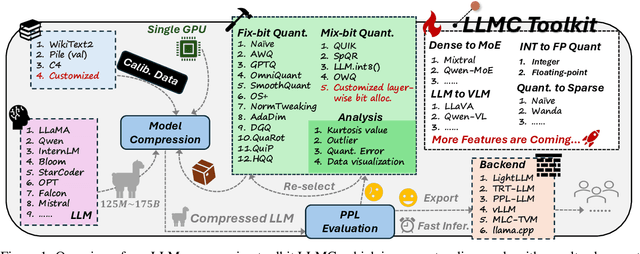
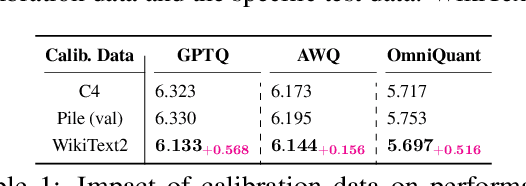
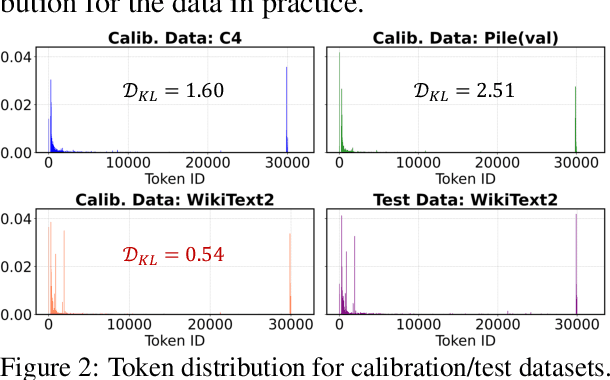
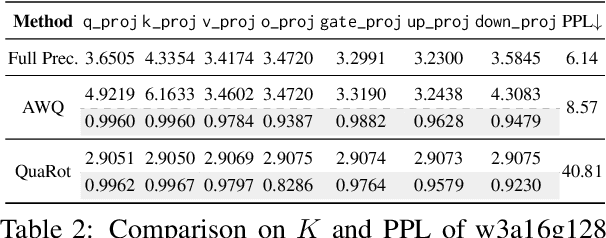
Recent advancements in large language models (LLMs) are propelling us toward artificial general intelligence, thanks to their remarkable emergent abilities and reasoning capabilities. However, the substantial computational and memory requirements of LLMs limit their widespread adoption. Quan- tization, a key compression technique, offers a viable solution to mitigate these demands by compressing and accelerating LLMs, albeit with poten- tial risks to model accuracy. Numerous studies have aimed to minimize the accuracy loss associated with quantization. However, the quantization configurations in these studies vary and may not be optimized for hard- ware compatibility. In this paper, we focus on identifying the most effective practices for quantizing LLMs, with the goal of balancing performance with computational efficiency. For a fair analysis, we develop a quantization toolkit LLMC, and design four crucial principles considering the inference efficiency, quantized accuracy, calibration cost, and modularization. By benchmarking on various models and datasets with over 500 experiments, three takeaways corresponding to calibration data, quantization algorithm, and quantization schemes are derived. Finally, a best practice of LLM PTQ pipeline is constructed. All the benchmark results and the toolkit can be found at https://github.com/ModelTC/llmc.