 Add to Chrome
 Add to Firefox
 Add to Edge
Bridging the English-Arabic Medical Knowledge Gap: Targeted Low-Rank Adaptation via Causal Layer Selection
Jul 31, 2026
Large Language Models (LLMs) perform strongly in English medical tasks but degrade substantially in Arabic, a gap widely attributed to limited training data. We systematically investigate this assumption via tuned lens probing and causal activation patching, and find that Arabic medical knowledge is present in intermediate model representations but fails to surface at the output. This mechanistic insight motivates a targeted adaptation strategy: rather than fine-tuning the full network, we propose Targeted Low-Rank Adaptation (TLoRA), restricted to the layer window where cross-lingual representations diverge, upstream of the output layers where the failure manifests. We evaluate TLoRA on multiple-choice medical QA, where our approach outperforms full-network LoRA, zero-shot, and few-shot baselines. We further evaluate it on short-answer generation and multi-turn clinical dialogue, where it performs competitively without the need for task-specific finetuning. We additionally introduce AraClinicDialog, a clinician-constructed Arabic medical dialogue benchmark in MSA with validated variants across four Arabic dialects. Together, these contributions demonstrate that mechanistic diagnosis can serve as a practical guide for targeted adaptation in underrepresented-language medical LLMs.

MedGuards: Multi-Agent System for Reliable Medical Error Detection and Correction
Jun 24, 2026As Large Language Models (LLMs) are increasingly deployed in healthcare settings, accurate error detection and correction in generated or existing text becomes critical, as even minor mistakes can pose risks to patient safety. Existing methods for error detection and correction, including automated checks and heuristic-based approaches, do not generalize well across unseen datasets. In this paper, we propose MedGuards as a medical safety guardrail, which is a new framework that treats medical error detection and correction as a multi-agent in-context learning task. Specialized agents separately detect, localize, and correct errors, while a confidence-guided arbitration mechanism resolves disagreements using reasoning traces and confidence scores. This design enhances interpretability, robustness, and adaptability, without requiring additional training of the base LLMs. Additionally, we introduce the Keyword-Prioritized Correction Score (KPCS), a new evaluation metric that considers whether critical keywords within the reference text are generated correctly, providing a more comprehensive assessment than conventional metrics. Experiments across four multilingual medical datasets consisting of clinical notes demonstrate significant improvements by the proposed framework across several metrics and models. Our aim is to enable safer deployment of LLMs in real-world healthcare applications. For reproducibility, we make our code publicly available at https://github.com/congboma/MedErrBench.
User-Aware Conditional Generative Total Correlation Learning for Multi-Modal Recommendation
Apr 03, 2026Multi-modal recommendation (MMR) enriches item representations by introducing item content, e.g., visual and textual descriptions, to improve upon interaction-only recommenders. The success of MMR hinges on aligning these content modalities with user preferences derived from interaction data, yet dominant practices based on disentangling modality-invariant preference-driving signals from modality-specific preference-irrelevant noises are flawed. First, they assume a one-size-fits-all relevance of item content to user preferences for all users, which contradicts the user-conditional fact of preferences. Second, they optimize pairwise contrastive losses separately toward cross-modal alignment, systematically ignoring higher-order dependencies inherent when multiple content modalities jointly influence user choices. In this paper, we introduce GTC, a conditional Generative Total Correlation learning framework. We employ an interaction-guided diffusion model to perform user-aware content feature filtering, preserving only personalized features relevant to each individual user. Furthermore, to capture complete cross-modal dependencies, we optimize a tractable lower bound of the total correlation of item representations across all modalities. Experiments on standard MMR benchmarks show GTC consistently outperforms state-of-the-art, with gains of up to 28.30% in NDCG@5. Ablation studies validate both conditional preference-driven feature filtering and total correlation optimization, confirming the ability of GTC to model user-conditional relationships in MMR tasks. The code is available at: https://github.com/jingdu-cs/GTC.
MedErrBench: A Fine-Grained Multilingual Benchmark for Medical Error Detection and Correction with Clinical Expert Annotations
Feb 05, 2026Inaccuracies in existing or generated clinical text may lead to serious adverse consequences, especially if it is a misdiagnosis or incorrect treatment suggestion. With Large Language Models (LLMs) increasingly being used across diverse healthcare applications, comprehensive evaluation through dedicated benchmarks is crucial. However, such datasets remain scarce, especially across diverse languages and contexts. In this paper, we introduce MedErrBench, the first multilingual benchmark for error detection, localization, and correction, developed under the guidance of experienced clinicians. Based on an expanded taxonomy of ten common error types, MedErrBench covers English, Arabic and Chinese, with natural clinical cases annotated and reviewed by domain experts. We assessed the performance of a range of general-purpose, language-specific, and medical-domain language models across all three tasks. Our results reveal notable performance gaps, particularly in non-English settings, highlighting the need for clinically grounded, language-aware systems. By making MedErrBench and our evaluation protocols publicly-available, we aim to advance multilingual clinical NLP to promote safer and more equitable AI-based healthcare globally. The dataset is available in the supplementary material. An anonymized version of the dataset is available at: https://github.com/congboma/MedErrBench.
Cross-Lingual Empirical Evaluation of Large Language Models for Arabic Medical Tasks
Feb 05, 2026In recent years, Large Language Models (LLMs) have become widely used in medical applications, such as clinical decision support, medical education, and medical question answering. Yet, these models are often English-centric, limiting their robustness and reliability for linguistically diverse communities. Recent work has highlighted discrepancies in performance in low-resource languages for various medical tasks, but the underlying causes remain poorly understood. In this study, we conduct a cross-lingual empirical analysis of LLM performance on Arabic and English medical question and answering. Our findings reveal a persistent language-driven performance gap that intensifies with increasing task complexity. Tokenization analysis exposes structural fragmentation in Arabic medical text, while reliability analysis suggests that model-reported confidence and explanations exhibit limited correlation with correctness. Together, these findings underscore the need for language-aware design and evaluation strategies in LLMs for medical tasks.
Explicit and Implicit Data Augmentation for Social Event Detection
Sep 04, 2025Social event detection involves identifying and categorizing important events from social media, which relies on labeled data, but annotation is costly and labor-intensive. To address this problem, we propose Augmentation framework for Social Event Detection (SED-Aug), a plug-and-play dual augmentation framework, which combines explicit text-based and implicit feature-space augmentation to enhance data diversity and model robustness. The explicit augmentation utilizes large language models to enhance textual information through five diverse generation strategies. For implicit augmentation, we design five novel perturbation techniques that operate in the feature space on structural fused embeddings. These perturbations are crafted to keep the semantic and relational properties of the embeddings and make them more diverse. Specifically, SED-Aug outperforms the best baseline model by approximately 17.67% on the Twitter2012 dataset and by about 15.57% on the Twitter2018 dataset in terms of the average F1 score. The code is available at GitHub: https://github.com/congboma/SED-Aug.
TransPrune: Token Transition Pruning for Efficient Large Vision-Language Model
Jul 28, 2025Large Vision-Language Models (LVLMs) have advanced multimodal learning but face high computational costs due to the large number of visual tokens, motivating token pruning to improve inference efficiency. The key challenge lies in identifying which tokens are truly important. Most existing approaches rely on attention-based criteria to estimate token importance. However, they inherently suffer from certain limitations, such as positional bias. In this work, we explore a new perspective on token importance based on token transitions in LVLMs. We observe that the transition of token representations provides a meaningful signal of semantic information. Based on this insight, we propose TransPrune, a training-free and efficient token pruning method. Specifically, TransPrune progressively prunes tokens by assessing their importance through a combination of Token Transition Variation (TTV)-which measures changes in both the magnitude and direction of token representations-and Instruction-Guided Attention (IGA), which measures how strongly the instruction attends to image tokens via attention. Extensive experiments demonstrate that TransPrune achieves comparable multimodal performance to original LVLMs, such as LLaVA-v1.5 and LLaVA-Next, across eight benchmarks, while reducing inference TFLOPs by more than half. Moreover, TTV alone can serve as an effective criterion without relying on attention, achieving performance comparable to attention-based methods. The code will be made publicly available upon acceptance of the paper at https://github.com/liaolea/TransPrune.
Kalman Filter Enhanced GRPO for Reinforcement Learning-Based Language Model Reasoning
May 12, 2025Reward baseline is important for Reinforcement Learning (RL) algorithms to reduce variance in policy gradient estimates. Recently, for language modeling, Group Relative Policy Optimization (GRPO) is proposed to compute the advantage for each output by subtracting the mean reward, as the baseline, for all outputs in the group. However, it can lead to inaccurate advantage estimates in environments with highly noisy rewards, potentially introducing bias. In this work, we propose a model, called Kalman Filter Enhanced Group Relative Policy Optimization (KRPO), by using lightweight Kalman filtering to dynamically estimate the latent reward mean and variance. This filtering technique replaces the naive batch mean baseline, enabling more adaptive advantage normalization. Our method does not require additional learned parameters over GRPO. This approach offers a simple yet effective way to incorporate multiple outputs of GRPO into advantage estimation, improving policy optimization in settings where highly dynamic reward signals are difficult to model for language models. Through experiments and analyses, we show that using a more adaptive advantage estimation model, KRPO can improve the stability and performance of GRPO. The code is available at https://github.com/billhhh/KRPO_LLMs_RL
Uncertainty Quantification for Machine Learning in Healthcare: A Survey
May 04, 2025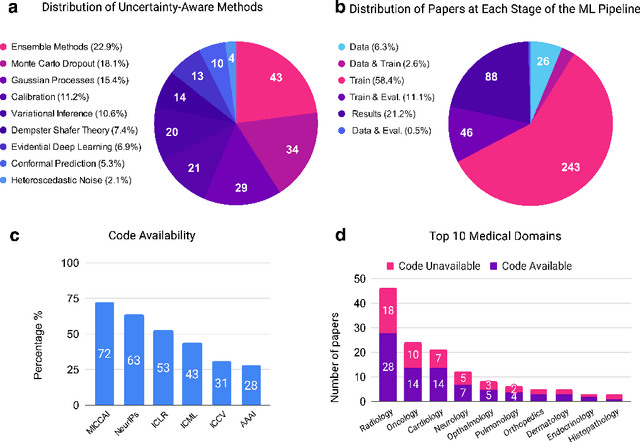
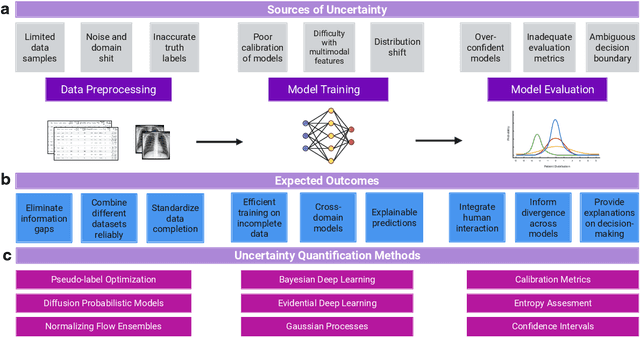
Uncertainty Quantification (UQ) is pivotal in enhancing the robustness, reliability, and interpretability of Machine Learning (ML) systems for healthcare, optimizing resources and improving patient care. Despite the emergence of ML-based clinical decision support tools, the lack of principled quantification of uncertainty in ML models remains a major challenge. Current reviews have a narrow focus on analyzing the state-of-the-art UQ in specific healthcare domains without systematically evaluating method efficacy across different stages of model development, and despite a growing body of research, its implementation in healthcare applications remains limited. Therefore, in this survey, we provide a comprehensive analysis of current UQ in healthcare, offering an informed framework that highlights how different methods can be integrated into each stage of the ML pipeline including data processing, training and evaluation. We also highlight the most popular methods used in healthcare and novel approaches from other domains that hold potential for future adoption in the medical context. We expect this study will provide a clear overview of the challenges and opportunities of implementing UQ in the ML pipeline for healthcare, guiding researchers and practitioners in selecting suitable techniques to enhance the reliability, safety and trust from patients and clinicians on ML-driven healthcare solutions.
In-Model Merging for Enhancing the Robustness of Medical Imaging Classification Models
Feb 27, 2025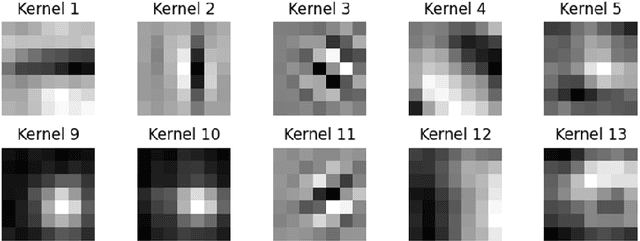
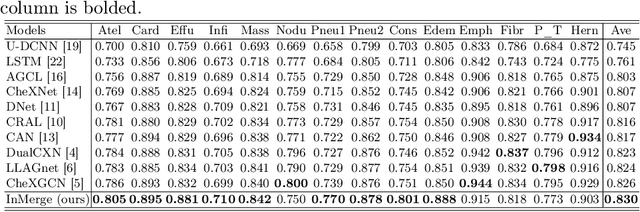

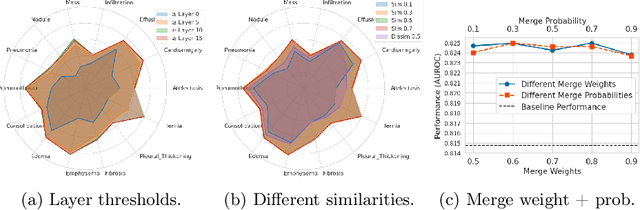
Model merging is an effective strategy to merge multiple models for enhancing model performances, and more efficient than ensemble learning as it will not introduce extra computation into inference. However, limited research explores if the merging process can occur within one model and enhance the model's robustness, which is particularly critical in the medical image domain. In the paper, we are the first to propose in-model merging (InMerge), a novel approach that enhances the model's robustness by selectively merging similar convolutional kernels in the deep layers of a single convolutional neural network (CNN) during the training process for classification. We also analytically reveal important characteristics that affect how in-model merging should be performed, serving as an insightful reference for the community. We demonstrate the feasibility and effectiveness of this technique for different CNN architectures on 4 prevalent datasets. The proposed InMerge-trained model surpasses the typically-trained model by a substantial margin. The code will be made public.