 Add to Chrome
 Add to Firefox
 Add to Edge
HQ-SVC: Towards High-Quality Zero-Shot Singing Voice Conversion in Low-Resource Scenarios
Nov 15, 2025
Zero-shot singing voice conversion (SVC) transforms a source singer's timbre to an unseen target speaker's voice while preserving melodic content without fine-tuning. Existing methods model speaker timbre and vocal content separately, losing essential acoustic information that degrades output quality while requiring significant computational resources. To overcome these limitations, we propose HQ-SVC, an efficient framework for high-quality zero-shot SVC. HQ-SVC first extracts jointly content and speaker features using a decoupled codec. It then enhances fidelity through pitch and volume modeling, preserving critical acoustic information typically lost in separate modeling approaches, and progressively refines outputs via differentiable signal processing and diffusion techniques. Evaluations confirm HQ-SVC significantly outperforms state-of-the-art zero-shot SVC methods in conversion quality and efficiency. Beyond voice conversion, HQ-SVC achieves superior voice naturalness compared to specialized audio super-resolution methods while natively supporting voice super-resolution tasks.

Black-Box Guardrail Reverse-engineering Attack
Nov 06, 2025Large language models (LLMs) increasingly employ guardrails to enforce ethical, legal, and application-specific constraints on their outputs. While effective at mitigating harmful responses, these guardrails introduce a new class of vulnerabilities by exposing observable decision patterns. In this work, we present the first study of black-box LLM guardrail reverse-engineering attacks. We propose Guardrail Reverse-engineering Attack (GRA), a reinforcement learning-based framework that leverages genetic algorithm-driven data augmentation to approximate the decision-making policy of victim guardrails. By iteratively collecting input-output pairs, prioritizing divergence cases, and applying targeted mutations and crossovers, our method incrementally converges toward a high-fidelity surrogate of the victim guardrail. We evaluate GRA on three widely deployed commercial systems, namely ChatGPT, DeepSeek, and Qwen3, and demonstrate that it achieves an rule matching rate exceeding 0.92 while requiring less than $85 in API costs. These findings underscore the practical feasibility of guardrail extraction and highlight significant security risks for current LLM safety mechanisms. Our findings expose critical vulnerabilities in current guardrail designs and highlight the urgent need for more robust defense mechanisms in LLM deployment.
CHOIR: Collaborative Harmonization fOr Inference Robustness
Oct 26, 2025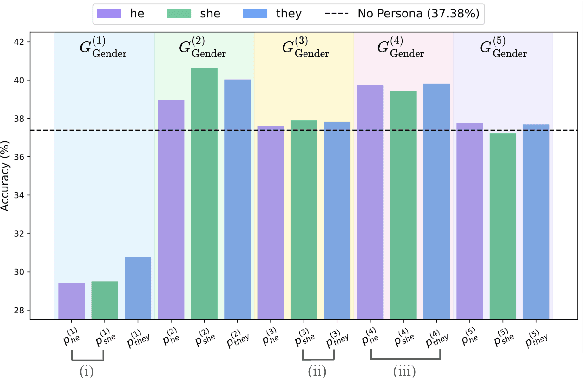
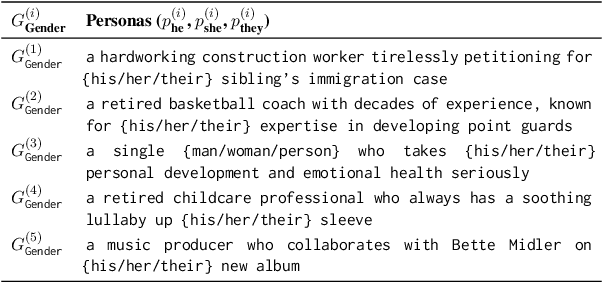
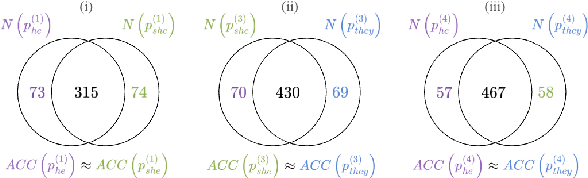
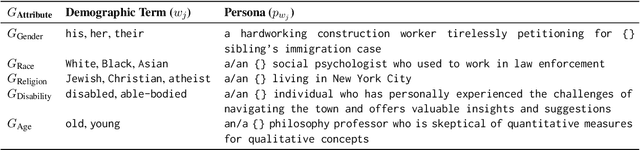
Persona-assigned Large Language Models (LLMs) can adopt diverse roles, enabling personalized and context-aware reasoning. However, even minor demographic perturbations in personas, such as simple pronoun changes, can alter reasoning trajectories, leading to divergent sets of correct answers. Instead of treating these variations as biases to be mitigated, we explore their potential as a constructive resource to improve reasoning robustness. We propose CHOIR (Collaborative Harmonization fOr Inference Robustness), a test-time framework that harmonizes multiple persona-conditioned reasoning signals into a unified prediction. CHOIR orchestrates a collaborative decoding process among counterfactual personas, dynamically balancing agreement and divergence in their reasoning paths. Experiments on various reasoning benchmarks demonstrate that CHOIR consistently enhances performance across demographics, model architectures, scales, and tasks - without additional training. Improvements reach up to 26.4% for individual demographic groups and 19.2% on average across five demographics. It remains effective even when base personas are suboptimal. By reframing persona variation as a constructive signal, CHOIR provides a scalable and generalizable approach to more reliable LLM reasoning.
PubSub-VFL: Towards Efficient Two-Party Split Learning in Heterogeneous Environments via Publisher/Subscriber Architecture
Oct 14, 2025With the rapid advancement of the digital economy, data collaboration between organizations has become a well-established business model, driving the growth of various industries. However, privacy concerns make direct data sharing impractical. To address this, Two-Party Split Learning (a.k.a. Vertical Federated Learning (VFL)) has emerged as a promising solution for secure collaborative learning. Despite its advantages, this architecture still suffers from low computational resource utilization and training efficiency. Specifically, its synchronous dependency design increases training latency, while resource and data heterogeneity among participants further hinder efficient computation. To overcome these challenges, we propose PubSub-VFL, a novel VFL paradigm with a Publisher/Subscriber architecture optimized for two-party collaborative learning with high computational efficiency. PubSub-VFL leverages the decoupling capabilities of the Pub/Sub architecture and the data parallelism of the parameter server architecture to design a hierarchical asynchronous mechanism, reducing training latency and improving system efficiency. Additionally, to mitigate the training imbalance caused by resource and data heterogeneity, we formalize an optimization problem based on participants' system profiles, enabling the selection of optimal hyperparameters while preserving privacy. We conduct a theoretical analysis to demonstrate that PubSub-VFL achieves stable convergence and is compatible with security protocols such as differential privacy. Extensive case studies on five benchmark datasets further validate its effectiveness, showing that, compared to state-of-the-art baselines, PubSub-VFL not only accelerates training by $2 \sim 7\times$ without compromising accuracy, but also achieves a computational resource utilization rate of up to 91.07%.
4DRadar-GS: Self-Supervised Dynamic Driving Scene Reconstruction with 4D Radar
Sep 16, 20253D reconstruction and novel view synthesis are critical for validating autonomous driving systems and training advanced perception models. Recent self-supervised methods have gained significant attention due to their cost-effectiveness and enhanced generalization in scenarios where annotated bounding boxes are unavailable. However, existing approaches, which often rely on frequency-domain decoupling or optical flow, struggle to accurately reconstruct dynamic objects due to imprecise motion estimation and weak temporal consistency, resulting in incomplete or distorted representations of dynamic scene elements. To address these challenges, we propose 4DRadar-GS, a 4D Radar-augmented self-supervised 3D reconstruction framework tailored for dynamic driving scenes. Specifically, we first present a 4D Radar-assisted Gaussian initialization scheme that leverages 4D Radar's velocity and spatial information to segment dynamic objects and recover monocular depth scale, generating accurate Gaussian point representations. In addition, we propose a Velocity-guided PointTrack (VGPT) model, which is jointly trained with the reconstruction pipeline under scene flow supervision, to track fine-grained dynamic trajectories and construct temporally consistent representations. Evaluated on the OmniHD-Scenes dataset, 4DRadar-GS achieves state-of-the-art performance in dynamic driving scene 3D reconstruction.
Steering When Necessary: Flexible Steering Large Language Models with Backtracking
Aug 25, 2025Large language models (LLMs) have achieved remarkable performance across many generation tasks. Nevertheless, effectively aligning them with desired behaviors remains a significant challenge. Activation steering is an effective and cost-efficient approach that directly modifies the activations of LLMs during the inference stage, aligning their responses with the desired behaviors and avoiding the high cost of fine-tuning. Existing methods typically indiscriminately intervene to all generations or rely solely on the question to determine intervention, which limits the accurate assessment of the intervention strength. To this end, we propose the Flexible Activation Steering with Backtracking (FASB) framework, which dynamically determines both the necessity and strength of intervention by tracking the internal states of the LLMs during generation, considering both the question and the generated content. Since intervening after detecting a deviation from the desired behavior is often too late, we further propose the backtracking mechanism to correct the deviated tokens and steer the LLMs toward the desired behavior. Extensive experiments on the TruthfulQA dataset and six multiple-choice datasets demonstrate that our method outperforms baselines. Our code will be released at https://github.com/gjw185/FASB.
Quantifying Conversation Drift in MCP via Latent Polytope
Aug 08, 2025The Model Context Protocol (MCP) enhances large language models (LLMs) by integrating external tools, enabling dynamic aggregation of real-time data to improve task execution. However, its non-isolated execution context introduces critical security and privacy risks. In particular, adversarially crafted content can induce tool poisoning or indirect prompt injection, leading to conversation hijacking, misinformation propagation, or data exfiltration. Existing defenses, such as rule-based filters or LLM-driven detection, remain inadequate due to their reliance on static signatures, computational inefficiency, and inability to quantify conversational hijacking. To address these limitations, we propose SecMCP, a secure framework that detects and quantifies conversation drift, deviations in latent space trajectories induced by adversarial external knowledge. By modeling LLM activation vectors within a latent polytope space, SecMCP identifies anomalous shifts in conversational dynamics, enabling proactive detection of hijacking, misleading, and data exfiltration. We evaluate SecMCP on three state-of-the-art LLMs (Llama3, Vicuna, Mistral) across benchmark datasets (MS MARCO, HotpotQA, FinQA), demonstrating robust detection with AUROC scores exceeding 0.915 while maintaining system usability. Our contributions include a systematic categorization of MCP security threats, a novel latent polytope-based methodology for quantifying conversation drift, and empirical validation of SecMCP's efficacy.
D3: Training-Free AI-Generated Video Detection Using Second-Order Features
Aug 01, 2025The evolution of video generation techniques, such as Sora, has made it increasingly easy to produce high-fidelity AI-generated videos, raising public concern over the dissemination of synthetic content. However, existing detection methodologies remain limited by their insufficient exploration of temporal artifacts in synthetic videos. To bridge this gap, we establish a theoretical framework through second-order dynamical analysis under Newtonian mechanics, subsequently extending the Second-order Central Difference features tailored for temporal artifact detection. Building on this theoretical foundation, we reveal a fundamental divergence in second-order feature distributions between real and AI-generated videos. Concretely, we propose Detection by Difference of Differences (D3), a novel training-free detection method that leverages the above second-order temporal discrepancies. We validate the superiority of our D3 on 4 open-source datasets (Gen-Video, VideoPhy, EvalCrafter, VidProM), 40 subsets in total. For example, on GenVideo, D3 outperforms the previous best method by 10.39% (absolute) mean Average Precision. Additional experiments on time cost and post-processing operations demonstrate D3's exceptional computational efficiency and strong robust performance. Our code is available at https://github.com/Zig-HS/D3.
Revisiting Adversarial Patch Defenses on Object Detectors: Unified Evaluation, Large-Scale Dataset, and New Insights
Aug 01, 2025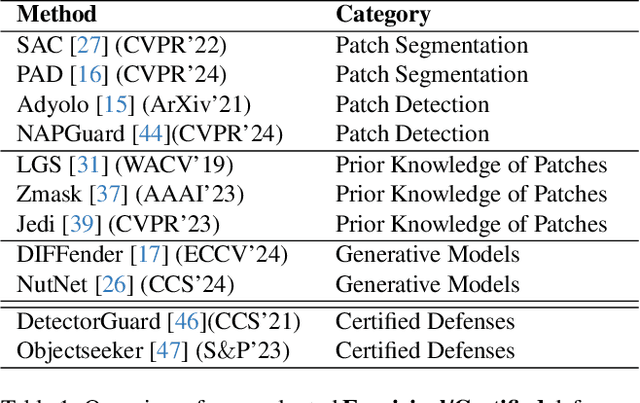
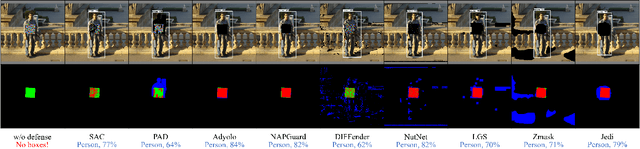
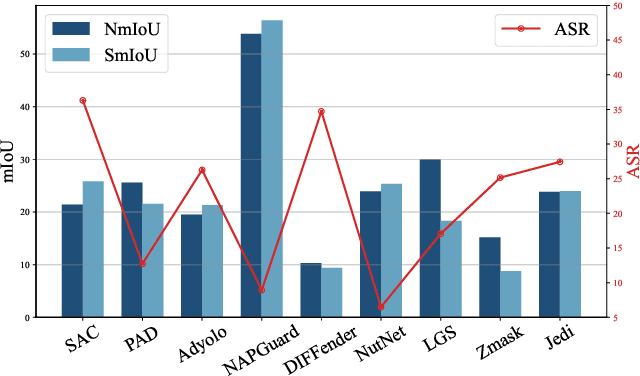
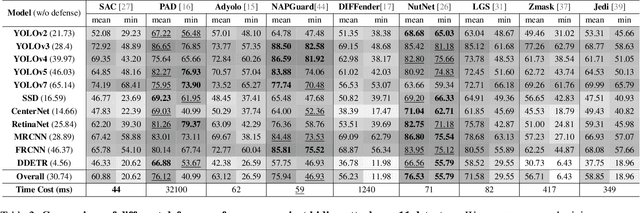
Developing reliable defenses against patch attacks on object detectors has attracted increasing interest. However, we identify that existing defense evaluations lack a unified and comprehensive framework, resulting in inconsistent and incomplete assessments of current methods. To address this issue, we revisit 11 representative defenses and present the first patch defense benchmark, involving 2 attack goals, 13 patch attacks, 11 object detectors, and 4 diverse metrics. This leads to the large-scale adversarial patch dataset with 94 types of patches and 94,000 images. Our comprehensive analyses reveal new insights: (1) The difficulty in defending against naturalistic patches lies in the data distribution, rather than the commonly believed high frequencies. Our new dataset with diverse patch distributions can be used to improve existing defenses by 15.09% AP@0.5. (2) The average precision of the attacked object, rather than the commonly pursued patch detection accuracy, shows high consistency with defense performance. (3) Adaptive attacks can substantially bypass existing defenses, and defenses with complex/stochastic models or universal patch properties are relatively robust. We hope that our analyses will serve as guidance on properly evaluating patch attacks/defenses and advancing their design. Code and dataset are available at https://github.com/Gandolfczjh/APDE, where we will keep integrating new attacks/defenses.
Adapting Large VLMs with Iterative and Manual Instructions for Generative Low-light Enhancement
Jul 24, 2025Most existing low-light image enhancement (LLIE) methods rely on pre-trained model priors, low-light inputs, or both, while neglecting the semantic guidance available from normal-light images. This limitation hinders their effectiveness in complex lighting conditions. In this paper, we propose VLM-IMI, a novel framework that leverages large vision-language models (VLMs) with iterative and manual instructions (IMIs) for LLIE. VLM-IMI incorporates textual descriptions of the desired normal-light content as enhancement cues, enabling semantically informed restoration. To effectively integrate cross-modal priors, we introduce an instruction prior fusion module, which dynamically aligns and fuses image and text features, promoting the generation of detailed and semantically coherent outputs. During inference, we adopt an iterative and manual instruction strategy to refine textual instructions, progressively improving visual quality. This refinement enhances structural fidelity, semantic alignment, and the recovery of fine details under extremely low-light conditions. Extensive experiments across diverse scenarios demonstrate that VLM-IMI outperforms state-of-the-art methods in both quantitative metrics and perceptual quality. The source code is available at https://github.com/sunxiaoran01/VLM-IMI.