 Add to Chrome
 Add to Firefox
 Add to Edge
Integrating Factual and Normative Industrial Knowledge via Constraint-Aware Graph Attention for Process Plan Recommendation
Jul 27, 2026
Integrating heterogeneous industrial knowledge, including factual relations and decision constraints, remains a core challenge in industrial information systems. Machining process planning exemplifies this problem because engineers must select operations by combining material properties, feature characteristics, and quality requirements. Existing methods rely mainly on similarity retrieval or classification, without a unified ranking objective or standardized evaluation. We propose PCA-GAT, which formulates machining process plan recommendation as a knowledge graph enhanced collaborative filtering problem. Bayesian Personalized Ranking provides the learning objective, while Recall@K and NDCG@K define evaluation. The knowledge graph supplies semantic structure when collaborative signals are sparse. Four domain constraints, material compatibility, precision requirements, feature applicability, and operation sequencing, are introduced as attention biases during graph propagation. Type-specific weights learn their importance, and an adaptive gate adjusts their influence using local context. On a real aerospace dataset with 115 parts and 507 plans, PCA-GAT achieves Recall@1 = 0.9087 and strong cold-start robustness, with about half the degradation of the strongest baseline under severe sparsity. Ablation studies show that knowledge graph enrichment is essential, constraints add value, and ungated constraint injection can hurt performance. The learned weights identify material-operation compatibility as the dominant factor, consistent with domain expertise. Results on three public benchmarks show no degradation when constraints are absent, supporting generalization beyond manufacturing. This study establishes a standardized recommendation protocol for engineering process planning and benchmarks seven methods across three categories, showing that knowledge representation is the main bottleneck.

Physically Verifiable Evidence and LLM-Based Reporting for Bearing Fault Diagnosis
Jul 24, 2026Trustworthy deployment of AI-based diagnosis in safety-critical mechanical systems hinges on validation: whether a prediction can be checked against physical reality before it is acted upon. Current intelligent fault diagnosers fail this standard in two ways. Their standard output, a class label with a softmax confidence score, is an internal statistic of the classifier, offering nothing checkable against independent physical knowledge; and the growing use of generative language models in maintenance reporting adds a second risk: hallucinated content entering reports on which decisions rest. Taking bearing fault diagnosis as the testbed, this work addresses both problems from the output side. The proposed Diagnostic Evidence Network (DENet) is an encoder-agnostic multi-task framework extending the output to a structured evidence record: the classification, a predicted characteristic frequency comparable against the theoretical value determined by bearing geometry and shaft speed, and a temporal localization of transient impulses inspectable on the raw waveform. Across four encoders and three public datasets, this evidence incurs no statistically significant accuracy cost, with a frequency error of about 6 Hz on 1,024-point segments where spectral estimation is structurally inapplicable. Centrally, the deviation between predicted and theoretical frequency constitutes a label-free, inference-time validation signal: it detects misclassifications with AUROC values of 0.970 and 0.871, and remains discriminative in the high-confidence regime where confidence-derived detectors are blind. Finally, a QLoRA-adapted language model is constrained to translate, but never generate, diagnostic content, reducing unsupported-claim rates from 10-12% to 2% and eliminating fabricated quantities.
A physics-informed foundation model for quantitative diffusion MRI
May 29, 2026Understanding the human brain requires access to its microscopic tissue architecture. Diffusion magnetic resonance imaging (MRI) provides the only noninvasive window into whole-brain microstructure in vivo, yet reliable quantitative mapping remains confined to specialized research settings requiring dense sampling and optimized acquisition protocols. To address this gap, we present a physics-informed generative microstructure network (PIGMENT) that learns a universal generative prior of human brain microstructure and adapts it zero-shot to each participant's measured data to recover subject-specific maps. Trained on 11375 scans spanning multiple sites, vendors, and field strengths, PIGMENT enabled reliable quantitative mapping for tensor, kurtosis, and NODDI models across external datasets from five independent centers. It remains effective where conventional fitting becomes unreliable, recovering meaningful maps from extremely sparse acquisitions while supporting downstream tractography and structural connectivity mapping. PIGMENT estimates demonstrated strong biological validity, preserving submillimeter cortical microarchitectural patterns and early-childhood white matter developmental trajectories from 10-fold accelerated scans. Furthermore, PIGMENT enables reliable quantitative tensor mapping on cost-efficient low-field systems and the extraction of tumor-related biomarkers using ultra-fast clinical protocols. Together, these results establish PIGMENT as a physics-informed foundation model that extends quantitative diffusion MRI into regimes traditionally too sparse, heterogeneous, or clinically constrained for reliable analysis.
E2Former-V2: On-the-Fly Equivariant Attention with Linear Activation Memory
Jan 23, 2026Equivariant Graph Neural Networks (EGNNs) have become a widely used approach for modeling 3D atomistic systems. However, mainstream architectures face critical scalability bottlenecks due to the explicit construction of geometric features or dense tensor products on \textit{every} edge. To overcome this, we introduce \textbf{E2Former-V2}, a scalable architecture that integrates algebraic sparsity with hardware-aware execution. We first propose \textbf{E}quivariant \textbf{A}xis-\textbf{A}ligned \textbf{S}parsification (EAAS). EAAS builds on Wigner-$6j$ convolution by exploiting an $\mathrm{SO}(3) \rightarrow \mathrm{SO}(2)$ change of basis to transform computationally expensive dense tensor contractions into efficient, sparse parity re-indexing operations. Building on this representation, we introduce \textbf{On-the-Fly Equivariant Attention}, a fully node-centric mechanism implemented via a custom fused Triton kernel. By eliminating materialized edge tensors and maximizing SRAM utilization, our kernel achieves a \textbf{20$\times$ improvement in TFLOPS} compared to standard implementations. Extensive experiments on the SPICE and OMol25 datasets demonstrate that E2Former-V2 maintains comparable predictive performance while notably accelerating inference. This work demonstrates that large equivariant transformers can be trained efficiently using widely accessible GPU platforms. The code is avalible at https://github.com/IQuestLab/UBio-MolFM/tree/e2formerv2.
Technical Report on classification of literature related to children speech disorder
May 20, 2025This technical report presents a natural language processing (NLP)-based approach for systematically classifying scientific literature on childhood speech disorders. We retrieved and filtered 4,804 relevant articles published after 2015 from the PubMed database using domain-specific keywords. After cleaning and pre-processing the abstracts, we applied two topic modeling techniques - Latent Dirichlet Allocation (LDA) and BERTopic - to identify latent thematic structures in the corpus. Our models uncovered 14 clinically meaningful clusters, such as infantile hyperactivity and abnormal epileptic behavior. To improve relevance and precision, we incorporated a custom stop word list tailored to speech pathology. Evaluation results showed that the LDA model achieved a coherence score of 0.42 and a perplexity of -7.5, indicating strong topic coherence and predictive performance. The BERTopic model exhibited a low proportion of outlier topics (less than 20%), demonstrating its capacity to classify heterogeneous literature effectively. These results provide a foundation for automating literature reviews in speech-language pathology.
A MARL Based Multi-Target Tracking Algorithm Under Jamming Against Radar
Dec 17, 2024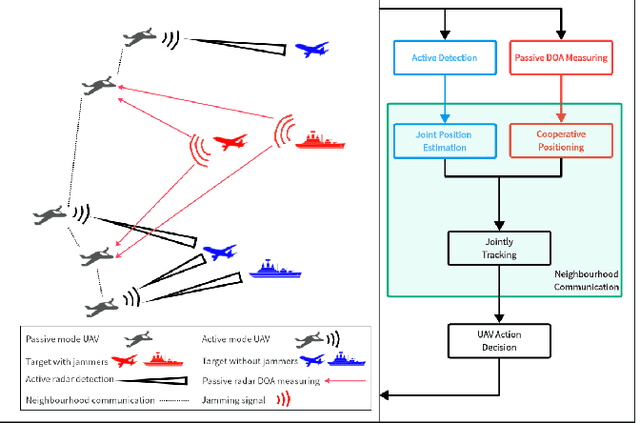
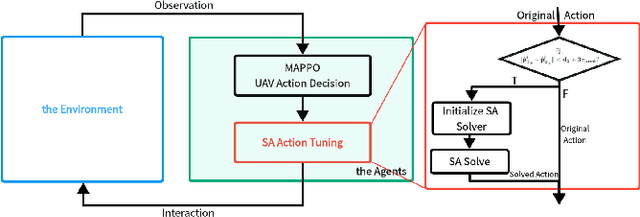
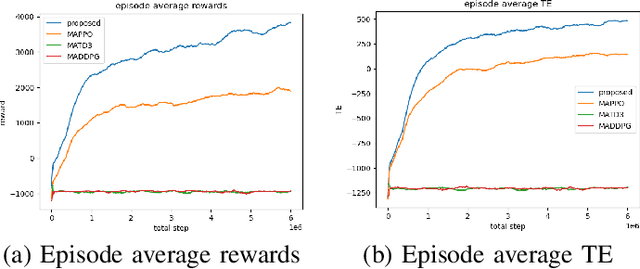
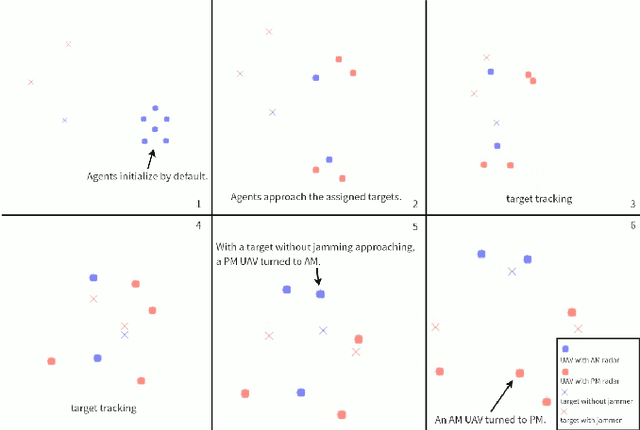
Unmanned aerial vehicles (UAVs) have played an increasingly important role in military operations and social life. Among all application scenarios, multi-target tracking tasks accomplished by UAV swarms have received extensive attention. However, when UAVs use radar to track targets, the tracking performance can be severely compromised by jammers. To track targets in the presence of jammers, UAVs can use passive radar to position the jammer. This paper proposes a system where a UAV swarm selects the radar's active or passive work mode to track multiple differently located and potentially jammer-carrying targets. After presenting the optimization problem and proving its solving difficulty, we use a multi-agent reinforcement learning algorithm to solve this control problem. We also propose a mechanism based on simulated annealing algorithm to avoid cases where UAV actions violate constraints. Simulation experiments demonstrate the effectiveness of the proposed algorithm.
ChatGPT and a New Academic Reality: Artificial Intelligence-Written Research Papers and the Ethics of the Large Language Models in Scholarly Publishing
Mar 31, 2023This paper discusses OpenAIs ChatGPT, a generative pre-trained transformer, which uses natural language processing to fulfill text-based user requests (i.e., a chatbot). The history and principles behind ChatGPT and similar models are discussed. This technology is then discussed in relation to its potential impact on academia and scholarly research and publishing. ChatGPT is seen as a potential model for the automated preparation of essays and other types of scholarly manuscripts. Potential ethical issues that could arise with the emergence of large language models like GPT-3, the underlying technology behind ChatGPT, and its usage by academics and researchers, are discussed and situated within the context of broader advancements in artificial intelligence, machine learning, and natural language processing for research and scholarly publishing.
Integrating Semantic and Structural Information with Graph Convolutional Network for Controversy Detection
May 16, 2020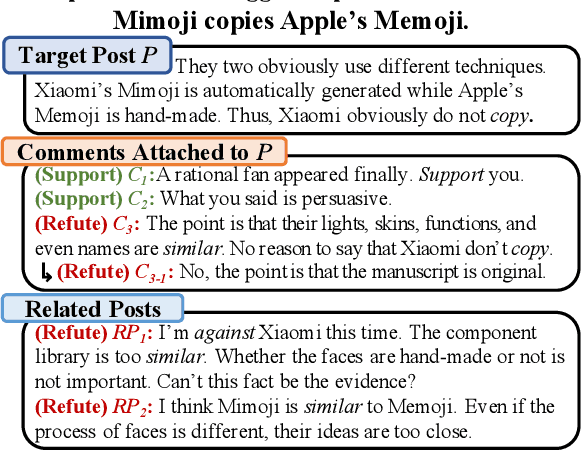
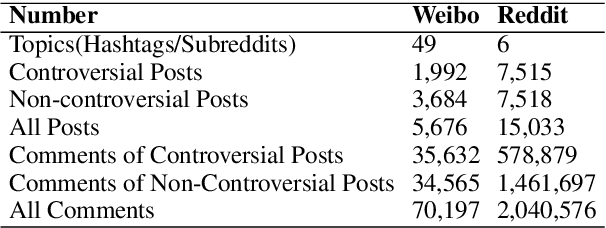
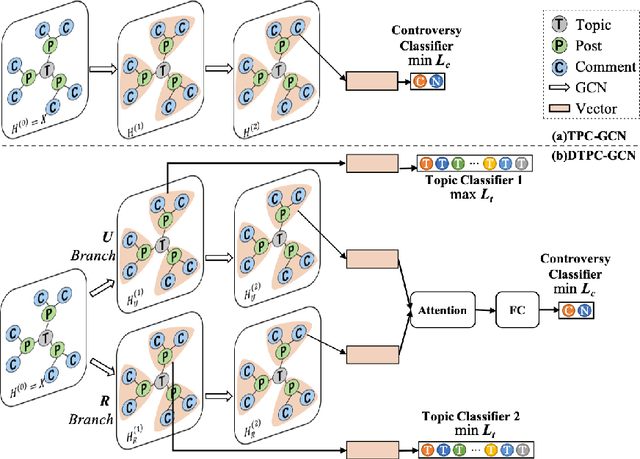
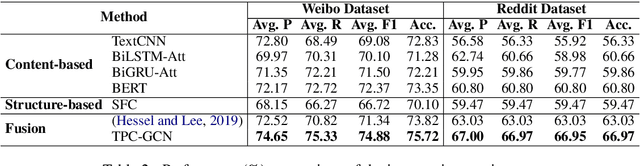
Identifying controversial posts on social media is a fundamental task for mining public sentiment, assessing the influence of events, and alleviating the polarized views. However, existing methods fail to 1) effectively incorporate the semantic information from content-related posts; 2) preserve the structural information for reply relationship modeling; 3) properly handle posts from topics dissimilar to those in the training set. To overcome the first two limitations, we propose Topic-Post-Comment Graph Convolutional Network (TPC-GCN), which integrates the information from the graph structure and content of topics, posts, and comments for post-level controversy detection. As to the third limitation, we extend our model to Disentangled TPC-GCN (DTPC-GCN), to disentangle topic-related and topic-unrelated features and then fuse dynamically. Extensive experiments on two real-world datasets demonstrate that our models outperform existing methods. Analysis of the results and cases proves that our models can integrate both semantic and structural information with significant generalizability.