 Add to Chrome
 Add to Firefox
 Add to Edge
Diagnosing the Compositional Knowledge of Vision Language Models from a Game-Theoretic View
May 27, 2024
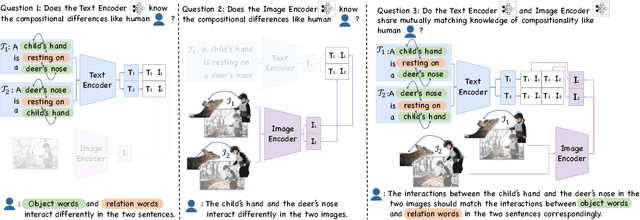
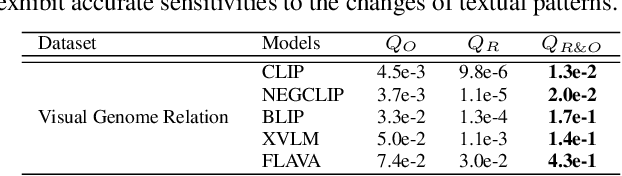
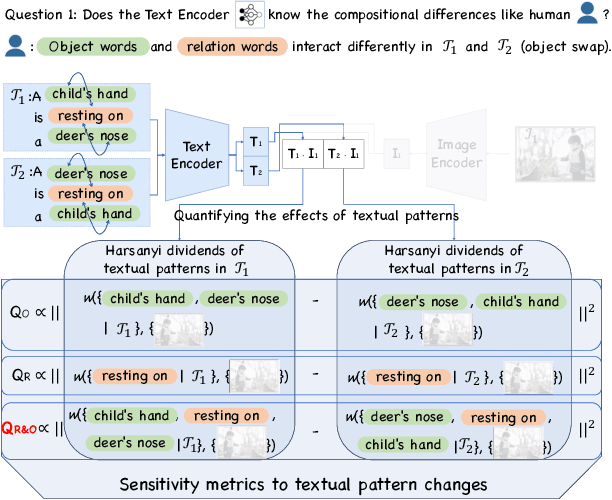
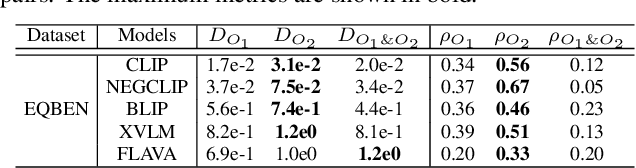
Compositional reasoning capabilities are usually considered as fundamental skills to characterize human perception. Recent studies show that current Vision Language Models (VLMs) surprisingly lack sufficient knowledge with respect to such capabilities. To this end, we propose to thoroughly diagnose the composition representations encoded by VLMs, systematically revealing the potential cause for this weakness. Specifically, we propose evaluation methods from a novel game-theoretic view to assess the vulnerability of VLMs on different aspects of compositional understanding, e.g., relations and attributes. Extensive experimental results demonstrate and validate several insights to understand the incapabilities of VLMs on compositional reasoning, which provide useful and reliable guidance for future studies. The deliverables will be updated at https://vlms-compositionality-gametheory.github.io/.

Deep learning improved autofocus for motion artifact reduction and its application in quantitative susceptibility mapping
May 26, 2024Purpose: To develop a pipeline for motion artifact correction in mGRE and quantitative susceptibility mapping (QSM). Methods: Deep learning is integrated with autofocus to improve motion artifact suppression, which is applied QSM of patients with Parkinson's disease (PD). The estimation of affine motion parameters in the autofocus method depends on signal-to-noise ratio and lacks accuracy when data sampling occurs outside the k-space center. A deep learning strategy is employed to remove the residual motion artifacts in autofocus. Results: Results obtained in simulated brain data (n =15) with reference truth show that the proposed autofocus deep learning method significantly improves the image quality of mGRE and QSM (p = 0.001 for SSIM, p < 0.0001 for PSNR and RMSE). Results from 10 PD patients with real motion artifacts in QSM have also been corrected using the proposed method and sent to an experienced radiologist for image quality evaluation, and the average image quality score has increased (p=0.0039). Conclusions: The proposed method enables substantial suppression of motion artifacts in mGRE and QSM.
Contactless Polysomnography: What Radio Waves Tell Us about Sleep
May 20, 2024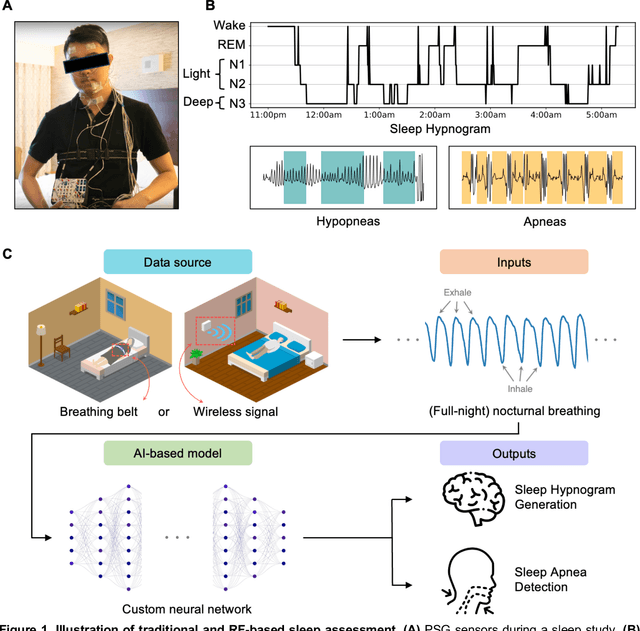


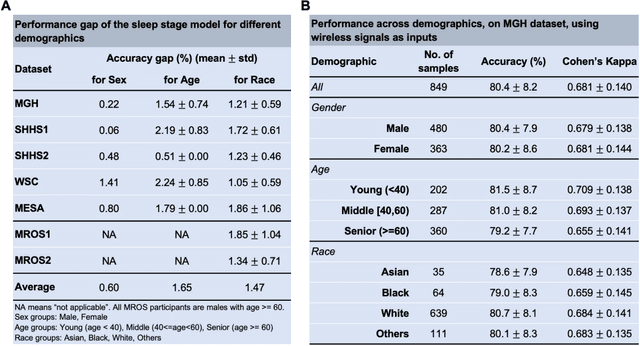
The ability to assess sleep at home, capture sleep stages, and detect the occurrence of apnea (without on-body sensors) simply by analyzing the radio waves bouncing off people's bodies while they sleep is quite powerful. Such a capability would allow for longitudinal data collection in patients' homes, informing our understanding of sleep and its interaction with various diseases and their therapeutic responses, both in clinical trials and routine care. In this article, we develop an advanced machine learning algorithm for passively monitoring sleep and nocturnal breathing from radio waves reflected off people while asleep. Validation results in comparison with the gold standard (i.e., polysomnography) (n=849) demonstrate that the model captures the sleep hypnogram (with an accuracy of 81% for 30-second epochs categorized into Wake, Light Sleep, Deep Sleep, or REM), detects sleep apnea (AUROC = 0.88), and measures the patient's Apnea-Hypopnea Index (ICC=0.95; 95% CI = [0.93, 0.97]). Notably, the model exhibits equitable performance across race, sex, and age. Moreover, the model uncovers informative interactions between sleep stages and a range of diseases including neurological, psychiatric, cardiovascular, and immunological disorders. These findings not only hold promise for clinical practice and interventional trials but also underscore the significance of sleep as a fundamental component in understanding and managing various diseases.
LIKO: LiDAR, Inertial, and Kinematic Odometry for Bipedal Robots
Apr 28, 2024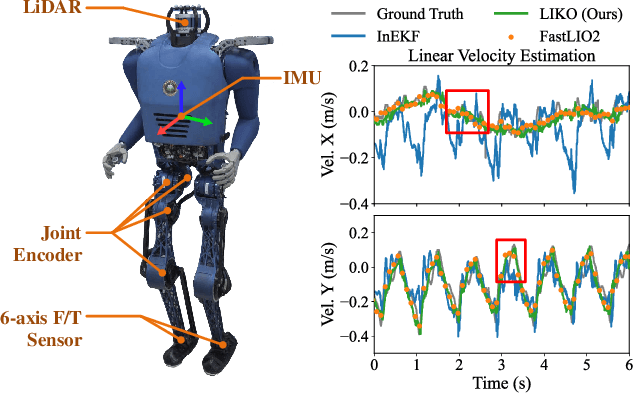


High-frequency and accurate state estimation is crucial for biped robots. This paper presents a tightly-coupled LiDAR-Inertial-Kinematic Odometry (LIKO) for biped robot state estimation based on an iterated extended Kalman filter. Beyond state estimation, the foot contact position is also modeled and estimated. This allows for both position and velocity updates from kinematic measurement. Additionally, the use of kinematic measurement results in an increased output state frequency of about 1kHz. This ensures temporal continuity of the estimated state and makes it practical for control purposes of biped robots. We also announce a biped robot dataset consisting of LiDAR, inertial measurement unit (IMU), joint encoders, force/torque (F/T) sensors, and motion capture ground truth to evaluate the proposed method. The dataset is collected during robot locomotion, and our approach reached the best quantitative result among other LIO-based methods and biped robot state estimation algorithms. The dataset and source code will be available at https://github.com/Mr-Zqr/LIKO.
Cross-modal Diffusion Modelling for Super-resolved Spatial Transcriptomics
Apr 19, 2024The recent advancement of spatial transcriptomics (ST) allows to characterize spatial gene expression within tissue for discovery research. However, current ST platforms suffer from low resolution, hindering in-depth understanding of spatial gene expression. Super-resolution approaches promise to enhance ST maps by integrating histology images with gene expressions of profiled tissue spots. However, current super-resolution methods are limited by restoration uncertainty and mode collapse. Although diffusion models have shown promise in capturing complex interactions between multi-modal conditions, it remains a challenge to integrate histology images and gene expression for super-resolved ST maps. This paper proposes a cross-modal conditional diffusion model for super-resolving ST maps with the guidance of histology images. Specifically, we design a multi-modal disentangling network with cross-modal adaptive modulation to utilize complementary information from histology images and spatial gene expression. Moreover, we propose a dynamic cross-attention modelling strategy to extract hierarchical cell-to-tissue information from histology images. Lastly, we propose a co-expression-based gene-correlation graph network to model the co-expression relationship of multiple genes. Experiments show that our method outperforms other state-of-the-art methods in ST super-resolution on three public datasets.
MAProtoNet: A Multi-scale Attentive Interpretable Prototypical Part Network for 3D Magnetic Resonance Imaging Brain Tumor Classification
Apr 13, 2024Automated diagnosis with artificial intelligence has emerged as a promising area in the realm of medical imaging, while the interpretability of the introduced deep neural networks still remains an urgent concern. Although contemporary works, such as XProtoNet and MProtoNet, has sought to design interpretable prediction models for the issue, the localization precision of their resulting attribution maps can be further improved. To this end, we propose a Multi-scale Attentive Prototypical part Network, termed MAProtoNet, to provide more precise maps for attribution. Specifically, we introduce a concise multi-scale module to merge attentive features from quadruplet attention layers, and produces attribution maps. The proposed quadruplet attention layers can enhance the existing online class activation mapping loss via capturing interactions between the spatial and channel dimension, while the multi-scale module then fuses both fine-grained and coarse-grained information for precise maps generation. We also apply a novel multi-scale mapping loss for supervision on the proposed multi-scale module. Compared to existing interpretable prototypical part networks in medical imaging, MAProtoNet can achieve state-of-the-art performance in localization on brain tumor segmentation (BraTS) datasets, resulting in approximately 4% overall improvement on activation precision score (with a best score of 85.8%), without using additional annotated labels of segmentation. Our code will be released in https://github.com/TUAT-Novice/maprotonet.
Idea-2-3D: Collaborative LMM Agents Enable 3D Model Generation from Interleaved Multimodal Inputs
Apr 05, 2024In this paper, we pursue a novel 3D AIGC setting: generating 3D content from IDEAs. The definition of an IDEA is the composition of multimodal inputs including text, image, and 3D models. To our knowledge, this challenging and appealing 3D AIGC setting has not been studied before. We propose the novel framework called Idea-2-3D to achieve this goal, which consists of three agents based upon large multimodel models (LMMs) and several existing algorithmic tools for them to invoke. Specifically, these three LMM-based agents are prompted to do the jobs of prompt generation, model selection and feedback reflection. They work in a cycle that involves both mutual collaboration and criticism. Note that this cycle is done in a fully automatic manner, without any human intervention. The framework then outputs a text prompt to generate 3D models that well align with input IDEAs. We show impressive 3D AIGC results that are beyond any previous methods can achieve. For quantitative comparisons, we construct caption-based baselines using a whole bunch of state-of-the-art 3D AIGC models and demonstrate Idea-2-3D out-performs significantly. In 94.2% of cases, Idea-2-3D meets users' requirements, marking a degree of match between IDEA and 3D models that is 2.3 times higher than baselines. Moreover, in 93.5% of the cases, users agreed that Idea-2-3D was better than baselines. Codes, data and models will made publicly available.
Enhancing Adversarial Training with Prior Knowledge Distillation for Robust Image Compression
Mar 16, 2024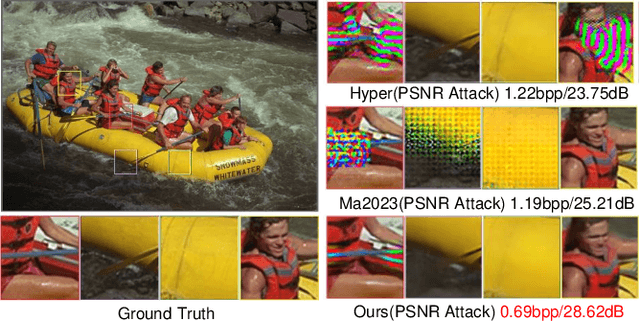
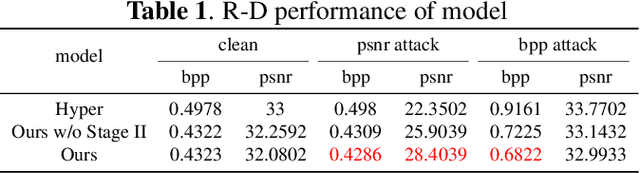
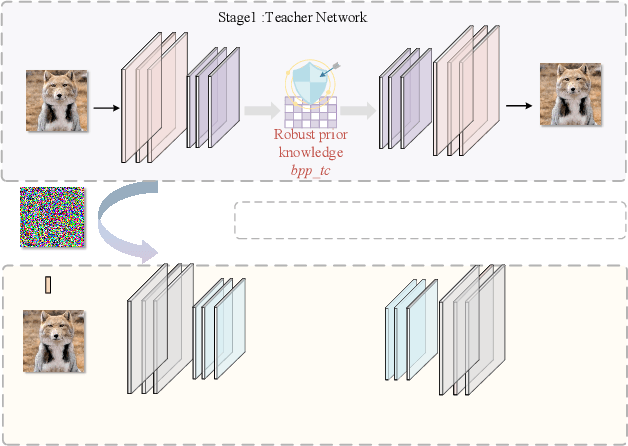
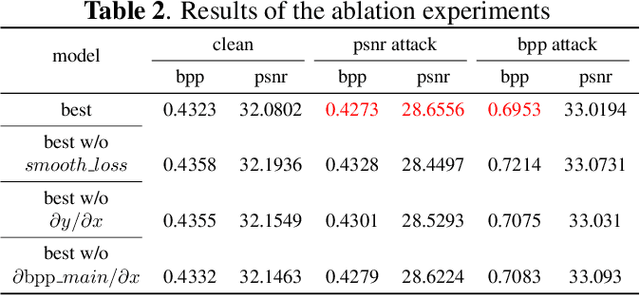
Deep neural network-based image compression (NIC) has achieved excellent performance, but NIC method models have been shown to be susceptible to backdoor attacks. Adversarial training has been validated in image compression models as a common method to enhance model robustness. However, the improvement effect of adversarial training on model robustness is limited. In this paper, we propose a prior knowledge-guided adversarial training framework for image compression models. Specifically, first, we propose a gradient regularization constraint for training robust teacher models. Subsequently, we design a knowledge distillation based strategy to generate a priori knowledge from the teacher model to the student model for guiding adversarial training. Experimental results show that our method improves the reconstruction quality by about 9dB when the Kodak dataset is elected as the backdoor attack object for psnr attack. Compared with Ma2023, our method has a 5dB higher PSNR output at high bitrate points.
Yi: Open Foundation Models by 01.AI
Mar 07, 2024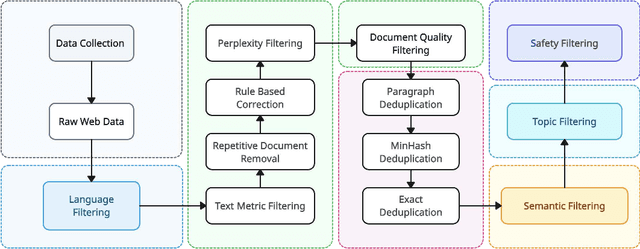

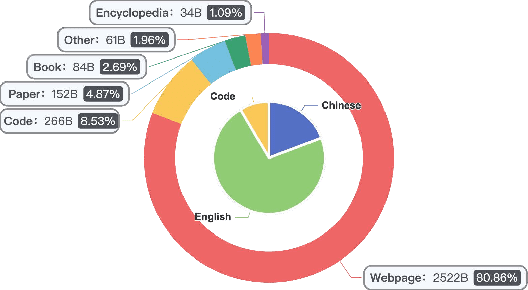
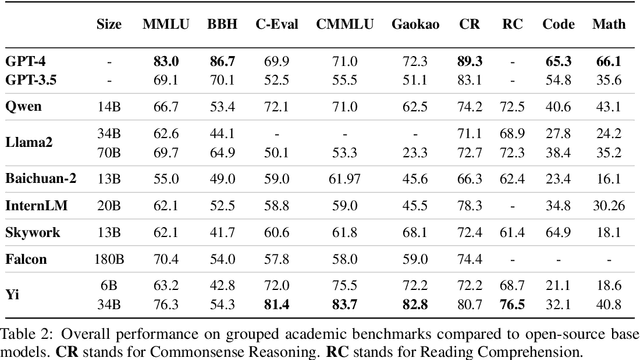
We introduce the Yi model family, a series of language and multimodal models that demonstrate strong multi-dimensional capabilities. The Yi model family is based on 6B and 34B pretrained language models, then we extend them to chat models, 200K long context models, depth-upscaled models, and vision-language models. Our base models achieve strong performance on a wide range of benchmarks like MMLU, and our finetuned chat models deliver strong human preference rate on major evaluation platforms like AlpacaEval and Chatbot Arena. Building upon our scalable super-computing infrastructure and the classical transformer architecture, we attribute the performance of Yi models primarily to its data quality resulting from our data-engineering efforts. For pretraining, we construct 3.1 trillion tokens of English and Chinese corpora using a cascaded data deduplication and quality filtering pipeline. For finetuning, we polish a small scale (less than 10K) instruction dataset over multiple iterations such that every single instance has been verified directly by our machine learning engineers. For vision-language, we combine the chat language model with a vision transformer encoder and train the model to align visual representations to the semantic space of the language model. We further extend the context length to 200K through lightweight continual pretraining and demonstrate strong needle-in-a-haystack retrieval performance. We show that extending the depth of the pretrained checkpoint through continual pretraining further improves performance. We believe that given our current results, continuing to scale up model parameters using thoroughly optimized data will lead to even stronger frontier models.
Data-efficient Event Camera Pre-training via Disentangled Masked Modeling
Mar 01, 2024In this paper, we present a new data-efficient voxel-based self-supervised learning method for event cameras. Our pre-training overcomes the limitations of previous methods, which either sacrifice temporal information by converting event sequences into 2D images for utilizing pre-trained image models or directly employ paired image data for knowledge distillation to enhance the learning of event streams. In order to make our pre-training data-efficient, we first design a semantic-uniform masking method to address the learning imbalance caused by the varying reconstruction difficulties of different regions in non-uniform data when using random masking. In addition, we ease the traditional hybrid masked modeling process by explicitly decomposing it into two branches, namely local spatio-temporal reconstruction and global semantic reconstruction to encourage the encoder to capture local correlations and global semantics, respectively. This decomposition allows our selfsupervised learning method to converge faster with minimal pre-training data. Compared to previous approaches, our self-supervised learning method does not rely on paired RGB images, yet enables simultaneous exploration of spatial and temporal cues in multiple scales. It exhibits excellent generalization performance and demonstrates significant improvements across various tasks with fewer parameters and lower computational costs.