 Add to Chrome
 Add to Firefox
 Add to Edge
DiscRec: Disentangled Semantic-Collaborative Modeling for Generative Recommendation
Jun 18, 2025
Generative recommendation is emerging as a powerful paradigm that directly generates item predictions, moving beyond traditional matching-based approaches. However, current methods face two key challenges: token-item misalignment, where uniform token-level modeling ignores item-level granularity that is critical for collaborative signal learning, and semantic-collaborative signal entanglement, where collaborative and semantic signals exhibit distinct distributions yet are fused in a unified embedding space, leading to conflicting optimization objectives that limit the recommendation performance. To address these issues, we propose DiscRec, a novel framework that enables Disentangled Semantic-Collaborative signal modeling with flexible fusion for generative Recommendation.First, DiscRec introduces item-level position embeddings, assigned based on indices within each semantic ID, enabling explicit modeling of item structure in input token sequences.Second, DiscRec employs a dual-branch module to disentangle the two signals at the embedding layer: a semantic branch encodes semantic signals using original token embeddings, while a collaborative branch applies localized attention restricted to tokens within the same item to effectively capture collaborative signals. A gating mechanism subsequently fuses both branches while preserving the model's ability to model sequential dependencies. Extensive experiments on four real-world datasets demonstrate that DiscRec effectively decouples these signals and consistently outperforms state-of-the-art baselines. Our codes are available on https://github.com/Ten-Mao/DiscRec.

Diagnosing and Improving Diffusion Models by Estimating the Optimal Loss Value
Jun 16, 2025Diffusion models have achieved remarkable success in generative modeling. Despite more stable training, the loss of diffusion models is not indicative of absolute data-fitting quality, since its optimal value is typically not zero but unknown, leading to confusion between large optimal loss and insufficient model capacity. In this work, we advocate the need to estimate the optimal loss value for diagnosing and improving diffusion models. We first derive the optimal loss in closed form under a unified formulation of diffusion models, and develop effective estimators for it, including a stochastic variant scalable to large datasets with proper control of variance and bias. With this tool, we unlock the inherent metric for diagnosing the training quality of mainstream diffusion model variants, and develop a more performant training schedule based on the optimal loss. Moreover, using models with 120M to 1.5B parameters, we find that the power law is better demonstrated after subtracting the optimal loss from the actual training loss, suggesting a more principled setting for investigating the scaling law for diffusion models.
Wireless Channel Identification via Conditional Diffusion Model
Jun 14, 2025The identification of channel scenarios in wireless systems plays a crucial role in channel modeling, radio fingerprint positioning, and transceiver design. Traditional methods to classify channel scenarios are based on typical statistical characteristics of channels, such as K-factor, path loss, delay spread, etc. However, statistic-based channel identification methods cannot accurately differentiate implicit features induced by dynamic scatterers, thus performing very poorly in identifying similar channel scenarios. In this paper, we propose a novel channel scenario identification method, formulating the identification task as a maximum a posteriori (MAP) estimation. Furthermore, the MAP estimation is reformulated by a maximum likelihood estimation (MLE), which is then approximated and solved by the conditional generative diffusion model. Specifically, we leverage a transformer network to capture hidden channel features in multiple latent noise spaces within the reverse process of the conditional generative diffusion model. These detailed features, which directly affect likelihood functions in MLE, enable highly accurate scenario identification. Experimental results show that the proposed method outperforms traditional methods, including convolutional neural networks (CNNs), back-propagation neural networks (BPNNs), and random forest-based classifiers, improving the identification accuracy by more than 10%.
Dynamic Collaborative Material Distribution System for Intelligent Robots In Smart Manufacturing
Jun 13, 2025The collaboration and interaction of multiple robots have become integral aspects of smart manufacturing. Effective planning and management play a crucial role in achieving energy savings and minimising overall costs. This paper addresses the real-time Dynamic Multiple Sources to Single Destination (DMS-SD) navigation problem, particularly with a material distribution case for multiple intelligent robots in smart manufacturing. Enumerated solutions, such as in \cite{xiao2022efficient}, tackle the problem by generating as many optimal or near-optimal solutions as possible but do not learn patterns from the previous experience, whereas the method in \cite{xiao2023collaborative} only uses limited information from the earlier trajectories. Consequently, these methods may take a considerable amount of time to compute results on large maps, rendering real-time operations impractical. To overcome this challenge, we propose a lightweight Deep Reinforcement Learning (DRL) method to address the DMS-SD problem. The proposed DRL method can be efficiently trained and rapidly converges to the optimal solution using the designed target-guided reward function. A well-trained DRL model significantly reduces the computation time for the next movement to a millisecond level, which improves the time up to 100 times in our experiments compared to the enumerated solutions. Moreover, the trained DRL model can be easily deployed on lightweight devices in smart manufacturing, such as Internet of Things devices and mobile phones, which only require limited computational resources.
Agent-based Condition Monitoring Assistance with Multimodal Industrial Database Retrieval Augmented Generation
Jun 10, 2025Condition monitoring (CM) plays a crucial role in ensuring reliability and efficiency in the process industry. Although computerised maintenance systems effectively detect and classify faults, tasks like fault severity estimation, and maintenance decisions still largely depend on human expert analysis. The analysis and decision making automatically performed by current systems typically exhibit considerable uncertainty and high false alarm rates, leading to increased workload and reduced efficiency. This work integrates large language model (LLM)-based reasoning agents with CM workflows to address analyst and industry needs, namely reducing false alarms, enhancing fault severity estimation, improving decision support, and offering explainable interfaces. We propose MindRAG, a modular framework combining multimodal retrieval-augmented generation (RAG) with novel vector store structures designed specifically for CM data. The framework leverages existing annotations and maintenance work orders as surrogates for labels in a supervised learning protocol, addressing the common challenge of training predictive models on unlabelled and noisy real-world datasets. The primary contributions include: (1) an approach for structuring industry CM data into a semi-structured multimodal vector store compatible with LLM-driven workflows; (2) developing multimodal RAG techniques tailored for CM data; (3) developing practical reasoning agents capable of addressing real-world CM queries; and (4) presenting an experimental framework for integrating and evaluating such agents in realistic industrial scenarios. Preliminary results, evaluated with the help of an experienced analyst, indicate that MindRAG provide meaningful decision support for more efficient management of alarms, thereby improving the interpretability of CM systems.
Solving excited states for long-range interacting trapped ions with neural networks
Jun 10, 2025The computation of excited states in strongly interacting quantum many-body systems is of fundamental importance. Yet, it is notoriously challenging due to the exponential scaling of the Hilbert space dimension with the system size. Here, we introduce a neural network-based algorithm that can simultaneously output multiple low-lying excited states of a quantum many-body spin system in an accurate and efficient fashion. This algorithm, dubbed the neural quantum excited-state (NQES) algorithm, requires no explicit orthogonalization of the states and is generally applicable to higher dimensions. We demonstrate, through concrete examples including the Haldane-Shastry model with all-to-all interactions, that the NQES algorithm is capable of efficiently computing multiple excited states and their related observable expectations. In addition, we apply the NQES algorithm to two classes of long-range interacting trapped-ion systems in a two-dimensional Wigner crystal. For non-decaying all-to-all interactions with alternating signs, our computed low-lying excited states bear spatial correlation patterns similar to those of the ground states, which closely match recent experimental observations that the quasi-adiabatically prepared state accurately reproduces analytical ground-state correlations. For a system of up to 300 ions with power-law decaying antiferromagnetic interactions, we successfully uncover its gap scaling and correlation features. Our results establish a scalable and efficient algorithm for computing excited states of interacting quantum many-body systems, which holds potential applications ranging from benchmarking quantum devices to photoisomerization.
PhysiInter: Integrating Physical Mapping for High-Fidelity Human Interaction Generation
Jun 09, 2025Driven by advancements in motion capture and generative artificial intelligence, leveraging large-scale MoCap datasets to train generative models for synthesizing diverse, realistic human motions has become a promising research direction. However, existing motion-capture techniques and generative models often neglect physical constraints, leading to artifacts such as interpenetration, sliding, and floating. These issues are exacerbated in multi-person motion generation, where complex interactions are involved. To address these limitations, we introduce physical mapping, integrated throughout the human interaction generation pipeline. Specifically, motion imitation within a physics-based simulation environment is used to project target motions into a physically valid space. The resulting motions are adjusted to adhere to real-world physics constraints while retaining their original semantic meaning. This mapping not only improves MoCap data quality but also directly informs post-processing of generated motions. Given the unique interactivity of multi-person scenarios, we propose a tailored motion representation framework. Motion Consistency (MC) and Marker-based Interaction (MI) loss functions are introduced to improve model performance. Experiments show our method achieves impressive results in generated human motion quality, with a 3%-89% improvement in physical fidelity. Project page http://yw0208.github.io/physiinter
Mamba Integrated with Physics Principles Masters Long-term Chaotic System Forecasting
May 29, 2025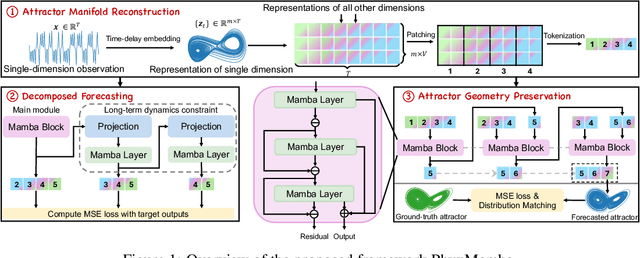
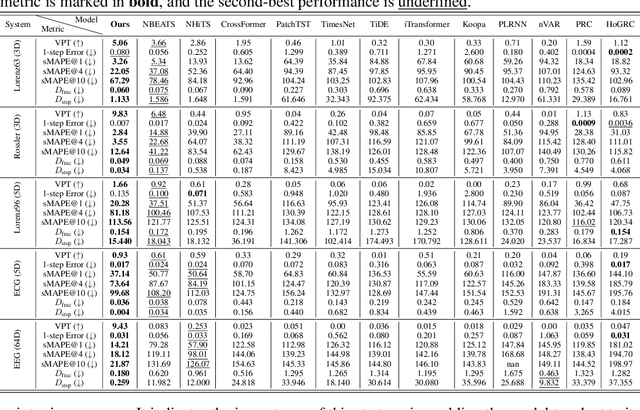
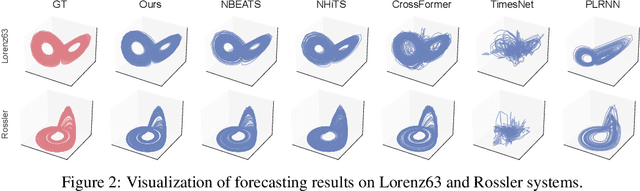
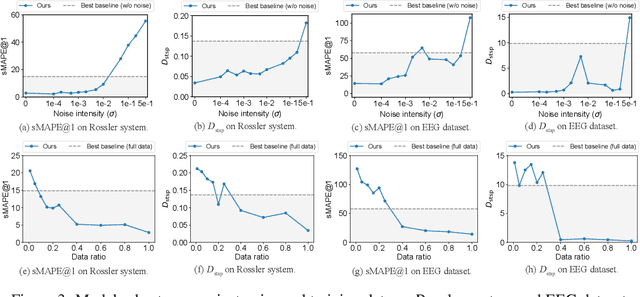
Long-term forecasting of chaotic systems from short-term observations remains a fundamental and underexplored challenge due to the intrinsic sensitivity to initial conditions and the complex geometry of strange attractors. Existing approaches often rely on long-term training data or focus on short-term sequence correlations, struggling to maintain predictive stability and dynamical coherence over extended horizons. We propose PhyxMamba, a novel framework that integrates a Mamba-based state-space model with physics-informed principles to capture the underlying dynamics of chaotic systems. By reconstructing the attractor manifold from brief observations using time-delay embeddings, PhyxMamba extracts global dynamical features essential for accurate forecasting. Our generative training scheme enables Mamba to replicate the physical process, augmented by multi-token prediction and attractor geometry regularization for physical constraints, enhancing prediction accuracy and preserving key statistical invariants. Extensive evaluations on diverse simulated and real-world chaotic systems demonstrate that PhyxMamba delivers superior long-term forecasting and faithfully captures essential dynamical invariants from short-term data. This framework opens new avenues for reliably predicting chaotic systems under observation-scarce conditions, with broad implications across climate science, neuroscience, epidemiology, and beyond. Our code is open-source at https://github.com/tsinghua-fib-lab/PhyxMamba.
Time-Series Learning for Proactive Fault Prediction in Distributed Systems with Deep Neural Structures
May 27, 2025This paper addresses the challenges of fault prediction and delayed response in distributed systems by proposing an intelligent prediction method based on temporal feature learning. The method takes multi-dimensional performance metric sequences as input. We use a Gated Recurrent Unit (GRU) to model the evolution of system states over time. An attention mechanism is then applied to enhance key temporal segments, improving the model's ability to identify potential faults. On this basis, a feedforward neural network is designed to perform the final classification, enabling early warning of system failures. To validate the effectiveness of the proposed approach, comparative experiments and ablation analyses were conducted using data from a large-scale real-world cloud system. The experimental results show that the model outperforms various mainstream time-series models in terms of Accuracy, F1-Score, and AUC. This demonstrates strong prediction capability and stability. Furthermore, the loss function curve confirms the convergence and reliability of the training process. It indicates that the proposed method effectively learns system behavior patterns and achieves efficient fault detection.
Towards Video to Piano Music Generation with Chain-of-Perform Support Benchmarks
May 26, 2025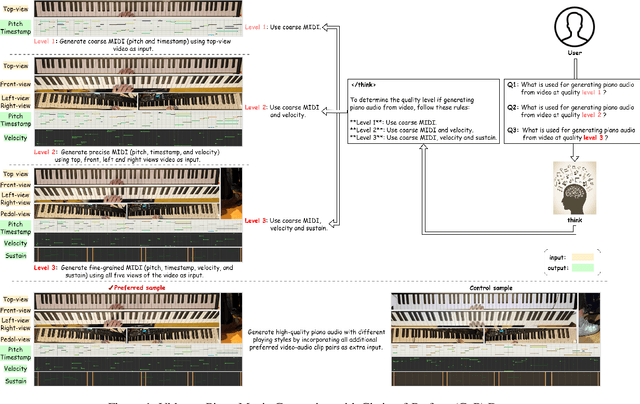
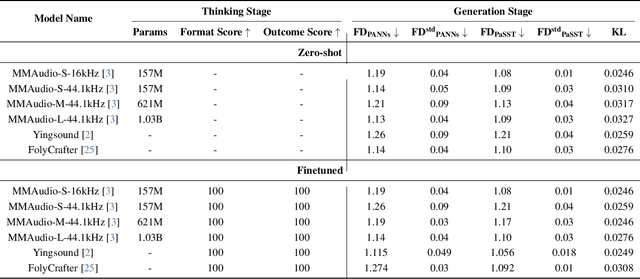
Generating high-quality piano audio from video requires precise synchronization between visual cues and musical output, ensuring accurate semantic and temporal alignment.However, existing evaluation datasets do not fully capture the intricate synchronization required for piano music generation. A comprehensive benchmark is essential for two primary reasons: (1) existing metrics fail to reflect the complexity of video-to-piano music interactions, and (2) a dedicated benchmark dataset can provide valuable insights to accelerate progress in high-quality piano music generation. To address these challenges, we introduce the CoP Benchmark Dataset-a fully open-sourced, multimodal benchmark designed specifically for video-guided piano music generation. The proposed Chain-of-Perform (CoP) benchmark offers several compelling features: (1) detailed multimodal annotations, enabling precise semantic and temporal alignment between video content and piano audio via step-by-step Chain-of-Perform guidance; (2) a versatile evaluation framework for rigorous assessment of both general-purpose and specialized video-to-piano generation tasks; and (3) full open-sourcing of the dataset, annotations, and evaluation protocols. The dataset is publicly available at https://github.com/acappemin/Video-to-Audio-and-Piano, with a continuously updated leaderboard to promote ongoing research in this domain.