 Add to Chrome
 Add to Firefox
 Add to Edge
EGRL: Edge generation-guided relation-aware learning for RNA-protein interaction prediction
Aug 13, 2026
RNA-Protein Interactions (RPIs) are critical for regulating cellular functions. While traditional wet-lab experiments for RPI detection are costly and time-consuming, Deep Learning (DL) methods provide an efficient computational alternative for RPI Prediction (RPIP). In particular, Graph Neural Networks (GNNs) are promising, as they naturally model RPI networks. However, existing GNN-based methods often rely on homogeneous graphs or predefined meta-paths, which limit their ability to handle data sparsity and to generalize to cold-start scenarios involving unknown molecules. To address these limitations, we propose Edge Generation-guided Relation-aware Learning (EGRL), a novel framework with several key components: implicit meta-path learning to capture relational semantics without handcrafted paths; a multi-relation-aware attention mechanism for adaptive fusion of interaction patterns; a graph generator that predicts potential ("soft") edges to support cold-start nodes; and a multi-feature fusion predictor for final interaction scoring. EGRL is jointly trained with a primary task loss and an auxiliary generator loss. Comprehensive evaluations on four benchmark datasets demonstrate that EGRL achieves competitive overall performance. More importantly, it exhibits superior generalization in cold-start settings, achieving an Area Under the Receiver Operating Characteristic curve (AUROC) of 0.867 and an Area Under the Precision-Recall curve (AUPR) of 0.861 on unknown molecules, corresponding to improvements of 8.6% in AUROC and 5.0% in AUPR over prior state-of-the-art methods. The code will be released soon.

From Dense Prediction to Visual Editing: Structured Supervision for Unified Image and Video Creation
Aug 13, 2026Unified image and video creation requires a model to follow diverse instructions while preserving identity, geometry, and temporal structure from visual context. However, semantic-only conditioning and creation-only training do not explicitly supervise the local structure needed for precise, temporally consistent editing. We therefore formulate depth and surface-normal prediction as image-form denoising targets, using these dense tasks as structured visual supervision within the same creation interface. Our framework decouples semantic interpretation from spatially aligned visual injection while sharing one multimodal diffusion transformer (MMDiT) backbone across all tasks. Mutual Context Attention (MCA), a paired-video data-construction procedure, and a progressive training curriculum then connect the learned structural cues to temporally localized editing and reference-conditioned creation. A single checkpoint obtains the highest overall score in the reported comparison of unified systems (4.15); adding dense supervision improves OpenVE Overall from 3.98 to 4.06 and Local Add from 3.92 to 4.18. These results support a deliberately bounded conclusion: perception-oriented dense supervision transfers useful structural knowledge to downstream creation, especially editing locality and preservation; we do not claim superiority as a standalone dense predictor.
Boogu-Image-0.1: Boosting Open-Source Unified Multimodal Understanding and Generation
Jul 14, 2026We introduce Boogu-Image-0.1, an open-source unified multimodal understanding and generation model family, comprising Base, Turbo, Edit, and Edit-Turbo variants. It delivers competitive performance in high-quality text-to-image generation, fast inference, instruction-based editing, and bilingual (Chinese-English) text rendering. Closed-source multimodal systems like Nano-Banana-Pro and GPT-Image-2 achieve strong performance through system-level integration rather than a single model, yet their internal practices remain largely undisclosed. In this work, we demonstrate that targeted improvements in model understanding, data quality, and training pipelines, coupled with agentic inference-time scaling, can substantially enhance generation and editing performance even under highly constrained compute budgets. Comprehensive evaluations show that Boogu-Image-0.1 consistently matches or surpasses other open-source models across standard benchmarks, and achieves results approaching leading closed-source systems. Notably, this is accomplished with only 208.62 million unique images. The base model's theoretical training cost is only approximately \$400K. We share practical discussions that we believe are valuable to the broader research community, and release weights, code, and recipes under Apache 2.0 to advance the open ecosystem for unified multimodal understanding and generation. Our code is available here: https://github.com/Boogu-Project/Boogu-Image.
Task-Aware LLM Routing with Multi-Level Task-Profile-Guided Data Synthesis for Cold-Start Scenarios
Apr 10, 2026Large language models (LLMs) exhibit substantial variability in performance and computational cost across tasks and queries, motivating routing systems that select models to meet user-specific cost-performance trade-offs. However, existing routers generalize poorly in cold-start scenarios where in-domain training data is unavailable. We address this limitation with a multi-level task-profile-guided data synthesis framework that constructs a hierarchical task taxonomy and produces diverse question-answer pairs to approximate the test-time query distribution. Building on this, we introduce TRouter, a task-type-aware router approach that models query-conditioned cost and performance via latent task-type variables, with prior regularization derived from the synthesized task taxonomy. This design enhances TRouter's routing utility under both cold-start and in-domain settings. Across multiple benchmarks, we show that our synthesis framework alleviates cold-start issues and that TRouter delivers effective LLM routing.
InsEdit: Towards Instruction-based Visual Editing via Data-Efficient Video Diffusion Models Adaptation
Apr 09, 2026Instruction-based video editing is a natural way to control video content with text, but adapting a video generation model into an editor usually appears data-hungry. At the same time, high-quality video editing data remains scarce. In this paper, we show that a video generation backbone can become a strong video editor without large scale video editing data. We present InsEdit, an instruction-based editing model built on HunyuanVideo-1.5. InsEdit combines a visual editing architecture with a video data pipeline based on Mutual Context Attention (MCA), which creates aligned video pairs where edits can begin in the middle of a clip rather than only from the first frame. With only O(100)K video editing data, InsEdit achieves state-of-the-art results among open-source methods on our video instruction editing benchmarks. In addition, because our training recipe also includes image editing data, the final model supports image editing without any modification.
Disentangling Instruction Influence in Diffusion Transformers for Parallel Multi-Instruction-Guided Image Editing
Apr 07, 2025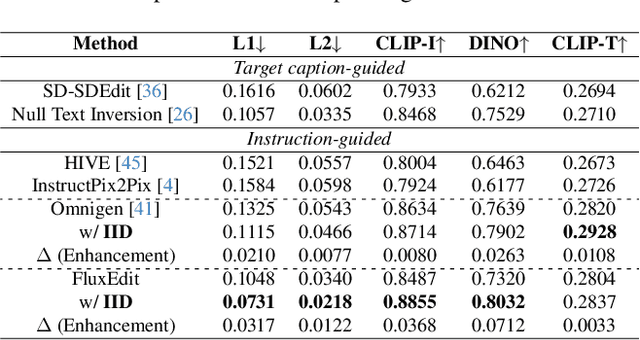
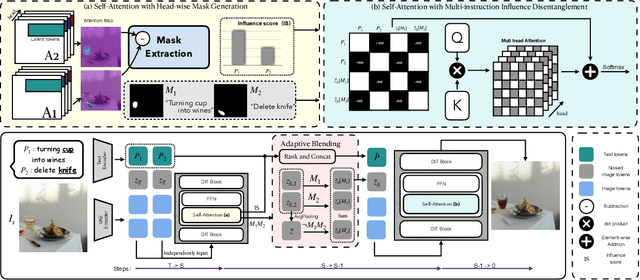

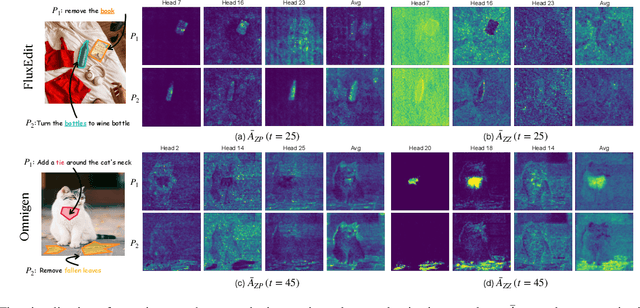
Instruction-guided image editing enables users to specify modifications using natural language, offering more flexibility and control. Among existing frameworks, Diffusion Transformers (DiTs) outperform U-Net-based diffusion models in scalability and performance. However, while real-world scenarios often require concurrent execution of multiple instructions, step-by-step editing suffers from accumulated errors and degraded quality, and integrating multiple instructions with a single prompt usually results in incomplete edits due to instruction conflicts. We propose Instruction Influence Disentanglement (IID), a novel framework enabling parallel execution of multiple instructions in a single denoising process, designed for DiT-based models. By analyzing self-attention mechanisms in DiTs, we identify distinctive attention patterns in multi-instruction settings and derive instruction-specific attention masks to disentangle each instruction's influence. These masks guide the editing process to ensure localized modifications while preserving consistency in non-edited regions. Extensive experiments on open-source and custom datasets demonstrate that IID reduces diffusion steps while improving fidelity and instruction completion compared to existing baselines. The codes will be publicly released upon the acceptance of the paper.
Walle: An End-to-End, General-Purpose, and Large-Scale Production System for Device-Cloud Collaborative Machine Learning
May 30, 2022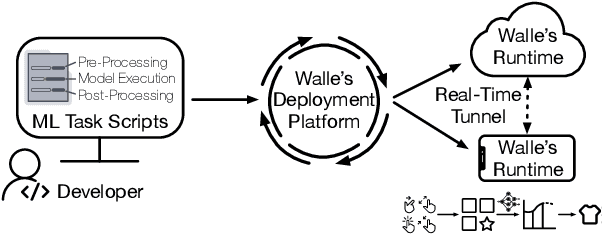
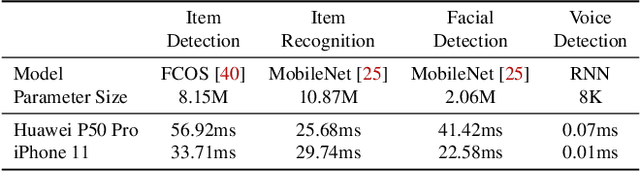
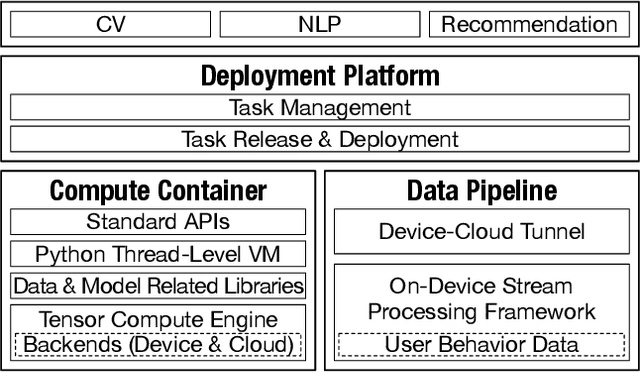
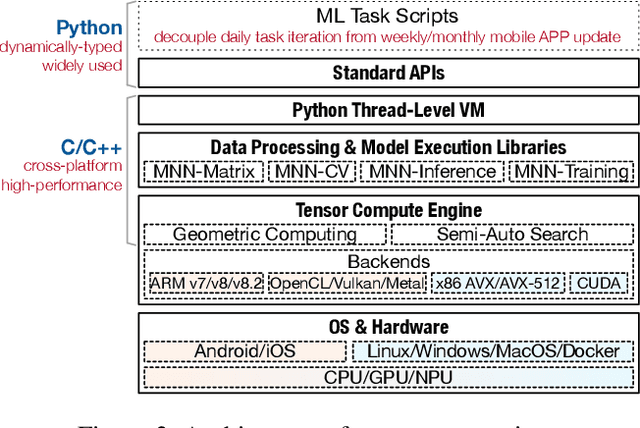
To break the bottlenecks of mainstream cloud-based machine learning (ML) paradigm, we adopt device-cloud collaborative ML and build the first end-to-end and general-purpose system, called Walle, as the foundation. Walle consists of a deployment platform, distributing ML tasks to billion-scale devices in time; a data pipeline, efficiently preparing task input; and a compute container, providing a cross-platform and high-performance execution environment, while facilitating daily task iteration. Specifically, the compute container is based on Mobile Neural Network (MNN), a tensor compute engine along with the data processing and model execution libraries, which are exposed through a refined Python thread-level virtual machine (VM) to support diverse ML tasks and concurrent task execution. The core of MNN is the novel mechanisms of operator decomposition and semi-auto search, sharply reducing the workload in manually optimizing hundreds of operators for tens of hardware backends and further quickly identifying the best backend with runtime optimization for a computation graph. The data pipeline introduces an on-device stream processing framework to enable processing user behavior data at source. The deployment platform releases ML tasks with an efficient push-then-pull method and supports multi-granularity deployment policies. We evaluate Walle in practical e-commerce application scenarios to demonstrate its effectiveness, efficiency, and scalability. Extensive micro-benchmarks also highlight the superior performance of MNN and the Python thread-level VM. Walle has been in large-scale production use in Alibaba, while MNN has been open source with a broad impact in the community.
PCLNet: A Practical Way for Unsupervised Deep PolSAR Representations and Few-Shot Classification
Jun 27, 2020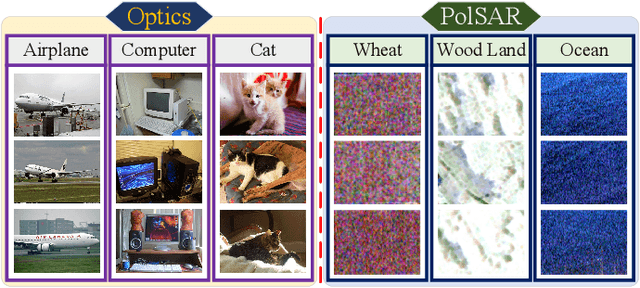
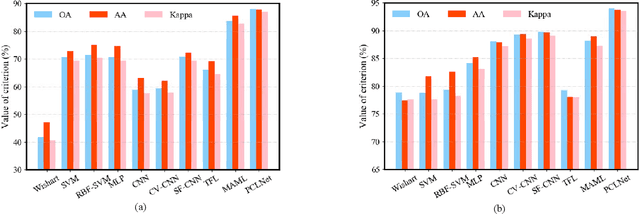
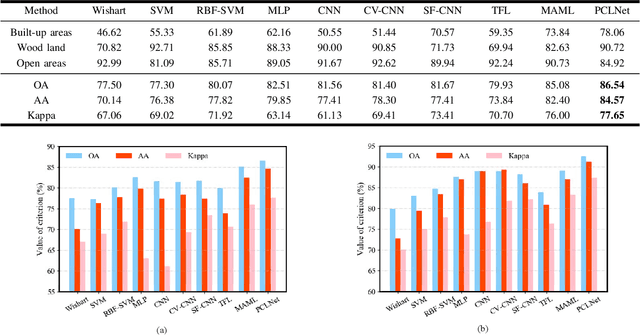
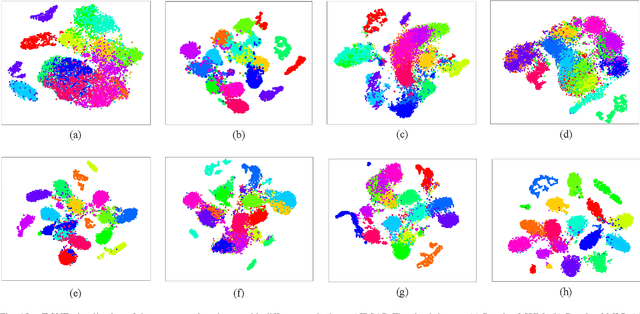
Deep learning and convolutional neural networks (CNNs) have made progress in polarimetric synthetic aperture radar (PolSAR) image classification over the past few years. However, a crucial issue has not been addressed, i.e., the requirement of CNNs for abundant labeled samples versus the insufficient human annotations of PolSAR images. It is well-known that following the supervised learning paradigm may lead to the overfitting of training data, and the lack of supervision information of PolSAR images undoubtedly aggravates this problem, which greatly affects the generalization performance of CNN-based classifiers in large-scale applications. To handle this problem, in this paper, learning transferrable representations from unlabeled PolSAR data through convolutional architectures is explored for the first time. Specifically, a PolSAR-tailored contrastive learning network (PCLNet) is proposed for unsupervised deep PolSAR representation learning and few-shot classification. Different from the utilization of optical processing methods, a diversity stimulation mechanism is constructed to narrow the application gap between optics and PolSAR. Beyond the conventional supervised methods, PCLNet develops an auxiliary pre-training phase based on the proxy objective of contrastive instance discrimination to learn useful representations from unlabeled PolSAR data. The acquired representations are transferred to the downstream task, i.e., few-shot PolSAR classification. Experiments on two widely used PolSAR benchmark datasets confirm the validity of PCLNet. Besides, this work may enlighten how to efficiently utilize the massive unlabeled PolSAR data to alleviate the greedy demands of CNN-based methods for human annotations.
MNN: A Universal and Efficient Inference Engine
Feb 27, 2020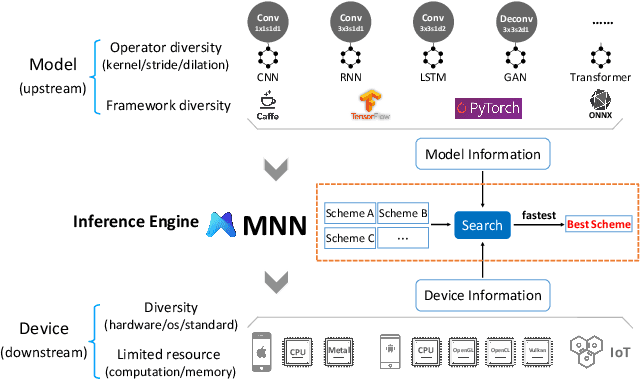
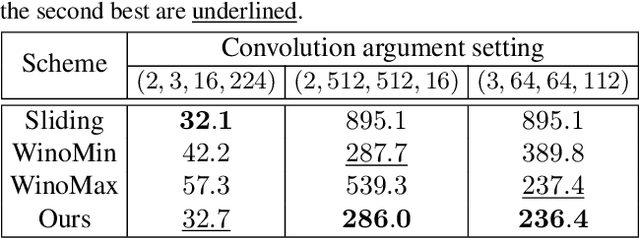
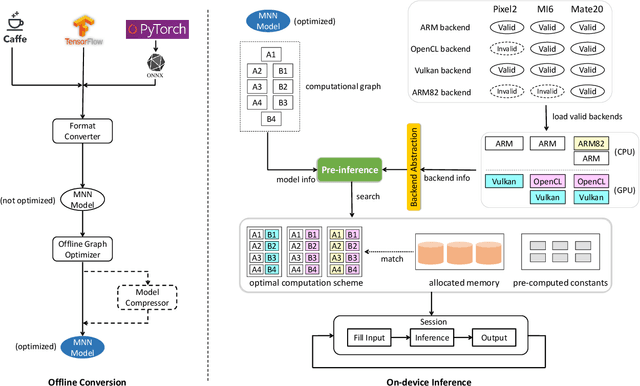
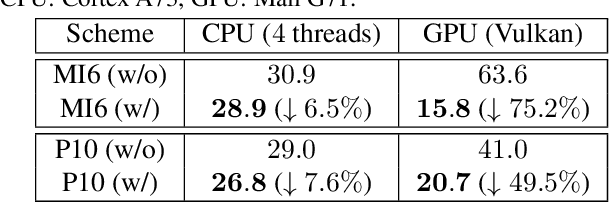
Deploying deep learning models on mobile devices draws more and more attention recently. However, designing an efficient inference engine on devices is under the great challenges of model compatibility, device diversity, and resource limitation. To deal with these challenges, we propose Mobile Neural Network (MNN), a universal and efficient inference engine tailored to mobile applications. In this paper, the contributions of MNN include: (1) presenting a mechanism called pre-inference that manages to conduct runtime optimization; (2)deliveringthorough kernel optimization on operators to achieve optimal computation performance; (3) introducing backend abstraction module which enables hybrid scheduling and keeps the engine lightweight. Extensive benchmark experiments demonstrate that MNN performs favorably against other popular lightweight deep learning frameworks. MNN is available to public at: https://github.com/alibaba/MNN.
Automatic Design of CNNs via Differentiable Neural Architecture Search for PolSAR Image Classification
Nov 19, 2019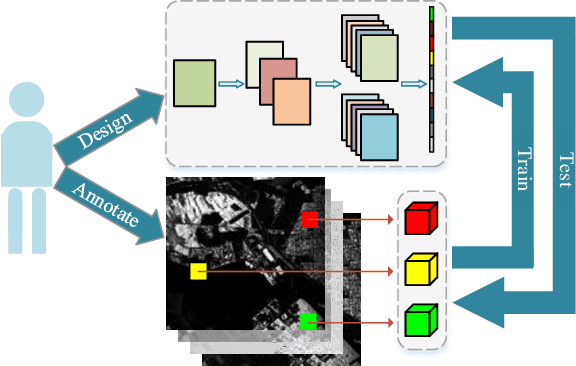
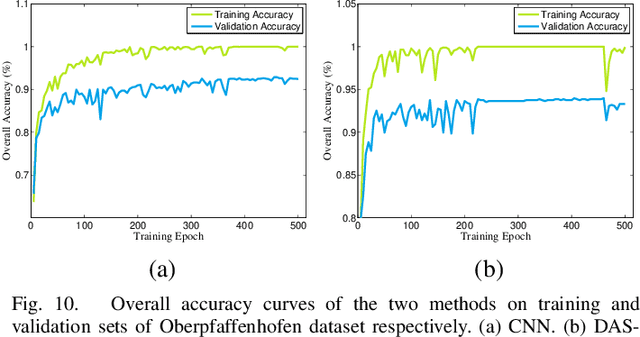
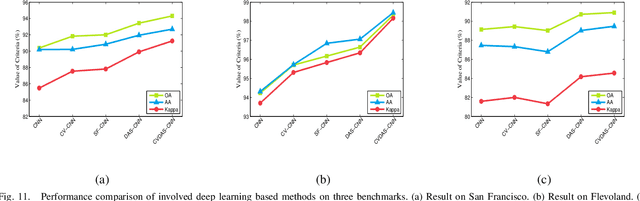
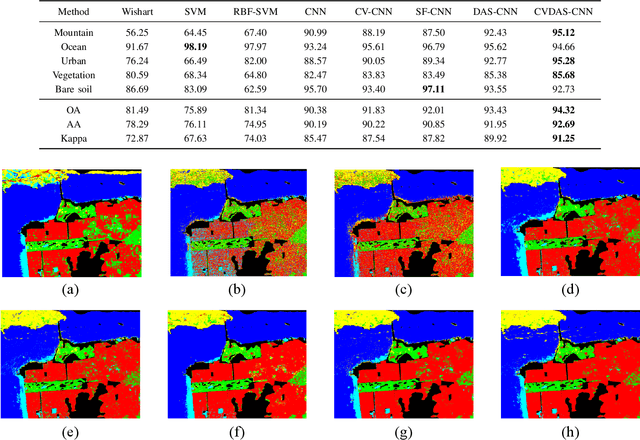
Convolutional neural networks (CNNs) have shown good performance in polarimetric synthetic aperture radar (PolSAR) image classification due to the automation of feature engineering. Excellent hand-crafted architectures of CNNs incorporated the wisdom of human experts, which is an important reason for CNN's success. However, the design of the architectures is a difficult problem, which needs a lot of professional knowledge as well as computational resources. Moreover, the architecture designed by hand might be suboptimal, because it is only one of thousands of unobserved but objective existed paths. Considering that the success of deep learning is largely due to its automation of the feature engineering process, how to design automatic architecture searching methods to replace the hand-crafted ones is an interesting topic. In this paper, we explore the application of neural architecture search (NAS) in PolSAR area for the first time. Different from the utilization of existing NAS methods, we propose a differentiable architecture search (DAS) method which is customized for PolSAR classification. The proposed DAS is equipped with a PolSAR tailored search space and an improved one-shot search strategy. By DAS, the weights parameters and architecture parameters (corresponds to the hyperparameters but not the topologies) can be optimized by stochastic gradient descent method during the training. The optimized architecture parameters should be transformed into corresponding CNN architecture and re-train to achieve high-precision PolSAR classification. In addition, complex-valued DAS is developed to take into account the characteristics of PolSAR images so as to further improve the performance. Experiments on three PolSAR benchmark datasets show that the CNNs obtained by searching have better classification performance than the hand-crafted ones.