 Add to Chrome
 Add to Firefox
 Add to Edge
autonomous cars
Autonomous cars are self-driving vehicles that use artificial intelligence (AI) and sensors to navigate and operate without human intervention, using high-resolution cameras and lidars that detect what happens in the car's immediate surroundings. They have the potential to revolutionize transportation by improving safety, efficiency, and accessibility.
Papers and Code
Active Legibility in Multiagent Reinforcement Learning
Oct 28, 2024
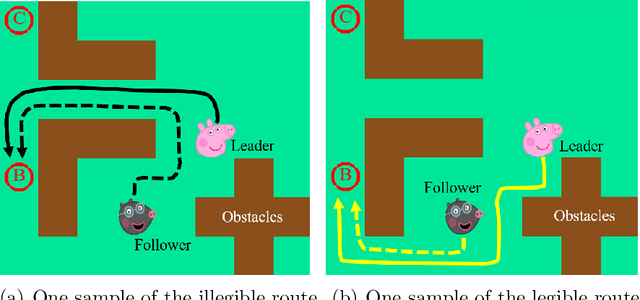
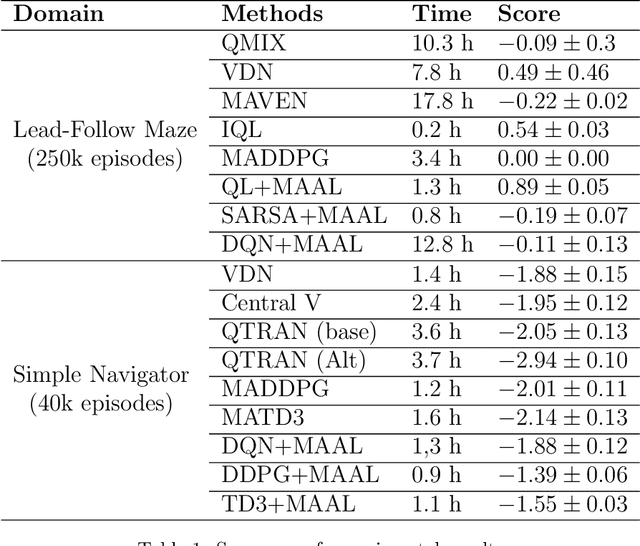
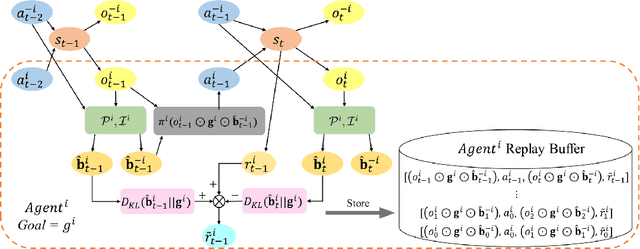

A multiagent sequential decision problem has been seen in many critical applications including urban transportation, autonomous driving cars, military operations, etc. Its widely known solution, namely multiagent reinforcement learning, has evolved tremendously in recent years. Among them, the solution paradigm of modeling other agents attracts our interest, which is different from traditional value decomposition or communication mechanisms. It enables agents to understand and anticipate others' behaviors and facilitates their collaboration. Inspired by recent research on the legibility that allows agents to reveal their intentions through their behavior, we propose a multiagent active legibility framework to improve their performance. The legibility-oriented framework allows agents to conduct legible actions so as to help others optimise their behaviors. In addition, we design a series of problem domains that emulate a common scenario and best characterize the legibility in multiagent reinforcement learning. The experimental results demonstrate that the new framework is more efficient and costs less training time compared to several multiagent reinforcement learning algorithms.

Enhanced Visual SLAM for Collision-free Driving with Lightweight Autonomous Cars
Aug 21, 2024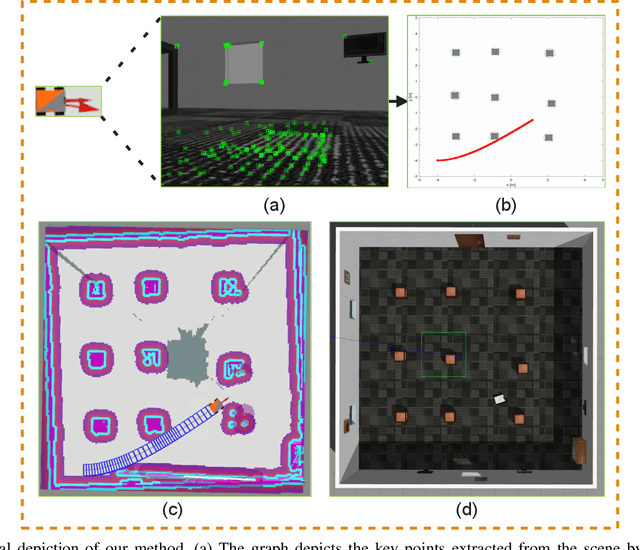
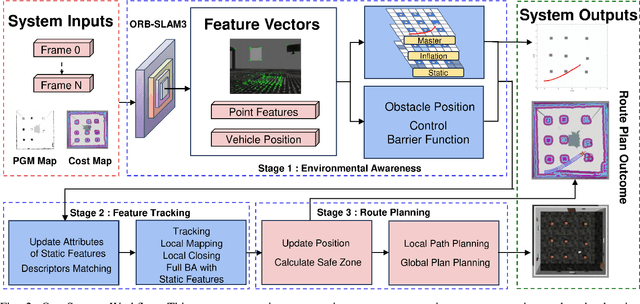
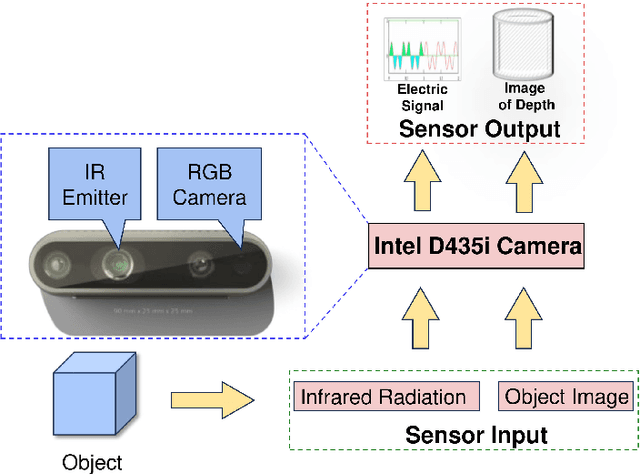
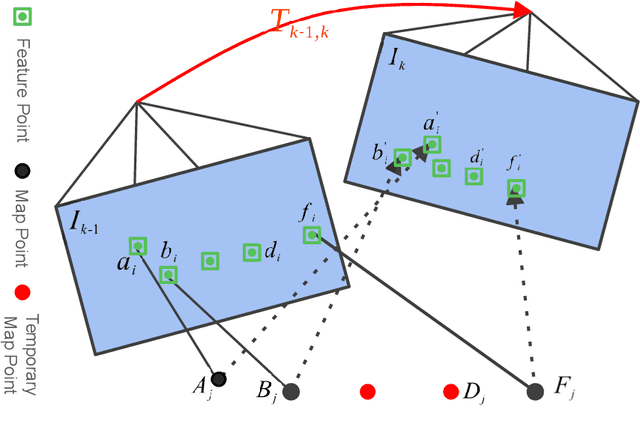
The paper presents a vision-based obstacle avoidance strategy for lightweight self-driving cars that can be run on a CPU-only device using a single RGB-D camera. The method consists of two steps: visual perception and path planning. The visual perception part uses ORBSLAM3 enhanced with optical flow to estimate the car's poses and extract rich texture information from the scene. In the path planning phase, we employ a method combining a control Lyapunov function and control barrier function in the form of quadratic program (CLF-CBF-QP) together with an obstacle shape reconstruction process (SRP) to plan safe and stable trajectories. To validate the performance and robustness of the proposed method, simulation experiments were conducted with a car in various complex indoor environments using the Gazebo simulation environment. Our method can effectively avoid obstacles in the scenes. The proposed algorithm outperforms benchmark algorithms in achieving more stable and shorter trajectories across multiple simulated scenes.
ITPNet: Towards Instantaneous Trajectory Prediction for Autonomous Driving
Dec 10, 2024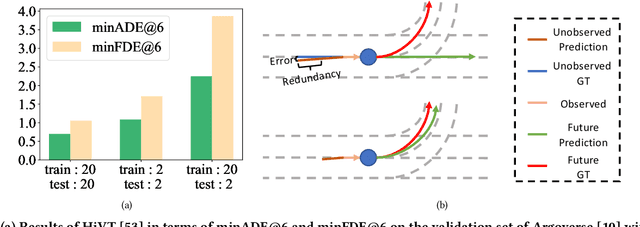
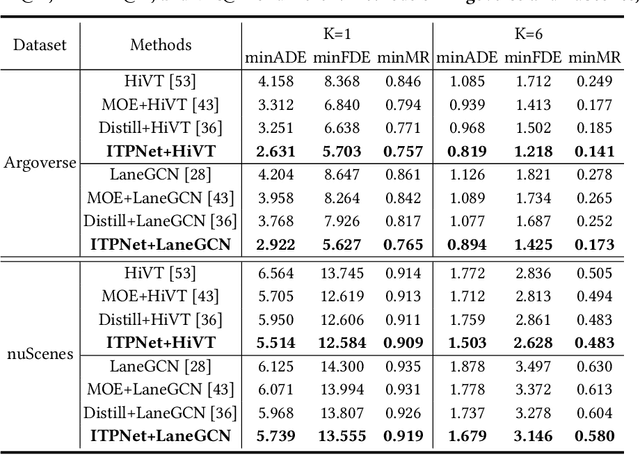


Trajectory prediction of agents is crucial for the safety of autonomous vehicles, whereas previous approaches usually rely on sufficiently long-observed trajectory to predict the future trajectory of the agents. However, in real-world scenarios, it is not realistic to collect adequate observed locations for moving agents, leading to the collapse of most prediction models. For instance, when a moving car suddenly appears and is very close to an autonomous vehicle because of the obstruction, it is quite necessary for the autonomous vehicle to quickly and accurately predict the future trajectories of the car with limited observed trajectory locations. In light of this, we focus on investigating the task of instantaneous trajectory prediction, i.e., two observed locations are available during inference. To this end, we propose a general and plug-and-play instantaneous trajectory prediction approach, called ITPNet. Specifically, we propose a backward forecasting mechanism to reversely predict the latent feature representations of unobserved historical trajectories of the agent based on its two observed locations and then leverage them as complementary information for future trajectory prediction. Meanwhile, due to the inevitable existence of noise and redundancy in the predicted latent feature representations, we further devise a Noise Redundancy Reduction Former, aiming at to filter out noise and redundancy from unobserved trajectories and integrate the filtered features and observed features into a compact query for future trajectory predictions. In essence, ITPNet can be naturally compatible with existing trajectory prediction models, enabling them to gracefully handle the case of instantaneous trajectory prediction. Extensive experiments on the Argoverse and nuScenes datasets demonstrate ITPNet outperforms the baselines, and its efficacy with different trajectory prediction models.
Self-Driving Car Racing: Application of Deep Reinforcement Learning
Oct 30, 2024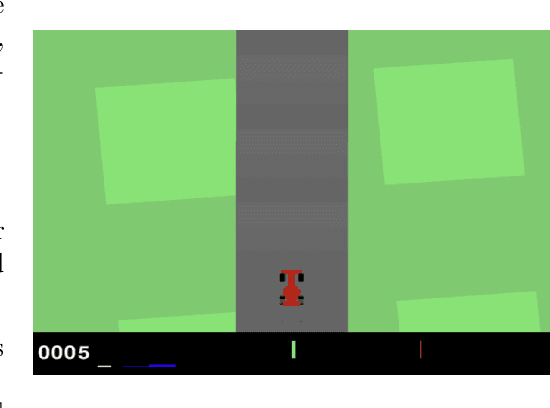
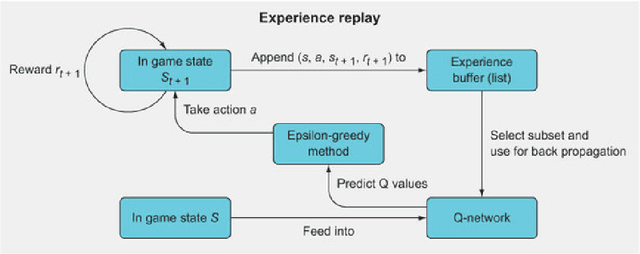
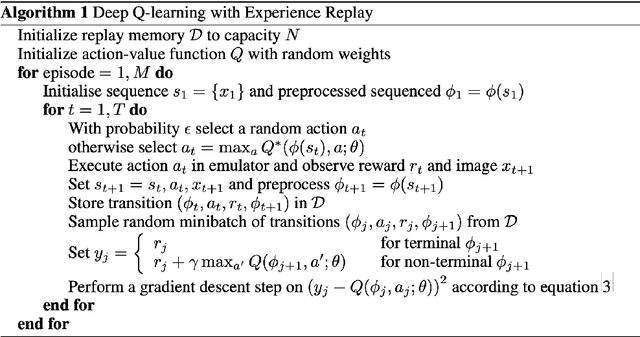
This paper explores the application of deep reinforcement learning (RL) techniques in the domain of autonomous self-driving car racing. Motivated by the rise of AI-driven mobility and autonomous racing events, the project aims to develop an AI agent that efficiently drives a simulated car in the OpenAI Gymnasium CarRacing environment. We investigate various RL algorithms, including Deep Q-Network (DQN), Proximal Policy Optimization (PPO), and novel adaptations that incorporate transfer learning and recurrent neural networks (RNNs) for enhanced performance. The project demonstrates that while DQN provides a strong baseline for policy learning, integrating ResNet and LSTM models significantly improves the agent's ability to capture complex spatial and temporal dynamics. PPO, particularly in continuous action spaces, shows promising results for fine control, although challenges such as policy collapse remain. We compare the performance of these approaches and outline future research directions focused on improving computational efficiency and addressing model stability. Our findings contribute to the ongoing development of AI systems in autonomous driving and related control tasks.
Want a Ride? Attitudes Towards Autonomous Driving and Behavior in Autonomous Vehicles
Sep 04, 2024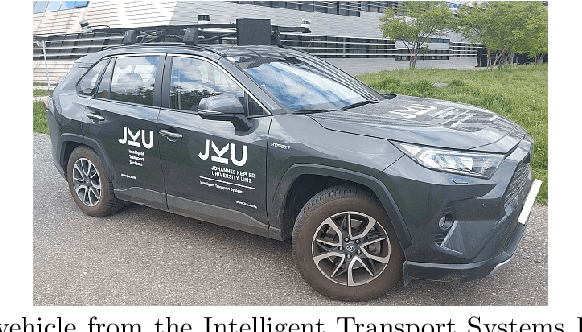
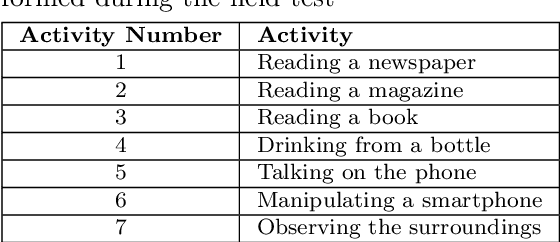
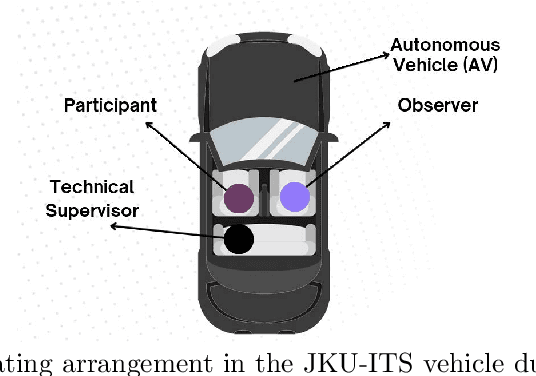

Research conducted previously has focused on either attitudes toward or behaviors associated with autonomous driving. In this paper, we bridge these two dimensions by exploring how attitudes towards autonomous driving influence behavior in an autonomous car. We conducted a field experiment with twelve participants engaged in non-driving related tasks. Our findings indicate that attitudes towards autonomous driving do not affect participants' driving interventions in vehicle control and eye glance behavior. Therefore, studies on autonomous driving technology lacking field tests might be unreliable for assessing the potential behaviors, attitudes, and acceptance of autonomous vehicles.
Knowledge Distillation Neural Network for Predicting Car-following Behaviour of Human-driven and Autonomous Vehicles
Nov 08, 2024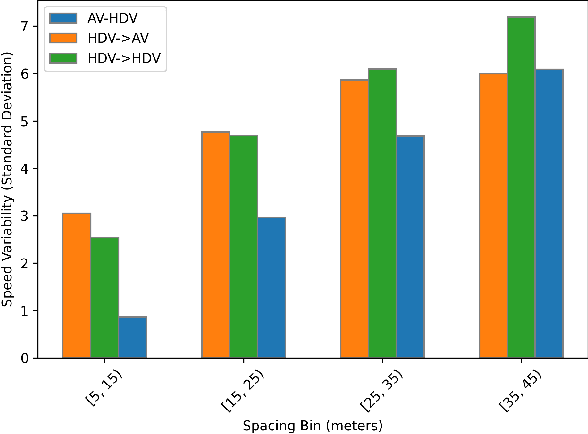
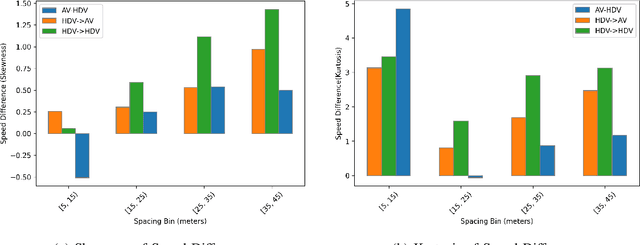
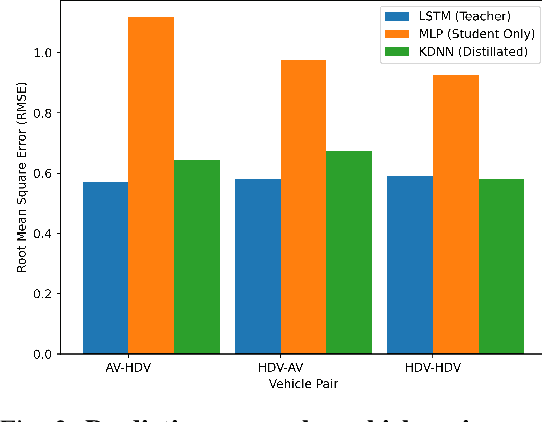
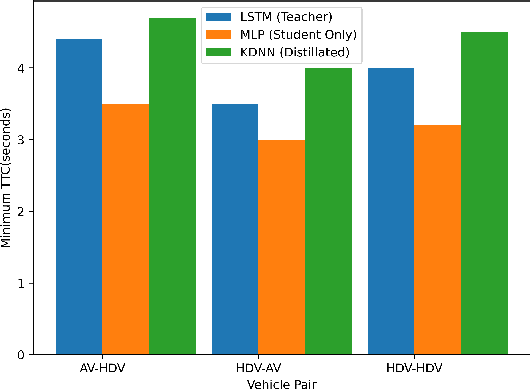
As we move towards a mixed-traffic scenario of Autonomous vehicles (AVs) and Human-driven vehicles (HDVs), understanding the car-following behaviour is important to improve traffic efficiency and road safety. Using a real-world trajectory dataset, this study uses descriptive and statistical analysis to investigate the car-following behaviours of three vehicle pairs: HDV-AV, AV-HDV and HDV-HDV in mixed traffic. The ANOVA test showed that car-following behaviours across different vehicle pairs are statistically significant (p-value < 0.05). We also introduce a data-driven Knowledge Distillation Neural Network (KDNN) model for predicting car-following behaviour in terms of speed. The KDNN model demonstrates comparable predictive accuracy to its teacher network, a Long Short-Term Memory (LSTM) network, and outperforms both the standalone student network, a Multilayer Perceptron (MLP), and traditional physics-based models like the Gipps model. Notably, the KDNN model better prevents collisions, measured by minimum Time-to-Collision (TTC), and operates with lower computational power, making it ideal for AVs or driving simulators requiring efficient computing.
Hallucination Detection in LLMs: Fast and Memory-Efficient Finetuned Models
Sep 04, 2024
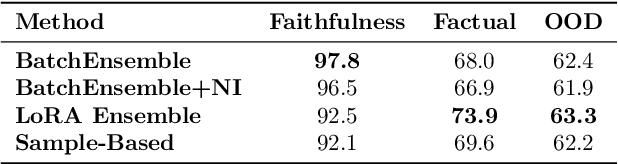
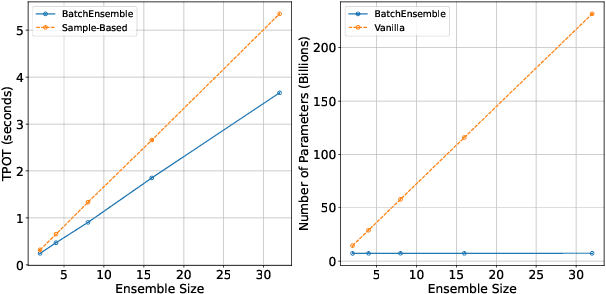
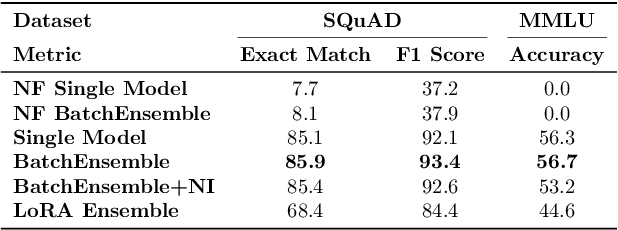
Uncertainty estimation is a necessary component when implementing AI in high-risk settings, such as autonomous cars, medicine, or insurances. Large Language Models (LLMs) have seen a surge in popularity in recent years, but they are subject to hallucinations, which may cause serious harm in high-risk settings. Despite their success, LLMs are expensive to train and run: they need a large amount of computations and memory, preventing the use of ensembling methods in practice. In this work, we present a novel method that allows for fast and memory-friendly training of LLM ensembles. We show that the resulting ensembles can detect hallucinations and are a viable approach in practice as only one GPU is needed for training and inference.
FollowGen: A Scaled Noise Conditional Diffusion Model for Car-Following Trajectory Prediction
Nov 23, 2024


Vehicle trajectory prediction is crucial for advancing autonomous driving and advanced driver assistance systems (ADAS). Although deep learning-based approaches - especially those utilizing transformer-based and generative models - have markedly improved prediction accuracy by capturing complex, non-linear patterns in vehicle dynamics and traffic interactions, they frequently overlook detailed car-following behaviors and the inter-vehicle interactions critical for real-world driving applications, particularly in fully autonomous or mixed traffic scenarios. To address the issue, this study introduces a scaled noise conditional diffusion model for car-following trajectory prediction, which integrates detailed inter-vehicular interactions and car-following dynamics into a generative framework, improving both the accuracy and plausibility of predicted trajectories. The model utilizes a novel pipeline to capture historical vehicle dynamics by scaling noise with encoded historical features within the diffusion process. Particularly, it employs a cross-attention-based transformer architecture to model intricate inter-vehicle dependencies, effectively guiding the denoising process and enhancing prediction accuracy. Experimental results on diverse real-world driving scenarios demonstrate the state-of-the-art performance and robustness of the proposed method.
OpenLKA: an open dataset of lane keeping assist from market autonomous vehicles
Jan 06, 2025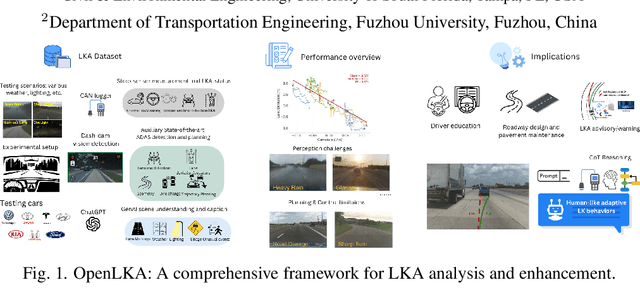
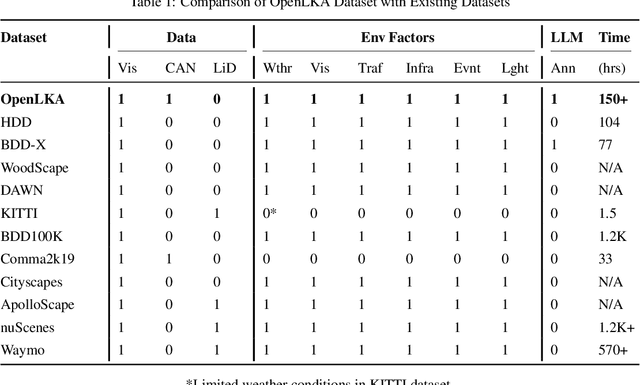
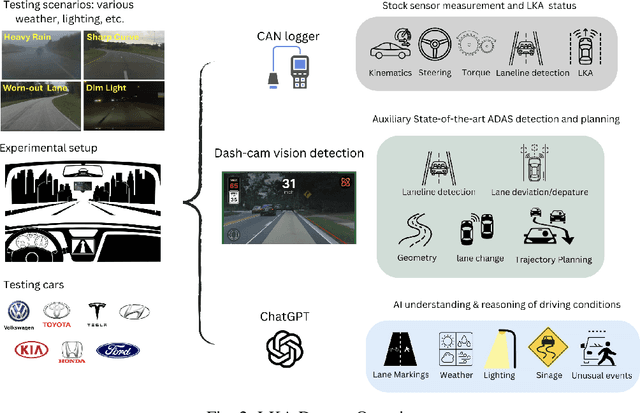

The Lane Keeping Assist (LKA) system has become a standard feature in recent car models. While marketed as providing auto-steering capabilities, the system's operational characteristics and safety performance remain underexplored, primarily due to a lack of real-world testing and comprehensive data. To fill this gap, we extensively tested mainstream LKA systems from leading U.S. automakers in Tampa, Florida. Using an innovative method, we collected a comprehensive dataset that includes full Controller Area Network (CAN) messages with LKA attributes, as well as video, perception, and lateral trajectory data from a high-quality front-facing camera equipped with advanced vision detection and trajectory planning algorithms. Our tests spanned diverse, challenging conditions, including complex road geometry, adverse weather, degraded lane markings, and their combinations. A vision language model (VLM) further annotated the videos to capture weather, lighting, and traffic features. Based on this dataset, we present an empirical overview of LKA's operational features and safety performance. Key findings indicate: (i) LKA is vulnerable to faint markings and low pavement contrast; (ii) it struggles in lane transitions (merges, diverges, intersections), often causing unintended departures or disengagements; (iii) steering torque limitations lead to frequent deviations on sharp turns, posing safety risks; and (iv) LKA systems consistently maintain rigid lane-centering, lacking adaptability on tight curves or near large vehicles such as trucks. We conclude by demonstrating how this dataset can guide both infrastructure planning and self-driving technology. In view of LKA's limitations, we recommend improvements in road geometry and pavement maintenance. Additionally, we illustrate how the dataset supports the development of human-like LKA systems via VLM fine-tuning and Chain of Thought reasoning.
Scalable Supervisory Architecture for Autonomous Race Cars
Aug 27, 2024
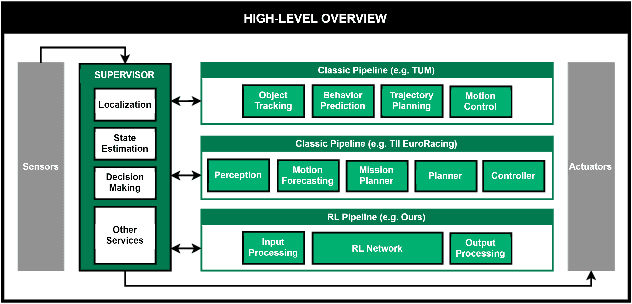
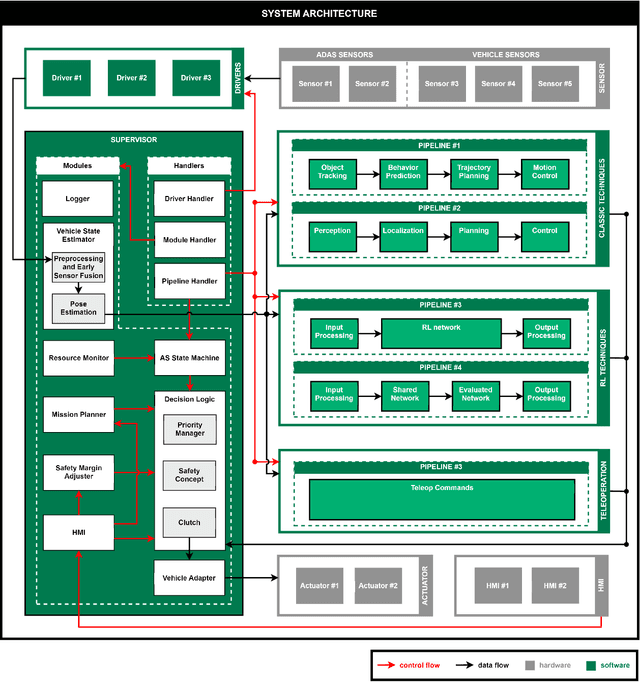

In recent years, the number and importance of autonomous racing leagues, and consequently the number of studies on them, has been growing. The seamless integration between different series has gained attention due to the scene's diversity. However, the high cost of full scale racing makes it a more accessible development model, to research at smaller form factors and scale up the achieved results. This paper presents a scalable architecture designed for autonomous racing that emphasizes modularity, adaptability to diverse configurations, and the ability to supervise parallel execution of pipelines that allows the use of different dynamic strategies. The system showcased consistent racing performance across different environments, demonstrated through successful participation in two relevant competitions. The results confirm the architecture's scalability and versatility, providing a robust foundation for the development of competitive autonomous racing systems. The successful application in real-world scenarios validates its practical effectiveness and highlights its potential for future advancements in autonomous racing technology.