 Add to Chrome
 Add to Firefox
 Add to Edge
Scientific Article Summarization
Papers and Code
Hallucination or Creativity: How to Evaluate AI-Generated Scientific Stories?
Feb 02, 2026
Generative AI can turn scientific articles into narratives for diverse audiences, but evaluating these stories remains challenging. Storytelling demands abstraction, simplification, and pedagogical creativity-qualities that are not often well-captured by standard summarization metrics. Meanwhile, factual hallucinations are critical in scientific contexts, yet, detectors often misclassify legitimate narrative reformulations or prove unstable when creativity is involved. In this work, we propose StoryScore, a composite metric for evaluating AI-generated scientific stories. StoryScore integrates semantic alignment, lexical grounding, narrative control, structural fidelity, redundancy avoidance, and entity-level hallucination detection into a unified framework. Our analysis also reveals why many hallucination detection methods fail to distinguish pedagogical creativity from factual errors, highlighting a key limitation: while automatic metrics can effectively assess semantic similarity with original content, they struggle to evaluate how it is narrated and controlled.

ARC: Argument Representation and Coverage Analysis for Zero-Shot Long Document Summarization with Instruction Following LLMs
May 29, 2025Integrating structured information has long improved the quality of abstractive summarization, particularly in retaining salient content. In this work, we focus on a specific form of structure: argument roles, which are crucial for summarizing documents in high-stakes domains such as law. We investigate whether instruction-tuned large language models (LLMs) adequately preserve this information. To this end, we introduce Argument Representation Coverage (ARC), a framework for measuring how well LLM-generated summaries capture salient arguments. Using ARC, we analyze summaries produced by three open-weight LLMs in two domains where argument roles are central: long legal opinions and scientific articles. Our results show that while LLMs cover salient argument roles to some extent, critical information is often omitted in generated summaries, particularly when arguments are sparsely distributed throughout the input. Further, we use ARC to uncover behavioral patterns -- specifically, how the positional bias of LLM context windows and role-specific preferences impact the coverage of key arguments in generated summaries, emphasizing the need for more argument-aware summarization strategies.
Can Large Language Models Match the Conclusions of Systematic Reviews?
May 28, 2025Systematic reviews (SR), in which experts summarize and analyze evidence across individual studies to provide insights on a specialized topic, are a cornerstone for evidence-based clinical decision-making, research, and policy. Given the exponential growth of scientific articles, there is growing interest in using large language models (LLMs) to automate SR generation. However, the ability of LLMs to critically assess evidence and reason across multiple documents to provide recommendations at the same proficiency as domain experts remains poorly characterized. We therefore ask: Can LLMs match the conclusions of systematic reviews written by clinical experts when given access to the same studies? To explore this question, we present MedEvidence, a benchmark pairing findings from 100 SRs with the studies they are based on. We benchmark 24 LLMs on MedEvidence, including reasoning, non-reasoning, medical specialist, and models across varying sizes (from 7B-700B). Through our systematic evaluation, we find that reasoning does not necessarily improve performance, larger models do not consistently yield greater gains, and knowledge-based fine-tuning degrades accuracy on MedEvidence. Instead, most models exhibit similar behavior: performance tends to degrade as token length increases, their responses show overconfidence, and, contrary to human experts, all models show a lack of scientific skepticism toward low-quality findings. These results suggest that more work is still required before LLMs can reliably match the observations from expert-conducted SRs, even though these systems are already deployed and being used by clinicians. We release our codebase and benchmark to the broader research community to further investigate LLM-based SR systems.
Towards Artificial Intelligence Research Assistant for Expert-Involved Learning
May 03, 2025Large Language Models (LLMs) and Large Multi-Modal Models (LMMs) have emerged as transformative tools in scientific research, yet their reliability and specific contributions to biomedical applications remain insufficiently characterized. In this study, we present \textbf{AR}tificial \textbf{I}ntelligence research assistant for \textbf{E}xpert-involved \textbf{L}earning (ARIEL), a multimodal dataset designed to benchmark and enhance two critical capabilities of LLMs and LMMs in biomedical research: summarizing extensive scientific texts and interpreting complex biomedical figures. To facilitate rigorous assessment, we create two open-source sets comprising biomedical articles and figures with designed questions. We systematically benchmark both open- and closed-source foundation models, incorporating expert-driven human evaluations conducted by doctoral-level experts. Furthermore, we improve model performance through targeted prompt engineering and fine-tuning strategies for summarizing research papers, and apply test-time computational scaling to enhance the reasoning capabilities of LMMs, achieving superior accuracy compared to human-expert corrections. We also explore the potential of using LMM Agents to generate scientific hypotheses from diverse multimodal inputs. Overall, our results delineate clear strengths and highlight significant limitations of current foundation models, providing actionable insights and guiding future advancements in deploying large-scale language and multi-modal models within biomedical research.
A comprehensive review of remote sensing in wetland classification and mapping
Apr 15, 2025Wetlands constitute critical ecosystems that support both biodiversity and human well-being; however, they have experienced a significant decline since the 20th century. Back in the 1970s, researchers began to employ remote sensing technologies for wetland classification and mapping to elucidate the extent and variations of wetlands. Although some review articles summarized the development of this field, there is a lack of a thorough and in-depth understanding of wetland classification and mapping: (1) the scientific importance of wetlands, (2) major data, methods used in wetland classification and mapping, (3) driving factors of wetland changes, (4) current research paradigm and limitations, (5) challenges and opportunities in wetland classification and mapping under the context of technological innovation and global environmental change. In this review, we aim to provide a comprehensive perspective and new insights into wetland classification and mapping for readers to answer these questions. First, we conduct a meta-analysis of over 1,200 papers, encompassing wetland types, methods, sensor types, and study sites, examining prevailing trends in wetland classification and mapping. Next, we review and synthesize the wetland features and existing data and methods in wetland classification and mapping. We also summarize typical wetland mapping products and explore the intrinsic driving factors of wetland changes across multiple spatial and temporal scales. Finally, we discuss current limitations and propose future directions in response to global environmental change and technological innovation. This review consolidates our understanding of wetland remote sensing and offers scientific recommendations that foster transformative progress in wetland science.
Citegeist: Automated Generation of Related Work Analysis on the arXiv Corpus
Mar 29, 2025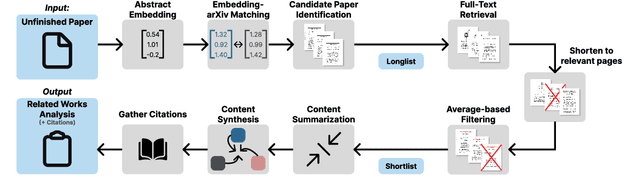
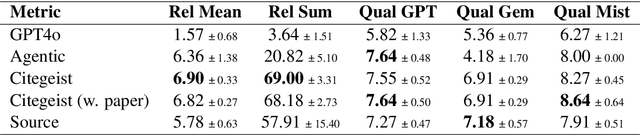
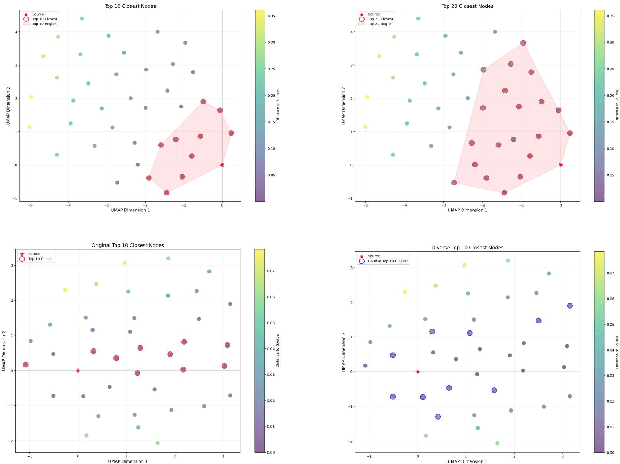
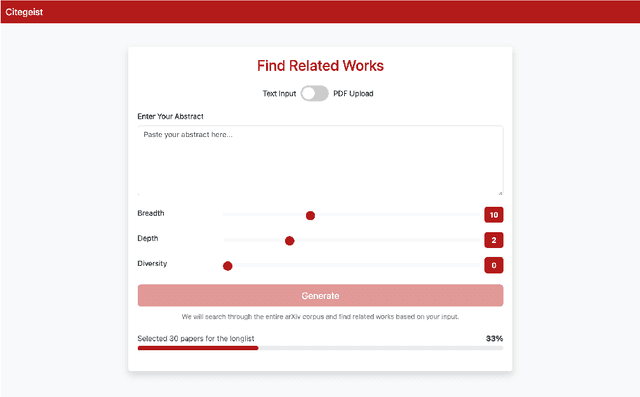
Large Language Models provide significant new opportunities for the generation of high-quality written works. However, their employment in the research community is inhibited by their tendency to hallucinate invalid sources and lack of direct access to a knowledge base of relevant scientific articles. In this work, we present Citegeist: An application pipeline using dynamic Retrieval Augmented Generation (RAG) on the arXiv Corpus to generate a related work section and other citation-backed outputs. For this purpose, we employ a mixture of embedding-based similarity matching, summarization, and multi-stage filtering. To adapt to the continuous growth of the document base, we also present an optimized way of incorporating new and modified papers. To enable easy utilization in the scientific community, we release both, a website (https://citegeist.org), as well as an implementation harness that works with several different LLM implementations.
Comprehensive Manuscript Assessment with Text Summarization Using 69707 articles
Mar 26, 2025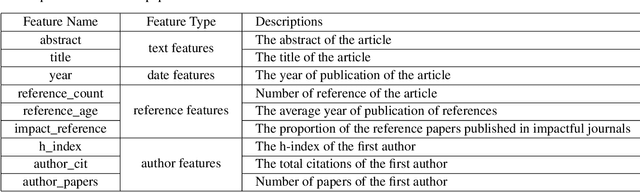
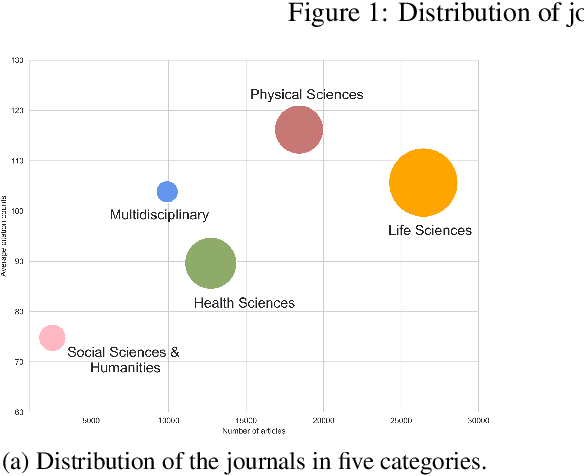

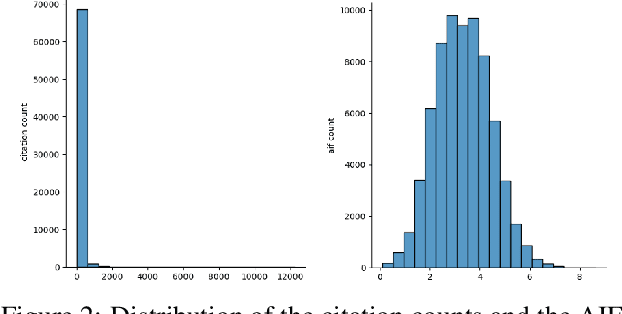
Rapid and efficient assessment of the future impact of research articles is a significant concern for both authors and reviewers. The most common standard for measuring the impact of academic papers is the number of citations. In recent years, numerous efforts have been undertaken to predict citation counts within various citation windows. However, most of these studies focus solely on a specific academic field or require early citation counts for prediction, rendering them impractical for the early-stage evaluation of papers. In this work, we harness Scopus to curate a significantly comprehensive and large-scale dataset of information from 69707 scientific articles sourced from 99 journals spanning multiple disciplines. We propose a deep learning methodology for the impact-based classification tasks, which leverages semantic features extracted from the manuscripts and paper metadata. To summarize the semantic features, such as titles and abstracts, we employ a Transformer-based language model to encode semantic features and design a text fusion layer to capture shared information between titles and abstracts. We specifically focus on the following impact-based prediction tasks using information of scientific manuscripts in pre-publication stage: (1) The impact of journals in which the manuscripts will be published. (2) The future impact of manuscripts themselves. Extensive experiments on our datasets demonstrate the superiority of our proposed model for impact-based prediction tasks. We also demonstrate potentials in generating manuscript's feedback and improvement suggestions.
SurveySum: A Dataset for Summarizing Multiple Scientific Articles into a Survey Section
Aug 29, 2024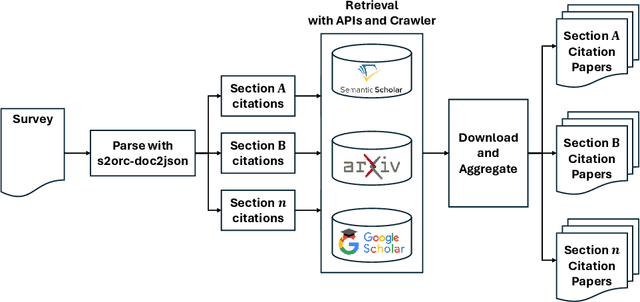


Document summarization is a task to shorten texts into concise and informative summaries. This paper introduces a novel dataset designed for summarizing multiple scientific articles into a section of a survey. Our contributions are: (1) SurveySum, a new dataset addressing the gap in domain-specific summarization tools; (2) two specific pipelines to summarize scientific articles into a section of a survey; and (3) the evaluation of these pipelines using multiple metrics to compare their performance. Our results highlight the importance of high-quality retrieval stages and the impact of different configurations on the quality of generated summaries.
FM2DS: Few-Shot Multimodal Multihop Data Synthesis with Knowledge Distillation for Question Answering
Dec 09, 2024
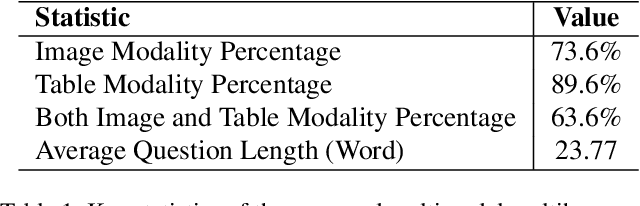

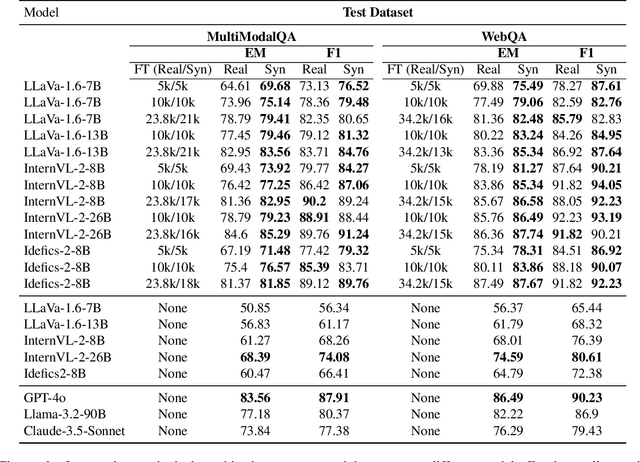
Multimodal multihop question answering is a complex task that requires reasoning over multiple sources of information, such as images and text, to answer questions. While there has been significant progress in visual question answering, the multihop setting remains unexplored due to the lack of high-quality datasets. Current methods focus on single-hop question answering or a single modality, which makes them unsuitable for real-world scenarios such as analyzing multimodal educational materials, summarizing lengthy academic articles, or interpreting scientific studies that combine charts, images, and text. To address this gap, we propose a novel methodology, introducing the first framework for creating a high-quality dataset that enables training models for multimodal multihop question answering. Our approach consists of a 5-stage pipeline that involves acquiring relevant multimodal documents from Wikipedia, synthetically generating high-level questions and answers, and validating them through rigorous criteria to ensure quality data. We evaluate our methodology by training models on our synthesized dataset and testing on two benchmarks, our results demonstrate that, with an equal sample size, models trained on our synthesized data outperform those trained on human-collected data by 1.9 in exact match (EM) on average. We believe our data synthesis method will serve as a strong foundation for training and evaluating multimodal multihop question answering models.
Scaling Large Vision-Language Models for Enhanced Multimodal Comprehension In Biomedical Image Analysis
Jan 26, 2025Large language models (LLMs) have demonstrated immense capabilities in understanding textual data and are increasingly being adopted to help researchers accelerate scientific discovery through knowledge extraction (information retrieval), knowledge distillation (summarizing key findings and methodologies into concise forms), and knowledge synthesis (aggregating information from multiple scientific sources to address complex queries, generate hypothesis and formulate experimental plans). However, scientific data often exists in both visual and textual modalities. Vision language models (VLMs) address this by incorporating a pretrained vision backbone for processing images and a cross-modal projector that adapts image tokens into the LLM dimensional space, thereby providing richer multimodal comprehension. Nevertheless, off-the-shelf VLMs show limited capabilities in handling domain-specific data and are prone to hallucinations. We developed intelligent assistants finetuned from LLaVA models to enhance multimodal understanding in low-dose radiation therapy (LDRT)-a benign approach used in the treatment of cancer-related illnesses. Using multilingual data from 42,673 articles, we devise complex reasoning and detailed description tasks for visual question answering (VQA) benchmarks. Our assistants, trained on 50,882 image-text pairs, demonstrate superior performance over base models as evaluated using LLM-as-a-judge approach, particularly in reducing hallucination and improving domain-specific comprehension.