 Add to Chrome
 Add to Firefox
 Add to Edge
Blink Estimation
Papers and Code
Adaptive vs. Static Robot-to-Human Handover: A Study on Orientation and Approach Direction
Apr 24, 2026
Robot-to-human handovers often rely on static, open-loop strategies (or, at best, approaches that adapt only the position), which generally do not consider how the object will be grasped by the human, thus requiring the user to adapt. This work presents a novel adaptive framework that dynamically adjusts the object's delivery pose in real time based on the user's hand pose and the intended downstream task. By integrating AI-based hand pose estimation with smooth, kinematically constrained trajectories, the system ensures a safe approach and an optimal handover orientation. A comprehensive user study compares the proposed adaptive approach against a static baseline across multiple tasks, evaluating both subjective metrics (NASA-TLX, Human-Robot Trust Scale) and objective physiological data (blink rate measured via wearable eye-trackers). The results demonstrate that dynamic alignment significantly reduces users' cognitive workload and physiological stress, while increasing perceived trust in the robot's reliability. These findings highlight the potential of task- and pose-aware systems for enabling fluid and ergonomic human-robot collaboration.

Visible Light Communication using Led-Based AR Markers for Robot Localization
Jan 10, 2026A method of information transmission using visual markers has been widely studied. In this approach, information or identifiers (IDs) are encoded in the black-and-white pattern of each marker. By analyzing the geometric properties of the marker frame - such as its size, distortion, and coordinates - the relative position and orientation between the camera and the marker can be estimated. Furthermore, by associating the positional information of each marker with its corresponding ID, the position of the camera that takes the image picture can be calculated. In the field of mobile robotics, such markers are commonly utilized for robot localization. As mobile robots become more widely used in everyday environments, such visual markers are expected to be utilized across various contexts. In environments where robots collaborate with humans - such as in cell-based manufacturing systems in factories or in domestic settings with partner robots - it is desirable for such markers to be designed in a manner that appears natural and unobtrusive to humans. In this paper, we propose a method for implementing an ArUco marker in the form of illumination. In the proposed method, LEDs are arranged in accordance with the grid pattern of the marker, and the blinking frequency of each LED is determined based on the corresponding black or white cell. As a result, the illumination appears uniformly bright to the human eye, while the camera can capture variations in the blinking frequency. From these differences, the black-and-white pattern can be reconstructed, enabling the identification of the marker's tag information. We develop a prototype system, and conduct experiments which are conducted to evaluate its performance in terms of recognition accuracy under varying distances and viewing angles with respect to the ArUco marker.
Blink: Dynamic Visual Token Resolution for Enhanced Multimodal Understanding
Dec 11, 2025Multimodal large language models (MLLMs) have achieved remarkable progress on various vision-language tasks, yet their visual perception remains limited. Humans, in comparison, perceive complex scenes efficiently by dynamically scanning and focusing on salient regions in a sequential "blink-like" process. Motivated by this strategy, we first investigate whether MLLMs exhibit similar behavior. Our pilot analysis reveals that MLLMs naturally attend to different visual regions across layers and that selectively allocating more computation to salient tokens can enhance visual perception. Building on this insight, we propose Blink, a dynamic visual token resolution framework that emulates the human-inspired process within a single forward pass. Specifically, Blink includes two modules: saliency-guided scanning and dynamic token resolution. It first estimates the saliency of visual tokens in each layer based on the attention map, and extends important tokens through a plug-and-play token super-resolution (TokenSR) module. In the next layer, it drops the extended tokens when they lose focus. This dynamic mechanism balances broad exploration and fine-grained focus, thereby enhancing visual perception adaptively and efficiently. Extensive experiments validate Blink, demonstrating its effectiveness in enhancing visual perception and multimodal understanding.
Inference-Time Gaze Refinement for Micro-Expression Recognition: Enhancing Event-Based Eye Tracking with Motion-Aware Post-Processing
Jun 14, 2025Event-based eye tracking holds significant promise for fine-grained cognitive state inference, offering high temporal resolution and robustness to motion artifacts, critical features for decoding subtle mental states such as attention, confusion, or fatigue. In this work, we introduce a model-agnostic, inference-time refinement framework designed to enhance the output of existing event-based gaze estimation models without modifying their architecture or requiring retraining. Our method comprises two key post-processing modules: (i) Motion-Aware Median Filtering, which suppresses blink-induced spikes while preserving natural gaze dynamics, and (ii) Optical Flow-Based Local Refinement, which aligns gaze predictions with cumulative event motion to reduce spatial jitter and temporal discontinuities. To complement traditional spatial accuracy metrics, we propose a novel Jitter Metric that captures the temporal smoothness of predicted gaze trajectories based on velocity regularity and local signal complexity. Together, these contributions significantly improve the consistency of event-based gaze signals, making them better suited for downstream tasks such as micro-expression analysis and mind-state decoding. Our results demonstrate consistent improvements across multiple baseline models on controlled datasets, laying the groundwork for future integration with multimodal affect recognition systems in real-world environments.
A Survey on Event-based Optical Marker Systems
Apr 29, 2025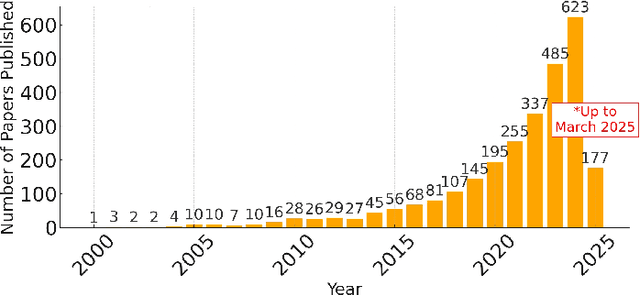
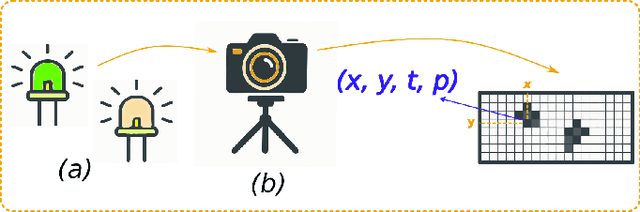
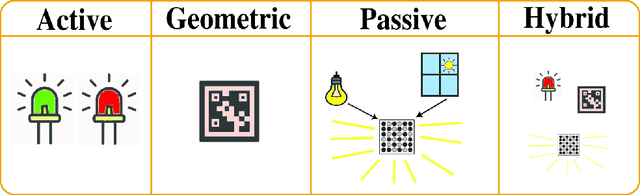
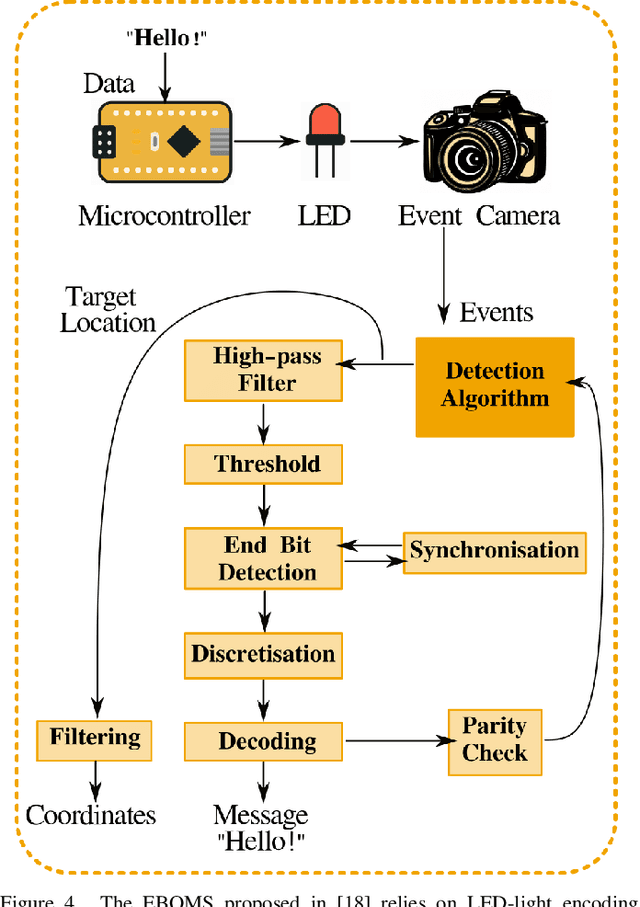
The advent of event-based cameras, with their low latency, high dynamic range, and reduced power consumption, marked a significant change in robotic vision and machine perception. In particular, the combination of these neuromorphic sensors with widely-available passive or active optical markers (e.g. AprilTags, arrays of blinking LEDs), has recently opened up a wide field of possibilities. This survey paper provides a comprehensive review on Event-Based Optical Marker Systems (EBOMS). We analyze the basic principles and technologies on which these systems are based, with a special focus on their asynchronous operation and robustness against adverse lighting conditions. We also describe the most relevant applications of EBOMS, including object detection and tracking, pose estimation, and optical communication. The article concludes with a discussion of possible future research directions in this rapidly-emerging and multidisciplinary field.
A Monocular Event-Camera Motion Capture System
Feb 17, 2025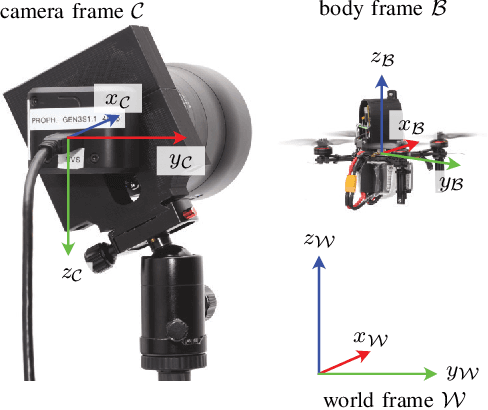
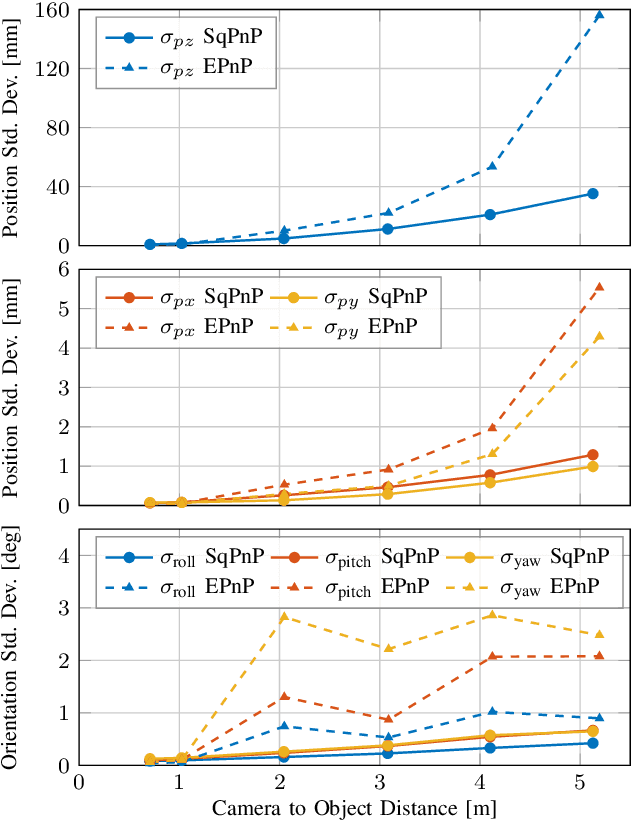
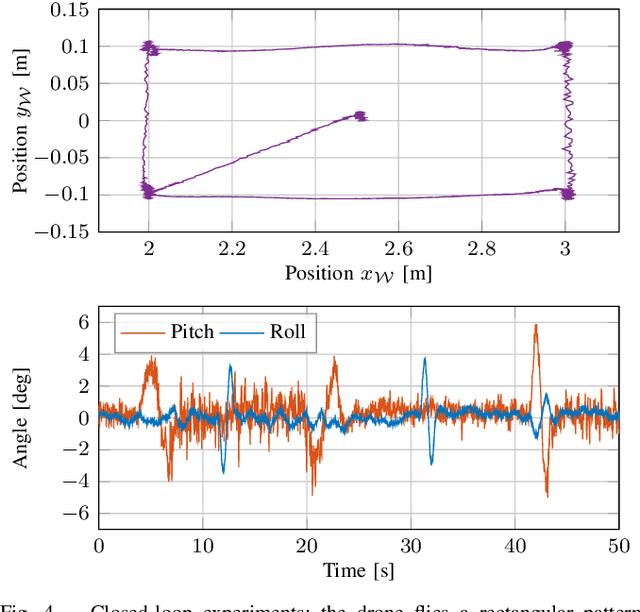
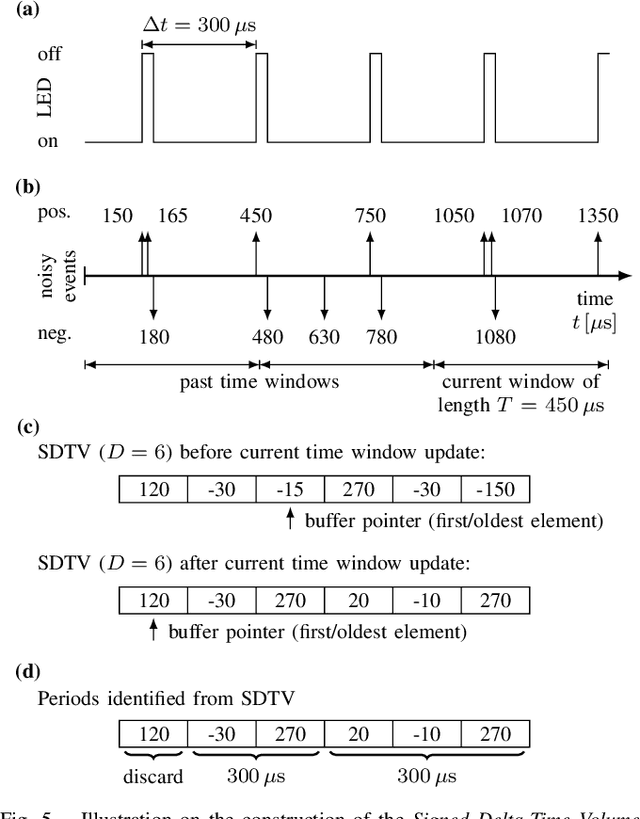
Motion capture systems are a widespread tool in research to record ground-truth poses of objects. Commercial systems use reflective markers attached to the object and then triangulate pose of the object from multiple camera views. Consequently, the object must be visible to multiple cameras which makes such multi-view motion capture systems unsuited for deployments in narrow, confined spaces (e.g. ballast tanks of ships). In this technical report we describe a monocular event-camera motion capture system which overcomes this limitation and is ideally suited for narrow spaces. Instead of passive markers it relies on active, blinking LED markers such that each marker can be uniquely identified from the blinking frequency. The markers are placed at known locations on the tracking object. We then solve the PnP (perspective-n-points) problem to obtain the position and orientation of the object. The developed system has millimeter accuracy, millisecond latency and we demonstrate that its state estimate can be used to fly a small, agile quadrotor.
Amortized Bayesian Local Interpolation NetworK: Fast covariance parameter estimation for Gaussian Processes
Nov 10, 2024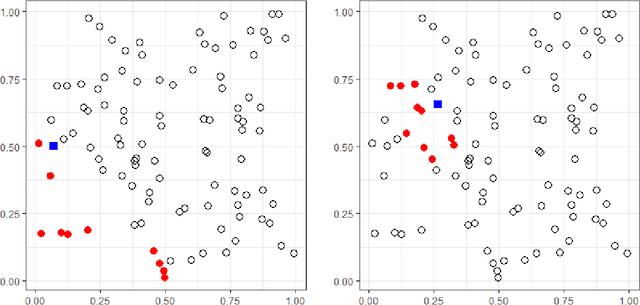

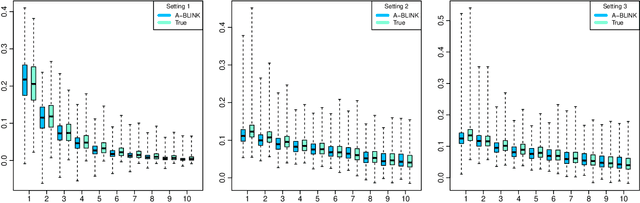
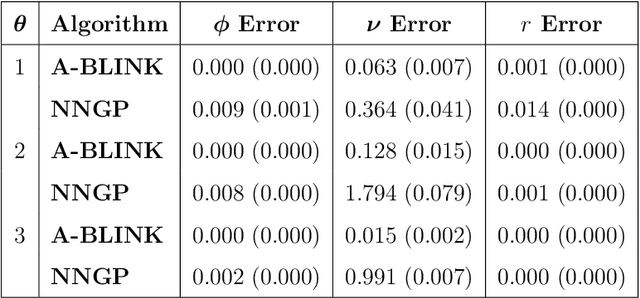
Gaussian processes (GPs) are a ubiquitous tool for geostatistical modeling with high levels of flexibility and interpretability, and the ability to make predictions at unseen spatial locations through a process called Kriging. Estimation of Kriging weights relies on the inversion of the process' covariance matrix, creating a computational bottleneck for large spatial datasets. In this paper, we propose an Amortized Bayesian Local Interpolation NetworK (A-BLINK) for fast covariance parameter estimation, which uses two pre-trained deep neural networks to learn a mapping from spatial location coordinates and covariance function parameters to Kriging weights and the spatial variance, respectively. The fast prediction time of these networks allows us to bypass the matrix inversion step, creating large computational speedups over competing methods in both frequentist and Bayesian settings, and also provides full posterior inference and predictions using Markov chain Monte Carlo sampling methods. We show significant increases in computational efficiency over comparable scalable GP methodology in an extensive simulation study with lower parameter estimation error. The efficacy of our approach is also demonstrated using a temperature dataset of US climate normals for 1991--2020 based on over 7,000 weather stations.
Uncertainty-aware retinal layer segmentation in OCT through probabilistic signed distance functions
Dec 06, 2024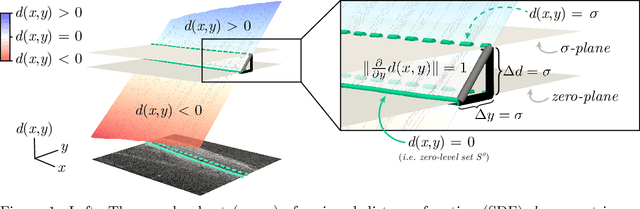
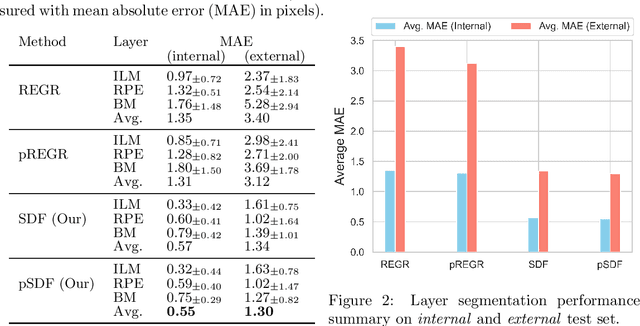
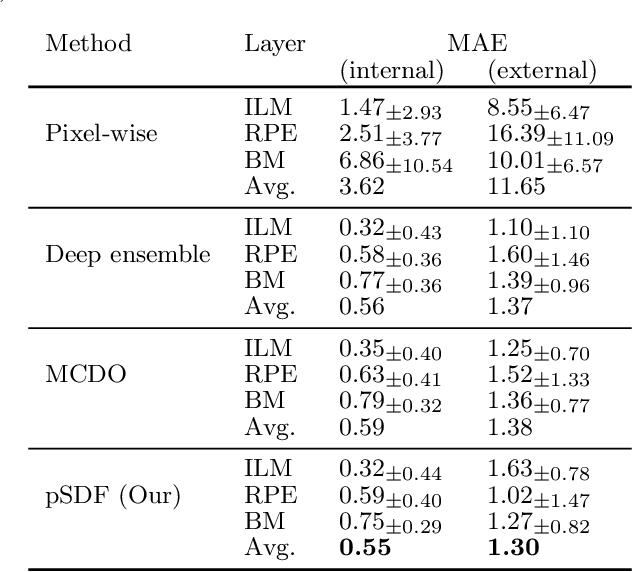
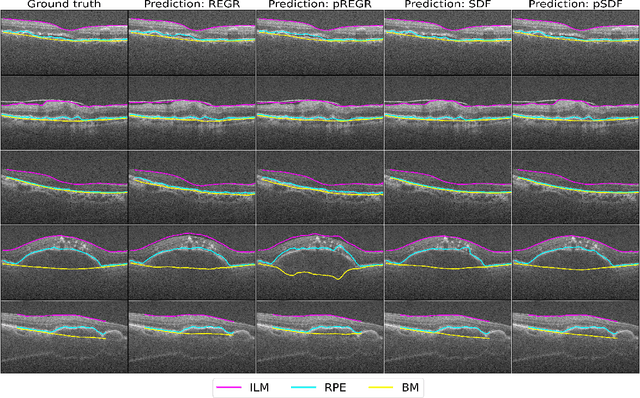
In this paper, we present a new approach for uncertainty-aware retinal layer segmentation in Optical Coherence Tomography (OCT) scans using probabilistic signed distance functions (SDF). Traditional pixel-wise and regression-based methods primarily encounter difficulties in precise segmentation and lack of geometrical grounding respectively. To address these shortcomings, our methodology refines the segmentation by predicting a signed distance function (SDF) that effectively parameterizes the retinal layer shape via level set. We further enhance the framework by integrating probabilistic modeling, applying Gaussian distributions to encapsulate the uncertainty in the shape parameterization. This ensures a robust representation of the retinal layer morphology even in the presence of ambiguous input, imaging noise, and unreliable segmentations. Both quantitative and qualitative evaluations demonstrate superior performance when compared to other methods. Additionally, we conducted experiments on artificially distorted datasets with various noise types-shadowing, blinking, speckle, and motion-common in OCT scans to showcase the effectiveness of our uncertainty estimation. Our findings demonstrate the possibility to obtain reliable segmentation of retinal layers, as well as an initial step towards the characterization of layer integrity, a key biomarker for disease progression. Our code is available at \url{https://github.com/niazoys/RLS_PSDF}.
GoHD: Gaze-oriented and Highly Disentangled Portrait Animation with Rhythmic Poses and Realistic Expression
Dec 13, 2024
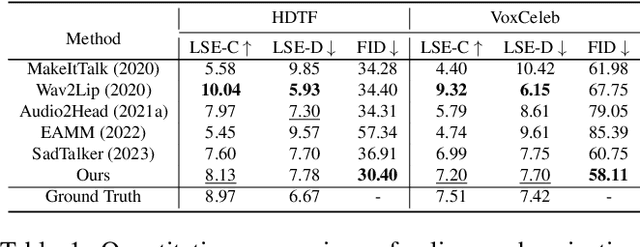
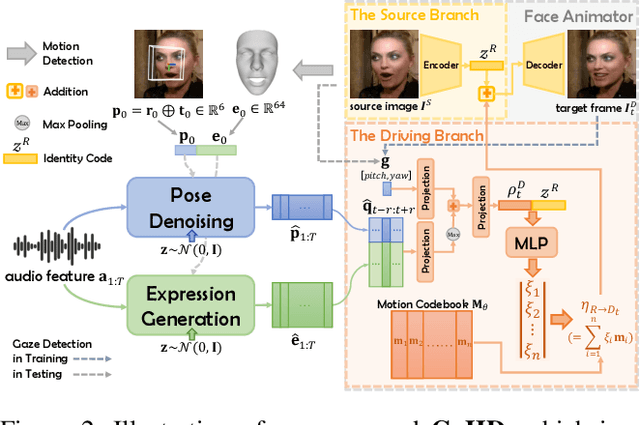
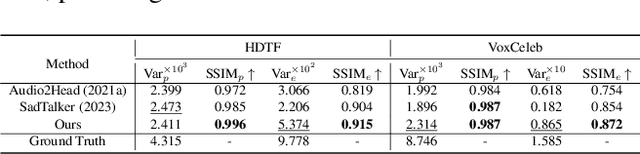
Audio-driven talking head generation necessitates seamless integration of audio and visual data amidst the challenges posed by diverse input portraits and intricate correlations between audio and facial motions. In response, we propose a robust framework GoHD designed to produce highly realistic, expressive, and controllable portrait videos from any reference identity with any motion. GoHD innovates with three key modules: Firstly, an animation module utilizing latent navigation is introduced to improve the generalization ability across unseen input styles. This module achieves high disentanglement of motion and identity, and it also incorporates gaze orientation to rectify unnatural eye movements that were previously overlooked. Secondly, a conformer-structured conditional diffusion model is designed to guarantee head poses that are aware of prosody. Thirdly, to estimate lip-synchronized and realistic expressions from the input audio within limited training data, a two-stage training strategy is devised to decouple frequent and frame-wise lip motion distillation from the generation of other more temporally dependent but less audio-related motions, e.g., blinks and frowns. Extensive experiments validate GoHD's advanced generalization capabilities, demonstrating its effectiveness in generating realistic talking face results on arbitrary subjects.
Perception Tokens Enhance Visual Reasoning in Multimodal Language Models
Dec 04, 2024Multimodal language models (MLMs) still face challenges in fundamental visual perception tasks where specialized models excel. Tasks requiring reasoning about 3D structures benefit from depth estimation, and reasoning about 2D object instances benefits from object detection. Yet, MLMs can not produce intermediate depth or boxes to reason over. Finetuning MLMs on relevant data doesn't generalize well and outsourcing computation to specialized vision tools is too compute-intensive and memory-inefficient. To address this, we introduce Perception Tokens, intrinsic image representations designed to assist reasoning tasks where language is insufficient. Perception tokens act as auxiliary reasoning tokens, akin to chain-of-thought prompts in language models. For example, in a depth-related task, an MLM augmented with perception tokens can reason by generating a depth map as tokens, enabling it to solve the problem effectively. We propose AURORA, a training method that augments MLMs with perception tokens for improved reasoning over visual inputs. AURORA leverages a VQVAE to transform intermediate image representations, such as depth maps into a tokenized format and bounding box tokens, which is then used in a multi-task training framework. AURORA achieves notable improvements across counting benchmarks: +10.8% on BLINK, +11.3% on CVBench, and +8.3% on SEED-Bench, outperforming finetuning approaches in generalization across datasets. It also improves on relative depth: over +6% on BLINK. With perception tokens, AURORA expands the scope of MLMs beyond language-based reasoning, paving the way for more effective visual reasoning capabilities.