 Add to Chrome
 Add to Firefox
 Add to Edge
QueryGaussian: Scalable and Training-Free Open-Vocabulary 3D Instance Retrieval
Jun 18, 2026
Efficiently retrieving specific 3D instances from large-scale scenes via natural language prompts remains a formidable challenge in multimedia analysis. Existing approaches predominantly follow a "scene-level embedding" paradigm, which requires distilling high-dimensional semantic features into every 3D primitive. This strategy suffers from a fundamental architectural bottleneck: memory and computational costs scale linearly with scene complexity, inevitably triggering out-of-memory (OOM) failures in city-scale environments. To address this barrier, we propose QueryGaussian, a training-free framework for expeditious and scalable open-vocabulary 3D instance retrieval. Unlike holistic semantic distillation, QueryGaussian employs an instance-level query mechanism that decouples semantic understanding from geometric representation. Specifically, we leverage pre-trained 2D vision models to interpret user prompts and lift segmentation masks into 3D via a concurrent maximum-weight association strategy, ensuring semantic-visual consistency. To mitigate projection ambiguity, we introduce a temporal fusion module with multi-stage adaptive density clustering. Experimental results demonstrate that QueryGaussian not only matches the accuracy of state-of-the-art methods but also delivers a decisive efficiency leap, reducing GPU memory usage by over 70% and accelerating inference by 180x. Crucially, QueryGaussian enables expeditious instance retrieval on city-scale scenes containing tens of millions of Gaussians using consumer-grade hardware.

AiraXiv: An AI-Driven Open-Access Platform for Human and AI Scientists
May 20, 2026Recent advances in artificial intelligence (AI) have accelerated the growth of both human-authored and AI-generated research outputs, placing increasing strain on traditional academic publishing systems and challenging the scalability of conference- and journal-centered paradigms amid rising submission volumes, reviewer workload, and venue size. To address these challenges, we explore an AI-era publishing paradigm in which both human and AI scientists participate as authors and readers, and papers evolve through continuous, feedback-driven iteration. We propose AiraXiv, an AI-driven open-access platform built on open preprints, AI-augmented analysis and review, and reader feedback. AiraXiv supports human scientists through an interactive UI and AI scientists through Model Context Protocol (MCP)-based interactions. We validate AiraXiv through real-world deployments, including serving as the submission platform for ICAIS 2025, demonstrating its potential as a fast, inclusive, and scalable research infrastructure for the AI era. AiraXiv is publicly available at https://airaxiv.com.
DEFLECT: Delay-Robust Execution via Flow-matching Likelihood-Estimated Counterfactual Tuning for VLA Policies
May 19, 2026Vision-Language-Action (VLA) policies are typically deployed with asynchronous inference: the robot executes a previously predicted action chunk while the model computes the next one. This creates a prediction-execution misalignment: the chunk is conditioned on the observation taken before inference began, but executes in a physical state that has already drifted forward by several control steps; naive asynchronous rollover collapses from 89% to under 1% on Kinetix as the inference cycle covers up to seven control steps. We introduce DEFLECT, a fully offline post-training refinement that applies as a near drop-in upgrade to existing async-VLA stacks by converting latency itself into a label-free preference signal: counterfactual fresh/stale action pairs are constructed from a frozen reference policy and scored under the deployment-time conditioning via an implicit flow-matching likelihood-ratio surrogate, with no human labels, reward models, or online rollouts. DEFLECT substantially extends the usable delay envelope of async VLA control, with +6.4 success-rate gain in the high-latency regime (5-7 control steps), +4.6 when transferred to a real-scale VLA at the longest delay, and consistent improvements on two real-robot tasks (a bimanual conveyor pick-and-place and a reactive whack-a-mole).
AI-driven platform for systematic nomenclature and intelligent knowledge acquisition of natural medicinal materials
Dec 27, 2023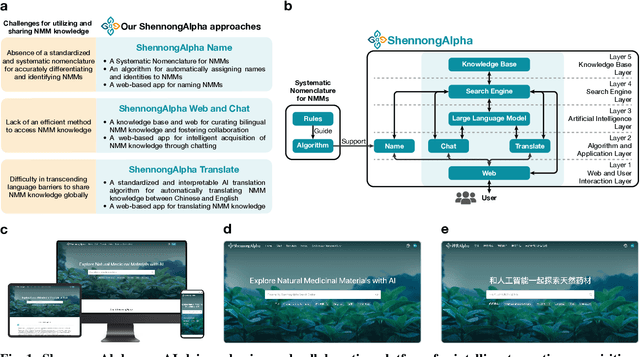
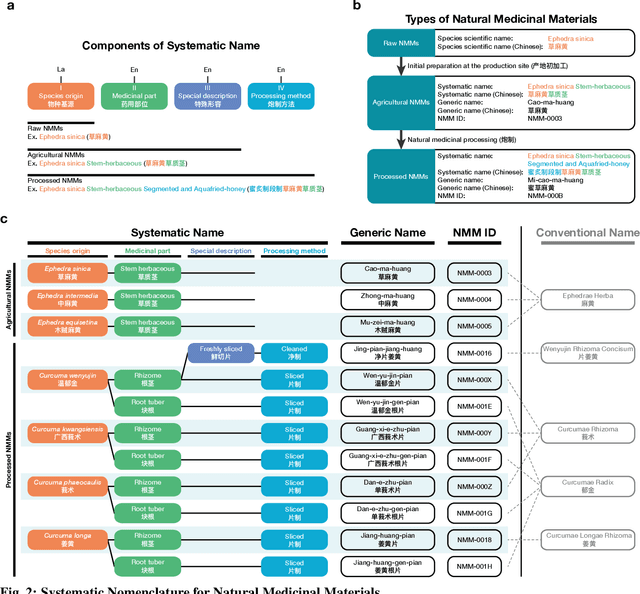
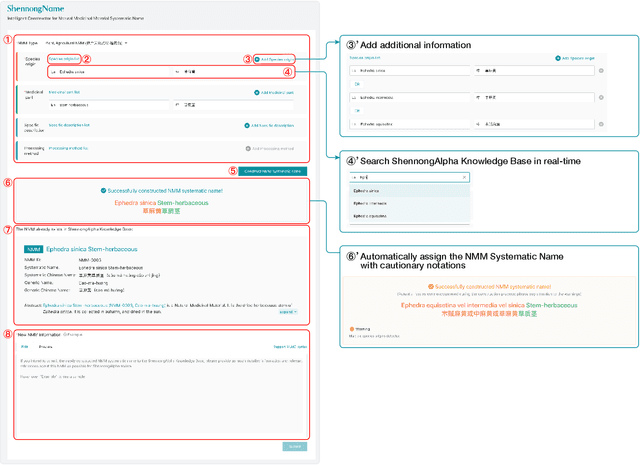
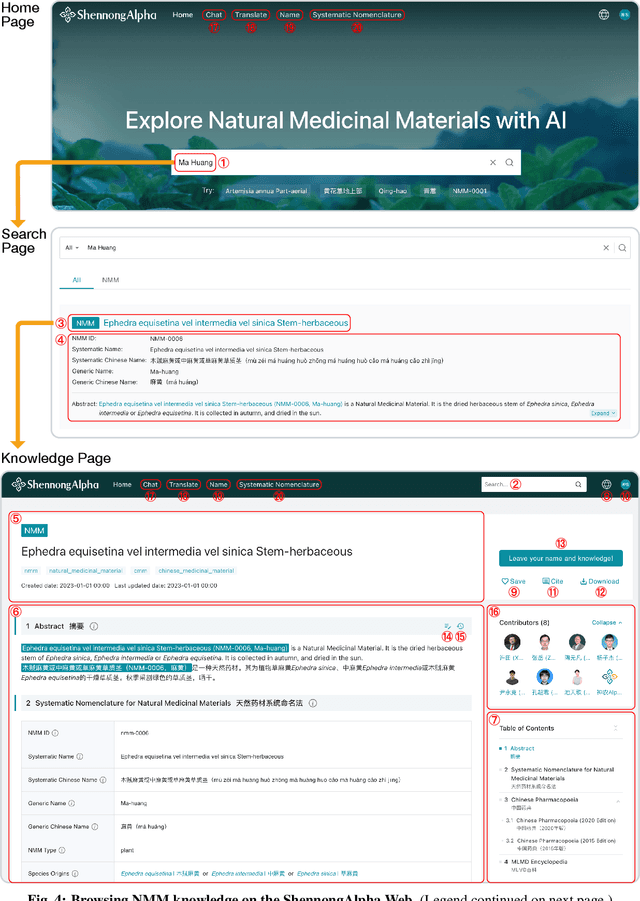
Natural Medicinal Materials (NMMs) have a long history of global clinical applications, accompanied by extensive informational records. Despite their significant impact on healthcare, the field faces a major challenge: the non-standardization of NMM knowledge, stemming from historical complexities and causing limitations in broader applications. To address this, we introduce a Systematic Nomenclature for NMMs, underpinned by ShennongAlpha, an AI-driven platform designed for intelligent knowledge acquisition. This nomenclature system enables precise identification and differentiation of NMMs. ShennongAlpha, cataloging over ten thousand NMMs with standardized bilingual information, enhances knowledge management and application capabilities, thereby overcoming traditional barriers. Furthermore, it pioneers AI-empowered conversational knowledge acquisition and standardized machine translation. These synergistic innovations mark the first major advance in integrating domain-specific NMM knowledge with AI, propelling research and applications across both NMM and AI fields while establishing a groundbreaking precedent in this crucial area.
Heterogeneous Contrastive Learning: Encoding Spatial Information for Compact Visual Representations
Nov 19, 2020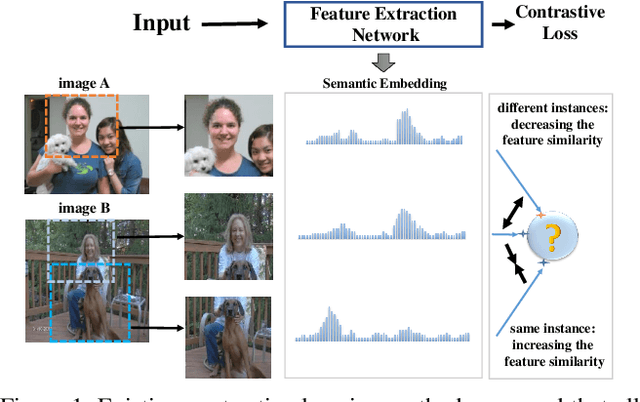
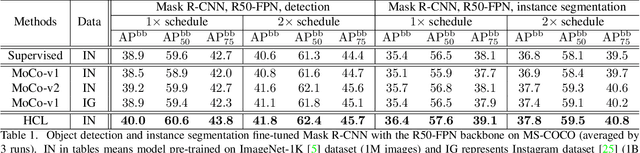
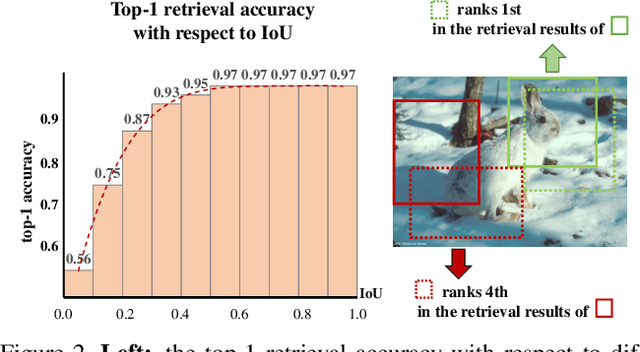
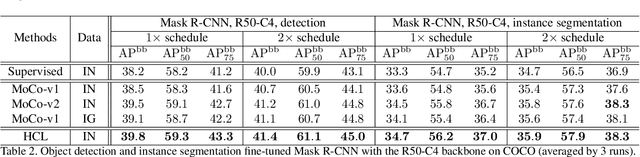
Contrastive learning has achieved great success in self-supervised visual representation learning, but existing approaches mostly ignored spatial information which is often crucial for visual representation. This paper presents heterogeneous contrastive learning (HCL), an effective approach that adds spatial information to the encoding stage to alleviate the learning inconsistency between the contrastive objective and strong data augmentation operations. We demonstrate the effectiveness of HCL by showing that (i) it achieves higher accuracy in instance discrimination and (ii) it surpasses existing pre-training methods in a series of downstream tasks while shrinking the pre-training costs by half. More importantly, we show that our approach achieves higher efficiency in visual representations, and thus delivers a key message to inspire the future research of self-supervised visual representation learning.
ATSO: Asynchronous Teacher-Student Optimization for Semi-Supervised Medical Image Segmentation
Jul 16, 2020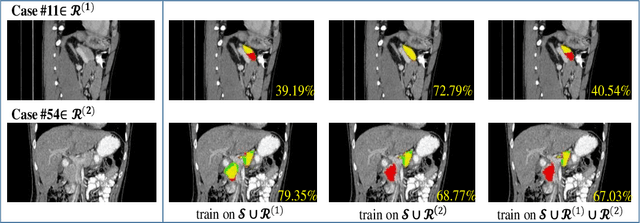
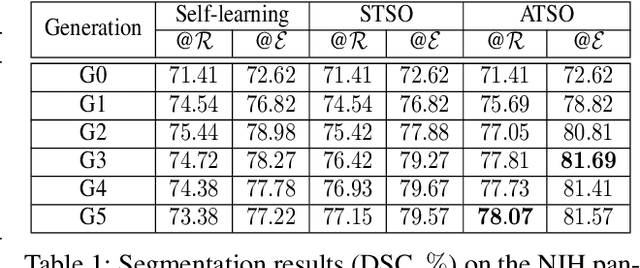
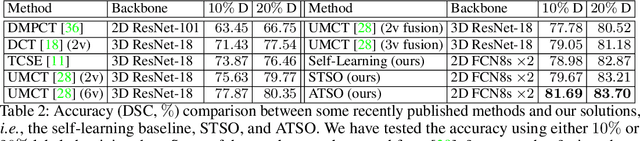
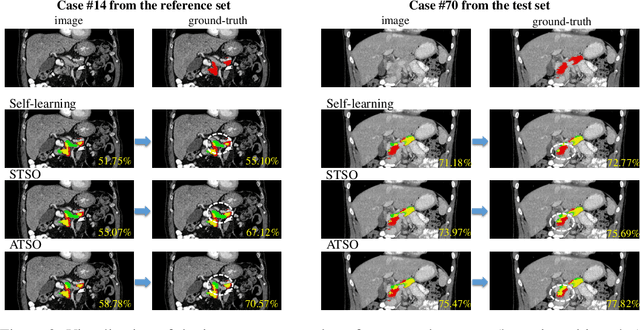
In medical image analysis, semi-supervised learning is an effective method to extract knowledge from a small amount of labeled data and a large amount of unlabeled data. This paper focuses on a popular pipeline known as self learning, and points out a weakness named lazy learning that refers to the difficulty for a model to learn from the pseudo labels generated by itself. To alleviate this issue, we propose ATSO, an asynchronous version of teacher-student optimization. ATSO partitions the unlabeled data into two subsets and alternately uses one subset to fine-tune the model and updates the label on the other subset. We evaluate ATSO on two popular medical image segmentation datasets and show its superior performance in various semi-supervised settings. With slight modification, ATSO transfers well to natural image segmentation for autonomous driving data.