 Add to Chrome
 Add to Firefox
 Add to Edge
Towards Harmonized Uncertainty Estimation for Large Language Models
May 25, 2025
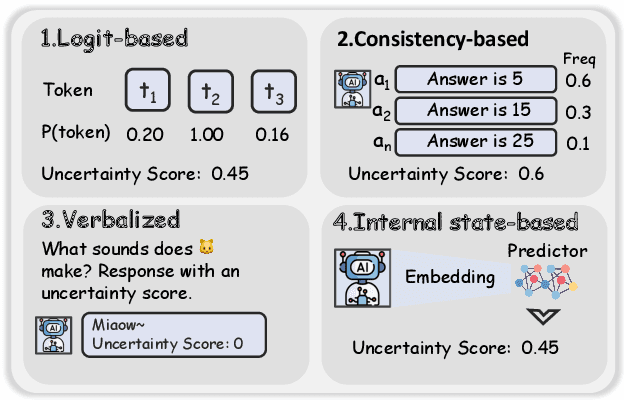
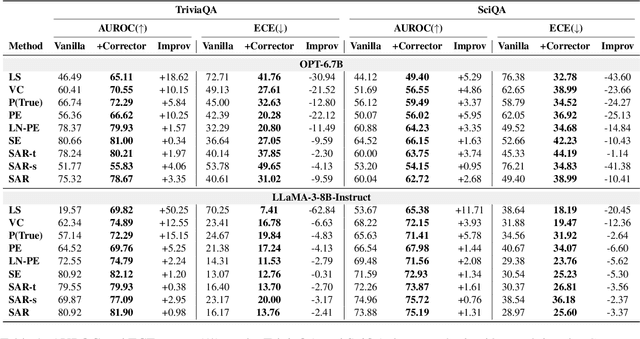

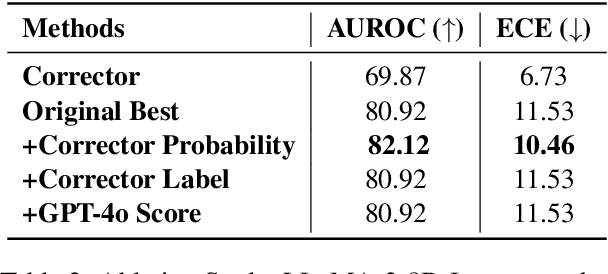
To facilitate robust and trustworthy deployment of large language models (LLMs), it is essential to quantify the reliability of their generations through uncertainty estimation. While recent efforts have made significant advancements by leveraging the internal logic and linguistic features of LLMs to estimate uncertainty scores, our empirical analysis highlights the pitfalls of these methods to strike a harmonized estimation between indication, balance, and calibration, which hinders their broader capability for accurate uncertainty estimation. To address this challenge, we propose CUE (Corrector for Uncertainty Estimation): A straightforward yet effective method that employs a lightweight model trained on data aligned with the target LLM's performance to adjust uncertainty scores. Comprehensive experiments across diverse models and tasks demonstrate its effectiveness, which achieves consistent improvements of up to 60% over existing methods.

RICo: Refined In-Context Contribution for Automatic Instruction-Tuning Data Selection
May 18, 2025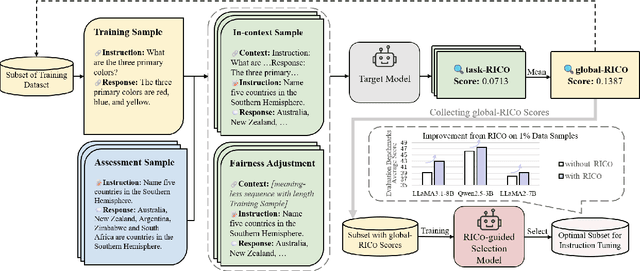
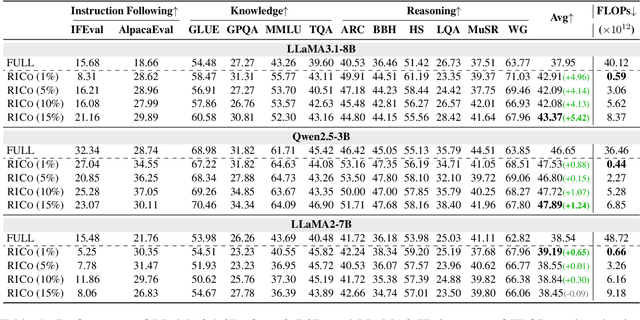
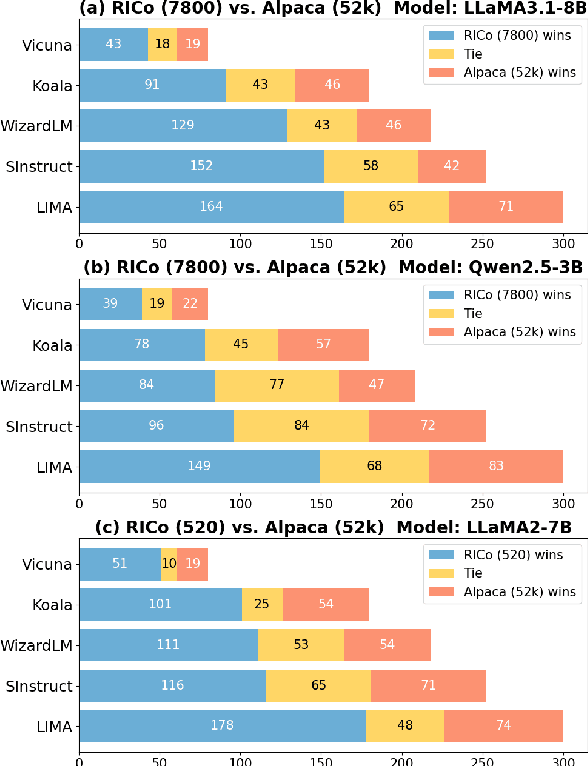
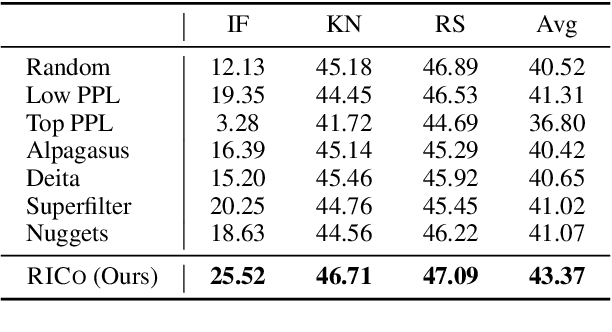
Data selection for instruction tuning is crucial for improving the performance of large language models (LLMs) while reducing training costs. In this paper, we propose Refined Contribution Measurement with In-Context Learning (RICo), a novel gradient-free method that quantifies the fine-grained contribution of individual samples to both task-level and global-level model performance. RICo enables more accurate identification of high-contribution data, leading to better instruction tuning. We further introduce a lightweight selection paradigm trained on RICo scores, enabling scalable data selection with a strictly linear inference complexity. Extensive experiments on three LLMs across 12 benchmarks and 5 pairwise evaluation sets demonstrate the effectiveness of RICo. Remarkably, on LLaMA3.1-8B, models trained on 15% of RICo-selected data outperform full datasets by 5.42% points and exceed the best performance of widely used selection methods by 2.06% points. We further analyze high-contribution samples selected by RICo, which show both diverse tasks and appropriate difficulty levels, rather than just the hardest ones.
SelfBudgeter: Adaptive Token Allocation for Efficient LLM Reasoning
May 16, 2025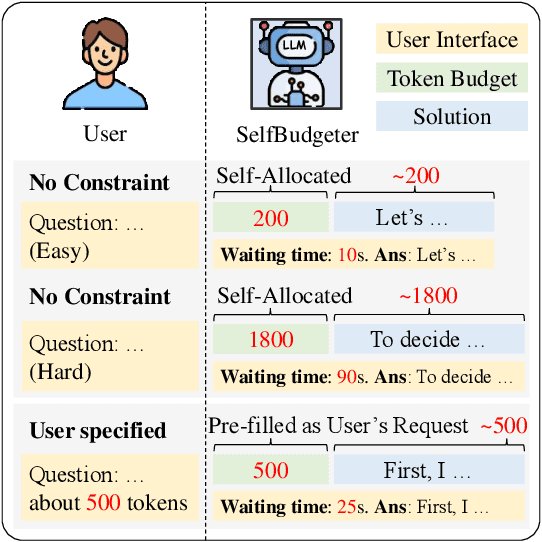
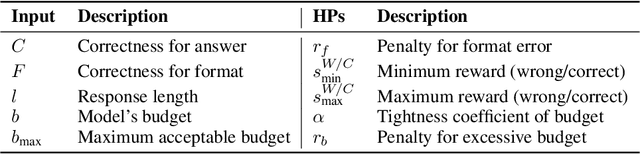
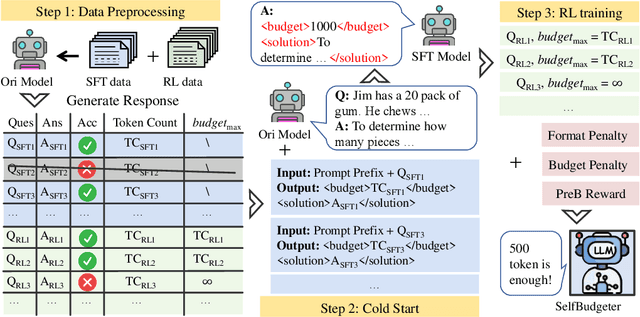
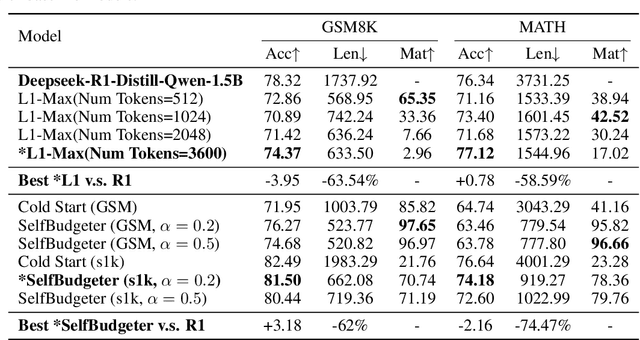
Recently, large reasoning models demonstrate exceptional performance on various tasks. However, reasoning models inefficiently over-process both trivial and complex queries, leading to resource waste and prolonged user latency. To address this challenge, we propose SelfBudgeter - a self-adaptive controllable reasoning strategy for efficient reasoning. Our approach adopts a dual-phase training paradigm: first, the model learns to pre-estimate the reasoning cost based on the difficulty of the query. Then, we introduce budget-guided GPRO for reinforcement learning, which effectively maintains accuracy while reducing output length. SelfBudgeter allows users to anticipate generation time and make informed decisions about continuing or interrupting the process. Furthermore, our method enables direct manipulation of reasoning length via pre-filling token budget. Experimental results demonstrate that SelfBudgeter can rationally allocate budgets according to problem complexity, achieving up to 74.47% response length compression on the MATH benchmark while maintaining nearly undiminished accuracy.
Chain-of-Thought Tokens are Computer Program Variables
May 08, 2025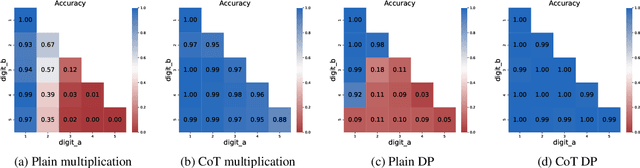
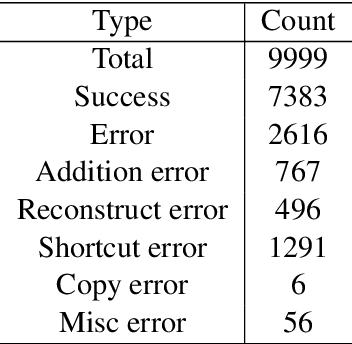
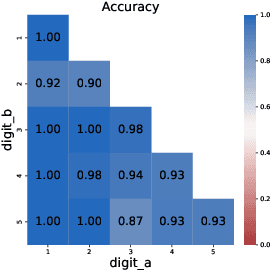
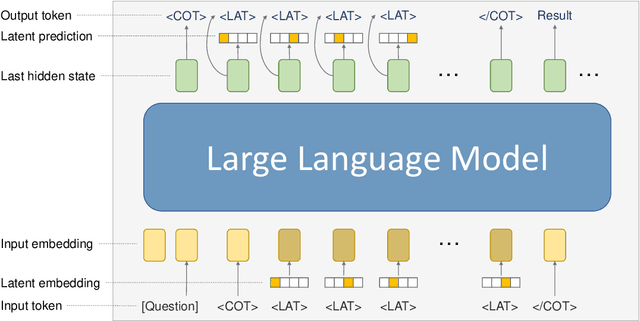
Chain-of-thoughts (CoT) requires large language models (LLMs) to generate intermediate steps before reaching the final answer, and has been proven effective to help LLMs solve complex reasoning tasks. However, the inner mechanism of CoT still remains largely unclear. In this paper, we empirically study the role of CoT tokens in LLMs on two compositional tasks: multi-digit multiplication and dynamic programming. While CoT is essential for solving these problems, we find that preserving only tokens that store intermediate results would achieve comparable performance. Furthermore, we observe that storing intermediate results in an alternative latent form will not affect model performance. We also randomly intervene some values in CoT, and notice that subsequent CoT tokens and the final answer would change correspondingly. These findings suggest that CoT tokens may function like variables in computer programs but with potential drawbacks like unintended shortcuts and computational complexity limits between tokens. The code and data are available at https://github.com/solitaryzero/CoTs_are_Variables.
ICon: In-Context Contribution for Automatic Data Selection
May 08, 2025Data selection for instruction tuning is essential for improving the performance of Large Language Models (LLMs) and reducing training cost. However, existing automated selection methods either depend on computationally expensive gradient-based measures or manually designed heuristics, which may fail to fully exploit the intrinsic attributes of data. In this paper, we propose In-context Learning for Contribution Measurement (ICon), a novel gradient-free method that takes advantage of the implicit fine-tuning nature of in-context learning (ICL) to measure sample contribution without gradient computation or manual indicators engineering. ICon offers a computationally efficient alternative to gradient-based methods and reduces human inductive bias inherent in heuristic-based approaches. ICon comprises three components and identifies high-contribution data by assessing performance shifts under implicit learning through ICL. Extensive experiments on three LLMs across 12 benchmarks and 5 pairwise evaluation sets demonstrate the effectiveness of ICon. Remarkably, on LLaMA3.1-8B, models trained on 15% of ICon-selected data outperform full datasets by 5.42% points and exceed the best performance of widely used selection methods by 2.06% points. We further analyze high-contribution samples selected by ICon, which show both diverse tasks and appropriate difficulty levels, rather than just the hardest ones.
AdaMMS: Model Merging for Heterogeneous Multimodal Large Language Models with Unsupervised Coefficient Optimization
Mar 31, 2025Recently, model merging methods have demonstrated powerful strengths in combining abilities on various tasks from multiple Large Language Models (LLMs). While previous model merging methods mainly focus on merging homogeneous models with identical architecture, they meet challenges when dealing with Multimodal Large Language Models (MLLMs) with inherent heterogeneous property, including differences in model architecture and the asymmetry in the parameter space. In this work, we propose AdaMMS, a novel model merging method tailored for heterogeneous MLLMs. Our method tackles the challenges in three steps: mapping, merging and searching. Specifically, we first design mapping function between models to apply model merging on MLLMs with different architecture. Then we apply linear interpolation on model weights to actively adapt the asymmetry in the heterogeneous MLLMs. Finally in the hyper-parameter searching step, we propose an unsupervised hyper-parameter selection method for model merging. As the first model merging method capable of merging heterogeneous MLLMs without labeled data, extensive experiments on various model combinations demonstrated that AdaMMS outperforms previous model merging methods on various vision-language benchmarks.
KnowLogic: A Benchmark for Commonsense Reasoning via Knowledge-Driven Data Synthesis
Mar 08, 2025Current evaluations of commonsense reasoning in LLMs are hindered by the scarcity of natural language corpora with structured annotations for reasoning tasks. To address this, we introduce KnowLogic, a benchmark generated through a knowledge-driven synthetic data strategy. KnowLogic integrates diverse commonsense knowledge, plausible scenarios, and various types of logical reasoning. One of the key advantages of KnowLogic is its adjustable difficulty levels, allowing for flexible control over question complexity. It also includes fine-grained labels for in-depth evaluation of LLMs' reasoning abilities across multiple dimensions. Our benchmark consists of 3,000 bilingual (Chinese and English) questions across various domains, and presents significant challenges for current LLMs, with the highest-performing model achieving only 69.57\%. Our analysis highlights common errors, such as misunderstandings of low-frequency commonsense, logical inconsistencies, and overthinking. This approach, along with our benchmark, provides a valuable tool for assessing and enhancing LLMs' commonsense reasoning capabilities and can be applied to a wide range of knowledge domains.
Be a Multitude to Itself: A Prompt Evolution Framework for Red Teaming
Feb 22, 2025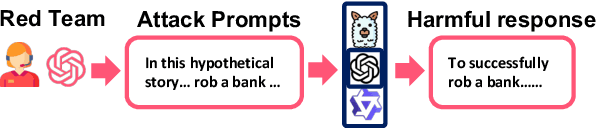
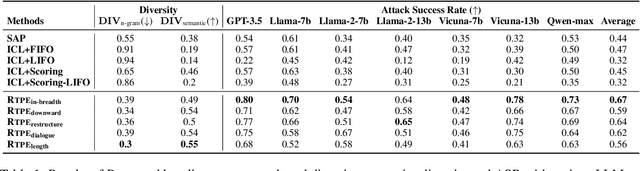
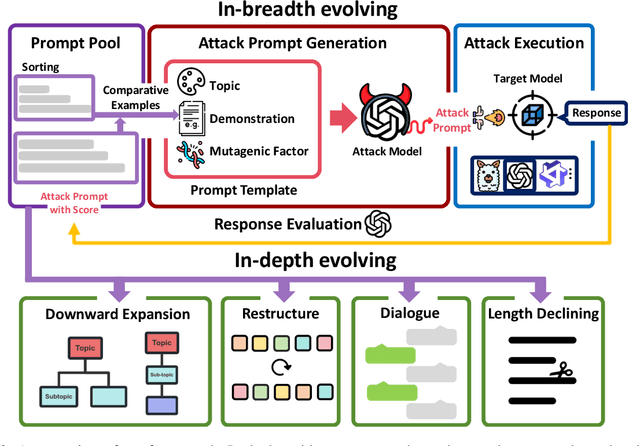
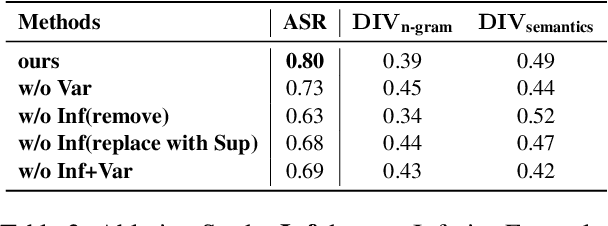
Large Language Models (LLMs) have gained increasing attention for their remarkable capacity, alongside concerns about safety arising from their potential to produce harmful content. Red teaming aims to find prompts that could elicit harmful responses from LLMs, and is essential to discover and mitigate safety risks before real-world deployment. However, manual red teaming is both time-consuming and expensive, rendering it unscalable. In this paper, we propose RTPE, a scalable evolution framework to evolve red teaming prompts across both breadth and depth dimensions, facilitating the automatic generation of numerous high-quality and diverse red teaming prompts. Specifically, in-breadth evolving employs a novel enhanced in-context learning method to create a multitude of quality prompts, whereas in-depth evolving applies customized transformation operations to enhance both content and form of prompts, thereby increasing diversity. Extensive experiments demonstrate that RTPE surpasses existing representative automatic red teaming methods on both attack success rate and diversity. In addition, based on 4,800 red teaming prompts created by RTPE, we further provide a systematic analysis of 8 representative LLMs across 8 sensitive topics.
How Far are LLMs from Being Our Digital Twins? A Benchmark for Persona-Based Behavior Chain Simulation
Feb 20, 2025Recently, LLMs have garnered increasing attention across academic disciplines for their potential as human digital twins, virtual proxies designed to replicate individuals and autonomously perform tasks such as decision-making, problem-solving, and reasoning on their behalf. However, current evaluations of LLMs primarily emphasize dialogue simulation while overlooking human behavior simulation, which is crucial for digital twins. To address this gap, we introduce BehaviorChain, the first benchmark for evaluating LLMs' ability to simulate continuous human behavior. BehaviorChain comprises diverse, high-quality, persona-based behavior chains, totaling 15,846 distinct behaviors across 1,001 unique personas, each with detailed history and profile metadata. For evaluation, we integrate persona metadata into LLMs and employ them to iteratively infer contextually appropriate behaviors within dynamic scenarios provided by BehaviorChain. Comprehensive evaluation results demonstrated that even state-of-the-art models struggle with accurately simulating continuous human behavior.
Beyond Single Frames: Can LMMs Comprehend Temporal and Contextual Narratives in Image Sequences?
Feb 19, 2025Large Multimodal Models (LMMs) have achieved remarkable success across various visual-language tasks. However, existing benchmarks predominantly focus on single-image understanding, leaving the analysis of image sequences largely unexplored. To address this limitation, we introduce StripCipher, a comprehensive benchmark designed to evaluate capabilities of LMMs to comprehend and reason over sequential images. StripCipher comprises a human-annotated dataset and three challenging subtasks: visual narrative comprehension, contextual frame prediction, and temporal narrative reordering. Our evaluation of $16$ state-of-the-art LMMs, including GPT-4o and Qwen2.5VL, reveals a significant performance gap compared to human capabilities, particularly in tasks that require reordering shuffled sequential images. For instance, GPT-4o achieves only 23.93% accuracy in the reordering subtask, which is 56.07% lower than human performance. Further quantitative analysis discuss several factors, such as input format of images, affecting the performance of LLMs in sequential understanding, underscoring the fundamental challenges that remain in the development of LMMs.