 Add to Chrome
 Add to Firefox
 Add to Edge
HyperGANStrument: Instrument Sound Synthesis and Editing with Pitch-Invariant Hypernetworks
Jan 09, 2024
GANStrument, exploiting GANs with a pitch-invariant feature extractor and instance conditioning technique, has shown remarkable capabilities in synthesizing realistic instrument sounds. To further improve the reconstruction ability and pitch accuracy to enhance the editability of user-provided sound, we propose HyperGANStrument, which introduces a pitch-invariant hypernetwork to modulate the weights of a pre-trained GANStrument generator, given a one-shot sound as input. The hypernetwork modulation provides feedback for the generator in the reconstruction of the input sound. In addition, we take advantage of an adversarial fine-tuning scheme for the hypernetwork to improve the reconstruction fidelity and generation diversity of the generator. Experimental results show that the proposed model not only enhances the generation capability of GANStrument but also significantly improves the editability of synthesized sounds. Audio examples are available at the online demo page.

Identification of morphological fingerprint in perinatal brains using quasi-conformal mapping and contrastive learning
Nov 25, 2023

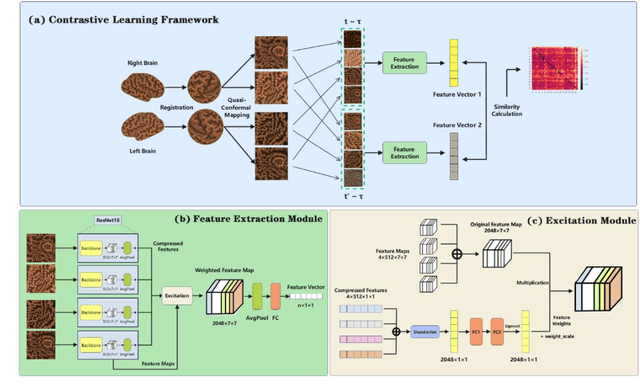

The morphological fingerprint in the brain is capable of identifying the uniqueness of an individual. However, whether such individual patterns are present in perinatal brains, and which morphological attributes or cortical regions better characterize the individual differences of ne-onates remain unclear. In this study, we proposed a deep learning framework that projected three-dimensional spherical meshes of three morphological features (i.e., cortical thickness, mean curvature, and sulcal depth) onto two-dimensional planes through quasi-conformal mapping, and employed the ResNet18 and contrastive learning for individual identification. We used the cross-sectional structural MRI data of 682 infants, incorporating with data augmentation, to train the model and fine-tuned the parameters based on 60 infants who had longitudinal scans. The model was validated on 30 longitudinal scanned infant data, and remarkable Top1 and Top5 accuracies of 71.37% and 84.10% were achieved, respectively. The sensorimotor and visual cortices were recognized as the most contributive regions in individual identification. Moreover, the folding morphology demonstrated greater discriminative capability than the cortical thickness, which could serve as the morphological fingerprint in perinatal brains. These findings provided evidence for the emergence of morphological fingerprints in the brain at the beginning of the third trimester, which may hold promising implications for understanding the formation of in-dividual uniqueness in the brain during early development.
DA-STC: Domain Adaptive Video Semantic Segmentation via Spatio-Temporal Consistency
Nov 22, 2023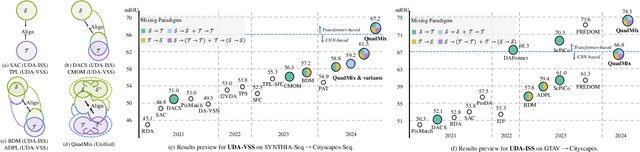
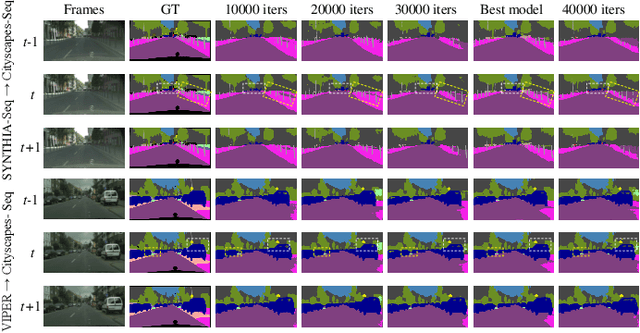
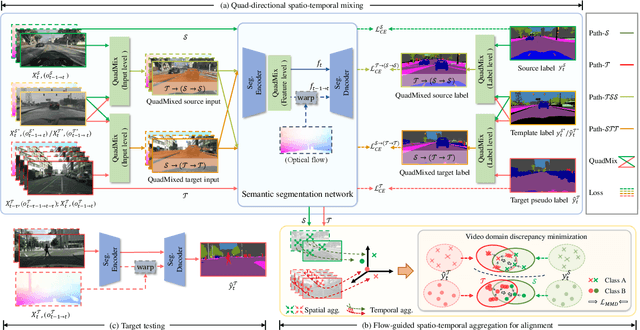
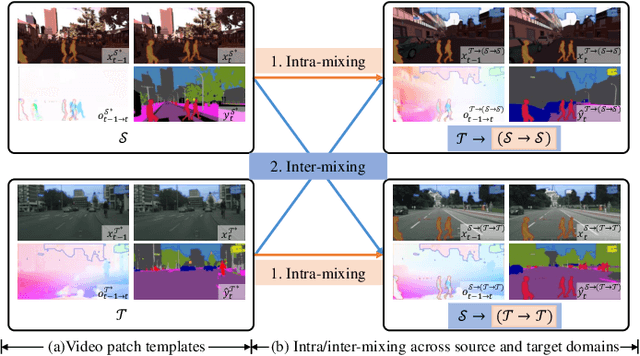
Video semantic segmentation is a pivotal aspect of video representation learning. However, significant domain shifts present a challenge in effectively learning invariant spatio-temporal features across the labeled source domain and unlabeled target domain for video semantic segmentation. To solve the challenge, we propose a novel DA-STC method for domain adaptive video semantic segmentation, which incorporates a bidirectional multi-level spatio-temporal fusion module and a category-aware spatio-temporal feature alignment module to facilitate consistent learning for domain-invariant features. Firstly, we perform bidirectional spatio-temporal fusion at the image sequence level and shallow feature level, leading to the construction of two fused intermediate video domains. This prompts the video semantic segmentation model to consistently learn spatio-temporal features of shared patch sequences which are influenced by domain-specific contexts, thereby mitigating the feature gap between the source and target domain. Secondly, we propose a category-aware feature alignment module to promote the consistency of spatio-temporal features, facilitating adaptation to the target domain. Specifically, we adaptively aggregate the domain-specific deep features of each category along spatio-temporal dimensions, which are further constrained to achieve cross-domain intra-class feature alignment and inter-class feature separation. Extensive experiments demonstrate the effectiveness of our method, which achieves state-of-the-art mIOUs on multiple challenging benchmarks. Furthermore, we extend the proposed DA-STC to the image domain, where it also exhibits superior performance for domain adaptive semantic segmentation. The source code and models will be made available at \url{https://github.com/ZHE-SAPI/DA-STC}.
Melody-conditioned lyrics generation via fine-tuning language model and its evaluation with ChatGPT
Oct 02, 2023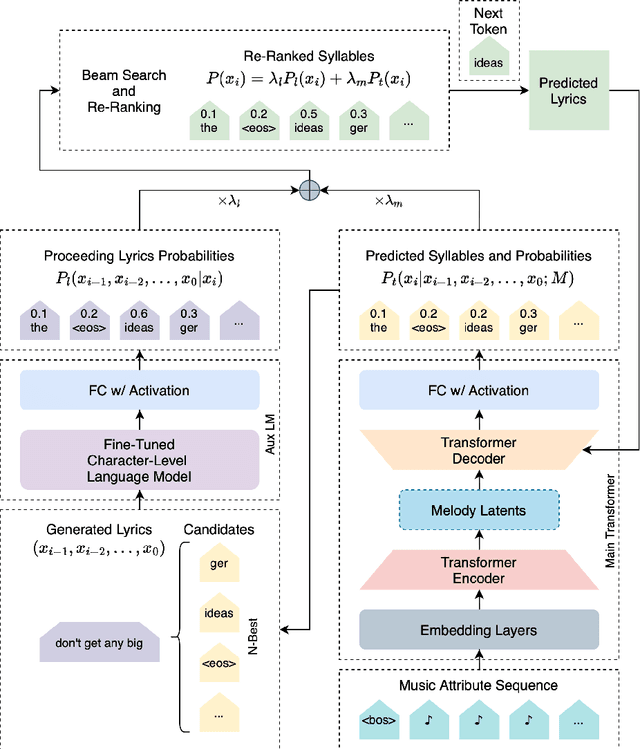
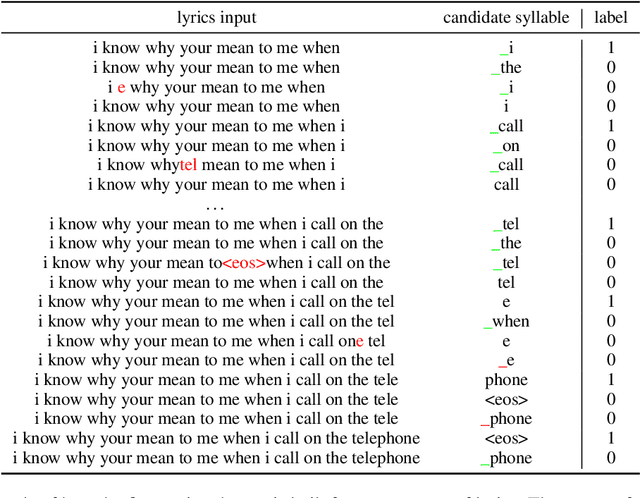
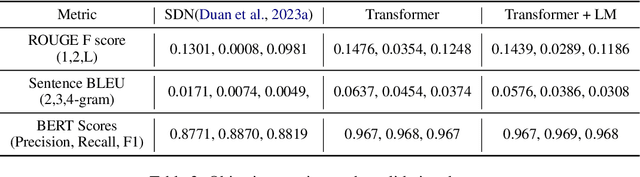
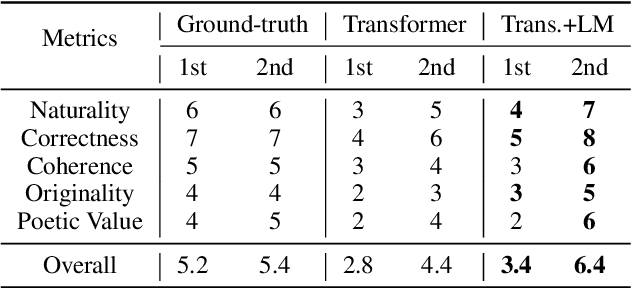
We leverage character-level language models for syllable-level lyrics generation from symbolic melody. By fine-tuning a character-level pre-trained model, we integrate language knowledge into the beam search of a syllable-level Transformer generator. Using ChatGPT-based evaluations, we demonstrate enhanced coherence and correctness in the generated lyrics.
Mani-GPT: A Generative Model for Interactive Robotic Manipulation
Aug 08, 2023
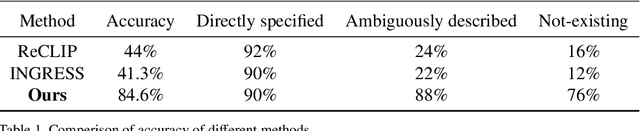
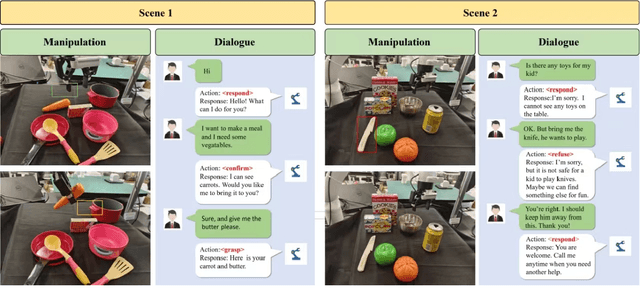

In real-world scenarios, human dialogues are multi-round and diverse. Furthermore, human instructions can be unclear and human responses are unrestricted. Interactive robots face difficulties in understanding human intents and generating suitable strategies for assisting individuals through manipulation. In this article, we propose Mani-GPT, a Generative Pre-trained Transformer (GPT) for interactive robotic manipulation. The proposed model has the ability to understand the environment through object information, understand human intent through dialogues, generate natural language responses to human input, and generate appropriate manipulation plans to assist the human. This makes the human-robot interaction more natural and humanized. In our experiment, Mani-GPT outperforms existing algorithms with an accuracy of 84.6% in intent recognition and decision-making for actions. Furthermore, it demonstrates satisfying performance in real-world dialogue tests with users, achieving an average response accuracy of 70%.
Points-to-3D: Bridging the Gap between Sparse Points and Shape-Controllable Text-to-3D Generation
Jul 26, 2023Text-to-3D generation has recently garnered significant attention, fueled by 2D diffusion models trained on billions of image-text pairs. Existing methods primarily rely on score distillation to leverage the 2D diffusion priors to supervise the generation of 3D models, e.g., NeRF. However, score distillation is prone to suffer the view inconsistency problem, and implicit NeRF modeling can also lead to an arbitrary shape, thus leading to less realistic and uncontrollable 3D generation. In this work, we propose a flexible framework of Points-to-3D to bridge the gap between sparse yet freely available 3D points and realistic shape-controllable 3D generation by distilling the knowledge from both 2D and 3D diffusion models. The core idea of Points-to-3D is to introduce controllable sparse 3D points to guide the text-to-3D generation. Specifically, we use the sparse point cloud generated from the 3D diffusion model, Point-E, as the geometric prior, conditioned on a single reference image. To better utilize the sparse 3D points, we propose an efficient point cloud guidance loss to adaptively drive the NeRF's geometry to align with the shape of the sparse 3D points. In addition to controlling the geometry, we propose to optimize the NeRF for a more view-consistent appearance. To be specific, we perform score distillation to the publicly available 2D image diffusion model ControlNet, conditioned on text as well as depth map of the learned compact geometry. Qualitative and quantitative comparisons demonstrate that Points-to-3D improves view consistency and achieves good shape controllability for text-to-3D generation. Points-to-3D provides users with a new way to improve and control text-to-3D generation.
Controllable Lyrics-to-Melody Generation
Jun 05, 2023Lyrics-to-melody generation is an interesting and challenging topic in AI music research field. Due to the difficulty of learning the correlations between lyrics and melody, previous methods suffer from low generation quality and lack of controllability. Controllability of generative models enables human interaction with models to generate desired contents, which is especially important in music generation tasks towards human-centered AI that can facilitate musicians in creative activities. To address these issues, we propose a controllable lyrics-to-melody generation network, ConL2M, which is able to generate realistic melodies from lyrics in user-desired musical style. Our work contains three main novelties: 1) To model the dependencies of music attributes cross multiple sequences, inter-branch memory fusion (Memofu) is proposed to enable information flow between multi-branch stacked LSTM architecture; 2) Reference style embedding (RSE) is proposed to improve the quality of generation as well as control the musical style of generated melodies; 3) Sequence-level statistical loss (SeqLoss) is proposed to help the model learn sequence-level features of melodies given lyrics. Verified by evaluation metrics for music quality and controllability, initial study of controllable lyrics-to-melody generation shows better generation quality and the feasibility of interacting with users to generate the melodies in desired musical styles when given lyrics.
Event-Centric Query Expansion in Web Search
May 30, 2023
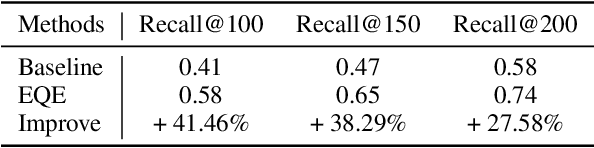
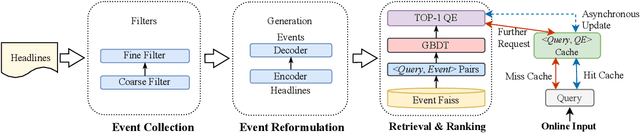
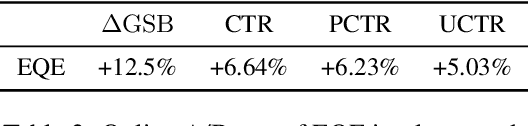
In search engines, query expansion (QE) is a crucial technique to improve search experience. Previous studies often rely on long-term search log mining, which leads to slow updates and is sub-optimal for time-sensitive news searches. In this work, we present Event-Centric Query Expansion (EQE), a novel QE system that addresses these issues by mining the best expansion from a significant amount of potential events rapidly and accurately. This system consists of four stages, i.e., event collection, event reformulation, semantic retrieval and online ranking. Specifically, we first collect and filter news headlines from websites. Then we propose a generation model that incorporates contrastive learning and prompt-tuning techniques to reformulate these headlines to concise candidates. Additionally, we fine-tune a dual-tower semantic model to function as an encoder for event retrieval and explore a two-stage contrastive training approach to enhance the accuracy of event retrieval. Finally, we rank the retrieved events and select the optimal one as QE, which is then used to improve the retrieval of event-related documents. Through offline analysis and online A/B testing, we observe that the EQE system significantly improves many metrics compared to the baseline. The system has been deployed in Tencent QQ Browser Search and served hundreds of millions of users. The dataset and baseline codes are available at https://open-event-hub.github.io/eqe .
CVGG-Net: Ship Recognition for SAR Images Based on Complex-Valued Convolutional Neural Network
May 13, 2023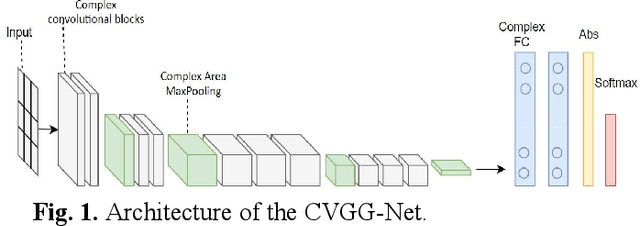
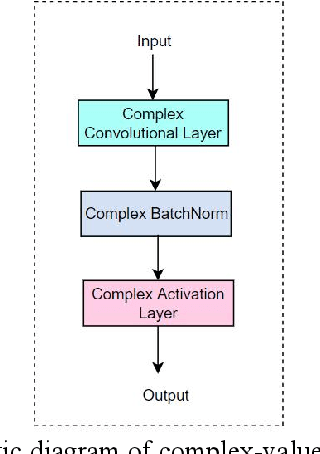
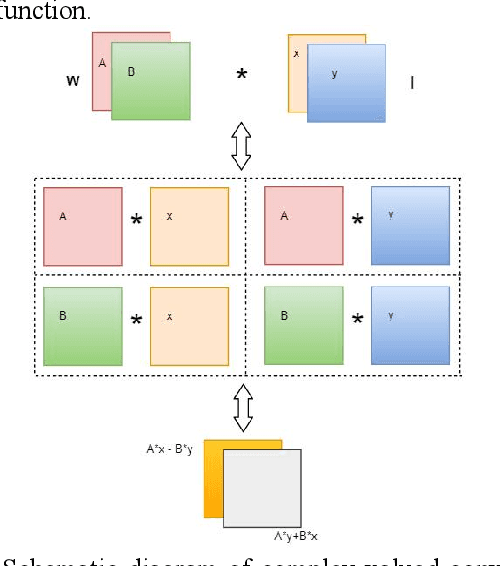
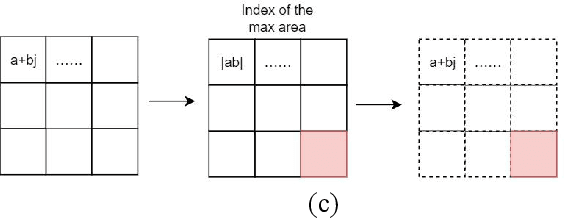
Ship target recognition is a vital task in synthetic aperture radar (SAR) imaging applications. Although convolutional neural networks have been successfully employed for SAR image target recognition, surpassing traditional algorithms, most existing research concentrates on the amplitude domain and neglects the essential phase information. Furthermore, several complex-valued neural networks utilize average pooling to achieve full complex values, resulting in suboptimal performance. To address these concerns, this paper introduces a Complex-valued Convolutional Neural Network (CVGG-Net) specifically designed for SAR image ship recognition. CVGG-Net effectively leverages both the amplitude and phase information in complex-valued SAR data. Additionally, this study examines the impact of various widely-used complex activation functions on network performance and presents a novel complex max-pooling method, called Complex Area Max-Pooling. Experimental results from two measured SAR datasets demonstrate that the proposed algorithm outperforms conventional real-valued convolutional neural networks. The proposed framework is validated on several SAR datasets.
SPHR-SAR-Net: Superpixel High-resolution SAR Imaging Network Based on Nonlocal Total Variation
Apr 10, 2023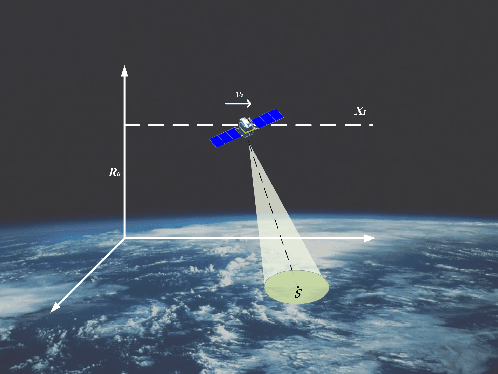
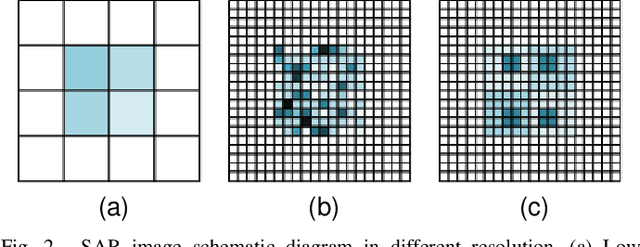
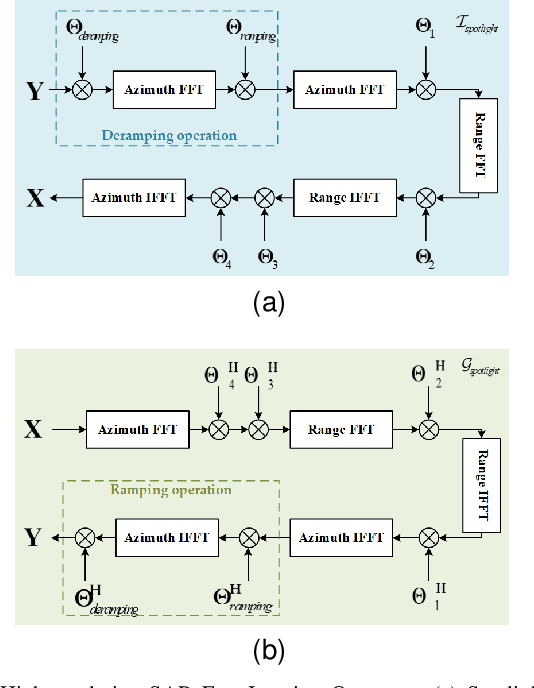
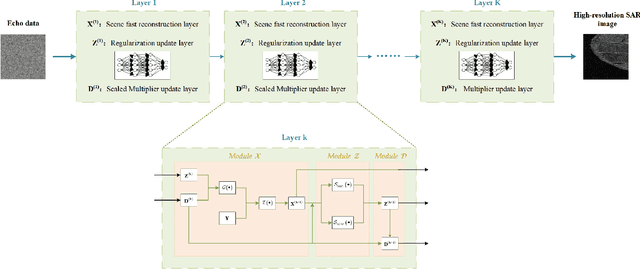
High-resolution is a key trend in the development of synthetic aperture radar (SAR), which enables the capture of fine details and accurate representation of backscattering properties. However, traditional high-resolution SAR imaging algorithms face several challenges. Firstly, these algorithms tend to focus on local information, neglecting non-local information between different pixel patches. Secondly, speckle is more pronounced and difficult to filter out in high-resolution SAR images. Thirdly, the process of high-resolution SAR imaging generally involves high time and computational complexity, making real-time imaging difficult to achieve. To address these issues, we propose a Superpixel High-Resolution SAR Imaging Network (SPHR-SAR-Net) for rapid despeckling in high-resolution SAR mode. Based on the concept of superpixel techniques, we initially combine non-convex and non-local total variation as compound regularization. This approach more effectively despeckles and manages the relationship between pixels while reducing bias effects caused by convex constraints. Subsequently, we solve the compound regularization model using the Alternating Direction Method of Multipliers (ADMM) algorithm and unfold it into a Deep Unfolded Network (DUN). The network's parameters are adaptively learned in a data-driven manner, and the learned network significantly increases imaging speed. Additionally, the Deep Unfolded Network is compatible with high-resolution imaging modes such as spotlight, staring spotlight, and sliding spotlight. In this paper, we demonstrate the superiority of SPHR-SAR-Net through experiments in both simulated and real SAR scenarios. The results indicate that SPHR-SAR-Net can rapidly perform high-resolution SAR imaging from raw echo data, producing accurate imaging results.