 Add to Chrome
 Add to Firefox
 Add to Edge
The Second Challenge on Cross-Domain Few-Shot Object Detection at NTIRE 2026: Methods and Results
Apr 13, 2026
Cross-domain few-shot object detection (CD-FSOD) remains a challenging problem for existing object detectors and few-shot learning approaches, particularly when generalizing across distinct domains. As part of NTIRE 2026, we hosted the second CD-FSOD Challenge to systematically evaluate and promote progress in detecting objects in unseen target domains under limited annotation conditions. The challenge received strong community interest, with 128 registered participants and a total of 696 submissions. Among them, 31 teams actively participated, and 19 teams submitted valid final results. Participants explored a wide range of strategies, introducing innovative methods that push the performance frontier under both open-source and closed-source tracks. This report presents a detailed overview of the NTIRE 2026 CD-FSOD Challenge, including a summary of the submitted approaches and an analysis of the final results across all participating teams. Challenge Codes: https://github.com/ohMargin/NTIRE2026_CDFSOD.

CVGG-Net: Ship Recognition for SAR Images Based on Complex-Valued Convolutional Neural Network
May 13, 2023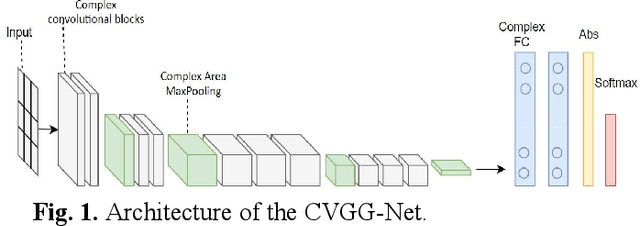
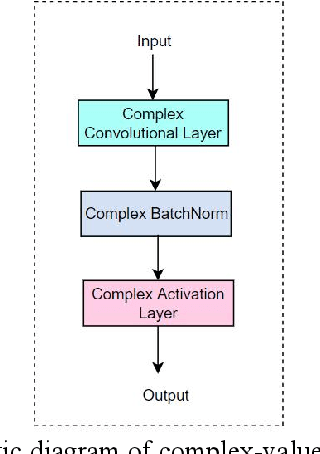
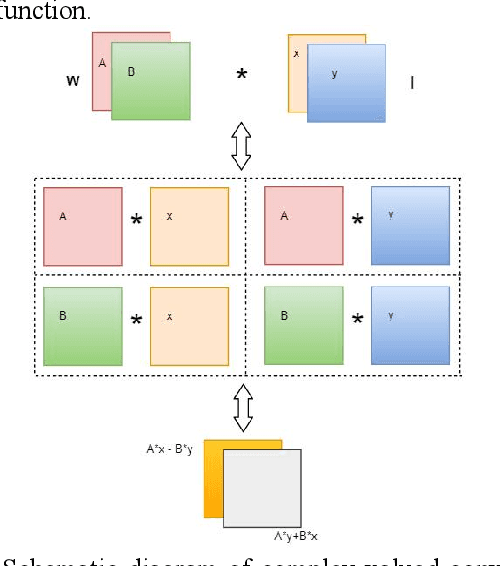
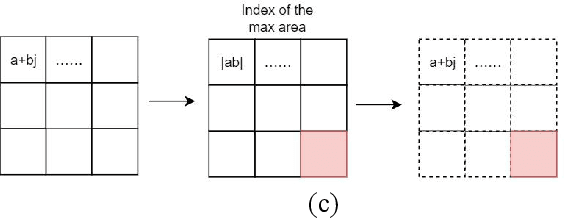
Ship target recognition is a vital task in synthetic aperture radar (SAR) imaging applications. Although convolutional neural networks have been successfully employed for SAR image target recognition, surpassing traditional algorithms, most existing research concentrates on the amplitude domain and neglects the essential phase information. Furthermore, several complex-valued neural networks utilize average pooling to achieve full complex values, resulting in suboptimal performance. To address these concerns, this paper introduces a Complex-valued Convolutional Neural Network (CVGG-Net) specifically designed for SAR image ship recognition. CVGG-Net effectively leverages both the amplitude and phase information in complex-valued SAR data. Additionally, this study examines the impact of various widely-used complex activation functions on network performance and presents a novel complex max-pooling method, called Complex Area Max-Pooling. Experimental results from two measured SAR datasets demonstrate that the proposed algorithm outperforms conventional real-valued convolutional neural networks. The proposed framework is validated on several SAR datasets.