 Add to Chrome
 Add to Firefox
 Add to Edge
Conditional Perceptual Quality Preserving Image Compression
Aug 16, 2023
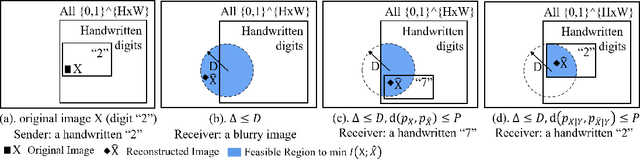

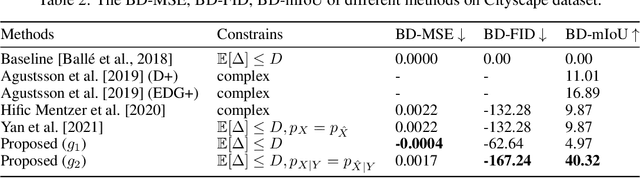
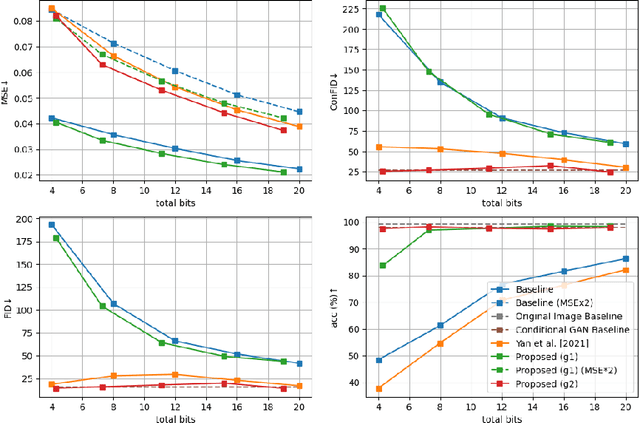
We propose conditional perceptual quality, an extension of the perceptual quality defined in \citet{blau2018perception}, by conditioning it on user defined information. Specifically, we extend the original perceptual quality $d(p_{X},p_{\hat{X}})$ to the conditional perceptual quality $d(p_{X|Y},p_{\hat{X}|Y})$, where $X$ is the original image, $\hat{X}$ is the reconstructed, $Y$ is side information defined by user and $d(.,.)$ is divergence. We show that conditional perceptual quality has similar theoretical properties as rate-distortion-perception trade-off \citep{blau2019rethinking}. Based on these theoretical results, we propose an optimal framework for conditional perceptual quality preserving compression. Experimental results show that our codec successfully maintains high perceptual quality and semantic quality at all bitrate. Besides, by providing a lowerbound of common randomness required, we settle the previous arguments on whether randomness should be incorporated into generator for (conditional) perceptual quality compression. The source code is provided in supplementary material.

Deep Context Interest Network for Click-Through Rate Prediction
Aug 11, 2023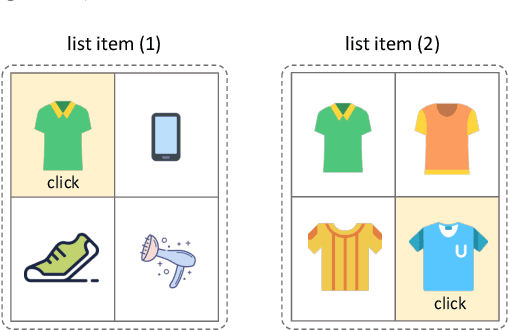
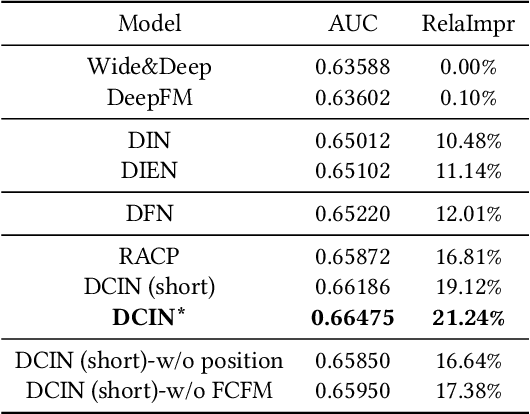
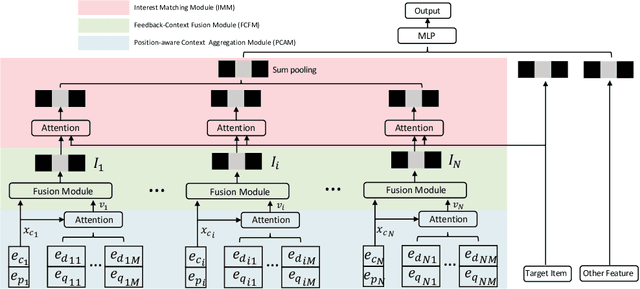
Click-Through Rate (CTR) prediction, estimating the probability of a user clicking on an item, is essential in industrial applications, such as online advertising. Many works focus on user behavior modeling to improve CTR prediction performance. However, most of those methods only model users' positive interests from users' click items while ignoring the context information, which is the display items around the clicks, resulting in inferior performance. In this paper, we highlight the importance of context information on user behavior modeling and propose a novel model named Deep Context Interest Network (DCIN), which integrally models the click and its display context to learn users' context-aware interests. DCIN consists of three key modules: 1) Position-aware Context Aggregation Module (PCAM), which performs aggregation of display items with an attention mechanism; 2) Feedback-Context Fusion Module (FCFM), which fuses the representation of clicks and display contexts through non-linear feature interaction; 3) Interest Matching Module (IMM), which activates interests related with the target item. Moreover, we provide our hands-on solution to implement our DCIN model on large-scale industrial systems. The significant improvements in both offline and online evaluations demonstrate the superiority of our proposed DCIN method. Notably, DCIN has been deployed on our online advertising system serving the main traffic, which brings 1.5% CTR and 1.5% RPM lift.
Phased Deep Spatio-temporal Learning for Highway Traffic Volume Prediction
Aug 11, 2023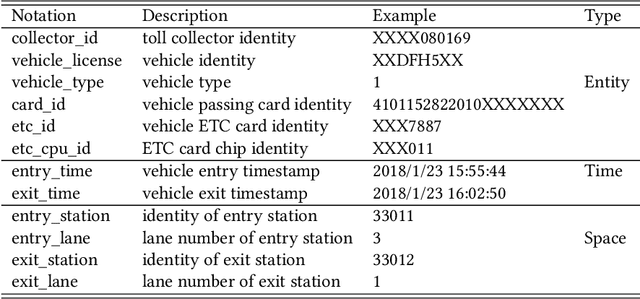

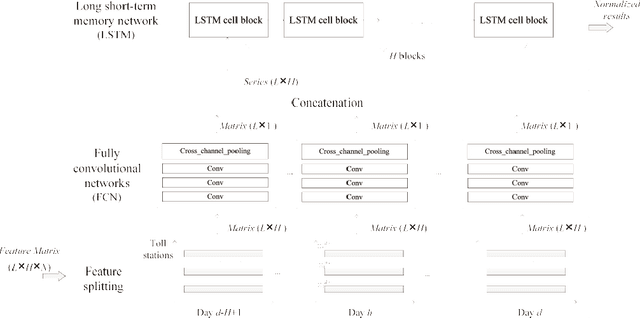
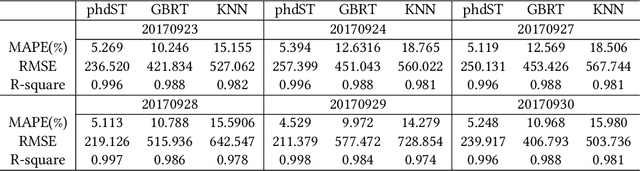
Inter-city highway transportation is significant for citizens' modern urban life and generates heterogeneous sensory data with spatio-temporal characteristics. As a routine analysis in transportation domain, daily traffic volume estimation faces challenges for highway toll stations including lacking of exploration of correlative spatio-temporal features from a long-term perspective and effective means to deal with data imbalance which always deteriorates the predictive performance. In this paper, a deep spatio-temporal learning method is proposed to predict daily traffic volume in three phases. In feature pre-processing phase, data is normalized elaborately according to latent long-tail distribution. In spatio-temporal learning phase, a hybrid model is employed combining fully convolution network (FCN) and long short-term memory (LSTM), which considers time, space, meteorology, and calendar from heterogeneous data. In decision phase, traffic volumes on a coming day at network-wide toll stations would be achieved effectively, which is especially calibrated for vital few highway stations. Using real-world data from one Chinese provincial highway, extensive experiments show our method has distinct improvement for predictive accuracy than various traditional models, reaching 5.269 and 0.997 in MPAE and R-squre metrics, respectively.
Image Synthesis under Limited Data: A Survey and Taxonomy
Jul 31, 2023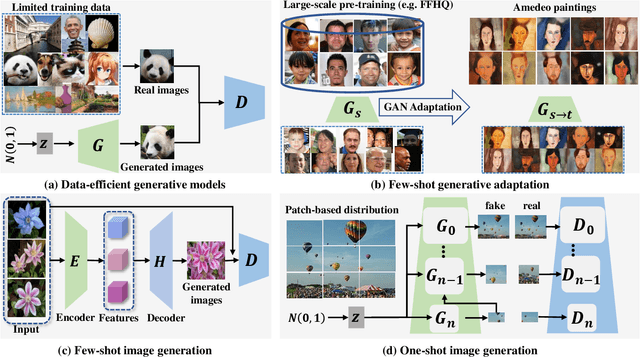
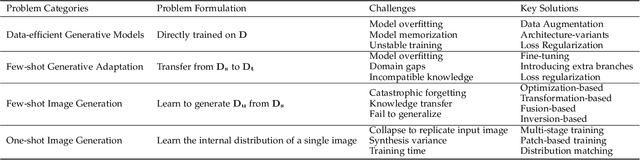
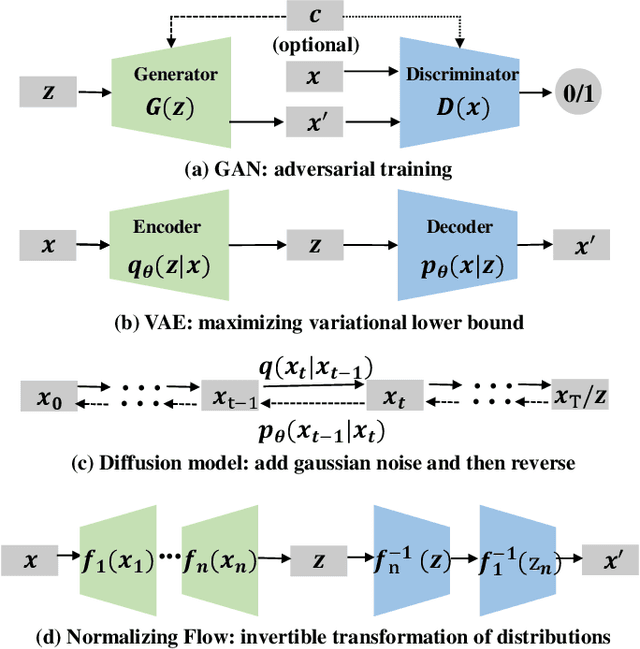
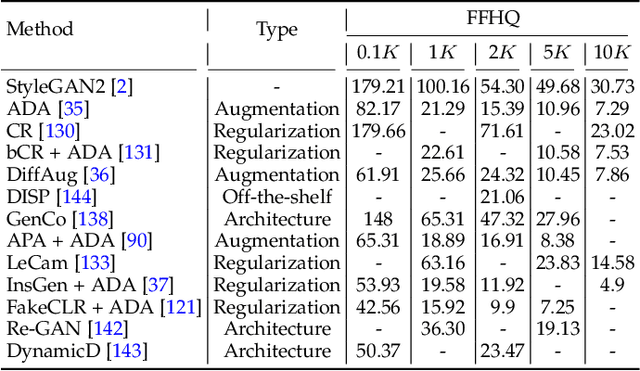
Deep generative models, which target reproducing the given data distribution to produce novel samples, have made unprecedented advancements in recent years. Their technical breakthroughs have enabled unparalleled quality in the synthesis of visual content. However, one critical prerequisite for their tremendous success is the availability of a sufficient number of training samples, which requires massive computation resources. When trained on limited data, generative models tend to suffer from severe performance deterioration due to overfitting and memorization. Accordingly, researchers have devoted considerable attention to develop novel models that are capable of generating plausible and diverse images from limited training data recently. Despite numerous efforts to enhance training stability and synthesis quality in the limited data scenarios, there is a lack of a systematic survey that provides 1) a clear problem definition, critical challenges, and taxonomy of various tasks; 2) an in-depth analysis on the pros, cons, and remain limitations of existing literature; as well as 3) a thorough discussion on the potential applications and future directions in the field of image synthesis under limited data. In order to fill this gap and provide a informative introduction to researchers who are new to this topic, this survey offers a comprehensive review and a novel taxonomy on the development of image synthesis under limited data. In particular, it covers the problem definition, requirements, main solutions, popular benchmarks, and remain challenges in a comprehensive and all-around manner.
A Tutorial on Extremely Large-Scale MIMO for 6G: Fundamentals, Signal Processing, and Applications
Jul 14, 2023Extremely large-scale multiple-input-multiple-output (XL-MIMO), which offers vast spatial degrees of freedom, has emerged as a potentially pivotal enabling technology for the sixth generation (6G) of wireless mobile networks. With its growing significance, both opportunities and challenges are concurrently manifesting. This paper presents a comprehensive survey of research on XL-MIMO wireless systems. In particular, we introduce four XL-MIMO hardware architectures: uniform linear array (ULA)-based XL-MIMO, uniform planar array (UPA)-based XL-MIMO utilizing either patch antennas or point antennas, and continuous aperture (CAP)-based XL-MIMO. We comprehensively analyze and discuss their characteristics and interrelationships. Following this, we examine exact and approximate near-field channel models for XL-MIMO. Given the distinct electromagnetic properties of near-field communications, we present a range of channel models to demonstrate the benefits of XL-MIMO. We further motivate and discuss low-complexity signal processing schemes to promote the practical implementation of XL-MIMO. Furthermore, we explore the interplay between XL-MIMO and other emergent 6G technologies. Finally, we outline several compelling research directions for future XL-MIMO wireless communication systems.
Cell-Free XL-MIMO Meets Multi-Agent Reinforcement Learning: Architectures, Challenges, and Future Directions
Jul 06, 2023Cell-free massive multiple-input multiple-output (mMIMO) and extremely large-scale MIMO (XL-MIMO) are regarded as promising innovations for the forthcoming generation of wireless communication systems. Their significant advantages in augmenting the number of degrees of freedom have garnered considerable interest. In this article, we first review the essential opportunities and challenges induced by XL-MIMO systems. We then propose the enhanced paradigm of cell-free XL-MIMO, which incorporates multi-agent reinforcement learning (MARL) to provide a distributed strategy for tackling the problem of high-dimension signal processing and costly energy consumption. Based on the unique near-field characteristics, we propose two categories of the low-complexity design, i.e., antenna selection and power control, to adapt to different cell-free XL-MIMO scenarios and achieve the maximum data rate. For inspiration, several critical future research directions pertaining to green cell-free XL-MIMO systems are presented.
Evaluation and Control Model Design of Human Factors for Autonomous Driving Systems
Jul 03, 2023With the fast development of driving automation technologies, user psychological acceptance of driving automation has become one of the major obstacles to the adoption of the driving automation technology. The most basic function of a passenger car is to transport passengers or drivers to their destinations safely and comfortably. Thus, the design of the driving automation should not just guarantee the safety of vehicle operation but also ensure occupant subjective level of comfort. Hence this paper proposes a local path planning algorithm for obstacle avoidance with occupant subjective feelings considered. Firstly, turning and obstacle avoidance conditions are designed, and four classifiers in machine learning are used to respectively establish subjective and objective evaluation models that link the objective vehicle dynamics parameters and occupant subjective confidence. Then, two potential fields are established based on the artificial potential field, reflecting the psychological feeling of drivers on obstacles and road boundaries. Accordingly, a path planning algorithm and a path tracking algorithm are designed respectively based on model predictive control, and the psychological safety boundary and the optimal classifier are used as part of cost functions. Finally, co-simulations of MATLAB/Simulink and CarSim are carried out. The results confirm the effectiveness of the proposed control algorithm, which can avoid obstacles satisfactorily and improve the psychological feeling of occupants effectively.
An Efficient Sparse Inference Software Accelerator for Transformer-based Language Models on CPUs
Jun 28, 2023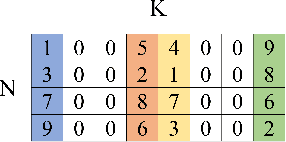
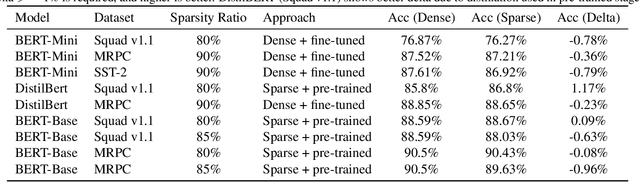
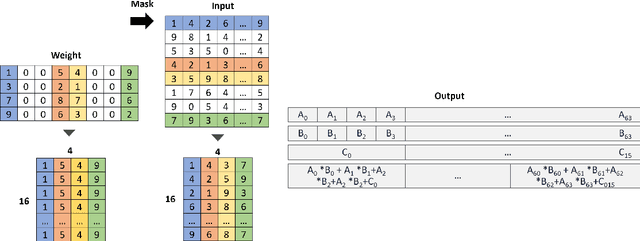
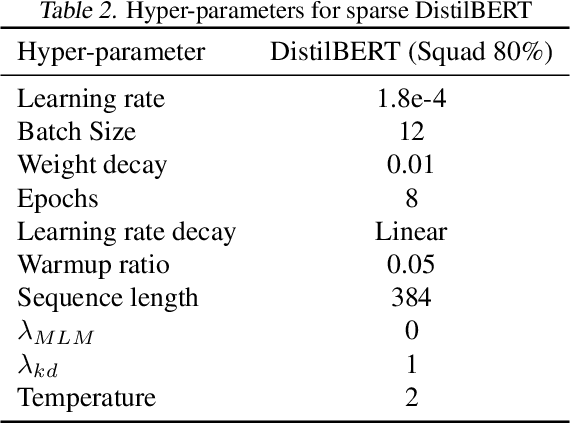
In recent years, Transformer-based language models have become the standard approach for natural language processing tasks. However, stringent throughput and latency requirements in industrial applications are limiting their adoption. To mitigate the gap, model compression techniques such as structured pruning are being used to improve inference efficiency. However, most existing neural network inference runtimes lack adequate support for structured sparsity. In this paper, we propose an efficient sparse deep learning inference software stack for Transformer-based language models where the weights are pruned with constant block size. Our sparse software accelerator leverages Intel Deep Learning Boost to maximize the performance of sparse matrix - dense matrix multiplication (commonly abbreviated as SpMM) on CPUs. Our SpMM kernel outperforms the existing sparse libraries (oneMKL, TVM, and LIBXSMM) by an order of magnitude on a wide range of GEMM shapes under 5 representative sparsity ratios (70%, 75%, 80%, 85%, 90%). Moreover, our SpMM kernel shows up to 5x speedup over dense GEMM kernel of oneDNN, a well-optimized dense library widely used in industry. We apply our sparse accelerator on widely-used Transformer-based language models including Bert-Mini, DistilBERT, Bert-Base, and BERT-Large. Our sparse inference software shows up to 1.5x speedup over Neural Magic's Deepsparse under same configurations on Xeon on Amazon Web Services under proxy production latency constraints. We also compare our solution with two framework-based inference solutions, ONNX Runtime and PyTorch, and demonstrate up to 37x speedup over ONNX Runtime and 345x over PyTorch on Xeon under the latency constraints. All the source code is publicly available on Github: https://github.com/intel/intel-extension-for-transformers.
Federated Learning-based Vehicle Trajectory Prediction against Cyberattacks
Jun 14, 2023With the development of the Internet of Vehicles (IoV), vehicle wireless communication poses serious cybersecurity challenges. Faulty information, such as fake vehicle positions and speeds sent by surrounding vehicles, could cause vehicle collisions, traffic jams, and even casualties. Additionally, private vehicle data leakages, such as vehicle trajectory and user account information, may damage user property and security. Therefore, achieving a cyberattack-defense scheme in the IoV system with faulty data saturation is necessary. This paper proposes a Federated Learning-based Vehicle Trajectory Prediction Algorithm against Cyberattacks (FL-TP) to address the above problems. The FL-TP is intensively trained and tested using a publicly available Vehicular Reference Misbehavior (VeReMi) dataset with five types of cyberattacks: constant, constant offset, random, random offset, and eventual stop. The results show that the proposed FL-TP algorithm can improve cyberattack detection and trajectory prediction by up to 6.99% and 54.86%, respectively, under the maximum cyberattack permeability scenarios compared with benchmark methods.
Muti-Scale And Token Mergence: Make Your ViT More Efficient
Jun 08, 2023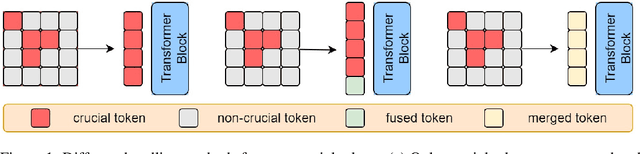
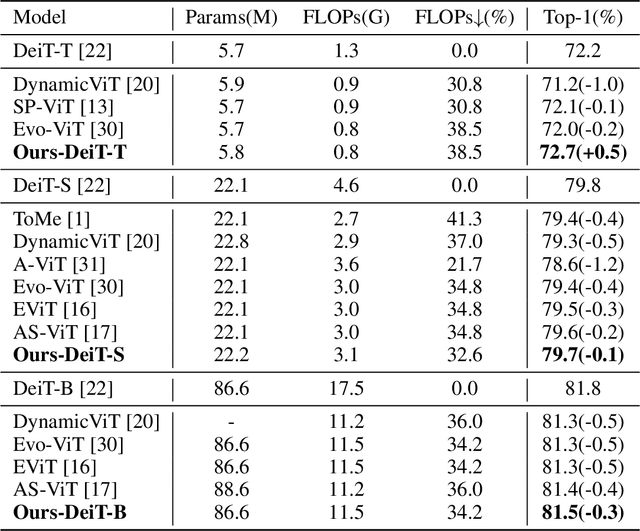
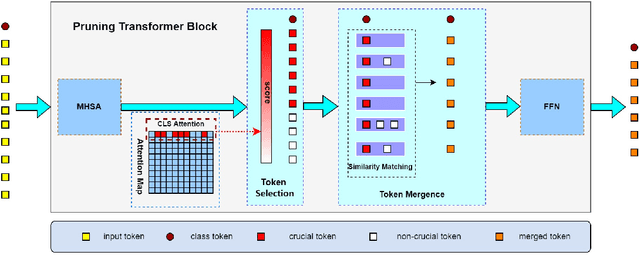
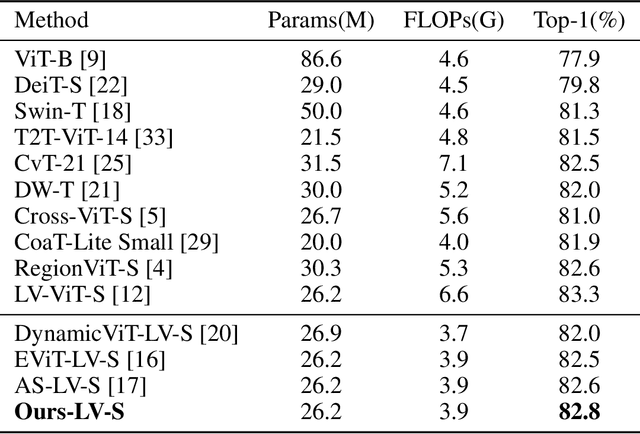
Since its inception, Vision Transformer (ViT) has emerged as a prevalent model in the computer vision domain. Nonetheless, the multi-head self-attention (MHSA) mechanism in ViT is computationally expensive due to its calculation of relationships among all tokens. Although some techniques mitigate computational overhead by discarding tokens, this also results in the loss of potential information from those tokens. To tackle these issues, we propose a novel token pruning method that retains information from non-crucial tokens by merging them with more crucial tokens, thereby mitigating the impact of pruning on model performance. Crucial and non-crucial tokens are identified by their importance scores and merged based on similarity scores. Furthermore, multi-scale features are exploited to represent images, which are fused prior to token pruning to produce richer feature representations. Importantly, our method can be seamlessly integrated with various ViTs, enhancing their adaptability. Experimental evidence substantiates the efficacy of our approach in reducing the influence of token pruning on model performance. For instance, on the ImageNet dataset, it achieves a remarkable 33% reduction in computational costs while only incurring a 0.1% decrease in accuracy on DeiT-S.