 Add to Chrome
 Add to Firefox
 Add to Edge
Not All Actions Are Equal: Rethinking Conditioning for Dexterous World Model
Jun 25, 2026
Recent advances in action-conditioned world models show promising progress in modeling complex interactions and forecasting future states under diverse action sequences. While these models are often driven by stronger visual representations and model capacity, action conditioning itself remains underexplored. Most existing approaches compress the entire action sequence into a single representation, which works well for low-DoF control but becomes less reliable in high-DoF scenarios. We observe that high-DoF dexterous actions are inherently heterogeneous, spanning multiple orders of magnitude, where large-scale motions coexist with subtle but important signals. When uniformly aggregated, optimization exhibits an imbalance across action components, which hinders the modeling of fine-grained effects and affects action fidelity. We therefore propose DexAC-WM, which treats action conditioning as a structured process rather than global compression. DexAC preserves dimension-level semantics via action tokenization and aligns action signals with visual dynamics through local refinement and global modulation. To address the limited high-level semantic grounding in existing world models, we further introduce a semantic branch that provides rich object-scene priors, which enables world model to capture dynamic visual details while supporting high-DoF action-conditioned video prediction. Experiments on EgoDex and EgoVerse show that combining the semantic branch with DexAC significantly improves FID, FVD, and PCK, demonstrating gains in visual-temporal realism and action-following consistency. We further verify that DexAC extends to other backbones, showing the scalability of our structured action-conditioning design. These results suggest that scaling world models to high-DoF control requires both structured action modeling and semantic grounding.

A Neuromorphic Reinforcement Learning Framework for Efficient Pathfinding in Robotic Mobile Fulfillment Systems
Jun 18, 2026Dynamic environmental changes, confined workspaces, and stringent real-time constraints make pathfinding in Robotic Mobile Fulfillment Systems (RMFS) a challenging problem for conventional search- and rule-based methods, which typically suffer from high computational complexity and long decision latency. While reinforcement learning (RL) has emerged as a powerful alternative, deploying learned policies with extreme energy efficiency on resource-constrained hardware remains an open challenge. We present SDQN-RMFS, an end-to-end framework that achieves high-fidelity deployment of an RL-trained policy from a full-precision artificial neural network (ANN) through to a neuromorphic chip. By computing only when triggered by sparse events, this framework unlocks ultra-low-power RMFS pathfinding. Our full-stack pipeline operates as follows: an ANN policy is first efficiently trained via a collision-allowing strategy to densify informative trajectories, and then converted into a spiking neural network (SNN) via a hard-label knowledge distillation approach. This effectively addresses the output distribution mismatch, preserving policy capability across the ANN-to-SNN pipeline while substantially reducing inference latency. Hardware experiments demonstrate up to 11,281$\times$ energy savings and a nearly two-fold reduction in latency compared to a high-performance GPU baseline, while maintaining decision quality on par with the original trained policy. These results establish physical neuromorphic inference as a practical and energy-sustainable pathway for large-scale RMFS operations.
HumanoidArena: Benchmarking Egocentric Hierarchical Whole-body Learning
Jun 16, 2026Humanoid robots promise whole-body interaction in human-centered environments, but scalable policy learning remains difficult because task-level decision-making and whole-body dynamic execution are tightly coupled. A practical solution is hierarchical control, where a high-level policy predicts intermediate whole-body actions and low-level general motion trackers (GMTs) execute them as stable humanoid motion. However, existing benchmarks rarely evaluate the policy-tracker interface itself, leaving open whether intermediate whole-body actions are executable, robust under task distribution shifts, and transferable across different GMT backends. We introduce HumanoidArena, a simulation-first benchmark for egocentric hierarchical whole-body learning. The benchmark formulates policy learning as a hierarchical decision making problem: a high-level policy converts egocentric vision, proprioception, and instructions into a compact whole-body action, which is subsequently executed by a low-level GMT. Instead of treating the legs as planar transport tools, HumanoidArena emphasizes interactions where lower-body coordination is structurally necessary in task completion. We therefore design 7 leg-critical HOI/HSI tasks in which success requires foot placement, balance maintenance, posture adjustment, and whole-body reorientation. To further diagnose the hierarchical system, we evaluate policies from two complementary perspectives: perturbation-conditioned generalization and GMT-conditioned transfer. Experiments show that hierarchical control enables learned policies to solve diverse leg-critical interactions, but performance is strongly tracker-conditioned and cross-GMT transfer remains fragile. These results position HumanoidArena as a benchmark for studying transferable intermediate action representations and scalable egocentric whole-body policy learning.
What Limits Vision-and-Language Navigation ?
May 13, 2026Vision-and-Language Navigation (VLN) is a cornerstone of embodied intelligence. However, current agents often suffer from significant performance degradation when transitioning from simulation to real-world deployment, primarily due to perceptual instability (e.g., lighting variations and motion blur) and under-specified instructions. While existing methods attempt to bridge this gap by scaling up model size and training data, we argue that the bottleneck lies in the lack of robust spatial grounding and cross-domain priors. In this paper, we propose StereoNav, a robust Vision-Language-Action framework designed to enhance real-world navigation consistency. To address the inherent gap between synthetic training and physical execution, we introduce Target-Location Priors as a persistent bridge. These priors provide stable visual guidance that remains invariant across domains, effectively grounding the agent even when instructions are vague. Furthermore, to mitigate visual disturbances like motion blur and illumination shifts, StereoNav leverages stereo vision to construct a unified representation of semantics and geometry, enabling precise action prediction through enhanced depth awareness. Extensive experiments on R2R-CE and RxR-CE demonstrate that StereoNav achieves state-of-the-art egocentric RGB performance, with SR and SPL scores of 81.1% and 68.3%, and 67.5% and 52.0%, respectively, while using significantly fewer parameters and less training data than prior scaling-based approaches. More importantly, real-world robotic deployments confirm that StereoNav substantially improves navigation reliability in complex, unstructured environments. Project page: https://yunheng-wang.github.io/stereonav-public.github.io.
UniGround: Universal 3D Visual Grounding via Training-Free Scene Parsing
Mar 09, 2026Understanding and localizing objects in complex 3D environments from natural language descriptions, known as 3D Visual Grounding (3DVG), is a foundational challenge in embodied AI, with broad implications for robotics, augmented reality, and human-machine interaction. Large-scale pre-trained foundation models have driven significant progress on this front, enabling open-vocabulary 3DVG that allows systems to locate arbitrary objects in a given scene. However, their reliance on pre-trained models constrains 3D perception and reasoning within the inherited knowledge boundaries, resulting in limited generalization to unseen spatial relationships and poor robustness to out-of-distribution scenes. In this paper, we replace this constrained perception with training-free visual and geometric reasoning, thereby unlocking open-world 3DVG that enables the localization of any object in any scene beyond the training data. Specifically, the proposed UniGround operates in two stages: a Global Candidate Filtering stage that constructs scene candidates through training-free 3D topology and multi-view semantic encoding, and a Local Precision Grounding stage that leverages multi-scale visual prompting and structured reasoning to precisely identify the target object. Experiments on ScanRefer and EmbodiedScan show that UniGround achieves 46.1\%/34.1\% Acc@0.25/0.5 on ScanRefer and 28.7\% Acc@0.25 on EmbodiedScan, establishing a new state-of-the-art among zero-shot methods on EmbodiedScan without any 3D supervision. We further evaluate UniGround in real-world environments under uncontrolled reconstruction conditions and substantial domain shift, showing training-free reasoning generalizes robustly beyond curated benchmarks.
Spherical Latent Motion Prior for Physics-Based Simulated Humanoid Control
Mar 01, 2026Learning motion priors for physics-based humanoid control is an active research topic. Existing approaches mainly include variational autoencoders (VAE) and adversarial motion priors (AMP). VAE introduces information loss, and random latent sampling may sometimes produce invalid behaviors. AMP suffers from mode collapse and struggles to capture diverse motion skills. We present the Spherical Latent Motion Prior (SLMP), a two-stage method for learning motion priors. In the first stage, we train a high-quality motion tracking controller. In the second stage, we distill the tracking controller into a spherical latent space. A combination of distillation, a discriminator, and a discriminator-guided local semantic consistency constraint shapes a structured latent action space, allowing stable random sampling without information loss. To evaluate SLMP, we collect a two-hour human combat motion capture dataset and show that SLMP preserves fine motion detail without information loss, and random sampling yields semantically valid and stable behaviors. When applied to a two-agent physics-based combat task, SLMP produces human-like and physically plausible combat behaviors only using simple rule-based rewards. Furthermore, SLMP generalizes across different humanoid robot morphologies, demonstrating its transferability beyond a single simulated avatar.
Iterative Closed-Loop Motion Synthesis for Scaling the Capabilities of Humanoid Control
Feb 25, 2026Physics-based humanoid control relies on training with motion datasets that have diverse data distributions. However, the fixed difficulty distribution of datasets limits the performance ceiling of the trained control policies. Additionally, the method of acquiring high-quality data through professional motion capture systems is constrained by costs, making it difficult to achieve large-scale scalability. To address these issues, we propose a closed-loop automated motion data generation and iterative framework. It can generate high-quality motion data with rich action semantics, including martial arts, dance, combat, sports, gymnastics, and more. Furthermore, our framework enables difficulty iteration of policies and data through physical metrics and objective evaluations, allowing the trained tracker to break through its original difficulty limits. On the PHC single-primitive tracker, using only approximately 1/10 of the AMASS dataset size, the average failure rate on the test set (2201 clips) is reduced by 45\% compared to the baseline. Finally, we conduct comprehensive ablation and comparative experiments to highlight the rationality and advantages of our framework.
HERO: Hierarchical Traversable 3D Scene Graphs for Embodied Navigation Among Movable Obstacles
Dec 17, 20253D Scene Graphs (3DSGs) constitute a powerful representation of the physical world, distinguished by their abilities to explicitly model the complex spatial, semantic, and functional relationships between entities, rendering a foundational understanding that enables agents to interact intelligently with their environment and execute versatile behaviors. Embodied navigation, as a crucial component of such capabilities, leverages the compact and expressive nature of 3DSGs to enable long-horizon reasoning and planning in complex, large-scale environments. However, prior works rely on a static-world assumption, defining traversable space solely based on static spatial layouts and thereby treating interactable obstacles as non-traversable. This fundamental limitation severely undermines their effectiveness in real-world scenarios, leading to limited reachability, low efficiency, and inferior extensibility. To address these issues, we propose HERO, a novel framework for constructing Hierarchical Traversable 3DSGs, that redefines traversability by modeling operable obstacles as pathways, capturing their physical interactivity, functional semantics, and the scene's relational hierarchy. The results show that, relative to its baseline, HERO reduces PL by 35.1% in partially obstructed environments and increases SR by 79.4% in fully obstructed ones, demonstrating substantially higher efficiency and reachability.
Adaptive Scaling of Policy Constraints for Offline Reinforcement Learning
Aug 27, 2025Offline reinforcement learning (RL) enables learning effective policies from fixed datasets without any environment interaction. Existing methods typically employ policy constraints to mitigate the distribution shift encountered during offline RL training. However, because the scale of the constraints varies across tasks and datasets of differing quality, existing methods must meticulously tune hyperparameters to match each dataset, which is time-consuming and often impractical. We propose Adaptive Scaling of Policy Constraints (ASPC), a second-order differentiable framework that dynamically balances RL and behavior cloning (BC) during training. We theoretically analyze its performance improvement guarantee. In experiments on 39 datasets across four D4RL domains, ASPC using a single hyperparameter configuration outperforms other adaptive constraint methods and state-of-the-art offline RL algorithms that require per-dataset tuning while incurring only minimal computational overhead. The code will be released at https://github.com/Colin-Jing/ASPC.
Hierarchical Multi-Label Contrastive Learning for Protein-Protein Interaction Prediction Across Organisms
Jul 03, 2025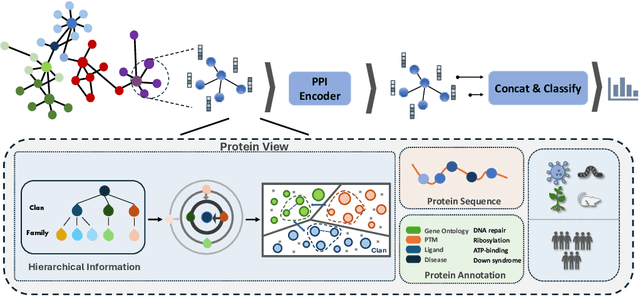
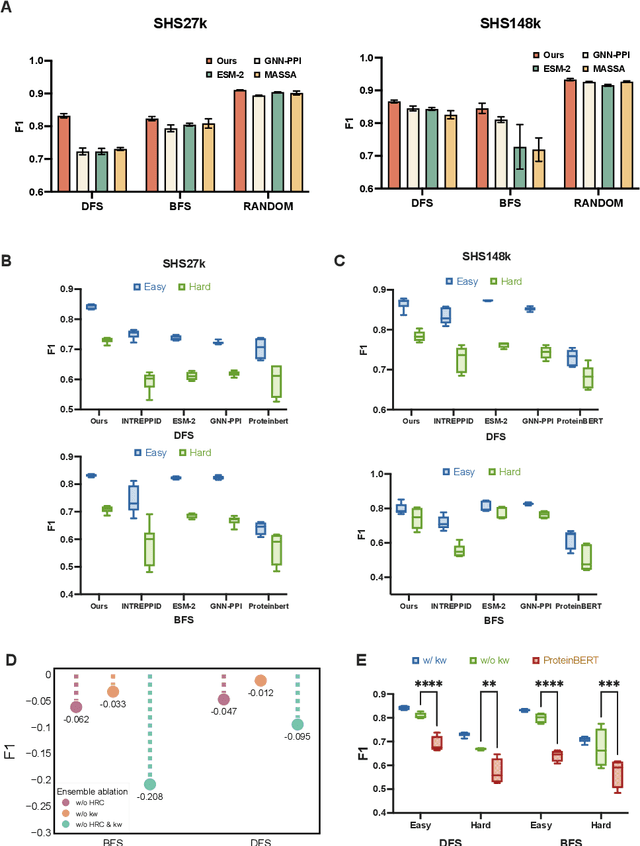
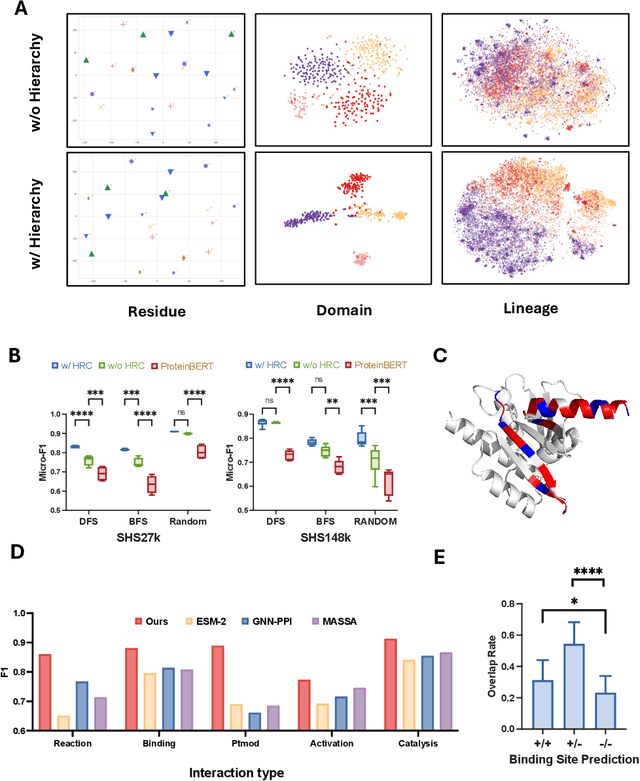
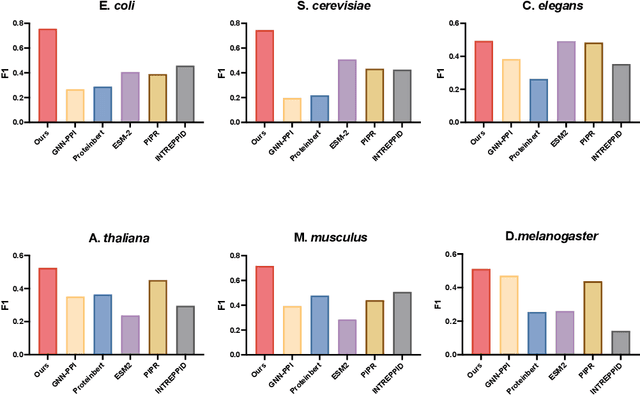
Recent advances in AI for science have highlighted the power of contrastive learning in bridging heterogeneous biological data modalities. Building on this paradigm, we propose HIPPO (HIerarchical Protein-Protein interaction prediction across Organisms), a hierarchical contrastive framework for protein-protein interaction(PPI) prediction, where protein sequences and their hierarchical attributes are aligned through multi-tiered biological representation matching. The proposed approach incorporates hierarchical contrastive loss functions that emulate the structured relationship among functional classes of proteins. The framework adaptively incorporates domain and family knowledge through a data-driven penalty mechanism, enforcing consistency between the learned embedding space and the intrinsic hierarchy of protein functions. Experiments on benchmark datasets demonstrate that HIPPO achieves state-of-the-art performance, outperforming existing methods and showing robustness in low-data regimes. Notably, the model demonstrates strong zero-shot transferability to other species without retraining, enabling reliable PPI prediction and functional inference even in less characterized or rare organisms where experimental data are limited. Further analysis reveals that hierarchical feature fusion is critical for capturing conserved interaction determinants, such as binding motifs and functional annotations. This work advances cross-species PPI prediction and provides a unified framework for interaction prediction in scenarios with sparse or imbalanced multi-species data.