 Add to Chrome
 Add to Firefox
 Add to Edge
OccuBench: Evaluating AI Agents on Real-World Professional Tasks via Language World Models
Apr 13, 2026
AI agents are expected to perform professional work across hundreds of occupational domains (from emergency department triage to nuclear reactor safety monitoring to customs import processing), yet existing benchmarks can only evaluate agents in the few domains where public environments exist. We introduce OccuBench, a benchmark covering 100 real-world professional task scenarios across 10 industry categories and 65 specialized domains, enabled by Language World Models (LWMs) that simulate domain-specific environments through LLM-driven tool response generation. Our multi-agent synthesis pipeline automatically produces evaluation instances with guaranteed solvability, calibrated difficulty, and document-grounded diversity. OccuBench evaluates agents along two complementary dimensions: task completion across professional domains and environmental robustness under controlled fault injection (explicit errors, implicit data degradation, and mixed faults). We evaluate 15 frontier models across 8 model families and find that: (1) no single model dominates all industries, as each has a distinct occupational capability profile; (2) implicit faults (truncated data, missing fields) are harder than both explicit errors (timeouts, 500s) and mixed faults, because they lack overt error signals and require the agent to independently detect data degradation; (3) larger models, newer generations, and higher reasoning effort consistently improve performance. GPT-5.2 improves by 27.5 points from minimal to maximum reasoning effort; and (4) strong agents are not necessarily strong environment simulators. Simulator quality is critical for LWM-based evaluation reliability. OccuBench provides the first systematic cross-industry evaluation of AI agents on professional occupational tasks.

Vector Field Augmented Differentiable Policy Learning for Vision-Based Drone Racing
Mar 09, 2026Autonomous drone racing in complex environments requires agile, high-speed flight while maintaining reliable obstacle avoidance. Differentiable-physics-based policy learning has recently demonstrated high sample efficiency and remarkable performance across various tasks, including agile drone flight and quadruped locomotion. However, applying such methods to drone racing remains difficult, as key objective like gate traversal are inherently hard to express as smooth, differentiable losses. To address these challenges, we propose DiffRacing, a novel vector field-augmented differentiable policy learning framework. DiffRacing integrates differentiable losses and vector fields into the training process to provide continuous and stable gradient signals, balancing obstacle avoidance and high-speed gate traversal. In addition, a differentiable Delta Action Model compensates for dynamics mismatch, enabling efficient sim-to-real transfer without explicit system identification. Extensive simulation and real-world experiments demonstrate that DiffRacing achieves superior sample efficiency, faster convergence, and robust flight performance, thereby demonstrating that vector fields can augment traditional gradient-based policy learning with a task-specific geometric prior.
DeepPlanning: Benchmarking Long-Horizon Agentic Planning with Verifiable Constraints
Jan 26, 2026While agent evaluation has shifted toward long-horizon tasks, most benchmarks still emphasize local, step-level reasoning rather than the global constrained optimization (e.g., time and financial budgets) that demands genuine planning ability. Meanwhile, existing LLM planning benchmarks underrepresent the active information gathering and fine-grained local constraints typical of real-world settings. To address this, we introduce DeepPlanning, a challenging benchmark for practical long-horizon agent planning. It features multi-day travel planning and multi-product shopping tasks that require proactive information acquisition, local constrained reasoning, and global constrained optimization. Evaluations on DeepPlanning show that even frontier agentic LLMs struggle with these problems, highlighting the importance of reliable explicit reasoning patterns and parallel tool use for achieving better effectiveness-efficiency trade-offs. Error analysis further points to promising directions for improving agentic LLMs over long planning horizons. We open-source the code and data to support future research.
Mastering Diverse, Unknown, and Cluttered Tracks for Robust Vision-Based Drone Racing
Dec 11, 2025Most reinforcement learning(RL)-based methods for drone racing target fixed, obstacle-free tracks, leaving the generalization to unknown, cluttered environments largely unaddressed. This challenge stems from the need to balance racing speed and collision avoidance, limited feasible space causing policy exploration trapped in local optima during training, and perceptual ambiguity between gates and obstacles in depth maps-especially when gate positions are only coarsely specified. To overcome these issues, we propose a two-phase learning framework: an initial soft-collision training phase that preserves policy exploration for high-speed flight, followed by a hard-collision refinement phase that enforces robust obstacle avoidance. An adaptive, noise-augmented curriculum with an asymmetric actor-critic architecture gradually shifts the policy's reliance from privileged gate-state information to depth-based visual input. We further impose Lipschitz constraints and integrate a track-primitive generator to enhance motion stability and cross-environment generalization. We evaluate our framework through extensive simulation and ablation studies, and validate it in real-world experiments on a computationally constrained quadrotor. The system achieves agile flight while remaining robust to gate-position errors, developing a generalizable drone racing framework with the capability to operate in diverse, partially unknown and cluttered environments. https://yufengsjtu.github.io/MasterRacing.github.io/
One Model to Critique Them All: Rewarding Agentic Tool-Use via Efficient Reasoning
Oct 30, 2025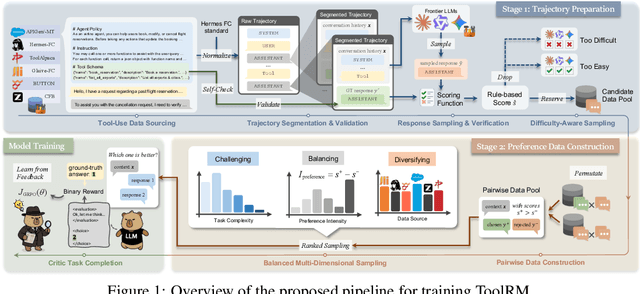

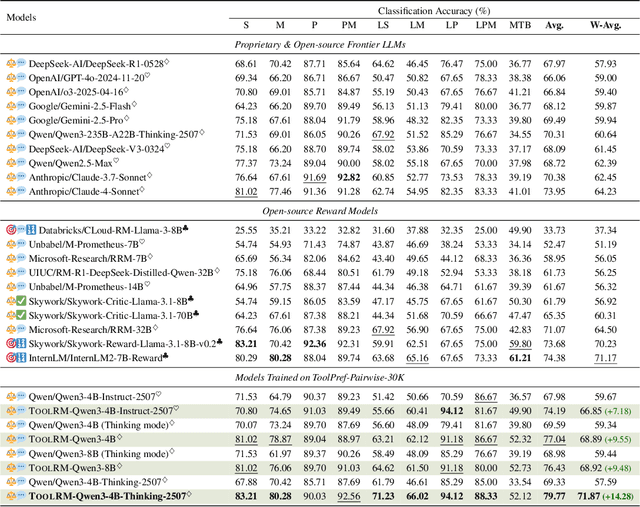
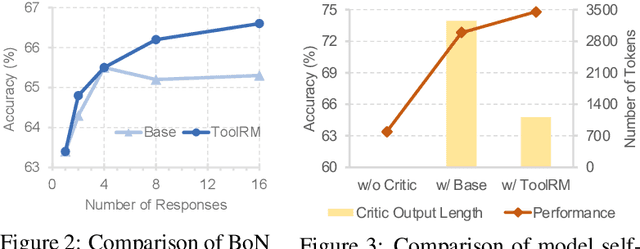
Reward models (RMs) play a critical role in aligning large language models (LLMs) with human preferences. Yet in the domain of tool learning, the lack of RMs specifically designed for function-calling tasks has limited progress toward more capable agentic AI. We introduce ToolRM, a family of lightweight generative RMs tailored for general tool-use scenarios. To build these models, we propose a novel pipeline that constructs pairwise preference data using rule-based scoring and multidimensional sampling. This yields ToolPref-Pairwise-30K, a diverse, balanced, and challenging dataset of critique tasks that supports reinforcement learning with verifiable feedback. To evaluate tool-use RMs, we also introduce TRBench$_{BFCL}$, a benchmark built on the agentic evaluation suite BFCL. Trained on our constructed data, models from the Qwen3-4B/8B series achieve up to 14.28% higher accuracy, substantially outperforming frontier models such as Claude 4 and OpenAI o3 in pairwise reward judgments. Beyond training objectives, ToolRM generalizes to broader critique tasks, including Best-of-N sampling and self-correction. Experiments on ACEBench highlight its effectiveness and efficiency, enabling inference-time scaling and reducing output token usage by over 66%. We release data and model checkpoints to facilitate future research.
RMTBench: Benchmarking LLMs Through Multi-Turn User-Centric Role-Playing
Jul 27, 2025Recent advancements in Large Language Models (LLMs) have shown outstanding potential for role-playing applications. Evaluating these capabilities is becoming crucial yet remains challenging. Existing benchmarks mostly adopt a \textbf{character-centric} approach, simplify user-character interactions to isolated Q&A tasks, and fail to reflect real-world applications. To address this limitation, we introduce RMTBench, a comprehensive \textbf{user-centric} bilingual role-playing benchmark featuring 80 diverse characters and over 8,000 dialogue rounds. RMTBench includes custom characters with detailed backgrounds and abstract characters defined by simple traits, enabling evaluation across various user scenarios. Our benchmark constructs dialogues based on explicit user motivations rather than character descriptions, ensuring alignment with practical user applications. Furthermore, we construct an authentic multi-turn dialogue simulation mechanism. With carefully selected evaluation dimensions and LLM-based scoring, this mechanism captures the complex intention of conversations between the user and the character. By shifting focus from character background to user intention fulfillment, RMTBench bridges the gap between academic evaluation and practical deployment requirements, offering a more effective framework for assessing role-playing capabilities in LLMs. All code and datasets will be released soon.
Qwen3 Technical Report
May 14, 2025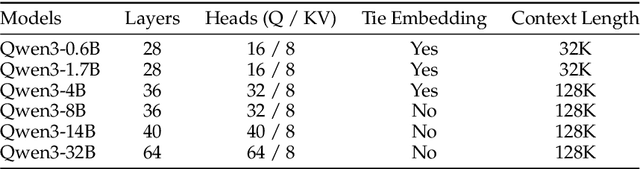
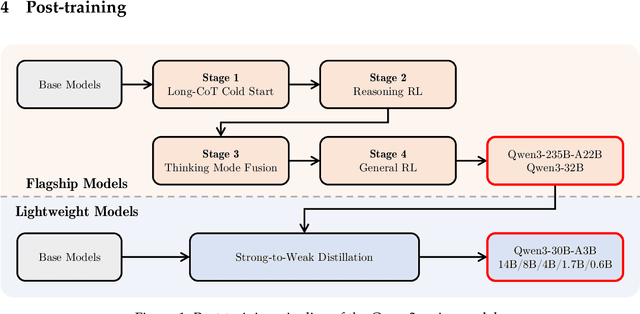

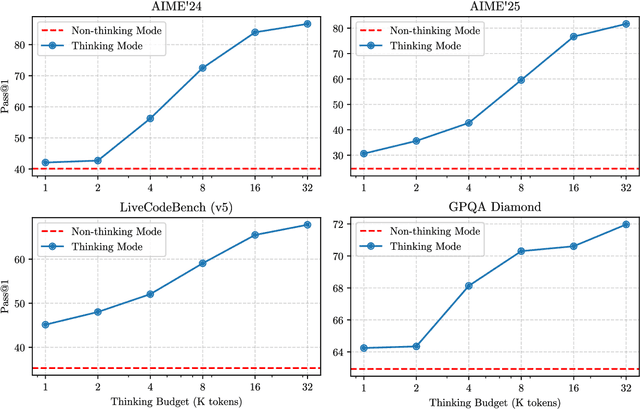
In this work, we present Qwen3, the latest version of the Qwen model family. Qwen3 comprises a series of large language models (LLMs) designed to advance performance, efficiency, and multilingual capabilities. The Qwen3 series includes models of both dense and Mixture-of-Expert (MoE) architectures, with parameter scales ranging from 0.6 to 235 billion. A key innovation in Qwen3 is the integration of thinking mode (for complex, multi-step reasoning) and non-thinking mode (for rapid, context-driven responses) into a unified framework. This eliminates the need to switch between different models--such as chat-optimized models (e.g., GPT-4o) and dedicated reasoning models (e.g., QwQ-32B)--and enables dynamic mode switching based on user queries or chat templates. Meanwhile, Qwen3 introduces a thinking budget mechanism, allowing users to allocate computational resources adaptively during inference, thereby balancing latency and performance based on task complexity. Moreover, by leveraging the knowledge from the flagship models, we significantly reduce the computational resources required to build smaller-scale models, while ensuring their highly competitive performance. Empirical evaluations demonstrate that Qwen3 achieves state-of-the-art results across diverse benchmarks, including tasks in code generation, mathematical reasoning, agent tasks, etc., competitive against larger MoE models and proprietary models. Compared to its predecessor Qwen2.5, Qwen3 expands multilingual support from 29 to 119 languages and dialects, enhancing global accessibility through improved cross-lingual understanding and generation capabilities. To facilitate reproducibility and community-driven research and development, all Qwen3 models are publicly accessible under Apache 2.0.
PWC-MoE: Privacy-Aware Wireless Collaborative Mixture of Experts
May 13, 2025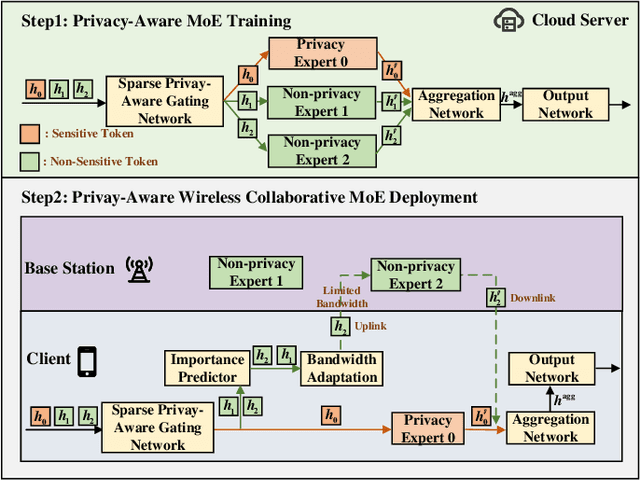
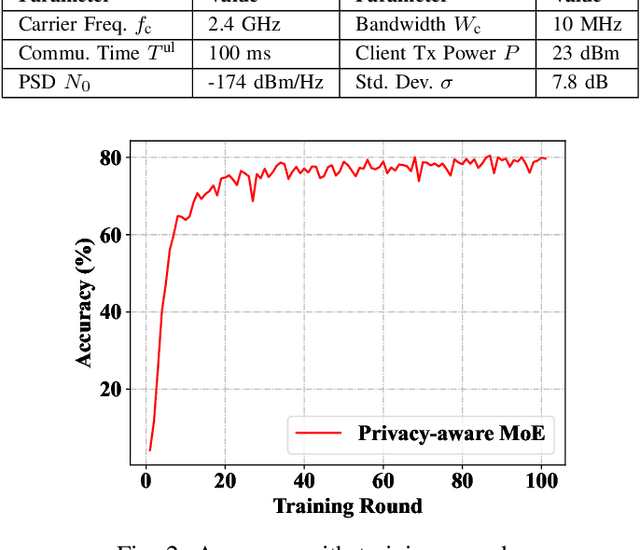
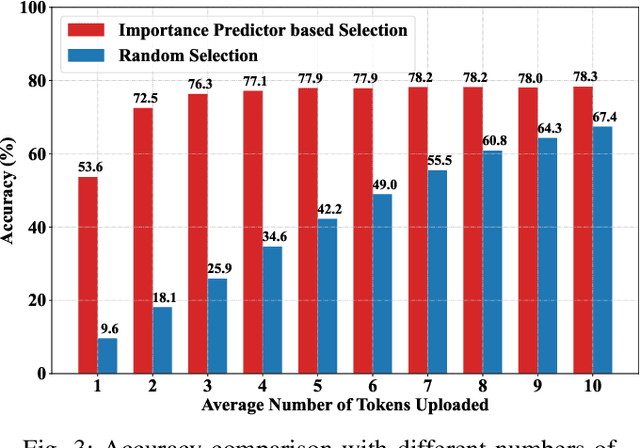
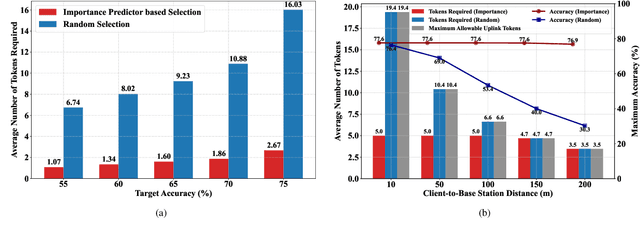
Large language models (LLMs) hosted on cloud servers alleviate the computational and storage burdens on local devices but raise privacy concerns due to sensitive data transmission and require substantial communication bandwidth, which is challenging in constrained environments. In contrast, small language models (SLMs) running locally enhance privacy but suffer from limited performance on complex tasks. To balance computational cost, performance, and privacy protection under bandwidth constraints, we propose a privacy-aware wireless collaborative mixture of experts (PWC-MoE) framework. Specifically, PWC-MoE employs a sparse privacy-aware gating network to dynamically route sensitive tokens to privacy experts located on local clients, while non-sensitive tokens are routed to non-privacy experts located at the remote base station. To achieve computational efficiency, the gating network ensures that each token is dynamically routed to and processed by only one expert. To enhance scalability and prevent overloading of specific experts, we introduce a group-wise load-balancing mechanism for the gating network that evenly distributes sensitive tokens among privacy experts and non-sensitive tokens among non-privacy experts. To adapt to bandwidth constraints while preserving model performance, we propose a bandwidth-adaptive and importance-aware token offloading scheme. This scheme incorporates an importance predictor to evaluate the importance scores of non-sensitive tokens, prioritizing the most important tokens for transmission to the base station based on their predicted importance and the available bandwidth. Experiments demonstrate that the PWC-MoE framework effectively preserves privacy and maintains high performance even in bandwidth-constrained environments, offering a practical solution for deploying LLMs in privacy-sensitive and bandwidth-limited scenarios.
Large-Scale AI in Telecom: Charting the Roadmap for Innovation, Scalability, and Enhanced Digital Experiences
Mar 06, 2025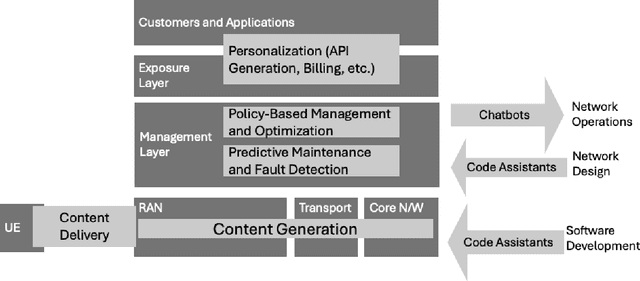
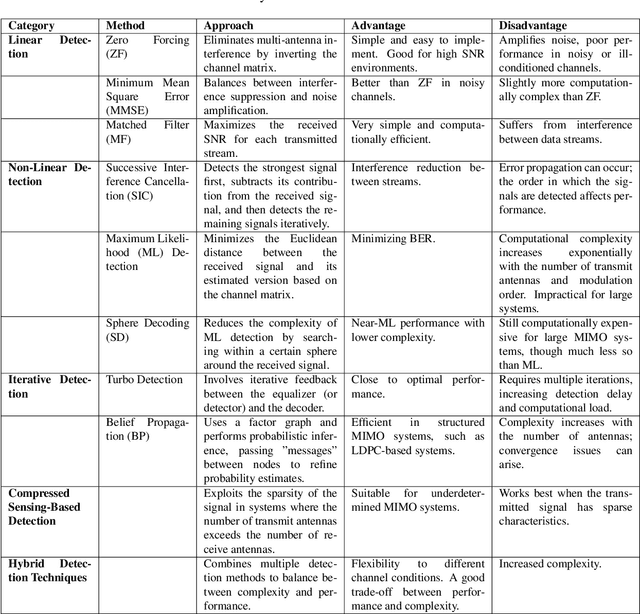
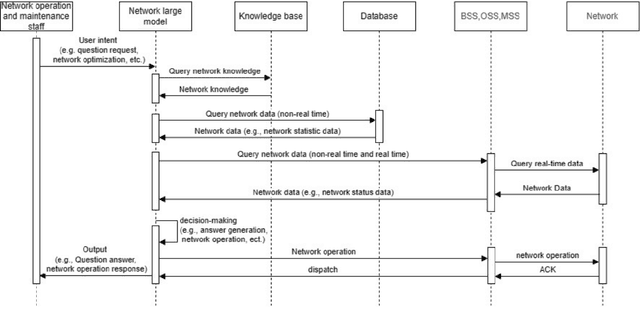
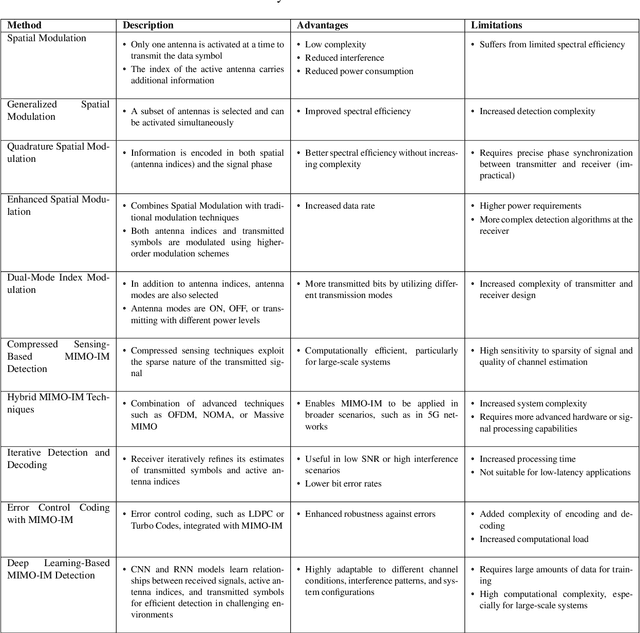
This white paper discusses the role of large-scale AI in the telecommunications industry, with a specific focus on the potential of generative AI to revolutionize network functions and user experiences, especially in the context of 6G systems. It highlights the development and deployment of Large Telecom Models (LTMs), which are tailored AI models designed to address the complex challenges faced by modern telecom networks. The paper covers a wide range of topics, from the architecture and deployment strategies of LTMs to their applications in network management, resource allocation, and optimization. It also explores the regulatory, ethical, and standardization considerations for LTMs, offering insights into their future integration into telecom infrastructure. The goal is to provide a comprehensive roadmap for the adoption of LTMs to enhance scalability, performance, and user-centric innovation in telecom networks.
Gaze-Guided Robotic Vascular Ultrasound Leveraging Human Intention Estimation
Feb 07, 2025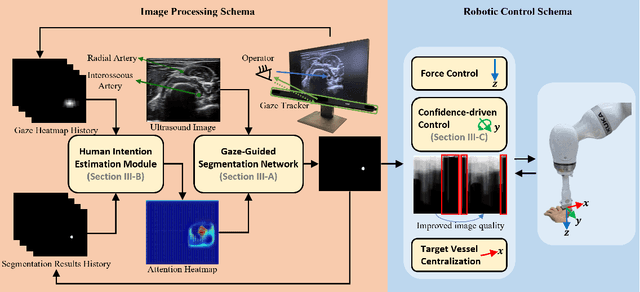
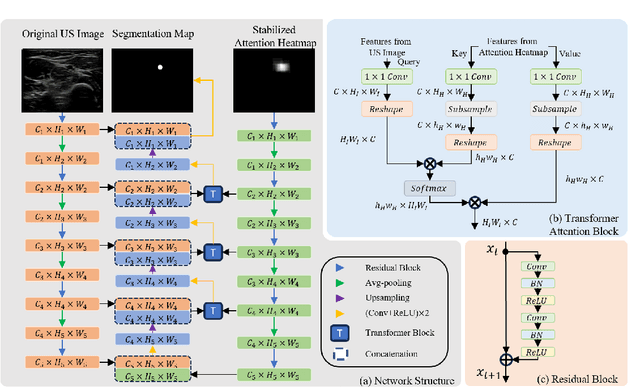
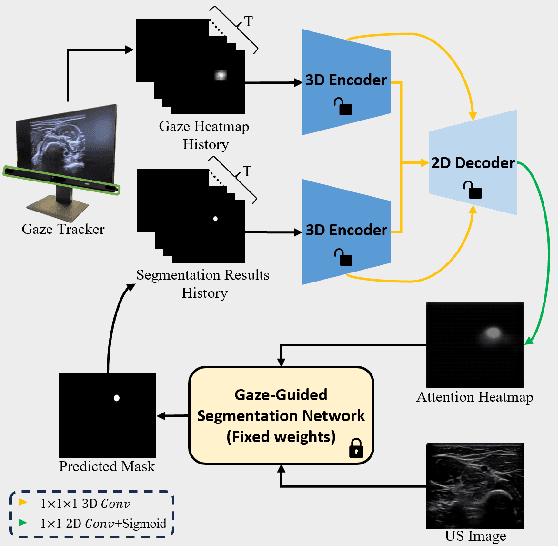
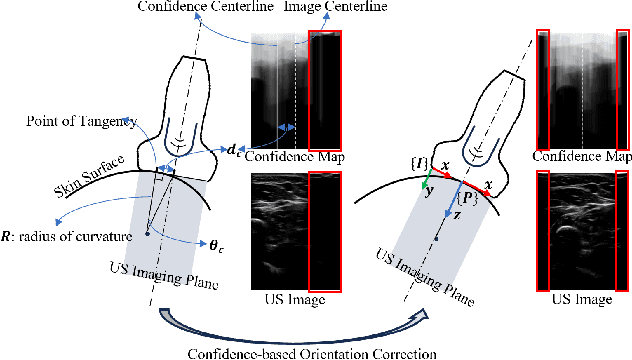
Medical ultrasound has been widely used to examine vascular structure in modern clinical practice. However, traditional ultrasound examination often faces challenges related to inter- and intra-operator variation. The robotic ultrasound system (RUSS) appears as a potential solution for such challenges because of its superiority in stability and reproducibility. Given the complex anatomy of human vasculature, multiple vessels often appear in ultrasound images, or a single vessel bifurcates into branches, complicating the examination process. To tackle this challenge, this work presents a gaze-guided RUSS for vascular applications. A gaze tracker captures the eye movements of the operator. The extracted gaze signal guides the RUSS to follow the correct vessel when it bifurcates. Additionally, a gaze-guided segmentation network is proposed to enhance segmentation robustness by exploiting gaze information. However, gaze signals are often noisy, requiring interpretation to accurately discern the operator's true intentions. To this end, this study proposes a stabilization module to process raw gaze data. The inferred attention heatmap is utilized as a region proposal to aid segmentation and serve as a trigger signal when the operator needs to adjust the scanning target, such as when a bifurcation appears. To ensure appropriate contact between the probe and surface during scanning, an automatic ultrasound confidence-based orientation correction method is developed. In experiments, we demonstrated the efficiency of the proposed gaze-guided segmentation pipeline by comparing it with other methods. Besides, the performance of the proposed gaze-guided RUSS was also validated as a whole on a realistic arm phantom with an uneven surface.