 Add to Chrome
 Add to Firefox
 Add to Edge
SceneTAP: Scene-Coherent Typographic Adversarial Planner against Vision-Language Models in Real-World Environments
Nov 28, 2024


Large vision-language models (LVLMs) have shown remarkable capabilities in interpreting visual content. While existing works demonstrate these models' vulnerability to deliberately placed adversarial texts, such texts are often easily identifiable as anomalous. In this paper, we present the first approach to generate scene-coherent typographic adversarial attacks that mislead advanced LVLMs while maintaining visual naturalness through the capability of the LLM-based agent. Our approach addresses three critical questions: what adversarial text to generate, where to place it within the scene, and how to integrate it seamlessly. We propose a training-free, multi-modal LLM-driven scene-coherent typographic adversarial planning (SceneTAP) that employs a three-stage process: scene understanding, adversarial planning, and seamless integration. The SceneTAP utilizes chain-of-thought reasoning to comprehend the scene, formulate effective adversarial text, strategically plan its placement, and provide detailed instructions for natural integration within the image. This is followed by a scene-coherent TextDiffuser that executes the attack using a local diffusion mechanism. We extend our method to real-world scenarios by printing and placing generated patches in physical environments, demonstrating its practical implications. Extensive experiments show that our scene-coherent adversarial text successfully misleads state-of-the-art LVLMs, including ChatGPT-4o, even after capturing new images of physical setups. Our evaluations demonstrate a significant increase in attack success rates while maintaining visual naturalness and contextual appropriateness. This work highlights vulnerabilities in current vision-language models to sophisticated, scene-coherent adversarial attacks and provides insights into potential defense mechanisms.

Relation-Aware Meta-Learning for Zero-shot Sketch-Based Image Retrieval
Nov 28, 2024Sketch-based image retrieval (SBIR) relies on free-hand sketches to retrieve natural photos within the same class. However, its practical application is limited by its inability to retrieve classes absent from the training set. To address this limitation, the task has evolved into Zero-Shot Sketch-Based Image Retrieval (ZS-SBIR), where model performance is evaluated on unseen categories. Traditional SBIR primarily focuses on narrowing the domain gap between photo and sketch modalities. However, in the zero-shot setting, the model not only needs to address this cross-modal discrepancy but also requires a strong generalization capability to transfer knowledge to unseen categories. To this end, we propose a novel framework for ZS-SBIR that employs a pair-based relation-aware quadruplet loss to bridge feature gaps. By incorporating two negative samples from different modalities, the approach prevents positive features from becoming disproportionately distant from one modality while remaining close to another, thus enhancing inter-class separability. We also propose a Relation-Aware Meta-Learning Network (RAMLN) to obtain the margin, a hyper-parameter of cross-modal quadruplet loss, to improve the generalization ability of the model. RAMLN leverages external memory to store feature information, which it utilizes to assign optimal margin values. Experimental results obtained on the extended Sketchy and TU-Berlin datasets show a sharp improvement over existing state-of-the-art methods in ZS-SBIR.
Hybrid Discriminative Attribute-Object Embedding Network for Compositional Zero-Shot Learning
Nov 28, 2024Compositional Zero-Shot Learning (CZSL) recognizes new combinations by learning from known attribute-object pairs. However, the main challenge of this task lies in the complex interactions between attributes and object visual representations, which lead to significant differences in images. In addition, the long-tail label distribution in the real world makes the recognition task more complicated. To address these problems, we propose a novel method, named Hybrid Discriminative Attribute-Object Embedding (HDA-OE) network. To increase the variability of training data, HDA-OE introduces an attribute-driven data synthesis (ADDS) module. ADDS generates new samples with diverse attribute labels by combining multiple attributes of the same object. By expanding the attribute space in the dataset, the model is encouraged to learn and distinguish subtle differences between attributes. To further improve the discriminative ability of the model, HDA-OE introduces the subclass-driven discriminative embedding (SDDE) module, which enhances the subclass discriminative ability of the encoding by embedding subclass information in a fine-grained manner, helping to capture the complex dependencies between attributes and object visual features. The proposed model has been evaluated on three benchmark datasets, and the results verify its effectiveness and reliability.
Weakly Supervised Framework Considering Multi-temporal Information for Large-scale Cropland Mapping with Satellite Imagery
Nov 27, 2024Accurately mapping large-scale cropland is crucial for agricultural production management and planning. Currently, the combination of remote sensing data and deep learning techniques has shown outstanding performance in cropland mapping. However, those approaches require massive precise labels, which are labor-intensive. To reduce the label cost, this study presented a weakly supervised framework considering multi-temporal information for large-scale cropland mapping. Specifically, we extract high-quality labels according to their consistency among global land cover (GLC) products to construct the supervised learning signal. On the one hand, to alleviate the overfitting problem caused by the model's over-trust of remaining errors in high-quality labels, we encode the similarity/aggregation of cropland in the visual/spatial domain to construct the unsupervised learning signal, and take it as the regularization term to constrain the supervised part. On the other hand, to sufficiently leverage the plentiful information in the samples without high-quality labels, we also incorporate the unsupervised learning signal in these samples, enriching the diversity of the feature space. After that, to capture the phenological features of croplands, we introduce dense satellite image time series (SITS) to extend the proposed framework in the temporal dimension. We also visualized the high dimensional phenological features to uncover how multi-temporal information benefits cropland extraction, and assessed the method's robustness under conditions of data scarcity. The proposed framework has been experimentally validated for strong adaptability across three study areas (Hunan Province, Southeast France, and Kansas) in large-scale cropland mapping, and the internal mechanism and temporal generalizability are also investigated.
Decoding Urban Industrial Complexity: Enhancing Knowledge-Driven Insights via IndustryScopeGPT
Nov 24, 2024


Industrial parks are critical to urban economic growth. Yet, their development often encounters challenges stemming from imbalances between industrial requirements and urban services, underscoring the need for strategic planning and operations. This paper introduces IndustryScopeKG, a pioneering large-scale multi-modal, multi-level industrial park knowledge graph, which integrates diverse urban data including street views, corporate, socio-economic, and geospatial information, capturing the complex relationships and semantics within industrial parks. Alongside this, we present the IndustryScopeGPT framework, which leverages Large Language Models (LLMs) with Monte Carlo Tree Search to enhance tool-augmented reasoning and decision-making in Industrial Park Planning and Operation (IPPO). Our work significantly improves site recommendation and functional planning, demonstrating the potential of combining LLMs with structured datasets to advance industrial park management. This approach sets a new benchmark for intelligent IPPO research and lays a robust foundation for advancing urban industrial development. The dataset and related code are available at https://github.com/Tongji-KGLLM/IndustryScope.
* 9 pages, 6 figures, the 32nd ACM International Conference on Multimedia
Interactive Visual Assessment for Text-to-Image Generation Models
Nov 23, 2024Visual generation models have achieved remarkable progress in computer graphics applications but still face significant challenges in real-world deployment. Current assessment approaches for visual generation tasks typically follow an isolated three-phase framework: test input collection, model output generation, and user assessment. These fashions suffer from fixed coverage, evolving difficulty, and data leakage risks, limiting their effectiveness in comprehensively evaluating increasingly complex generation models. To address these limitations, we propose DyEval, an LLM-powered dynamic interactive visual assessment framework that facilitates collaborative evaluation between humans and generative models for text-to-image systems. DyEval features an intuitive visual interface that enables users to interactively explore and analyze model behaviors, while adaptively generating hierarchical, fine-grained, and diverse textual inputs to continuously probe the capability boundaries of the models based on their feedback. Additionally, to provide interpretable analysis for users to further improve tested models, we develop a contextual reflection module that mines failure triggers of test inputs and reflects model potential failure patterns supporting in-depth analysis using the logical reasoning ability of LLM. Qualitative and quantitative experiments demonstrate that DyEval can effectively help users identify max up to 2.56 times generation failures than conventional methods, and uncover complex and rare failure patterns, such as issues with pronoun generation and specific cultural context generation. Our framework provides valuable insights for improving generative models and has broad implications for advancing the reliability and capabilities of visual generation systems across various domains.
Privacy-Preserving Video Anomaly Detection: A Survey
Nov 21, 2024


Video Anomaly Detection (VAD) aims to automatically analyze spatiotemporal patterns in surveillance videos collected from open spaces to detect anomalous events that may cause harm without physical contact. However, vision-based surveillance systems such as closed-circuit television often capture personally identifiable information. The lack of transparency and interpretability in video transmission and usage raises public concerns about privacy and ethics, limiting the real-world application of VAD. Recently, researchers have focused on privacy concerns in VAD by conducting systematic studies from various perspectives including data, features, and systems, making Privacy-Preserving Video Anomaly Detection (P2VAD) a hotspot in the AI community. However, current research in P2VAD is fragmented, and prior reviews have mostly focused on methods using RGB sequences, overlooking privacy leakage and appearance bias considerations. To address this gap, this article systematically reviews the progress of P2VAD for the first time, defining its scope and providing an intuitive taxonomy. We outline the basic assumptions, learning frameworks, and optimization objectives of various approaches, analyzing their strengths, weaknesses, and potential correlations. Additionally, we provide open access to research resources such as benchmark datasets and available code. Finally, we discuss key challenges and future opportunities from the perspectives of AI development and P2VAD deployment, aiming to guide future work in the field.
Global Challenge for Safe and Secure LLMs Track 1
Nov 21, 2024


This paper introduces the Global Challenge for Safe and Secure Large Language Models (LLMs), a pioneering initiative organized by AI Singapore (AISG) and the CyberSG R&D Programme Office (CRPO) to foster the development of advanced defense mechanisms against automated jailbreaking attacks. With the increasing integration of LLMs in critical sectors such as healthcare, finance, and public administration, ensuring these models are resilient to adversarial attacks is vital for preventing misuse and upholding ethical standards. This competition focused on two distinct tracks designed to evaluate and enhance the robustness of LLM security frameworks. Track 1 tasked participants with developing automated methods to probe LLM vulnerabilities by eliciting undesirable responses, effectively testing the limits of existing safety protocols within LLMs. Participants were challenged to devise techniques that could bypass content safeguards across a diverse array of scenarios, from offensive language to misinformation and illegal activities. Through this process, Track 1 aimed to deepen the understanding of LLM vulnerabilities and provide insights for creating more resilient models.
Understanding Chain-of-Thought in LLMs through Information Theory
Nov 18, 2024Large Language Models (LLMs) have shown impressive performance in complex reasoning tasks through Chain-of-Thought (CoT) reasoning, allowing models to break down problems into manageable sub-tasks. However, existing CoT evaluation techniques either require annotated CoT data or fall short in accurately assessing intermediate reasoning steps, leading to high rates of false positives. In this paper, we formalize CoT reasoning in LLMs through an information-theoretic lens. Specifically, our framework quantifies the `information gain' at each reasoning step, enabling the identification of failure modes in LLMs without the need for expensive annotated datasets. We demonstrate the efficacy of our approach through extensive experiments on toy and GSM-8K data, where it significantly outperforms existing outcome-based methods by providing more accurate insights into model performance on individual tasks.
AIGS: Generating Science from AI-Powered Automated Falsification
Nov 17, 2024
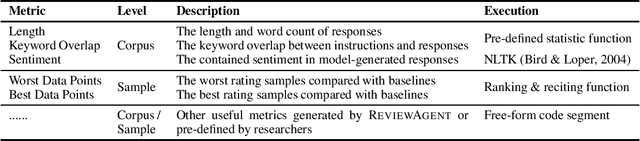

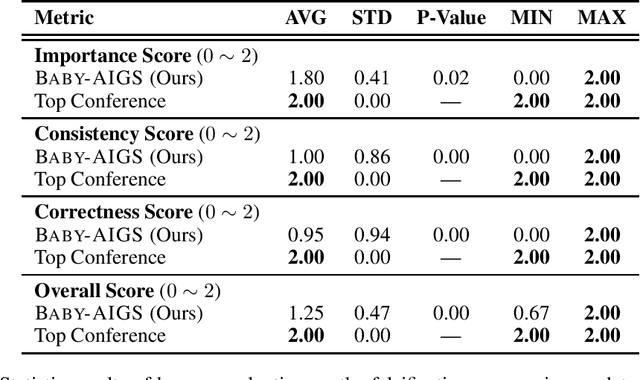
Rapid development of artificial intelligence has drastically accelerated the development of scientific discovery. Trained with large-scale observation data, deep neural networks extract the underlying patterns in an end-to-end manner and assist human researchers with highly-precised predictions in unseen scenarios. The recent rise of Large Language Models (LLMs) and the empowered autonomous agents enable scientists to gain help through interaction in different stages of their research, including but not limited to literature review, research ideation, idea implementation, and academic writing. However, AI researchers instantiated by foundation model empowered agents with full-process autonomy are still in their infancy. In this paper, we study $\textbf{AI-Generated Science}$ (AIGS), where agents independently and autonomously complete the entire research process and discover scientific laws. By revisiting the definition of scientific research, we argue that $\textit{falsification}$ is the essence of both human research process and the design of an AIGS system. Through the lens of falsification, prior systems attempting towards AI-Generated Science either lack the part in their design, or rely heavily on existing verification engines that narrow the use in specialized domains. In this work, we propose Baby-AIGS as a baby-step demonstration of a full-process AIGS system, which is a multi-agent system with agents in roles representing key research process. By introducing FalsificationAgent, which identify and then verify possible scientific discoveries, we empower the system with explicit falsification. Experiments on three tasks preliminarily show that Baby-AIGS could produce meaningful scientific discoveries, though not on par with experienced human researchers. Finally, we discuss on the limitations of current Baby-AIGS, actionable insights, and related ethical issues in detail.