 Add to Chrome
 Add to Firefox
 Add to Edge
BAG: Body-Aligned 3D Wearable Asset Generation
Jan 27, 2025
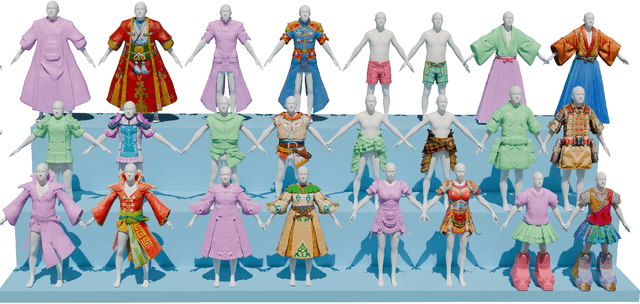
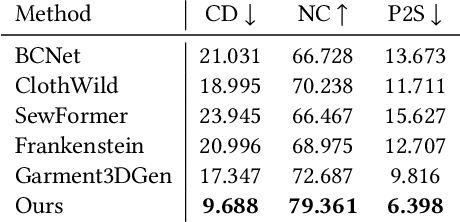
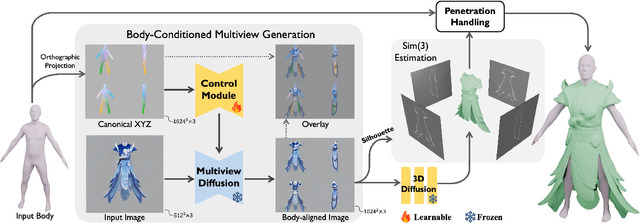
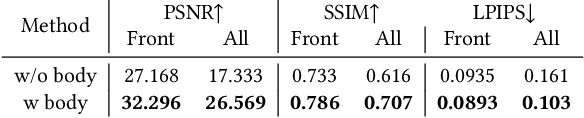
While recent advancements have shown remarkable progress in general 3D shape generation models, the challenge of leveraging these approaches to automatically generate wearable 3D assets remains unexplored. To this end, we present BAG, a Body-aligned Asset Generation method to output 3D wearable asset that can be automatically dressed on given 3D human bodies. This is achived by controlling the 3D generation process using human body shape and pose information. Specifically, we first build a general single-image to consistent multiview image diffusion model, and train it on the large Objaverse dataset to achieve diversity and generalizability. Then we train a Controlnet to guide the multiview generator to produce body-aligned multiview images. The control signal utilizes the multiview 2D projections of the target human body, where pixel values represent the XYZ coordinates of the body surface in a canonical space. The body-conditioned multiview diffusion generates body-aligned multiview images, which are then fed into a native 3D diffusion model to produce the 3D shape of the asset. Finally, by recovering the similarity transformation using multiview silhouette supervision and addressing asset-body penetration with physics simulators, the 3D asset can be accurately fitted onto the target human body. Experimental results demonstrate significant advantages over existing methods in terms of image prompt-following capability, shape diversity, and shape quality. Our project page is available at https://bag-3d.github.io/.

Scalable Machine Learning Training Infrastructure for Online Ads Recommendation and Auction Scoring Modeling at Google
Jan 17, 2025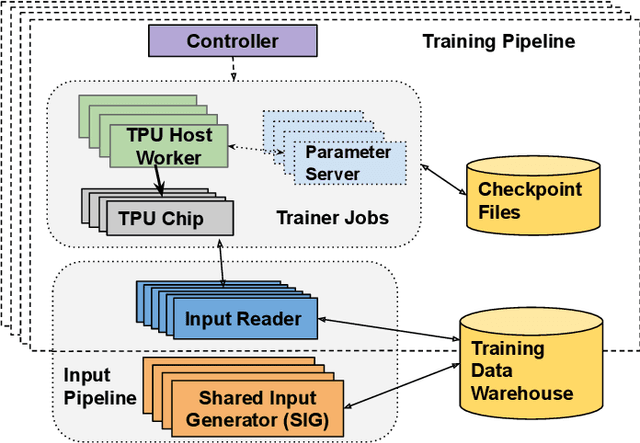
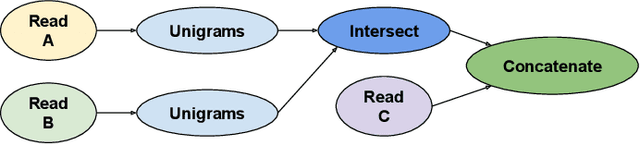
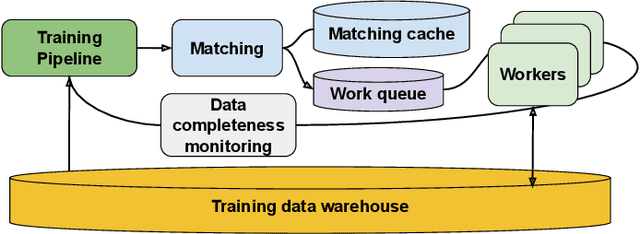
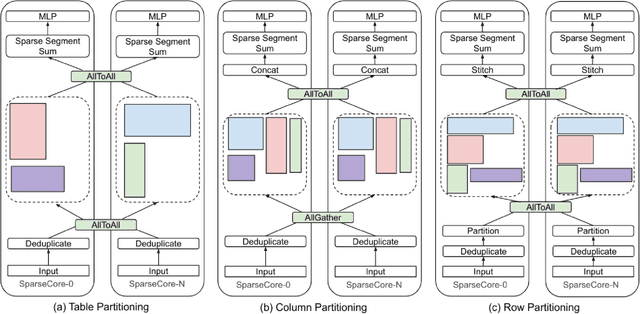
Large-scale Ads recommendation and auction scoring models at Google scale demand immense computational resources. While specialized hardware like TPUs have improved linear algebra computations, bottlenecks persist in large-scale systems. This paper proposes solutions for three critical challenges that must be addressed for efficient end-to-end execution in a widely used production infrastructure: (1) Input Generation and Ingestion Pipeline: Efficiently transforming raw features (e.g., "search query") into numerical inputs and streaming them to TPUs; (2) Large Embedding Tables: Optimizing conversion of sparse features into dense floating-point vectors for neural network consumption; (3) Interruptions and Error Handling: Minimizing resource wastage in large-scale shared datacenters. To tackle these challenges, we propose a shared input generation technique to reduce computational load of input generation by amortizing costs across many models. Furthermore, we propose partitioning, pipelining, and RPC (Remote Procedure Call) coalescing software techniques to optimize embedding operations. To maintain efficiency at scale, we describe novel preemption notice and training hold mechanisms that minimize resource wastage, and ensure prompt error resolution. These techniques have demonstrated significant improvement in Google production, achieving a 116% performance boost and an 18% reduction in training costs across representative models.
Reasoning with Graphs: Structuring Implicit Knowledge to Enhance LLMs Reasoning
Jan 14, 2025Large language models (LLMs) have demonstrated remarkable success across a wide range of tasks; however, they still encounter challenges in reasoning tasks that require understanding and inferring relationships between distinct pieces of information within text sequences. This challenge is particularly pronounced in tasks involving multi-step processes, such as logical reasoning and multi-hop question answering, where understanding implicit relationships between entities and leveraging multi-hop connections in the given context are crucial. Graphs, as fundamental data structures, explicitly represent pairwise relationships between entities, thereby offering the potential to enhance LLMs' reasoning capabilities. External graphs have proven effective in supporting LLMs across multiple tasks. However, in many reasoning tasks, no pre-existing graph structure is provided. Can we structure implicit knowledge derived from context into graphs to assist LLMs in reasoning? In this paper, we propose Reasoning with Graphs (RwG) by first constructing explicit graphs from the context and then leveraging these graphs to enhance LLM reasoning performance on reasoning tasks. Extensive experiments demonstrate the effectiveness of the proposed method in improving both logical reasoning and multi-hop question answering tasks.
Zero-shot Video Moment Retrieval via Off-the-shelf Multimodal Large Language Models
Jan 14, 2025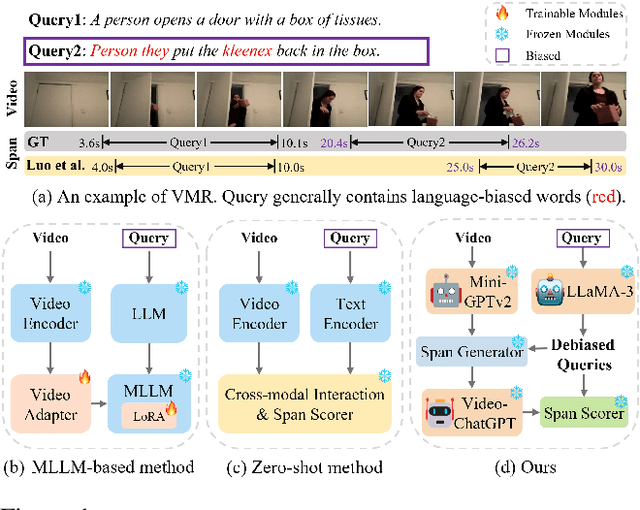

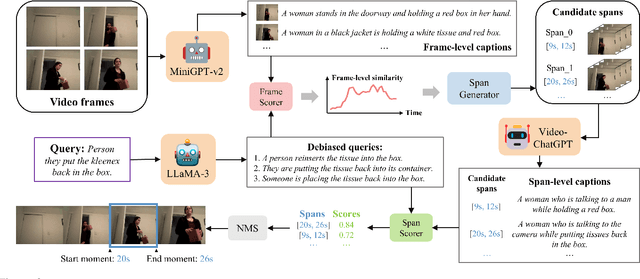

The target of video moment retrieval (VMR) is predicting temporal spans within a video that semantically match a given linguistic query. Existing VMR methods based on multimodal large language models (MLLMs) overly rely on expensive high-quality datasets and time-consuming fine-tuning. Although some recent studies introduce a zero-shot setting to avoid fine-tuning, they overlook inherent language bias in the query, leading to erroneous localization. To tackle the aforementioned challenges, this paper proposes Moment-GPT, a tuning-free pipeline for zero-shot VMR utilizing frozen MLLMs. Specifically, we first employ LLaMA-3 to correct and rephrase the query to mitigate language bias. Subsequently, we design a span generator combined with MiniGPT-v2 to produce candidate spans adaptively. Finally, to leverage the video comprehension capabilities of MLLMs, we apply VideoChatGPT and span scorer to select the most appropriate spans. Our proposed method substantially outperforms the state-ofthe-art MLLM-based and zero-shot models on several public datasets, including QVHighlights, ActivityNet-Captions, and Charades-STA.
A Preliminary Survey of Semantic Descriptive Model for Images
Jan 13, 2025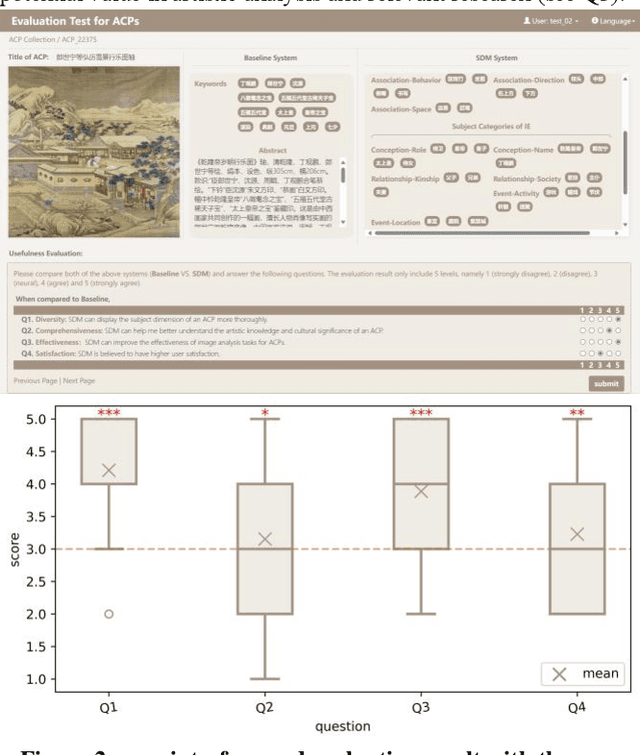
Considering the lack of a unified framework for image description and deep cultural analysis at the subject level in the field of Ancient Chinese Paintings (ACP), this study utilized the Beijing Palace Museum's ACP collections to develop a semantic model integrating the iconological theory with a new workflow for term extraction and mapping. Our findings underscore the model's effectiveness. SDM can be used to support further art-related knowledge organization and cultural exploration of ACPs.
CeViT: Copula-Enhanced Vision Transformer in multi-task learning and bi-group image covariates with an application to myopia screening
Jan 11, 2025
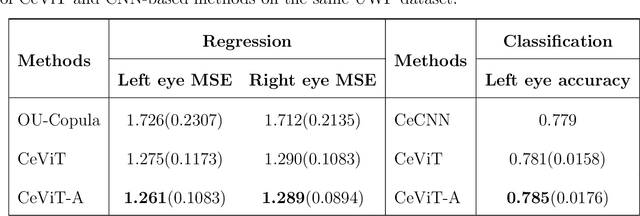
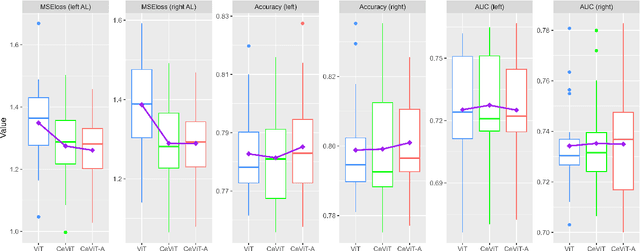
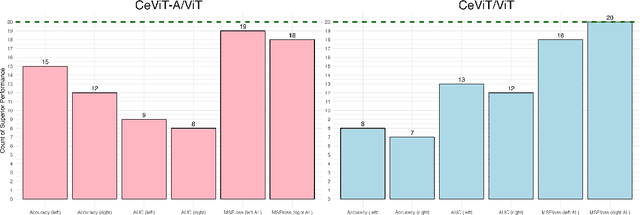
We aim to assist image-based myopia screening by resolving two longstanding problems, "how to integrate the information of ocular images of a pair of eyes" and "how to incorporate the inherent dependence among high-myopia status and axial length for both eyes." The classification-regression task is modeled as a novel 4-dimensional muti-response regression, where discrete responses are allowed, that relates to two dependent 3rd-order tensors (3D ultrawide-field fundus images). We present a Vision Transformer-based bi-channel architecture, named CeViT, where the common features of a pair of eyes are extracted via a shared Transformer encoder, and the interocular asymmetries are modeled through separated multilayer perceptron heads. Statistically, we model the conditional dependence among mixture of discrete-continuous responses given the image covariates by a so-called copula loss. We establish a new theoretical framework regarding fine-tuning on CeViT based on latent representations, allowing the black-box fine-tuning procedure interpretable and guaranteeing higher relative efficiency of fine-tuning weight estimation in the asymptotic setting. We apply CeViT to an annotated ultrawide-field fundus image dataset collected by Shanghai Eye \& ENT Hospital, demonstrating that CeViT enhances the baseline model in both accuracy of classifying high-myopia and prediction of AL on both eyes.
Population Aware Diffusion for Time Series Generation
Jan 01, 2025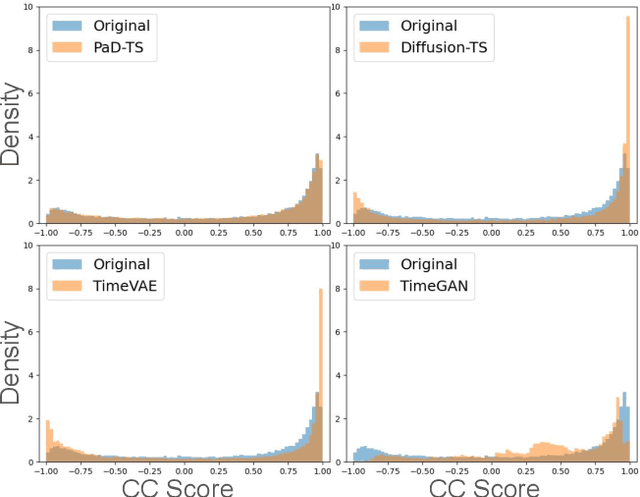
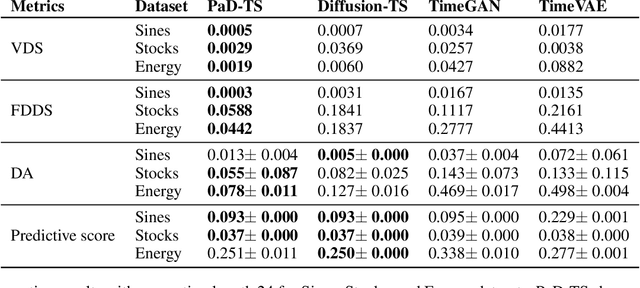
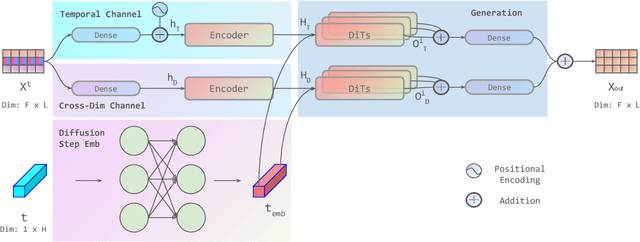
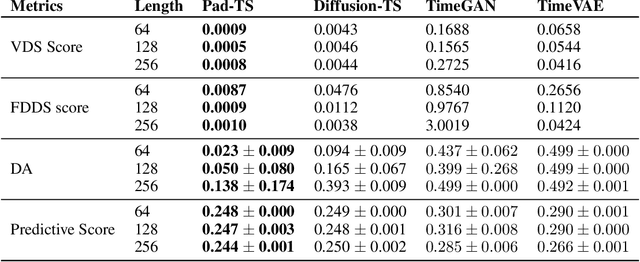
Diffusion models have shown promising ability in generating high-quality time series (TS) data. Despite the initial success, existing works mostly focus on the authenticity of data at the individual level, but pay less attention to preserving the population-level properties on the entire dataset. Such population-level properties include value distributions for each dimension and distributions of certain functional dependencies (e.g., cross-correlation, CC) between different dimensions. For instance, when generating house energy consumption TS data, the value distributions of the outside temperature and the kitchen temperature should be preserved, as well as the distribution of CC between them. Preserving such TS population-level properties is critical in maintaining the statistical insights of the datasets, mitigating model bias, and augmenting downstream tasks like TS prediction. Yet, it is often overlooked by existing models. Hence, data generated by existing models often bear distribution shifts from the original data. We propose Population-aware Diffusion for Time Series (PaD-TS), a new TS generation model that better preserves the population-level properties. The key novelties of PaD-TS include 1) a new training method explicitly incorporating TS population-level property preservation, and 2) a new dual-channel encoder model architecture that better captures the TS data structure. Empirical results in major benchmark datasets show that PaD-TS can improve the average CC distribution shift score between real and synthetic data by 5.9x while maintaining a performance comparable to state-of-the-art models on individual-level authenticity.
HUNYUANPROVER: A Scalable Data Synthesis Framework and Guided Tree Search for Automated Theorem Proving
Dec 30, 2024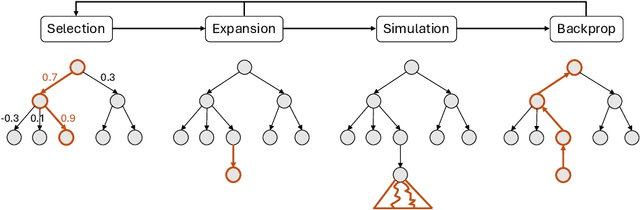
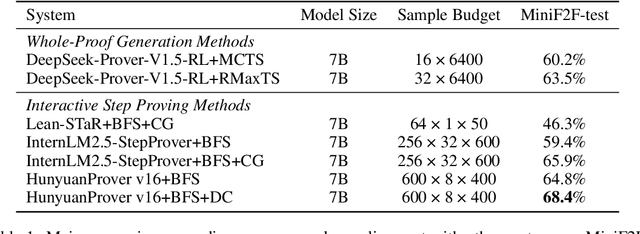
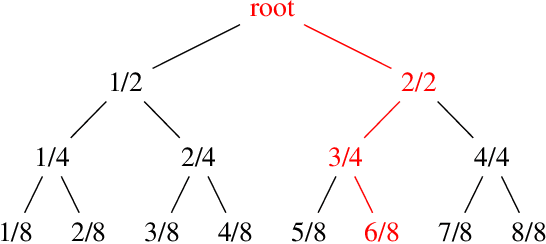
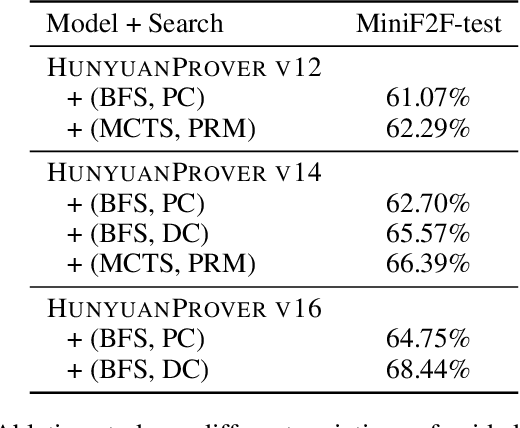
We introduce HunyuanProver, an language model finetuned from the Hunyuan 7B for interactive automatic theorem proving with LEAN4. To alleviate the data sparsity issue, we design a scalable framework to iterative synthesize data with low cost. Besides, guided tree search algorithms are designed to enable effective ``system 2 thinking`` of the prover. HunyuanProver achieves state-of-the-art (SOTA) performances on major benchmarks. Specifically, it achieves a pass of 68.4% on the miniF2F-test compared to 65.9%, the current SOTA results. It proves 4 IMO statements (imo_1960_p2, imo_1962_p2}, imo_1964_p2 and imo_1983_p6) in miniF2F-test. To benefit the community, we will open-source a dataset of 30k synthesized instances, where each instance contains the original question in natural language, the converted statement by autoformalization, and the proof by HunyuanProver.
Improving Factuality with Explicit Working Memory
Dec 24, 2024


Large language models can generate factually inaccurate content, a problem known as hallucination. Recent works have built upon retrieved-augmented generation to improve factuality through iterative prompting but these methods are limited by the traditional RAG design. To address these challenges, we introduce EWE (Explicit Working Memory), a novel approach that enhances factuality in long-form text generation by integrating a working memory that receives real-time feedback from external resources. The memory is refreshed based on online fact-checking and retrieval feedback, allowing EWE to rectify false claims during the generation process and ensure more accurate and reliable outputs. Our experiments demonstrate that Ewe outperforms strong baselines on four fact-seeking long-form generation datasets, increasing the factuality metric, VeriScore, by 2 to 10 points absolute without sacrificing the helpfulness of the responses. Further analysis reveals that the design of rules for memory updates, configurations of memory units, and the quality of the retrieval datastore are crucial factors for influencing model performance.
End-to-end Generative Spatial-Temporal Ultrasonic Odometry and Mapping Framework
Dec 23, 2024


Performing simultaneous localization and mapping (SLAM) in low-visibility conditions, such as environments filled with smoke, dust and transparent objets, has long been a challenging task. Sensors like cameras and Light Detection and Ranging (LiDAR) are significantly limited under these conditions, whereas ultrasonic sensors offer a more robust alternative. However, the low angular resolution, slow update frequency, and limited detection accuracy of ultrasonic sensors present barriers for SLAM. In this work, we propose a novel end-to-end generative ultrasonic SLAM framework. This framework employs a sensor array with overlapping fields of view, leveraging the inherently low angular resolution of ultrasonic sensors to implicitly encode spatial features in conjunction with the robot's motion. Consecutive time frame data is processed through a sliding window mechanism to capture temporal features. The spatiotemporally encoded sensor data is passed through multiple modules to generate dense scan point clouds and robot pose transformations for map construction and odometry. The main contributions of this work include a novel ultrasonic sensor array that spatiotemporally encodes the surrounding environment, and an end-to-end generative SLAM framework that overcomes the inherent defects of ultrasonic sensors. Several real-world experiments demonstrate the feasibility and robustness of the proposed framework.