 Add to Chrome
 Add to Firefox
 Add to Edge
Bayesian Poisson-Randomized Gamma Tensor Factorization with Application to International Trade Flows
Jun 15, 2026
We study sparse semi-continuous tensor data with excess zeros, heavy right tails, and slice-specific dispersion. Such features arise naturally in monetary-valued multi-way data, such as international trade, where most exporter--importer--product--year cells are zero while positive values are continuous and highly variable. To model these data, we propose a Bayesian hierarchical tensor factorization model that places a low-rank CP structure on a latent Poisson rate tensor and couples it with a conditional Gamma model for positive outcomes, with rate parameters that can vary across slices within a mode. The model therefore separates the occurrence and magnitude of positive observations while borrowing strength across all tensor dimensions through a shared low-rank latent structure. To scale posterior inference to large arrays, we develop a hybrid variational--Monte Carlo algorithm that combines efficient coordinate ascent updates with a partially collapsed augmented-data sampler. Applied to approximately 60 million trade flows, the method surfaces multiway dependence across exporters, importers, products, and years that is difficult to recover from gravity-type or pairwise network analyses, which do not jointly model the product and temporal dimensions.

A Preliminary Survey of Semantic Descriptive Model for Images
Jan 13, 2025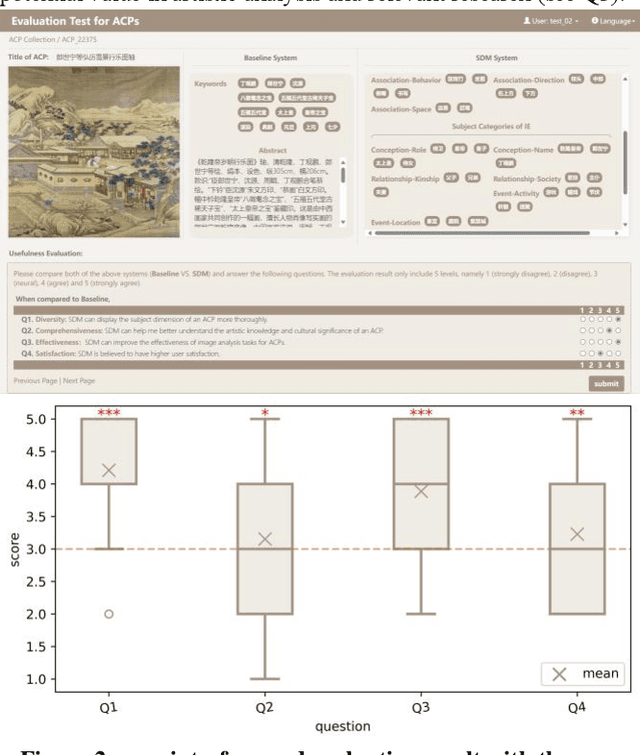
Considering the lack of a unified framework for image description and deep cultural analysis at the subject level in the field of Ancient Chinese Paintings (ACP), this study utilized the Beijing Palace Museum's ACP collections to develop a semantic model integrating the iconological theory with a new workflow for term extraction and mapping. Our findings underscore the model's effectiveness. SDM can be used to support further art-related knowledge organization and cultural exploration of ACPs.
Restricted Tweedie Stochastic Block Models
Oct 17, 2023

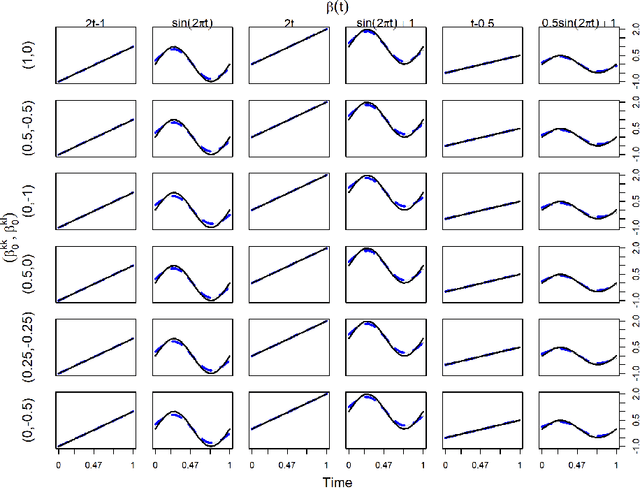
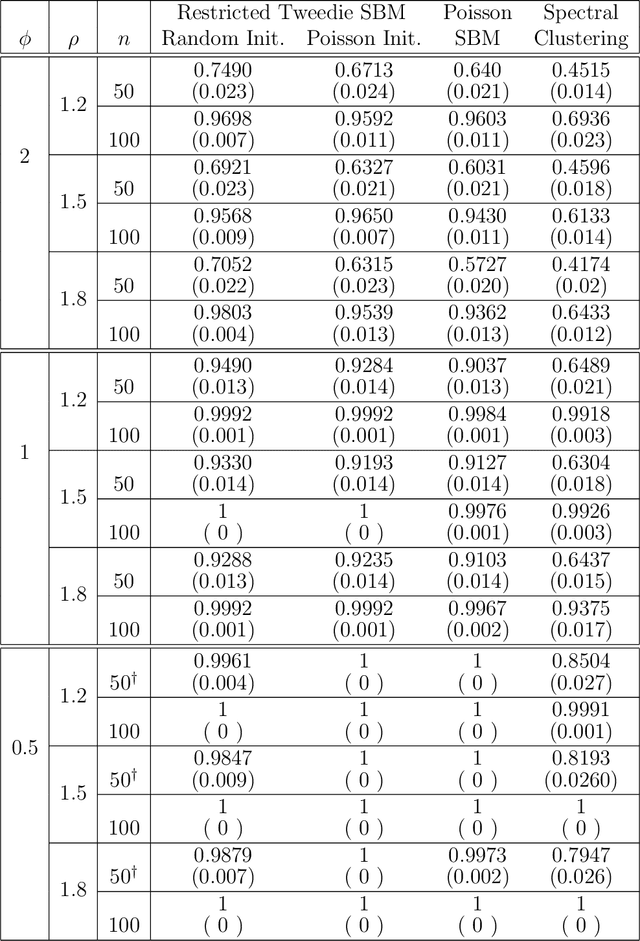
The stochastic block model (SBM) is a widely used framework for community detection in networks, where the network structure is typically represented by an adjacency matrix. However, conventional SBMs are not directly applicable to an adjacency matrix that consists of non-negative zero-inflated continuous edge weights. To model the international trading network, where edge weights represent trading values between countries, we propose an innovative SBM based on a restricted Tweedie distribution. Additionally, we incorporate nodal information, such as the geographical distance between countries, and account for its dynamic effect on edge weights. Notably, we show that given a sufficiently large number of nodes, estimating this covariate effect becomes independent of community labels of each node when computing the maximum likelihood estimator of parameters in our model. This result enables the development of an efficient two-step algorithm that separates the estimation of covariate effects from other parameters. We demonstrate the effectiveness of our proposed method through extensive simulation studies and an application to real-world international trading data.