 Add to Chrome
 Add to Firefox
 Add to Edge
Towards Codable Text Watermarking for Large Language Models
Jul 29, 2023
As large language models (LLMs) generate texts with increasing fluency and realism, there is a growing need to identify the source of texts to prevent the abuse of LLMs. Text watermarking techniques have proven reliable in distinguishing whether a text is generated by LLMs by injecting hidden patterns into the generated texts. However, we argue that existing watermarking methods for LLMs are encoding-inefficient (only contain one bit of information - whether it is generated from an LLM or not) and cannot flexibly meet the diverse information encoding needs (such as encoding model version, generation time, user id, etc.) in different LLMs application scenarios. In this work, we conduct the first systematic study on the topic of Codable Text Watermarking for LLMs (CTWL) that allows text watermarks to carry more customizable information. First of all, we study the taxonomy of LLM watermarking technology and give a mathematical formulation for CTWL. Additionally, we provide a comprehensive evaluation system for CTWL: (1) watermarking success rate, (2) robustness against various corruptions, (3) coding rate of payload information, (4) encoding and decoding efficiency, (5) impacts on the quality of the generated text. To meet the requirements of these non-Pareto-improving metrics, we devise a CTWL method named Balance-Marking, based on the motivation of ensuring that available and unavailable vocabularies for encoding information have approximately equivalent probabilities. Compared to the random vocabulary partitioning extended from the existing work, a probability-balanced vocabulary partition can significantly improve the quality of the generated text. Extensive experimental results have shown that our method outperforms a direct baseline under comprehensive evaluation.

M$^3$IT: A Large-Scale Dataset towards Multi-Modal Multilingual Instruction Tuning
Jun 08, 2023Instruction tuning has significantly advanced large language models (LLMs) such as ChatGPT, enabling them to align with human instructions across diverse tasks. However, progress in open vision-language models (VLMs) has been limited due to the scarcity of high-quality instruction datasets. To tackle this challenge and promote research in the vision-language field, we introduce the Multi-Modal, Multilingual Instruction Tuning (M$^3$IT) dataset, designed to optimize VLM alignment with human instructions. Our M$^3$IT dataset comprises 40 carefully curated datasets, including 2.4 million instances and 400 manually written task instructions, reformatted into a vision-to-text structure. Key tasks are translated into 80 languages with an advanced translation system, ensuring broader accessibility. M$^3$IT surpasses previous datasets regarding task coverage, instruction number and instance scale. Moreover, we develop Ying-VLM, a VLM model trained on our M$^3$IT dataset, showcasing its potential to answer complex questions requiring world knowledge, generalize to unseen video tasks, and comprehend unseen instructions in Chinese. We have open-sourced the dataset to encourage further research.
Label Words are Anchors: An Information Flow Perspective for Understanding In-Context Learning
May 23, 2023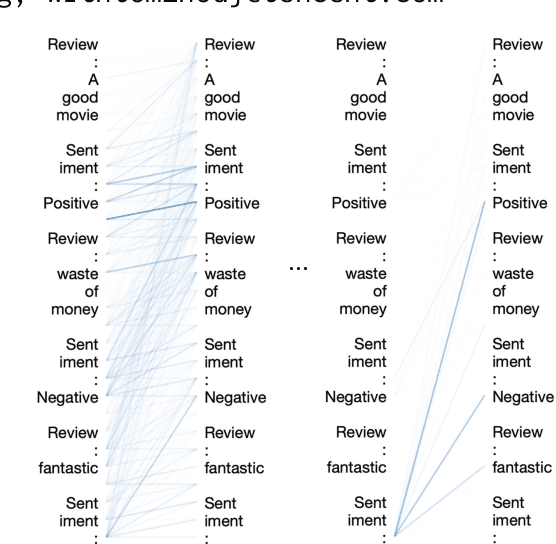
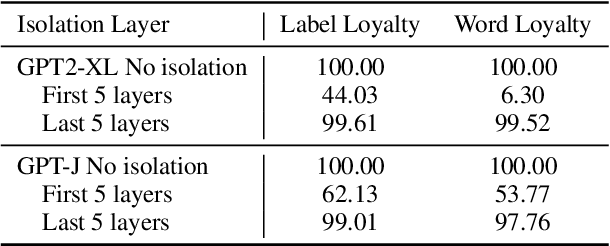
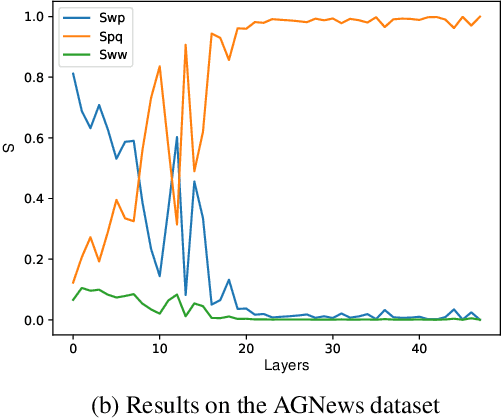

In-context learning (ICL) emerges as a promising capability of large language models (LLMs) by providing them with demonstration examples to perform diverse tasks. However, the underlying mechanism of how LLMs learn from the provided context remains under-explored. In this paper, we investigate the working mechanism of ICL through an information flow lens. Our findings reveal that label words in the demonstration examples function as anchors: (1) semantic information aggregates into label word representations during the shallow computation layers' processing; (2) the consolidated information in label words serves as a reference for LLMs' final predictions. Based on these insights, we introduce an anchor re-weighting method to improve ICL performance, a demonstration compression technique to expedite inference, and an analysis framework for diagnosing ICL errors in GPT2-XL. The promising applications of our findings again validate the uncovered ICL working mechanism and pave the way for future studies.
Can Language Models Understand Physical Concepts?
May 23, 2023Language models~(LMs) gradually become general-purpose interfaces in the interactive and embodied world, where the understanding of physical concepts is an essential prerequisite. However, it is not yet clear whether LMs can understand physical concepts in the human world. To investigate this, we design a benchmark VEC that covers the tasks of (i) Visual concepts, such as the shape and material of objects, and (ii) Embodied Concepts, learned from the interaction with the world such as the temperature of objects. Our zero (few)-shot prompting results show that the understanding of certain visual concepts emerges as scaling up LMs, but there are still basic concepts to which the scaling law does not apply. For example, OPT-175B performs close to humans with a zero-shot accuracy of 85\% on the material concept, yet behaves like random guessing on the mass concept. Instead, vision-augmented LMs such as CLIP and BLIP achieve a human-level understanding of embodied concepts. Analysis indicates that the rich semantics in visual representation can serve as a valuable source of embodied knowledge. Inspired by this, we propose a distillation method to transfer embodied knowledge from VLMs to LMs, achieving performance gain comparable with that by scaling up the parameters of LMs 134x. Our dataset is available at \url{https://github.com/TobiasLee/VEC}
Communication Efficient Federated Learning for Multilingual Neural Machine Translation with Adapter
May 21, 2023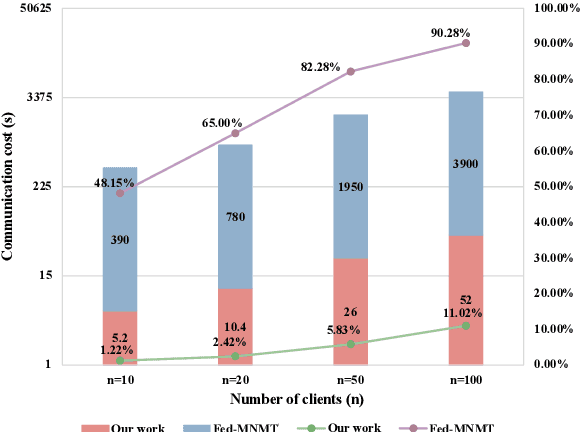
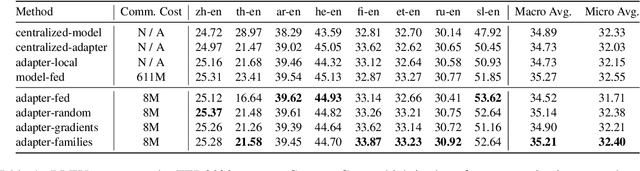
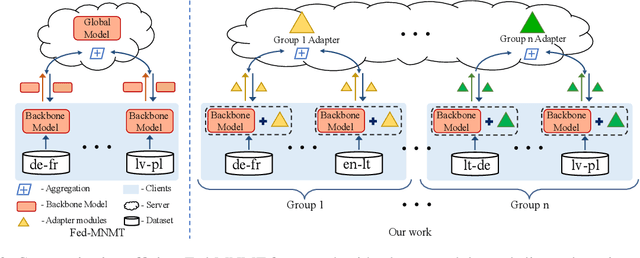

Federated Multilingual Neural Machine Translation (Fed-MNMT) has emerged as a promising paradigm for institutions with limited language resources. This approach allows multiple institutions to act as clients and train a unified model through model synchronization, rather than collecting sensitive data for centralized training. This significantly reduces the cost of corpus collection and preserves data privacy. However, as pre-trained language models (PLMs) continue to increase in size, the communication cost for transmitting parameters during synchronization has become a training speed bottleneck. In this paper, we propose a communication-efficient Fed-MNMT framework that addresses this issue by keeping PLMs frozen and only transferring lightweight adapter modules between clients. Since different language pairs exhibit substantial discrepancies in data distributions, adapter parameters of clients may conflict with each other. To tackle this, we explore various clustering strategies to group parameters for integration and mitigate the negative effects of conflicting parameters. Experimental results demonstrate that our framework reduces communication cost by over 98% while achieving similar or even better performance compared to competitive baselines. Further analysis reveals that clustering strategies effectively solve the problem of linguistic discrepancy and pruning adapter modules further improves communication efficiency.
PALM: Open Fundus Photograph Dataset with Pathologic Myopia Recognition and Anatomical Structure Annotation
May 13, 2023Pathologic myopia (PM) is a common blinding retinal degeneration suffered by highly myopic population. Early screening of this condition can reduce the damage caused by the associated fundus lesions and therefore prevent vision loss. Automated diagnostic tools based on artificial intelligence methods can benefit this process by aiding clinicians to identify disease signs or to screen mass populations using color fundus photographs as inputs. This paper provides insights about PALM, our open fundus imaging dataset for pathological myopia recognition and anatomical structure annotation. Our databases comprises 1200 images with associated labels for the pathologic myopia category and manual annotations of the optic disc, the position of the fovea and delineations of lesions such as patchy retinal atrophy (including peripapillary atrophy) and retinal detachment. In addition, this paper elaborates on other details such as the labeling process used to construct the database, the quality and characteristics of the samples and provides other relevant usage notes.
Diffusion Theory as a Scalpel: Detecting and Purifying Poisonous Dimensions in Pre-trained Language Models Caused by Backdoor or Bias
May 08, 2023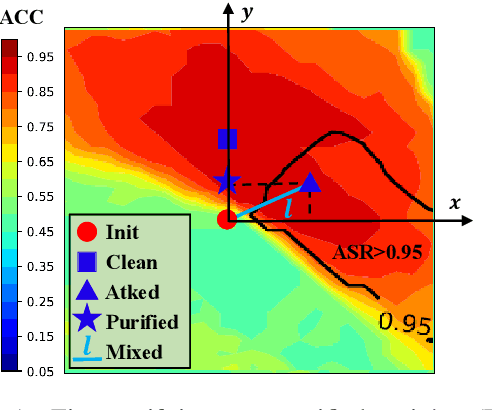
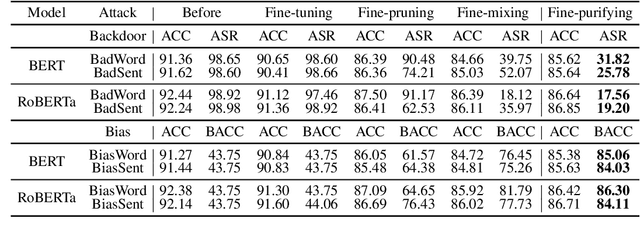

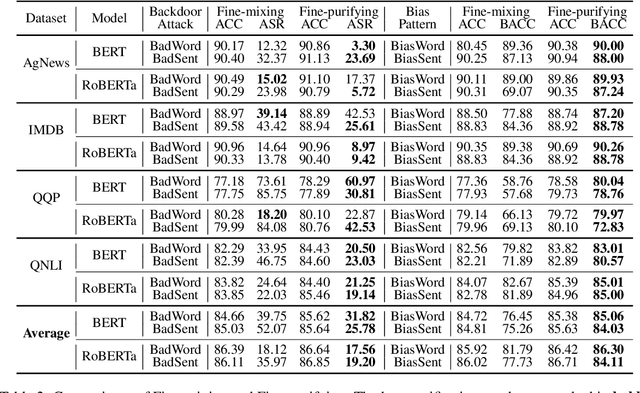
Pre-trained Language Models (PLMs) may be poisonous with backdoors or bias injected by the suspicious attacker during the fine-tuning process. A core challenge of purifying potentially poisonous PLMs is precisely finding poisonous dimensions. To settle this issue, we propose the Fine-purifying approach, which utilizes the diffusion theory to study the dynamic process of fine-tuning for finding potentially poisonous dimensions. According to the relationship between parameter drifts and Hessians of different dimensions, we can detect poisonous dimensions with abnormal dynamics, purify them by resetting them to clean pre-trained weights, and then fine-tune the purified weights on a small clean dataset. To the best of our knowledge, we are the first to study the dynamics guided by the diffusion theory for safety or defense purposes. Experimental results validate the effectiveness of Fine-purifying even with a small clean dataset.
Prompt Pre-Training with Twenty-Thousand Classes for Open-Vocabulary Visual Recognition
Apr 10, 2023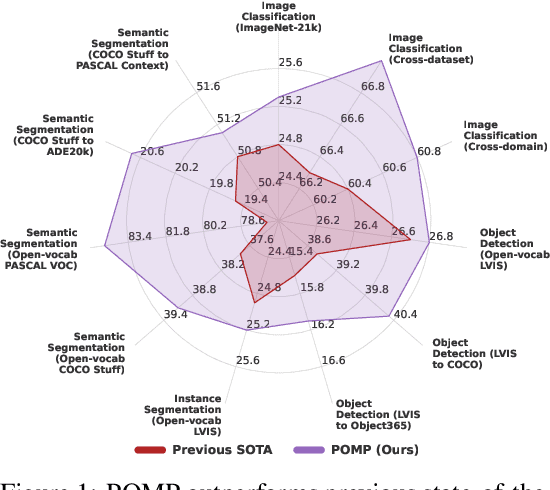
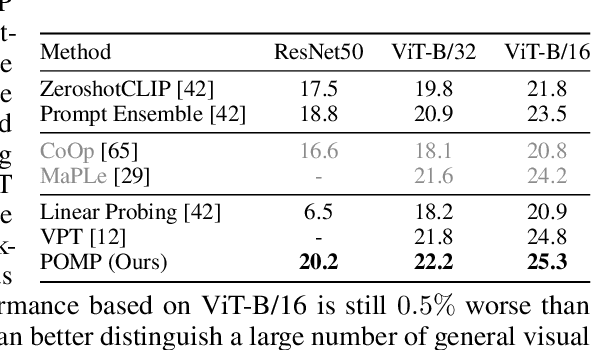
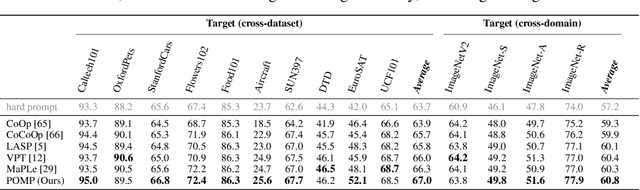
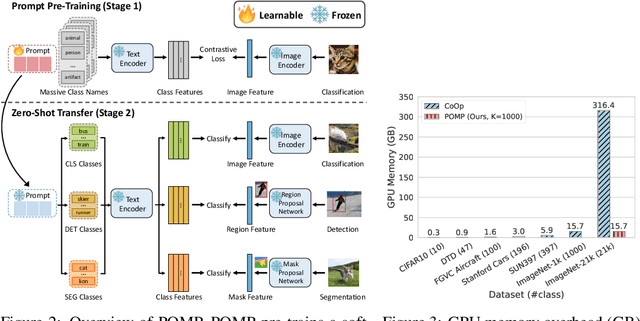
This work proposes POMP, a prompt pre-training method for vision-language models. Being memory and computation efficient, POMP enables the learned prompt to condense semantic information for a rich set of visual concepts with over twenty-thousand classes. Once pre-trained, the prompt with a strong transferable ability can be directly plugged into a variety of visual recognition tasks including image classification, semantic segmentation, and object detection, to boost recognition performances in a zero-shot manner. Empirical evaluation shows that POMP achieves state-of-the-art performances on 21 downstream datasets, e.g., 67.0% average accuracy on 10 classification dataset (+3.1% compared to CoOp) and 84.4 hIoU on open-vocabulary Pascal VOC segmentation (+6.9 compared to ZSSeg).
Fine-Tuning Deteriorates General Textual Out-of-Distribution Detection by Distorting Task-Agnostic Features
Jan 30, 2023Detecting out-of-distribution (OOD) inputs is crucial for the safe deployment of natural language processing (NLP) models. Though existing methods, especially those based on the statistics in the feature space of fine-tuned pre-trained language models (PLMs), are claimed to be effective, their effectiveness on different types of distribution shifts remains underexplored. In this work, we take the first step to comprehensively evaluate the mainstream textual OOD detection methods for detecting semantic and non-semantic shifts. We find that: (1) no existing method behaves well in both settings; (2) fine-tuning PLMs on in-distribution data benefits detecting semantic shifts but severely deteriorates detecting non-semantic shifts, which can be attributed to the distortion of task-agnostic features. To alleviate the issue, we present a simple yet effective general OOD score named GNOME that integrates the confidence scores derived from the task-agnostic and task-specific representations. Experiments show that GNOME works well in both semantic and non-semantic shift scenarios, and further brings significant improvement on two cross-task benchmarks where both kinds of shifts simultaneously take place. Our code is available at https://github.com/lancopku/GNOME.
Integrating Local Real Data with Global Gradient Prototypes for Classifier Re-Balancing in Federated Long-Tailed Learning
Jan 26, 2023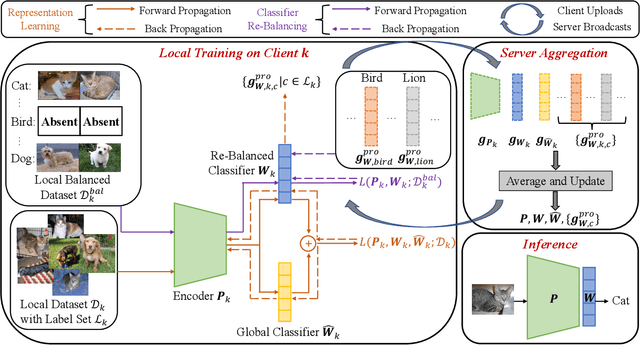
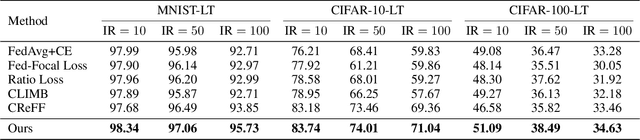
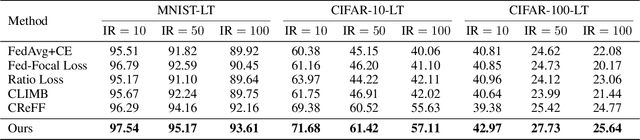
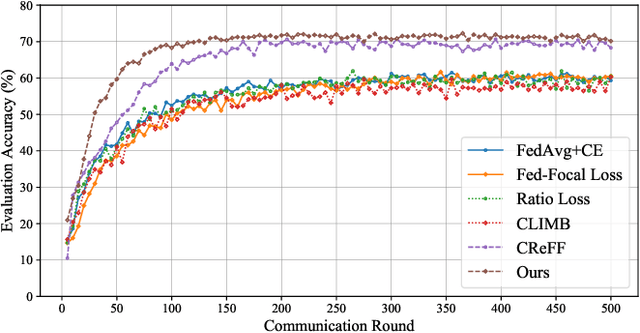
Federated Learning (FL) has become a popular distributed learning paradigm that involves multiple clients training a global model collaboratively in a data privacy-preserving manner. However, the data samples usually follow a long-tailed distribution in the real world, and FL on the decentralized and long-tailed data yields a poorly-behaved global model severely biased to the head classes with the majority of the training samples. To alleviate this issue, decoupled training has recently been introduced to FL, considering it has achieved promising results in centralized long-tailed learning by re-balancing the biased classifier after the instance-balanced training. However, the current study restricts the capacity of decoupled training in federated long-tailed learning with a sub-optimal classifier re-trained on a set of pseudo features, due to the unavailability of a global balanced dataset in FL. In this work, in order to re-balance the classifier more effectively, we integrate the local real data with the global gradient prototypes to form the local balanced datasets, and thus re-balance the classifier during the local training. Furthermore, we introduce an extra classifier in the training phase to help model the global data distribution, which addresses the problem of contradictory optimization goals caused by performing classifier re-balancing locally. Extensive experiments show that our method consistently outperforms the existing state-of-the-art methods in various settings.