 Add to Chrome
 Add to Firefox
 Add to Edge
Dynamic Commonsense Coordination for Empathetic Response Generation
Jul 24, 2026
Empathetic Response Generation (ERG) requires models to recognize users' emotions and generate empathetic responses. Commonsense knowledge has been shown to support such reasoning, yet existing approaches typically reuse fixed commonsense representations across understanding and generation, limiting their ability to coordinate such knowledge across different stages. We propose DCC, a Dynamic Commonsense Coordination Framework with three complementary modules: residual-based commonsense interaction (SCE-AttnRes) to integrate contextual and situational commonsense representations, Association-Guided Commonsense Filtering (AGCF) to down-weight low-relevance commonsense relations, and Iterative Commonsense-Aware Decoding (ICAD) to dynamically retrieve commonsense memories during generation. Experiments on the Empathetic-Dialogues benchmark show that DCC improves emotion classification accuracy and response diversity over the CEM baseline while maintaining comparable perplexity. An LLM-based blind evaluation further demonstrates that DCC generates responses with better relevance, coherence, and informativeness. The code and implementation details will be publicly available at https://github.com/Hanabi-Q/DCC-ERG.

When Should Queries Be Decomposed? A Stage-Aware Study of Query Decomposition for Multi-Condition Retrieval
Jun 07, 2026Multi-condition retrieval requires systems to identify documents that satisfy multiple distinct constraints, moving beyond mere topical relevance. While query decomposition is widely adopted as an intuitive remedy, its effectiveness across different retrieval pipeline stages remains underexplored. In this paper, we conduct a stage-aware empirical study and uncover a stark, stage-dependent effect: decomposition during initial retrieval frequently harms retrieval performance due to semantic dilution, yet substantially improves reranking by enabling more fine-grained constraint verification. Motivated by these insights, we propose a principled Stage-Aware Decomposition framework that retains the monolithic query during initial retrieval to preserve global semantic context, while employing sub-queries exclusively during reranking for fine-grained constraint matching. Extensive evaluations on the MultiConIR and SSRB benchmarks demonstrate that our framework consistently improves ranking performance for compositional queries across multiple retrieval and reranking models. We release our code at https://github.com/EIT-NLP/Query-Decompose.
Exploring Information Processing in Large Language Models: Insights from Information Bottleneck Theory
Jan 06, 2025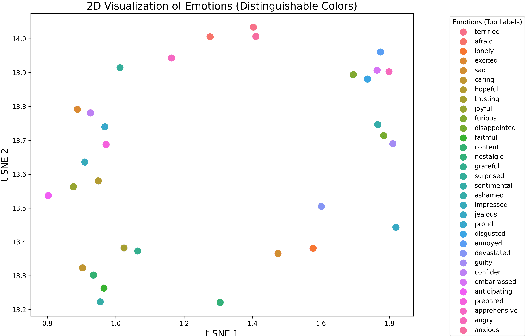
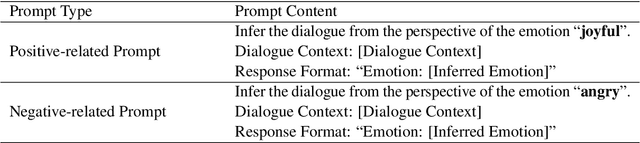
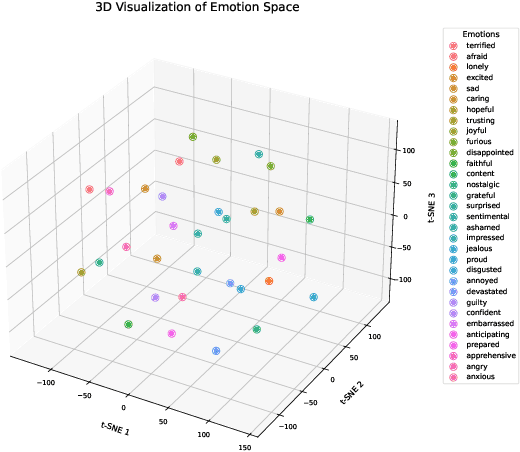
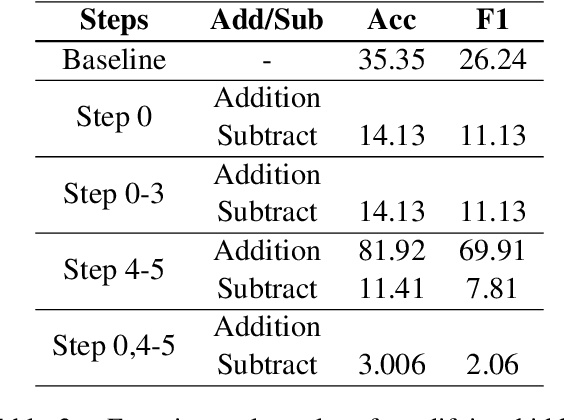
Large Language Models (LLMs) have demonstrated remarkable performance across a wide range of tasks by understanding input information and predicting corresponding outputs. However, the internal mechanisms by which LLMs comprehend input and make effective predictions remain poorly understood. In this paper, we explore the working mechanism of LLMs in information processing from the perspective of Information Bottleneck Theory. We propose a non-training construction strategy to define a task space and identify the following key findings: (1) LLMs compress input information into specific task spaces (e.g., sentiment space, topic space) to facilitate task understanding; (2) they then extract and utilize relevant information from the task space at critical moments to generate accurate predictions. Based on these insights, we introduce two novel approaches: an Information Compression-based Context Learning (IC-ICL) and a Task-Space-guided Fine-Tuning (TS-FT). IC-ICL enhances reasoning performance and inference efficiency by compressing retrieved example information into the task space. TS-FT employs a space-guided loss to fine-tune LLMs, encouraging the learning of more effective compression and selection mechanisms. Experiments across multiple datasets validate the effectiveness of task space construction. Additionally, IC-ICL not only improves performance but also accelerates inference speed by over 40\%, while TS-FT achieves superior results with a minimal strategy adjustment.