 Add to Chrome
 Add to Firefox
 Add to Edge
Weak-to-Strong On-Policy Distillation
Jul 28, 2026
On-policy distillation (OPD), which aligns a student with the teacher's token-level distribution on the student's own rollouts, is an effective paradigm for transferring capabilities across LLMs. Prevailing approaches assume a teacher at least as capable as the student: they either distill a larger model into a smaller one, which fails at the frontier where no larger teacher exists, or consolidate multiple domain experts trained from a shared base, which requires costly training at the student's scale. We introduce Weak-to-Strong On-Policy Distillation (W2S-OPD), a simple yet effective OPD framework that improves the strong student by distilling from multiple weak models. W2S-OPD constructs a proxy teacher in logit space from a contrast pair of a positive and a negative model, both smaller than the student and cheap to obtain. Their logit difference isolates the capability direction, which is added to the student's own base model, yielding a proxy teacher that couples this direction while staying distributionally adjacent to the student. The student then distills it by minimizing the per-token reverse KL on its own rollouts. We instantiate the contrast pair as i) a post-RL expert against its pre-RL initialization, isolating the skill RL instills, ii) a larger against a smaller base model, isolating the capability from scale, and iii) a small base model with correct versus wrong hints, isolating the instance-level direction toward the solution. Across four math and three code benchmarks, W2S-OPD outperforms OPD, enables the student to surpass the domain teacher, and keeps improving the student even when every supervision source is weaker. Analysis shows different contrasts yield distinct signals: the post-RL and hint contrasts emphasize reasoning frameworks, while the scale contrast emphasizes the solving procedure. Our code will be available at https://github.com/Yu-Fangxu/W2S-OPD.

Rushes: A Human Preference Dataset for Pluralistic Alignment
Jul 22, 2026We introduce Rushes, a dataset and benchmark for studying revealed human engagement preferences in interactive narrative environments. Rushes is collected through a game interface where users interact with AI-generated branching narratives and select one choice from a small, explicit candidate set at each decision point. Each interaction logs the full candidate set, the user's choice, and the evolving narrative context, yielding time-ordered trajectories with persistent user-level identifiers. Rushes contains 44,226 decision events from 8,167 unique users across six games, capturing sequential, personalized engagement behavior rather than static judgments. We show that user choices exhibit structured, non-random patterns, quantified by a low choice entropy relative to a uniform baseline. We position Rushes as a diagnostic benchmark for pluralistic alignment and demonstrate a robust Engagement Gap: state-of-the-art LLMs, including GPT-5, fail to outperform simple baselines. While classical Matrix Factorization (SVD) captures measurable personalized signal (37.7%), frontier LLMs (34.23%) struggle to even match the Popularity Baseline (36.4%) on event-level choice prediction. This gap suggests that single, population-level objectives, like those used in modern RLHF, appear insufficient to capture heterogeneous, context-dependent engagement signals. As a result, even highly capable models default to majority preferences rather than adapting to individual trajectories. We release Rushes to support research into pluralistic alignment and sequential decision-making in generative systems. The full code for the platform and dataset will be available here: https://github.com/microsoft/rushes
Test-Time Learning with an Evolving Library
May 14, 2026We introduce EvoLib, a test-time learning framework that enables large language models to accumulate, reuse, and evolve knowledge across problem instances without parameter updates or external supervision. Instead of adapting model parameters, our approach maintains a shared library of knowledge abstractions, including modular skills and reflective insights, automatically extracted from the model's own inference trajectories. To support continual improvement, we introduce a principled weighting and consolidation mechanism that jointly optimizes for immediate utility and long-term value. This allows simple, instance-specific abstractions to evolve into more general and reusable ones over time. Across challenging benchmarks in mathematical reasoning, code generation, and multi-turn agentic environments, EvoLib improves substantially over the top test-time scaling and learning methods without ground-truth feedback.
Agentic-imodels: Evolving agentic interpretability tools via autoresearch
May 05, 2026Agentic data science (ADS) systems are rapidly improving their capability to autonomously analyze, fit, and interpret data, potentially moving towards a future where agents conduct the vast majority of data-science work. However, current ADS systems use statistical tools designed to be interpretable by humans, rather than interpretable by agents. To address this, we introduce Agentic-imodels, an agentic autoresearch loop that evolves data-science tools designed to be interpretable by agents. Specifically, it develops a library of scikit-learn-compatible regressors for tabular data that are optimized for both predictive performance and a novel LLM-based interpretability metric. The metric measures a suite of LLM-graded tests that probe whether a fitted model's string representation is "simulatable" by an LLM, i.e. whether the LLM can answer questions about the model's behavior by reading its string output alone. We find that the evolved models jointly improve predictive performance and agent-facing interpretability, generalizing to new datasets and new interpretability tests. Furthermore, these evolved models improve downstream end-to-end ADS, increasing performance for Copilot CLI, Claude Code, and Codex on the BLADE benchmark by up to 73%
Learning to Solve Complex Problems via Dataset Decomposition
Feb 23, 2026Curriculum learning is a class of training strategies that organizes the data being exposed to a model by difficulty, gradually from simpler to more complex examples. This research explores a reverse curriculum generation approach that recursively decomposes complex datasets into simpler, more learnable components. We propose a teacher-student framework where the teacher is equipped with the ability to reason step-by-step, which is used to recursively generate easier versions of examples, enabling the student model to progressively master difficult tasks. We propose a novel scoring system to measure data difficulty based on its structural complexity and conceptual depth, allowing curriculum construction over decomposed data. Experiments on math datasets (MATH and AIME) and code generation datasets demonstrate that models trained with curricula generated by our approach exhibit superior performance compared to standard training on original datasets.
The Combined Problem of Online Task Assignment and Lifelong Path Finding in Logistics Warehouses: A Case Study
Feb 11, 2025
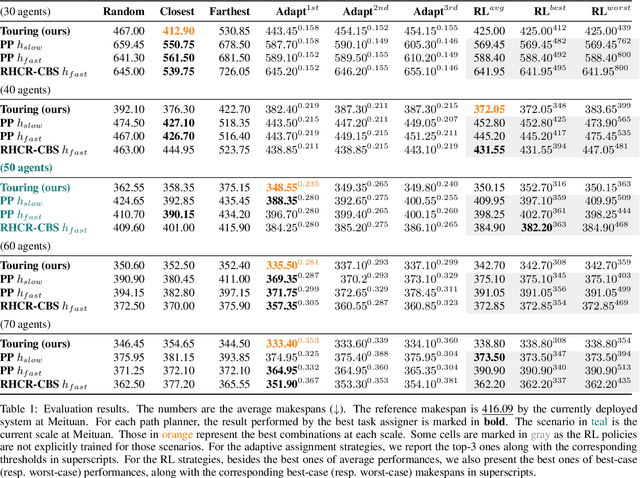
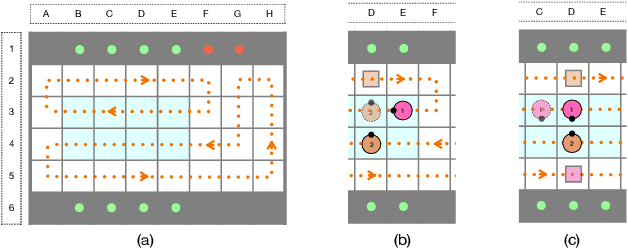
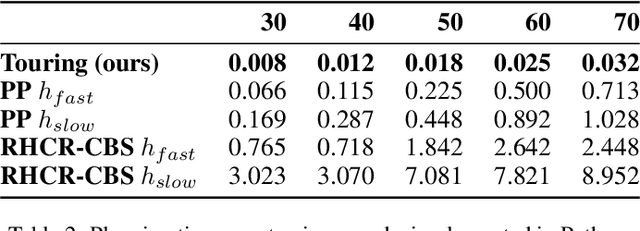
We study the combined problem of online task assignment and lifelong path finding, which is crucial for the logistics industries. However, most literature either (1) focuses on lifelong path finding assuming a given task assigner, or (2) studies the offline version of this problem where tasks are known in advance. We argue that, to maximize the system throughput, the online version that integrates these two components should be tackled directly. To this end, we introduce a formal framework of the combined problem and its solution concept. Then, we design a rule-based lifelong planner under a practical robot model that works well even in environments with severe local congestion. Upon that, we automate the search for the task assigner with respect to the underlying path planner. Simulation experiments conducted in warehouse scenarios at \textit{Meituan}, one of the largest shopping platforms in China, demonstrate that (a)~\textit{in terms of time efficiency}, our system requires only 83.77\% of the execution time needed for the currently deployed system at Meituan, outperforming other SOTA algorithms by 8.09\%; (b)~\textit{in terms of economic efficiency}, ours can achieve the same throughput with only 60\% of the agents currently in use.
Qwen2.5-1M Technical Report
Jan 26, 2025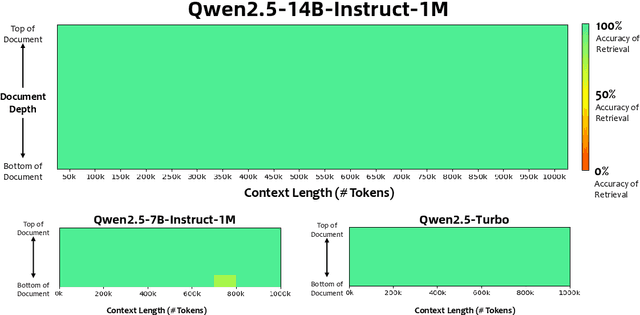

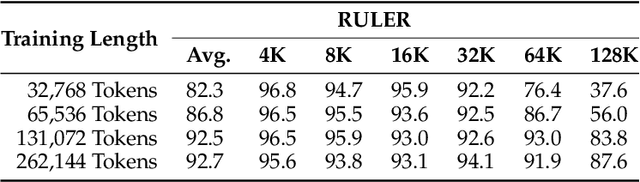
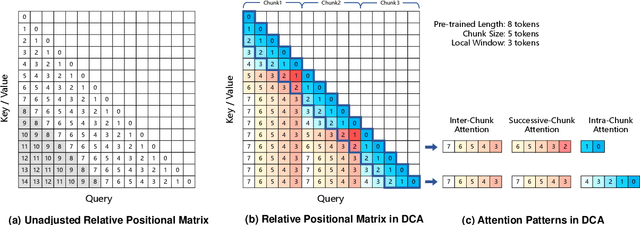
We introduce Qwen2.5-1M, a series of models that extend the context length to 1 million tokens. Compared to the previous 128K version, the Qwen2.5-1M series have significantly enhanced long-context capabilities through long-context pre-training and post-training. Key techniques such as long data synthesis, progressive pre-training, and multi-stage supervised fine-tuning are employed to effectively enhance long-context performance while reducing training costs. To promote the use of long-context models among a broader user base, we present and open-source our inference framework. This framework includes a length extrapolation method that can expand the model context lengths by at least four times, or even more, without additional training. To reduce inference costs, we implement a sparse attention method along with chunked prefill optimization for deployment scenarios and a sparsity refinement method to improve precision. Additionally, we detail our optimizations in the inference engine, including kernel optimization, pipeline parallelism, and scheduling optimization, which significantly enhance overall inference performance. By leveraging our inference framework, the Qwen2.5-1M models achieve a remarkable 3x to 7x prefill speedup in scenarios with 1 million tokens of context. This framework provides an efficient and powerful solution for developing applications that require long-context processing using open-source models. The Qwen2.5-1M series currently includes the open-source models Qwen2.5-7B-Instruct-1M and Qwen2.5-14B-Instruct-1M, as well as the API-accessed model Qwen2.5-Turbo. Evaluations show that Qwen2.5-1M models have been greatly improved in long-context tasks without compromising performance in short-context scenarios. Specifically, the Qwen2.5-14B-Instruct-1M model significantly outperforms GPT-4o-mini in long-context tasks and supports contexts eight times longer.
Echoes in AI: Quantifying Lack of Plot Diversity in LLM Outputs
Dec 31, 2024With rapid advances in large language models (LLMs), there has been an increasing application of LLMs in creative content ideation and generation. A critical question emerges: can current LLMs provide ideas that are diverse enough to truly bolster the collective creativity? We examine two state-of-the-art LLMs, GPT-4 and LLaMA-3, on story generation and discover that LLM-generated stories often consist of plot elements that are echoed across a number of generations. To quantify this phenomenon, we introduce the Sui Generis score, which estimates how unlikely a plot element is to appear in alternative storylines generated by the same LLM. Evaluating on 100 short stories, we find that LLM-generated stories often contain combinations of idiosyncratic plot elements echoed frequently across generations, while the original human-written stories are rarely recreated or even echoed in pieces. Moreover, our human evaluation shows that the ranking of Sui Generis scores among story segments correlates moderately with human judgment of surprise level, even though score computation is completely automatic without relying on human judgment.
Game Plot Design with an LLM-powered Assistant: An Empirical Study with Game Designers
Nov 05, 2024We introduce GamePlot, an LLM-powered assistant that supports game designers in crafting immersive narratives for turn-based games, and allows them to test these games through a collaborative game play and refine the plot throughout the process. Our user study with 14 game designers shows high levels of both satisfaction with the generated game plots and sense of ownership over the narratives, but also reconfirms that LLM are limited in their ability to generate complex and truly innovative content. We also show that diverse user populations have different expectations from AI assistants, and encourage researchers to study how tailoring assistants to diverse user groups could potentially lead to increased job satisfaction and greater creativity and innovation over time.
fPLSA: Learning Semantic Structures in Document Collections Using Foundation Models
Oct 07, 2024
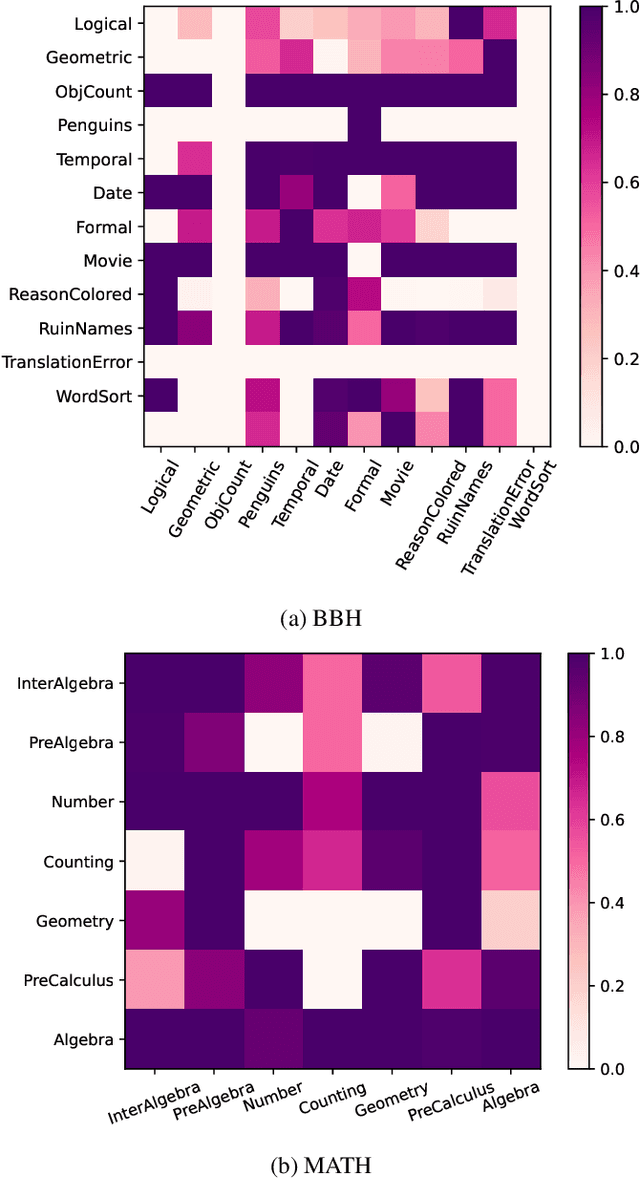
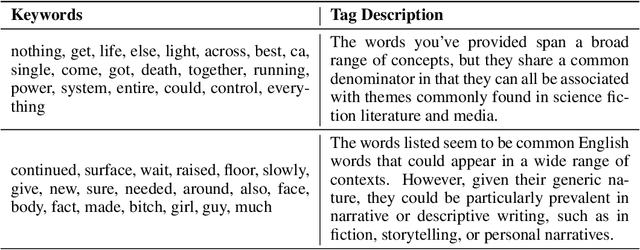
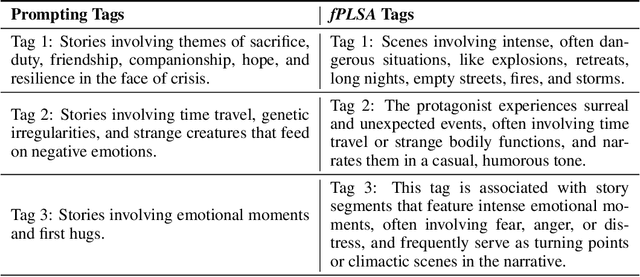
Humans have the ability to learn new tasks by inferring high-level concepts from existing solution, then manipulating these concepts in lieu of the raw data. Can we automate this process by deriving latent semantic structures in a document collection using foundation models? We introduce fPLSA, a foundation-model-based Probabilistic Latent Semantic Analysis (PLSA) method that iteratively clusters and tags document segments based on document-level contexts. These tags can be used to model the structure of given documents and for hierarchical sampling of new texts. Our experiments on story writing, math, and multi-step reasoning datasets demonstrate that fPLSA tags help reconstruct the original texts better than existing tagging methods. Moreover, when used for hierarchical sampling, fPLSA produces more diverse outputs with a higher likelihood of hitting the correct answer than direct sampling and hierarchical sampling with existing tagging methods.