 Add to Chrome
 Add to Firefox
 Add to Edge
IDF-MFL: Infrastructure-free and Drift-free Magnetic Field Localization for Mobile Robot
Nov 09, 2024
In recent years, infrastructure-based localization methods have achieved significant progress thanks to their reliable and drift-free localization capability. However, the pre-installed infrastructures suffer from inflexibilities and high maintenance costs. This poses an interesting problem of how to develop a drift-free localization system without using the pre-installed infrastructures. In this paper, an infrastructure-free and drift-free localization system is proposed using the ambient magnetic field (MF) information, namely IDF-MFL. IDF-MFL is infrastructure-free thanks to the high distinctiveness of the ambient MF information produced by inherent ferromagnetic objects in the environment, such as steel and reinforced concrete structures of buildings, and underground pipelines. The MF-based localization problem is defined as a stochastic optimization problem with the consideration of the non-Gaussian heavy-tailed noise introduced by MF measurement outliers (caused by dynamic ferromagnetic objects), and an outlier-robust state estimation algorithm is derived to find the optimal distribution of robot state that makes the expectation of MF matching cost achieves its lower bound. The proposed method is evaluated in multiple scenarios, including experiments on high-fidelity simulation, and real-world environments. The results demonstrate that the proposed method can achieve high-accuracy, reliable, and real-time localization without any pre-installed infrastructures.

The Limits of Differential Privacy in Online Learning
Nov 08, 2024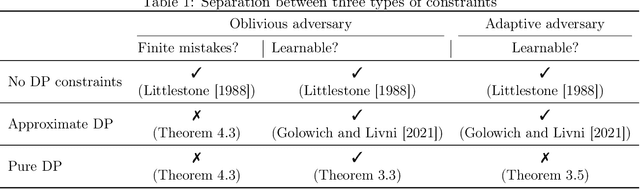
Differential privacy (DP) is a formal notion that restricts the privacy leakage of an algorithm when running on sensitive data, in which privacy-utility trade-off is one of the central problems in private data analysis. In this work, we investigate the fundamental limits of differential privacy in online learning algorithms and present evidence that separates three types of constraints: no DP, pure DP, and approximate DP. We first describe a hypothesis class that is online learnable under approximate DP but not online learnable under pure DP under the adaptive adversarial setting. This indicates that approximate DP must be adopted when dealing with adaptive adversaries. We then prove that any private online learner must make an infinite number of mistakes for almost all hypothesis classes. This essentially generalizes previous results and shows a strong separation between private and non-private settings since a finite mistake bound is always attainable (as long as the class is online learnable) when there is no privacy requirement.
Relative Pose Estimation for Nonholonomic Robot Formation with UWB-IO Measurements
Nov 08, 2024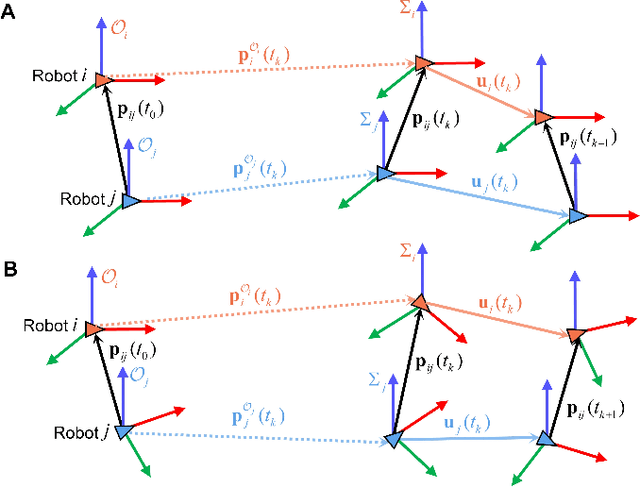
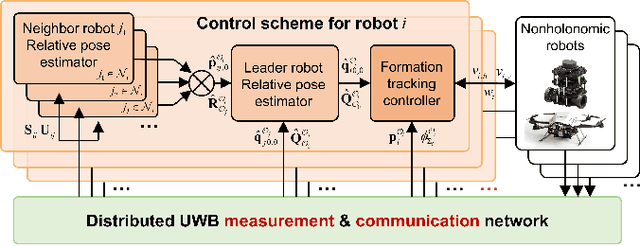
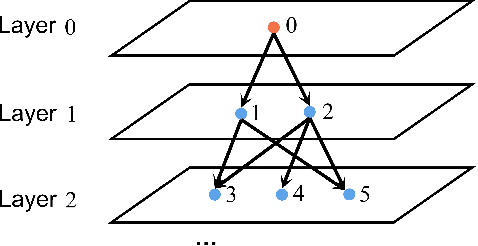
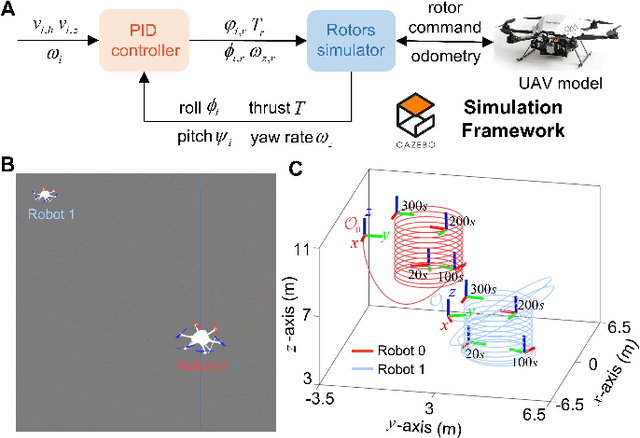
This article studies the problem of distributed formation control for multiple robots by using onboard ultra wide band (UWB) ranging and inertial odometer (IO) measurements. Although this problem has been widely studied, a fundamental limitation of most works is that they require each robot's pose and sensor measurements are expressed in a common reference frame. However, it is inapplicable for nonholonomic robot formations due to the practical difficulty of aligning IO measurements of individual robot in a common frame. To address this problem, firstly, a concurrent-learning based estimator is firstly proposed to achieve relative localization between neighboring robots in a local frame. Different from most relative localization methods in a global frame, both relative position and orientation in a local frame are estimated with only UWB ranging and IO measurements. Secondly, to deal with information loss caused by directed communication topology, a cooperative localization algorithm is introduced to estimate the relative pose to the leader robot. Thirdly, based on the theoretical results on relative pose estimation, a distributed formation tracking controller is proposed for nonholonomic robots. Both gazebo physical simulation and real-world experiments conducted on networked TurtleBot3 nonholonomic robots are provided to demonstrate the effectiveness of the proposed method.
Non-Euclidean Mixture Model for Social Network Embedding
Nov 07, 2024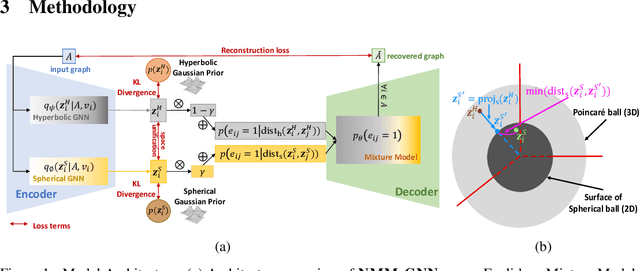
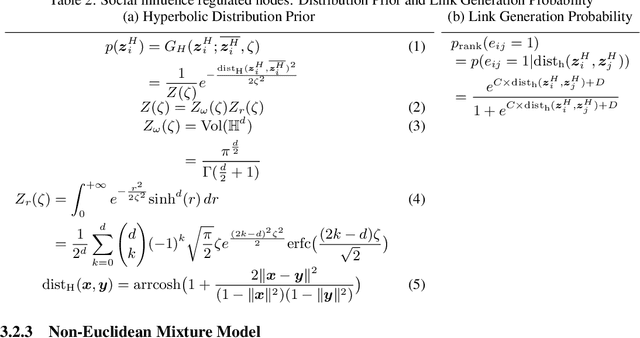
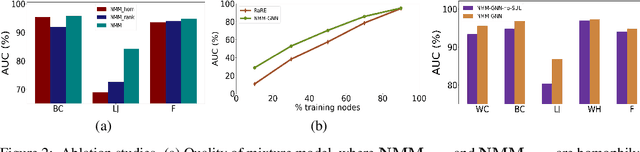
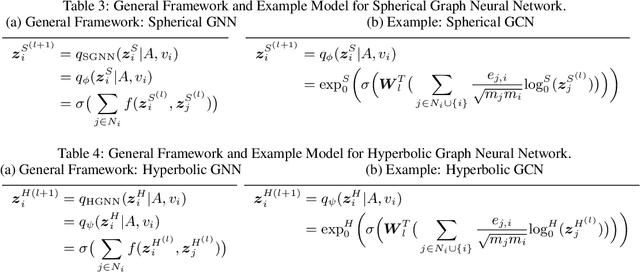
It is largely agreed that social network links are formed due to either homophily or social influence. Inspired by this, we aim at understanding the generation of links via providing a novel embedding-based graph formation model. Different from existing graph representation learning, where link generation probabilities are defined as a simple function of the corresponding node embeddings, we model the link generation as a mixture model of the two factors. In addition, we model the homophily factor in spherical space and the influence factor in hyperbolic space to accommodate the fact that (1) homophily results in cycles and (2) influence results in hierarchies in networks. We also design a special projection to align these two spaces. We call this model Non-Euclidean Mixture Model, i.e., NMM. We further integrate NMM with our non-Euclidean graph variational autoencoder (VAE) framework, NMM-GNN. NMM-GNN learns embeddings through a unified framework which uses non-Euclidean GNN encoders, non-Euclidean Gaussian priors, a non-Euclidean decoder, and a novel space unification loss component to unify distinct non-Euclidean geometric spaces. Experiments on public datasets show NMM-GNN significantly outperforms state-of-the-art baselines on social network generation and classification tasks, demonstrating its ability to better explain how the social network is formed.
Graph Fourier Neural ODEs: Bridging Spatial and Temporal Multiscales in Molecular Dynamics
Nov 03, 2024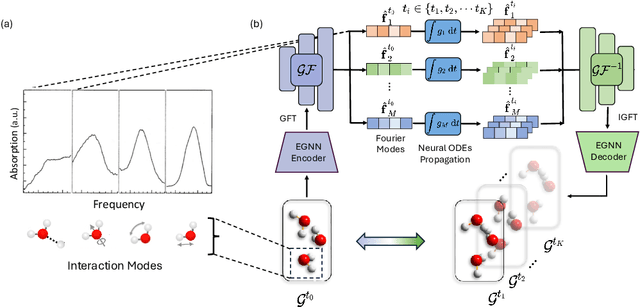
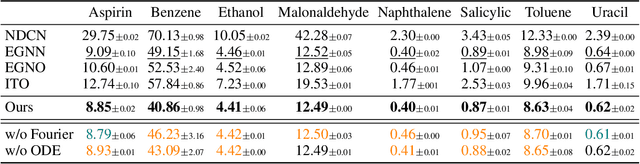
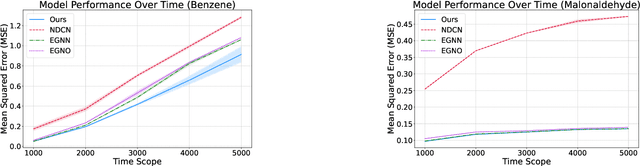
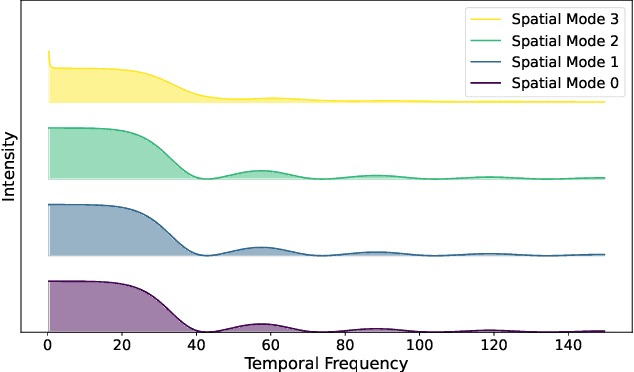
Molecular dynamics simulations are crucial for understanding complex physical, chemical, and biological processes at the atomic level. However, accurately capturing interactions across multiple spatial and temporal scales remains a significant challenge. We present a novel framework that jointly models spatial and temporal multiscale interactions in molecular dynamics. Our approach leverages Graph Fourier Transforms to decompose molecular structures into different spatial scales and employs Neural Ordinary Differential Equations to model the temporal dynamics in a curated manner influenced by the spatial modes. This unified framework links spatial structures with temporal evolution in a flexible manner, enabling more accurate and comprehensive simulations of molecular systems. We evaluate our model on the MD17 dataset, demonstrating consistent performance improvements over state-of-the-art baselines across multiple molecules, particularly under challenging conditions such as irregular timestep sampling and long-term prediction horizons. Ablation studies confirm the significant contributions of both spatial and temporal multiscale modeling components. Our method advances the simulation of complex molecular systems, potentially accelerating research in computational chemistry, drug discovery, and materials science.
Domain-specific Guided Summarization for Mental Health Posts
Nov 03, 2024


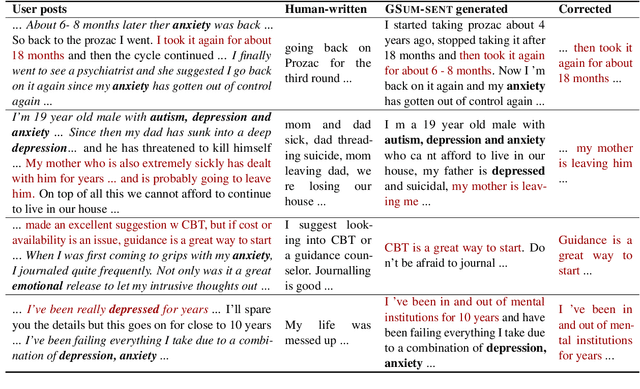
In domain-specific contexts, particularly mental health, abstractive summarization requires advanced techniques adept at handling specialized content to generate domain-relevant and faithful summaries. In response to this, we introduce a guided summarizer equipped with a dual-encoder and an adapted decoder that utilizes novel domain-specific guidance signals, i.e., mental health terminologies and contextually rich sentences from the source document, to enhance its capacity to align closely with the content and context of guidance, thereby generating a domain-relevant summary. Additionally, we present a post-editing correction model to rectify errors in the generated summary, thus enhancing its consistency with the original content in detail. Evaluation on the MentSum dataset reveals that our model outperforms existing baseline models in terms of both ROUGE and FactCC scores. Although the experiments are specifically designed for mental health posts, the methodology we've developed offers broad applicability, highlighting its versatility and effectiveness in producing high-quality domain-specific summaries.
NCST: Neural-based Color Style Transfer for Video Retouching
Nov 01, 2024

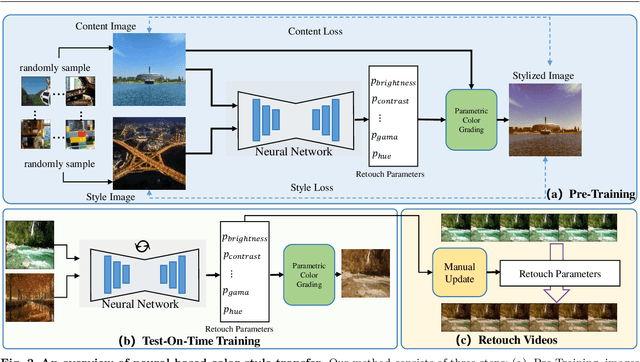

Video color style transfer aims to transform the color style of an original video by using a reference style image. Most existing methods employ neural networks, which come with challenges like opaque transfer processes and limited user control over the outcomes. Typically, users cannot fine-tune the resulting images or videos. To tackle this issue, we introduce a method that predicts specific parameters for color style transfer using two images. Initially, we train a neural network to learn the corresponding color adjustment parameters. When applying style transfer to a video, we fine-tune the network with key frames from the video and the chosen style image, generating precise transformation parameters. These are then applied to convert the color style of both images and videos. Our experimental results demonstrate that our algorithm surpasses current methods in color style transfer quality. Moreover, each parameter in our method has a specific, interpretable meaning, enabling users to understand the color style transfer process and allowing them to perform manual fine-tuning if desired.
In-Context LoRA for Diffusion Transformers
Oct 31, 2024



Recent research arXiv:2410.15027 has explored the use of diffusion transformers (DiTs) for task-agnostic image generation by simply concatenating attention tokens across images. However, despite substantial computational resources, the fidelity of the generated images remains suboptimal. In this study, we reevaluate and streamline this framework by hypothesizing that text-to-image DiTs inherently possess in-context generation capabilities, requiring only minimal tuning to activate them. Through diverse task experiments, we qualitatively demonstrate that existing text-to-image DiTs can effectively perform in-context generation without any tuning. Building on this insight, we propose a remarkably simple pipeline to leverage the in-context abilities of DiTs: (1) concatenate images instead of tokens, (2) perform joint captioning of multiple images, and (3) apply task-specific LoRA tuning using small datasets (e.g., $20\sim 100$ samples) instead of full-parameter tuning with large datasets. We name our models In-Context LoRA (IC-LoRA). This approach requires no modifications to the original DiT models, only changes to the training data. Remarkably, our pipeline generates high-fidelity image sets that better adhere to prompts. While task-specific in terms of tuning data, our framework remains task-agnostic in architecture and pipeline, offering a powerful tool for the community and providing valuable insights for further research on product-level task-agnostic generation systems. We release our code, data, and models at https://github.com/ali-vilab/In-Context-LoRA
Topology-Aware Graph Augmentation for Predicting Clinical Trajectories in Neurocognitive Disorders
Oct 31, 2024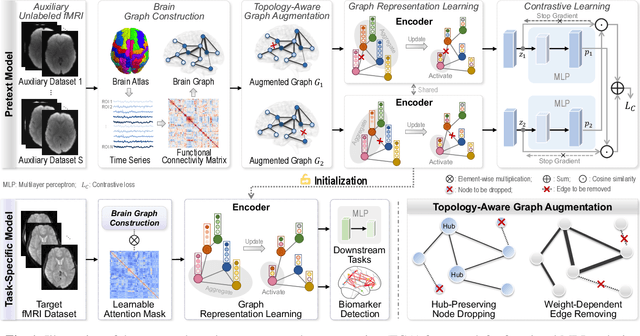
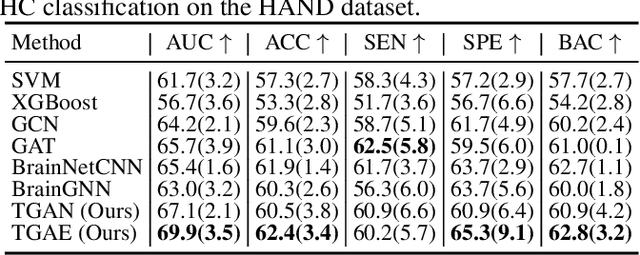
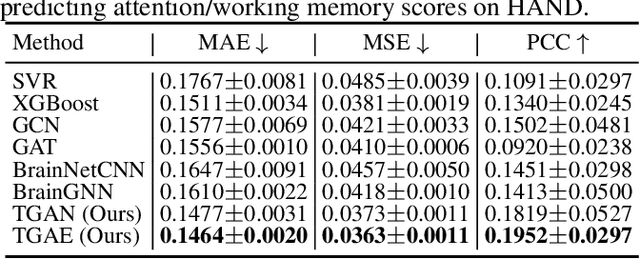

Brain networks/graphs derived from resting-state functional MRI (fMRI) help study underlying pathophysiology of neurocognitive disorders by measuring neuronal activities in the brain. Some studies utilize learning-based methods for brain network analysis, but typically suffer from low model generalizability caused by scarce labeled fMRI data. As a notable self-supervised strategy, graph contrastive learning helps leverage auxiliary unlabeled data. But existing methods generally arbitrarily perturb graph nodes/edges to generate augmented graphs, without considering essential topology information of brain networks. To this end, we propose a topology-aware graph augmentation (TGA) framework, comprising a pretext model to train a generalizable encoder on large-scale unlabeled fMRI cohorts and a task-specific model to perform downstream tasks on a small target dataset. In the pretext model, we design two novel topology-aware graph augmentation strategies: (1) hub-preserving node dropping that prioritizes preserving brain hub regions according to node importance, and (2) weight-dependent edge removing that focuses on keeping important functional connectivities based on edge weights. Experiments on 1, 688 fMRI scans suggest that TGA outperforms several state-of-the-art methods.
Are Large-Language Models Graph Algorithmic Reasoners?
Oct 29, 2024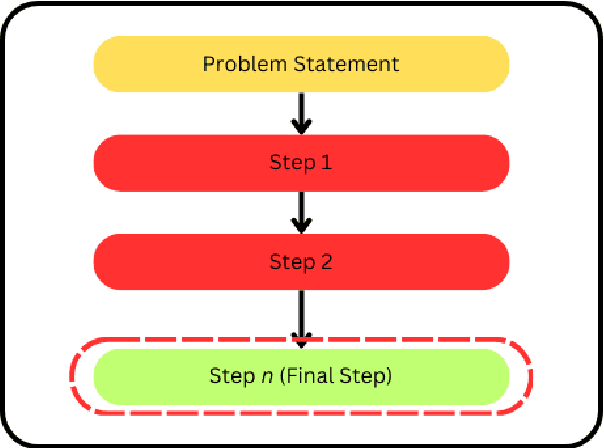
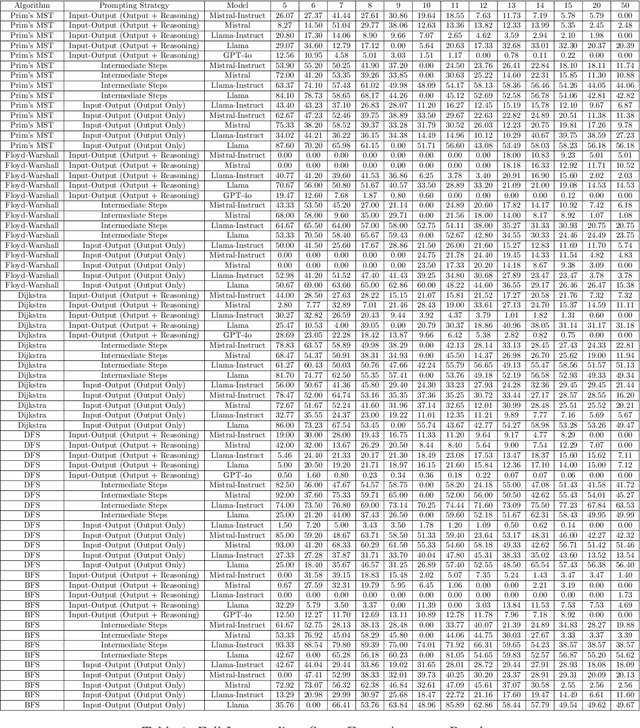
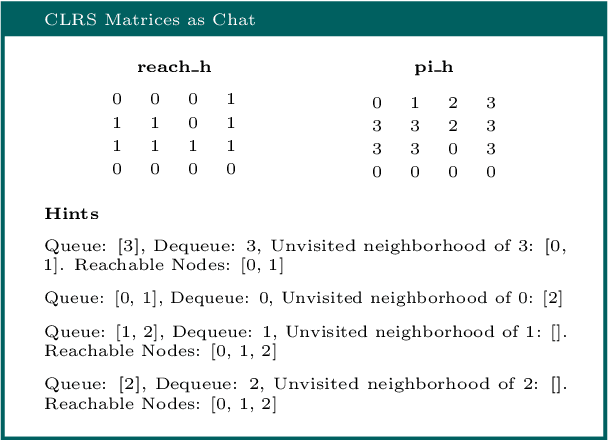
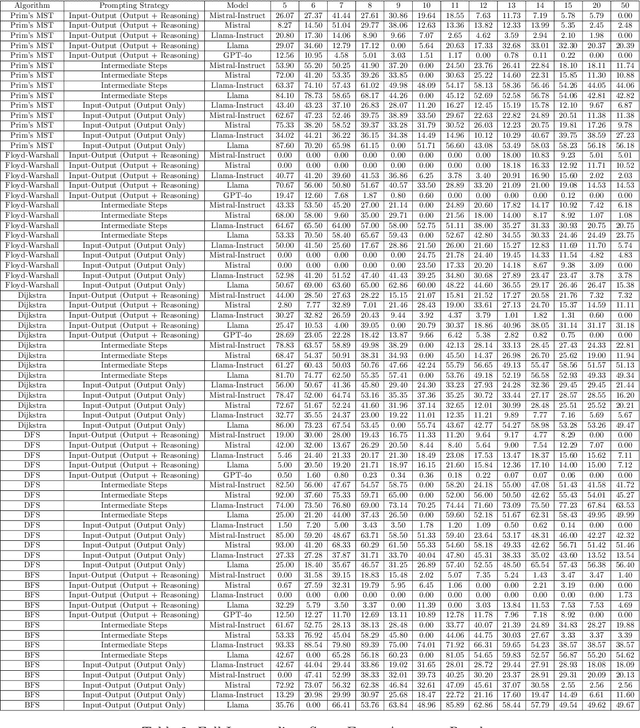
We seek to address a core challenge facing current Large Language Models (LLMs). LLMs have demonstrated superior performance in many tasks, yet continue to struggle with reasoning problems on explicit graphs that require multiple steps. To address this gap, we introduce a novel benchmark designed to evaluate LLM performance on classical algorithmic reasoning tasks on explicit graphs. Our benchmark encompasses five fundamental algorithms: Breadth-First Search (BFS) and Depth-First Search (DFS) for connectivity, Dijkstra's algorithm and Floyd-Warshall algorithm for all nodes shortest path, and Prim's Minimum Spanning Tree (MST-Prim's) algorithm. Through extensive experimentation, we assess the capabilities of state-of-the-art LLMs in executing these algorithms step-by-step and systematically evaluate their performance at each stage. Our findings highlight the persistent challenges LLMs face in this domain and underscore the necessity for advanced prompting techniques and algorithmic instruction to enhance their graph reasoning abilities. This work presents MAGMA, the first comprehensive benchmark focused on LLMs completing classical graph algorithms, and provides a critical step toward understanding and improving their structured problem-solving skills.