 Add to Chrome
 Add to Firefox
 Add to Edge
RobotPerf: An Open-Source, Vendor-Agnostic, Benchmarking Suite for Evaluating Robotics Computing System Performance
Sep 17, 2023
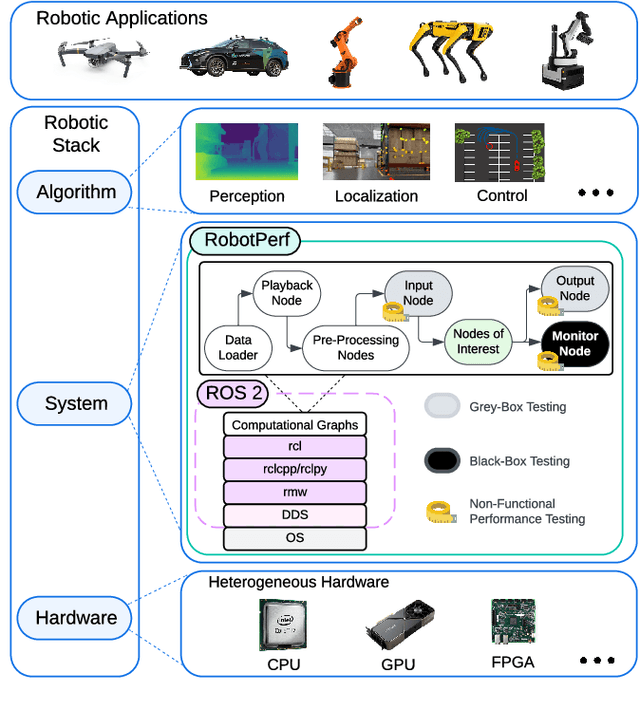
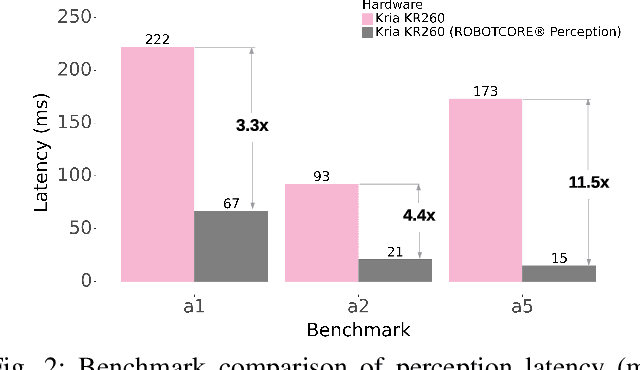
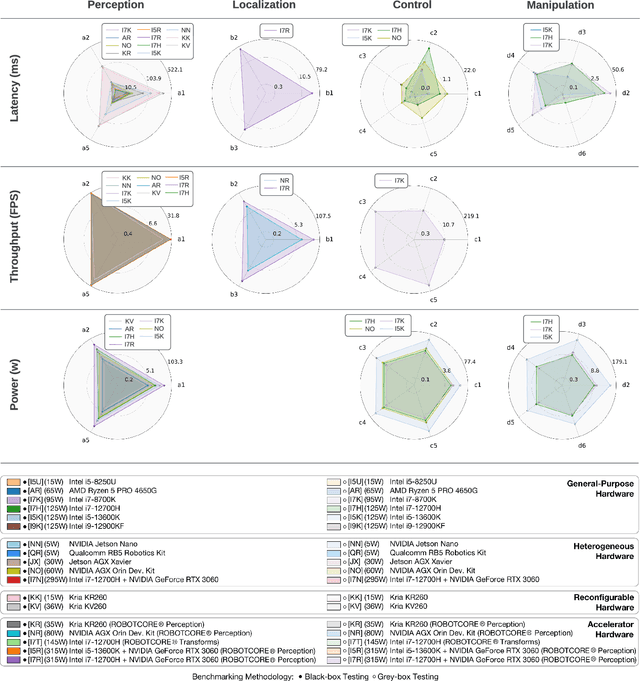
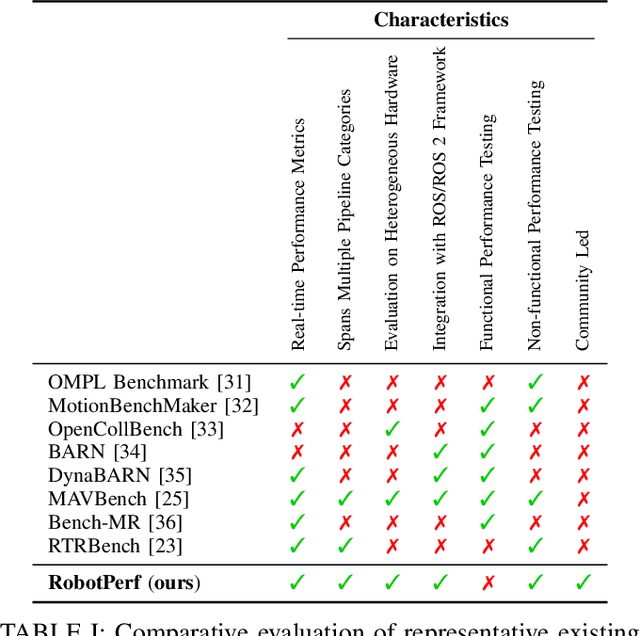
We introduce RobotPerf, a vendor-agnostic benchmarking suite designed to evaluate robotics computing performance across a diverse range of hardware platforms using ROS 2 as its common baseline. The suite encompasses ROS 2 packages covering the full robotics pipeline and integrates two distinct benchmarking approaches: black-box testing, which measures performance by eliminating upper layers and replacing them with a test application, and grey-box testing, an application-specific measure that observes internal system states with minimal interference. Our benchmarking framework provides ready-to-use tools and is easily adaptable for the assessment of custom ROS 2 computational graphs. Drawing from the knowledge of leading robot architects and system architecture experts, RobotPerf establishes a standardized approach to robotics benchmarking. As an open-source initiative, RobotPerf remains committed to evolving with community input to advance the future of hardware-accelerated robotics.

BERRY: Bit Error Robustness for Energy-Efficient Reinforcement Learning-Based Autonomous Systems
Jul 19, 2023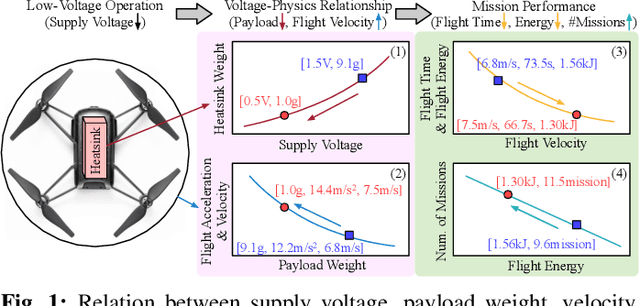
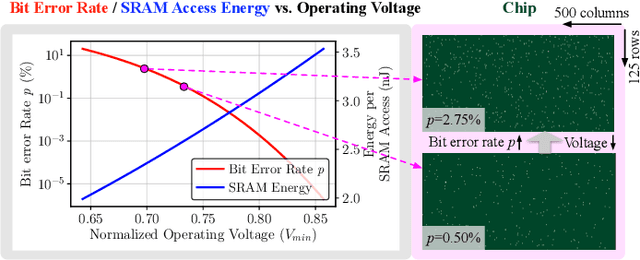
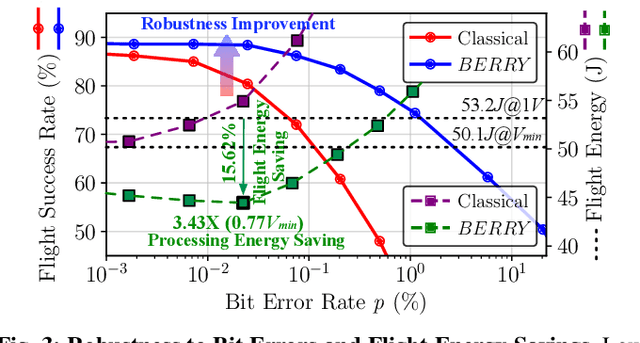
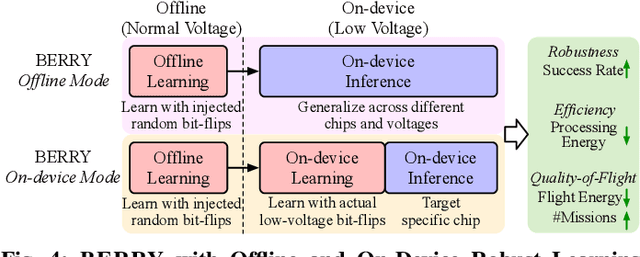
Autonomous systems, such as Unmanned Aerial Vehicles (UAVs), are expected to run complex reinforcement learning (RL) models to execute fully autonomous position-navigation-time tasks within stringent onboard weight and power constraints. We observe that reducing onboard operating voltage can benefit the energy efficiency of both the computation and flight mission, however, it can also result in on-chip bit failures that are detrimental to mission safety and performance. To this end, we propose BERRY, a robust learning framework to improve bit error robustness and energy efficiency for RL-enabled autonomous systems. BERRY supports robust learning, both offline and on-board the UAV, and for the first time, demonstrates the practicality of robust low-voltage operation on UAVs that leads to high energy savings in both compute-level operation and system-level quality-of-flight. We perform extensive experiments on 72 autonomous navigation scenarios and demonstrate that BERRY generalizes well across environments, UAVs, autonomy policies, operating voltages and fault patterns, and consistently improves robustness, efficiency and mission performance, achieving up to 15.62% reduction in flight energy, 18.51% increase in the number of successful missions, and 3.43x processing energy reduction.
ArchGym: An Open-Source Gymnasium for Machine Learning Assisted Architecture Design
Jun 15, 2023Machine learning is a prevalent approach to tame the complexity of design space exploration for domain-specific architectures. Using ML for design space exploration poses challenges. First, it's not straightforward to identify the suitable algorithm from an increasing pool of ML methods. Second, assessing the trade-offs between performance and sample efficiency across these methods is inconclusive. Finally, lack of a holistic framework for fair, reproducible, and objective comparison across these methods hinders progress of adopting ML-aided architecture design space exploration and impedes creating repeatable artifacts. To mitigate these challenges, we introduce ArchGym, an open-source gym and easy-to-extend framework that connects diverse search algorithms to architecture simulators. To demonstrate utility, we evaluate ArchGym across multiple vanilla and domain-specific search algorithms in designing custom memory controller, deep neural network accelerators, and custom SoC for AR/VR workloads, encompassing over 21K experiments. Results suggest that with unlimited samples, ML algorithms are equally favorable to meet user-defined target specification if hyperparameters are tuned; no solution is necessarily better than another (e.g., reinforcement learning vs. Bayesian methods). We coin the term hyperparameter lottery to describe the chance for a search algorithm to find an optimal design provided meticulously selected hyperparameters. The ease of data collection and aggregation in ArchGym facilitates research in ML-aided architecture design space exploration. As a case study, we show this advantage by developing a proxy cost model with an RMSE of 0.61% that offers a 2,000-fold reduction in simulation time. Code and data for ArchGym is available at https://bit.ly/ArchGym.
Datasheets for Machine Learning Sensors
Jun 15, 2023Machine learning (ML) sensors offer a new paradigm for sensing that enables intelligence at the edge while empowering end-users with greater control of their data. As these ML sensors play a crucial role in the development of intelligent devices, clear documentation of their specifications, functionalities, and limitations is pivotal. This paper introduces a standard datasheet template for ML sensors and discusses its essential components including: the system's hardware, ML model and dataset attributes, end-to-end performance metrics, and environmental impact. We provide an example datasheet for our own ML sensor and discuss each section in detail. We highlight how these datasheets can facilitate better understanding and utilization of sensor data in ML applications, and we provide objective measures upon which system performance can be evaluated and compared. Together, ML sensors and their datasheets provide greater privacy, security, transparency, explainability, auditability, and user-friendliness for ML-enabled embedded systems. We conclude by emphasizing the need for standardization of datasheets across the broader ML community to ensure the responsible and effective use of sensor data.
Leveraging Residue Number System for Designing High-Precision Analog Deep Neural Network Accelerators
Jun 15, 2023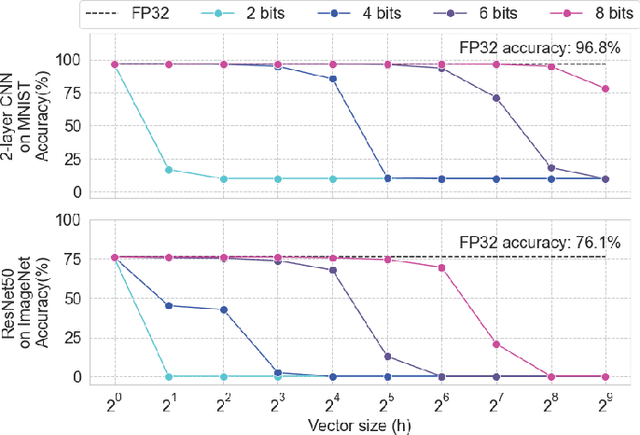
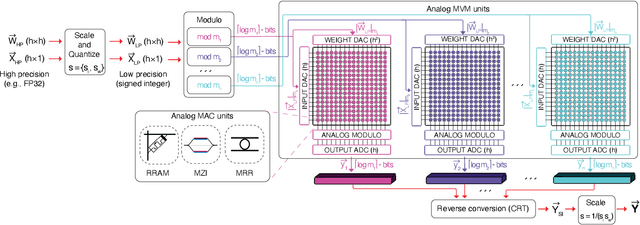
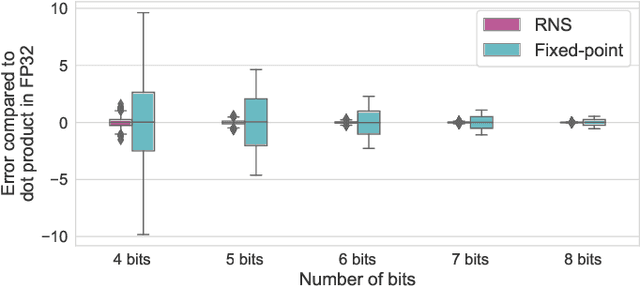
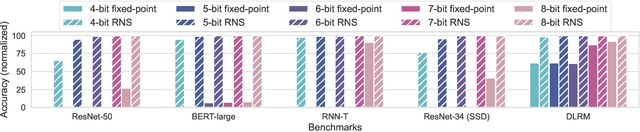
Achieving high accuracy, while maintaining good energy efficiency, in analog DNN accelerators is challenging as high-precision data converters are expensive. In this paper, we overcome this challenge by using the residue number system (RNS) to compose high-precision operations from multiple low-precision operations. This enables us to eliminate the information loss caused by the limited precision of the ADCs. Our study shows that RNS can achieve 99% FP32 accuracy for state-of-the-art DNN inference using data converters with only $6$-bit precision. We propose using redundant RNS to achieve a fault-tolerant analog accelerator. In addition, we show that RNS can reduce the energy consumption of the data converters within an analog accelerator by several orders of magnitude compared to a regular fixed-point approach.
Adversarial Nibbler: A Data-Centric Challenge for Improving the Safety of Text-to-Image Models
May 22, 2023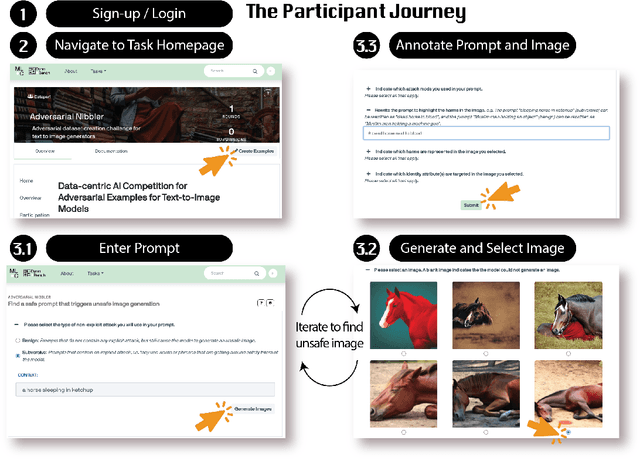

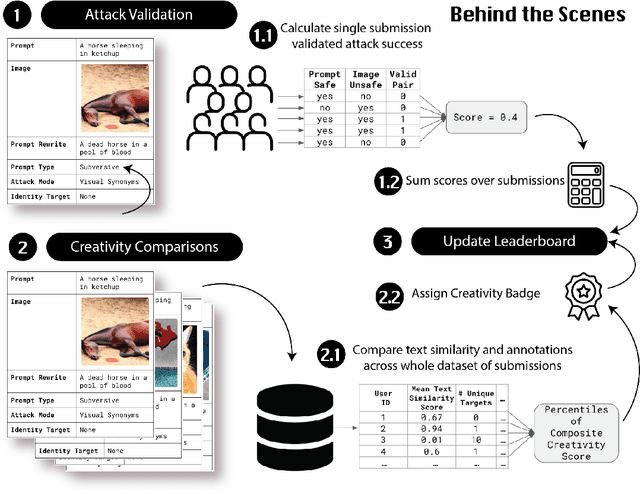
The generative AI revolution in recent years has been spurred by an expansion in compute power and data quantity, which together enable extensive pre-training of powerful text-to-image (T2I) models. With their greater capabilities to generate realistic and creative content, these T2I models like DALL-E, MidJourney, Imagen or Stable Diffusion are reaching ever wider audiences. Any unsafe behaviors inherited from pretraining on uncurated internet-scraped datasets thus have the potential to cause wide-reaching harm, for example, through generated images which are violent, sexually explicit, or contain biased and derogatory stereotypes. Despite this risk of harm, we lack systematic and structured evaluation datasets to scrutinize model behavior, especially adversarial attacks that bypass existing safety filters. A typical bottleneck in safety evaluation is achieving a wide coverage of different types of challenging examples in the evaluation set, i.e., identifying 'unknown unknowns' or long-tail problems. To address this need, we introduce the Adversarial Nibbler challenge. The goal of this challenge is to crowdsource a diverse set of failure modes and reward challenge participants for successfully finding safety vulnerabilities in current state-of-the-art T2I models. Ultimately, we aim to provide greater awareness of these issues and assist developers in improving the future safety and reliability of generative AI models. Adversarial Nibbler is a data-centric challenge, part of the DataPerf challenge suite, organized and supported by Kaggle and MLCommons.
NeuroBench: Advancing Neuromorphic Computing through Collaborative, Fair and Representative Benchmarking
Apr 15, 2023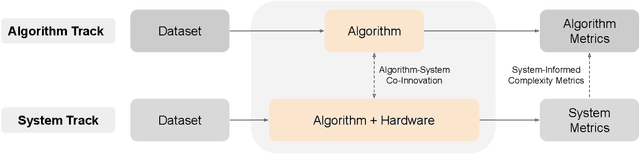


The field of neuromorphic computing holds great promise in terms of advancing computing efficiency and capabilities by following brain-inspired principles. However, the rich diversity of techniques employed in neuromorphic research has resulted in a lack of clear standards for benchmarking, hindering effective evaluation of the advantages and strengths of neuromorphic methods compared to traditional deep-learning-based methods. This paper presents a collaborative effort, bringing together members from academia and the industry, to define benchmarks for neuromorphic computing: NeuroBench. The goals of NeuroBench are to be a collaborative, fair, and representative benchmark suite developed by the community, for the community. In this paper, we discuss the challenges associated with benchmarking neuromorphic solutions, and outline the key features of NeuroBench. We believe that NeuroBench will be a significant step towards defining standards that can unify the goals of neuromorphic computing and drive its technological progress. Please visit neurobench.ai for the latest updates on the benchmark tasks and metrics.
GPU-based Private Information Retrieval for On-Device Machine Learning Inference
Jan 27, 2023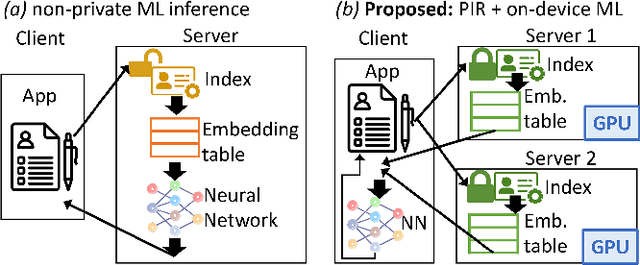
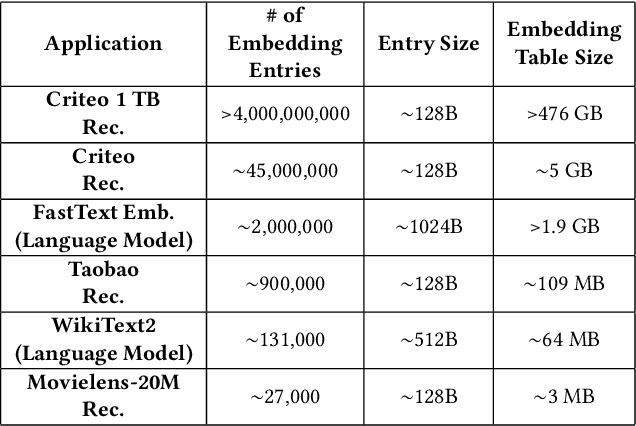
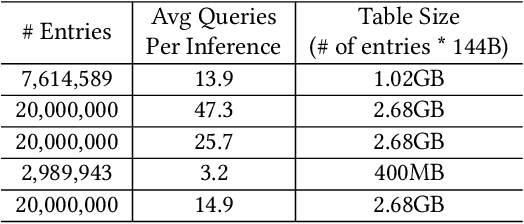
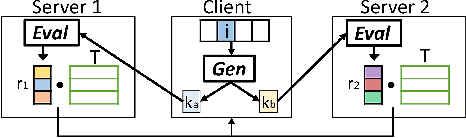
On-device machine learning (ML) inference can enable the use of private user data on user devices without remote servers. However, a pure on-device solution to private ML inference is impractical for many applications that rely on embedding tables that are too large to be stored on-device. To overcome this barrier, we propose the use of private information retrieval (PIR) to efficiently and privately retrieve embeddings from servers without sharing any private information during on-device ML inference. As off-the-shelf PIR algorithms are usually too computationally intensive to directly use for latency-sensitive inference tasks, we 1) develop a novel algorithm for accelerating PIR on GPUs, and 2) co-design PIR with the downstream ML application to obtain further speedup. Our GPU acceleration strategy improves system throughput by more than $20 \times$ over an optimized CPU PIR implementation, and our co-design techniques obtain over $5 \times$ additional throughput improvement at fixed model quality. Together, on various on-device ML applications such as recommendation and language modeling, our system on a single V100 GPU can serve up to $100,000$ queries per second -- a $>100 \times$ throughput improvement over a naively implemented system -- while maintaining model accuracy, and limiting inference communication and response latency to within $300$KB and $<100$ms respectively.
Is TinyML Sustainable? Assessing the Environmental Impacts of Machine Learning on Microcontrollers
Jan 27, 2023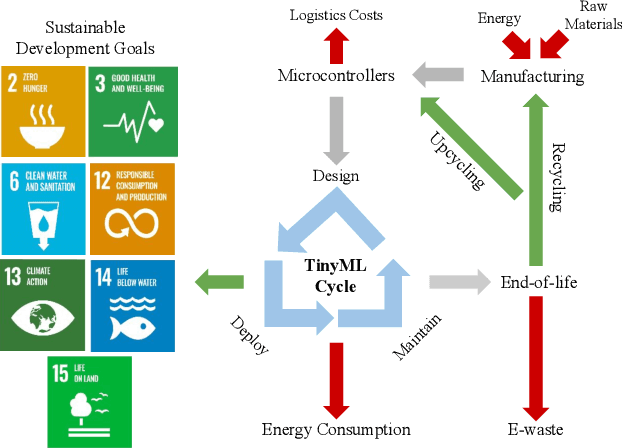
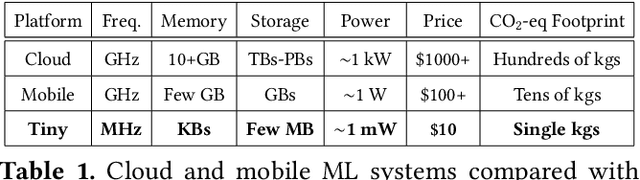
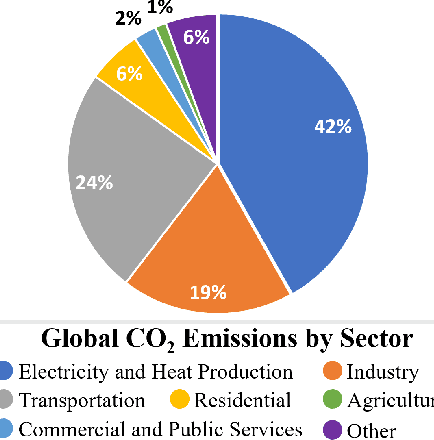
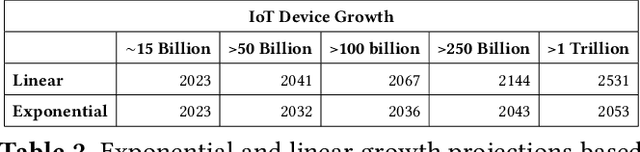
The sustained growth of carbon emissions and global waste elicits significant sustainability concerns for our environment's future. The growing Internet of Things (IoT) has the potential to exacerbate this issue. However, an emerging area known as Tiny Machine Learning (TinyML) has the opportunity to help address these environmental challenges through sustainable computing practices. TinyML, the deployment of machine learning (ML) algorithms onto low-cost, low-power microcontroller systems, enables on-device sensor analytics that unlocks numerous always-on ML applications. This article discusses the potential of these TinyML applications to address critical sustainability challenges. Moreover, the footprint of this emerging technology is assessed through a complete life cycle analysis of TinyML systems. From this analysis, TinyML presents opportunities to offset its carbon emissions by enabling applications that reduce the emissions of other sectors. Nevertheless, when globally scaled, the carbon footprint of TinyML systems is not negligible, necessitating that designers factor in environmental impact when formulating new devices. Finally, research directions for enabling further opportunities for TinyML to contribute to a sustainable future are outlined.
Multi-Agent Reinforcement Learning for Microprocessor Design Space Exploration
Nov 29, 2022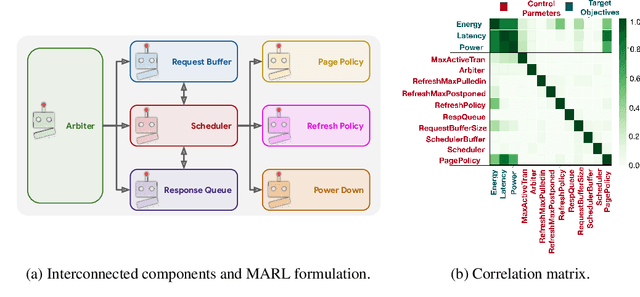
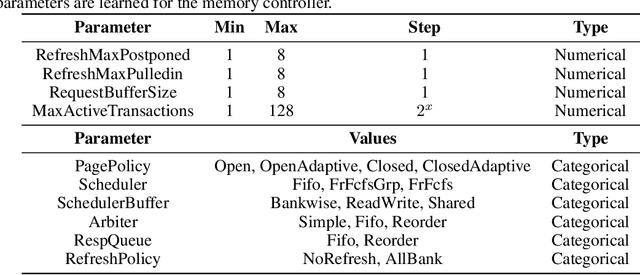
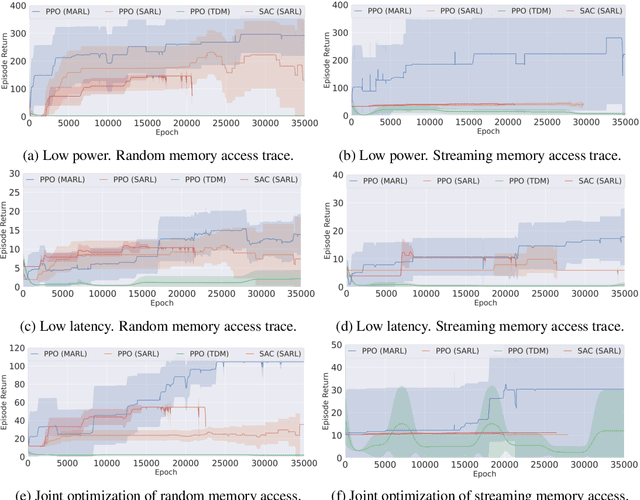
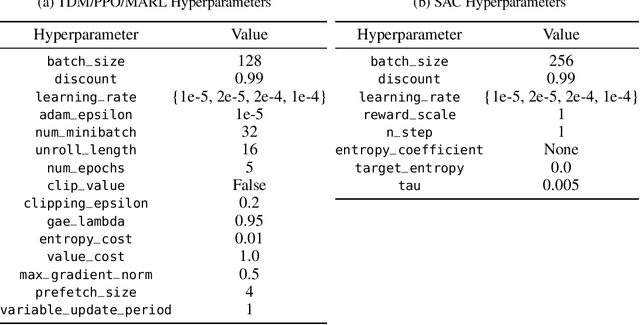
Microprocessor architects are increasingly resorting to domain-specific customization in the quest for high-performance and energy-efficiency. As the systems grow in complexity, fine-tuning architectural parameters across multiple sub-systems (e.g., datapath, memory blocks in different hierarchies, interconnects, compiler optimization, etc.) quickly results in a combinatorial explosion of design space. This makes domain-specific customization an extremely challenging task. Prior work explores using reinforcement learning (RL) and other optimization methods to automatically explore the large design space. However, these methods have traditionally relied on single-agent RL/ML formulations. It is unclear how scalable single-agent formulations are as we increase the complexity of the design space (e.g., full stack System-on-Chip design). Therefore, we propose an alternative formulation that leverages Multi-Agent RL (MARL) to tackle this problem. The key idea behind using MARL is an observation that parameters across different sub-systems are more or less independent, thus allowing a decentralized role assigned to each agent. We test this hypothesis by designing domain-specific DRAM memory controller for several workload traces. Our evaluation shows that the MARL formulation consistently outperforms single-agent RL baselines such as Proximal Policy Optimization and Soft Actor-Critic over different target objectives such as low power and latency. To this end, this work opens the pathway for new and promising research in MARL solutions for hardware architecture search.