 Add to Chrome
 Add to Firefox
 Add to Edge
Making Embodied AI Reliable: A Community Agenda from Testing to Formal Verification
Jun 02, 2026
Embodied AI systems are increasingly deployed in open-world environments, yet ensuring their reliability remains a fundamental challenge. Drawing on discussions from the AAAI'26 Bridge Program on "Making Embodied AI Reliable with Testing and Formal Verification", this article argues that reliability in embodied AI is inherently a lifecycle assurance problem arising from uncertainty, human interaction, and emergent behaviors across tightly coupled system components. We identify three complementary directions toward reliable embodied AI: (1) trustworthy scenario-based testing supported by validated specifications and meaningful coverage metrics, (2) compositional verification enabled by structured symbolic representations of system behavior and environmental context, and (3) runtime assurance mechanisms capable of adapting to uncertainty and distribution shifts during deployment. Rather than treating these approaches independently, we advocate integrated assurance workflows that connect testing, verification, and runtime adaptation through shared neuro-symbolic representations and continuous feedback across the system lifecycle. Such integration provides a foundation for building trustworthy embodied AI systems that can operate safely and reliably in complex real-world environments.

Symbolic Regression via Latent Iterative Refinement
May 26, 2026Symbolic regression (SR) seeks closed-form mathematical expressions that fit observed data. Neural SR methods amortize the search by training an encoder to map observations directly to expressions in a single pass, but this amortized inference leaves a residual amortization gap between its one-shot prediction and the true posterior. We propose Latent Equation Embedding (LEE), a framework that closes this gap through iterative amortized inference in a functionally grounded latent space. LEE learns a shared latent space Z equipped with three components: an encoder f_theta that jointly embeds symbolic tokens and numerical observations into a single latent vector z; an expression decoder g_expr that reconstructs formulas from z; and an evaluation decoder g_eval that predicts function values from z, explicitly grounding the latent space in functional behavior. At inference, LEE performs iterative refinement by re-encoding decoded expressions jointly with observations, progressively improving the latent estimate. LEE uses the encoder itself as a learned inference optimizer: each re-encoding step implicitly computes the mismatch between the candidate and the data. Because g_eval is differentiable in z, we additionally interleave continuous gradient descent with discrete re-encoding, yielding a hybrid iterative and gradient refinement procedure. On SRBench across three noise levels, against 19 baselines spanning genetic programming, symbolic-neural hybrids, and pre-trained Transformers, LEE produces expressions 2--10x simpler than the strongest accuracy-oriented baselines, including Operon, GP-GOMEA, TPSR, RAG-SR, and GenSR, with complexity 8--11 versus 20--90. These results advance the low-complexity region of the accuracy-complexity Pareto frontier and show graceful degradation as noise increases.
Symbolic Density Estimation: A Decompositional Approach
Mar 30, 2026We introduce AI-Kolmogorov, a novel framework for Symbolic Density Estimation (SymDE). Symbolic regression (SR) has been effectively used to produce interpretable models in standard regression settings but its applicability to density estimation tasks has largely been unexplored. To address the SymDE task we introduce a multi-stage pipeline: (i) problem decomposition through clustering and/or probabilistic graphical model structure learning; (ii) nonparametric density estimation; (iii) support estimation; and finally (iv) SR on the density estimate. We demonstrate the efficacy of AI-Kolmogorov on synthetic mixture models, multivariate normal distributions, and three exotic distributions, two of which are motivated by applications in high-energy physics. We show that AI-Kolmogorov can discover underlying distributions or otherwise provide valuable insight into the mathematical expressions describing them.
Learning Data-Efficient and Generalizable Neural Operators via Fundamental Physics Knowledge
Feb 16, 2026Recent advances in scientific machine learning (SciML) have enabled neural operators (NOs) to serve as powerful surrogates for modeling the dynamic evolution of physical systems governed by partial differential equations (PDEs). While existing approaches focus primarily on learning simulations from the target PDE, they often overlook more fundamental physical principles underlying these equations. Inspired by how numerical solvers are compatible with simulations of different settings of PDEs, we propose a multiphysics training framework that jointly learns from both the original PDEs and their simplified basic forms. Our framework enhances data efficiency, reduces predictive errors, and improves out-of-distribution (OOD) generalization, particularly in scenarios involving shifts of physical parameters and synthetic-to-real transfer. Our method is architecture-agnostic and demonstrates consistent improvements in normalized root mean square error (nRMSE) across a wide range of 1D/2D/3D PDE problems. Through extensive experiments, we show that explicit incorporation of fundamental physics knowledge significantly strengthens the generalization ability of neural operators. We will release models and codes at https://sites.google.com/view/sciml-fundemental-pde.
Report for NSF Workshop on AI for Electronic Design Automation
Jan 20, 2026This report distills the discussions and recommendations from the NSF Workshop on AI for Electronic Design Automation (EDA), held on December 10, 2024 in Vancouver alongside NeurIPS 2024. Bringing together experts across machine learning and EDA, the workshop examined how AI-spanning large language models (LLMs), graph neural networks (GNNs), reinforcement learning (RL), neurosymbolic methods, etc.-can facilitate EDA and shorten design turnaround. The workshop includes four themes: (1) AI for physical synthesis and design for manufacturing (DFM), discussing challenges in physical manufacturing process and potential AI applications; (2) AI for high-level and logic-level synthesis (HLS/LLS), covering pragma insertion, program transformation, RTL code generation, etc.; (3) AI toolbox for optimization and design, discussing frontier AI developments that could potentially be applied to EDA tasks; and (4) AI for test and verification, including LLM-assisted verification tools, ML-augmented SAT solving, security/reliability challenges, etc. The report recommends NSF to foster AI/EDA collaboration, invest in foundational AI for EDA, develop robust data infrastructures, promote scalable compute infrastructure, and invest in workforce development to democratize hardware design and enable next-generation hardware systems. The workshop information can be found on the website https://ai4eda-workshop.github.io/.
FrontierCS: Evolving Challenges for Evolving Intelligence
Dec 17, 2025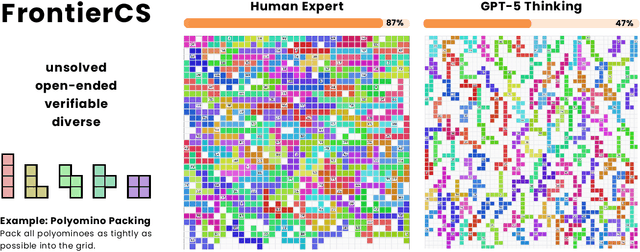

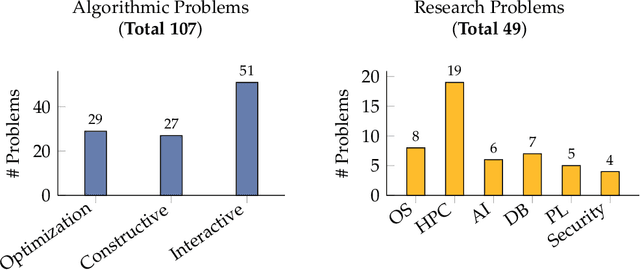

We introduce FrontierCS, a benchmark of 156 open-ended problems across diverse areas of computer science, designed and reviewed by experts, including CS PhDs and top-tier competitive programming participants and problem setters. Unlike existing benchmarks that focus on tasks with known optimal solutions, FrontierCS targets problems where the optimal solution is unknown, but the quality of a solution can be objectively evaluated. Models solve these tasks by implementing executable programs rather than outputting a direct answer. FrontierCS includes algorithmic problems, which are often NP-hard variants of competitive programming problems with objective partial scoring, and research problems with the same property. For each problem we provide an expert reference solution and an automatic evaluator. Combining open-ended design, measurable progress, and expert curation, FrontierCS provides a benchmark at the frontier of computer-science difficulty. Empirically, we find that frontier reasoning models still lag far behind human experts on both the algorithmic and research tracks, that increasing reasoning budgets alone does not close this gap, and that models often over-optimize for generating merely workable code instead of discovering high-quality algorithms and system designs.
O-Forge: An LLM + Computer Algebra Framework for Asymptotic Analysis
Oct 14, 2025
Large language models have recently demonstrated advanced capabilities in solving IMO and Putnam problems; yet their role in research mathematics has remained fairly limited. The key difficulty is verification: suggested proofs may look plausible, but cannot be trusted without rigorous checking. We present a framework, called LLM+CAS, and an associated tool, O-Forge, that couples frontier LLMs with a computer algebra systems (CAS) in an In-Context Symbolic Feedback loop to produce proofs that are both creative and symbolically verified. Our focus is on asymptotic inequalities, a topic that often involves difficult proofs and appropriate decomposition of the domain into the "right" subdomains. Many mathematicians, including Terry Tao, have suggested that using AI tools to find the right decompositions can be very useful for research-level asymptotic analysis. In this paper, we show that our framework LLM+CAS turns out to be remarkably effective at proposing such decompositions via a combination of a frontier LLM and a CAS. More precisely, we use an LLM to suggest domain decomposition, and a CAS (such as Mathematica) that provides a verification of each piece axiomatically. Using this loop, we answer a question posed by Terence Tao: whether LLMs coupled with a verifier can be used to help prove intricate asymptotic inequalities. More broadly, we show how AI can move beyond contest math towards research-level tools for professional mathematicians.
Robustness of deep learning classification to adversarial input on GPUs: asynchronous parallel accumulation is a source of vulnerability
Mar 21, 2025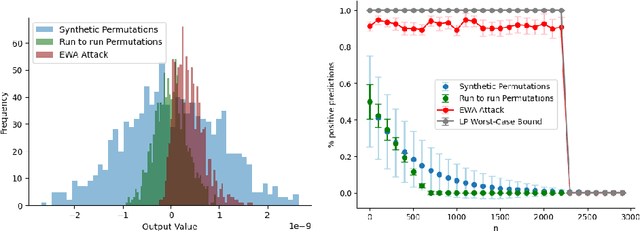
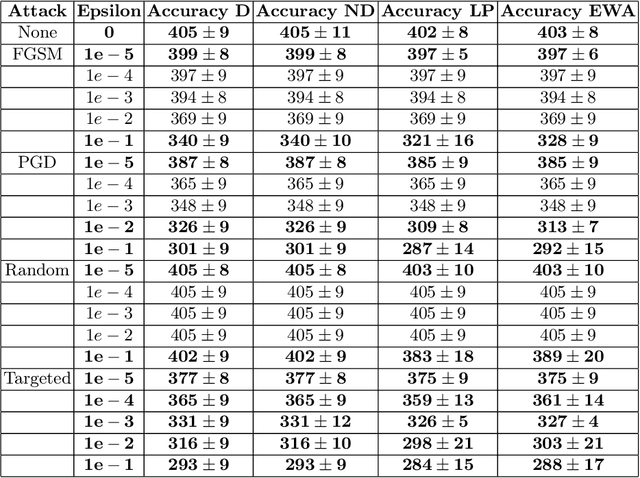
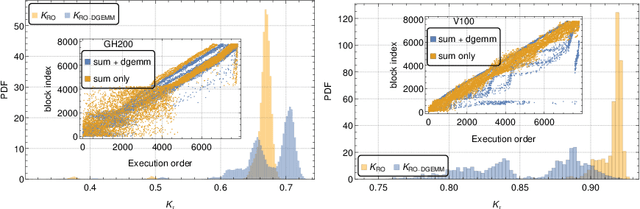
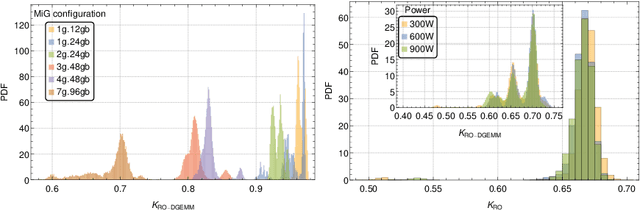
The ability of machine learning (ML) classification models to resist small, targeted input perturbations - known as adversarial attacks - is a key measure of their safety and reliability. We show that floating-point non associativity (FPNA) coupled with asynchronous parallel programming on GPUs is sufficient to result in misclassification, without any perturbation to the input. Additionally, we show this misclassification is particularly significant for inputs close to the decision boundary and that standard adversarial robustness results may be overestimated up to 4.6% when not considering machine-level details. We first study a linear classifier, before focusing on standard Graph Neural Network (GNN) architectures and datasets. We present a novel black-box attack using Bayesian optimization to determine external workloads that bias the output of reductions on GPUs and reliably lead to misclassification. Motivated by these results, we present a new learnable permutation (LP) gradient-based approach, to learn floating point operation orderings that lead to misclassifications, making the assumption that any reduction or permutation ordering is possible. This LP approach provides a worst-case estimate in a computationally efficient manner, avoiding the need to run identical experiments tens of thousands of times over a potentially large set of possible GPU states or architectures. Finally, we investigate parallel reduction ordering across different GPU architectures for a reduction under three conditions: (1) executing external background workloads, (2) utilizing multi-GPU virtualization, and (3) applying power capping. Our results demonstrate that parallel reduction ordering varies significantly across architectures under the first two conditions. The results and methods developed here can help to include machine-level considerations into adversarial robustness assessments.
LLMStinger: Jailbreaking LLMs using RL fine-tuned LLMs
Nov 13, 2024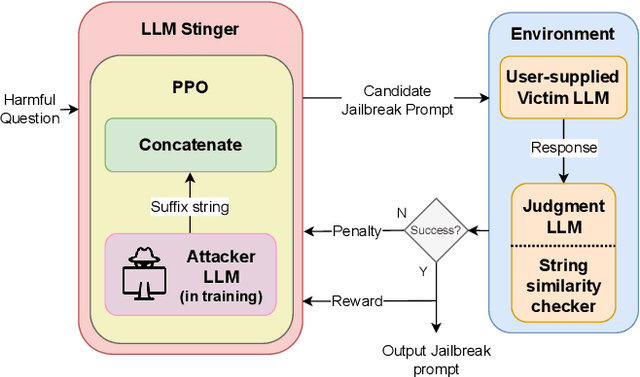
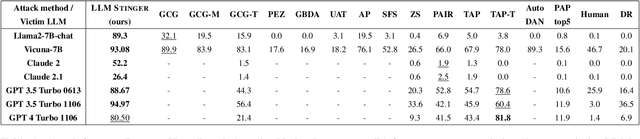
We introduce LLMStinger, a novel approach that leverages Large Language Models (LLMs) to automatically generate adversarial suffixes for jailbreak attacks. Unlike traditional methods, which require complex prompt engineering or white-box access, LLMStinger uses a reinforcement learning (RL) loop to fine-tune an attacker LLM, generating new suffixes based on existing attacks for harmful questions from the HarmBench benchmark. Our method significantly outperforms existing red-teaming approaches (we compared against 15 of the latest methods), achieving a +57.2% improvement in Attack Success Rate (ASR) on LLaMA2-7B-chat and a +50.3% ASR increase on Claude 2, both models known for their extensive safety measures. Additionally, we achieved a 94.97% ASR on GPT-3.5 and 99.4% on Gemma-2B-it, demonstrating the robustness and adaptability of LLMStinger across open and closed-source models.
Can Transformers Reason Logically? A Study in SAT Solving
Oct 09, 2024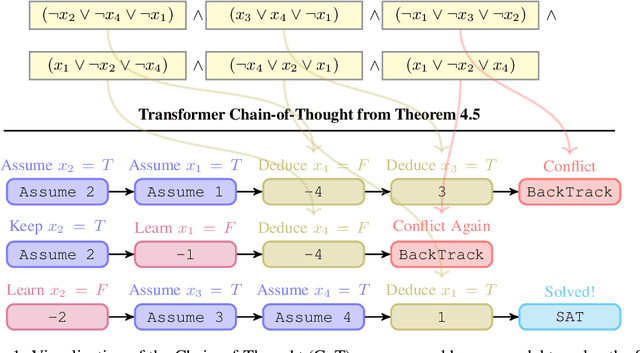
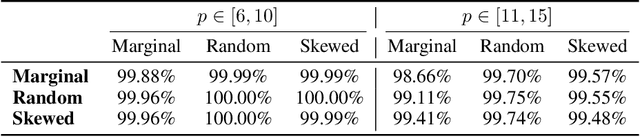
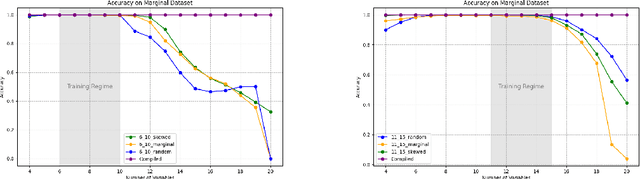
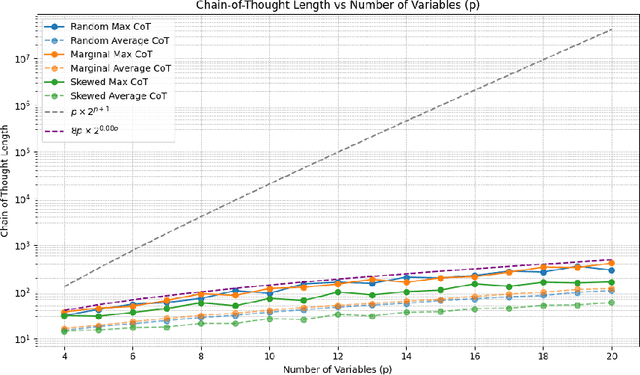
We theoretically and empirically study the logical reasoning capabilities of LLMs in the context of the Boolean satisfiability (SAT) problem. First, we construct a decoder-only Transformer that can solve SAT using backtracking and deduction via Chain-of-Thought (CoT). We prove its correctness by showing trace equivalence to the well-known DPLL SAT-solving algorithm. Second, to support the implementation of this abstract construction, we design a compiler $\texttt{PARAT}$ that takes as input a procedural specification and outputs a transformer model implementing this specification. Third, rather than $\textit{programming}$ a transformer to reason, we evaluate empirically whether it can be $\textit{trained}$ to do so by learning directly from algorithmic traces ("reasoning paths") of the DPLL algorithm.