 Add to Chrome
 Add to Firefox
 Add to Edge
A Data-centric Framework for Improving Domain-specific Machine Reading Comprehension Datasets
Apr 02, 2023
Low-quality data can cause downstream problems in high-stakes applications. Data-centric approach emphasizes on improving dataset quality to enhance model performance. High-quality datasets are needed for general-purpose Large Language Models (LLMs) training, as well as for domain-specific models, which are usually small in size as it is costly to engage a large number of domain experts for their creation. Thus, it is vital to ensure high-quality domain-specific training data. In this paper, we propose a framework for enhancing the data quality of original datasets. We applied the proposed framework to four biomedical datasets and showed relative improvement of up to 33%/40% for fine-tuning of retrieval/reader models on the BioASQ dataset when using back translation to enhance the original dataset quality.

Retrieving Multimodal Information for Augmented Generation: A Survey
Mar 20, 2023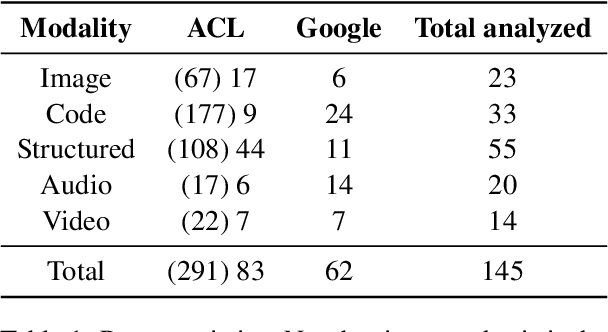
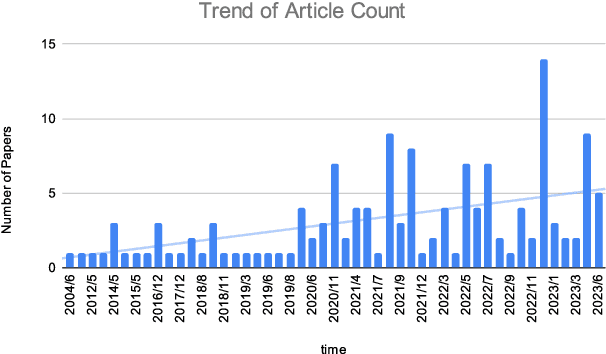
In this survey, we review methods that retrieve multimodal knowledge to assist and augment generative models. This group of works focuses on retrieving grounding contexts from external sources, including images, codes, tables, graphs, and audio. As multimodal learning and generative AI have become more and more impactful, such retrieval augmentation offers a promising solution to important concerns such as factuality, reasoning, interpretability, and robustness. We provide an in-depth review of retrieval-augmented generation in different modalities and discuss potential future directions. As this is an emerging field, we continue to add new papers and methods.
Towards Interpretable and Efficient Automatic Reference-Based Summarization Evaluation
Mar 07, 2023Interpretability and efficiency are two important considerations for the adoption of neural automatic metrics. In this work, we develop strong-performing automatic metrics for reference-based summarization evaluation, based on a two-stage evaluation pipeline that first extracts basic information units from one text sequence and then checks the extracted units in another sequence. The metrics we developed include two-stage metrics that can provide high interpretability at both the fine-grained unit level and summary level, and one-stage metrics that achieve a balance between efficiency and interoperability. We make the developed tools publicly available through a Python package and GitHub.
xCodeEval: A Large Scale Multilingual Multitask Benchmark for Code Understanding, Generation, Translation and Retrieval
Mar 06, 2023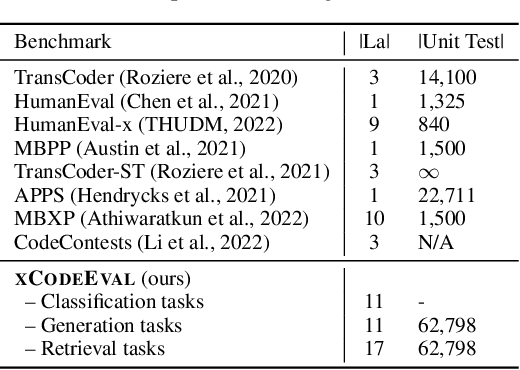
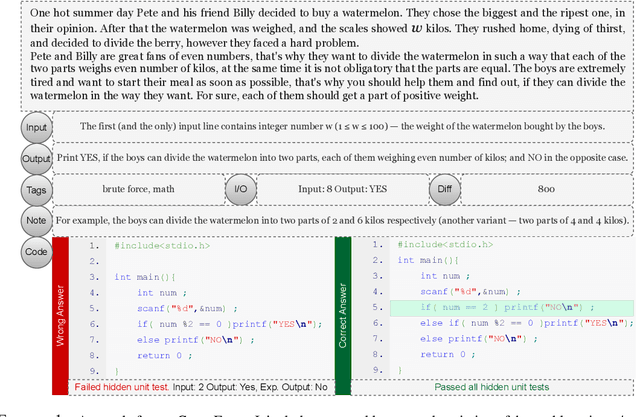
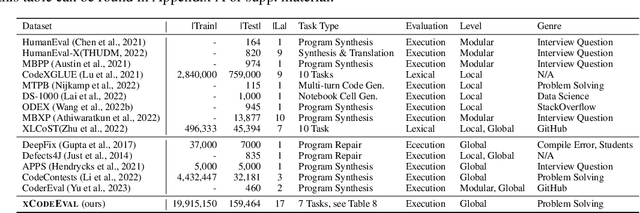
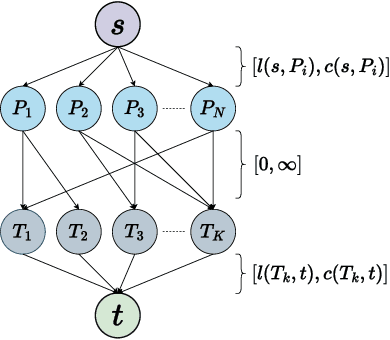
The ability to solve problems is a hallmark of intelligence and has been an enduring goal in AI. AI systems that can create programs as solutions to problems or assist developers in writing programs can increase productivity and make programming more accessible. Recently, pre-trained large language models have shown impressive abilities in generating new codes from natural language descriptions, repairing buggy codes, translating codes between languages, and retrieving relevant code segments. However, the evaluation of these models has often been performed in a scattered way on only one or two specific tasks, in a few languages, at a partial granularity (e.g., function) level and in many cases without proper training data. Even more concerning is that in most cases the evaluation of generated codes has been done in terms of mere lexical overlap rather than actual execution whereas semantic similarity (or equivalence) of two code segments depends only on their ``execution similarity'', i.e., being able to get the same output for a given input.
Learning to Initialize: Can Meta Learning Improve Cross-task Generalization in Prompt Tuning?
Feb 16, 2023Prompt tuning (PT) which only tunes the embeddings of an additional sequence of tokens per task, keeping the pre-trained language model (PLM) frozen, has shown remarkable performance in few-shot learning. Despite this, PT has been shown to rely heavily on good initialization of the prompt embeddings. In this work, we study meta prompt tuning (MPT) to systematically explore how meta-learning can help improve (if it can) cross-task generalization in PT through learning to initialize the prompt embeddings from other relevant tasks. We empirically analyze a representative set of meta learning algorithms in a wide range of adaptation settings with different source/target task configurations on a large set of few-shot tasks. With extensive experiments and analysis, we demonstrate the effectiveness of MPT. We find the improvement to be significant particularly on classification tasks. For other kinds of tasks such as question answering, we observe that while MPT can outperform PT in most cases, it does not always outperform multi-task learning. We further provide an in-depth analysis from the perspective of task similarity.
Dynamic Scheduled Sampling with Imitation Loss for Neural Text Generation
Jan 31, 2023State-of-the-art neural text generation models are typically trained to maximize the likelihood of each token in the ground-truth sequence conditioned on the previous target tokens. However, during inference, the model needs to make a prediction conditioned on the tokens generated by itself. This train-test discrepancy is referred to as exposure bias. Scheduled sampling is a curriculum learning strategy that gradually exposes the model to its own predictions during training to mitigate this bias. Most of the proposed approaches design a scheduler based on training steps, which generally requires careful tuning depending on the training setup. In this work, we introduce Dynamic Scheduled Sampling with Imitation Loss (DySI), which maintains the schedule based solely on the training time accuracy, while enhancing the curriculum learning by introducing an imitation loss, which attempts to make the behavior of the decoder indistinguishable from the behavior of a teacher-forced decoder. DySI is universally applicable across training setups with minimal tuning. Extensive experiments and analysis show that DySI not only achieves notable improvements on standard machine translation benchmarks, but also significantly improves the robustness of other text generation models.
SPT: Semi-Parametric Prompt Tuning for Multitask Prompted Learning
Dec 21, 2022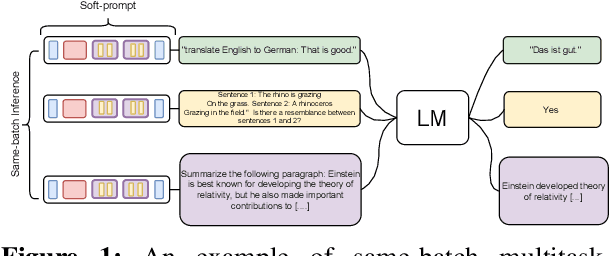
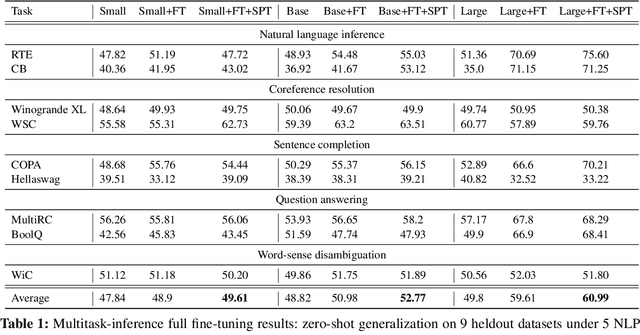
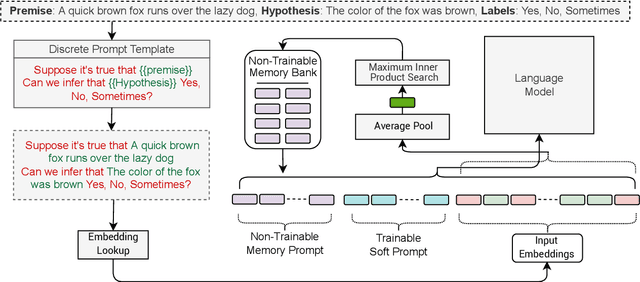
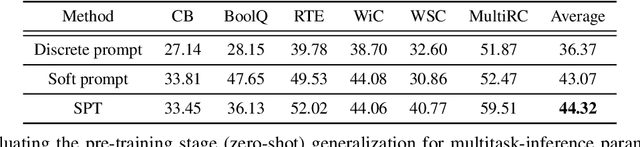
Pre-trained large language models can efficiently interpolate human-written prompts in a natural way. Multitask prompted learning can help generalization through a diverse set of tasks at once, thus enhancing the potential for more effective downstream fine-tuning. To perform efficient multitask-inference in the same batch, parameter-efficient fine-tuning methods such as prompt tuning have been proposed. However, the existing prompt tuning methods may lack generalization. We propose SPT, a semi-parametric prompt tuning method for multitask prompted learning. The novel component of SPT is a memory bank from where memory prompts are retrieved based on discrete prompts. Extensive experiments, such as (i) fine-tuning a full language model with SPT on 31 different tasks from 8 different domains and evaluating zero-shot generalization on 9 heldout datasets under 5 NLP task categories and (ii) pretraining SPT on the GLUE datasets and evaluating fine-tuning on the SuperGLUE datasets, demonstrate effectiveness of SPT.
Is GPT-3 a Psychopath? Evaluating Large Language Models from a Psychological Perspective
Dec 20, 2022Are large language models (LLMs) like GPT-3 psychologically safe? In this work, we design unbiased prompts to evaluate LLMs systematically from a psychological perspective. Firstly, we test the personality traits of three different LLMs with Short Dark Triad (SD-3) and Big Five Inventory (BFI). We find all of them show higher scores on SD-3 than the human average, indicating a relatively darker personality. Furthermore, LLMs like InstructGPT and FLAN-T5, which are fine-tuned with safety metrics, do not necessarily have more positive personalities. They score higher on Machiavellianism and Narcissism than GPT-3. Secondly, we test the LLMs in GPT-3 series on well-being tests to study the impact of fine-tuning with more training data. Interestingly, we observe a continuous increase in well-being scores from GPT-3 to InstructGPT. Following the observations, we show that instruction-finetune FLAN-T5 with positive answers in BFI can effectively improve the model from a psychological perspective. Finally, we call on the community to evaluate and improve LLMs' safety systematically instead of at the sentence level only.
Is GPT-3 a Good Data Annotator?
Dec 20, 2022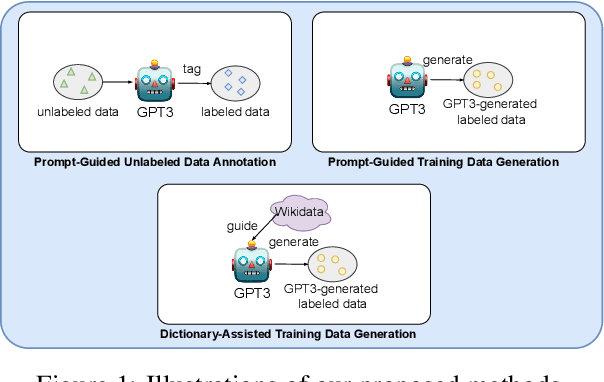
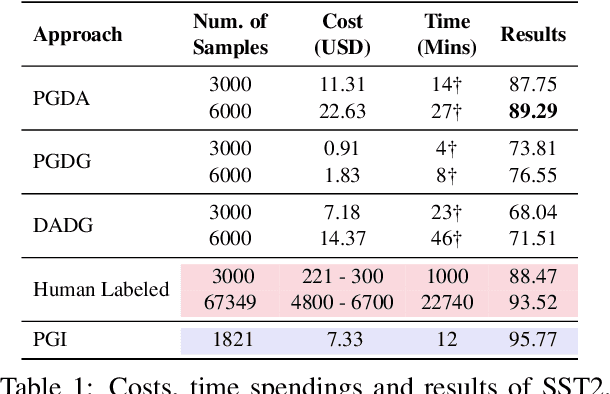
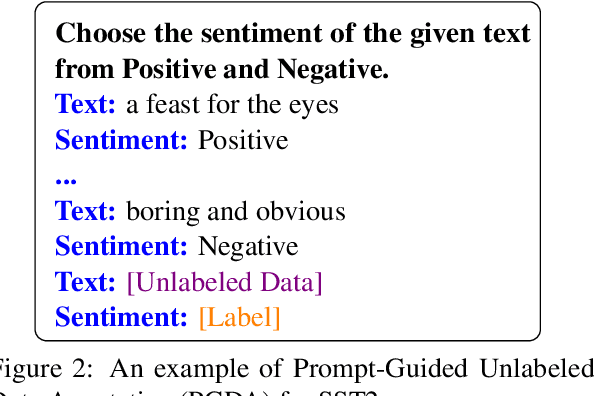
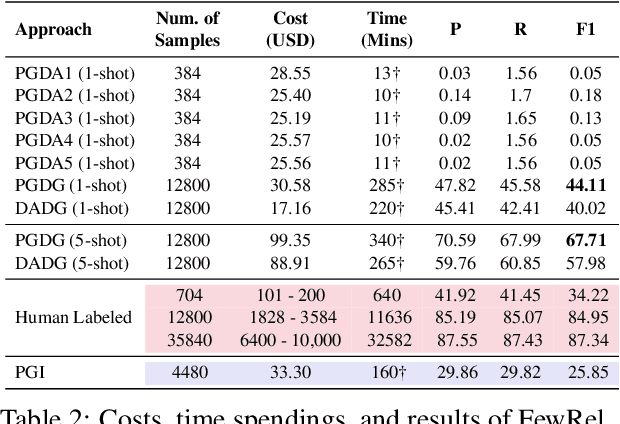
GPT-3 (Generative Pre-trained Transformer 3) is a large-scale autoregressive language model developed by OpenAI, which has demonstrated impressive few-shot performance on a wide range of natural language processing (NLP) tasks. Hence, an intuitive application is to use it for data annotation. In this paper, we investigate whether GPT-3 can be used as a good data annotator for NLP tasks. Data annotation is the process of labeling data that could be used to train machine learning models. It is a crucial step in the development of NLP systems, as it allows the model to learn the relationship between the input data and the desired output. Given the impressive language capabilities of GPT-3, it is natural to wonder whether it can be used to effectively annotate data for NLP tasks. In this paper, we evaluate the performance of GPT-3 as a data annotator by comparing it with traditional data annotation methods and analyzing its output on a range of tasks. Through this analysis, we aim to provide insight into the potential of GPT-3 as a general-purpose data annotator in NLP.
Unsupervised Summarization Re-ranking
Dec 19, 2022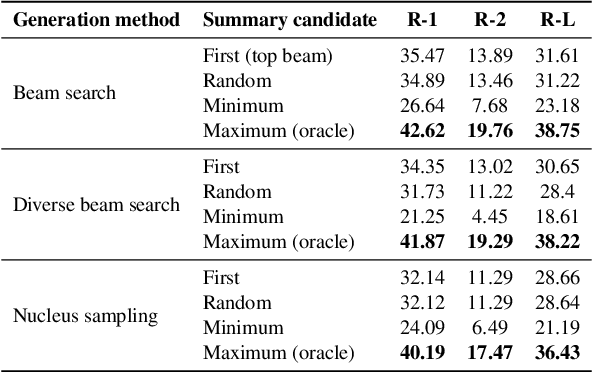
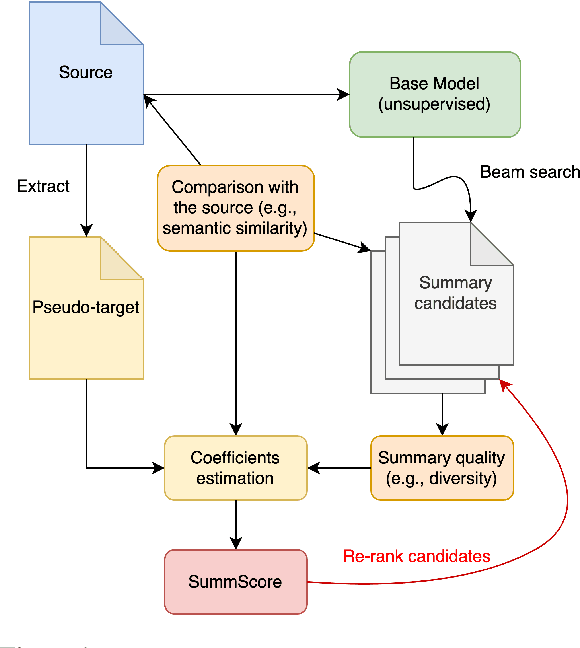


With the rise of task-specific pre-training objectives, abstractive summarization models like PEGASUS offer appealing zero-shot performance on downstream summarization tasks. However, the performance of such unsupervised models still lags significantly behind their supervised counterparts. Similarly to the supervised setup, we notice a very high variance in quality among summary candidates from these models whereas only one candidate is kept as the summary output. In this paper, we propose to re-rank summary candidates in an unsupervised manner, aiming to close the performance gap between unsupervised and supervised models. Our approach improves the pre-trained unsupervised PEGASUS by 4.37% to 7.27% relative mean ROUGE across four widely-adopted summarization benchmarks, and achieves relative gains of 7.51% (up to 23.73%) averaged over 30 transfer setups.