 Add to Chrome
 Add to Firefox
 Add to Edge
SEER: Long-Context Reasoning via Selective Visual-Text Compression
Aug 16, 2026
Long-context reasoning remains computationally expensive for large language models due to the quadratic complexity of attention over text tokens. Visual-text compression offers a promising alternative by rendering text into images and processing them with vision-language models, often reducing token usage. However, existing approaches apply uniform compression regardless of query relevance, potentially sacrificing precision where detailed extraction is required. We present SEER, a framework that learns to select query-relevant images through visual scanning and retrieve textual content only where needed, combining the efficiency of visual compression with the precision of text-based reasoning. Through supervised fine-tuning on tool-interaction trajectories, SEER learns adaptive tool invocation for selection and retrieval. Experiments on long-context benchmarks show that SEER improves extraction precision through selective text retrieval while retaining average prompt-token savings relative to full-text baselines. On LongBench, SEER achieves 51.11% average accuracy, outperforming the visual-text baseline Glyph-9B by 2.33 points and Qwen3-8B by 3.49 points. Code can be accessed at https://github.com/jiaweixu98/SEER

Diagnose Before You Compress: Prediction-Independent Bottleneck Witness Refinement for LLM Serving Traces
Aug 01, 2026Production LLM serving generates millions of diverse requests, making full-trace replay across serving configurations increasingly expensive. Existing trace reduction methods mainly preserve workload distributions or representative requests, but bottleneck-revealing workloads may be rare and non-representative. Moreover, evidence for one component cannot compensate for missing evidence in another, while using predicted bottlenecks as target truth creates circular evaluation. These limitations make it necessary to preserve evidence for every bottleneck component rather than rely on workload representativeness alone. We propose Bottleneck-Preserving Witnessing (BPW), a quality-constrained framework for compact and diagnostically reliable LLM serving replay suites. BPW first performs Workload Candidate Nomination using response-blind workload features and closed source-side measurements. This stage identifies workloads that may expose scheduler, prefill, decode, or KV-cache bottlenecks. Coverage-Priority Sequence Construction then organizes multi-component proposals as reusable hyperedges and prioritizes weak and uncovered dimensions. Finally, Bottleneck Truth Verification derives prediction-independent labels solely from direct target-system measurements. The verified results determine the earliest prefix satisfying the direct two-witness requirement for every component. Experiments on BurstGPT, ServeGen, and Mooncake show that BPW reaches the verified gate with a compact workload set and outperforms 16 policies, achieving relative improvements of 2.3% and 16.3% in Mean prefix Macro-F1 and WBRC-AUC, respectively. Stage-resolved and sensitivity analyses confirm the distinct contributions and local stability of its three stages. Our code is publicly available at https://github.com/llmllmllm/BPW
PREF-Gate: Provenance-Constrained Relational Evidence Fusion with Validation-Gated Selection for Graph Fraud Detection
Jul 13, 2026Relational fraud detection can exploit both label-free graph context and label-derived neighborhood evidence, but these two information sources obey different validity conditions. In particular, neighborhood risk becomes invalid when a queried node's own label, or any validation or test label, enters its construction. We formulate this issue as provenance-constrained relational evidence use and present PREF-Gate, an auditable decision framework with two fixed experts and a finite validation gate. The context expert uses attributes, one-hop means, feature residuals, and degree descriptors without labels. The evidence expert adds self-excluded, training-label-only neighborhood risk and empirical-Bayes summaries that expose support, uncertainty, availability, and shrinkage. Before test inference, the gate selects either expert or one of three pre-specified probability mixtures and fixes the decision threshold. On Amazon, YelpChi, and TFinance, using five identical stratified splits and 14 same-protocol methods, PREF-Gate obtains mean AUPRC values of 0.9085, 0.8104, and 0.8913. It selects the label-free expert on all Amazon and YelpChi splits and an evidence mixture on all TFinance splits. Thus, the main result is conditional rather than universal: label-derived relational evidence is useful only where held-out validation supports it. The framework couples competitive ranking performance with an explicit label-provenance contract, finite selection policy, failure accounting, and review-budget evaluation, providing an auditable knowledge-based decision pipeline for graph fraud detection.
Beyond Sparse Supervision: Diffusion-Guided Learning for Few-Shot Graph Fraud Detection
Jun 26, 2026Graph-based fraud detection is essential for safeguarding large-scale transaction systems, where undetected anomalies may lead to substantial financial losses and security risks. Real-world fraud graphs pose two coupled challenges: sparse and imbalanced supervision, where verified fraudulent labels are scarce and heavily skewed toward benign accounts, and representation dilution, where spatial message passing may oversmooth camouflaged anomalies while spectral filters may suppress fraud-relevant mid- and high-frequency irregularities. To address these challenges, we propose ADC-GNN, short for Attention-guided Diffusion-Contrastive Graph Neural Network, a unified framework that combines diffusion-guided feature augmentation, contrastive representation learning, and multi-hop spectral attention for few-shot graph fraud detection. The diffusion component is formulated as a feature-space denoising augmentation mechanism rather than a full topology-generative graph diffusion model: it constructs noise-perturbed node-feature views under a cosine schedule and uses contrastive learning to stabilize node representations across perturbations. The spectral attention module further adaptively emphasizes fraud-relevant hop-level and relation-level cues. We evaluate ADC-GNN primarily on three public benchmarks and additionally report a proprietary real-world telecom transaction dataset with approximately 60,000 records as a private case study. Under the 1% training setting, ADC-GNN achieves consistent improvements over original graph fraud baselines and four protocol-consistent recent graph anomaly/fraud baselines on the public benchmarks. Additional analyses on split stability, training ratios, oversampling alternatives, module-level ablations, diffusion schedules, and runtime and memory-consumption comparisons further characterize the effective operating regime of ADC-GNN.
From Query to Counsel: Structured Reasoning with a Multi-Agent Framework and Dataset for Legal Consultation
Apr 12, 2026Legal consultation question answering (Legal CQA) presents unique challenges compared to traditional legal QA tasks, including the scarcity of high-quality training data, complex task composition, and strong contextual dependencies. To address these, we construct JurisCQAD, a large-scale dataset of over 43,000 real-world Chinese legal queries annotated with expert-validated positive and negative responses, and design a structured task decomposition that converts each query into a legal element graph integrating entities, events, intents, and legal issues. We further propose JurisMA, a modular multi-agent framework supporting dynamic routing, statutory grounding, and stylistic optimization. Combined with the element graph, the framework enables strong context-aware reasoning, effectively capturing dependencies across legal facts, norms, and procedural logic. Trained on JurisCQAD and evaluated on a refined LawBench, our system significantly outperforms both general-purpose and legal-domain LLMs across multiple lexical and semantic metrics, demonstrating the benefits of interpretable decomposition and modular collaboration in Legal CQA.
Smart Commander: A Hierarchical Reinforcement Learning Framework for Fleet-Level PHM Decision Optimization
Apr 08, 2026Decision-making in military aviation Prognostics and Health Management (PHM) faces significant challenges due to the "curse of dimensionality" in large-scale fleet operations, combined with sparse feedback and stochastic mission profiles. To address these issues, this paper proposes Smart Commander, a novel Hierarchical Reinforcement Learning (HRL) framework designed to optimize sequential maintenance and logistics decisions. The framework decomposes the complex control problem into a two-tier hierarchy: a strategic General Commander manages fleet-level availability and cost objectives, while tactical Operation Commanders execute specific actions for sortie generation, maintenance scheduling, and resource allocation. The proposed approach is validated within a custom-built, high-fidelity discrete-event simulation environment that captures the dynamics of aircraft configuration and support logistics.By integrating layered reward shaping with planning-enhanced neural networks, the method effectively addresses the difficulty of sparse and delayed rewards. Empirical evaluations demonstrate that Smart Commander significantly outperforms conventional monolithic Deep Reinforcement Learning (DRL) and rule-based baselines. Notably, it achieves a substantial reduction in training time while demonstrating superior scalability and robustness in failure-prone environments. These results highlight the potential of HRL as a reliable paradigm for next-generation intelligent fleet management.
Choosing How to Remember: Adaptive Memory Structures for LLM Agents
Feb 15, 2026Memory is critical for enabling large language model (LLM) based agents to maintain coherent behavior over long-horizon interactions. However, existing agent memory systems suffer from two key gaps: they rely on a one-size-fits-all memory structure and do not model memory structure selection as a context-adaptive decision, limiting their ability to handle heterogeneous interaction patterns and resulting in suboptimal performance. We propose a unified framework, FluxMem, that enables adaptive memory organization for LLM agents. Our framework equips agents with multiple complementary memory structures. It explicitly learns to select among these structures based on interaction-level features, using offline supervision derived from downstream response quality and memory utilization. To support robust long-horizon memory evolution, we further introduce a three-level memory hierarchy and a Beta Mixture Model-based probabilistic gate for distribution-aware memory fusion, replacing brittle similarity thresholds. Experiments on two long-horizon benchmarks, PERSONAMEM and LoCoMo, demonstrate that our method achieves average improvements of 9.18% and 6.14%.
Discovering Common Information in Multi-view Data
Jun 21, 2024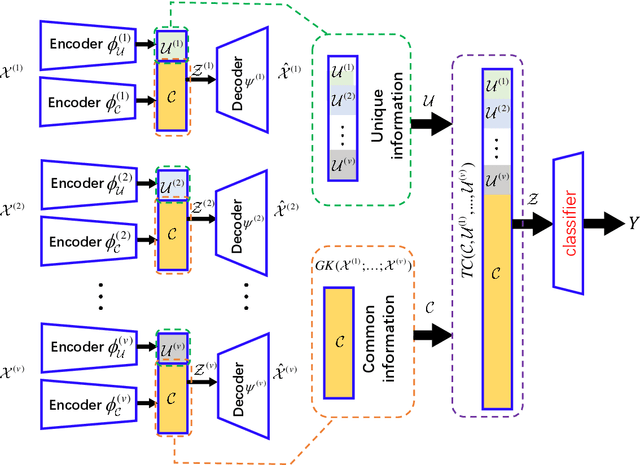

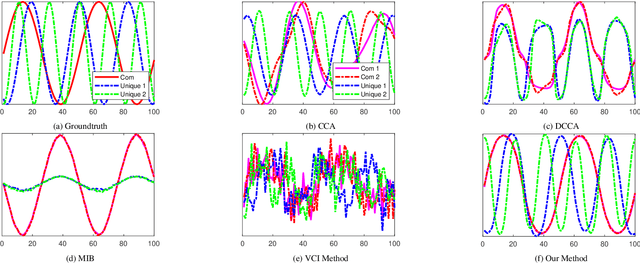
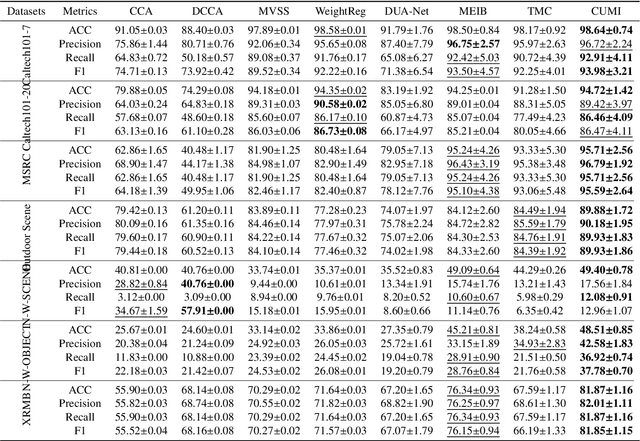
We introduce an innovative and mathematically rigorous definition for computing common information from multi-view data, drawing inspiration from G\'acs-K\"orner common information in information theory. Leveraging this definition, we develop a novel supervised multi-view learning framework to capture both common and unique information. By explicitly minimizing a total correlation term, the extracted common information and the unique information from each view are forced to be independent of each other, which, in turn, theoretically guarantees the effectiveness of our framework. To estimate information-theoretic quantities, our framework employs matrix-based R{\'e}nyi's $\alpha$-order entropy functional, which forgoes the need for variational approximation and distributional estimation in high-dimensional space. Theoretical proof is provided that our framework can faithfully discover both common and unique information from multi-view data. Experiments on synthetic and seven benchmark real-world datasets demonstrate the superior performance of our proposed framework over state-of-the-art approaches.
Generalized Cauchy-Schwarz Divergence and Its Deep Learning Applications
May 07, 2024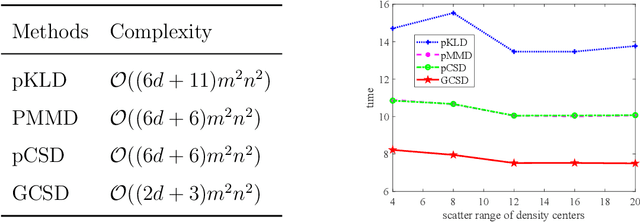
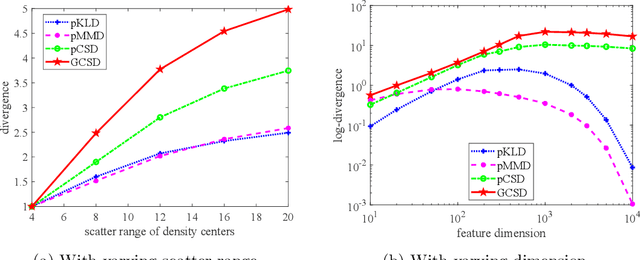
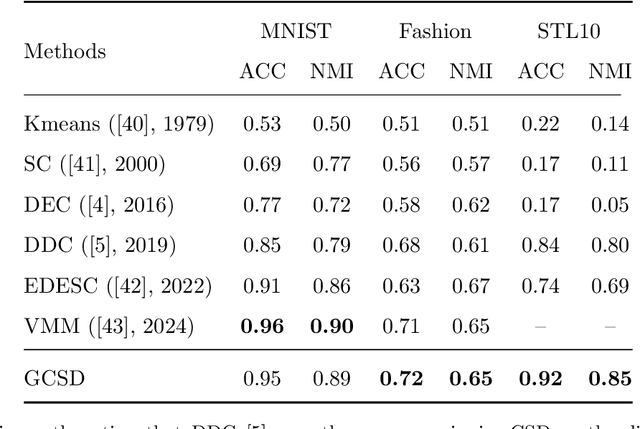
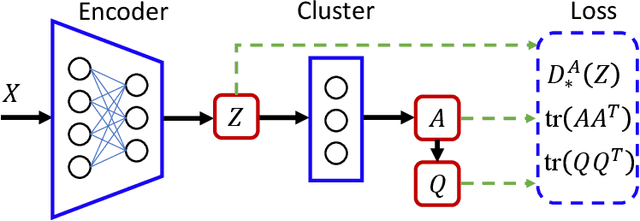
Divergence measures play a central role in machine learning and become increasingly essential in deep learning. However, valid and computationally efficient divergence measures for multiple (more than two) distributions are scarcely investigated. This becomes particularly crucial in areas where the simultaneous management of multiple distributions is both unavoidable and essential. Examples include clustering, multi-source domain adaptation or generalization, and multi-view learning, among others. Although calculating the mean of pairwise distances between any two distributions serves as a common way to quantify the total divergence among multiple distributions, it is crucial to acknowledge that this approach is not straightforward and requires significant computational resources. In this study, we introduce a new divergence measure for multiple distributions named the generalized Cauchy-Schwarz divergence (GCSD), which is inspired by the classic Cauchy-Schwarz divergence. Additionally, we provide a closed-form sample estimator based on kernel density estimation, making it convenient and straightforward to use in various machine-learning applications. Finally, we apply the proposed GCSD to two challenging machine learning tasks, namely deep learning-based clustering and the problem of multi-source domain adaptation. The experimental results showcase the impressive performance of GCSD in both tasks, highlighting its potential application in machine-learning areas that involve quantifying multiple distributions.
On the Adversarial Robustness of Generative Autoencoders in the Latent Space
Jul 05, 2023The generative autoencoders, such as the variational autoencoders or the adversarial autoencoders, have achieved great success in lots of real-world applications, including image generation, and signal communication. However, little concern has been devoted to their robustness during practical deployment. Due to the probabilistic latent structure, variational autoencoders (VAEs) may confront problems such as a mismatch between the posterior distribution of the latent and real data manifold, or discontinuity in the posterior distribution of the latent. This leaves a back door for malicious attackers to collapse VAEs from the latent space, especially in scenarios where the encoder and decoder are used separately, such as communication and compressed sensing. In this work, we provide the first study on the adversarial robustness of generative autoencoders in the latent space. Specifically, we empirically demonstrate the latent vulnerability of popular generative autoencoders through attacks in the latent space. We also evaluate the difference between variational autoencoders and their deterministic variants and observe that the latter performs better in latent robustness. Meanwhile, we identify a potential trade-off between the adversarial robustness and the degree of the disentanglement of the latent codes. Additionally, we also verify the feasibility of improvement for the latent robustness of VAEs through adversarial training. In summary, we suggest concerning the adversarial latent robustness of the generative autoencoders, analyze several robustness-relative issues, and give some insights into a series of key challenges.