 Add to Chrome
 Add to Firefox
 Add to Edge
TimeBench: A Comprehensive Evaluation of Temporal Reasoning Abilities in Large Language Models
Nov 29, 2023
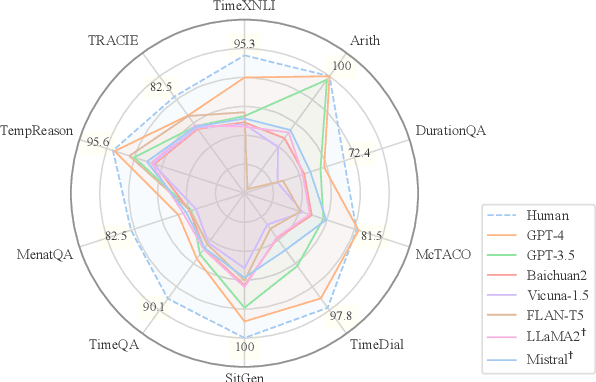
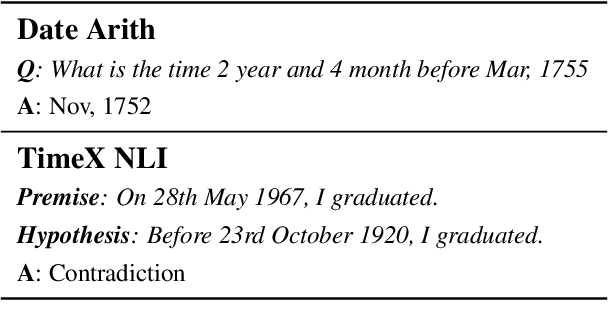
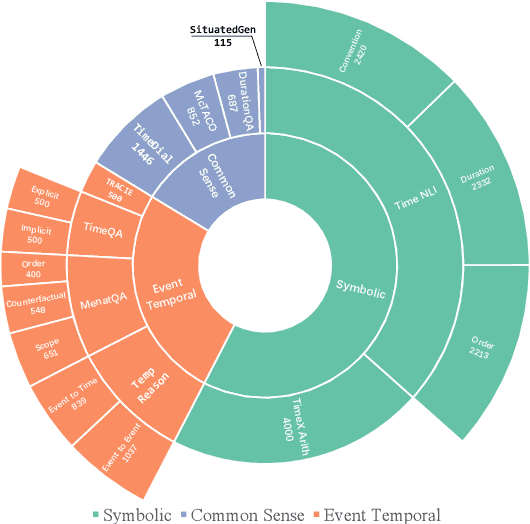
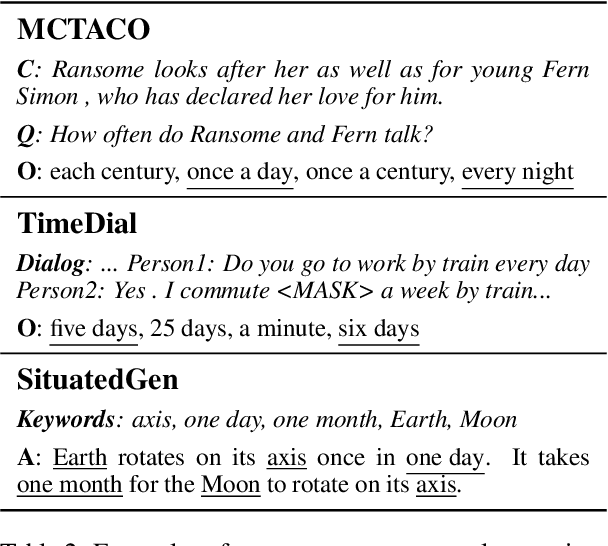
Understanding time is a pivotal aspect of human cognition, crucial in the broader framework of grasping the intricacies of the world. Previous studies typically focus on specific aspects of time, lacking a comprehensive temporal reasoning benchmark. To address this issue, we propose TimeBench, a comprehensive hierarchical temporal reasoning benchmark that covers a broad spectrum of temporal reasoning phenomena, which provides a thorough evaluation for investigating the temporal reasoning capabilities of large language models. We conduct extensive experiments on popular LLMs, such as GPT-4, LLaMA2, and Mistral, incorporating chain-of-thought prompting. Our experimental results indicate a significant performance gap between the state-of-the-art LLMs and humans, highlighting that there is still a considerable distance to cover in temporal reasoning. We aspire for TimeBench to serve as a comprehensive benchmark, fostering research in temporal reasoning for LLMs. Our resource is available at https://github.com/zchuz/TimeBench

GBD-TS: Goal-based Pedestrian Trajectory Prediction with Diffusion using Tree Sampling Algorithm
Nov 25, 2023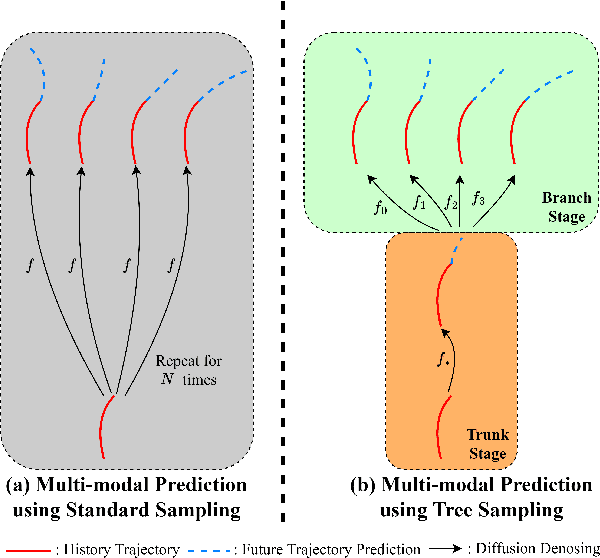
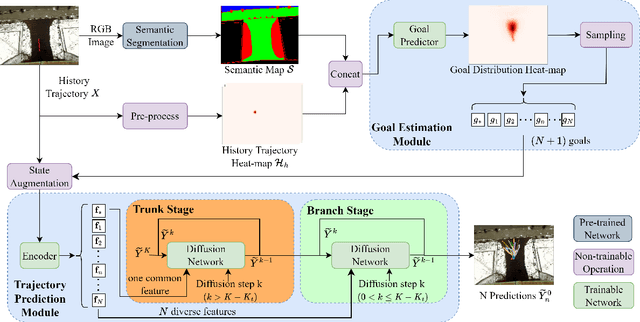
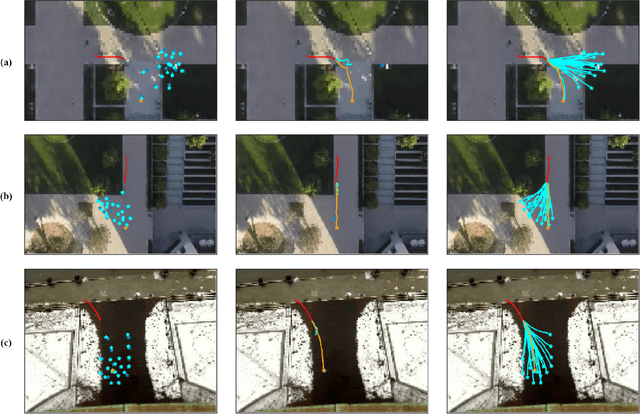
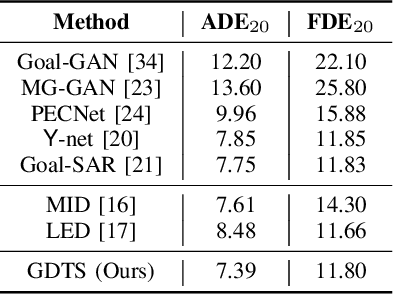
Predicting pedestrian trajectories is crucial for improving the safety and effectiveness of autonomous driving and mobile robots. However, this task is nontrivial due to the inherent stochasticity of human motion, which naturally requires the predictor to generate multi-model prediction. Previous works have used various generative methods, such as GAN and VAE, for pedestrian trajectory prediction. Nevertheless, these methods may suffer from problems, including mode collapse and relatively low-quality results. The denoising diffusion probabilistic model (DDPM) has recently been applied to trajectory prediction due to its simple training process and powerful reconstruction ability. However, current diffusion-based methods are straightforward without fully leveraging input information and usually require many denoising iterations leading to a long inference time or an additional network for initialization. To address these challenges and promote the application of diffusion models in trajectory prediction, we propose a novel scene-aware multi-modal pedestrian trajectory prediction framework called GBD. GBD combines goal prediction with the diffusion network. First, the goal predictor produces multiple goals, and then the diffusion network generates multi-modal trajectories conditioned on these goals. Furthermore, we introduce a new diffusion sampling algorithm named tree sampling (TS), which leverages common feature to reduce the inference time and improve accuracy for multi-modal prediction. Experimental results demonstrate that our GBD-TS method achieves state-of-the-art performance with real-time inference speed.
Pruning random resistive memory for optimizing analogue AI
Nov 13, 2023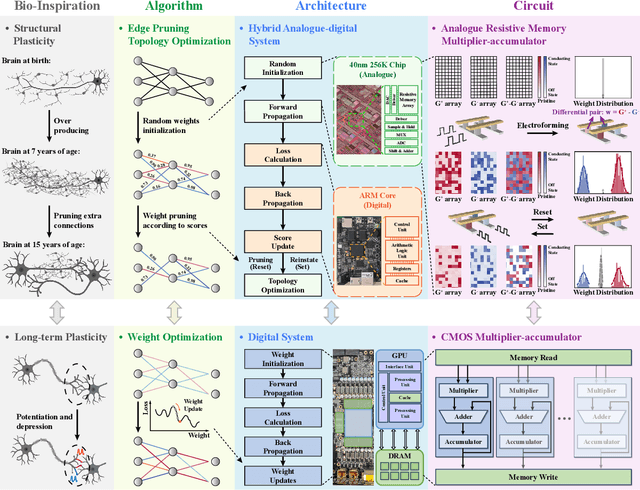
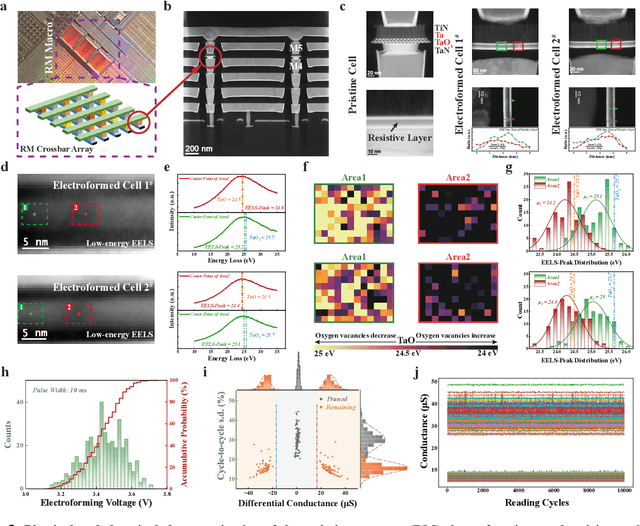
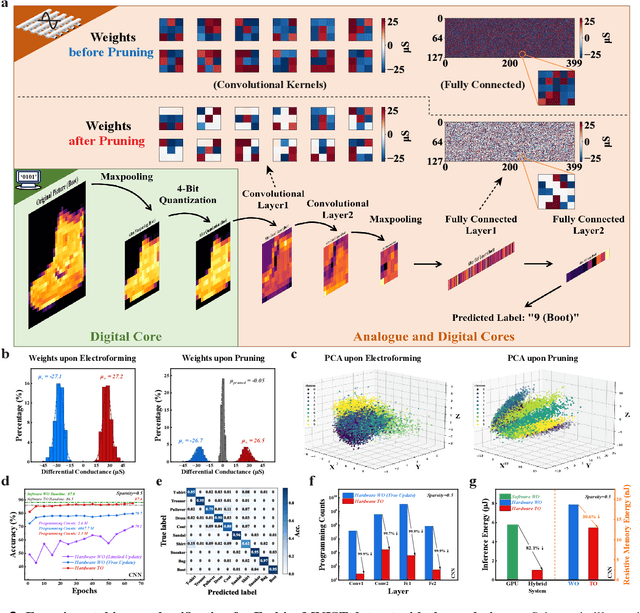
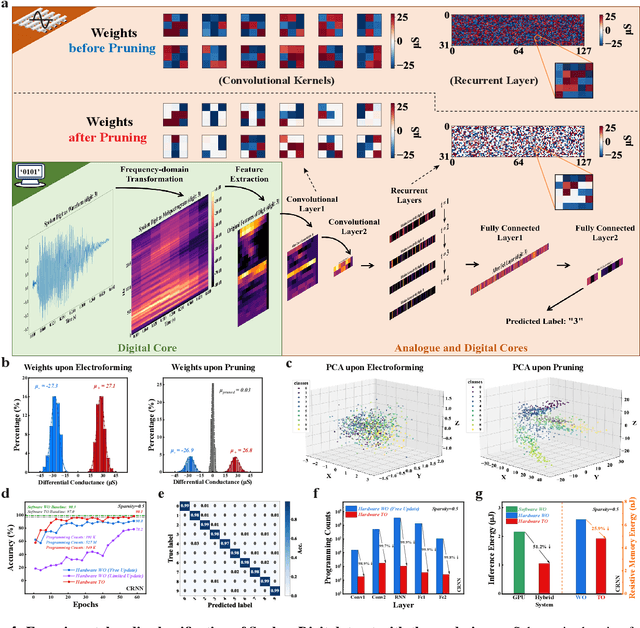
The rapid advancement of artificial intelligence (AI) has been marked by the large language models exhibiting human-like intelligence. However, these models also present unprecedented challenges to energy consumption and environmental sustainability. One promising solution is to revisit analogue computing, a technique that predates digital computing and exploits emerging analogue electronic devices, such as resistive memory, which features in-memory computing, high scalability, and nonvolatility. However, analogue computing still faces the same challenges as before: programming nonidealities and expensive programming due to the underlying devices physics. Here, we report a universal solution, software-hardware co-design using structural plasticity-inspired edge pruning to optimize the topology of a randomly weighted analogue resistive memory neural network. Software-wise, the topology of a randomly weighted neural network is optimized by pruning connections rather than precisely tuning resistive memory weights. Hardware-wise, we reveal the physical origin of the programming stochasticity using transmission electron microscopy, which is leveraged for large-scale and low-cost implementation of an overparameterized random neural network containing high-performance sub-networks. We implemented the co-design on a 40nm 256K resistive memory macro, observing 17.3% and 19.9% accuracy improvements in image and audio classification on FashionMNIST and Spoken digits datasets, as well as 9.8% (2%) improvement in PR (ROC) in image segmentation on DRIVE datasets, respectively. This is accompanied by 82.1%, 51.2%, and 99.8% improvement in energy efficiency thanks to analogue in-memory computing. By embracing the intrinsic stochasticity and in-memory computing, this work may solve the biggest obstacle of analogue computing systems and thus unleash their immense potential for next-generation AI hardware.
MTGER: Multi-view Temporal Graph Enhanced Temporal Reasoning over Time-Involved Document
Nov 08, 2023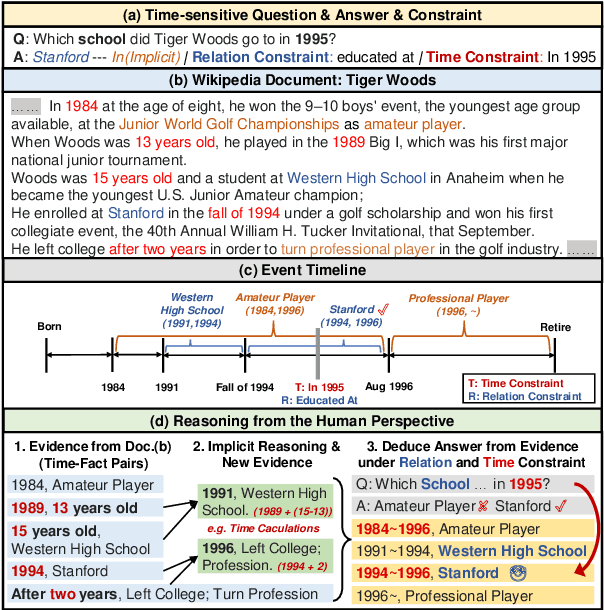
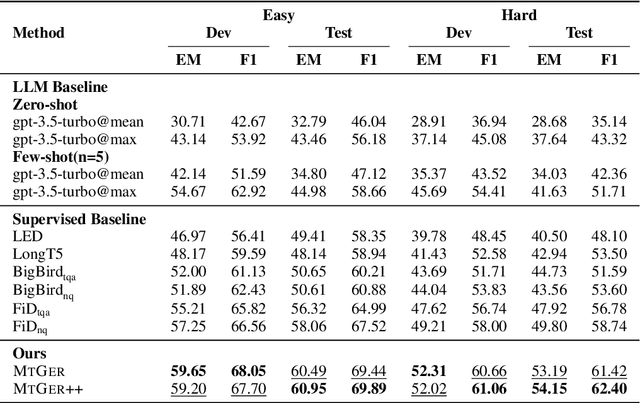
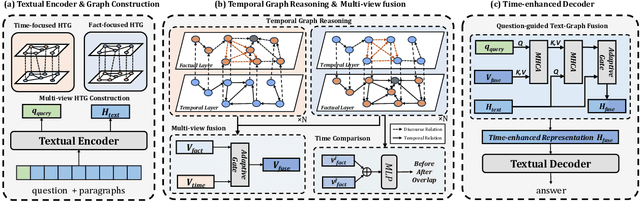
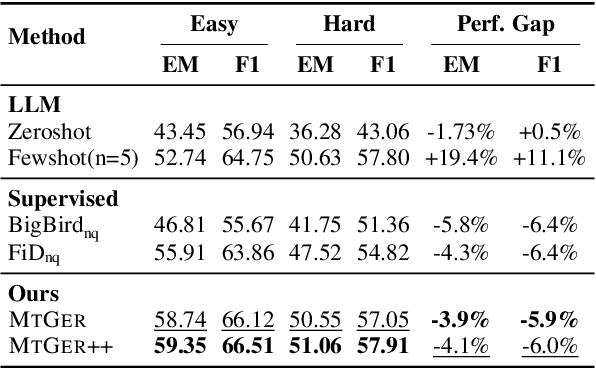
The facts and time in the document are intricately intertwined, making temporal reasoning over documents challenging. Previous work models time implicitly, making it difficult to handle such complex relationships. To address this issue, we propose MTGER, a novel Multi-view Temporal Graph Enhanced Temporal Reasoning framework for temporal reasoning over time-involved documents. Concretely, MTGER explicitly models the temporal relationships among facts by multi-view temporal graphs. On the one hand, the heterogeneous temporal graphs explicitly model the temporal and discourse relationships among facts; on the other hand, the multi-view mechanism captures both time-focused and fact-focused information, allowing the two views to complement each other through adaptive fusion. To further improve the implicit reasoning capability of the model, we design a self-supervised time-comparing objective. Extensive experimental results demonstrate the effectiveness of our method on the TimeQA and SituatedQA datasets. Furthermore, MTGER gives more consistent answers under question perturbations.
Learning to Learn for Few-shot Continual Active Learning
Nov 07, 2023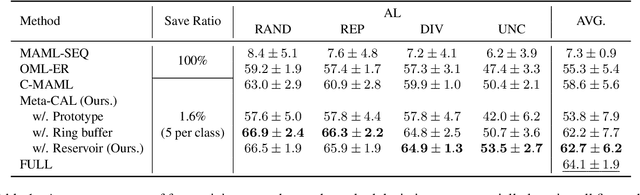

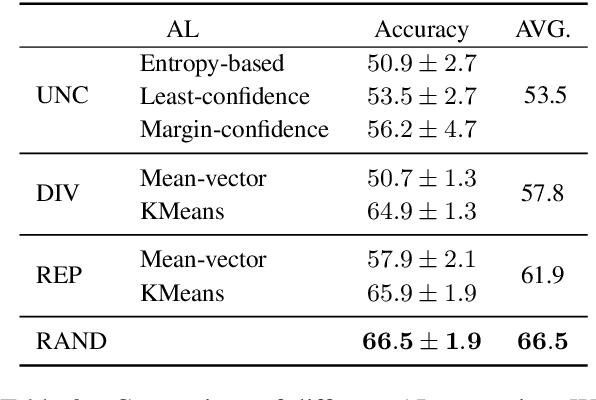

Continual learning strives to ensure stability in solving previously seen tasks while demonstrating plasticity in a novel domain. Recent advances in CL are mostly confined to a supervised learning setting, especially in NLP domain. In this work, we consider a few-shot continual active learning (CAL) setting where labeled data is inadequate, and unlabeled data is abundant but with a limited annotation budget. We propose a simple but efficient method, called Meta-Continual Active Learning. Specifically, we employ meta-learning and experience replay to address the trade-off between stability and plasticity. As a result, it finds an optimal initialization that efficiently utilizes annotated information for fast adaptation while preventing catastrophic forgetting of past tasks. We conduct extensive experiments to validate the effectiveness of the proposed method and analyze the effect of various active learning strategies and memory sample selection methods in a few-shot CAL setup. Our experiment results demonstrate that random sampling is the best default strategy for both active learning and memory sample selection to solve few-shot CAL problems.
IR-STP: Enhancing Autonomous Driving with Interaction Reasoning in Spatio-Temporal Planning
Nov 06, 2023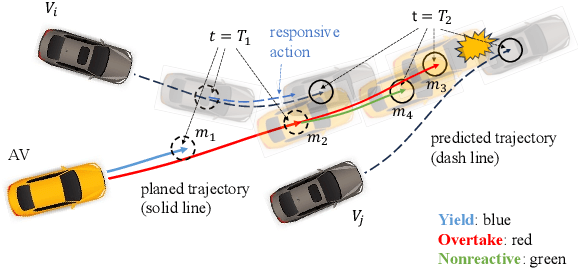
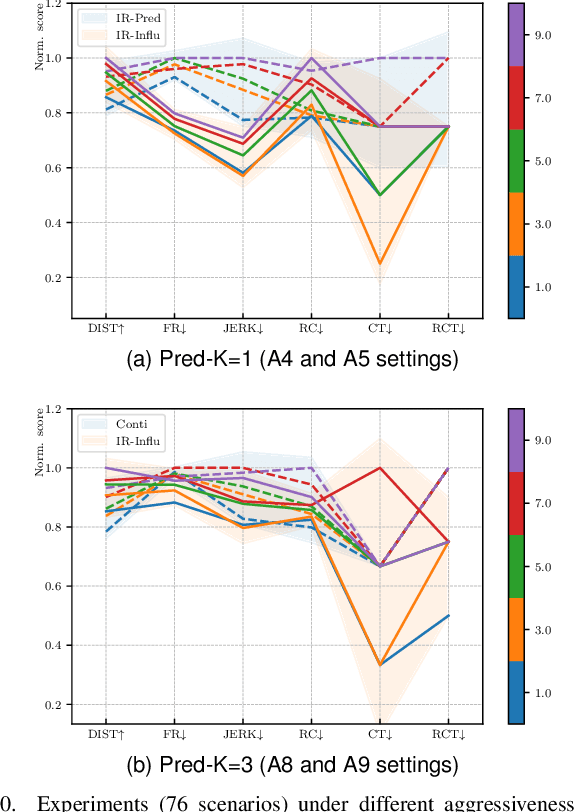
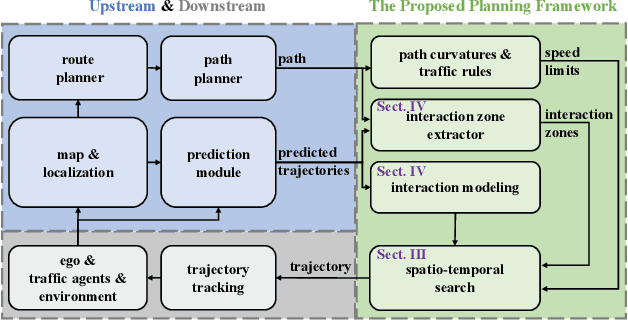
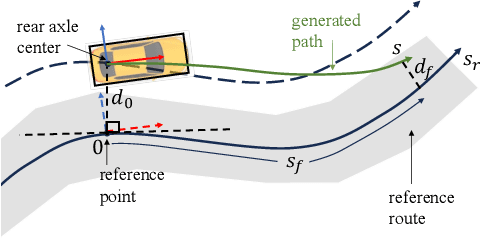
Considerable research efforts have been devoted to the development of motion planning algorithms, which form a cornerstone of the autonomous driving system (ADS). However, obtaining an interactive and secure trajectory for the ADS remains a formidable task, especially in scenarios with significant interaction complexities. Many contemporary prediction-based planning methods frequently overlook interaction modeling, leading to less effective planning performance. This paper introduces a novel prediction-based interactive planning framework that explicitly and mathematically models interactions among traffic entities during the planning process. Our method incorporates interaction reasoning into spatio-temporal (s-t) planning by defining interaction conditions and constraints. Furthermore, it records and continually updates interaction relations for each planned state throughout the forward search. We assess the performance of our approach alongside state-of-the-art methods using a series of experiments conducted in both single and multi-modal scenarios. These experiments encompass variations in the accuracy of prediction outcomes and different degrees of planner aggressiveness. The experimental findings demonstrate the effectiveness and robustness of our method, yielding insights applicable to the wider field of autonomous driving. For the community's reference, our code is accessible at https://github.com/ChenYingbing/IR-STP-Planner.
Myriad: Large Multimodal Model by Applying Vision Experts for Industrial Anomaly Detection
Nov 01, 2023


Existing industrial anomaly detection (IAD) methods predict anomaly scores for both anomaly detection and localization. However, they struggle to perform a multi-turn dialog and detailed descriptions for anomaly regions, e.g., color, shape, and categories of industrial anomalies. Recently, large multimodal (i.e., vision and language) models (LMMs) have shown eminent perception abilities on multiple vision tasks such as image captioning, visual understanding, visual reasoning, etc., making it a competitive potential choice for more comprehensible anomaly detection. However, the knowledge about anomaly detection is absent in existing general LMMs, while training a specific LMM for anomaly detection requires a tremendous amount of annotated data and massive computation resources. In this paper, we propose a novel large multi-modal model by applying vision experts for industrial anomaly detection (dubbed Myriad), which leads to definite anomaly detection and high-quality anomaly description. Specifically, we adopt MiniGPT-4 as the base LMM and design an Expert Perception module to embed the prior knowledge from vision experts as tokens which are intelligible to Large Language Models (LLMs). To compensate for the errors and confusions of vision experts, we introduce a domain adapter to bridge the visual representation gaps between generic and industrial images. Furthermore, we propose a Vision Expert Instructor, which enables the Q-Former to generate IAD domain vision-language tokens according to vision expert prior. Extensive experiments on MVTec-AD and VisA benchmarks demonstrate that our proposed method not only performs favorably against state-of-the-art methods under the 1-class and few-shot settings, but also provide definite anomaly prediction along with detailed descriptions in IAD domain.
Every Dataset Counts: Scaling up Monocular 3D Object Detection with Joint Datasets Training
Oct 02, 2023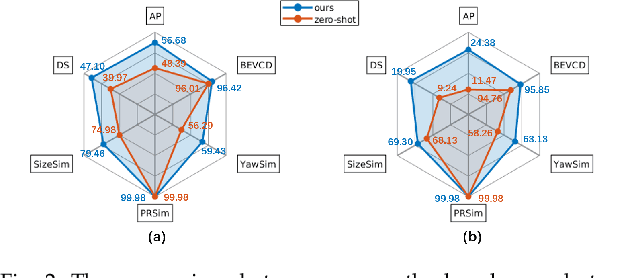

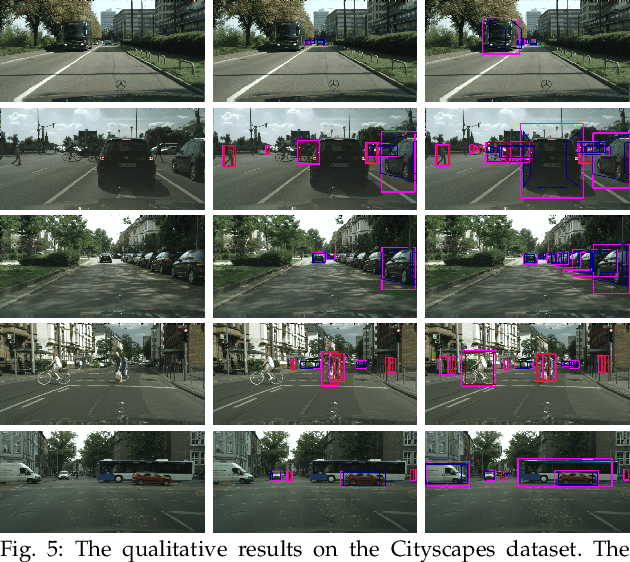

Monocular 3D object detection plays a crucial role in autonomous driving. However, existing monocular 3D detection algorithms depend on 3D labels derived from LiDAR measurements, which are costly to acquire for new datasets and challenging to deploy in novel environments. Specifically, this study investigates the pipeline for training a monocular 3D object detection model on a diverse collection of 3D and 2D datasets. The proposed framework comprises three components: (1) a robust monocular 3D model capable of functioning across various camera settings, (2) a selective-training strategy to accommodate datasets with differing class annotations, and (3) a pseudo 3D training approach using 2D labels to enhance detection performance in scenes containing only 2D labels. With this framework, we could train models on a joint set of various open 3D/2D datasets to obtain models with significantly stronger generalization capability and enhanced performance on new dataset with only 2D labels. We conduct extensive experiments on KITTI/nuScenes/ONCE/Cityscapes/BDD100K datasets to demonstrate the scaling ability of the proposed method.
Improving Autonomous Driving Safety with POP: A Framework for Accurate Partially Observed Trajectory Predictions
Sep 27, 2023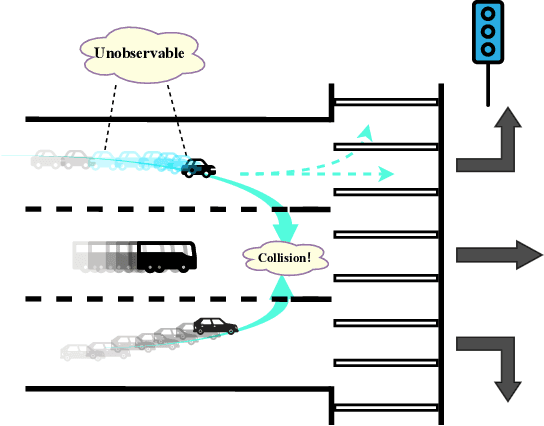
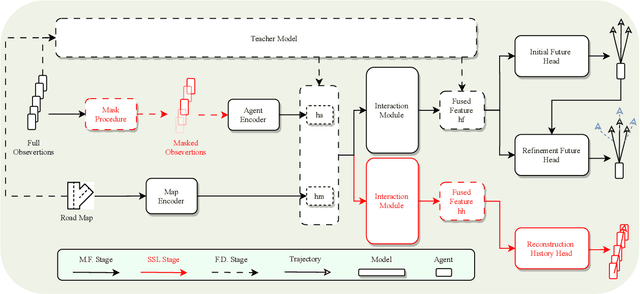
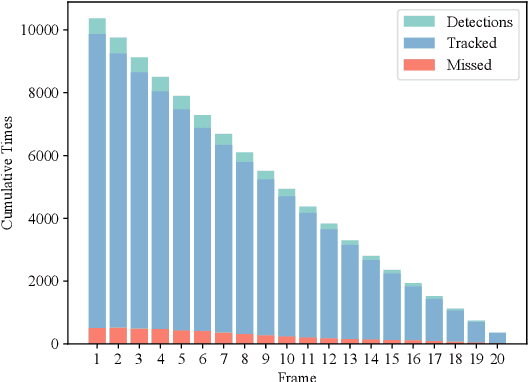
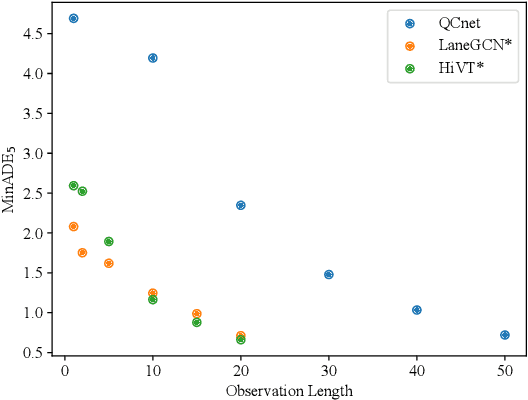
Accurate trajectory prediction is crucial for safe and efficient autonomous driving, but handling partial observations presents significant challenges. To address this, we propose a novel trajectory prediction framework called Partial Observations Prediction (POP) for congested urban road scenarios. The framework consists of two stages: self-supervised learning (SSL) and feature distillation. In SSL, a reconstruction branch reconstructs the hidden history of partial observations using a mask procedure and reconstruction head. The feature distillation stage transfers knowledge from a fully observed teacher model to a partially observed student model, improving prediction accuracy. POP achieves comparable results to top-performing methods in open-loop experiments and outperforms the baseline method in closed-loop simulations, including safety metrics. Qualitative results illustrate the superiority of POP in providing reasonable and safe trajectory predictions.
A Survey of Chain of Thought Reasoning: Advances, Frontiers and Future
Sep 27, 2023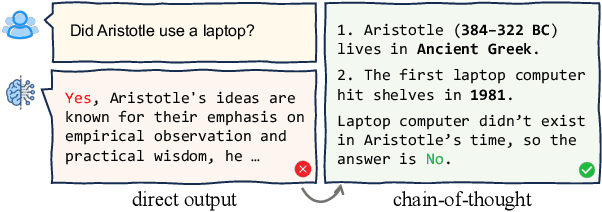
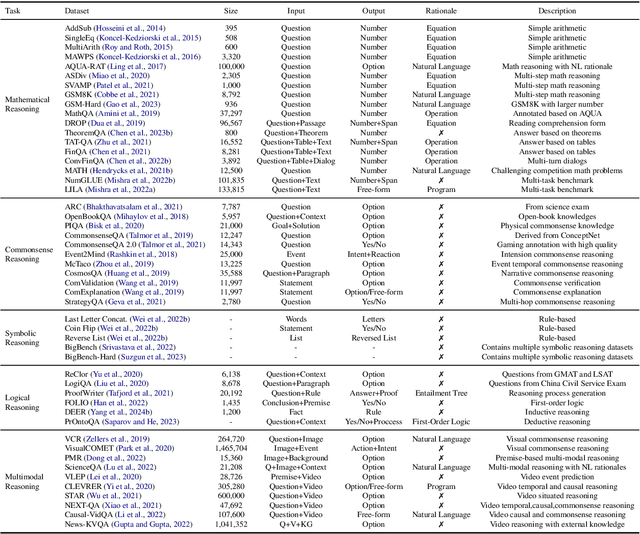
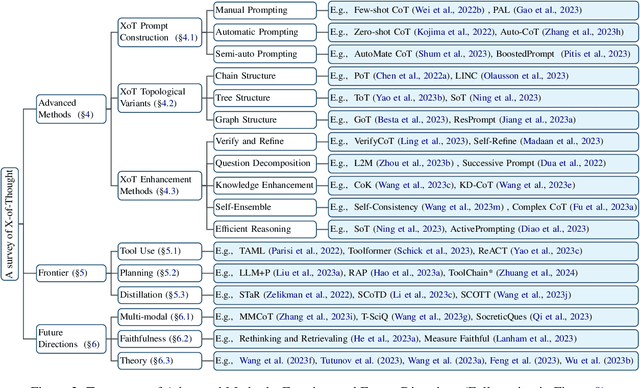
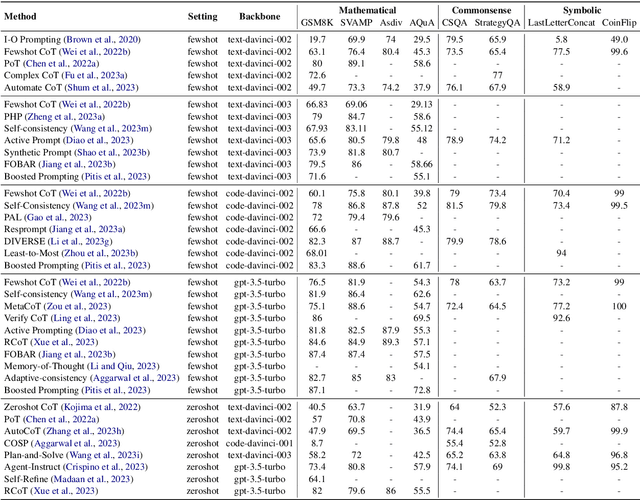
Chain-of-thought reasoning, a cognitive process fundamental to human intelligence, has garnered significant attention in the realm of artificial intelligence and natural language processing. However, there still remains a lack of a comprehensive survey for this arena. To this end, we take the first step and present a thorough survey of this research field carefully and widely. We use X-of-Thought to refer to Chain-of-Thought in a broad sense. In detail, we systematically organize the current research according to the taxonomies of methods, including XoT construction, XoT structure variants, and enhanced XoT. Additionally, we describe XoT with frontier applications, covering planning, tool use, and distillation. Furthermore, we address challenges and discuss some future directions, including faithfulness, multi-modal, and theory. We hope this survey serves as a valuable resource for researchers seeking to innovate within the domain of chain-of-thought reasoning.