 Add to Chrome
 Add to Firefox
 Add to Edge
Monotonic Learning in the PAC Framework: A New Perspective
Jan 09, 2025
Monotone learning refers to learning processes in which expected performance consistently improves as more training data is introduced. Non-monotone behavior of machine learning has been the topic of a series of recent works, with various proposals that ensure monotonicity by applying transformations or wrappers on learning algorithms. In this work, from a different perspective, we tackle the topic of monotone learning within the framework of Probably Approximately Correct (PAC) learning theory. Following the mechanism that estimates sample complexity of a PAC-learnable problem, we derive a performance lower bound for that problem, and prove the monotonicity of that bound as the sample sizes increase. By calculating the lower bound distribution, we are able to prove that given a PAC-learnable problem with a hypothesis space that is either of finite size or of finite VC dimension, any learning algorithm based on Empirical Risk Minimization (ERM) is monotone if training samples are independent and identically distributed (i.i.d.). We further carry out an experiment on two concrete machine learning problems, one of which has a finite hypothesis set, and the other of finite VC dimension, and compared the experimental data for the empirical risk distributions with the estimated theoretical bound. The results of the comparison have confirmed the monotonicity of learning for the two PAC-learnable problems.

Universal Speaker Embedding Free Target Speaker Extraction and Personal Voice Activity Detection
Jan 07, 2025
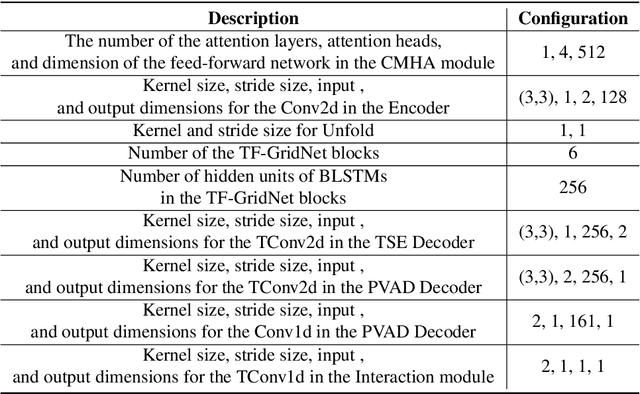


Determining 'who spoke what and when' remains challenging in real-world applications. In typical scenarios, Speaker Diarization (SD) is employed to address the problem of 'who spoke when,' while Target Speaker Extraction (TSE) or Target Speaker Automatic Speech Recognition (TSASR) techniques are utilized to resolve the issue of 'who spoke what.' Although some works have achieved promising results by combining SD and TSE systems, inconsistencies remain between SD and TSE regarding both output inconsistency and scenario mismatch. To address these limitations, we propose a Universal Speaker Embedding Free Target Speaker Extraction and Personal Voice Activity Detection (USEF-TP) model that jointly performs TSE and Personal Voice Activity Detection (PVAD). USEF-TP leverages frame-level features obtained through a cross-attention mechanism as speaker-related features instead of using speaker embeddings as in traditional approaches. Additionally, a multi-task learning algorithm with a scenario-aware differentiated loss function is applied to ensure robust performance across various levels of speaker overlap. The experimental results show that our proposed USEF-TP model achieves superior performance in TSE and PVAD tasks on the LibriMix and SparseLibriMix datasets.
MDP3: A Training-free Approach for List-wise Frame Selection in Video-LLMs
Jan 06, 2025Video large language models (Video-LLMs) have made significant progress in understanding videos. However, processing multiple frames leads to lengthy visual token sequences, presenting challenges such as the limited context length cannot accommodate the entire video, and the inclusion of irrelevant frames hinders visual perception. Hence, effective frame selection is crucial. This paper emphasizes that frame selection should follow three key principles: query relevance, list-wise diversity, and sequentiality. Existing methods, such as uniform frame sampling and query-frame matching, do not capture all of these principles. Thus, we propose Markov decision determinantal point process with dynamic programming (MDP3) for frame selection, a training-free and model-agnostic method that can be seamlessly integrated into existing Video-LLMs. Our method first estimates frame similarities conditioned on the query using a conditional Gaussian kernel within the reproducing kernel Hilbert space~(RKHS). We then apply the determinantal point process~(DPP) to the similarity matrix to capture both query relevance and list-wise diversity. To incorporate sequentiality, we segment the video and apply DPP within each segment, conditioned on the preceding segment selection, modeled as a Markov decision process~(MDP) for allocating selection sizes across segments. Theoretically, MDP3 provides a \((1 - 1/e)\)-approximate solution to the NP-hard list-wise frame selection problem with pseudo-polynomial time complexity, demonstrating its efficiency. Empirically, MDP3 significantly outperforms existing methods, verifying its effectiveness and robustness.
From Aleatoric to Epistemic: Exploring Uncertainty Quantification Techniques in Artificial Intelligence
Jan 05, 2025
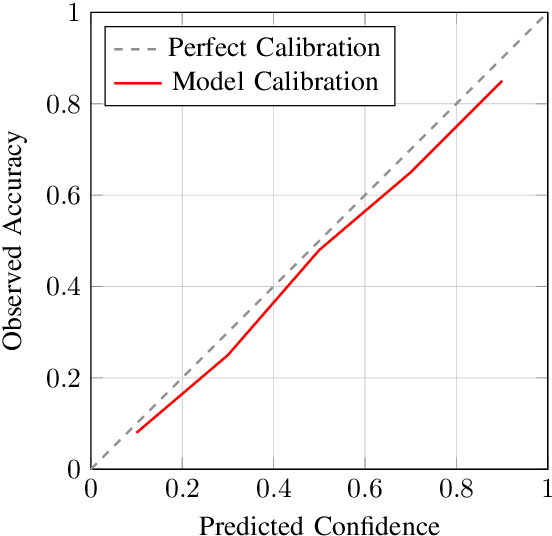

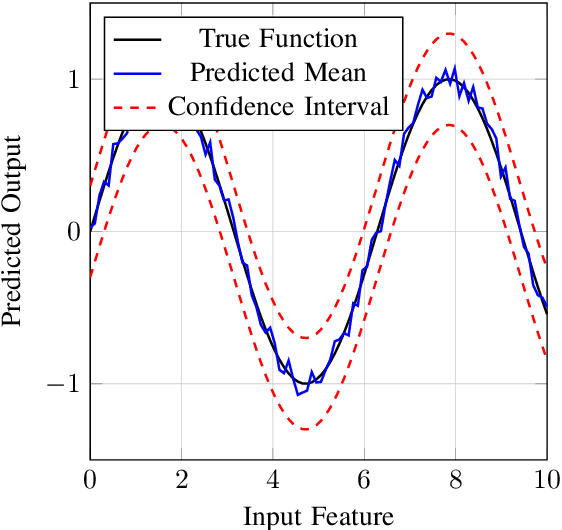
Uncertainty quantification (UQ) is a critical aspect of artificial intelligence (AI) systems, particularly in high-risk domains such as healthcare, autonomous systems, and financial technology, where decision-making processes must account for uncertainty. This review explores the evolution of uncertainty quantification techniques in AI, distinguishing between aleatoric and epistemic uncertainties, and discusses the mathematical foundations and methods used to quantify these uncertainties. We provide an overview of advanced techniques, including probabilistic methods, ensemble learning, sampling-based approaches, and generative models, while also highlighting hybrid approaches that integrate domain-specific knowledge. Furthermore, we examine the diverse applications of UQ across various fields, emphasizing its impact on decision-making, predictive accuracy, and system robustness. The review also addresses key challenges such as scalability, efficiency, and integration with explainable AI, and outlines future directions for research in this rapidly developing area. Through this comprehensive survey, we aim to provide a deeper understanding of UQ's role in enhancing the reliability, safety, and trustworthiness of AI systems.
Long-range Brain Graph Transformer
Jan 02, 2025Understanding communication and information processing among brain regions of interest (ROIs) is highly dependent on long-range connectivity, which plays a crucial role in facilitating diverse functional neural integration across the entire brain. However, previous studies generally focused on the short-range dependencies within brain networks while neglecting the long-range dependencies, limiting an integrated understanding of brain-wide communication. To address this limitation, we propose Adaptive Long-range aware TransformER (ALTER), a brain graph transformer to capture long-range dependencies between brain ROIs utilizing biased random walk. Specifically, we present a novel long-range aware strategy to explicitly capture long-range dependencies between brain ROIs. By guiding the walker towards the next hop with higher correlation value, our strategy simulates the real-world brain-wide communication. Furthermore, by employing the transformer framework, ALERT adaptively integrates both short- and long-range dependencies between brain ROIs, enabling an integrated understanding of multi-level communication across the entire brain. Extensive experiments on ABIDE and ADNI datasets demonstrate that ALTER consistently outperforms generalized state-of-the-art graph learning methods (including SAN, Graphormer, GraphTrans, and LRGNN) and other graph learning based brain network analysis methods (including FBNETGEN, BrainNetGNN, BrainGNN, and BrainNETTF) in neurological disease diagnosis. Cases of long-range dependencies are also presented to further illustrate the effectiveness of ALTER. The implementation is available at \url{https://github.com/yushuowiki/ALTER}.
ResoFilter: Fine-grained Synthetic Data Filtering for Large Language Models through Data-Parameter Resonance Analysis
Dec 20, 2024
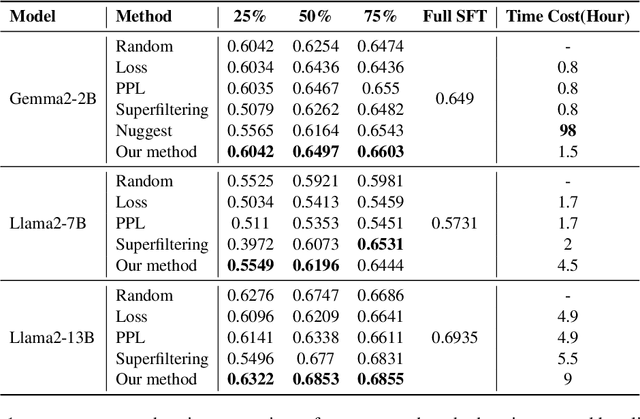
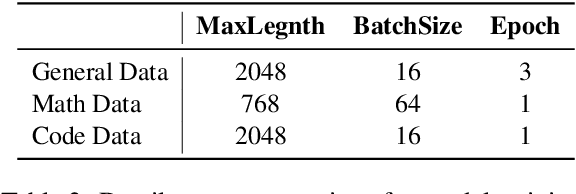
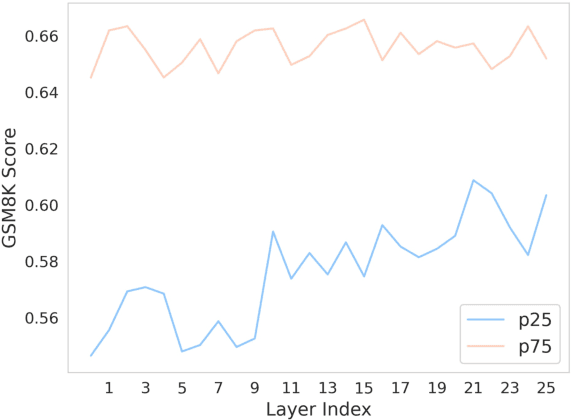
Large language models (LLMs) have shown remarkable effectiveness across various domains, with data augmentation methods utilizing GPT for synthetic data generation becoming prevalent. However, the quality and utility of augmented data remain questionable, and current methods lack clear metrics for evaluating data characteristics. To address these challenges, we propose ResoFilter, a novel method that integrates models, data, and tasks to refine datasets. ResoFilter leverages the fine-tuning process to obtain Data-Parameter features for data selection, offering improved interpretability by representing data characteristics through model weights. Our experiments demonstrate that ResoFilter achieves comparable results to full-scale fine-tuning using only half the data in mathematical tasks and exhibits strong generalization across different models and domains. This method provides valuable insights for constructing synthetic datasets and evaluating high-quality data, offering a promising solution for enhancing data augmentation techniques and improving training dataset quality for LLMs. For reproducibility, we will release our code and data upon acceptance.
ResoFilter: Rine-grained Synthetic Data Filtering for Large Language Models through Data-Parameter Resonance Analysis
Dec 19, 2024Large language models (LLMs) have shown remarkable effectiveness across various domains, with data augmentation methods utilizing GPT for synthetic data generation becoming prevalent. However, the quality and utility of augmented data remain questionable, and current methods lack clear metrics for evaluating data characteristics. To address these challenges, we propose ResoFilter, a novel method that integrates models, data, and tasks to refine datasets. ResoFilter leverages the fine-tuning process to obtain Data-Parameter features for data selection, offering improved interpretability by representing data characteristics through model weights. Our experiments demonstrate that ResoFilter achieves comparable results to full-scale fine-tuning using only half the data in mathematical tasks and exhibits strong generalization across different models and domains. This method provides valuable insights for constructing synthetic datasets and evaluating high-quality data, offering a promising solution for enhancing data augmentation techniques and improving training dataset quality for LLMs. For reproducibility, we will release our code and data upon acceptance.
From Bench to Bedside: A Review of Clinical Trialsin Drug Discovery and Development
Dec 12, 2024Clinical trials are an indispensable part of the drug development process, bridging the gap between basic research and clinical application. During the development of new drugs, clinical trials are used not only to evaluate the safety and efficacy of the drug but also to explore its dosage, treatment regimens, and potential side effects. This review discusses the various stages of clinical trials, including Phase I (safety assessment), Phase II (preliminary efficacy evaluation), Phase III (large-scale validation), and Phase IV (post-marketing surveillance), highlighting the characteristics of each phase and their interrelationships. Additionally, the paper addresses the major challenges encountered in clinical trials, such as ethical issues, subject recruitment difficulties, diversity and representativeness concerns, and proposes strategies for overcoming these challenges. With the advancement of technology, innovative technologies such as artificial intelligence, big data, and digitalization are gradually transforming clinical trial design and implementation, improving trial efficiency and data quality. The article also looks forward to the future of clinical trials, particularly the impact of emerging therapies such as gene therapy and immunotherapy on trial design, as well as the importance of regulatory reforms and global collaboration. In conclusion, the core role of clinical trials in drug development will continue to drive the progress of innovative drug development and clinical treatment.
Deep Learning Model Security: Threats and Defenses
Dec 12, 2024
Deep learning has transformed AI applications but faces critical security challenges, including adversarial attacks, data poisoning, model theft, and privacy leakage. This survey examines these vulnerabilities, detailing their mechanisms and impact on model integrity and confidentiality. Practical implementations, including adversarial examples, label flipping, and backdoor attacks, are explored alongside defenses such as adversarial training, differential privacy, and federated learning, highlighting their strengths and limitations. Advanced methods like contrastive and self-supervised learning are presented for enhancing robustness. The survey concludes with future directions, emphasizing automated defenses, zero-trust architectures, and the security challenges of large AI models. A balanced approach to performance and security is essential for developing reliable deep learning systems.
Deep Learning, Machine Learning, Advancing Big Data Analytics and Management
Dec 03, 2024

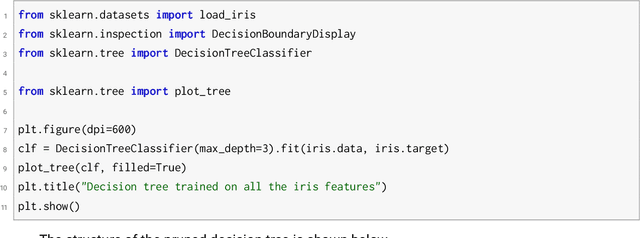
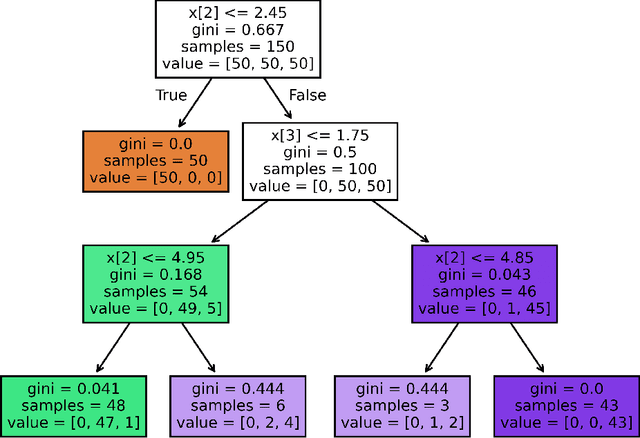
Advancements in artificial intelligence, machine learning, and deep learning have catalyzed the transformation of big data analytics and management into pivotal domains for research and application. This work explores the theoretical foundations, methodological advancements, and practical implementations of these technologies, emphasizing their role in uncovering actionable insights from massive, high-dimensional datasets. The study presents a systematic overview of data preprocessing techniques, including data cleaning, normalization, integration, and dimensionality reduction, to prepare raw data for analysis. Core analytics methodologies such as classification, clustering, regression, and anomaly detection are examined, with a focus on algorithmic innovation and scalability. Furthermore, the text delves into state-of-the-art frameworks for data mining and predictive modeling, highlighting the role of neural networks, support vector machines, and ensemble methods in tackling complex analytical challenges. Special emphasis is placed on the convergence of big data with distributed computing paradigms, including cloud and edge computing, to address challenges in storage, computation, and real-time analytics. The integration of ethical considerations, including data privacy and compliance with global standards, ensures a holistic perspective on data management. Practical applications across healthcare, finance, marketing, and policy-making illustrate the real-world impact of these technologies. Through comprehensive case studies and Python-based implementations, this work equips researchers, practitioners, and data enthusiasts with the tools to navigate the complexities of modern data analytics. It bridges the gap between theory and practice, fostering the development of innovative solutions for managing and leveraging data in the era of artificial intelligence.