 Add to Chrome
 Add to Firefox
 Add to Edge
CresOWLve: Benchmarking Creative Problem-Solving Over Real-World Knowledge
Apr 03, 2026
Creative problem-solving requires combining multiple cognitive abilities, including logical reasoning, lateral thinking, analogy-making, and commonsense knowledge, to discover insights that connect seemingly unrelated pieces of information. However, most existing benchmarks for large language models (LLMs) evaluate only specific components of this process. Moreover, many creativity-oriented benchmarks rely on artificially constructed brainteasers or contrived scenarios that do not reflect how creative problem-solving occurs in real-world settings. To address this gap, we introduce CresOWLve, a benchmark for evaluating creative problem-solving using puzzles grounded in real-world knowledge. Problems in CresOWLve require employing multiple creative thinking strategies, retrieving facts from diverse domains, and creatively combining them to arrive at a solution. Evaluating several frontier non-thinking and thinking LLMs, we show that CresOWLve remains highly challenging. Our analysis reveals a consistent performance gap: models perform substantially better on factual questions than on creative ones (up to a -17% drop). While models can often retrieve the relevant knowledge, they struggle to form the non-obvious creative connections required to integrate this information and arrive at the correct answer.

Large Language Models Align with the Human Brain during Creative Thinking
Apr 03, 2026Creative thinking is a fundamental aspect of human cognition, and divergent thinking-the capacity to generate novel and varied ideas-is widely regarded as its core generative engine. Large language models (LLMs) have recently demonstrated impressive performance on divergent thinking tests and prior work has shown that models with higher task performance tend to be more aligned to human brain activity. However, existing brain-LLM alignment studies have focused on passive, non-creative tasks. Here, we explore brain alignment during creative thinking using fMRI data from 170 participants performing the Alternate Uses Task (AUT). We extract representations from LLMs varying in size (270M-72B) and measure alignment to brain responses via Representational Similarity Analysis (RSA), targeting the creativity-related default mode and frontoparietal networks. We find that brain-LLM alignment scales with model size (default mode network only) and idea originality (both networks), with effects strongest early in the creative process. We further show that post-training objectives shape alignment in functionally selective ways: a creativity-optimized \texttt{Llama-3.1-8B-Instruct} preserves alignment with high-creativity neural responses while reducing alignment with low-creativity ones; a human behavior fine-tuned model elevates alignment with both; and a reasoning-trained variant shows the opposite pattern, suggesting chain-of-thought training steers representations away from creative neural geometry toward analytical processing. These results demonstrate that post-training objectives selectively reshape LLM representations relative to the neural geometry of human creative thought.
Apertus: Democratizing Open and Compliant LLMs for Global Language Environments
Sep 17, 2025
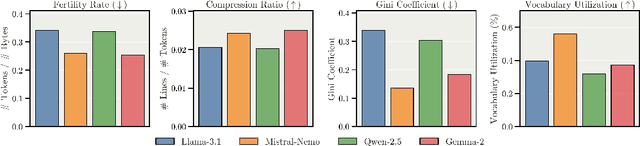

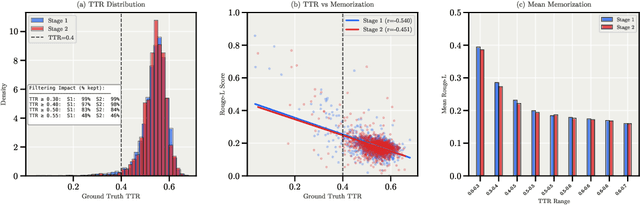
We present Apertus, a fully open suite of large language models (LLMs) designed to address two systemic shortcomings in today's open model ecosystem: data compliance and multilingual representation. Unlike many prior models that release weights without reproducible data pipelines or regard for content-owner rights, Apertus models are pretrained exclusively on openly available data, retroactively respecting robots.txt exclusions and filtering for non-permissive, toxic, and personally identifiable content. To mitigate risks of memorization, we adopt the Goldfish objective during pretraining, strongly suppressing verbatim recall of data while retaining downstream task performance. The Apertus models also expand multilingual coverage, training on 15T tokens from over 1800 languages, with ~40% of pretraining data allocated to non-English content. Released at 8B and 70B scales, Apertus approaches state-of-the-art results among fully open models on multilingual benchmarks, rivalling or surpassing open-weight counterparts. Beyond model weights, we release all scientific artifacts from our development cycle with a permissive license, including data preparation scripts, checkpoints, evaluation suites, and training code, enabling transparent audit and extension.
Creative Preference Optimization
May 20, 2025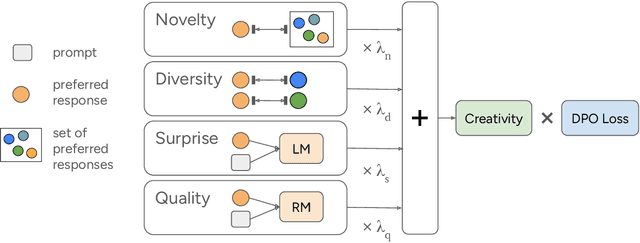
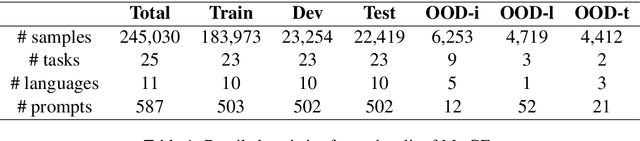
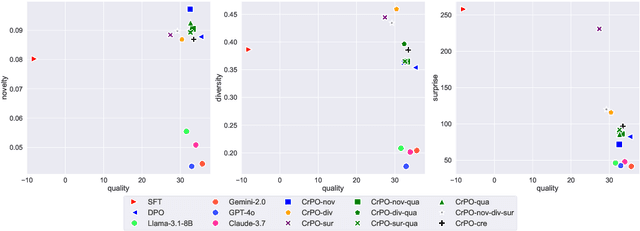
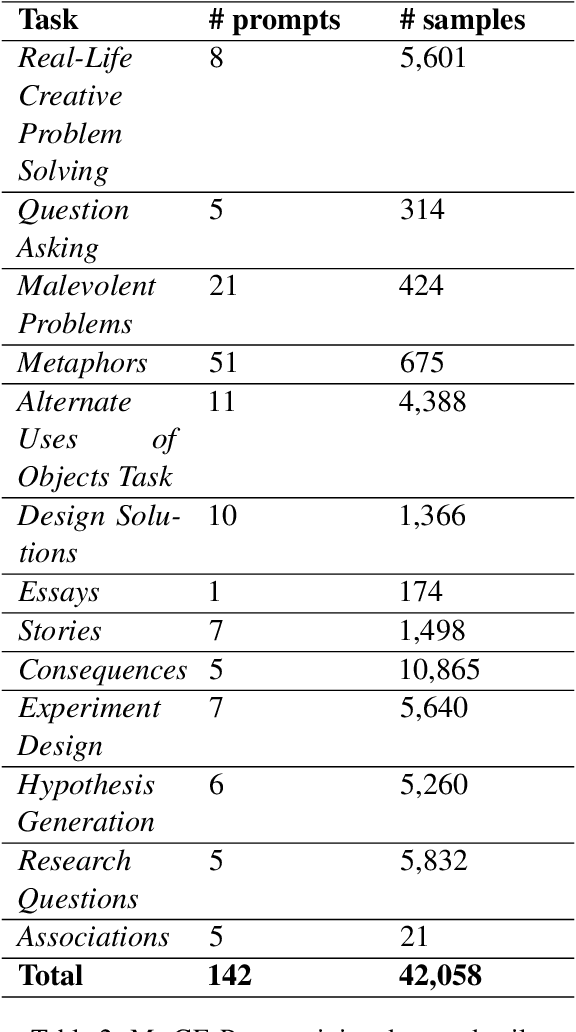
While Large Language Models (LLMs) have demonstrated impressive performance across natural language generation tasks, their ability to generate truly creative content-characterized by novelty, diversity, surprise, and quality-remains limited. Existing methods for enhancing LLM creativity often focus narrowly on diversity or specific tasks, failing to address creativity's multifaceted nature in a generalizable way. In this work, we propose Creative Preference Optimization (CrPO), a novel alignment method that injects signals from multiple creativity dimensions into the preference optimization objective in a modular fashion. We train and evaluate creativity-augmented versions of several models using CrPO and MuCE, a new large-scale human preference dataset spanning over 200,000 human-generated responses and ratings from more than 30 psychological creativity assessments. Our models outperform strong baselines, including GPT-4o, on both automated and human evaluations, producing more novel, diverse, and surprising generations while maintaining high output quality. Additional evaluations on NoveltyBench further confirm the generalizability of our approach. Together, our results demonstrate that directly optimizing for creativity within preference frameworks is a promising direction for advancing the creative capabilities of LLMs without compromising output quality.
Evaluating Creative Short Story Generation in Humans and Large Language Models
Nov 04, 2024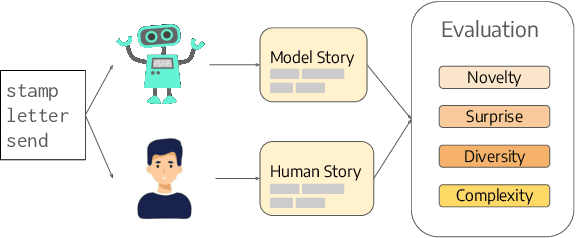
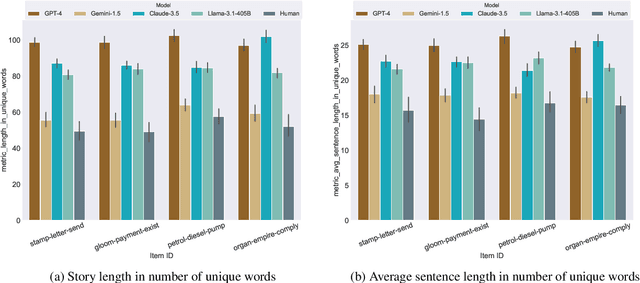
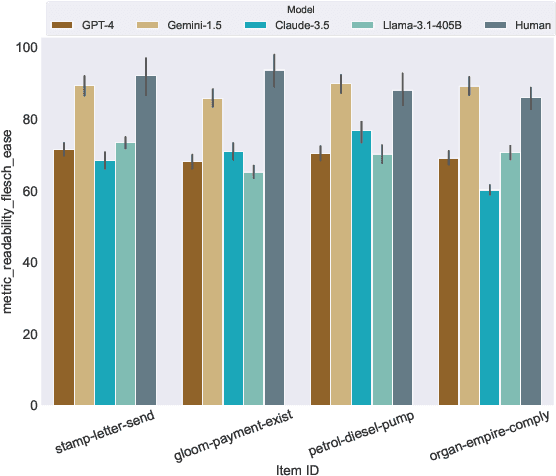
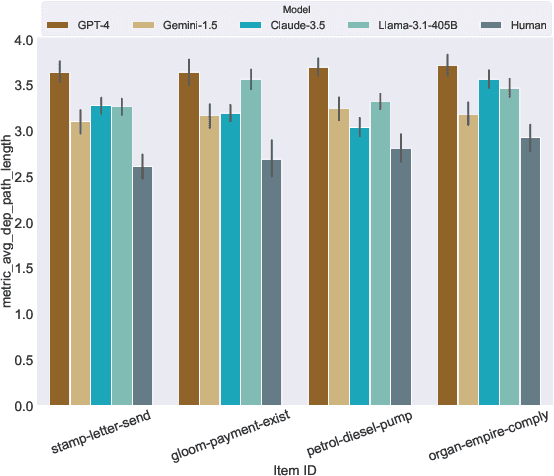
Storytelling is a fundamental aspect of human communication, relying heavily on creativity to produce narratives that are novel, appropriate, and surprising. While large language models (LLMs) have recently demonstrated the ability to generate high-quality stories, their creative capabilities remain underexplored. Previous research has either focused on creativity tests requiring short responses or primarily compared model performance in story generation to that of professional writers. However, the question of whether LLMs exhibit creativity in writing short stories on par with the average human remains unanswered. In this work, we conduct a systematic analysis of creativity in short story generation across LLMs and everyday people. Using a five-sentence creative story task, commonly employed in psychology to assess human creativity, we automatically evaluate model- and human-generated stories across several dimensions of creativity, including novelty, surprise, and diversity. Our findings reveal that while LLMs can generate stylistically complex stories, they tend to fall short in terms of creativity when compared to average human writers.
Creativity in AI: Progresses and Challenges
Oct 22, 2024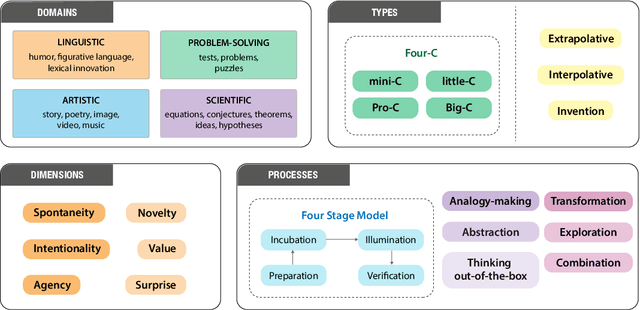
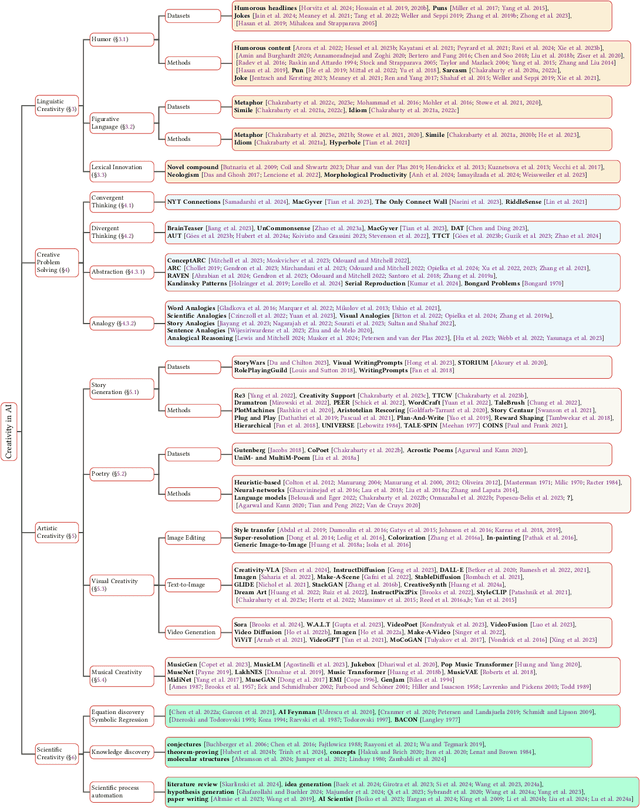

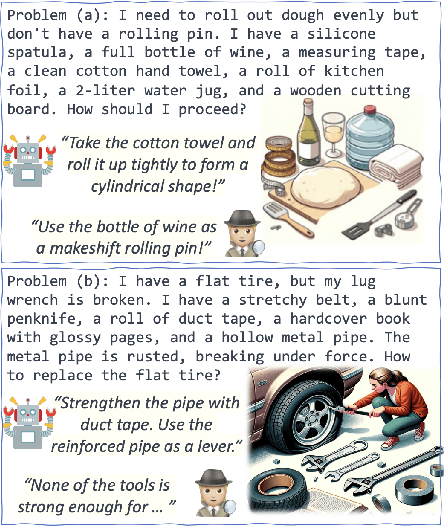
Creativity is the ability to produce novel, useful, and surprising ideas, and has been widely studied as a crucial aspect of human cognition. Machine creativity on the other hand has been a long-standing challenge. With the rise of advanced generative AI, there has been renewed interest and debate regarding AI's creative capabilities. Therefore, it is imperative to revisit the state of creativity in AI and identify key progresses and remaining challenges. In this work, we survey leading works studying the creative capabilities of AI systems, focusing on creative problem-solving, linguistic, artistic, and scientific creativity. Our review suggests that while the latest AI models are largely capable of producing linguistically and artistically creative outputs such as poems, images, and musical pieces, they struggle with tasks that require creative problem-solving, abstract thinking and compositionality and their generations suffer from a lack of diversity, originality, long-range incoherence and hallucinations. We also discuss key questions concerning copyright and authorship issues with generative models. Furthermore, we highlight the need for a comprehensive evaluation of creativity that is process-driven and considers several dimensions of creativity. Finally, we propose future research directions to improve the creativity of AI outputs, drawing inspiration from cognitive science and psychology.
Evaluating Morphological Compositional Generalization in Large Language Models
Oct 16, 2024Large language models (LLMs) have demonstrated significant progress in various natural language generation and understanding tasks. However, their linguistic generalization capabilities remain questionable, raising doubts about whether these models learn language similarly to humans. While humans exhibit compositional generalization and linguistic creativity in language use, the extent to which LLMs replicate these abilities, particularly in morphology, is under-explored. In this work, we systematically investigate the morphological generalization abilities of LLMs through the lens of compositionality. We define morphemes as compositional primitives and design a novel suite of generative and discriminative tasks to assess morphological productivity and systematicity. Focusing on agglutinative languages such as Turkish and Finnish, we evaluate several state-of-the-art instruction-finetuned multilingual models, including GPT-4 and Gemini. Our analysis shows that LLMs struggle with morphological compositional generalization particularly when applied to novel word roots, with performance declining sharply as morphological complexity increases. While models can identify individual morphological combinations better than chance, their performance lacks systematicity, leading to significant accuracy gaps compared to humans.
Could ChatGPT get an Engineering Degree? Evaluating Higher Education Vulnerability to AI Assistants
Aug 07, 2024
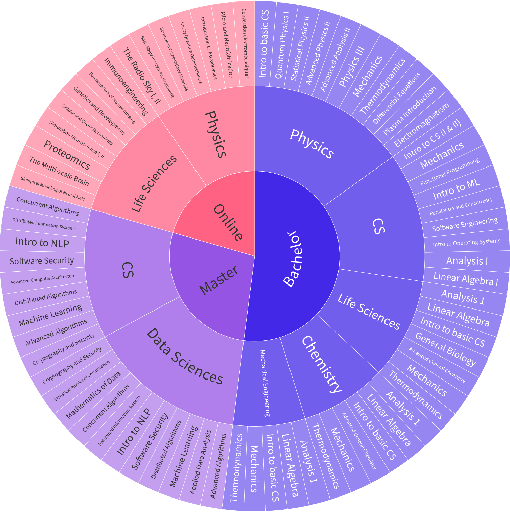

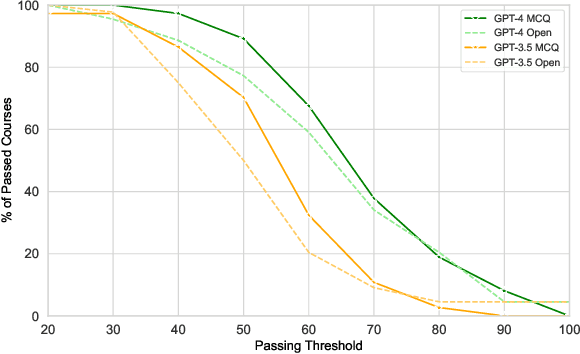
AI assistants are being increasingly used by students enrolled in higher education institutions. While these tools provide opportunities for improved teaching and education, they also pose significant challenges for assessment and learning outcomes. We conceptualize these challenges through the lens of vulnerability, the potential for university assessments and learning outcomes to be impacted by student use of generative AI. We investigate the potential scale of this vulnerability by measuring the degree to which AI assistants can complete assessment questions in standard university-level STEM courses. Specifically, we compile a novel dataset of textual assessment questions from 50 courses at EPFL and evaluate whether two AI assistants, GPT-3.5 and GPT-4 can adequately answer these questions. We use eight prompting strategies to produce responses and find that GPT-4 answers an average of 65.8% of questions correctly, and can even produce the correct answer across at least one prompting strategy for 85.1% of questions. When grouping courses in our dataset by degree program, these systems already pass non-project assessments of large numbers of core courses in various degree programs, posing risks to higher education accreditation that will be amplified as these models improve. Our results call for revising program-level assessment design in higher education in light of advances in generative AI.
DiffuCOMET: Contextual Commonsense Knowledge Diffusion
Feb 26, 2024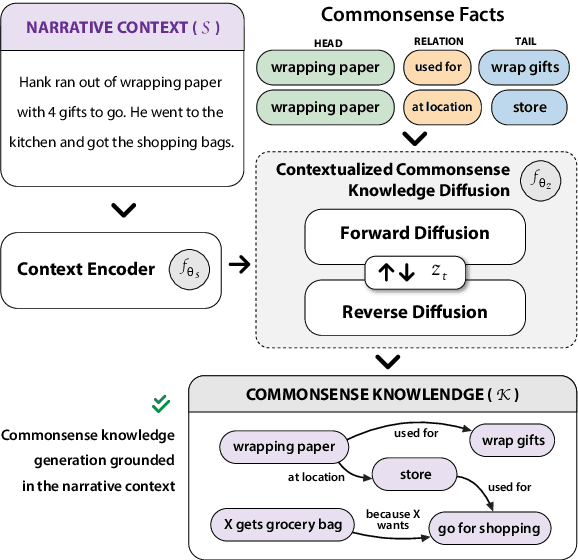
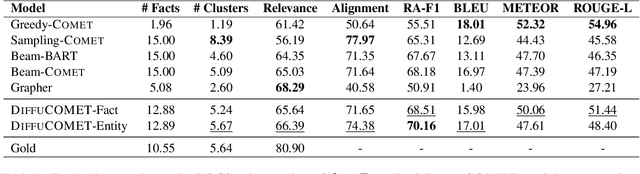
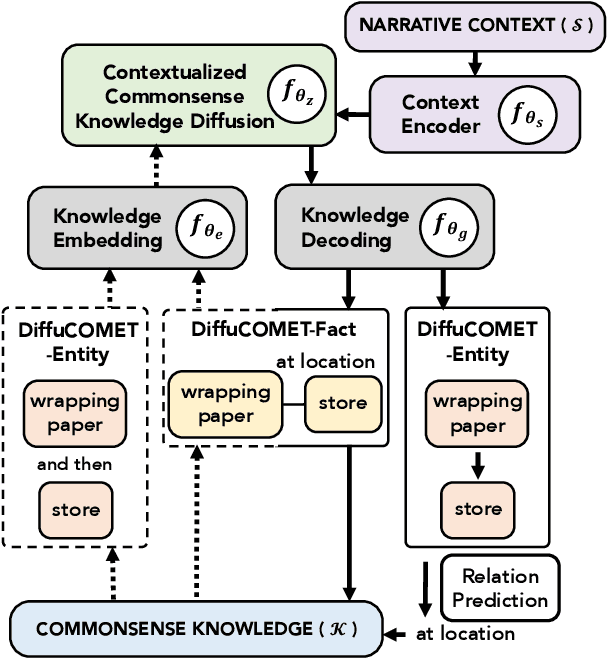
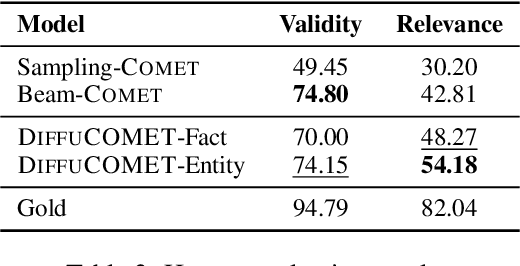
Inferring contextually-relevant and diverse commonsense to understand narratives remains challenging for knowledge models. In this work, we develop a series of knowledge models, DiffuCOMET, that leverage diffusion to learn to reconstruct the implicit semantic connections between narrative contexts and relevant commonsense knowledge. Across multiple diffusion steps, our method progressively refines a representation of commonsense facts that is anchored to a narrative, producing contextually-relevant and diverse commonsense inferences for an input context. To evaluate DiffuCOMET, we introduce new metrics for commonsense inference that more closely measure knowledge diversity and contextual relevance. Our results on two different benchmarks, ComFact and WebNLG+, show that knowledge generated by DiffuCOMET achieves a better trade-off between commonsense diversity, contextual relevance and alignment to known gold references, compared to baseline knowledge models.
δ-CAUSAL: Exploring Defeasibility in Causal Reasoning
Jan 06, 2024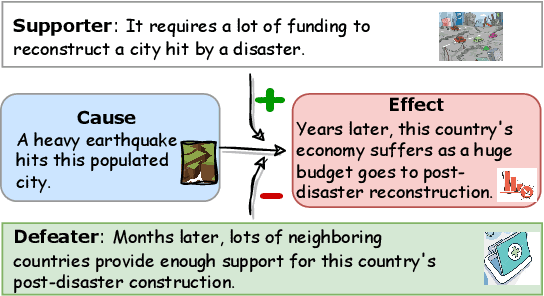
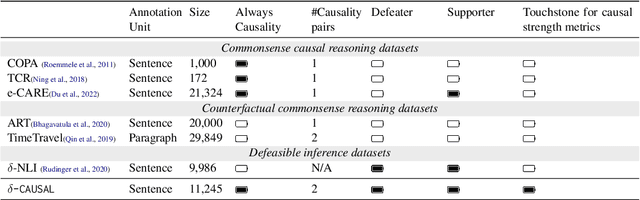
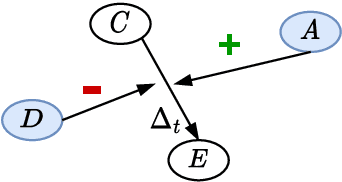
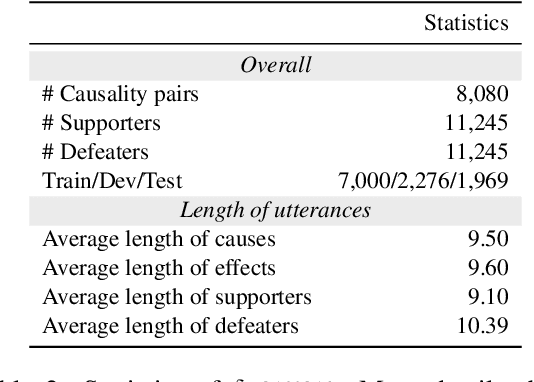
Defeasibility in causal reasoning implies that the causal relationship between cause and effect can be strengthened or weakened. Namely, the causal strength between cause and effect should increase or decrease with the incorporation of strengthening arguments (supporters) or weakening arguments (defeaters), respectively. However, existing works ignore defeasibility in causal reasoning and fail to evaluate existing causal strength metrics in defeasible settings. In this work, we present {\delta}-CAUSAL, the first benchmark dataset for studying defeasibility in causal reasoning. {\delta}-CAUSAL includes around 11K events spanning ten domains, featuring defeasible causality pairs, i.e., cause-effect pairs accompanied by supporters and defeaters. We further show current causal strength metrics fail to reflect the change of causal strength with the incorporation of supporters or defeaters in {\delta}-CAUSAL. To this end, we propose CESAR (Causal Embedding aSsociation with Attention Rating), a metric that measures causal strength based on token-level causal relationships. CESAR achieves a significant 69.7% relative improvement over existing metrics, increasing from 47.2% to 80.1% in capturing the causal strength change brought by supporters and defeaters. We further demonstrate even Large Language Models (LLMs) like GPT-3.5 still lag 4.5 and 10.7 points behind humans in generating supporters and defeaters, emphasizing the challenge posed by {\delta}-CAUSAL.