 Add to Chrome
 Add to Firefox
 Add to Edge
Compass: Navigating Global Marine Lead Data Integration through Expert-Guided LLM Agent
May 28, 2026
Marine lead (Pb) and its isotopes are critical tracers for ocean circulation and anthropogenic pollution, yet in-situ observations remain costly and sparse. While vast historical records exist, they lie buried within the unstructured content of academic papers, creating "data silos" inaccessible to comprehensive analysis. Manual extraction is unscalable, while general-purpose Large Language Models (LLMs) lack the necessary domain-specific knowledge, leading to hallucinations and scientifically invalid outputs. To address this, we introduce an expert-guided adaptation approach that enables LLMs to perform rigorous scientific data extraction without fine-tuning. We operationalize this approach through Compass, an LLM agent framework enhanced by a Knowledge Tree co-designed with marine scientists, which decomposes complex tasks into verifiable steps, guiding the agent's reasoning to ensure scientific validity. Deploying Compass across a corpus of over 230,000 relevant open-access papers, we successfully extract 3,751 previously unincorporated Pb records. This effort establishes the largest integrated marine Pb database to date. Beyond standard metrics, Compass demonstrates superior reliability through multi-layered validation, achieving 92% accuracy as confirmed through expert manual verification. The newly integrated data expand coverage in previously under-sampled regions such as the East China Sea and the Southern Ocean, providing an enriched data foundation for future scientific discoveries. We release an interactive visualization platform to facilitate open scientific access. Our work demonstrates that expert-guided agents can effectively bridge the gap between general-purpose LLMs and high-stakes scientific domains, enabling scalable data discovery in geosciences.

Rethinking Efficient Graph Coarsening via a Non-Selfishness Principle
May 13, 2026Graph coarsening is a graph dimensionality reduction technique that aims to construct a smaller and more tractable graph while preserving the essential structural and semantic properties of the original graph. However, most existing methods rely on pair-wise similarity matching, where each node independently searches for its best partner based on global information. This selfishness matching paradigm incurs substantial computational and memory overhead. To address this problem, we shift to a non-selfishness principle that prioritizes the collective interference of neighborhood in coarsening, and propose an efficient method named NOPE, which achieves linear memory consumption and near-linear computational complexity in the number of nodes. Furthermore, we derive a faster variant NOPE*, which reduces O(δ\dot d) interference evaluation to O(d) based on the local isotropy assumption, and consequently alleviates the computational bottleneck for high-degree nodes. Experimental results show that NOPE* achieves 1.8-10\times speedup over NOPE and surpass almost all baselines with 1-3 orders of magnitude acceleration. Meanwhile, learning on coarsened graphs yields comparable performance to original graphs, and can even show superior performance over LLM-based graph reasoning owing to compact graph information. The code can be available at https://github.com/dazonglian/NOPE-main.
SLASH the Sink: Sharpening Structural Attention Inside LLMs
May 11, 2026Large Language Models (LLMs) show remarkable semantic understanding but often struggle with structural understanding when processing graph topologies in a serialized format. Existing solutions rely on training external graph-based adapters or fine-tuning, which incur high costs and lost generalizability. In this work, we investigate the internal mechanisms of LLMs and present a critical finding: LLMs spontaneously reconstruct the graph's topology internally, evidenced by a distinct "sawtooth" pattern in their attention maps that structurally aligns with the "token-level adjacency matrix". However, this intrinsic structural understanding is diluted by the attention sink. We theoretically formalize this dilution as a representation bottleneck, stemming from a fundamental conflict: the model's anisotropic bias, essential for language tasks, suppresses the topology-aware local aggregation required for graph reasoning. To address this, we propose a training-free solution, named StructuraL Attention SHarpening (Slash), which amplifies this internal structural understanding via a plug-and-play attention redistribution. Experiments on pure graph tasks and molecular prediction validate Slash delivers significant and consistent performance gains across diverse LLMs.
Safactory: A Scalable Agent Factory for Trustworthy Autonomous Intelligence
May 07, 2026As large models evolve from conversational assistants into autonomous agents, challenges increasingly arise from long-horizon decision making, tool use, and real environment interaction. Existing agenticinfrastructure remain fragmented across evaluation, data management, and agent evolution, making it difficult to discover risks systematically and improve models in a continuous closed loop. In this report, we present \textbf{Safactory}, a scalable agent factory for trustworthy autonomous intelligence. Safactory integrates three tightly coupled platforms: a \textbf{Parallel Simulation Platform} for trajectory generation, a \textbf{Trustworthy Data Platform} for trajectory storage and experience extraction, and an \textbf{Autonomous Evolution Platform} for asynchronous reinforcement learning and on-policy distillation. As far as we know, Safactory is the first framework to propose a unified evolutionary pipeline for next-generation trustworthy autonomous intelligence.
AGCD: Agent-Guided Cross-Modal Decoding for Weather Forecasting
Mar 16, 2026Accurate weather forecasting is more than grid-wise regression: it must preserve coherent synoptic structures and physical consistency of meteorological fields, especially under autoregressive rollouts where small one-step errors can amplify into structural bias. Existing physics-priors approaches typically impose global, once-for-all constraints via architectures, regularization, or NWP coupling, offering limited state-adaptive and sample-specific controllability at deployment. To bridge this gap, we propose Agent-Guided Cross-modal Decoding (AGCD), a plug-and-play decoding-time prior-injection paradigm that derives state-conditioned physics-priors from the current multivariate atmosphere and injects them into forecasters in a controllable and reusable way. Specifically, We design a multi-agent meteorological narration pipeline to generate state-conditioned physics-priors, utilizing MLLMs to extract various meteorological elements effectively. To effectively apply the priors, AGCD further introduce cross-modal region interaction decoding that performs region-aware multi-scale tokenization and efficient physics-priors injection to refine visual features without changing the backbone interface. Experiments on WeatherBench demonstrate consistent gains for 6-hour forecasting across two resolutions (5.625 degree and 1.40625 degree) and diverse backbones (generic and weather-specialized), including strictly causal 48-hour autoregressive rollouts that reduce early-stage error accumulation and improve long-horizon stability.
<SOG_k>: One LLM Token for Explicit Graph Structural Understanding
Feb 02, 2026Large language models show great potential in unstructured data understanding, but still face significant challenges with graphs due to their structural hallucination. Existing approaches mainly either verbalize graphs into natural language, which leads to excessive token consumption and scattered attention, or transform graphs into trainable continuous embeddings (i.e., soft prompt), but exhibit severe misalignment with original text tokens. To solve this problem, we propose to incorporate one special token <SOG_k> to fully represent the Structure Of Graph within a unified token space, facilitating explicit topology input and structural information sharing. Specifically, we propose a topology-aware structural tokenizer that maps each graph topology into a highly selective single token. Afterwards, we construct a set of hybrid structure Question-Answering corpora to align new structural tokens with existing text tokens. With this approach, <SOG_k> empowers LLMs to understand, generate, and reason in a concise and accurate manner. Extensive experiments on five graph-level benchmarks demonstrate the superiority of our method, achieving a performance improvement of 9.9% to 41.4% compared to the baselines while exhibiting interpretability and consistency. Furthermore, our method provides a flexible extension to node-level tasks, enabling both global and local structural understanding. The codebase is publicly available at https://github.com/Jingyao-Wu/SOG.
Task-Adaptive Parameter-Efficient Fine-Tuning for Weather Foundation Models
Sep 26, 2025While recent advances in machine learning have equipped Weather Foundation Models (WFMs) with substantial generalization capabilities across diverse downstream tasks, the escalating computational requirements associated with their expanding scale increasingly hinder practical deployment. Current Parameter-Efficient Fine-Tuning (PEFT) methods, designed for vision or language tasks, fail to address the unique challenges of weather downstream tasks, such as variable heterogeneity, resolution diversity, and spatiotemporal coverage variations, leading to suboptimal performance when applied to WFMs. To bridge this gap, we introduce WeatherPEFT, a novel PEFT framework for WFMs incorporating two synergistic innovations. First, during the forward pass, Task-Adaptive Dynamic Prompting (TADP) dynamically injects the embedding weights within the encoder to the input tokens of the pre-trained backbone via internal and external pattern extraction, enabling context-aware feature recalibration for specific downstream tasks. Furthermore, during backpropagation, Stochastic Fisher-Guided Adaptive Selection (SFAS) not only leverages Fisher information to identify and update the most task-critical parameters, thereby preserving invariant pre-trained knowledge, but also introduces randomness to stabilize the selection. We demonstrate the effectiveness and efficiency of WeatherPEFT on three downstream tasks, where existing PEFT methods show significant gaps versus Full-Tuning, and WeatherPEFT achieves performance parity with Full-Tuning using fewer trainable parameters. The code of this work will be released.
TianQuan-Climate: A Subseasonal-to-Seasonal Global Weather Model via Incorporate Climatology State
Apr 14, 2025Subseasonal forecasting serves as an important support for Sustainable Development Goals (SDGs), such as climate challenges, agricultural yield and sustainable energy production. However, subseasonal forecasting is a complex task in meteorology due to dissipating initial conditions and delayed external forces. Although AI models are increasingly pushing the boundaries of this forecasting limit, they face two major challenges: error accumulation and Smoothness. To address these two challenges, we propose Climate Furnace Subseasonal-to-Seasonal (TianQuan-Climate), a novel machine learning model designed to provide global daily mean forecasts up to 45 days, covering five upper-air atmospheric variables at 13 pressure levels and two surface variables. Our proposed TianQuan-Climate has two advantages: 1) it utilizes a multi-model prediction strategy to reduce system error impacts in long-term subseasonal forecasts; 2) it incorporates a Content Fusion Module for climatological integration and extends ViT with uncertainty blocks (UD-ViT) to improve generalization by learning from uncertainty. We demonstrate the effectiveness of TianQuan-Climate on benchmarks for weather forecasting and climate projections within the 15 to 45-day range, where TianQuan-Climate outperforms existing numerical and AI methods.
AceMap: Knowledge Discovery through Academic Graph
Mar 05, 2024


The exponential growth of scientific literature requires effective management and extraction of valuable insights. While existing scientific search engines excel at delivering search results based on relational databases, they often neglect the analysis of collaborations between scientific entities and the evolution of ideas, as well as the in-depth analysis of content within scientific publications. The representation of heterogeneous graphs and the effective measurement, analysis, and mining of such graphs pose significant challenges. To address these challenges, we present AceMap, an academic system designed for knowledge discovery through academic graph. We present advanced database construction techniques to build the comprehensive AceMap database with large-scale academic publications that contain rich visual, textual, and numerical information. AceMap also employs innovative visualization, quantification, and analysis methods to explore associations and logical relationships among academic entities. AceMap introduces large-scale academic network visualization techniques centered on nebular graphs, providing a comprehensive view of academic networks from multiple perspectives. In addition, AceMap proposes a unified metric based on structural entropy to quantitatively measure the knowledge content of different academic entities. Moreover, AceMap provides advanced analysis capabilities, including tracing the evolution of academic ideas through citation relationships and concept co-occurrence, and generating concise summaries informed by this evolutionary process. In addition, AceMap uses machine reading methods to generate potential new ideas at the intersection of different fields. Exploring the integration of large language models and knowledge graphs is a promising direction for future research in idea evolution. Please visit \url{https://www.acemap.info} for further exploration.
ChordMics: Acoustic Signal Purification with Distributed Microphones
Sep 30, 2022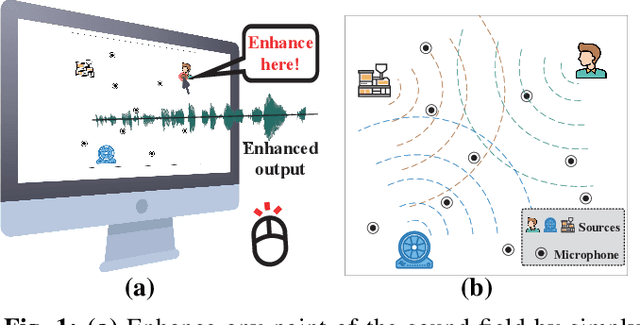
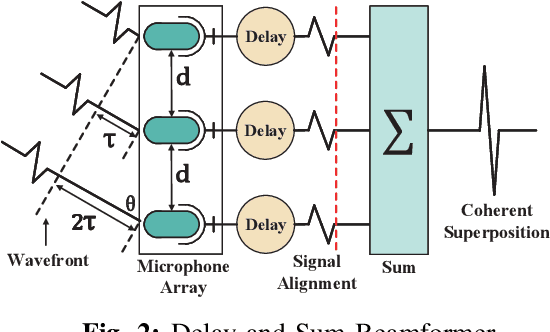
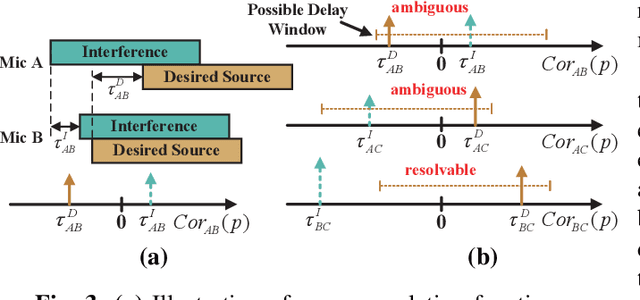
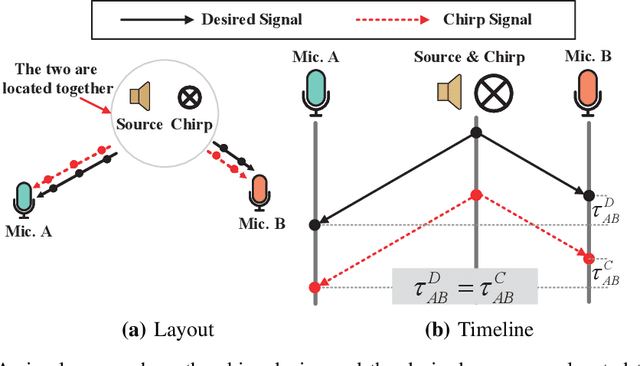
Acoustic signal acts as an essential input to many systems. However, the pure acoustic signal is very difficult to extract, especially in noisy environments. Existing beamforming systems are able to extract the signal transmitted from certain directions. However, since microphones are centrally deployed, these systems have limited coverage and low spatial resolution. We overcome the above limitations and present ChordMics, a distributed beamforming system. By leveraging the spatial diversity of the distributed microphones, ChordMics is able to extract the acoustic signal from arbitrary points. To realize such a system, we further address the fundamental challenge in distributed beamforming: aligning the signals captured by distributed and unsynchronized microphones. We implement ChordMics and evaluate its performance under both LOS and NLOS scenarios. The evaluation results tell that ChordMics can deliver higher SINR than the centralized microphone array. The average performance gain is up to 15dB.