 Add to Chrome
 Add to Firefox
 Add to Edge
PushDualGen: Enabling LLMs to Generate Semantic IDs with Interpretable Copy for Industrial Push Recommendation
Aug 08, 2026
Push recommendation in KuaiShou proactively delivers personalized content to nearly one billion users to facilitate their engagement. Recently, generative recommendation has achieved end-to-end user personalization through semantic ID. However, their black- box characteristics make recommendation logics difficult to trace, hindering their deployment. OneRec-Thinking addresses this by incorporating CoT before generating SIDs, but this significantly increases inference cost. To support large-scale industrial applications, we propose PushDualGen, a lightweight generator, which first generates the SID and then produces a copy as a skippable explanation. PushDualGen has been deployed in Kuaishou's push recommendation system. Online A/B tests demonstrate the effectiveness of PushDualGen, delivering significant improvements in both user attraction and satisfaction. The effective play rate for videos recommended to users has relatively increased by 8.50%, while the dissatisfaction rate has relatively fallen by 37.70%. In the long term, PushDualGen optimises the content ecosystem, providing more exposure for long-tail videos.

Zing: Social Mind for LLMs
Jul 26, 2026As large language models move from isolated task solving toward long-term service in human environments, they require social intelligence: the ability to infer mental states, track social relations, reason over norms, and adapt behavior under context. This report presents Zhijing, an integrated framework for measuring, internalizing, and grounding social intelligence. For measurement, we introduce SoMBench, a psychology-grounded benchmark spanning 3 primary dimensions, 17 secondary dimensions, and 71 task paradigms. It controls question format, narrative perspective, and context length across 284 shared scenarios and 3,481 expert-verified instances. Evaluation of 20 representative LLMs reveals substantial headroom: the best model achieves only 72.08% overall accuracy, and none of the 17 secondary dimensions reaches the 90% near-ceiling band. For internalization, we develop Zing, a diagnosis-driven training recipe combining supervised fine-tuning, on-policy distillation, and rubric-based reinforcement learning. Across five social-cognition benchmarks, Zing consistently outperforms its base models, with Zing-27B-Stage2 achieving the best average score and Zing-32B-Stage2 remaining competitive with DeepSeek-V4-Pro. For deployment-time grounding, we build Actio, a harness-controlled inference architecture that routes four typed supports into reasoning: PRISM for procedural guidance, Starling for runtime mental-state representation, SAGE for reusable experience, and gated RAG for external social and normative knowledge. Across five base models and three benchmarks, the full harness improves 14 of 15 model-benchmark pairs and is best or tied for best in 8, demonstrating the effectiveness of typed runtime support. Together, these results show that socially intelligent LLMs require coordinated advances in evaluation, parametric internalization, and deployment-time grounding.
HiFloat4 Format for Language Model Pre-training on Ascend NPUs
Apr 09, 2026Large foundation models have become central to modern machine learning, with performance scaling predictably with model size and data. However, training and deploying such models incur substantial computational and memory costs, motivating the development of low-precision training techniques. Recent work has demonstrated that 4-bit floating-point (FP4) formats--such as MXFP4 and NVFP4--can be successfully applied to linear GEMM operations in large language models (LLMs), achieving up to 4x improvements in compute throughput and memory efficiency compared to higher-precision baselines. In this work, we investigate the recently proposed HiFloat4 FP4 format for Huawei Ascend NPUs and systematically compare it with MXFP4 in large-scale training settings. All experiments are conducted on Ascend NPU clusters, with linear and expert GEMM operations performed entirely in FP4 precision. We evaluate both dense architectures (e.g., Pangu and LLaMA-style models) and mixture-of-experts (MoE) models, where both standard linear layers and expert-specific GEMMs operate in FP4. Furthermore, we explore stabilization techniques tailored to FP4 training that significantly reduce numerical degradation, maintaining relative error within 1% of full-precision baselines while preserving the efficiency benefits of 4-bit computation. Our results provide a comprehensive empirical study of FP4 training on NPUs and highlight the practical trade-offs between FP4 formats in large-scale dense and MoE models.
Impact-Aware Bimanual Catching of Large-Momentum Objects
Mar 25, 2024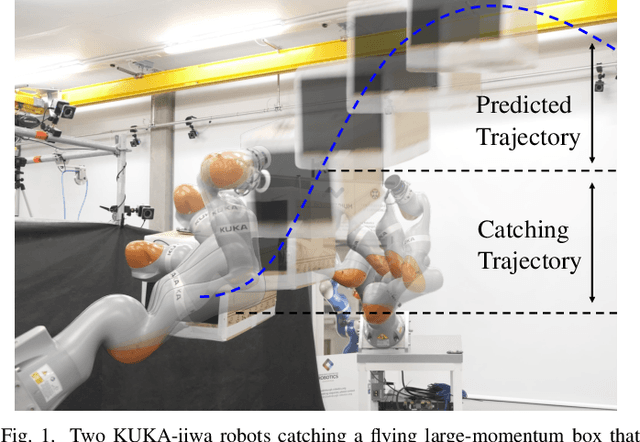

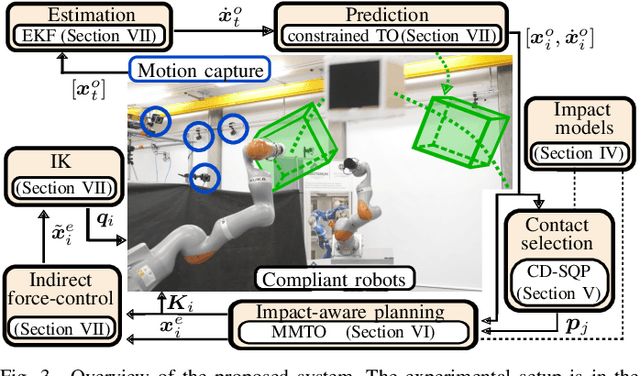
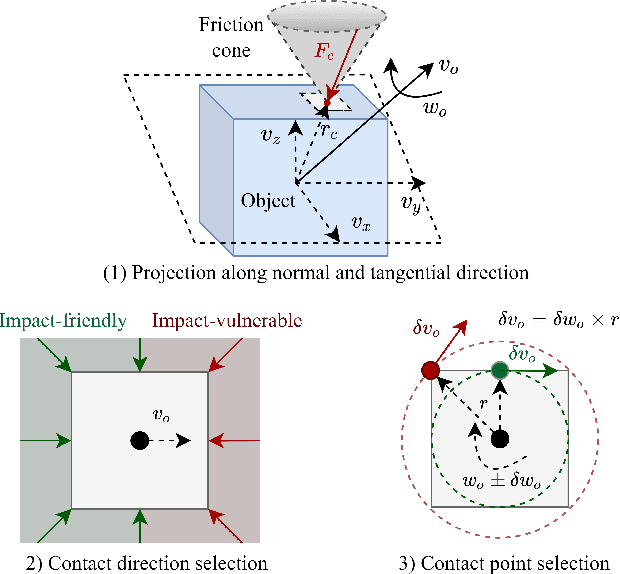
This paper investigates one of the most challenging tasks in dynamic manipulation -- catching large-momentum moving objects. Beyond the realm of quasi-static manipulation, dealing with highly dynamic objects can significantly improve the robot's capability of interacting with its surrounding environment. Yet, the inevitable motion mismatch between the fast moving object and the approaching robot will result in large impulsive forces, which lead to the unstable contacts and irreversible damage to both the object and the robot. To address the above problems, we propose an online optimization framework to: 1) estimate and predict the linear and angular motion of the object; 2) search and select the optimal contact locations across every surface of the object to mitigate impact through sequential quadratic programming (SQP); 3) simultaneously optimize the end-effector motion, stiffness, and contact force for both robots using multi-mode trajectory optimization (MMTO); and 4) realise the impact-aware catching motion on the compliant robotic system based on indirect force controller. We validate the impulse distribution, contact selection, and impact-aware MMTO algorithms in simulation and demonstrate the benefits of the proposed framework in real-world experiments including catching large-momentum moving objects with well-defined motion, constrained motion and free-flying motion.
Dynamic Feature-based Deep Reinforcement Learning for Flow Control of Circular Cylinder with Sparse Surface Pressure Sensing
Jul 28, 2023This study proposes a self-learning algorithm for closed-loop cylinder wake control targeting lower drag and lower lift fluctuations with the additional challenge of sparse sensor information, taking deep reinforcement learning as the starting point. DRL performance is significantly improved by lifting the sensor signals to dynamic features (DF), which predict future flow states. The resulting dynamic feature-based DRL (DF-DRL) automatically learns a feedback control in the plant without a dynamic model. Results show that the drag coefficient of the DF-DRL model is 25% less than the vanilla model based on direct sensor feedback. More importantly, using only one surface pressure sensor, DF-DRL can reduce the drag coefficient to a state-of-the-art performance of about 8% at Re = 100 and significantly mitigate lift coefficient fluctuations. Hence, DF-DRL allows the deployment of sparse sensing of the flow without degrading the control performance. This method also shows good robustness in controlling flow under higher Reynolds numbers, which reduces the drag coefficient by 32.2% and 46.55% at Re = 500 and 1000, respectively, indicating the broad applicability of the method. Since surface pressure information is more straightforward to measure in realistic scenarios than flow velocity information, this study provides a valuable reference for experimentally designing the active flow control of a circular cylinder based on wall pressure signals, which is an essential step toward further developing intelligent control in realistic multi-input multi-output (MIMO) system.
Underlaid Sensing Pilot for Integrated Sensing and Communications
Jul 24, 2023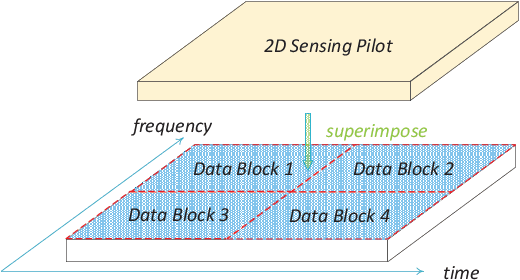
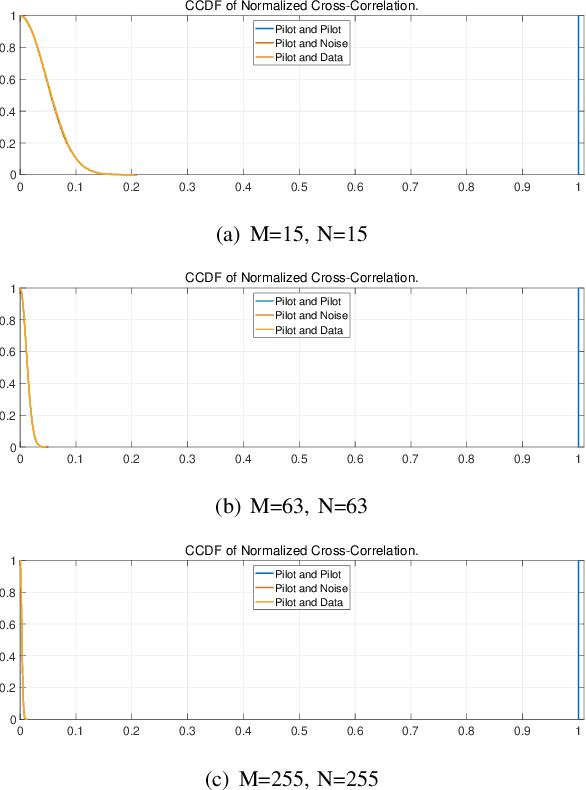
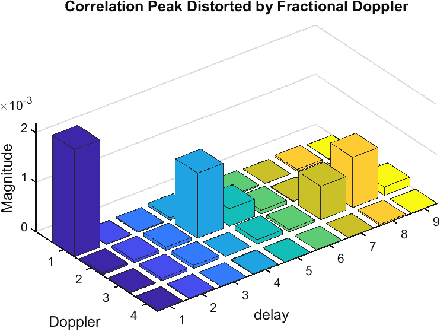
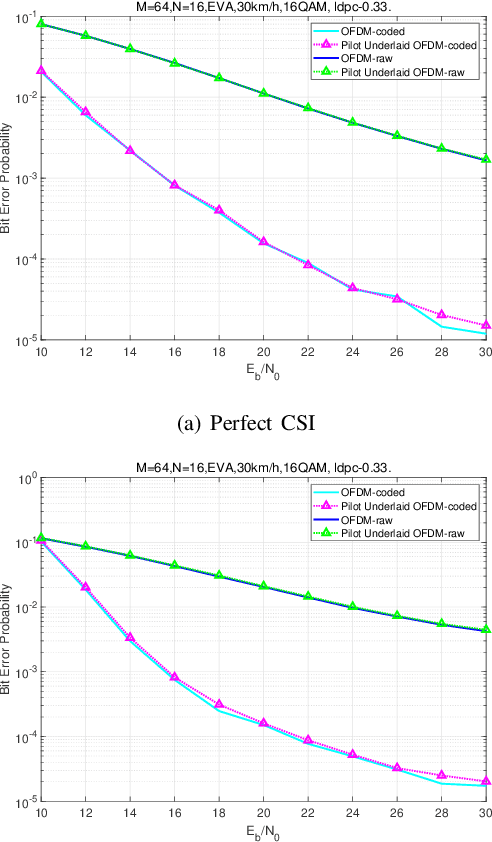
This paper investigates a novel underlaid sensing pilot signal design for integrated sensing and communications (ISAC) in an OFDM-based communication system. The proposed two-dimensional (2D) pilot signal is first generated on the delay-Doppler (DD) plane and then converted to the time-frequency (TF) plane for multiplexing with the OFDM data symbols. The sensing signal underlays the OFDM data, allowing for the sharing of time-frequency resources. In this framework, sensing detection is implemented based on a simple 2D correlation, taking advantage of the favorable auto-correlation properties of the sensing pilot. In the communication part, the sensing pilot, served as a known signal, can be utilized for channel estimation and equalization to ensure optimal symbol detection performance. The underlaid sensing pilot demonstrates good scalability and can adapt to different delay and Doppler resolution requirements without violating the OFDM frame structure. Experimental results show the effective sensing performance of the proposed pilot, with only a small fraction of power shared from the OFDM data, while maintaining satisfactory symbol detection performance in communication.
QoE-based Semantic-Aware Resource Allocation for Multi-Task Networks
May 11, 2023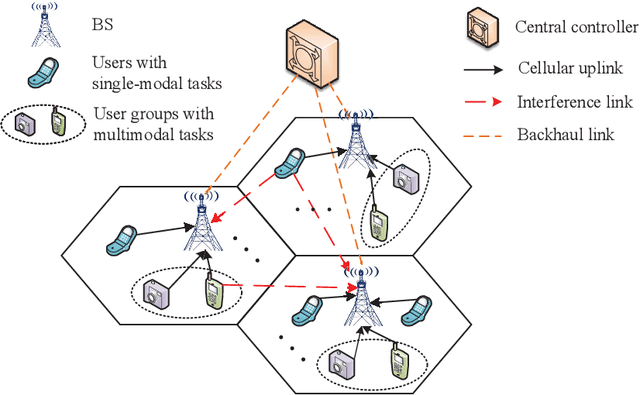
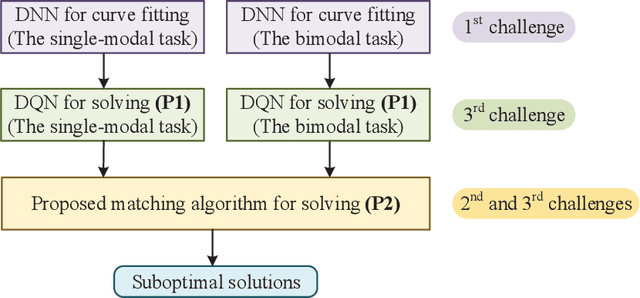
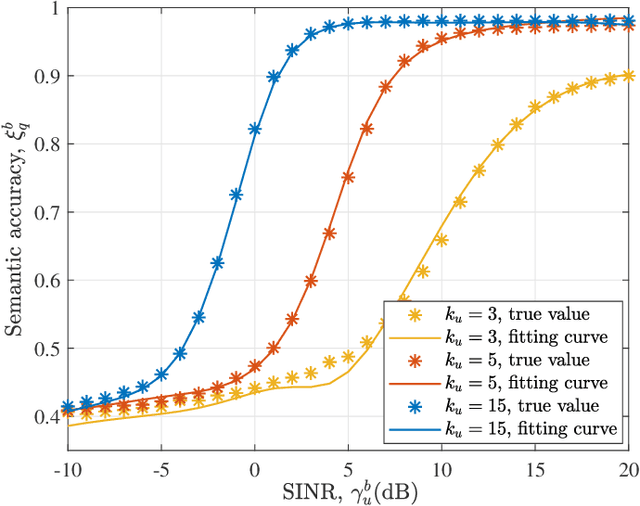
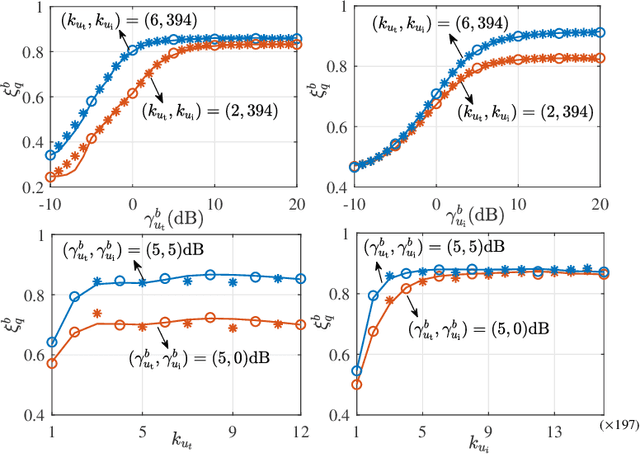
In semantic communications, only task-relevant information is transmitted, yielding significant performance gains over conventional communications. To satisfy user requirements for different tasks, we investigate the semantic-aware resource allocation in a multi-cell network for serving multiple tasks in this paper. First, semantic entropy is defined and quantified to measure the semantic information for different tasks. Then, we develop a novel quality-of-experience (QoE) model to formulate the semantic-aware resource allocation problem in terms of semantic compression, channel assignment, and transmit power allocation. To solve the formulated problem, we first decouple it into two subproblems. The first one is to optimize semantic compression with given channel assignment and power allocation results, which is solved by a developed deep Q-network (DQN) based method. The second one is to optimize the channel assignment and transmit power, which is modeled as a many-to-one matching game and solved by a proposed low-complexity matching algorithm. Simulation results validate the effectiveness and superiority of the proposed semantic-aware resource allocation method, as well as its compatibility with conventional and semantic communications.
ROS-PyBullet Interface: A Framework for Reliable Contact Simulation and Human-Robot Interaction
Oct 13, 2022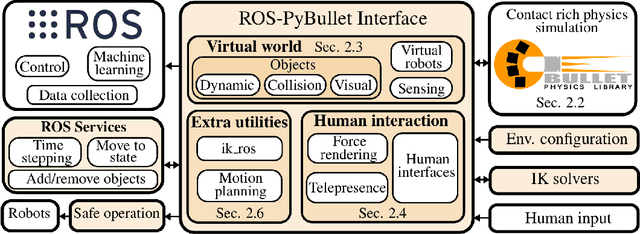
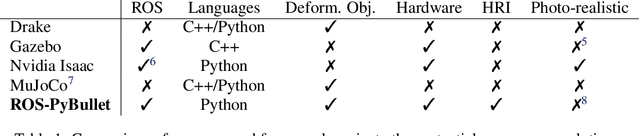
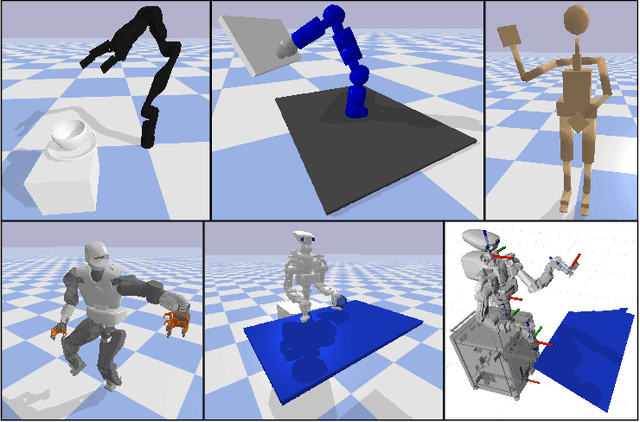
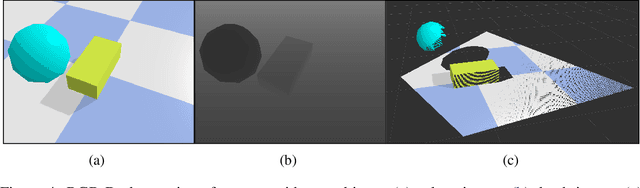
Reliable contact simulation plays a key role in the development of (semi-)autonomous robots, especially when dealing with contact-rich manipulation scenarios, an active robotics research topic. Besides simulation, components such as sensing, perception, data collection, robot hardware control, human interfaces, etc. are all key enablers towards applying machine learning algorithms or model-based approaches in real world systems. However, there is a lack of software connecting reliable contact simulation with the larger robotics ecosystem (i.e. ROS, Orocos), for a more seamless application of novel approaches, found in the literature, to existing robotic hardware. In this paper, we present the ROS-PyBullet Interface, a framework that provides a bridge between the reliable contact/impact simulator PyBullet and the Robot Operating System (ROS). Furthermore, we provide additional utilities for facilitating Human-Robot Interaction (HRI) in the simulated environment. We also present several use-cases that highlight the capabilities and usefulness of our framework. Please check our video, source code, and examples included in the supplementary material. Our full code base is open source and can be found at https://github.com/cmower/ros_pybullet_interface.
Reinforcement Learning for Cognitive Delay/Disruption Tolerant Network Node Management in an LEO-based Satellite Constellation
Sep 27, 2022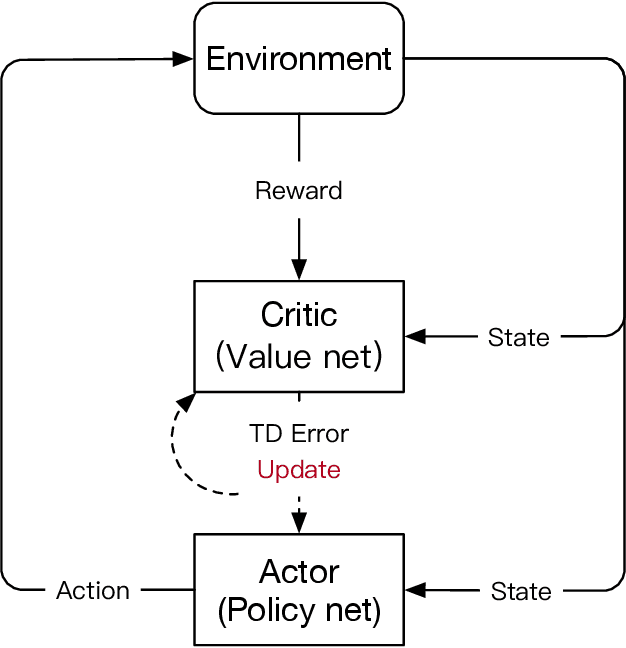
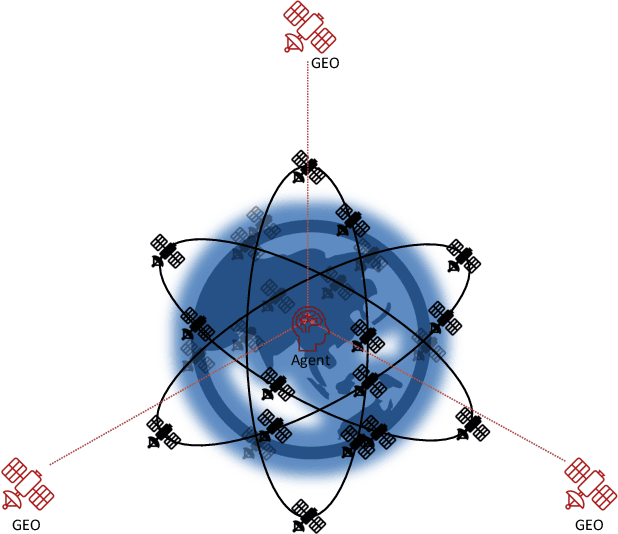
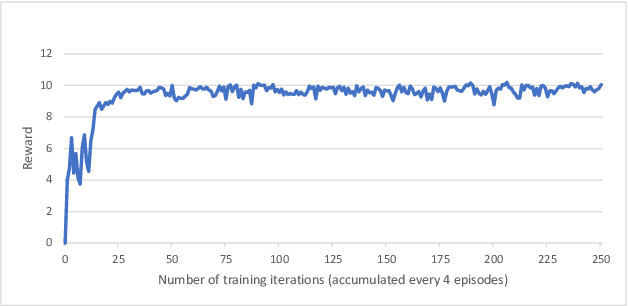
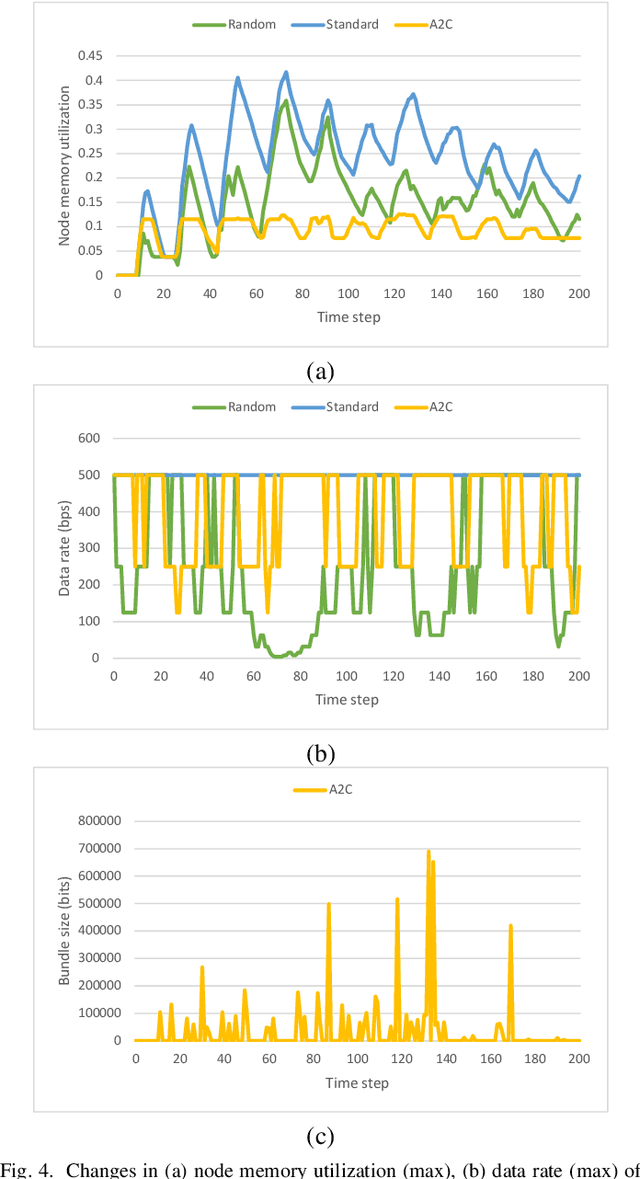
In recent years, with the large-scale deployment of space spacecraft entities and the increase of satellite onboard capabilities, delay/disruption tolerant network (DTN) emerged as a more robust communication protocol than TCP/IP in the case of excessive network dynamics. DTN node buffer management is still an active area of research, as the current implementation of the DTN core protocol still relies on the assumption that there is always enough memory available in different network nodes to store and forward bundles. In addition, the classical queuing theory does not apply to the dynamic management of DTN node buffers. Therefore, this paper proposes a centralized approach to automatically manage cognitive DTN nodes in low earth orbit (LEO) satellite constellation scenarios based on the advanced reinforcement learning (RL) strategy advantage actor-critic (A2C). The method aims to explore training a geosynchronous earth orbit intelligent agent to manage all DTN nodes in an LEO satellite constellation scenario. The goal of the A2C agent is to maximize delivery success rate and minimize network resource consumption cost while considering node memory utilization. The intelligent agent can dynamically adjust the radio data rate and perform drop operations based on bundle priority. In order to measure the effectiveness of applying A2C technology to DTN node management issues in LEO satellite constellation scenarios, this paper compares the trained intelligent agent strategy with the other two non-RL policies, including random and standard policies. Experiments show that the A2C strategy balances delivery success rate and cost, and provides the highest reward and the lowest node memory utilization.
QoE-Aware Resource Allocation for Semantic Communication Networks
May 28, 2022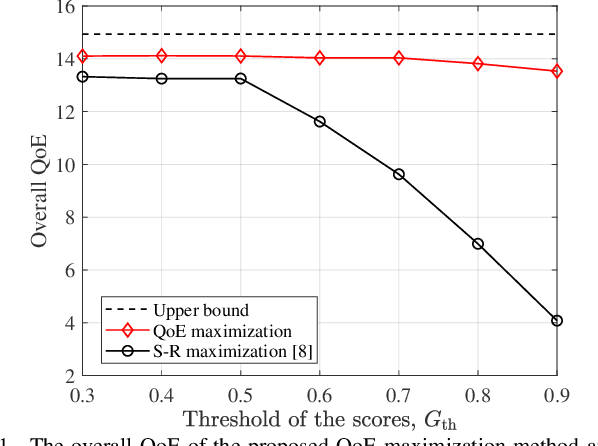
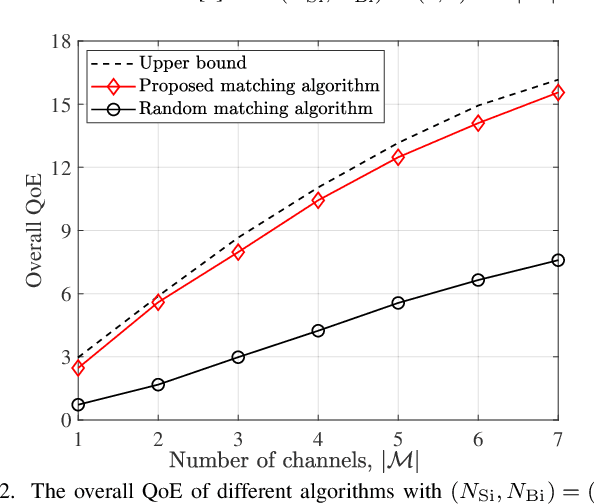
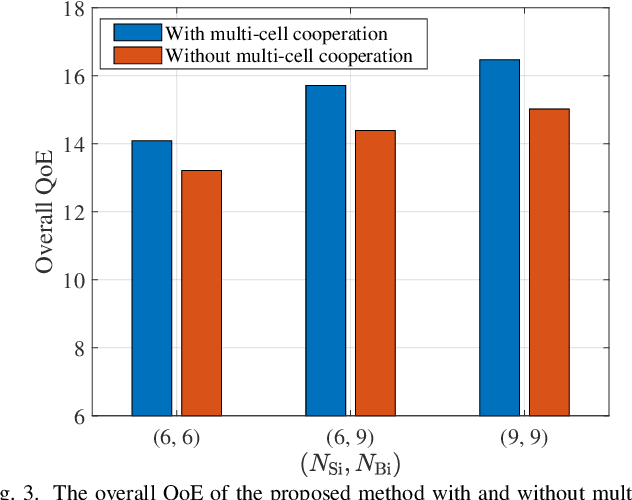
With the aim of accomplishing intelligence tasks, semantic communications transmit task-related information only, yielding significant performance gains over conventional communications. To guarantee user requirements for different types of tasks, we perform the semantic-aware resource allocation in a multi-cell multi-task network in this paper. Specifically, an approximate measure of semantic entropy is first developed to quantify the semantic information for different tasks, based on which a novel quality-of-experience (QoE) model is proposed. We formulate the QoE-aware semantic resource allocation in terms of the number of transmitted semantic symbols, channel assignment, and power allocation. To solve this problem, we first decouple it into two independent subproblems. The first one is to optimize the number of transmitted semantic symbols with given channel assignment and power allocation, which is solved by the exhaustive searching method. The second one is the channel assignment and power allocation subproblem, which is modeled as a many-to-one matching game and solved by the proposed low-complexity matching algorithm. Simulation results demonstrate the effectiveness and superiority of the proposed method on the overall QoE.