 Add to Chrome
 Add to Firefox
 Add to Edge
Optimal Routing for Federated Learning over Dynamic Satellite Networks: Tractable or Not?
Apr 21, 2026
Federated learning (FL) is a key paradigm for distributed model learning across decentralized data sources. Communication in each FL round typically consists of two phases: (i) distributing the global model from a server to clients, and (ii) collecting updated local models from clients to the server for aggregation. This paper focuses on a type of FL where communication between a client and the server is relay-based over dynamic networks, making routing optimization essential. A typical scenario is in-orbit FL, where satellites act as clients and communicate with a server (which can be a satellite, ground station, or aerial platform) via multi-hop inter-satellite links. This paper presents a comprehensive tractability analysis of routing optimization for in-orbit FL under different settings. For global model distribution, these include the number of models, the objective function, and routing schemes (unicast versus multicast, and splittable versus unsplittable flow). For local model collection, the settings consider the number of models, client selection, and flow splittability. For each case, we rigorously prove whether the global optimum is obtainable in polynomial time or the problem is NP-hard. Together, our analysis draws clear boundaries between tractable and intractable regimes for a broad spectrum of routing problems for in-orbit FL. For tractable cases, the derived efficient algorithms are directly applicable in practice. For intractable cases, we provide fundamental insights into their inherent complexity. These contributions fill a critical yet unexplored research gap, laying a foundation for principled routing design, evaluation, and deployment in satellite-based FL or similar distributed learning systems.

Reinforcement Learning for Cognitive Delay/Disruption Tolerant Network Node Management in an LEO-based Satellite Constellation
Sep 27, 2022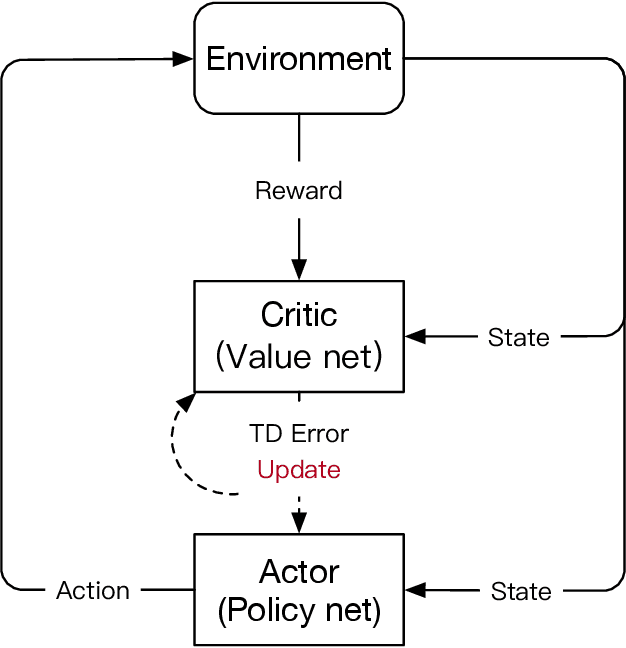
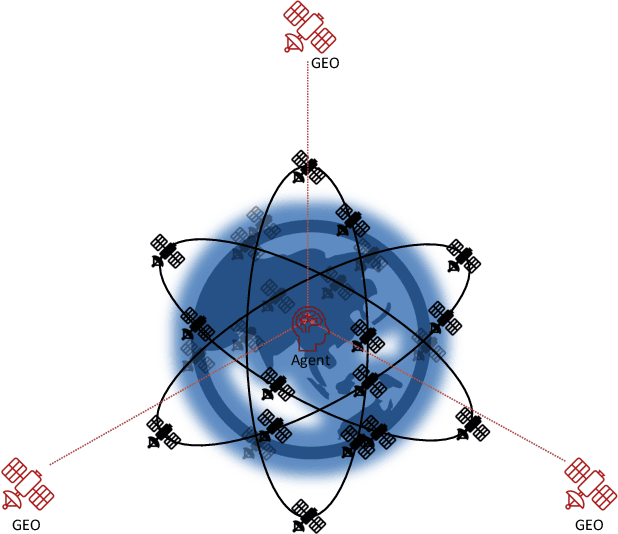
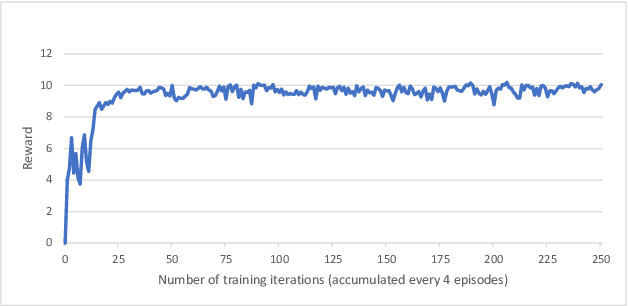
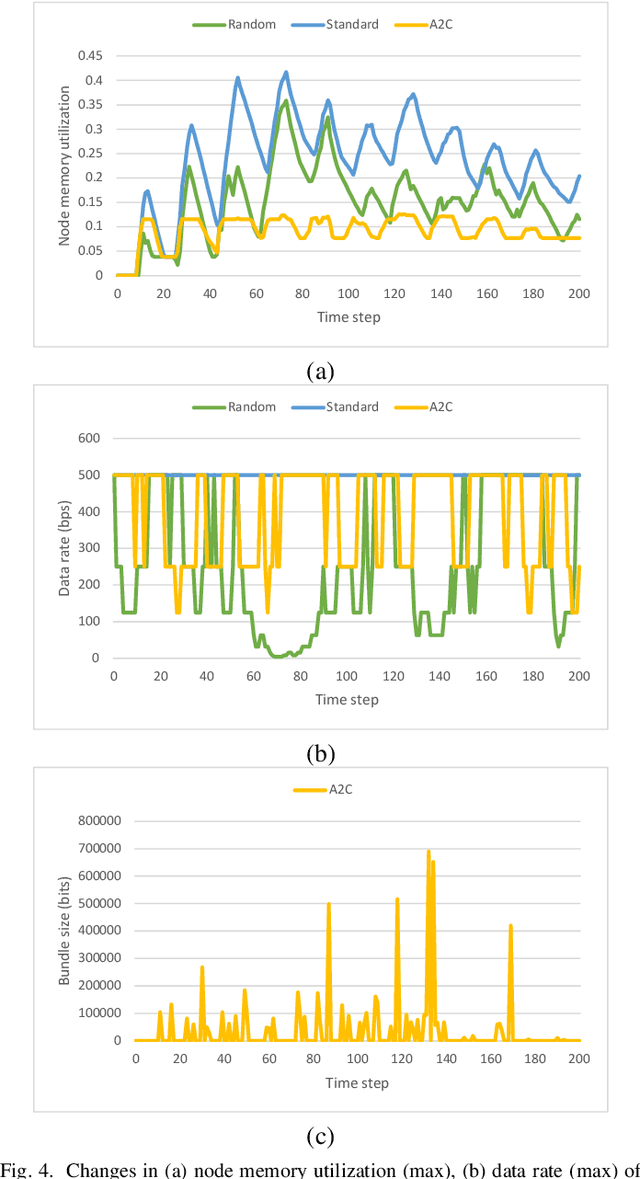
In recent years, with the large-scale deployment of space spacecraft entities and the increase of satellite onboard capabilities, delay/disruption tolerant network (DTN) emerged as a more robust communication protocol than TCP/IP in the case of excessive network dynamics. DTN node buffer management is still an active area of research, as the current implementation of the DTN core protocol still relies on the assumption that there is always enough memory available in different network nodes to store and forward bundles. In addition, the classical queuing theory does not apply to the dynamic management of DTN node buffers. Therefore, this paper proposes a centralized approach to automatically manage cognitive DTN nodes in low earth orbit (LEO) satellite constellation scenarios based on the advanced reinforcement learning (RL) strategy advantage actor-critic (A2C). The method aims to explore training a geosynchronous earth orbit intelligent agent to manage all DTN nodes in an LEO satellite constellation scenario. The goal of the A2C agent is to maximize delivery success rate and minimize network resource consumption cost while considering node memory utilization. The intelligent agent can dynamically adjust the radio data rate and perform drop operations based on bundle priority. In order to measure the effectiveness of applying A2C technology to DTN node management issues in LEO satellite constellation scenarios, this paper compares the trained intelligent agent strategy with the other two non-RL policies, including random and standard policies. Experiments show that the A2C strategy balances delivery success rate and cost, and provides the highest reward and the lowest node memory utilization.