 Add to Chrome
 Add to Firefox
 Add to Edge
Exploring and Bridging Knowledge Holes in Unlearned Multimodal Large Language Models
Aug 03, 2026
Machine unlearning offers a promising approach to remove unsafe content from Multimodal Large Language Models (MLLMs), yet ensuring the precision of unlearning remains a persistent challenge. One reason is that current MLLM unlearning evaluation paradigms suffer from a critical blind spot: they assess model utility through benchmarks whose representations are distant from the forget set, failing to capture knowledge holes---severe degradation on benign adjacent inputs. To probe knowledge holes in unlearned MLLMs, we construct a benchmark that captures unintended degradation on benign inputs sharing generic patterns with the forget set, and confirm through controlled experiments that they are a systematic consequence of commonly used approaches. Furthermore, to bridge this gap, we propose Selective Protection with Anchored Regularization, which protects generic patterns via anchored activation filtering while reinforcing them through entity-abstracted enhancement. Our experiments on SafeEraser demonstrate that SPAR recovers over 98% of vanilla response quality compared to below 50% for standard baselines---while achieving 0.00% attack success rate and competitive model utility. These results underscore the necessity of more fine-grained evaluation for trustworthy MLLM unlearning.

Toward Fine-Grained Forgetting:Attribute Unlearning for Multimodal Large Language Models
Aug 02, 2026Multimodal large language models (MLLMs) exhibit strong vision--language capabilities but may also memorize and disclose sensitive information. Machine unlearning seeks to remove designated knowledge without retraining from scratch while preserving general utility. Existing privacy-oriented benchmarks primarily adopt profile-level deletion, whereas practical requests are often finer grained: a model should forget a specified attribute while retaining non-sensitive information about the same identity. We therefore introduce attribute-level MLLM unlearning as a finer-grained task and construct a benchmark spanning long-text, numeric, and short-text targets, multiple forget ratios, and diverse question types. Our evaluation reveals that target and retained attributes share identity-specific and visual evidence, making selective forgetting susceptible to residual leakage or collateral degradation; accordingly, existing methods exhibit unstable forgetting--retention trade-offs in this setting. To address this challenge, we propose Causal Localization and Retain-Aware Projection (CLRP), a lightweight training-free framework. CLRP uses activation patching to identify the layer that causally mediates target-attribute disclosure, then applies a retain-aware projection that removes the target-attribute subspace while preserving same-identity evidence. Experiments across multiple widely used MLLMs with distinct architectures and parameter scales demonstrate the effectiveness of CLRP.
SWE-NFI: Studying and Benchmarking Coding Agents for Non-Functional Improvements
Jul 29, 2026Although coding agents have achieved impressive performance on correctness-oriented benchmarks, their ability to make behavior-preserving non-functional improvements (NFIs) remains underexplored. In real-world software development, developers continuously improve software quality without changing observable behavior, yet existing benchmarks primarily evaluate functional correctness and provide limited support for assessing these non-functional improvements. In this paper, we present SWE-NFI, a benchmark for evaluating coding agents on NFIs beyond functional correctness. Our benchmark contains 188 tasks constructed from real merged pull requests in open-source Python projects. We operationalize developer-oriented NFIs into 92 executable rules and develop a comprehensive evaluation suite that combines functional correctness testing with rule-based NFI evaluation. We evaluate state-of-the-art commercial and open-source coding agents. Although the best-performing agent achieves a 70.0\% functional correctness rate, all evaluated agents generally fall short of human developers in overall NFI capability. The gap is particularly evident for structural code improvements, where agents' NFI scores range from 0.0 to 1.3, compared with 1.5 for the human reference. Our benchmark and findings provide a reproducible foundation for evaluating and advancing coding agents beyond functional correctness.
Thresholded Cross-Attention for Reliable Intensity-Chromaticity Fusion in Low-Light Image Enhancement
Jul 15, 2026Low-Light Image Enhancement (LLIE) requires a careful balance among noise suppression, color fidelity, and efficiency. Recent HVI-based methods alleviate color entanglement by decoupling intensity and chromaticity, yet how reliably the two streams are fused again is an overlooked factor that largely determines the final quality. We observe that the confidence of cross-stream attention is strongly layer-dependent, so the fixed-quota selection of Top-K sparse attention is mismatched to it, discarding informative dependencies in some layers while retaining noisy ones in others. Motivated by this observation, we propose TCA-Net, a network built around Thresholded Cross-Attention that targets reliable intensity-chromaticity fusion in the HVI space rather than introducing yet another color representation. At its core, TCA replaces the rigid Top-K quota with a fixed confidence threshold whose retained cardinality is input- and layer-adaptive, retaining only high-confidence cross-stream interactions while suppressing unreliable ones. Around this core, two complementary designs clean up the fusion before and after it: a Phase-guided Fourier Interaction Module provides a structure-aware brightness initialization for the intensity stream prior to fusion, and a Decoupled Dual-Stream Guidance Module constructs residual intensity features to suppress chromaticity leakage during reconstruction. A Scale-Aware Consistency Regularization further improves structural robustness under scale perturbations during training. Extensive experiments on LOL-v1, LOL-v2, Sony-Total-Dark, and LSRW-Huawei demonstrate that TCA-Net delivers competitive restoration accuracy, improved color fidelity, and a compact parameter size.
Visual-Advantage On-Policy Distillation for Vision-Language Models
May 21, 2026On-policy knowledge distillation has proven effective for language models, yet its application to vision-language models (VLMs) remains underexplored. We observe that standard on-policy distillation can improve a student's output quality while failing to strengthen its reliance on visual input: on vision-critical tokens, the student's predictions remain largely unchanged whether or not fine-grained visual detail is present, even though the teacher's predictions depend heavily on it.To make this difference observable, we introduce visual advantage (VA), the token-level log-probability difference when the teacher scores a student-generated rollout with versus without access to fine-grained visual detail. VA is concentrated in a small minority of tokens, and these high-VA tokens are the ones that actually carry the visual supervision signal. This motivates a distillation objective that treats them differently from language scaffolding, so their contribution is not diluted by the abundant surrounding language tokens.We propose Visual-Advantage On-Policy Distillation (VA-OPD), which uses VA at two granularities: rollout-level reweighting by trajectory-averaged VA, and token-level KL averaged within high-VA and low-VA groups separately. We train on two math datasets (Geometry3K and ViRL39K) and evaluate on eight benchmarks covering both mathematical reasoning and visual understanding, across three teacher sizes (4B, 8B, and 32B) on the Qwen3-VL family. VA-OPD improves over standard on-policy distillation on every benchmark, with the gain growing monotonically along both the teacher-size and data-scale axes, suggesting that these factors compound consistently.
Cycle-resolved Cephalopod-Inspired Pulsed-Jet Robot With High-Volume Expulsion and Drag-Reduced Gliding
May 07, 2026Cephalopod pulsed-jet locomotion is not a single isolated expulsion event, but a coordinated cycle involving jet expulsion, passive gliding, and mantle refilling. Inspired by this cycle-resolved biological strategy, this paper presents a cephalopod-inspired pulsed-jet robot with a rigid-soft hybrid origami mantle that enables large, actively driven, and geometry-guided body deformation. The proposed mantle integrates rigid folding panels with a compliant silicone framework, allowing a 75% effective cavity-volume reduction during expulsion and reducing the projected cross-sectional drag area by approximately 75.7% in the contracted gliding configuration. Using this platform, we formulate a cycle-resolved framework to separately investigate how expelled volume, glide duration, and refill pathway influence whole-cycle locomotion performance. Experiments show that the robot reaches a peak speed of approximately 0.5 m/s (3.8 BL/s) and an average speed exceeding 0.2 m/s (1.5 BL/s) within the first jetting cycle. The results further demonstrate the roles of high expelled-volume-ratio contraction in speed generation, reduced-drag-area gliding under different glide durations, and mantle-aperture-inspired passive inlet valves in assisting refill. This work provides both a robotic implementation of actively deformable cephalopod-like jet propulsion and a unified experimental platform for studying expulsion-gliding-refilling dynamics in pulsed-jet locomotion.
Unified Structural-Hydrodynamic Modeling of Underwater Underactuated Mechanisms and Soft Robots
Mar 09, 2026Underwater robots are widely deployed for ocean exploration and manipulation. Underactuated mechanisms are particularly advantageous in aquatic environments, as reducing actuator count lowers the risk of motor leakage while introducing inherent mechanical compliance. However, accurate modeling of underwater underactuated and soft robotic systems remains challenging because it requires identifying a high-dimensional set of internal structural and external hydrodynamic parameters. In this work, we propose a trajectory-driven global optimization framework for unified structural-hydrodynamic modeling of underwater multibody systems. Inspired by the Covariance Matrix Adaptation Evolution Strategy (CMA-ES), the proposed approach simultaneously identifies coupled internal elastic, damping, and distributed hydrodynamic parameters through trajectory-level matching between simulation and experimental motion. This enables high-fidelity reproduction of both underactuated mechanisms and compliant soft robotic systems in underwater environments. We first validate the framework on a link-by-link underactuated multibody mechanism, demonstrating accurate identification of distributed hydrodynamic coefficients, with a normalized end effector position error below 5% across multiple trajectories, varying initial conditions, and both active-passive and fully passive configurations. The identified modeling strategy is then transferred to a single octopus-inspired soft arm, showing strong real-to-sim consistency without manual retuning. Finally, eight identified arms are assembled into a swimming octopus robot, where the unified parameter set enables realistic whole body behavior without additional parameter calibration. These results demonstrate the scalability and transferability of the proposed structural-hydrodynamic modeling framework across underwater underactuated and soft robotic systems.
MIRROR: Manifold Ideal Reference ReconstructOR for Generalizable AI-Generated Image Detection
Feb 02, 2026High-fidelity generative models have narrowed the perceptual gap between synthetic and real images, posing serious threats to media security. Most existing AI-generated image (AIGI) detectors rely on artifact-based classification and struggle to generalize to evolving generative traces. In contrast, human judgment relies on stable real-world regularities, with deviations from the human cognitive manifold serving as a more generalizable signal of forgery. Motivated by this insight, we reformulate AIGI detection as a Reference-Comparison problem that verifies consistency with the real-image manifold rather than fitting specific forgery cues. We propose MIRROR (Manifold Ideal Reference ReconstructOR), a framework that explicitly encodes reality priors using a learnable discrete memory bank. MIRROR projects an input into a manifold-consistent ideal reference via sparse linear combination, and uses the resulting residuals as robust detection signals. To evaluate whether detectors reach the "superhuman crossover" required to replace human experts, we introduce the Human-AIGI benchmark, featuring a psychophysically curated human-imperceptible subset. Across 14 benchmarks, MIRROR consistently outperforms prior methods, achieving gains of 2.1% on six standard benchmarks and 8.1% on seven in-the-wild benchmarks. On Human-AIGI, MIRROR reaches 89.6% accuracy across 27 generators, surpassing both lay users and visual experts, and further approaching the human perceptual limit as pretrained backbones scale. The code is publicly available at: https://github.com/349793927/MIRROR
SecureAgentBench: Benchmarking Secure Code Generation under Realistic Vulnerability Scenarios
Sep 26, 2025Large language model (LLM) powered code agents are rapidly transforming software engineering by automating tasks such as testing, debugging, and repairing, yet the security risks of their generated code have become a critical concern. Existing benchmarks have offered valuable insights but remain insufficient: they often overlook the genuine context in which vulnerabilities were introduced or adopt narrow evaluation protocols that fail to capture either functional correctness or newly introduced vulnerabilities. We therefore introduce SecureAgentBench, a benchmark of 105 coding tasks designed to rigorously evaluate code agents' capabilities in secure code generation. Each task includes (i) realistic task settings that require multi-file edits in large repositories, (ii) aligned contexts based on real-world open-source vulnerabilities with precisely identified introduction points, and (iii) comprehensive evaluation that combines functionality testing, vulnerability checking through proof-of-concept exploits, and detection of newly introduced vulnerabilities using static analysis. We evaluate three representative agents (SWE-agent, OpenHands, and Aider) with three state-of-the-art LLMs (Claude 3.7 Sonnet, GPT-4.1, and DeepSeek-V3.1). Results show that (i) current agents struggle to produce secure code, as even the best-performing one, SWE-agent supported by DeepSeek-V3.1, achieves merely 15.2% correct-and-secure solutions, (ii) some agents produce functionally correct code but still introduce vulnerabilities, including new ones not previously recorded, and (iii) adding explicit security instructions for agents does not significantly improve secure coding, underscoring the need for further research. These findings establish SecureAgentBench as a rigorous benchmark for secure code generation and a step toward more reliable software development with LLMs.
R2Vul: Learning to Reason about Software Vulnerabilities with Reinforcement Learning and Structured Reasoning Distillation
Apr 07, 2025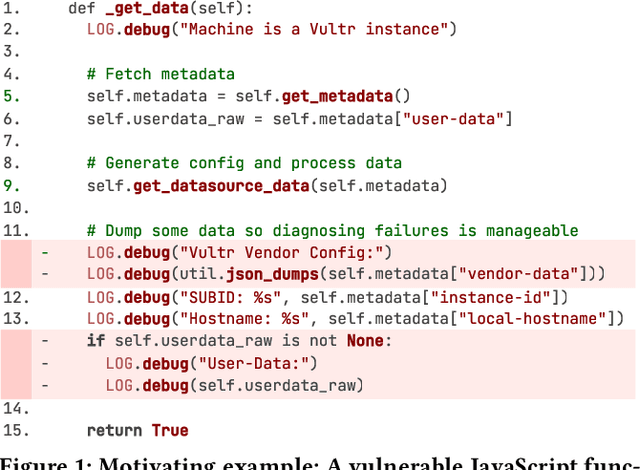
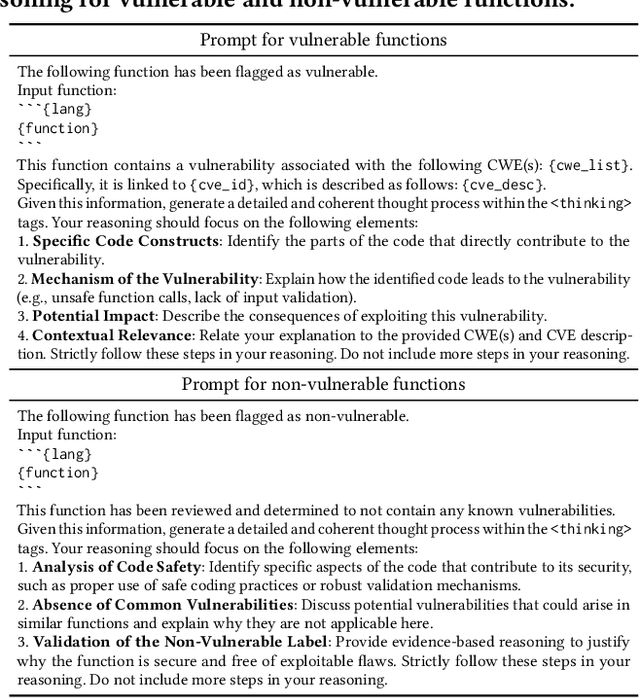
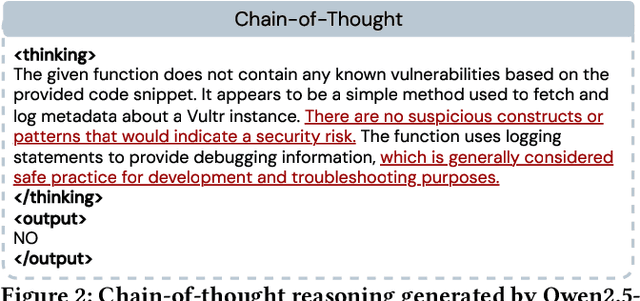
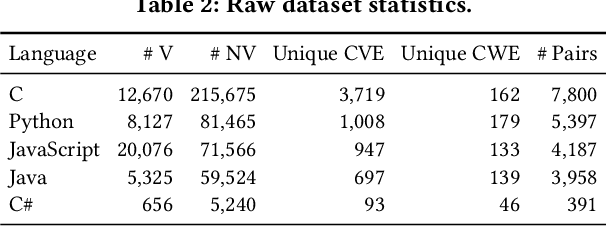
Large language models (LLMs) have shown promising performance in software vulnerability detection (SVD), yet their reasoning capabilities remain unreliable. Existing approaches relying on chain-of-thought (CoT) struggle to provide relevant and actionable security assessments. Additionally, effective SVD requires not only generating coherent reasoning but also differentiating between well-founded and misleading yet plausible security assessments, an aspect overlooked in prior work. To this end, we introduce R2Vul, a novel approach that distills structured reasoning into small LLMs using reinforcement learning from AI feedback (RLAIF). Through RLAIF, R2Vul enables LLMs to produce structured, security-aware reasoning that is actionable and reliable while explicitly learning to distinguish valid assessments from misleading ones. We evaluate R2Vul across five languages against SAST tools, CoT, instruction tuning, and classification-based baselines. Our results show that R2Vul with structured reasoning distillation enables a 1.5B student LLM to rival larger models while improving generalization to out-of-distribution vulnerabilities. Beyond model improvements, we contribute a large-scale, multilingual preference dataset featuring structured reasoning to support future research in SVD.