 Add to Chrome
 Add to Firefox
 Add to Edge
MG-RWKV: Multi-Grained Context-Aware RWKV for Temporal Forgery Localization
Jul 01, 2026
Driven by Artificial Intelligence-Generated Content (AIGC), the authenticity of audio-visual content is facing severe challenges. Temporal Forgery Localization (TFL) aims to precisely identify manipulated segments within untrimmed sequences. However, existing methods are limited by CNNs' local receptive fields or Transformers' quadratic complexity, while emerging linear models often struggle to balance global authentic context compression with local abrupt forgery perception. To address this, we propose MG-RWKV, a multi-granularity framework that leverages the data-dependent state evolution of RWKV to achieve efficient full-sequence processing with O(T) complexity. Our framework features three core innovations: (1) a Bidirectional RWKV architecture that captures bidirectional temporal contexts without quadratic overhead; (2) a Multi-Granularity Mixture of Experts (MG-MoE) that performs dynamic routing over explicit temporal receptive fields, adaptively selecting granularities based on forgery duration to significantly enhance decision interpretability; and (3) Cross-Granularity Consistency (CGC), which aligns adjacent feature pyramid levels through hierarchical scale-wise pairing and spatial boundary-aware weighting, effectively reducing false positives in authentic regions. Extensive experiments on Lav-DF, TVIL, and Psynd datasets demonstrate that MG-RWKV achieves state-of-the-art performance with low computational cost.

DeskCraft: Benchmarking Desktop Agents on Professional Workflows and Human-in-the-Loop Collaboration
Jun 02, 2026Real-world professional desktop workflows in specialized creative and engineering software unfold over long horizons and often require human-in-the-loop coordination, where agents proactively seek necessary information and users provide additional instructions, clarifications, feedback, or corrections as the task progresses. Yet existing desktop GUI benchmarks mostly reduce this setting to short, simplified tasks with all user instructions provided upfront. To address this issue, we introduce DeskCraft, a desktop GUI benchmark targeting long horizon creative and engineering workflows and proactive human-agent collaboration. DeskCraft organizes tasks into a multilevel difficulty taxonomy, with long horizon tasks requiring over 50 execution steps, and covers professional creative software across design, video, audio, and 3D creation. Furthermore, DeskCraft formalizes human-agent collaboration into an interaction protocol covering mid-turn and post-turn exchanges. Mid-turn interaction captures both agent-initiated clarification under uncertainty and user-initiated interruption during execution, while post-turn interaction accommodates user-driven feedback after the agent signals completion, together spanning the full space of realistic collaboration patterns. We evaluate 18 proprietary and open source agents on 538 tasks and find that GPT-5.4 reaches 31.6% on standard tasks and 27.6% on interactive tasks. Further analyses reveal persistent failures in long horizon workflow delivery and proactive clarification. We will open-source all evaluation codes, tasks, and data at https://github.com/mrwwk/DeskCraft.
Natural-Language Agent Harnesses
Mar 26, 2026Agent performance increasingly depends on \emph{harness engineering}, yet harness design is usually buried in controller code and runtime-specific conventions, making it hard to transfer, compare, and study as a scientific object. We ask whether the high-level control logic of an agent harness can instead be externalized as a portable executable artifact. We introduce \textbf{Natural-Language Agent Harnesses} (NLAHs), which express harness behavior in editable natural language, and \textbf{Intelligent Harness Runtime} (IHR), a shared runtime that executes these harnesses through explicit contracts, durable artifacts, and lightweight adapters. Across coding and computer-use benchmarks, we conduct controlled evaluations of operational viability, module ablation, and code-to-text harness migration.
FCL-COD: Weakly Supervised Camouflaged Object Detection with Frequency-aware and Contrastive Learning
Mar 24, 2026Existing camouflage object detection (COD) methods typically rely on fully-supervised learning guided by mask annotations. However, obtaining mask annotations is time-consuming and labor-intensive. Compared to fully-supervised methods, existing weakly-supervised COD methods exhibit significantly poorer performance. Even for the Segment Anything Model (SAM), there are still challenges in handling weakly-supervised camouflage object detection (WSCOD), such as: a. non-camouflage target responses, b. local responses, c. extreme responses, and d. lack of refined boundary awareness, which leads to unsatisfactory results in camouflage scenes. To alleviate these issues, we propose a frequency-aware and contrastive learning-based WSCOD framework in this paper, named FCL-COD. To mitigate the problem of non-camouflaged object responses, we propose the Frequency-aware Low-rank Adaptation (FoRA) method, which incorporates frequency-aware camouflage scene knowledge into SAM. To overcome the challenges of local and extreme responses, we introduce a gradient-aware contrastive learning approach that effectively delineates precise foreground-background boundaries. Additionally, to address the lack of refined boundary perception, we present a multi-scale frequency-aware representation learning strategy that facilitates the modeling of more refined boundaries. We validate the effectiveness of our approach through extensive empirical experiments on three widely recognized COD benchmarks. The results confirm that our method surpasses both state-of-the-art weakly supervised and even fully supervised techniques.
AdaMem: Adaptive User-Centric Memory for Long-Horizon Dialogue Agents
Mar 17, 2026Large language model (LLM) agents increasingly rely on external memory to support long-horizon interaction, personalized assistance, and multi-step reasoning. However, existing memory systems still face three core challenges: they often rely too heavily on semantic similarity, which can miss evidence crucial for user-centric understanding; they frequently store related experiences as isolated fragments, weakening temporal and causal coherence; and they typically use static memory granularities that do not adapt well to the requirements of different questions. We propose AdaMem, an adaptive user-centric memory framework for long-horizon dialogue agents. AdaMem organizes dialogue history into working, episodic, persona, and graph memories, enabling the system to preserve recent context, structured long-term experiences, stable user traits, and relation-aware connections within a unified framework. At inference time, AdaMem first resolves the target participant, then builds a question-conditioned retrieval route that combines semantic retrieval with relation-aware graph expansion only when needed, and finally produces the answer through a role-specialized pipeline for evidence synthesis and response generation. We evaluate AdaMem on the LoCoMo and PERSONAMEM benchmarks for long-horizon reasoning and user modeling. Experimental results show that AdaMem achieves state-of-the-art performance on both benchmarks. The code will be released upon acceptance.
Learning Cross-View Object Correspondence via Cycle-Consistent Mask Prediction
Feb 22, 2026We study the task of establishing object-level visual correspondence across different viewpoints in videos, focusing on the challenging egocentric-to-exocentric and exocentric-to-egocentric scenarios. We propose a simple yet effective framework based on conditional binary segmentation, where an object query mask is encoded into a latent representation to guide the localization of the corresponding object in a target video. To encourage robust, view-invariant representations, we introduce a cycle-consistency training objective: the predicted mask in the target view is projected back to the source view to reconstruct the original query mask. This bidirectional constraint provides a strong self-supervisory signal without requiring ground-truth annotations and enables test-time training (TTT) at inference. Experiments on the Ego-Exo4D and HANDAL-X benchmarks demonstrate the effectiveness of our optimization objective and TTT strategy, achieving state-of-the-art performance. The code is available at https://github.com/shannany0606/CCMP.
What Makes Low-Bit Quantization-Aware Training Work for Reasoning LLMs? A Systematic Study
Jan 21, 2026Reasoning models excel at complex tasks such as coding and mathematics, yet their inference is often slow and token-inefficient. To improve the inference efficiency, post-training quantization (PTQ) usually comes with the cost of large accuracy drops, especially for reasoning tasks under low-bit settings. In this study, we present a systematic empirical study of quantization-aware training (QAT) for reasoning models. Our key findings include: (1) Knowledge distillation is a robust objective for reasoning models trained via either supervised fine-tuning or reinforcement learning; (2) PTQ provides a strong initialization for QAT, improving accuracy while reducing training cost; (3) Reinforcement learning remains feasible for quantized models given a viable cold start and yields additional gains; and (4) Aligning the PTQ calibration domain with the QAT training domain accelerates convergence and often improves the final accuracy. Finally, we consolidate these findings into an optimized workflow (Reasoning-QAT), and show that it consistently outperforms state-of-the-art PTQ methods across multiple LLM backbones and reasoning datasets. For instance, on Qwen3-0.6B, it surpasses GPTQ by 44.53% on MATH-500 and consistently recovers performance in the 2-bit regime.
IteRPrimE: Zero-shot Referring Image Segmentation with Iterative Grad-CAM Refinement and Primary Word Emphasis
Mar 02, 2025Zero-shot Referring Image Segmentation (RIS) identifies the instance mask that best aligns with a specified referring expression without training and fine-tuning, significantly reducing the labor-intensive annotation process. Despite achieving commendable results, previous CLIP-based models have a critical drawback: the models exhibit a notable reduction in their capacity to discern relative spatial relationships of objects. This is because they generate all possible masks on an image and evaluate each masked region for similarity to the given expression, often resulting in decreased sensitivity to direct positional clues in text inputs. Moreover, most methods have weak abilities to manage relationships between primary words and their contexts, causing confusion and reduced accuracy in identifying the correct target region. To address these challenges, we propose IteRPrimE (Iterative Grad-CAM Refinement and Primary word Emphasis), which leverages a saliency heatmap through Grad-CAM from a Vision-Language Pre-trained (VLP) model for image-text matching. An iterative Grad-CAM refinement strategy is introduced to progressively enhance the model's focus on the target region and overcome positional insensitivity, creating a self-correcting effect. Additionally, we design the Primary Word Emphasis module to help the model handle complex semantic relations, enhancing its ability to attend to the intended object. Extensive experiments conducted on the RefCOCO/+/g, and PhraseCut benchmarks demonstrate that IteRPrimE outperforms previous state-of-the-art zero-shot methods, particularly excelling in out-of-domain scenarios.
Detection of Small Targets in Sea Clutter Based on RepVGG and Continuous Wavelet Transform
Nov 14, 2023
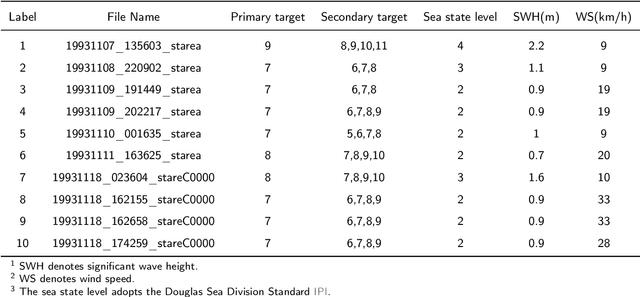
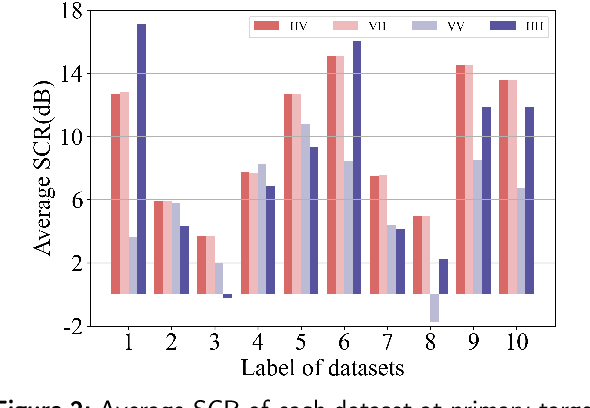
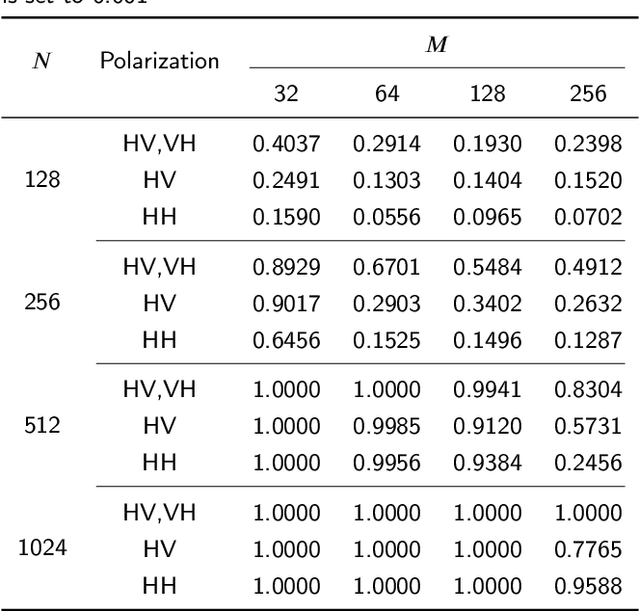
Constructing a high-performance target detector under the background of sea clutter is always necessary and important. In this work, we propose a RepVGGA0-CWT detector, where RepVGG is a residual network that gains a high detection accuracy. Different from traditional residual networks, RepVGG keeps an acceptable calculation speed. Giving consideration to both accuracy and speed, the RepVGGA0 is selected among all the variants of RepVGG. Also, continuous wavelet transform (CWT) is employed to extract the radar echoes' time-frequency feature effectively. In the tests, other networks (ResNet50, ResNet18 and AlexNet) and feature extraction methods (short-time Fourier transform (STFT), CWT) are combined to build detectors for comparison. The result of different datasets shows that the RepVGGA0-CWT detector performs better than those detectors in terms of low controllable false alarm rate, high training speed, high inference speed and low memory usage. This RepVGGA0-CWT detector is hardware-friendly and can be applied in real-time scenes for its high inference speed in detection.