 Add to Chrome
 Add to Firefox
 Add to Edge
Ventor-QTest: Threat-Model-Driven Verification of Vendor-Hosted LLM APIs
Aug 17, 2026
As large language models become increasingly widespread, third-party providers that deploy open-weight models have become an important part of the ecosystem. Auditing the quality of their inference APIs is therefore an open problem. We formalize hosted model routing as a stochastic process and propose \mbox{\textbf{Ventor-QTest}}, a composite black-box audit that requires no probability information from the target API. Its repeated-request component sends each frozen constrained context to the target multiple times, reconstructs a categorical output distribution from the returned text counts, and reports \emph{average fidelity loss} (AFL) as a null-bias-corrected, within-window mean coarsened-KL statistic. Its long-sequence component uses independent runs to report \emph{extreme fidelity loss} (EFL) through the empirical upper tail of a run-level reference-centered-surprisal statistic. Across three logprob-capable route conditions, AFL shows strong linear descriptive agreement with a logprob-derived coarsened-KL comparator. Across seven route snapshots, 20-run sequence probes reveal route-specific EFL variation. AFL and EFL have little detectable route-level association with GPQA-Diamond accuracy. In contrast, pronounced EFL coincides with a decline in Terminal-Bench pass rate as task exposure increases. This pattern may arise because correctness in long-horizon tasks is more sensitive to extreme fidelity loss. These results motivate reporting AFL and EFL jointly, particularly when auditing long-horizon agentic tasks. The open-source implementation is available at https://github.com/Tencent/AI-Infra-Guard/tree/main/services/api_checker/ventor_qtest.

GenVid2Robot: From Video Generation to Robot Manipulation via Rigid-Geometric Consistency
Jul 10, 2026Generated videos provide useful visual motion priors for robot manipulation, but their visual plausibility does not imply physical executability. A generated video usually lacks metric geometry, grasp grounding, robot kinematic feasibility, and execution-time feedback, which makes direct trajectory replay unreliable in real-world manipulation. This paper presents GenVid2Robot, a rigid-geometric consistency framework that converts generated video motion into executable real-robot manipulation trajectories. Given an initial RGB-D observation and a task instruction, GenVid2Robot samples task-relevant semantic anchors from the real first frame, tracks these anchors through generated video candidates, and verifies whether the resulting 2D motion can be explained by first-frame RGB-D anchors under a sparse relative $SE(3)$ model. In this way, generated videos are treated as uncertain visual motion hypotheses rather than direct robot demonstrations. Only geometrically consistent motion is transferred to the robot. The accepted relative motion is then applied to the real grasp-time TCP pose selected by mask-constrained grasping, producing a grasp-conditioned execution trajectory that is consistent with both the visual motion prior and the physical grasp configuration. To reduce execution mismatch caused by RGB-D noise, calibration residuals, and small contact-induced displacement, a bounded depth-compensation module corrects local depth-direction errors without assuming full online replanning. Real-robot experiments demonstrate that GenVid2Robot improves the reliability of generated-video-guided manipulation by grounding visual motion priors with sparse metric geometry, grasp constraints, robot feasibility checking, and bounded execution feedback.
INSPATIO-WORLD: A Real-Time 4D World Simulator via Spatiotemporal Autoregressive Modeling
Apr 08, 2026Building world models with spatial consistency and real-time interactivity remains a fundamental challenge in computer vision. Current video generation paradigms often struggle with a lack of spatial persistence and insufficient visual realism, making it difficult to support seamless navigation in complex environments. To address these challenges, we propose INSPATIO-WORLD, a novel real-time framework capable of recovering and generating high-fidelity, dynamic interactive scenes from a single reference video. At the core of our approach is a Spatiotemporal Autoregressive (STAR) architecture, which enables consistent and controllable scene evolution through two tightly coupled components: Implicit Spatiotemporal Cache aggregates reference and historical observations into a latent world representation, ensuring global consistency during long-horizon navigation; Explicit Spatial Constraint Module enforces geometric structure and translates user interactions into precise and physically plausible camera trajectories. Furthermore, we introduce Joint Distribution Matching Distillation (JDMD). By using real-world data distributions as a regularizing guide, JDMD effectively overcomes the fidelity degradation typically caused by over-reliance on synthetic data. Extensive experiments demonstrate that INSPATIO-WORLD significantly outperforms existing state-of-the-art (SOTA) models in spatial consistency and interaction precision, ranking first among real-time interactive methods on the WorldScore-Dynamic benchmark, and establishing a practical pipeline for navigating 4D environments reconstructed from monocular videos.
InSpatio-WorldFM: An Open-Source Real-Time Generative Frame Model
Mar 12, 2026We present InSpatio-WorldFM, an open-source real-time frame model for spatial intelligence. Unlike video-based world models that rely on sequential frame generation and incur substantial latency due to window-level processing, InSpatio-WorldFM adopts a frame-based paradigm that generates each frame independently, enabling low-latency real-time spatial inference. By enforcing multi-view spatial consistency through explicit 3D anchors and implicit spatial memory, the model preserves global scene geometry while maintaining fine-grained visual details across viewpoint changes. We further introduce a progressive three-stage training pipeline that transforms a pretrained image diffusion model into a controllable frame model and finally into a real-time generator through few-step distillation. Experimental results show that InSpatio-WorldFM achieves strong multi-view consistency while supporting interactive exploration on consumer-grade GPUs, providing an efficient alternative to traditional video-based world models for real-time world simulation.
QEDBENCH: Quantifying the Alignment Gap in Automated Evaluation of University-Level Mathematical Proofs
Feb 24, 2026As Large Language Models (LLMs) saturate elementary benchmarks, the research frontier has shifted from generation to the reliability of automated evaluation. We demonstrate that standard "LLM-as-a-Judge" protocols suffer from a systematic Alignment Gap when applied to upper-undergraduate to early graduate level mathematics. To quantify this, we introduce QEDBench, the first large-scale dual-rubric alignment benchmark to systematically measure alignment with human experts on university-level math proofs by contrasting course-specific rubrics against expert common knowledge criteria. By deploying a dual-evaluation matrix (7 judges x 5 solvers) against 1,000+ hours of human evaluation, we reveal that certain frontier evaluators like Claude Opus 4.5, DeepSeek-V3, Qwen 2.5 Max, and Llama 4 Maverick exhibit significant positive bias (up to +0.18, +0.20, +0.30, +0.36 mean score inflation, respectively). Furthermore, we uncover a critical reasoning gap in the discrete domain: while Gemini 3.0 Pro achieves state-of-the-art performance (0.91 average human evaluation score), other reasoning models like GPT-5 Pro and Claude Sonnet 4.5 see their performance significantly degrade in discrete domains. Specifically, their average human evaluation scores drop to 0.72 and 0.63 in Discrete Math, and to 0.74 and 0.50 in Graph Theory. In addition to these research results, we also release QEDBench as a public benchmark for evaluating and improving AI judges. Our benchmark is publicly published at https://github.com/qqliu/Yale-QEDBench.
ShizhenGPT: Towards Multimodal LLMs for Traditional Chinese Medicine
Aug 20, 2025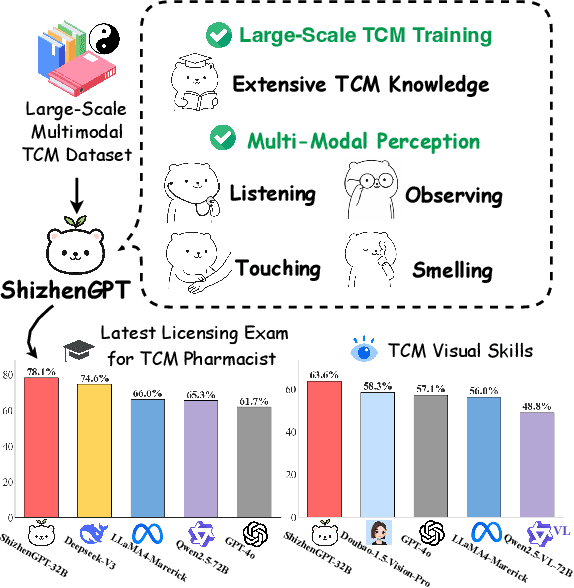
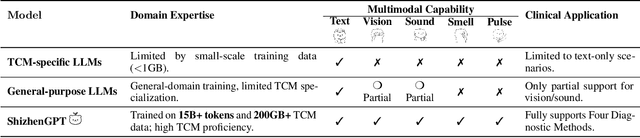
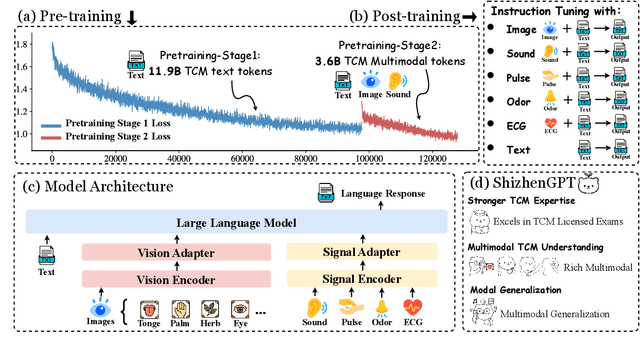
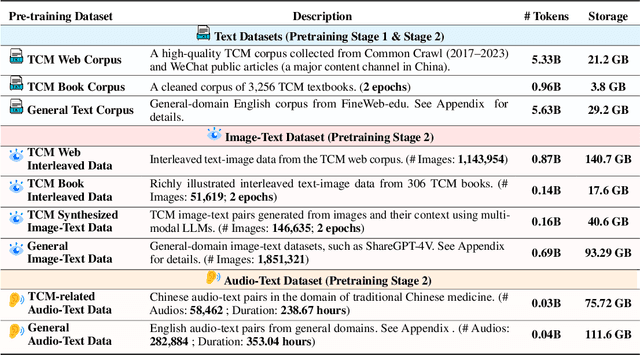
Despite the success of large language models (LLMs) in various domains, their potential in Traditional Chinese Medicine (TCM) remains largely underexplored due to two critical barriers: (1) the scarcity of high-quality TCM data and (2) the inherently multimodal nature of TCM diagnostics, which involve looking, listening, smelling, and pulse-taking. These sensory-rich modalities are beyond the scope of conventional LLMs. To address these challenges, we present ShizhenGPT, the first multimodal LLM tailored for TCM. To overcome data scarcity, we curate the largest TCM dataset to date, comprising 100GB+ of text and 200GB+ of multimodal data, including 1.2M images, 200 hours of audio, and physiological signals. ShizhenGPT is pretrained and instruction-tuned to achieve deep TCM knowledge and multimodal reasoning. For evaluation, we collect recent national TCM qualification exams and build a visual benchmark for Medicinal Recognition and Visual Diagnosis. Experiments demonstrate that ShizhenGPT outperforms comparable-scale LLMs and competes with larger proprietary models. Moreover, it leads in TCM visual understanding among existing multimodal LLMs and demonstrates unified perception across modalities like sound, pulse, smell, and vision, paving the way toward holistic multimodal perception and diagnosis in TCM. Datasets, models, and code are publicly available. We hope this work will inspire further exploration in this field.
SyncAnimation: A Real-Time End-to-End Framework for Audio-Driven Human Pose and Talking Head Animation
Jan 24, 2025Generating talking avatar driven by audio remains a significant challenge. Existing methods typically require high computational costs and often lack sufficient facial detail and realism, making them unsuitable for applications that demand high real-time performance and visual quality. Additionally, while some methods can synchronize lip movement, they still face issues with consistency between facial expressions and upper body movement, particularly during silent periods. In this paper, we introduce SyncAnimation, the first NeRF-based method that achieves audio-driven, stable, and real-time generation of speaking avatar by combining generalized audio-to-pose matching and audio-to-expression synchronization. By integrating AudioPose Syncer and AudioEmotion Syncer, SyncAnimation achieves high-precision poses and expression generation, progressively producing audio-synchronized upper body, head, and lip shapes. Furthermore, the High-Synchronization Human Renderer ensures seamless integration of the head and upper body, and achieves audio-sync lip. The project page can be found at https://syncanimation.github.io
Environmental large language model Evaluation (ELLE) dataset: A Benchmark for Evaluating Generative AI applications in Eco-environment Domain
Jan 10, 2025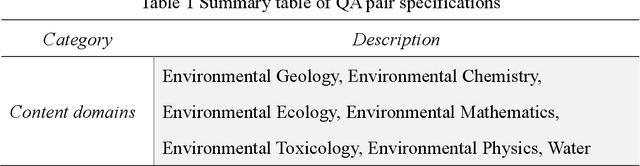

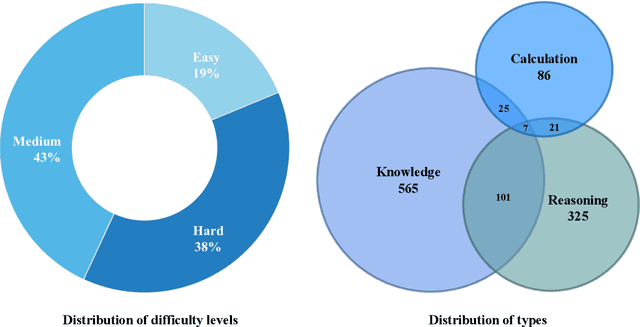
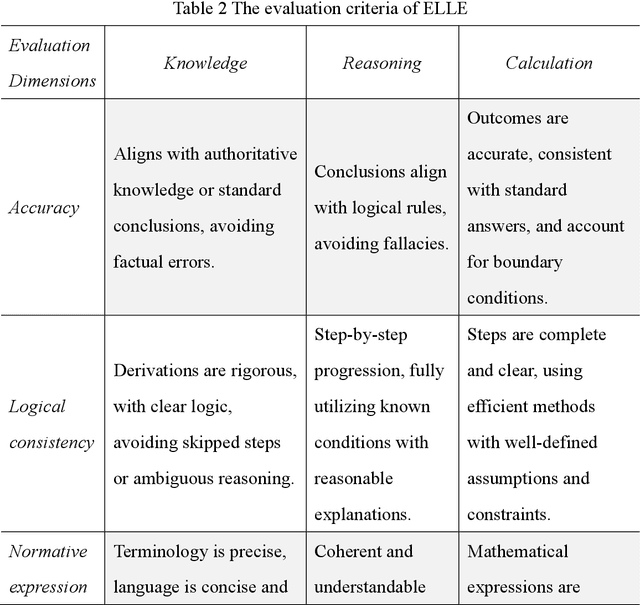
Generative AI holds significant potential for ecological and environmental applications such as monitoring, data analysis, education, and policy support. However, its effectiveness is limited by the lack of a unified evaluation framework. To address this, we present the Environmental Large Language model Evaluation (ELLE) question answer (QA) dataset, the first benchmark designed to assess large language models and their applications in ecological and environmental sciences. The ELLE dataset includes 1,130 question answer pairs across 16 environmental topics, categorized by domain, difficulty, and type. This comprehensive dataset standardizes performance assessments in these fields, enabling consistent and objective comparisons of generative AI performance. By providing a dedicated evaluation tool, ELLE dataset promotes the development and application of generative AI technologies for sustainable environmental outcomes. The dataset and code are available at https://elle.ceeai.net/ and https://github.com/CEEAI/elle.
Learning Quadrupedal Robot Locomotion for Narrow Pipe Inspection
Dec 18, 2024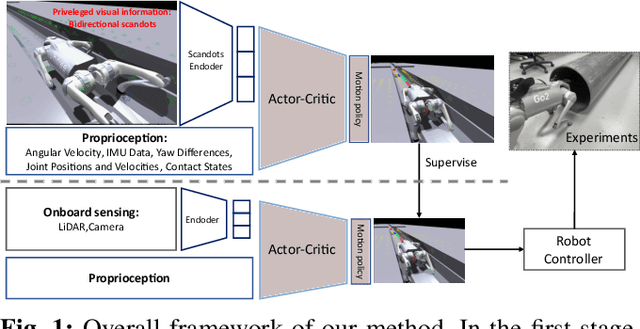
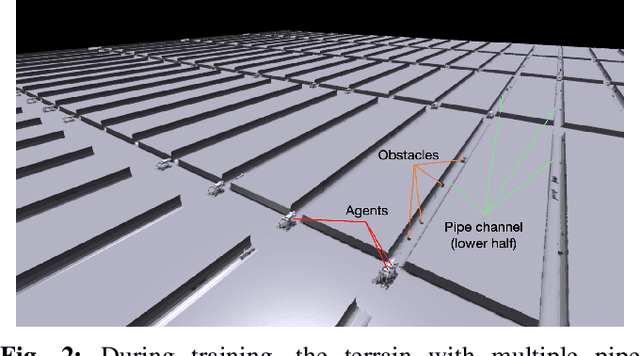
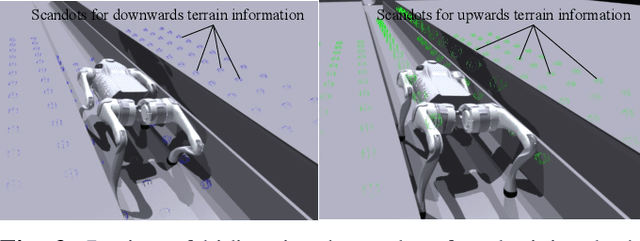
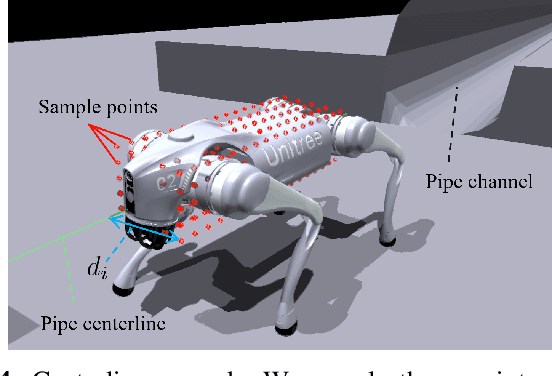
Various pipes are extensively used in both industrial settings and daily life, but the pipe inspection especially those with narrow sizes are still very challenging with tremendous time and manufacturing consumed. Quadrupedal robots, inspired from patrol dogs, can be a substitution of traditional solutions but always suffer from navigation and locomotion difficulties. In this paper, we introduce a Reinforcement Learning (RL) based method to train a policy enabling the quadrupedal robots to cross narrow pipes adaptively. A new privileged visual information and a new reward function are defined to tackle the problems. Experiments on both simulation and real world scenarios were completed, demonstrated that the proposed method can achieve the pipe-crossing task even with unexpected obstacles inside.
Deep Learning-Enabled ISAC-OTFS Pre-equalization Design for Aerial-Terrestrial Networks
Dec 06, 2024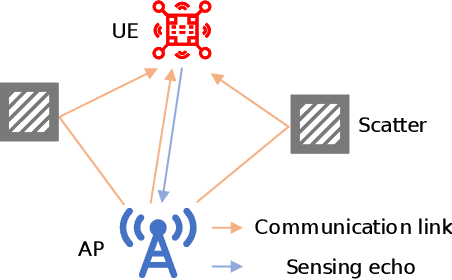
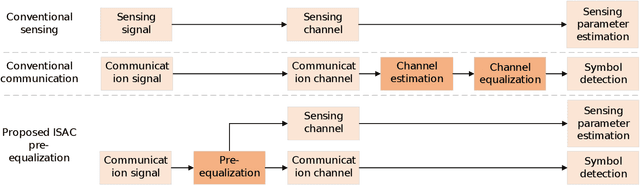
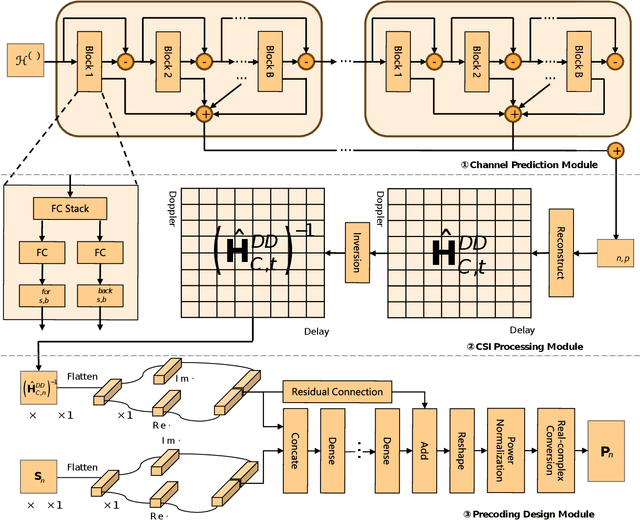
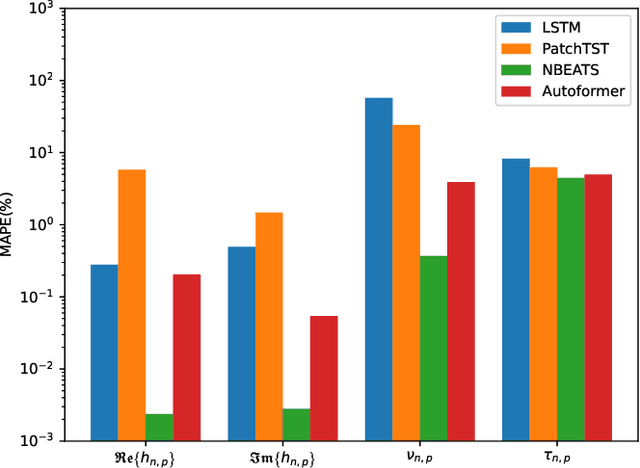
Orthogonal time frequency space (OTFS) modulation has been viewed as a promising technique for integrated sensing and communication (ISAC) systems and aerial-terrestrial networks, due to its delay-Doppler domain transmission property and strong Doppler-resistance capability. However, it also suffers from high processing complexity at the receiver. In this work, we propose a novel pre-equalization based ISAC-OTFS transmission framework, where the terrestrial base station (BS) executes pre-equalization based on its estimated channel state information (CSI). In particular, the mean square error of OTFS symbol demodulation and Cramer-Rao lower bound of sensing parameter estimation are derived, and their weighted sum is utilized as the metric for optimizing the pre-equalization matrix. To address the formulated problem while taking the time-varying CSI into consideration, a deep learning enabled channel prediction-based pre-equalization framework is proposed, where a parameter-level channel prediction module is utilized to decouple OTFS channel parameters, and a low-dimensional prediction network is leveraged to correct outdated CSI. A CSI processing module is then used to initialize the input of the pre-equalization module. Finally, a residual-structured deep neural network is cascaded to execute pre-equalization. Simulation results show that under the proposed framework, the demodulation complexity at the receiver as well as the pilot overhead for channel estimation, are significantly reduced, while the symbol detection performance approaches those of conventional minimum mean square error equalization and perfect CSI.