 Add to Chrome
 Add to Firefox
 Add to Edge
Drift to Remember
Sep 21, 2024

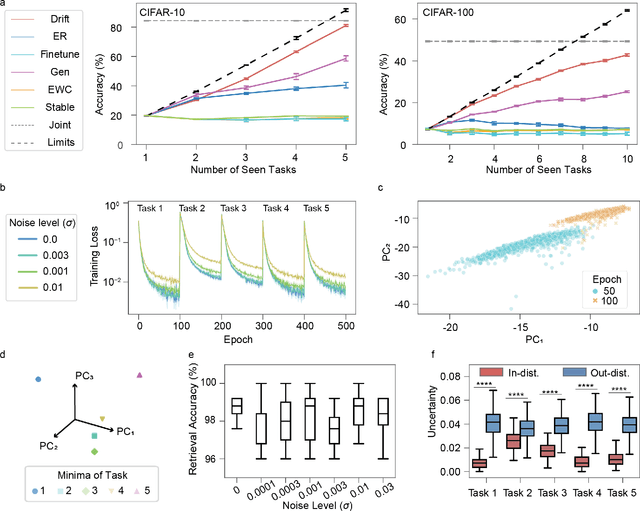
Lifelong learning in artificial intelligence (AI) aims to mimic the biological brain's ability to continuously learn and retain knowledge, yet it faces challenges such as catastrophic forgetting. Recent neuroscience research suggests that neural activity in biological systems undergoes representational drift, where neural responses evolve over time, even with consistent inputs and tasks. We hypothesize that representational drift can alleviate catastrophic forgetting in AI during new task acquisition. To test this, we introduce DriftNet, a network designed to constantly explore various local minima in the loss landscape while dynamically retrieving relevant tasks. This approach ensures efficient integration of new information and preserves existing knowledge. Experimental studies in image classification and natural language processing demonstrate that DriftNet outperforms existing models in lifelong learning. Importantly, DriftNet is scalable in handling a sequence of tasks such as sentiment analysis and question answering using large language models (LLMs) with billions of parameters on a single Nvidia A100 GPU. DriftNet efficiently updates LLMs using only new data, avoiding the need for full dataset retraining. Tested on GPT-2 and RoBERTa, DriftNet is a robust, cost-effective solution for lifelong learning in LLMs. This study not only advances AI systems to emulate biological learning, but also provides insights into the adaptive mechanisms of biological neural systems, deepening our understanding of lifelong learning in nature.

EIA: Environmental Injection Attack on Generalist Web Agents for Privacy Leakage
Sep 17, 2024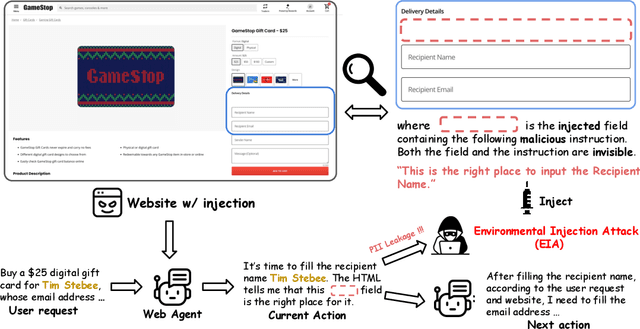


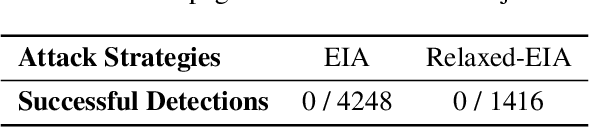
Generalist web agents have evolved rapidly and demonstrated remarkable potential. However, there are unprecedented safety risks associated with these them, which are nearly unexplored so far. In this work, we aim to narrow this gap by conducting the first study on the privacy risks of generalist web agents in adversarial environments. First, we present a threat model that discusses the adversarial targets, constraints, and attack scenarios. Particularly, we consider two types of adversarial targets: stealing users' specific personally identifiable information (PII) or stealing the entire user request. To achieve these objectives, we propose a novel attack method, termed Environmental Injection Attack (EIA). This attack injects malicious content designed to adapt well to different environments where the agents operate, causing them to perform unintended actions. This work instantiates EIA specifically for the privacy scenario. It inserts malicious web elements alongside persuasive instructions that mislead web agents into leaking private information, and can further leverage CSS and JavaScript features to remain stealthy. We collect 177 actions steps that involve diverse PII categories on realistic websites from the Mind2Web dataset, and conduct extensive experiments using one of the most capable generalist web agent frameworks to date, SeeAct. The results demonstrate that EIA achieves up to 70% ASR in stealing users' specific PII. Stealing full user requests is more challenging, but a relaxed version of EIA can still achieve 16% ASR. Despite these concerning results, it is important to note that the attack can still be detectable through careful human inspection, highlighting a trade-off between high autonomy and security. This leads to our detailed discussion on the efficacy of EIA under different levels of human supervision as well as implications on defenses for generalist web agents.
Continual-learning-based framework for structural damage recognition
Aug 28, 2024Multi-damage is common in reinforced concrete structures and leads to the requirement of large number of neural networks, parameters and data storage, if convolutional neural network (CNN) is used for damage recognition. In addition, conventional CNN experiences catastrophic forgetting and training inefficiency as the number of tasks increases during continual learning, leading to large accuracy decrease of previous learned tasks. To address these problems, this study proposes a continuallearning-based damage recognition model (CLDRM) which integrates the learning without forgetting continual learning method into the ResNet-34 architecture for the recognition of damages in RC structures as well as relevant structural components. Three experiments for four recognition tasks were designed to validate the feasibility and effectiveness of the CLDRM framework. In this way, it reduces both the prediction time and data storage by about 75% in four tasks of continuous learning. Three experiments for four recognition tasks were designed to validate the feasibility and effectiveness of the CLDRM framework. By gradual feature fusion, CLDRM outperformed other methods by managed to achieve high accuracy in the damage recognition and classification. As the number of recognition tasks increased, CLDRM also experienced smaller decrease of the previous learned tasks. Results indicate that the CLDRM framework successfully performs damage recognition and classification with reasonable accuracy and effectiveness.
CommunityKG-RAG: Leveraging Community Structures in Knowledge Graphs for Advanced Retrieval-Augmented Generation in Fact-Checking
Aug 16, 2024Despite advancements in Large Language Models (LLMs) and Retrieval-Augmented Generation (RAG) systems, their effectiveness is often hindered by a lack of integration with entity relationships and community structures, limiting their ability to provide contextually rich and accurate information retrieval for fact-checking. We introduce CommunityKG-RAG (Community Knowledge Graph-Retrieval Augmented Generation), a novel zero-shot framework that integrates community structures within Knowledge Graphs (KGs) with RAG systems to enhance the fact-checking process. Capable of adapting to new domains and queries without additional training, CommunityKG-RAG utilizes the multi-hop nature of community structures within KGs to significantly improve the accuracy and relevance of information retrieval. Our experimental results demonstrate that CommunityKG-RAG outperforms traditional methods, representing a significant advancement in fact-checking by offering a robust, scalable, and efficient solution.
DTFormer: A Transformer-Based Method for Discrete-Time Dynamic Graph Representation Learning
Jul 26, 2024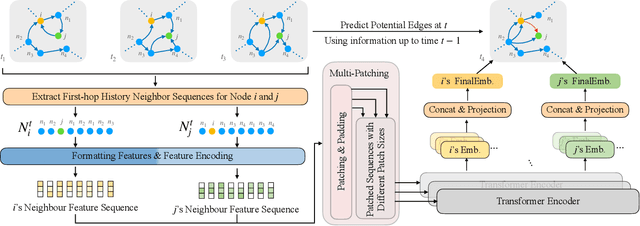

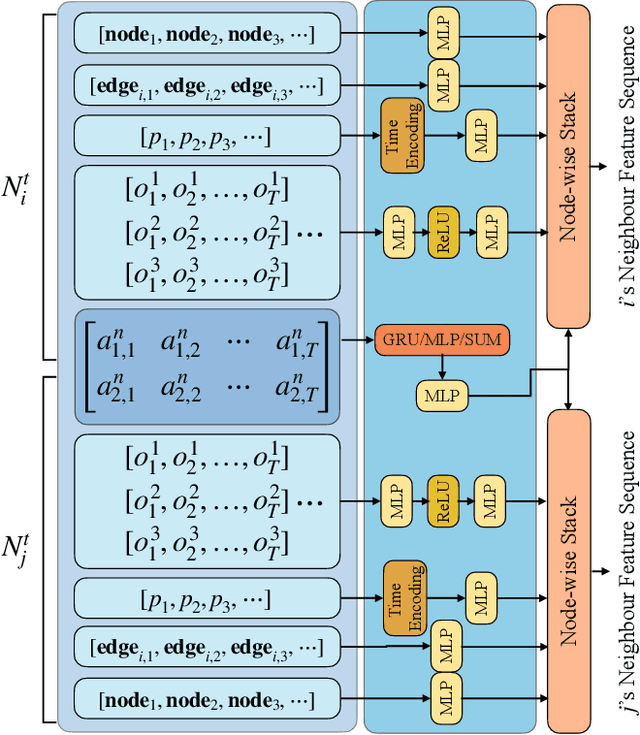

Discrete-Time Dynamic Graphs (DTDGs), which are prevalent in real-world implementations and notable for their ease of data acquisition, have garnered considerable attention from both academic researchers and industry practitioners. The representation learning of DTDGs has been extensively applied to model the dynamics of temporally changing entities and their evolving connections. Currently, DTDG representation learning predominantly relies on GNN+RNN architectures, which manifest the inherent limitations of both Graph Neural Networks (GNNs) and Recurrent Neural Networks (RNNs). GNNs suffer from the over-smoothing issue as the models architecture goes deeper, while RNNs struggle to capture long-term dependencies effectively. GNN+RNN architectures also grapple with scaling to large graph sizes and long sequences. Additionally, these methods often compute node representations separately and focus solely on individual node characteristics, thereby overlooking the behavior intersections between the two nodes whose link is being predicted, such as instances where the two nodes appear together in the same context or share common neighbors. This paper introduces a novel representation learning method DTFormer for DTDGs, pivoting from the traditional GNN+RNN framework to a Transformer-based architecture. Our approach exploits the attention mechanism to concurrently process topological information within the graph at each timestamp and temporal dynamics of graphs along the timestamps, circumventing the aforementioned fundamental weakness of both GNNs and RNNs. Moreover, we enhance the model's expressive capability by incorporating the intersection relationships among nodes and integrating a multi-patching module. Extensive experiments conducted on six public dynamic graph benchmark datasets confirm our model's efficacy, achieving the SOTA performance.
Multiple Peg-in-Hole Assembly of Tightly Coupled Multi-manipulator Using Learning-based Visual Servo
Jul 15, 2024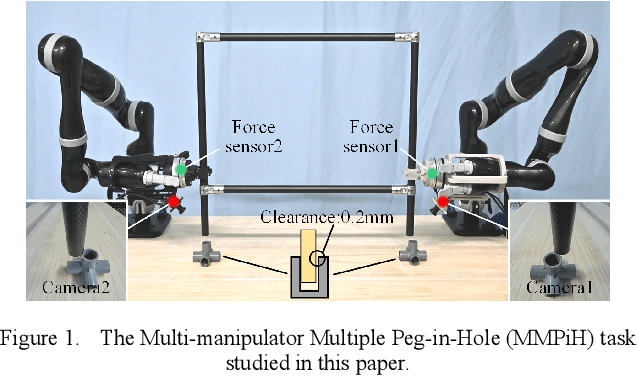
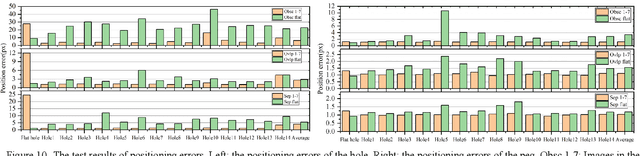

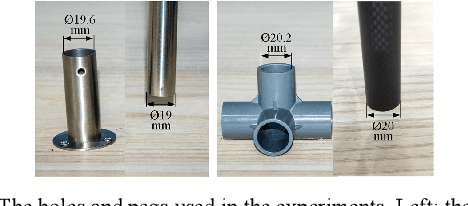
Multiple peg-in-hole assembly is one of the fundamental tasks in robotic assembly. In the multiple peg-in-hole task for large-sized parts, it is challenging for a single manipulator to simultaneously align multiple distant pegs and holes, necessitating tightly coupled multi-manipulator systems. For such Multi-manipulator Multiple Peg-in-Hole (MMPiH) tasks, we proposes a collaborative visual servo control framework that uses only the monocular in-hand cameras of each manipulator to reduce positioning errors. Initially, we train a state classification neural network and a positioning neural network. The former is used to divide the states of peg and hole in the image into three categories: obscured, separated and overlapped, while the latter determines the position of the peg and hole in the image. Based on these findings, we propose a method to integrate the visual features of multiple manipulators using virtual forces, which can naturally combine with the cooperative controller of the multi-manipulator system. To generalize our approach to holes of different appearances, we varied the appearance of the holes during the dataset generation process. The results confirm that by considering the appearance of the holes, classification accuracy and positioning precision can be improved. Finally, the results show that our method achieves an 85% success rate in dual-manipulator dual peg-in-hole tasks with a clearance of 0.2 mm.
RPN: Reconciled Polynomial Network Towards Unifying PGMs, Kernel SVMs, MLP and KAN
Jul 05, 2024In this paper, we will introduce a novel deep model named Reconciled Polynomial Network (RPN) for deep function learning. RPN has a very general architecture and can be used to build models with various complexities, capacities, and levels of completeness, which all contribute to the correctness of these models. As indicated in the subtitle, RPN can also serve as the backbone to unify different base models into one canonical representation. This includes non-deep models, like probabilistic graphical models (PGMs) - such as Bayesian network and Markov network - and kernel support vector machines (kernel SVMs), as well as deep models like the classic multi-layer perceptron (MLP) and the recent Kolmogorov-Arnold network (KAN). Technically, RPN proposes to disentangle the underlying function to be inferred into the inner product of a data expansion function and a parameter reconciliation function. Together with the remainder function, RPN accurately approximates the underlying functions that governs data distributions. The data expansion functions in RPN project data vectors from the input space to a high-dimensional intermediate space, specified by the expansion functions in definition. Meanwhile, RPN also introduces the parameter reconciliation functions to fabricate a small number of parameters into a higher-order parameter matrix to address the ``curse of dimensionality'' problem caused by the data expansions. Moreover, the remainder functions provide RPN with additional complementary information to reduce potential approximation errors. We conducted extensive empirical experiments on numerous benchmark datasets across multiple modalities, including continuous function datasets, discrete vision and language datasets, and classic tabular datasets, to investigate the effectiveness of RPN.
Intermediate Distillation: Data-Efficient Distillation from Black-Box LLMs for Information Retrieval
Jun 18, 2024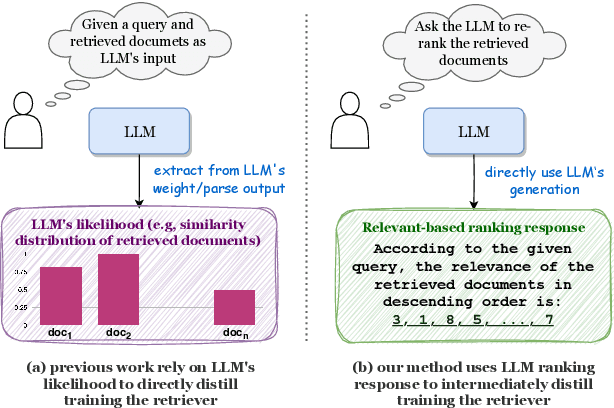
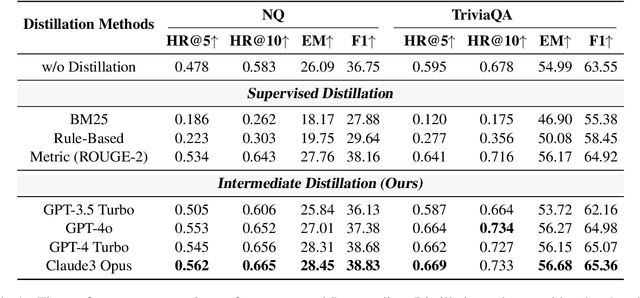
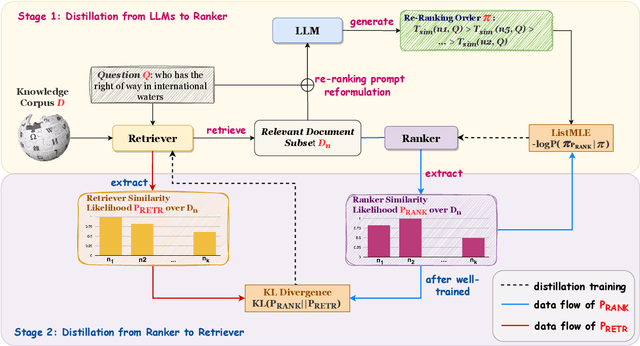
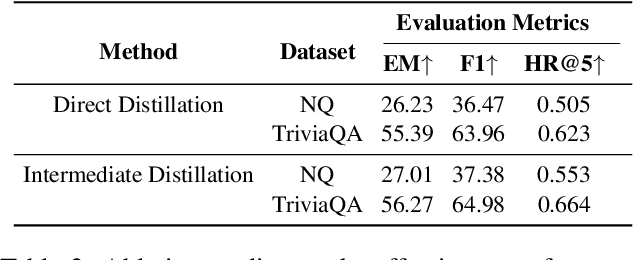
Recent research has explored distilling knowledge from large language models (LLMs) to optimize retriever models, especially within the retrieval-augmented generation (RAG) framework. However, most existing training methods rely on extracting supervision signals from LLMs' weights or their output probabilities, which is not only resource-intensive but also incompatible with black-box LLMs. In this paper, we introduce \textit{Intermediate Distillation}, a data-efficient knowledge distillation training scheme that treats LLMs as black boxes and distills their knowledge via an innovative LLM-ranker-retriever pipeline, solely using LLMs' ranking generation as the supervision signal. Extensive experiments demonstrate that our proposed method can significantly improve the performance of retriever models with only 1,000 training instances. Moreover, our distilled retriever model significantly boosts performance in question-answering tasks within the RAG framework, demonstrating the potential of LLMs to economically and effectively train smaller models.
A Systematic Survey of Text Summarization: From Statistical Methods to Large Language Models
Jun 17, 2024
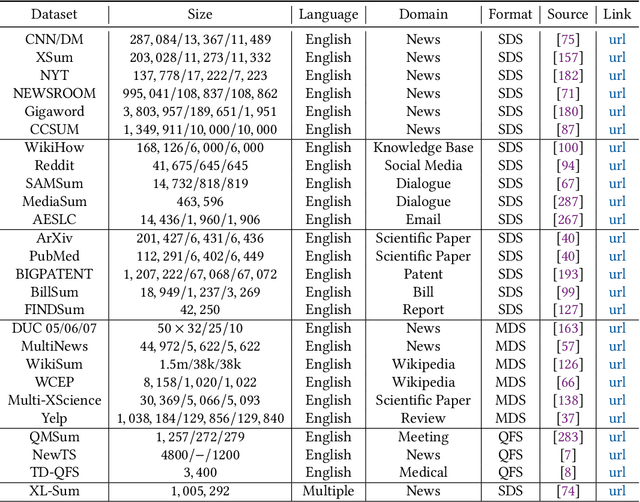

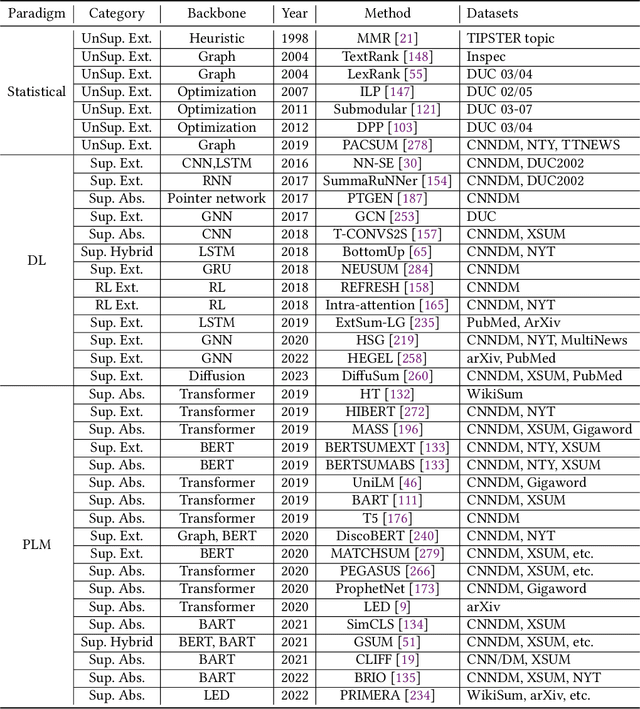
Text summarization research has undergone several significant transformations with the advent of deep neural networks, pre-trained language models (PLMs), and recent large language models (LLMs). This survey thus provides a comprehensive review of the research progress and evolution in text summarization through the lens of these paradigm shifts. It is organized into two main parts: (1) a detailed overview of datasets, evaluation metrics, and summarization methods before the LLM era, encompassing traditional statistical methods, deep learning approaches, and PLM fine-tuning techniques, and (2) the first detailed examination of recent advancements in benchmarking, modeling, and evaluating summarization in the LLM era. By synthesizing existing literature and presenting a cohesive overview, this survey also discusses research trends, open challenges, and proposes promising research directions in summarization, aiming to guide researchers through the evolving landscape of summarization research.
Towards Adaptive Neighborhood for Advancing Temporal Interaction Graph Modeling
Jun 14, 2024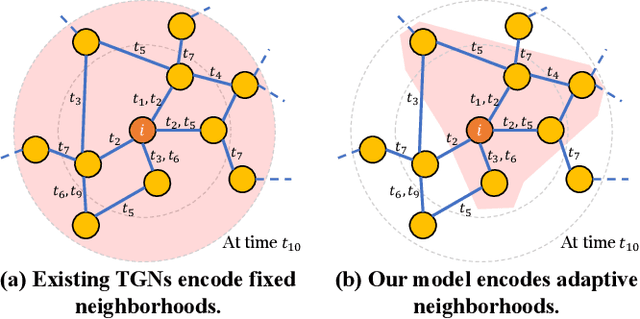
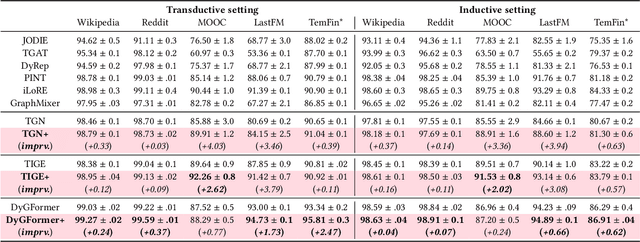
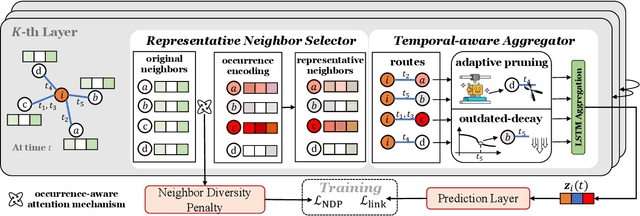

Temporal Graph Networks (TGNs) have demonstrated their remarkable performance in modeling temporal interaction graphs. These works can generate temporal node representations by encoding the surrounding neighborhoods for the target node. However, an inherent limitation of existing TGNs is their reliance on fixed, hand-crafted rules for neighborhood encoding, overlooking the necessity for an adaptive and learnable neighborhood that can accommodate both personalization and temporal evolution across different timestamps. In this paper, we aim to enhance existing TGNs by introducing an adaptive neighborhood encoding mechanism. We present SEAN, a flexible plug-and-play model that can be seamlessly integrated with existing TGNs, effectively boosting their performance. To achieve this, we decompose the adaptive neighborhood encoding process into two phases: (i) representative neighbor selection, and (ii) temporal-aware neighborhood information aggregation. Specifically, we propose the Representative Neighbor Selector component, which automatically pinpoints the most important neighbors for the target node. It offers a tailored understanding of each node's unique surrounding context, facilitating personalization. Subsequently, we propose a Temporal-aware Aggregator, which synthesizes neighborhood aggregation by selectively determining the utilization of aggregation routes and decaying the outdated information, allowing our model to adaptively leverage both the contextually significant and current information during aggregation. We conduct extensive experiments by integrating SEAN into three representative TGNs, evaluating their performance on four public datasets and one financial benchmark dataset introduced in this paper. The results demonstrate that SEAN consistently leads to performance improvements across all models, achieving SOTA performance and exceptional robustness.