 Add to Chrome
 Add to Firefox
 Add to Edge
SIDScope: A Diagnostic Resource for Semantic-ID Interfaces in Generative Recommendation
Aug 19, 2026
Semantic-ID mappings are reusable interfaces between item tokenizers and generative recommenders, yet released mappings rarely state whether they are coherent, what structure they expose, how generated paths resolve, or what must be revalidated after a refresh. SIDScope is a source-traced diagnostic resource for these decisions. It normalizes item-to-code artifacts, verifies provenance and joins, profiles mapping structure, compares paired revisions, and accounts for path-to-item outcomes in generated traces. Across nine source-traced tokenizer exports from seven families on Amazon and Yelp data - eight executable routes plus one auditable snapshot - SIDScope reveals that interface health is multi-signal rather than scalar. Its central finding is mechanism-conditional: prefix alignment strongly tracks held-out candidate exposure when retrieval consumes SID prefixes, then weakens as scoring becomes prefix-independent. Trained trace accounting exposes a second hidden gap: a valid target path can survive without uniquely retrieving the target item by 1.2-3.0 percentage points. A refresh case establishes a third: repairing the mapping does not by itself restore an inherited generator; model reuse requires a separate handoff check. The package provides frozen evidence summaries, conformance reports, trace labels, table builders, and CPU-only verifiers. It supports decisions about artifact readiness, interface risks, and revalidation before model reuse.

Zero-Observation User Reactivation with Gap-Driven Dimensional Gating
Jul 22, 2026Sequential recommendation (SR) models capture continuously observed behavior, but a returning user may have no interactions for months or years. We define this setting as Zero-Observation Reactivation: the user has a pre-gap history, while the platform observes no behavioral signals during a macro-gap Delta t. Under a chronologically aligned Gap-Synthesize Protocol on three Amazon datasets (Video Games, CDs & Vinyl, and Movies & TV), Hit@10 decreases monotonically across the evaluated gap buckets and reaches its lowest level beyond one year. The pattern appears across recurrent, unidirectional, and bidirectional SR backbones. We propose DeltaGate, a lightweight output-layer plugin that keeps the backbone frozen and routes each representation dimension between the personalized history and a learned, zero-initialized global prior. The gate is conditioned jointly on Delta t and the personalized representation. In a controlled diagnostic, we hold the personalized representation fixed and vary Delta t to isolate the trained gate's response to the gap input. In the >365d Video Games bucket, DG-SASRec reaches 0.047 Hit@10 versus 0.031 for SASRec, while DG-BERT4Rec reaches 0.046 versus 0.025 for BERT4Rec, with 66K trainable parameters (2--4% overhead). End-to-end retraining attains higher absolute accuracy but changes the backbone embeddings; the frozen plugin preserves zero backbone drift, uses about 40x fewer trainable parameters, and retains observable dimension-wise routing. The source code is available at https://github.com/jdding/DeltaGate.
SIDInspector: A Mapping-First Diagnostic Resource for Semantic-ID Tokenizers
Jun 09, 2026Semantic-ID (\sid) tokenizers are increasingly reused as standalone artifacts in generative recommendation: an exported item-to-code mapping becomes the address space that a later sequence generator must use. These mappings rarely come with a common inspection interface, so coverage gaps, full-code aliasing, behaviorally weak prefixes, tail compression, and prefix fan-out are often found only after downstream training. We present \tool, a mapping-first diagnostic resource for \sid tokenizer artifacts. \tool defines a small adapter contract over item mappings, metadata, interactions, and optional generator traces; validates the contract; and reports mapping-level probes for utilization, aliasing, neighborhood alignment, popularity allocation, and structural cost, with hooks for temporal churn and generator traces. \tool reports inspectable artifact profiles before downstream leaderboard scores. The released resource covers four tokenizer artifact lines: a same-item GRID/RQ-KMeans-style and ReSID/GAOQ contrast on 23,742 Musical items, plus released LETTER and LC-Rec item-index artifacts. In the Musical contrast, the GRID-style feature-text export has 3,749 unique full codes and a 0.977 full-code aliasing rate, while ReSID/GAOQ is aliasing-free in its exported mapping. Yet the strongest prefix--co-occurrence alignment comes from a deterministic category-prefix control, not from either learned export row (0.447 versus 0.154 and 0.055--0.080), showing that addressability and behaviorally meaningful prefixes should be inspected separately. Cross-domain, fixed-reranker, and mechanism-probe checks support the same diagnostic direction: prefix alignment is a candidate-exposure signal, while final ranking quality remains a downstream model question.
SkillResolve-Bench: Measuring and Resolving Same-Capability Ambiguity in Agent Skill Retrieval
Jun 09, 2026Agent skill libraries are becoming routable software assets: a retrieved skill can contribute instructions, scripts, resource bindings, and execution assumptions to an agent. This makes skill retrieval more than broad relevance matching. A retriever can find the right capability family yet expose the wrong same-capability representative. We study this failure as same-capability execution-risk retrieval. Each query pairs a helpful skill with a query-specific risky sibling that shares the capability family but can lead execution toward a stale resource, missing precondition, or wrong procedure. We introduce SkillResolve-Bench 1.0, an auditable benchmark for this setting with 661 helpful/risky pairs, source-role and admission evidence, cue/leakage checks, query-disjoint splits, and a 7,982-candidate pool that includes 6,660 public SkillRet candidates. The benchmark reports helpful ranking together with harmful sibling rate (HSR@K), the top-K exposure of the risky sibling. We also provide SkillResolve, a reference method that resolves active candidate families, scores query-conditioned utility from confusable library negatives and contract-profile cues, and selects one representative from each family before the final top-K list. Under the released family relation, SkillResolve reaches Recall@3 0.766 and NDCG@3 0.699 while keeping HSR@3=0. It improves over SkillRouter by 0.112 Recall@3 and 0.165 NDCG@3 while reducing HSR@3 from 0.693 to 0. Without representative selection, HSR@3 rises to 0.236 under the same scorer, identifying within-family representative choice as the mechanism that turns capability retrieval into safer procedural exposure.
Beyond the Flat Sequence: Hierarchical and Preference-Aware Generative Recommendations
Mar 01, 2026Generative Recommenders (GRs), exemplified by the Hierarchical Sequential Transduction Unit (HSTU), have emerged as a powerful paradigm for modeling long user interaction sequences. However, we observe that their "flat-sequence" assumption overlooks the rich, intrinsic structure of user behavior. This leads to two key limitations: a failure to capture the temporal hierarchy of session-based engagement, and computational inefficiency, as dense attention introduces significant noise that obscures true preference signals within semantically sparse histories, which deteriorates the quality of the learned representations. To this end, we propose a novel framework named HPGR (Hierarchical and Preference-aware Generative Recommender), built upon a two-stage paradigm that injects these crucial structural priors into the model to handle the drawback. Specifically, HPGR comprises two synergistic stages. First, a structure-aware pre-training stage employs a session-based Masked Item Modeling (MIM) objective to learn a hierarchically-informed and semantically rich item representation space. Second, a preference-aware fine-tuning stage leverages these powerful representations to implement a Preference-Guided Sparse Attention mechanism, which dynamically constrains computation to only the most relevant historical items, enhancing both efficiency and signal-to-noise ratio. Empirical experiments on a large-scale proprietary industrial dataset from APPGallery and an online A/B test verify that HPGR achieves state-of-the-art performance over multiple strong baselines, including HSTU and MTGR.
* Accepted to the ACM Web Conference 2026 (WWW '26). 9 pages, 9 figures. Zerui Chen and Heng Chang contributed equally to this work
Towards Practical Large-scale Dynamical Heterogeneous Graph Embedding: Cold-start Resilient Recommendation
Dec 15, 2025Deploying dynamic heterogeneous graph embeddings in production faces key challenges of scalability, data freshness, and cold-start. This paper introduces a practical, two-stage solution that balances deep graph representation with low-latency incremental updates. Our framework combines HetSGFormer, a scalable graph transformer for static learning, with Incremental Locally Linear Embedding (ILLE), a lightweight, CPU-based algorithm for real-time updates. HetSGFormer captures global structure with linear scalability, while ILLE provides rapid, targeted updates to incorporate new data, thus avoiding costly full retraining. This dual approach is cold-start resilient, leveraging the graph to create meaningful embeddings from sparse data. On billion-scale graphs, A/B tests show HetSGFormer achieved up to a 6.11% lift in Advertiser Value over previous methods, while the ILLE module added another 3.22% lift and improved embedding refresh timeliness by 83.2%. Our work provides a validated framework for deploying dynamic graph learning in production environments.
BIS: NL2SQL Service Evaluation Benchmark for Business Intelligence Scenarios
Oct 30, 2024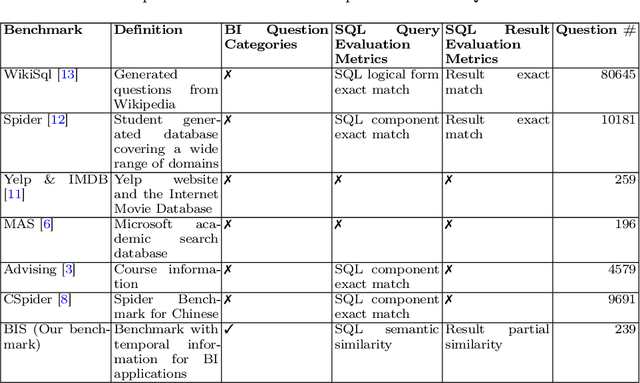
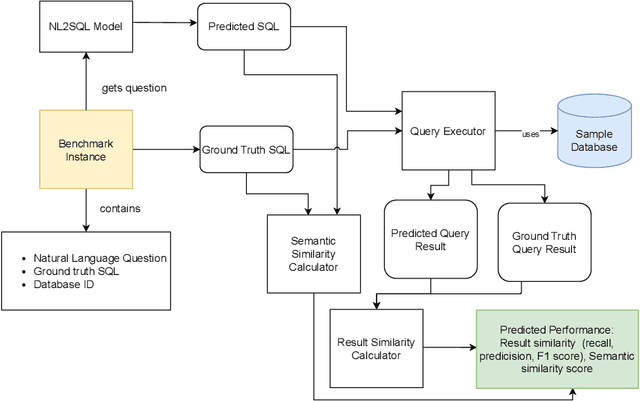
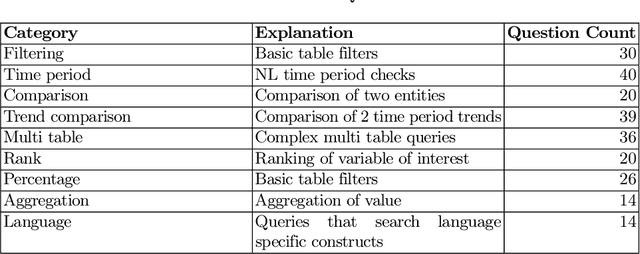
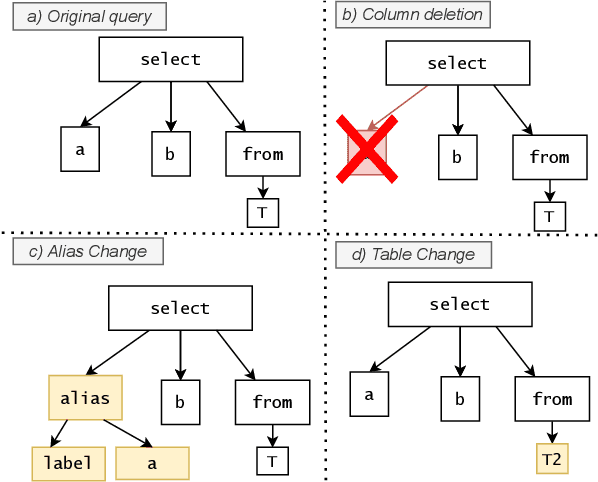
NL2SQL (Natural Language to Structured Query Language) transformation has seen wide adoption in Business Intelligence (BI) applications in recent years. However, existing NL2SQL benchmarks are not suitable for production BI scenarios, as they are not designed for common business intelligence questions. To address this gap, we have developed a new benchmark focused on typical NL questions in industrial BI scenarios. We discuss the challenges of constructing a BI-focused benchmark and the shortcomings of existing benchmarks. Additionally, we introduce question categories in our benchmark that reflect common BI inquiries. Lastly, we propose two novel semantic similarity evaluation metrics for assessing NL2SQL capabilities in BI applications and services.
P/D-Serve: Serving Disaggregated Large Language Model at Scale
Aug 15, 2024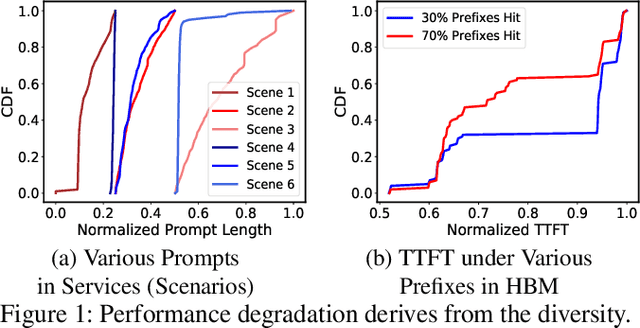
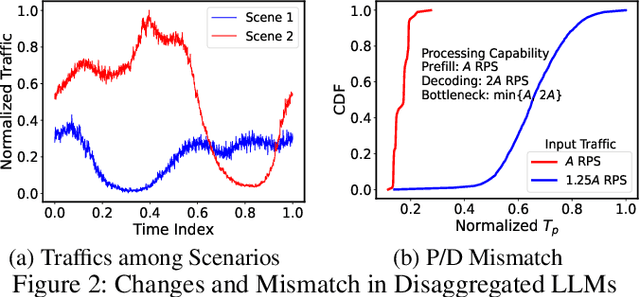
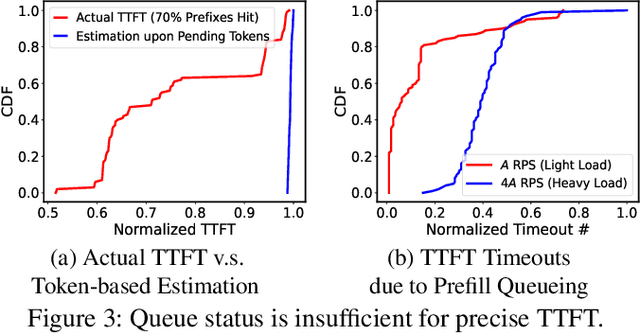
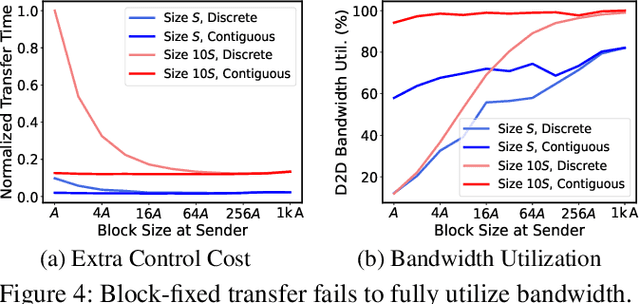
Serving disaggregated large language models (LLMs) over tens of thousands of xPU devices (GPUs or NPUs) with reliable performance faces multiple challenges. 1) Ignoring the diversity (various prefixes and tidal requests), treating all the prompts in a mixed pool is inadequate. To facilitate the similarity per scenario and minimize the inner mismatch on P/D (prefill and decoding) processing, fine-grained organization is required, dynamically adjusting P/D ratios for better performance. 2) Due to inaccurate estimation on workload (queue status or maintained connections), the global scheduler easily incurs unnecessary timeouts in prefill. 3) Block-fixed device-to-device (D2D) KVCache transfer over cluster-level RDMA (remote direct memory access) fails to achieve desired D2D utilization as expected. To overcome previous problems, this paper proposes an end-to-end system P/D-Serve, complying with the paradigm of MLOps (machine learning operations), which models end-to-end (E2E) P/D performance and enables: 1) fine-grained P/D organization, mapping the service with RoCE (RDMA over converged ethernet) as needed, to facilitate similar processing and dynamic adjustments on P/D ratios; 2) on-demand forwarding upon rejections for idle prefill, decoupling the scheduler from regular inaccurate reports and local queues, to avoid timeouts in prefill; and 3) efficient KVCache transfer via optimized D2D access. P/D-Serve is implemented upon Ascend and MindSpore, has been deployed over tens of thousands of NPUs for more than eight months in commercial use, and further achieves 60\%, 42\% and 46\% improvements on E2E throughput, time-to-first-token (TTFT) SLO (service level objective) and D2D transfer time. As the E2E system with optimizations, P/D-Serve achieves 6.7x increase on throughput, compared with aggregated LLMs.
Unified Low-rank Compression Framework for Click-through Rate Prediction
May 28, 2024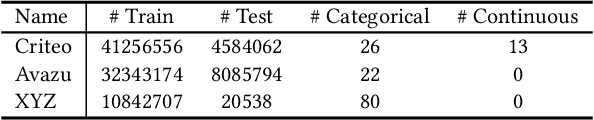
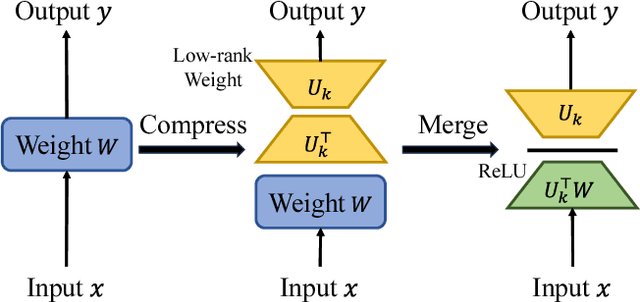
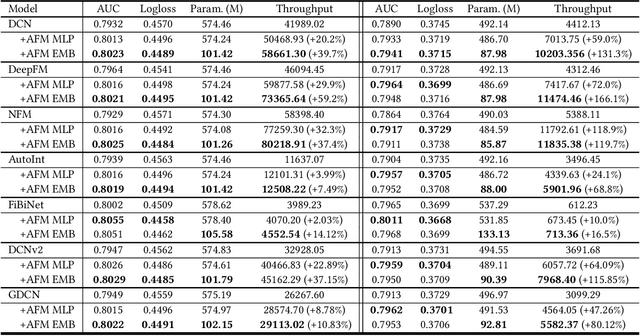
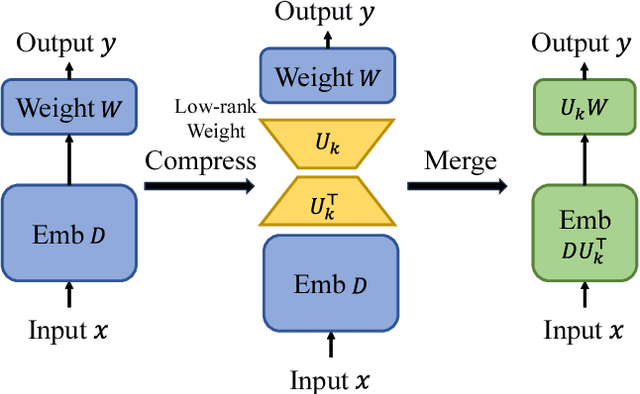
Deep Click-Through Rate (CTR) prediction models play an important role in modern industrial recommendation scenarios. However, high memory overhead and computational costs limit their deployment in resource-constrained environments. Low-rank approximation is an effective method for computer vision and natural language processing models, but its application in compressing CTR prediction models has been less explored. Due to the limited memory and computing resources, compression of CTR prediction models often confronts three fundamental challenges, i.e., (1). How to reduce the model sizes to adapt to edge devices? (2). How to speed up CTR prediction model inference? (3). How to retain the capabilities of original models after compression? Previous low-rank compression research mostly uses tensor decomposition, which can achieve a high parameter compression ratio, but brings in AUC degradation and additional computing overhead. To address these challenges, we propose a unified low-rank decomposition framework for compressing CTR prediction models. We find that even with the most classic matrix decomposition SVD method, our framework can achieve better performance than the original model. To further improve the effectiveness of our framework, we locally compress the output features instead of compressing the model weights. Our unified low-rank compression framework can be applied to embedding tables and MLP layers in various CTR prediction models. Extensive experiments on two academic datasets and one real industrial benchmark demonstrate that, with 3-5x model size reduction, our compressed models can achieve both faster inference and higher AUC than the uncompressed original models. Our code is at https://github.com/yuhao318/Atomic_Feature_Mimicking.
Continual Graph Convolutional Network for Text Classification
Apr 09, 2023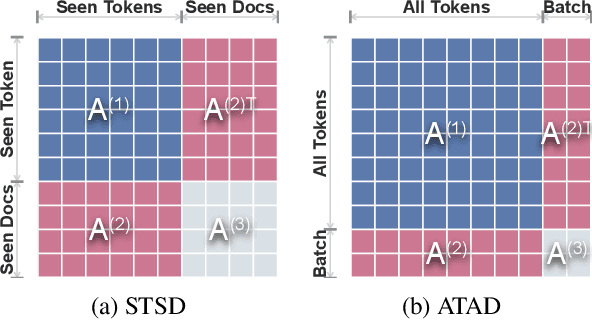
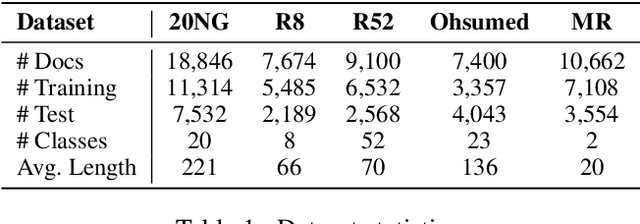
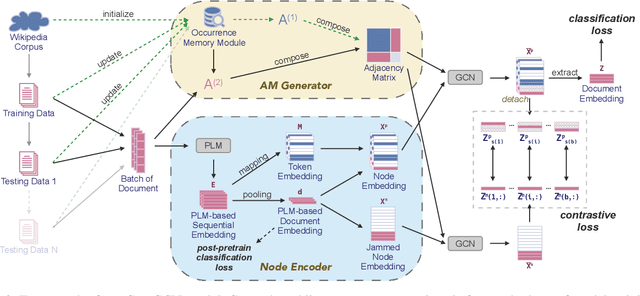
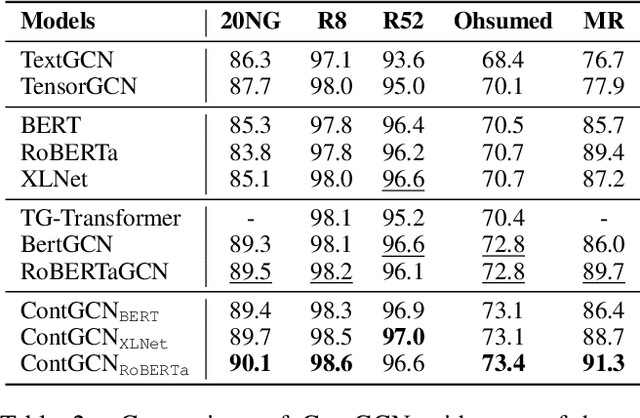
Graph convolutional network (GCN) has been successfully applied to capture global non-consecutive and long-distance semantic information for text classification. However, while GCN-based methods have shown promising results in offline evaluations, they commonly follow a seen-token-seen-document paradigm by constructing a fixed document-token graph and cannot make inferences on new documents. It is a challenge to deploy them in online systems to infer steaming text data. In this work, we present a continual GCN model (ContGCN) to generalize inferences from observed documents to unobserved documents. Concretely, we propose a new all-token-any-document paradigm to dynamically update the document-token graph in every batch during both the training and testing phases of an online system. Moreover, we design an occurrence memory module and a self-supervised contrastive learning objective to update ContGCN in a label-free manner. A 3-month A/B test on Huawei public opinion analysis system shows ContGCN achieves 8.86% performance gain compared with state-of-the-art methods. Offline experiments on five public datasets also show ContGCN can improve inference quality. The source code will be released at https://github.com/Jyonn/ContGCN.