 Add to Chrome
 Add to Firefox
 Add to Edge
Teaching Autonomous Vehicles to Express Interaction Intent during Unprotected Left Turns: A Human-Driving-Prior-Based Trajectory Planning Approach
Jul 29, 2023
With the integration of Autonomous Vehicles (AVs) into our transportation systems, their harmonious coexistence with Human-driven Vehicles (HVs) in mixed traffic settings becomes a crucial focus of research. A vital component of this coexistence is the capability of AVs to mimic human-like interaction intentions within the traffic environment. To address this, we propose a novel framework for Unprotected left-turn trajectory planning for AVs, aiming to replicate human driving patterns and facilitate effective communication of social intent. Our framework comprises three stages: trajectory generation, evaluation, and selection. In the generation stage, we use real human-driving trajectory data to define constraints for an anticipated trajectory space, generating candidate motion trajectories that embody intent expression. The evaluation stage employs maximum entropy inverse reinforcement learning (ME-IRL) to assess human trajectory preferences, considering factors such as traffic efficiency, driving comfort, and interactive safety. In the selection stage, we apply a Boltzmann distribution-based method to assign rewards and probabilities to candidate trajectories, thereby facilitating human-like decision-making. We conduct validation of our proposed framework using a real trajectory dataset and perform a comparative analysis against several baseline methods. The results demonstrate the superior performance of our framework in terms of human-likeness, intent expression capability, and computational efficiency. Limited by the length of the text, more details of this research can be found at https://shorturl.at/jqu35

Nexus sine qua non: Essentially connected neural networks for spatial-temporal forecasting of multivariate time series
Jul 04, 2023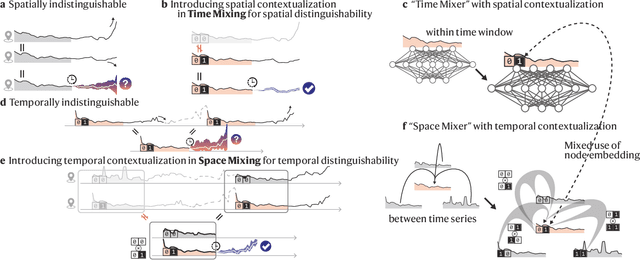
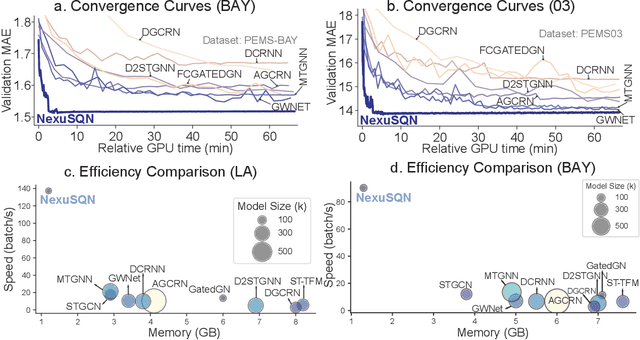
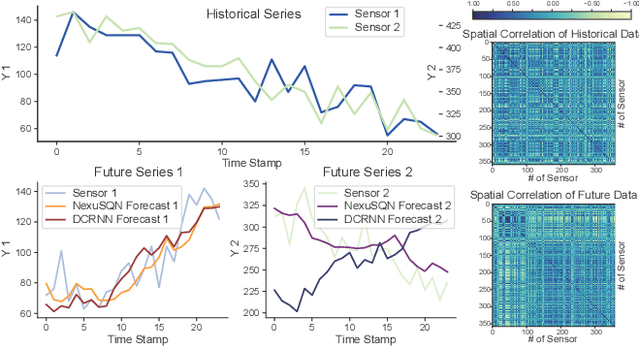
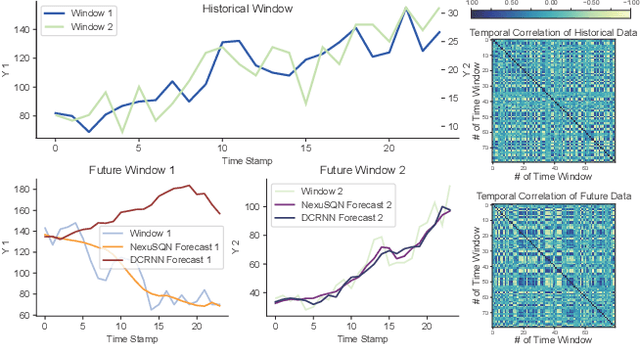
Modeling and forecasting multivariate time series not only facilitates the decision making of practitioners, but also deepens our scientific understanding of the underlying dynamical systems. Spatial-temporal graph neural networks (STGNNs) are emerged as powerful predictors and have become the de facto models for learning spatiotemporal representations in recent years. However, existing architectures of STGNNs tend to be complicated by stacking a series of fancy layers. The designed models could be either redundant or enigmatic, which pose great challenges on their complexity and scalability. Such concerns prompt us to re-examine the designs of modern STGNNs and identify core principles that contribute to a powerful and efficient neural predictor. Here we present a compact predictive model that is fully defined by a dense encoder-decoder and a message-passing layer, powered by node identifications, without any complex sequential modules, e.g., TCNs, RNNs, and Transformers. Empirical results demonstrate how a simple and elegant model with proper inductive basis can compare favorably w.r.t. the state of the art with elaborate designs, while being much more interpretable and computationally efficient for spatial-temporal forecasting problem. We hope our findings would open new horizons for future studies to revisit the design of more concise neural forecasting architectures.
Measuring Sociality in Driving Interaction
Jun 24, 2023
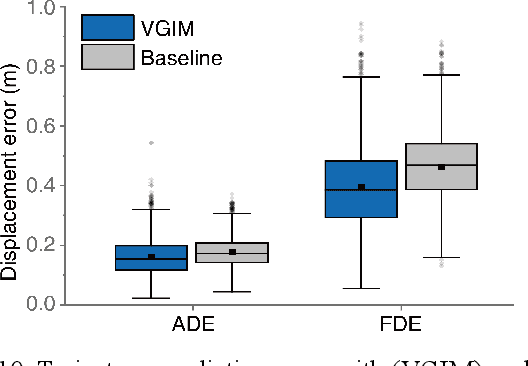
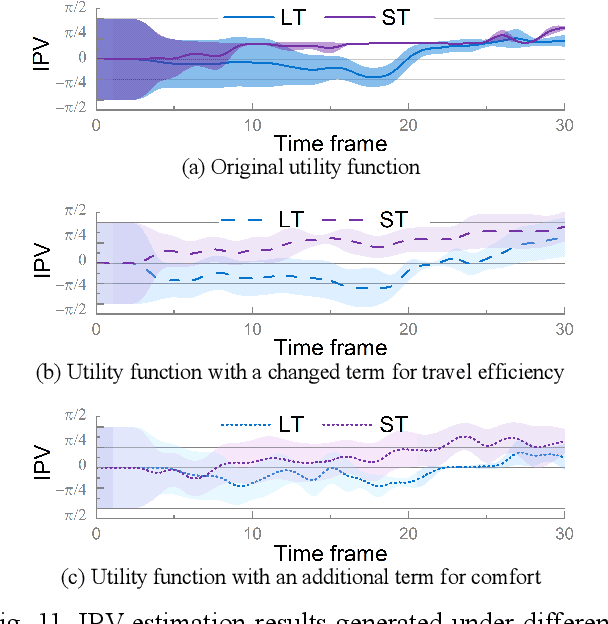
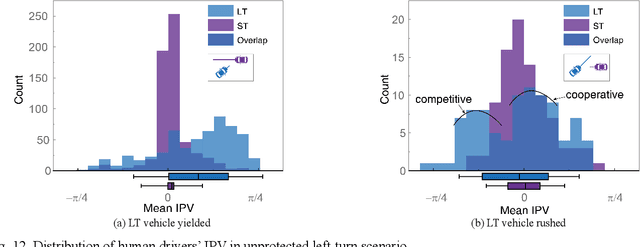
Interacting with other human road users is one of the most challenging tasks for autonomous vehicles. To generate congruent driving behaviors, the awareness and understanding of sociality, which includes implicit social customs and individualized social preferences of human drivers, are required. To understand and quantify the complex sociality in driving interactions, we propose a Virtual-Game-based Interaction Model (VGIM) that is explicitly parameterized by a social preference measurement, Interaction Preference Value (IPV), which is designed to capture the driver's relative preference for individual rewards over group rewards. A method for identifying IPV from observed driving trajectory is also provided. Then, we analyze human drivers' IPV with driving data recorded in a typical interactive driving scenario, the unprotected left turn. The results show that (1) human drivers express varied social preferences in executing different tasks (turning left or going straight); (2) competitive actions are strategically conducted by human drivers in order to coordinate with others. Finally, we implement the humanlike IPV expressing strategy with a rule-based method and embed it into VGIM and optimization-based motion planners. Controlled simulation experiments are conducted, and the results demonstrate that (1) IPV identification could improve the motion prediction performance in interactive driving scenarios and (2) dynamic IPV expressing strategy extracted from human driving data makes it possible to reproduce humanlike coordination patterns in the driving interaction.
A Macro-Micro Approach to Reconstructing Vehicle Trajectories on Multi-Lane Freeways with Lane Changing
Jun 09, 2023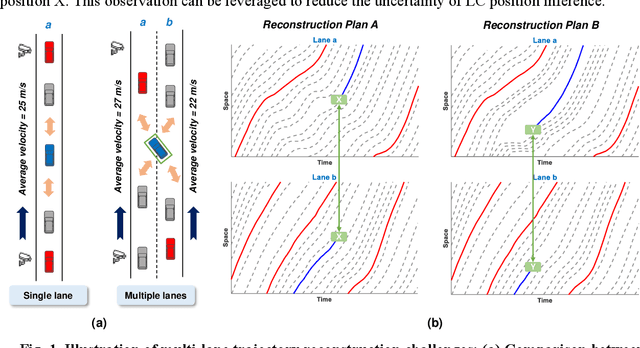
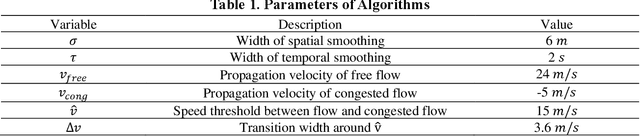
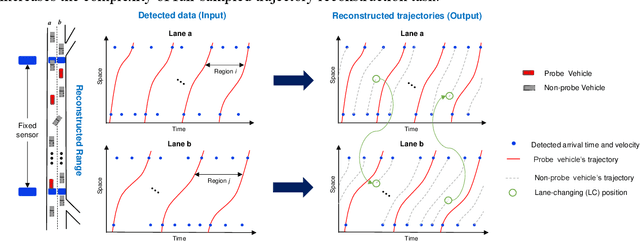
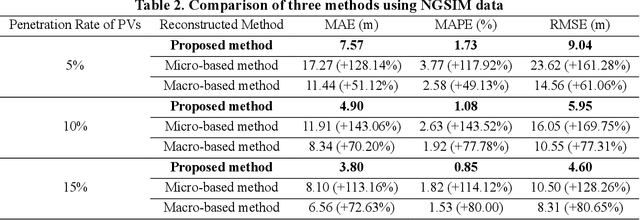
Vehicle trajectories can offer the most precise and detailed depiction of traffic flow and serve as a critical component in traffic management and control applications. Various technologies have been applied to reconstruct vehicle trajectories from sparse fixed and mobile detection data. However, existing methods predominantly concentrate on single-lane scenarios and neglect lane-changing (LC) behaviors that occur across multiple lanes, which limit their applicability in practical traffic systems. To address this research gap, we propose a macro-micro approach for reconstructing complete vehicle trajectories on multi-lane freeways, wherein the macro traffic state information and micro driving models are integrated to overcome the restrictions imposed by lane boundary. Particularly, the macroscopic velocity contour maps are established for each lane to regulate the movement of vehicle platoons, meanwhile the velocity difference between adjacent lanes provide valuable criteria for guiding LC behaviors. Simultaneously, the car-following models are extended from micro perspective to supply lane-based candidate trajectories and define the plausible range for LC positions. Later, a two-stage trajectory fusion algorithm is proposed to jointly infer both the car-following and LC behaviors, in which the optimal LC positions is identified and candidate trajectories are adjusted according to their weights. The proposed framework was evaluated using NGSIM dataset, and the results indicated a remarkable enhancement in both the accuracy and smoothness of reconstructed trajectories, with performance indicators reduced by over 30% compared to two representative reconstruction methods. Furthermore, the reconstruction process effectively reproduced LC behaviors across contiguous lanes, adding to the framework's comprehensiveness and realism.
Flexible Job Shop Scheduling via Dual Attention Network Based Reinforcement Learning
May 09, 2023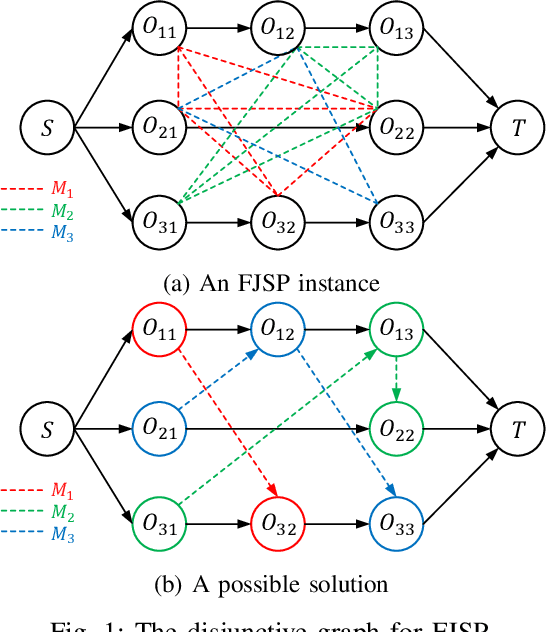
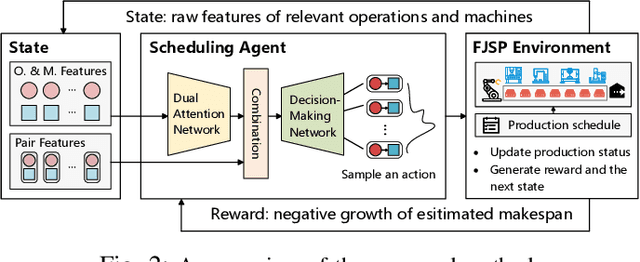
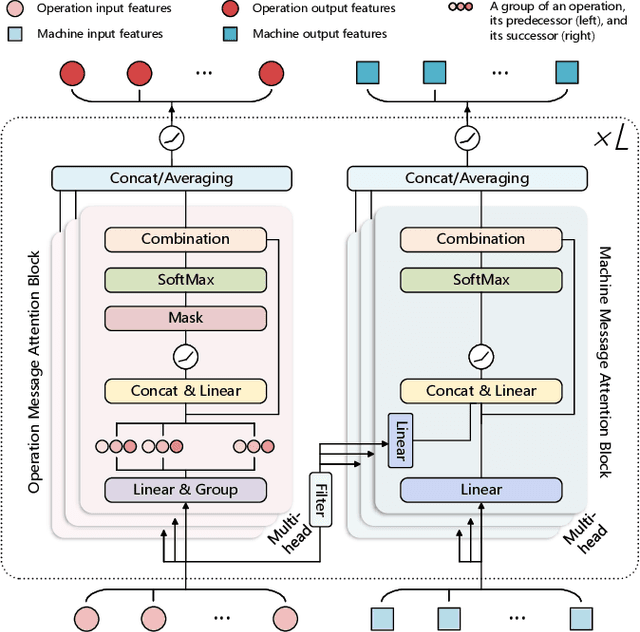
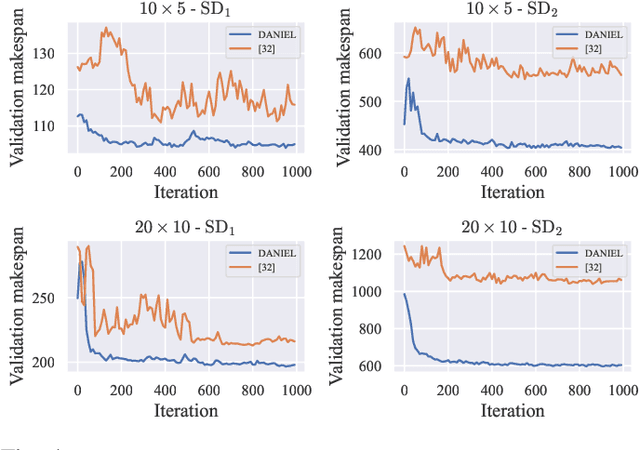
Flexible manufacturing has given rise to complex scheduling problems such as the flexible job shop scheduling problem (FJSP). In FJSP, operations can be processed on multiple machines, leading to intricate relationships between operations and machines. Recent works have employed deep reinforcement learning (DRL) to learn priority dispatching rules (PDRs) for solving FJSP. However, the quality of solutions still has room for improvement relative to that by the exact methods such as OR-Tools. To address this issue, this paper presents a novel end-to-end learning framework that weds the merits of self-attention models for deep feature extraction and DRL for scalable decision-making. The complex relationships between operations and machines are represented precisely and concisely, for which a dual-attention network (DAN) comprising several interconnected operation message attention blocks and machine message attention blocks is proposed. The DAN exploits the complicated relationships to construct production-adaptive operation and machine features to support high-quality decisionmaking. Experimental results using synthetic data as well as public benchmarks corroborate that the proposed approach outperforms both traditional PDRs and the state-of-the-art DRL method. Moreover, it achieves results comparable to exact methods in certain cases and demonstrates favorable generalization ability to large-scale and real-world unseen FJSP tasks.
A Survey on Out-of-Distribution Detection in NLP
May 05, 2023Out-of-distribution (OOD) detection is essential for the reliable and safe deployment of machine learning systems in the real world. Great progress has been made over the past years. This paper presents the first review of recent advances in OOD detection with a particular focus on natural language processing approaches. First, we provide a formal definition of OOD detection and discuss several related fields. We then categorize recent algorithms into three classes according to the data they used: (1) OOD data available, (2) OOD data unavailable + in-distribution (ID) label available, and (3) OOD data unavailable + ID label unavailable. Third, we introduce datasets, applications, and metrics. Finally, we summarize existing work and present potential future research topics.
Efficient and Robust Time-Optimal Trajectory Planning and Control for Agile Quadrotor Flight
May 04, 2023Agile quadrotor flight relies on rapidly planning and accurately tracking time-optimal trajectories, a technology critical to their application in the wild. However, the computational burden of computing time-optimal trajectories based on the full quadrotor dynamics (typically on the order of minutes or even hours) can hinder its ability to respond quickly to changing scenarios. Additionally, modeling errors and external disturbances can lead to deviations from the desired trajectory during tracking in real time. This letter proposes a novel approach to computing time-optimal trajectories, by fixing the nodes with waypoint constraints and adopting separate sampling intervals for trajectories between waypoints, which significantly accelerates trajectory planning. Furthermore, the planned paths are tracked via a time-adaptive model predictive control scheme whose allocated tracking time can be adaptively adjusted on-the-fly, therefore enhancing the tracking accuracy and robustness. We evaluate our approach through simulations and experimentally validate its performance in dynamic waypoint scenarios for time-optimal trajectory replanning and trajectory tracking.
MC-ViViT: Multi-branch Classifier-ViViT to Detect Mild Cognitive Impairment in Older Adults using Facial Videos
Apr 11, 2023Deep machine learning models including Convolutional Neural Networks (CNN) have been successful in the detection of Mild Cognitive Impairment (MCI) using medical images, questionnaires, and videos. This paper proposes a novel Multi-branch Classifier-Video Vision Transformer (MC-ViViT) model to distinguish MCI from those with normal cognition by analyzing facial features. The data comes from the I-CONECT, a behavioral intervention trial aimed at improving cognitive function by providing frequent video chats. MC-ViViT extracts spatiotemporal features of videos in one branch and augments representations by the MC module. The I-CONECT dataset is challenging as the dataset is imbalanced containing Hard-Easy and Positive-Negative samples, which impedes the performance of MC-ViViT. We propose a loss function for Hard-Easy and Positive-Negative Samples (HP Loss) by combining Focal loss and AD-CORRE loss to address the imbalanced problem. Our experimental results on the I-CONECT dataset show the great potential of MC-ViViT in predicting MCI with a high accuracy of 90.63\% accuracy on some of the interview videos.
Keypoint-Guided Optimal Transport
Mar 23, 2023Existing Optimal Transport (OT) methods mainly derive the optimal transport plan/matching under the criterion of transport cost/distance minimization, which may cause incorrect matching in some cases. In many applications, annotating a few matched keypoints across domains is reasonable or even effortless in annotation burden. It is valuable to investigate how to leverage the annotated keypoints to guide the correct matching in OT. In this paper, we propose a novel KeyPoint-Guided model by ReLation preservation (KPG-RL) that searches for the optimal matching (i.e., transport plan) guided by the keypoints in OT. To impose the keypoints in OT, first, we propose a mask-based constraint of the transport plan that preserves the matching of keypoint pairs. Second, we propose to preserve the relation of each data point to the keypoints to guide the matching. The proposed KPG-RL model can be solved by Sinkhorn's algorithm and is applicable even when distributions are supported in different spaces. We further utilize the relation preservation constraint in the Kantorovich Problem and Gromov-Wasserstein model to impose the guidance of keypoints in them. Meanwhile, the proposed KPG-RL model is extended to the partial OT setting. Moreover, we deduce the dual formulation of the KPG-RL model, which is solved using deep learning techniques. Based on the learned transport plan from dual KPG-RL, we propose a novel manifold barycentric projection to transport source data to the target domain. As applications, we apply the proposed KPG-RL model to the heterogeneous domain adaptation and image-to-image translation. Experiments verified the effectiveness of the proposed approach.
Towards better traffic volume estimation: Tackling both underdetermined and non-equilibrium problems via a correlation-adaptive graph convolution network
Mar 14, 2023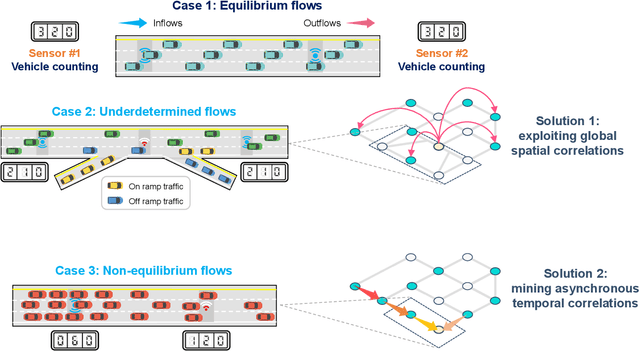
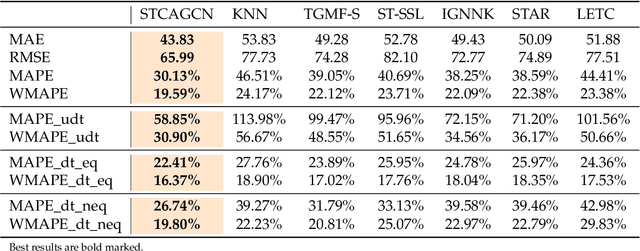
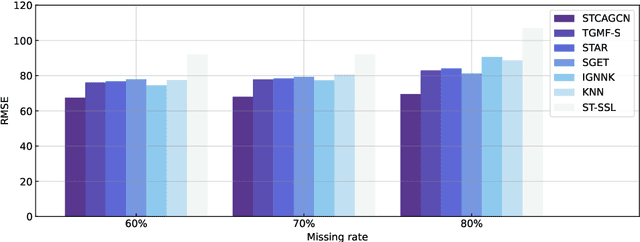
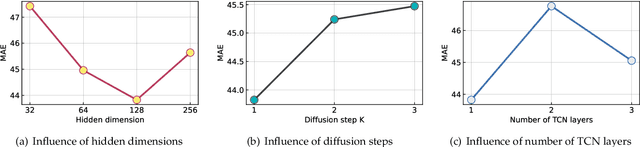
Traffic volume is an indispensable ingredient to provide fine-grained information for traffic management and control. However, due to limited deployment of traffic sensors, obtaining full-scale volume information is far from easy. Existing works on this topic primarily focus on improving the overall estimation accuracy of a particular method and ignore the underlying challenges of volume estimation, thereby having inferior performances on some critical tasks. This paper studies two key problems with regard to traffic volume estimation: (1) underdetermined traffic flows caused by undetected movements, and (2) non-equilibrium traffic flows arise from congestion propagation. Here we demonstrate a graph-based deep learning method that can offer a data-driven, model-free and correlation adaptive approach to tackle the above issues and perform accurate network-wide traffic volume estimation. Particularly, in order to quantify the dynamic and nonlinear relationships between traffic speed and volume for the estimation of underdetermined flows, a speed patternadaptive adjacent matrix based on graph attention is developed and integrated into the graph convolution process, to capture non-local correlations between sensors. To measure the impacts of non-equilibrium flows, a temporal masked and clipped attention combined with a gated temporal convolution layer is customized to capture time-asynchronous correlations between upstream and downstream sensors. We then evaluate our model on a real-world highway traffic volume dataset and compare it with several benchmark models. It is demonstrated that the proposed model achieves high estimation accuracy even under 20% sensor coverage rate and outperforms other baselines significantly, especially on underdetermined and non-equilibrium flow locations. Furthermore, comprehensive quantitative model analysis are also carried out to justify the model designs.