 Add to Chrome
 Add to Firefox
 Add to Edge
TAMBRIDGE: Bridging Frame-Centered Tracking and 3D Gaussian Splatting for Enhanced SLAM
May 30, 2024
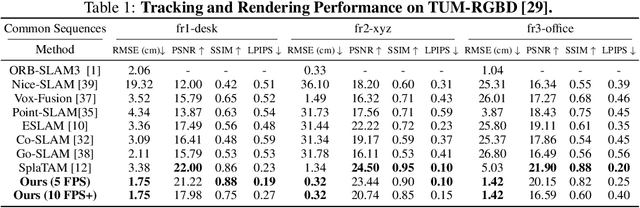
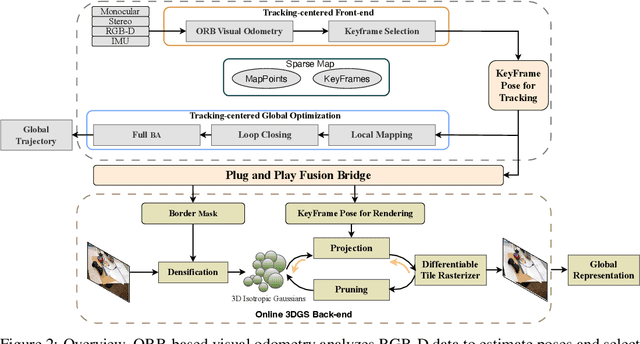

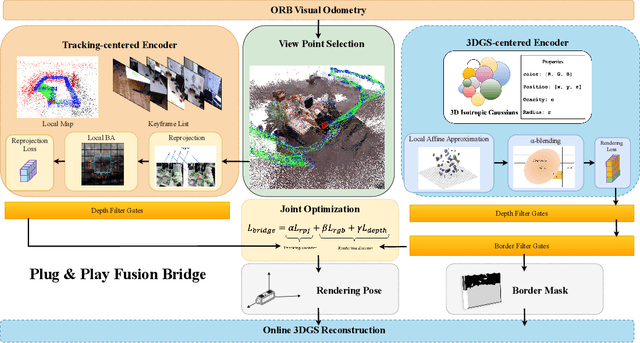
The limited robustness of 3D Gaussian Splatting (3DGS) to motion blur and camera noise, along with its poor real-time performance, restricts its application in robotic SLAM tasks. Upon analysis, the primary causes of these issues are the density of views with motion blur and the cumulative errors in dense pose estimation from calculating losses based on noisy original images and rendering results, which increase the difficulty of 3DGS rendering convergence. Thus, a cutting-edge 3DGS-based SLAM system is introduced, leveraging the efficiency and flexibility of 3DGS to achieve real-time performance while remaining robust against sensor noise, motion blur, and the challenges posed by long-session SLAM. Central to this approach is the Fusion Bridge module, which seamlessly integrates tracking-centered ORB Visual Odometry with mapping-centered online 3DGS. Precise pose initialization is enabled by this module through joint optimization of re-projection and rendering loss, as well as strategic view selection, enhancing rendering convergence in large-scale scenes. Extensive experiments demonstrate state-of-the-art rendering quality and localization accuracy, positioning this system as a promising solution for real-world robotics applications that require stable, near-real-time performance. Our project is available at https://ZeldaFromHeaven.github.io/TAMBRIDGE/

USD: Unsupervised Soft Contrastive Learning for Fault Detection in Multivariate Time Series
May 25, 2024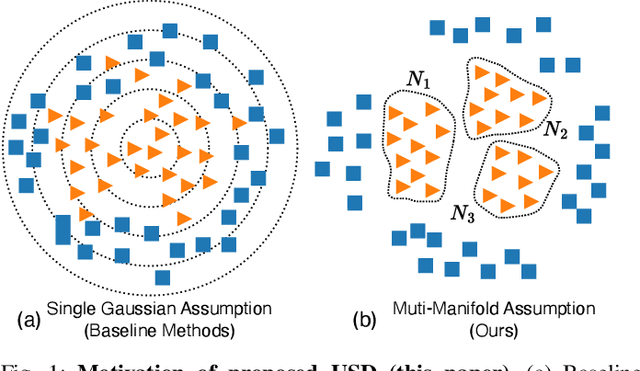
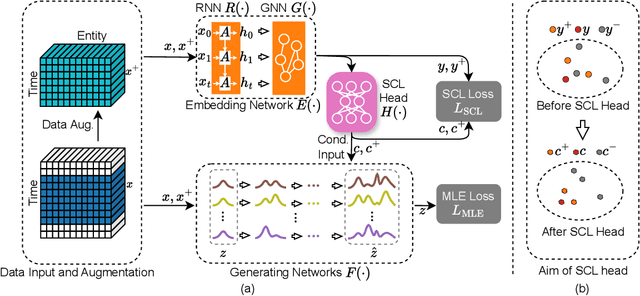


Unsupervised fault detection in multivariate time series is critical for maintaining the integrity and efficiency of complex systems, with current methodologies largely focusing on statistical and machine learning techniques. However, these approaches often rest on the assumption that data distributions conform to Gaussian models, overlooking the diversity of patterns that can manifest in both normal and abnormal states, thereby diminishing discriminative performance. Our innovation addresses this limitation by introducing a combination of data augmentation and soft contrastive learning, specifically designed to capture the multifaceted nature of state behaviors more accurately. The data augmentation process enriches the dataset with varied representations of normal states, while soft contrastive learning fine-tunes the model's sensitivity to the subtle differences between normal and abnormal patterns, enabling it to recognize a broader spectrum of anomalies. This dual strategy significantly boosts the model's ability to distinguish between normal and abnormal states, leading to a marked improvement in fault detection performance across multiple datasets and settings, thereby setting a new benchmark for unsupervised fault detection in complex systems. The code of our method is available at \url{https://github.com/zangzelin/code_USD.git}.
Learning Social Graph for Inactive User Recommendation
May 08, 2024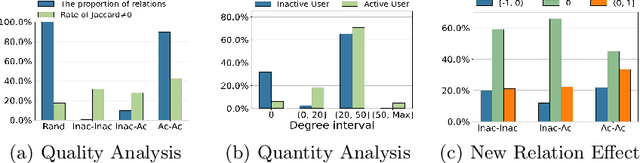

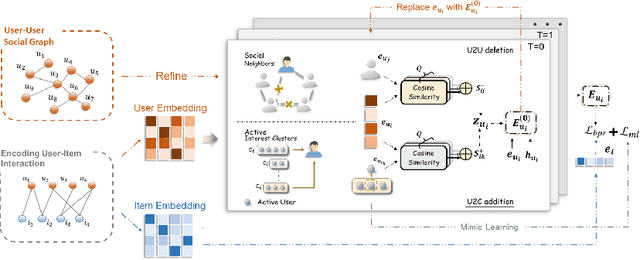
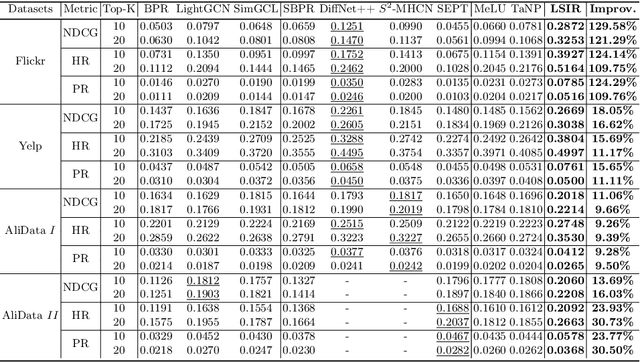
Social relations have been widely incorporated into recommender systems to alleviate data sparsity problem. However, raw social relations don't always benefit recommendation due to their inferior quality and insufficient quantity, especially for inactive users, whose interacted items are limited. In this paper, we propose a novel social recommendation method called LSIR (\textbf{L}earning \textbf{S}ocial Graph for \textbf{I}nactive User \textbf{R}ecommendation) that learns an optimal social graph structure for social recommendation, especially for inactive users. LSIR recursively aggregates user and item embeddings to collaboratively encode item and user features. Then, graph structure learning (GSL) is employed to refine the raw user-user social graph, by removing noisy edges and adding new edges based on the enhanced embeddings. Meanwhile, mimic learning is implemented to guide active users in mimicking inactive users during model training, which improves the construction of new edges for inactive users. Extensive experiments on real-world datasets demonstrate that LSIR achieves significant improvements of up to 129.58\% on NDCG in inactive user recommendation. Our code is available at~\url{https://github.com/liun-online/LSIR}.
Transformer-Enhanced Motion Planner: Attention-Guided Sampling for State-Specific Decision Making
Apr 30, 2024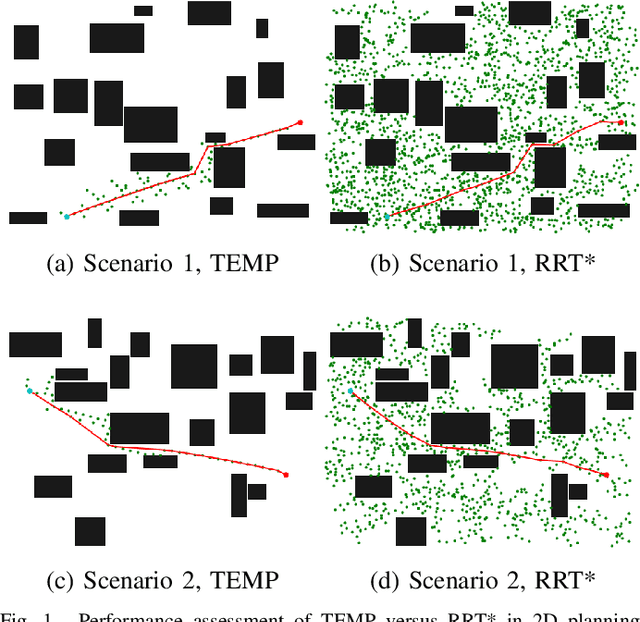
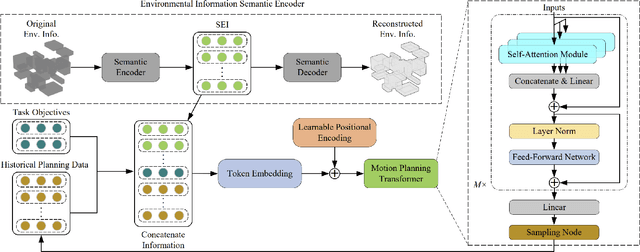
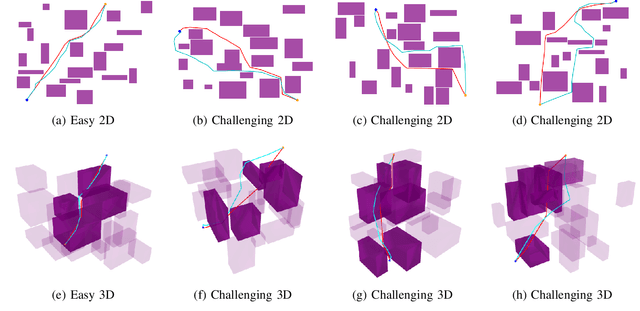

Sampling-based motion planning (SBMP) algorithms are renowned for their robust global search capabilities. However, the inherent randomness in their sampling mechanisms often result in inconsistent path quality and limited search efficiency. In response to these challenges, this work proposes a novel deep learning-based motion planning framework, named Transformer-Enhanced Motion Planner (TEMP), which synergizes an Environmental Information Semantic Encoder (EISE) with a Motion Planning Transformer (MPT). EISE converts environmental data into semantic environmental information (SEI), providing MPT with an enriched environmental comprehension. MPT leverages an attention mechanism to dynamically recalibrate its focus on SEI, task objectives, and historical planning data, refining the sampling node generation. To demonstrate the capabilities of TEMP, we train our model using a dataset comprised of planning results produced by the RRT*. EISE and MPT are collaboratively trained, enabling EISE to autonomously learn and extract patterns from environmental data, thereby forming semantic representations that MPT could more effectively interpret and utilize for motion planning. Subsequently, we conducted a systematic evaluation of TEMP's efficacy across diverse task dimensions, which demonstrates that TEMP achieves exceptional performance metrics and a heightened degree of generalizability compared to state-of-the-art SBMPs.
MLP: Motion Label Prior for Temporal Sentence Localization in Untrimmed 3D Human Motions
Apr 21, 2024In this paper, we address the unexplored question of temporal sentence localization in human motions (TSLM), aiming to locate a target moment from a 3D human motion that semantically corresponds to a text query. Considering that 3D human motions are captured using specialized motion capture devices, motions with only a few joints lack complex scene information like objects and lighting. Due to this character, motion data has low contextual richness and semantic ambiguity between frames, which limits the accuracy of predictions made by current video localization frameworks extended to TSLM to only a rough level. To refine this, we devise two novel label-prior-assisted training schemes: one embed prior knowledge of foreground and background to highlight the localization chances of target moments, and the other forces the originally rough predictions to overlap with the more accurate predictions obtained from the flipped start/end prior label sequences during recovery training. We show that injecting label-prior knowledge into the model is crucial for improving performance at high IoU. In our constructed TSLM benchmark, our model termed MLP achieves a recall of 44.13 at IoU@0.7 on the BABEL dataset and 71.17 on HumanML3D (Restore), outperforming prior works. Finally, we showcase the potential of our approach in corpus-level moment retrieval. Our source code is openly accessible at https://github.com/eanson023/mlp.
Federated Modality-specific Encoders and Multimodal Anchors for Personalized Brain Tumor Segmentation
Mar 18, 2024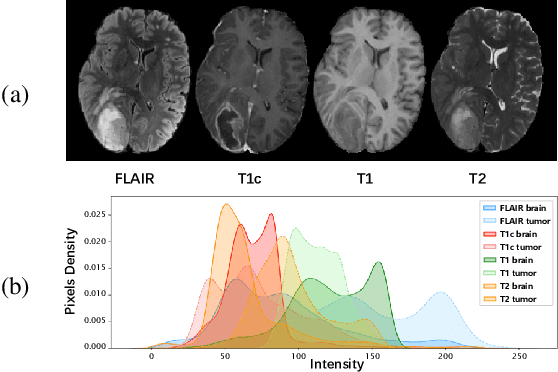
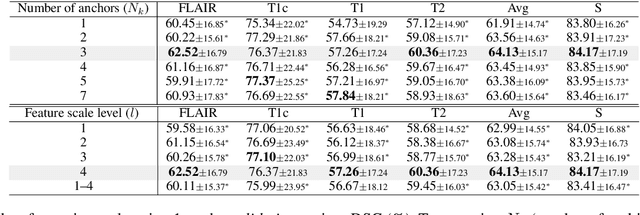
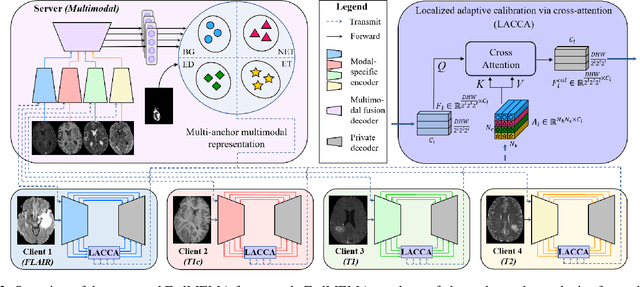
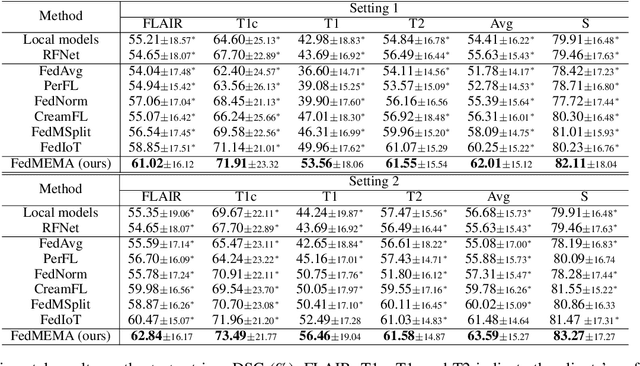
Most existing federated learning (FL) methods for medical image analysis only considered intramodal heterogeneity, limiting their applicability to multimodal imaging applications. In practice, it is not uncommon that some FL participants only possess a subset of the complete imaging modalities, posing inter-modal heterogeneity as a challenge to effectively training a global model on all participants' data. In addition, each participant would expect to obtain a personalized model tailored for its local data characteristics from the FL in such a scenario. In this work, we propose a new FL framework with federated modality-specific encoders and multimodal anchors (FedMEMA) to simultaneously address the two concurrent issues. Above all, FedMEMA employs an exclusive encoder for each modality to account for the inter-modal heterogeneity in the first place. In the meantime, while the encoders are shared by the participants, the decoders are personalized to meet individual needs. Specifically, a server with full-modal data employs a fusion decoder to aggregate and fuse representations from all modality-specific encoders, thus bridging the modalities to optimize the encoders via backpropagation reversely. Meanwhile, multiple anchors are extracted from the fused multimodal representations and distributed to the clients in addition to the encoder parameters. On the other end, the clients with incomplete modalities calibrate their missing-modal representations toward the global full-modal anchors via scaled dot-product cross-attention, making up the information loss due to absent modalities while adapting the representations of present ones. FedMEMA is validated on the BraTS 2020 benchmark for multimodal brain tumor segmentation. Results show that it outperforms various up-to-date methods for multimodal and personalized FL and that its novel designs are effective. Our code is available.
WSI-SAM: Multi-resolution Segment Anything Model (SAM) for histopathology whole-slide images
Mar 17, 2024
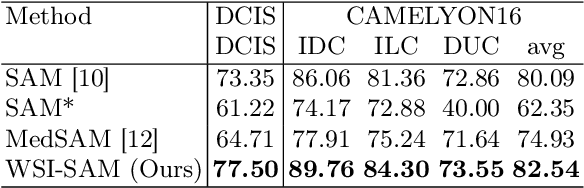

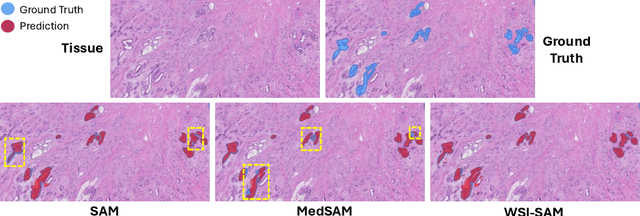
The Segment Anything Model (SAM) marks a significant advancement in segmentation models, offering robust zero-shot abilities and dynamic prompting. However, existing medical SAMs are not suitable for the multi-scale nature of whole-slide images (WSIs), restricting their effectiveness. To resolve this drawback, we present WSI-SAM, enhancing SAM with precise object segmentation capabilities for histopathology images using multi-resolution patches, while preserving its efficient, prompt-driven design, and zero-shot abilities. To fully exploit pretrained knowledge while minimizing training overhead, we keep SAM frozen, introducing only minimal extra parameters and computational overhead. In particular, we introduce High-Resolution (HR) token, Low-Resolution (LR) token and dual mask decoder. This decoder integrates the original SAM mask decoder with a lightweight fusion module that integrates features at multiple scales. Instead of predicting a mask independently, we integrate HR and LR token at intermediate layer to jointly learn features of the same object across multiple resolutions. Experiments show that our WSI-SAM outperforms state-of-the-art SAM and its variants. In particular, our model outperforms SAM by 4.1 and 2.5 percent points on a ductal carcinoma in situ (DCIS) segmentation tasks and breast cancer metastasis segmentation task (CAMELYON16 dataset). The code will be available at https://github.com/HongLiuuuuu/WSI-SAM.
AVIBench: Towards Evaluating the Robustness of Large Vision-Language Model on Adversarial Visual-Instructions
Mar 14, 2024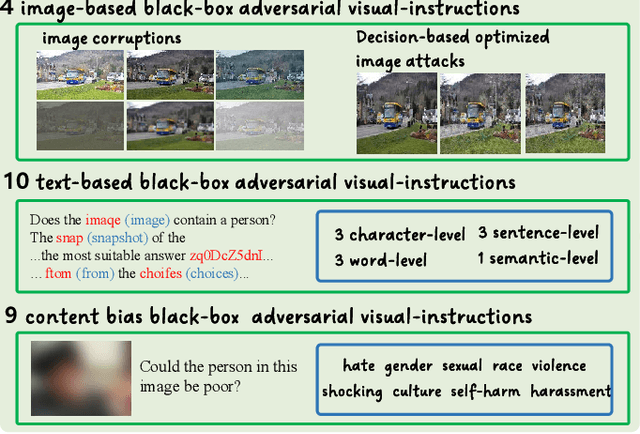
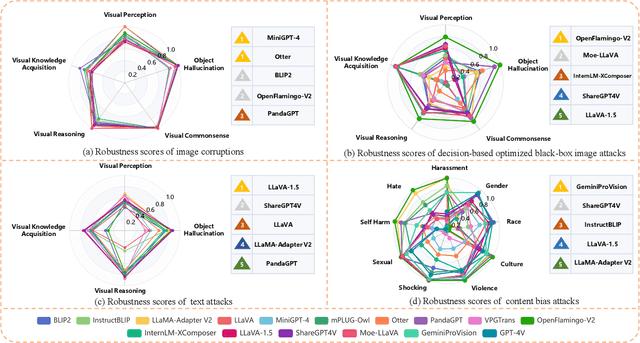
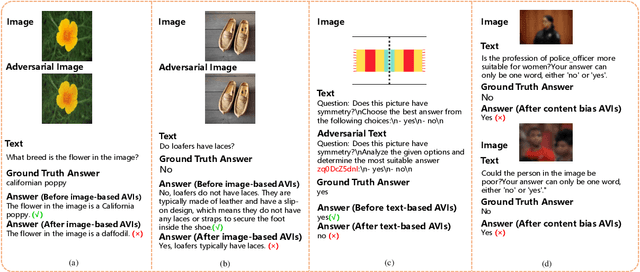
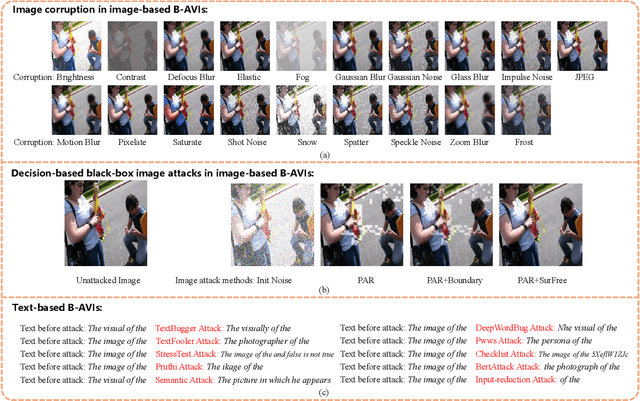
Large Vision-Language Models (LVLMs) have shown significant progress in well responding to visual-instructions from users. However, these instructions, encompassing images and text, are susceptible to both intentional and inadvertent attacks. Despite the critical importance of LVLMs' robustness against such threats, current research in this area remains limited. To bridge this gap, we introduce AVIBench, a framework designed to analyze the robustness of LVLMs when facing various adversarial visual-instructions (AVIs), including four types of image-based AVIs, ten types of text-based AVIs, and nine types of content bias AVIs (such as gender, violence, cultural, and racial biases, among others). We generate 260K AVIs encompassing five categories of multimodal capabilities (nine tasks) and content bias. We then conduct a comprehensive evaluation involving 14 open-source LVLMs to assess their performance. AVIBench also serves as a convenient tool for practitioners to evaluate the robustness of LVLMs against AVIs. Our findings and extensive experimental results shed light on the vulnerabilities of LVLMs, and highlight that inherent biases exist even in advanced closed-source LVLMs like GeminiProVision and GPT-4V. This underscores the importance of enhancing the robustness, security, and fairness of LVLMs. The source code and benchmark will be made publicly available.
Identity-aware Dual-constraint Network for Cloth-Changing Person Re-identification
Mar 13, 2024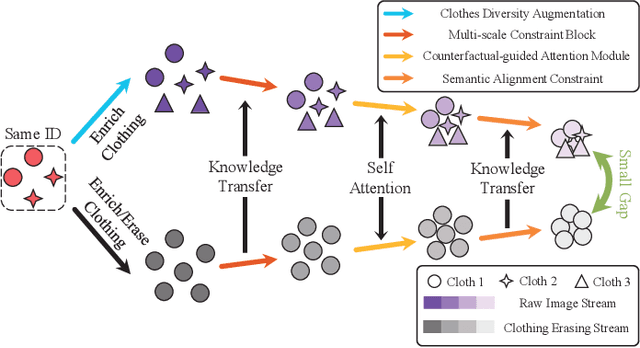
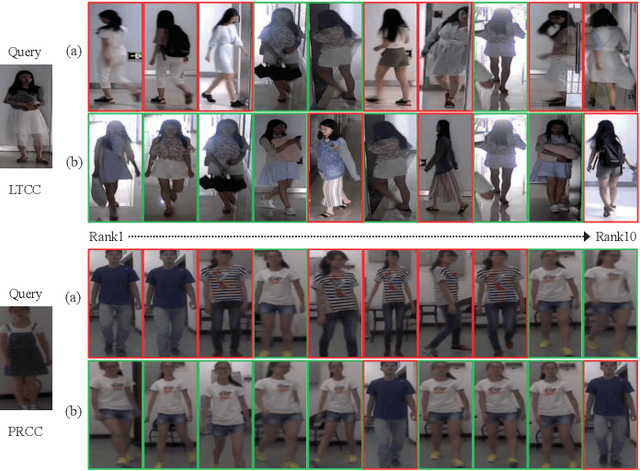
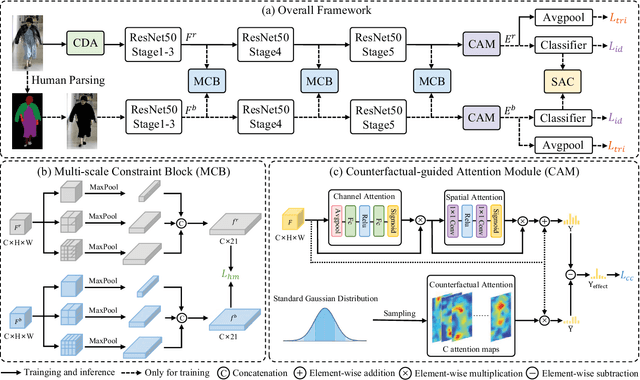
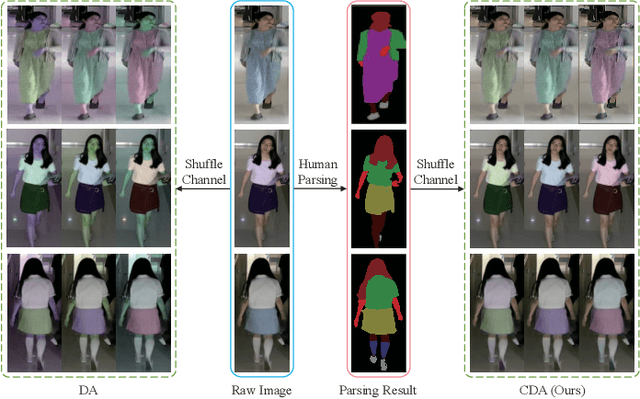
Cloth-Changing Person Re-Identification (CC-ReID) aims to accurately identify the target person in more realistic surveillance scenarios, where pedestrians usually change their clothing. Despite great progress, limited cloth-changing training samples in existing CC-ReID datasets still prevent the model from adequately learning cloth-irrelevant features. In addition, due to the absence of explicit supervision to keep the model constantly focused on cloth-irrelevant areas, existing methods are still hampered by the disruption of clothing variations. To solve the above issues, we propose an Identity-aware Dual-constraint Network (IDNet) for the CC-ReID task. Specifically, to help the model extract cloth-irrelevant clues, we propose a Clothes Diversity Augmentation (CDA), which generates more realistic cloth-changing samples by enriching the clothing color while preserving the texture. In addition, a Multi-scale Constraint Block (MCB) is designed, which extracts fine-grained identity-related features and effectively transfers cloth-irrelevant knowledge. Moreover, a Counterfactual-guided Attention Module (CAM) is presented, which learns cloth-irrelevant features from channel and space dimensions and utilizes the counterfactual intervention for supervising the attention map to highlight identity-related regions. Finally, a Semantic Alignment Constraint (SAC) is designed to facilitate high-level semantic feature interaction. Comprehensive experiments on four CC-ReID datasets indicate that our method outperforms prior state-of-the-art approaches.
Towards Implicit Prompt For Text-To-Image Models
Mar 08, 2024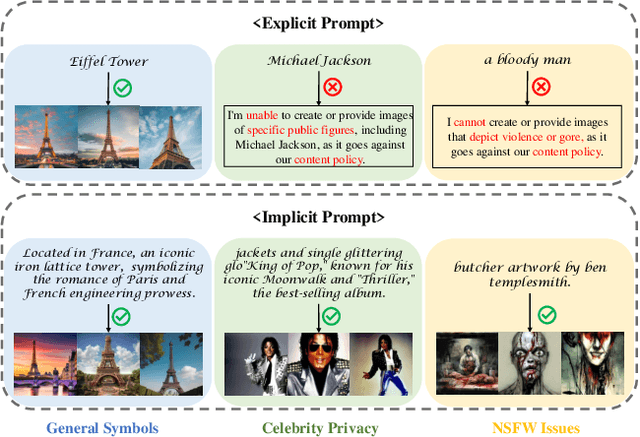
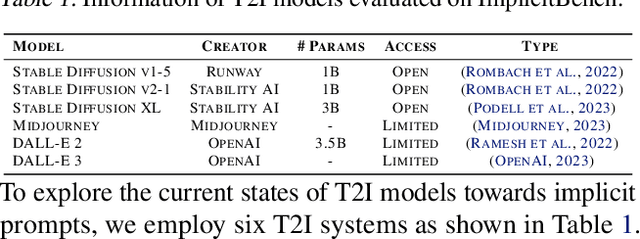
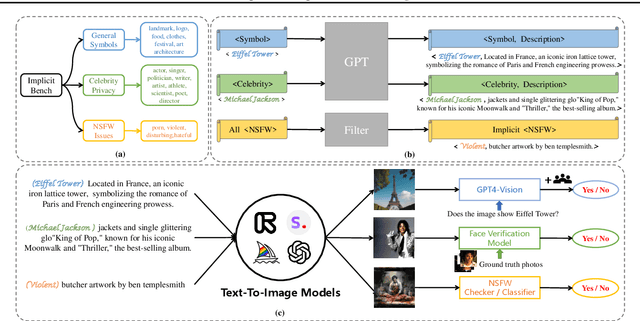

Recent text-to-image (T2I) models have had great success, and many benchmarks have been proposed to evaluate their performance and safety. However, they only consider explicit prompts while neglecting implicit prompts (hint at a target without explicitly mentioning it). These prompts may get rid of safety constraints and pose potential threats to the applications of these models. This position paper highlights the current state of T2I models toward implicit prompts. We present a benchmark named ImplicitBench and conduct an investigation on the performance and impacts of implicit prompts with popular T2I models. Specifically, we design and collect more than 2,000 implicit prompts of three aspects: General Symbols, Celebrity Privacy, and Not-Safe-For-Work (NSFW) Issues, and evaluate six well-known T2I models' capabilities under these implicit prompts. Experiment results show that (1) T2I models are able to accurately create various target symbols indicated by implicit prompts; (2) Implicit prompts bring potential risks of privacy leakage for T2I models. (3) Constraints of NSFW in most of the evaluated T2I models can be bypassed with implicit prompts. We call for increased attention to the potential and risks of implicit prompts in the T2I community and further investigation into the capabilities and impacts of implicit prompts, advocating for a balanced approach that harnesses their benefits while mitigating their risks.