 Add to Chrome
 Add to Firefox
 Add to Edge
Mitosis Detection in the Wild: Multi-Tumor and Context-Aware Generalization in the MIDOG 2025 Challenge
Jun 05, 2026
Automated mitosis detection is a well-established task in computational pathology. While previous benchmarks focused on scanner-induced domain shift, clinical "real-world" application requires models to be robust across the vast variance to be expected in the histological landscape. The MItosis DOmain Generalization (MIDOG) 2025 challenge was designed to evaluate algorithmic performance across unprecedented biological and contextual diversity. We curated a test dataset of 365 cases, encompassing 12 distinct human, canine and feline tumor types, digitized across multiple scanning platforms. Moving beyond hand-selected hotspots, the challenge required detection also in random tissue areas (representative of the whole slide detection situation) and challenging areas (areas rich in hard negatives). In the second track, we introduced the classification of atypical mitotic figures (AMFs). There were 18 teams submitting to the detection track, with F1 scores ranging up to 0.740. In the AMF detection track, we had 21 submissions with balanced accuracy values up to 0.908. Our analysis reveals that while most models perform reliably in traditional hotspots, significant performance degradation occurs in challenging ROIs, where false positive rates tripled. Furthermore, performance varied significantly across the 12 tumor types, highlighting "blind spots" in current state-of-the-art architectures when encountering rare or highly pleomorphic malignancies. Moreover, we evaluated the effectiveness of ensembling and found a mean increases of 1.5 and 1.3 percentage points in F1 score and balanced accuracy, respectively. In contrast, TTA showed no relevant improvement. MIDOG 2025 demonstrates that "in the wild" mitosis detection remains a significant hurdle. The transition from hotspot-only evaluation to a multi-contextual framework provides a more realistic proxy for clinical reliability.

Attention-Based Multimodal Survival Prediction with Cross-Modal Bilinear Fusion
May 12, 2026We propose a novel multimodal deep learning framework for patient-level survival prediction, which integrates whole-slide histology features, RNA-seq expression profiles, and clinical variables. Our architecture combines an ABMIL module~\cite{ilse2018attention} for slide-level representation with feedforward encoders for RNA and clinical data. These embeddings are then integrated through low-rank bilinear cross-modal fusion~\cite{liu2018efficient} to model conditional interactions across modalities while controlling parameter growth. The model outputs continuous risk scores that are subsequently mapped to survival times using a nonparametric calibration procedure based on the Kaplan--Meier estimator~\cite{kaplan1958nonparametric}. By decomposing multimodal reasoning into independent pairwise interactions, the proposed fusion design promotes structural interpretability and parameter efficiency compared with full tensor and hierarchical fusion strategies. Experiments on the CHIMERA challenge dataset demonstrate improved predictive performance over concatenation-based baselines and competitive generalization on hidden evaluation cohorts. These results indicate that the proposed framework is a promising approach for multimodal survival prediction in HR-NMIBC. The implementation is publicly available at https://github.com/hassancpu/ChimeraChallenge2025_Task_3.
Data-driven Synthesis of Magnetic Resonance Spectroscopy Data using a Variational Autoencoder
Feb 28, 2026The development of deep learning methods for magnetic resonance spectroscopy (MRS) is often hindered by limited availability of large, high-quality training datasets. While physics-based simulations are commonly used to mitigate this limitation, accurately modeling all in-vivo signal components remains challenging. In this work, we propose a data-driven framework for synthesizing in-vivo MRS data using a variational autoencoder (VAE) trained exclusively on measured single-voxel spectroscopy data. The model learns a low-dimensional latent representation of complex-valued spectra and enables generation of new samples through latent-space sampling and interpolation. The generative performance of the proposed approach is evaluated using a comprehensive set of complementary analyses, including reconstruction quality, feature-level similarity using low-dimensional embeddings, application-based signal quality metrics, and metabolite quantification agreement. The results demonstrate that the VAE accurately reconstructs dominant spectral patterns and generates synthetic spectra that occupy the same feature space as in-vivo data. In an example application targeting GABA-edited spectroscopy, augmenting limited subsets of transients with synthetic spectra improves signal quality metrics such as signal-to-noise ratio, linewidth, and shape scores. However, the results also reveal limitations of the generative approach, including under-representation of stochastic noise and reduced accuracy in absolute metabolite quantification, particularly for applications sensitive to concentration estimates. These findings highlight both potential and limitations of data-driven MRS synthesis. Beyond the proposed model, this study introduces a structured evaluation framework for generative MRS methods, emphasizing the importance of application-aware validation when synthetic data are used for downstream analysis.
Artificial Intelligence-Based Classification of Spitz Tumors
Aug 07, 2025Spitz tumors are diagnostically challenging due to overlap in atypical histological features with conventional melanomas. We investigated to what extent AI models, using histological and/or clinical features, can: (1) distinguish Spitz tumors from conventional melanomas; (2) predict the underlying genetic aberration of Spitz tumors; and (3) predict the diagnostic category of Spitz tumors. The AI models were developed and validated using a dataset of 393 Spitz tumors and 379 conventional melanomas. Predictive performance was measured using the AUROC and the accuracy. The performance of the AI models was compared with that of four experienced pathologists in a reader study. Moreover, a simulation experiment was conducted to investigate the impact of implementing AI-based recommendations for ancillary diagnostic testing on the workflow of the pathology department. The best AI model based on UNI features reached an AUROC of 0.95 and an accuracy of 0.86 in differentiating Spitz tumors from conventional melanomas. The genetic aberration was predicted with an accuracy of 0.55 compared to 0.25 for randomly guessing. The diagnostic category was predicted with an accuracy of 0.51, where random chance-level accuracy equaled 0.33. On all three tasks, the AI models performed better than the four pathologists, although differences were not statistically significant for most individual comparisons. Based on the simulation experiment, implementing AI-based recommendations for ancillary diagnostic testing could reduce material costs, turnaround times, and examinations. In conclusion, the AI models achieved a strong predictive performance in distinguishing between Spitz tumors and conventional melanomas. On the more challenging tasks of predicting the genetic aberration and the diagnostic category of Spitz tumors, the AI models performed better than random chance.
A Spatially-Aware Multiple Instance Learning Framework for Digital Pathology
Apr 24, 2025
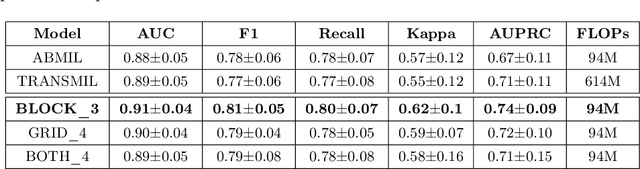
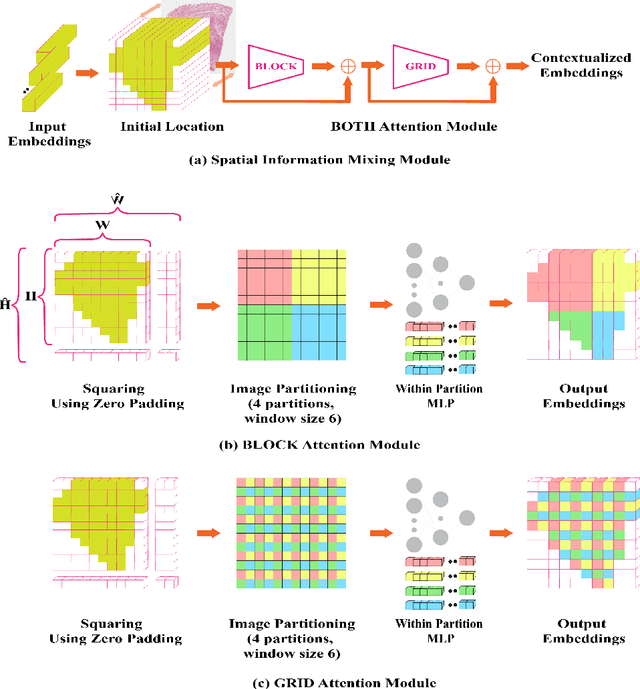
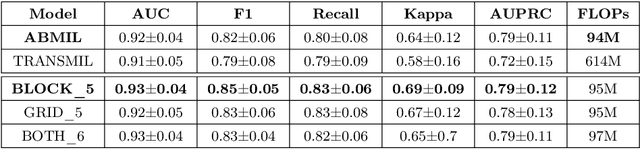
Multiple instance learning (MIL) is a promising approach for weakly supervised classification in pathology using whole slide images (WSIs). However, conventional MIL methods such as Attention-Based Deep Multiple Instance Learning (ABMIL) typically disregard spatial interactions among patches that are crucial to pathological diagnosis. Recent advancements, such as Transformer based MIL (TransMIL), have incorporated spatial context and inter-patch relationships. However, it remains unclear whether explicitly modeling patch relationships yields similar performance gains in ABMIL, which relies solely on Multi-Layer Perceptrons (MLPs). In contrast, TransMIL employs Transformer-based layers, introducing a fundamental architectural shift at the cost of substantially increased computational complexity. In this work, we enhance the ABMIL framework by integrating interaction-aware representations to address this question. Our proposed model, Global ABMIL (GABMIL), explicitly captures inter-instance dependencies while preserving computational efficiency. Experimental results on two publicly available datasets for tumor subtyping in breast and lung cancers demonstrate that GABMIL achieves up to a 7 percentage point improvement in AUPRC and a 5 percentage point increase in the Kappa score over ABMIL, with minimal or no additional computational overhead. These findings underscore the importance of incorporating patch interactions within MIL frameworks.
PathoPainter: Augmenting Histopathology Segmentation via Tumor-aware Inpainting
Mar 06, 2025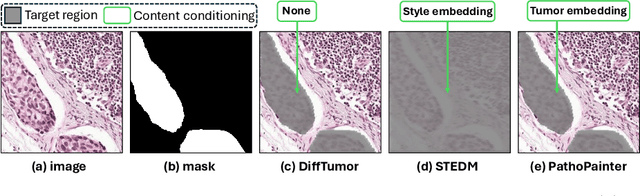
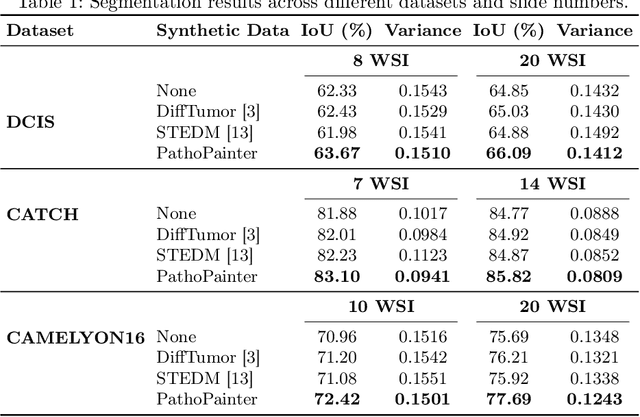
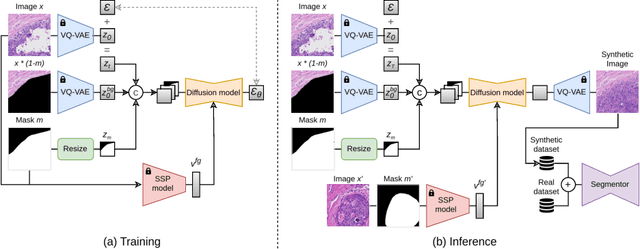

Tumor segmentation plays a critical role in histopathology, but it requires costly, fine-grained image-mask pairs annotated by pathologists. Thus, synthesizing histopathology data to expand the dataset is highly desirable. Previous works suffer from inaccuracies and limited diversity in image-mask pairs, both of which affect training segmentation, particularly in small-scale datasets and the inherently complex nature of histopathology images. To address this challenge, we propose PathoPainter, which reformulates image-mask pair generation as a tumor inpainting task. Specifically, our approach preserves the background while inpainting the tumor region, ensuring precise alignment between the generated image and its corresponding mask. To enhance dataset diversity while maintaining biological plausibility, we incorporate a sampling mechanism that conditions tumor inpainting on regional embeddings from a different image. Additionally, we introduce a filtering strategy to exclude uncertain synthetic regions, further improving the quality of the generated data. Our comprehensive evaluation spans multiple datasets featuring diverse tumor types and various training data scales. As a result, segmentation improved significantly with our synthetic data, surpassing existing segmentation data synthesis approaches, e.g., 75.69% -> 77.69% on CAMELYON16. The code is available at https://github.com/HongLiuuuuu/PathoPainter.
Adaptive Prototype Learning for Multimodal Cancer Survival Analysis
Mar 06, 2025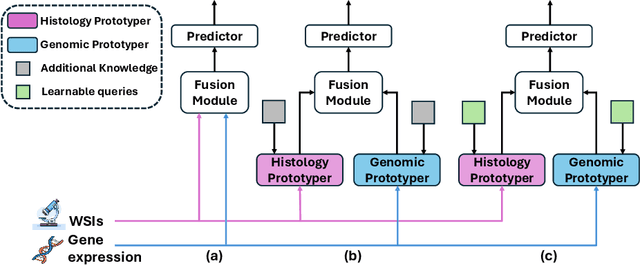
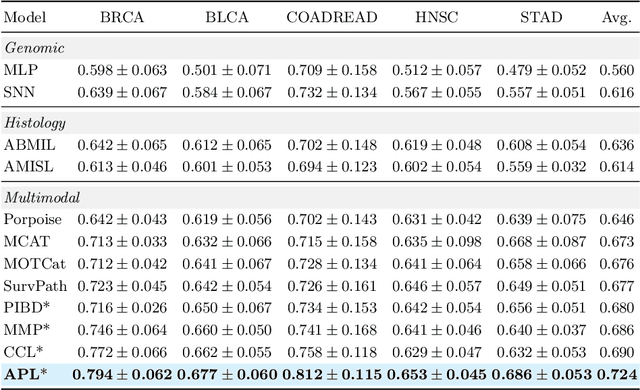
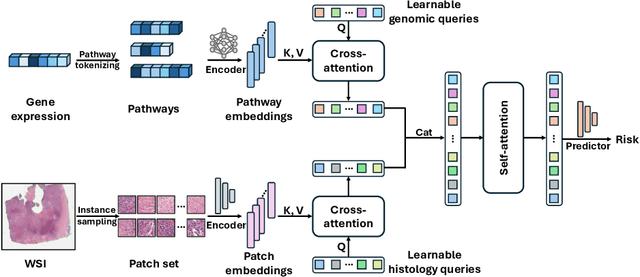
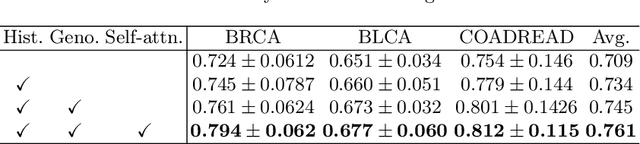
Leveraging multimodal data, particularly the integration of whole-slide histology images (WSIs) and transcriptomic profiles, holds great promise for improving cancer survival prediction. However, excessive redundancy in multimodal data can degrade model performance. In this paper, we propose Adaptive Prototype Learning (APL), a novel and effective approach for multimodal cancer survival analysis. APL adaptively learns representative prototypes in a data-driven manner, reducing redundancy while preserving critical information. Our method employs two sets of learnable query vectors that serve as a bridge between high-dimensional representations and survival prediction, capturing task-relevant features. Additionally, we introduce a multimodal mixed self-attention mechanism to enable cross-modal interactions, further enhancing information fusion. Extensive experiments on five benchmark cancer datasets demonstrate the superiority of our approach over existing methods. The code is available at https://github.com/HongLiuuuuu/APL.
On the Importance of Text Preprocessing for Multimodal Representation Learning and Pathology Report Generation
Feb 26, 2025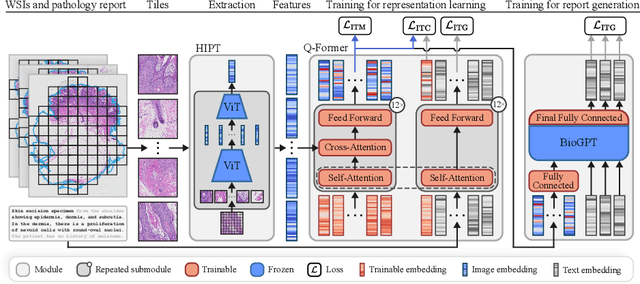
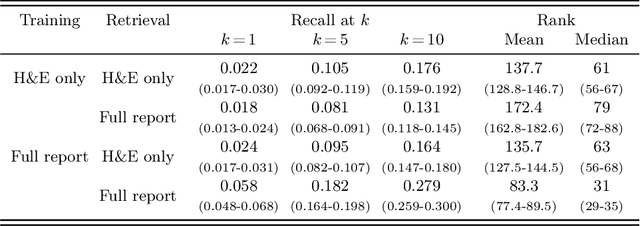
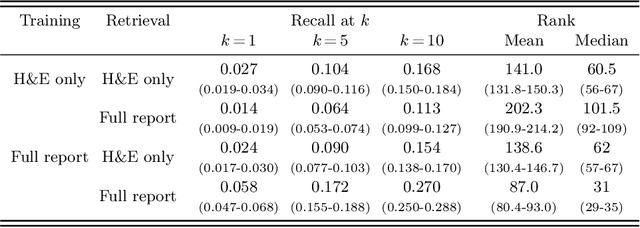
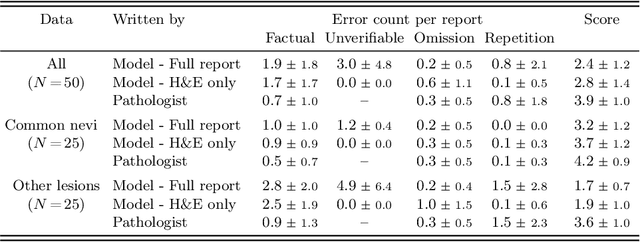
Vision-language models in pathology enable multimodal case retrieval and automated report generation. Many of the models developed so far, however, have been trained on pathology reports that include information which cannot be inferred from paired whole slide images (e.g., patient history), potentially leading to hallucinated sentences in generated reports. To this end, we investigate how the selection of information from pathology reports for vision-language modeling affects the quality of the multimodal representations and generated reports. More concretely, we compare a model trained on full reports against a model trained on preprocessed reports that only include sentences describing the cell and tissue appearances based on the H&E-stained slides. For the experiments, we built upon the BLIP-2 framework and used a cutaneous melanocytic lesion dataset of 42,433 H&E-stained whole slide images and 19,636 corresponding pathology reports. Model performance was assessed using image-to-text and text-to-image retrieval, as well as qualitative evaluation of the generated reports by an expert pathologist. Our results demonstrate that text preprocessing prevents hallucination in report generation. Despite the improvement in the quality of the generated reports, training the vision-language model on full reports showed better cross-modal retrieval performance.
Pathology Report Generation and Multimodal Representation Learning for Cutaneous Melanocytic Lesions
Feb 26, 2025Millions of melanocytic skin lesions are examined by pathologists each year, the majority of which concern common nevi (i.e., ordinary moles). While most of these lesions can be diagnosed in seconds, writing the corresponding pathology report is much more time-consuming. Automating part of the report writing could, therefore, alleviate the increasing workload of pathologists. In this work, we develop a vision-language model specifically for the pathology domain of cutaneous melanocytic lesions. The model follows the Contrastive Captioner framework and was trained and evaluated using a melanocytic lesion dataset of 42,512 H&E-stained whole slide images and 19,645 corresponding pathology reports. Our results show that the quality scores of model-generated reports were on par with pathologist-written reports for common nevi, assessed by an expert pathologist in a reader study. While report generation revealed to be more difficult for rare melanocytic lesion subtypes, the cross-modal retrieval performance for these cases was considerably better.
Artificial Intelligence-Based Triaging of Cutaneous Melanocytic Lesions
Oct 14, 2024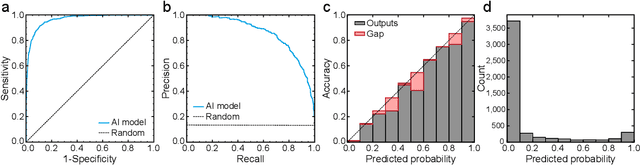
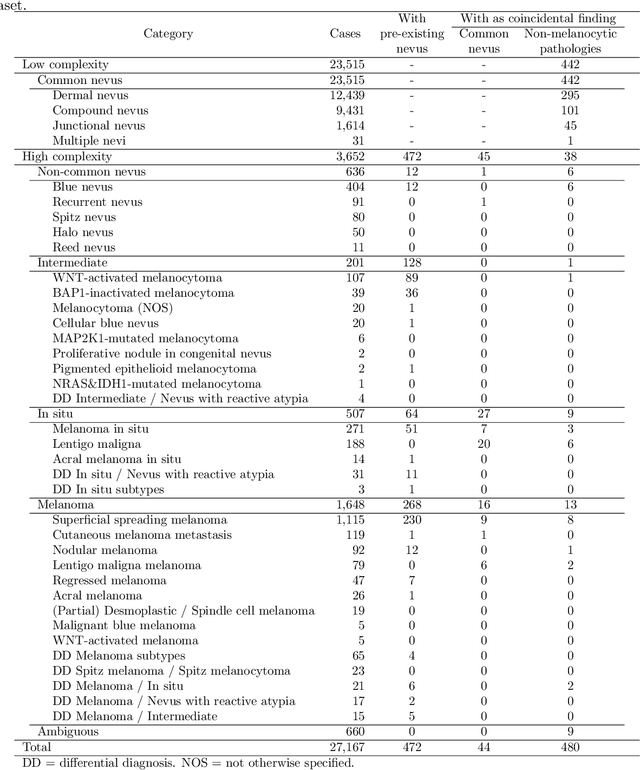
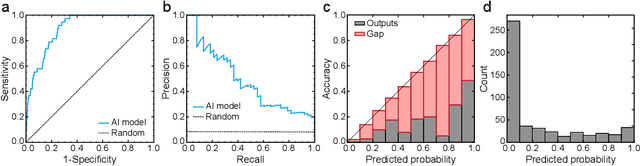

Pathologists are facing an increasing workload due to a growing volume of cases and the need for more comprehensive diagnoses. Aiming to facilitate workload reduction and faster turnaround times, we developed an artificial intelligence (AI) model for triaging cutaneous melanocytic lesions based on whole slide images. The AI model was developed and validated using a retrospective cohort from the UMC Utrecht. The dataset consisted of 52,202 whole slide images from 27,167 unique specimens, acquired from 20,707 patients. Specimens with only common nevi were assigned to the low complexity category (86.6%). In contrast, specimens with any other melanocytic lesion subtype, including non-common nevi, melanocytomas, and melanomas, were assigned to the high complexity category (13.4%). The dataset was split on patient level into a development set (80%) and test sets (20%) for independent evaluation. Predictive performance was primarily measured using the area under the receiver operating characteristic curve (AUROC) and the area under the precision-recall curve (AUPRC). A simulation experiment was performed to study the effect of implementing AI-based triaging in the clinic. The AI model reached an AUROC of 0.966 (95% CI, 0.960-0.972) and an AUPRC of 0.857 (95% CI, 0.836-0.877) on the in-distribution test set, and an AUROC of 0.899 (95% CI, 0.860-0.934) and an AUPRC of 0.498 (95% CI, 0.360-0.639) on the out-of-distribution test set. In the simulation experiment, using random case assignment as baseline, AI-based triaging prevented an average of 43.9 (95% CI, 36-55) initial examinations of high complexity cases by general pathologists for every 500 cases. In conclusion, the AI model achieved a strong predictive performance in differentiating between cutaneous melanocytic lesions of high and low complexity. The improvement in workflow efficiency due to AI-based triaging could be substantial.