 Add to Chrome
 Add to Firefox
 Add to Edge
TopoPerception: A Shortcut-Free Evaluation of Global Visual Perception in Large Vision-Language Models
Nov 14, 2025
Large Vision-Language Models (LVLMs) typically align visual features from an encoder with a pre-trained Large Language Model (LLM). However, this makes the visual perception module a bottleneck, which constrains the overall capabilities of LVLMs. Conventional evaluation benchmarks, while rich in visual semantics, often contain unavoidable local shortcuts that can lead to an overestimation of models' perceptual abilities. Here, we introduce TopoPerception, a benchmark that leverages topological properties to rigorously evaluate the global visual perception capabilities of LVLMs across various granularities. Since topology depends on the global structure of an image and is invariant to local features, TopoPerception enables a shortcut-free assessment of global perception, fundamentally distinguishing it from semantically rich tasks. We evaluate state-of-the-art models on TopoPerception and find that even at the coarsest perceptual granularity, all models perform no better than random chance, indicating a profound inability to perceive global visual features. Notably, a consistent trend emerge within model families: more powerful models with stronger reasoning capabilities exhibit lower accuracy. This suggests that merely scaling up models is insufficient to address this deficit and may even exacerbate it. Progress may require new training paradigms or architectures. TopoPerception not only exposes a critical bottleneck in current LVLMs but also offers a lens and direction for improving their global visual perception. The data and code are publicly available at: https://github.com/Wenhao-Zhou/TopoPerception.

A Hybrid Framework Bridging CNN and ViT based on Theory of Evidence for Diabetic Retinopathy Grading
Oct 30, 2025Diabetic retinopathy (DR) is a leading cause of vision loss among middle-aged and elderly people, which significantly impacts their daily lives and mental health. To improve the efficiency of clinical screening and enable the early detection of DR, a variety of automated DR diagnosis systems have been recently established based on convolutional neural network (CNN) or vision Transformer (ViT). However, due to the own shortages of CNN / ViT, the performance of existing methods using single-type backbone has reached a bottleneck. One potential way for the further improvements is integrating different kinds of backbones, which can fully leverage the respective strengths of them (\emph{i.e.,} the local feature extraction capability of CNN and the global feature capturing ability of ViT). To this end, we propose a novel paradigm to effectively fuse the features extracted by different backbones based on the theory of evidence. Specifically, the proposed evidential fusion paradigm transforms the features from different backbones into supporting evidences via a set of deep evidential networks. With the supporting evidences, the aggregated opinion can be accordingly formed, which can be used to adaptively tune the fusion pattern between different backbones and accordingly boost the performance of our hybrid model. We evaluated our method on two publicly available DR grading datasets. The experimental results demonstrate that our hybrid model not only improves the accuracy of DR grading, compared to the state-of-the-art frameworks, but also provides the excellent interpretability for feature fusion and decision-making.
OFFSIDE: Benchmarking Unlearning Misinformation in Multimodal Large Language Models
Oct 26, 2025Advances in Multimodal Large Language Models (MLLMs) intensify concerns about data privacy, making Machine Unlearning (MU), the selective removal of learned information, a critical necessity. However, existing MU benchmarks for MLLMs are limited by a lack of image diversity, potential inaccuracies, and insufficient evaluation scenarios, which fail to capture the complexity of real-world applications. To facilitate the development of MLLMs unlearning and alleviate the aforementioned limitations, we introduce OFFSIDE, a novel benchmark for evaluating misinformation unlearning in MLLMs based on football transfer rumors. This manually curated dataset contains 15.68K records for 80 players, providing a comprehensive framework with four test sets to assess forgetting efficacy, generalization, utility, and robustness. OFFSIDE supports advanced settings like selective unlearning and corrective relearning, and crucially, unimodal unlearning (forgetting only text data). Our extensive evaluation of multiple baselines reveals key findings: (1) Unimodal methods (erasing text-based knowledge) fail on multimodal rumors; (2) Unlearning efficacy is largely driven by catastrophic forgetting; (3) All methods struggle with "visual rumors" (rumors appear in the image); (4) The unlearned rumors can be easily recovered and (5) All methods are vulnerable to prompt attacks. These results expose significant vulnerabilities in current approaches, highlighting the need for more robust multimodal unlearning solutions. The code is available at \href{https://github.com/zh121800/OFFSIDE}{https://github.com/zh121800/OFFSIDE}.
Label Smoothing Improves Gradient Ascent in LLM Unlearning
Oct 25, 2025LLM unlearning has emerged as a promising approach, aiming to enable models to forget hazardous/undesired knowledge at low cost while preserving as much model utility as possible. Among existing techniques, the most straightforward method is performing Gradient Ascent (GA) w.r.t. the forget data, thereby forcing the model to unlearn the forget dataset. However, GA suffers from severe instability, as it drives updates in a divergent direction, often resulting in drastically degraded model utility. To address this issue, we propose Smoothed Gradient Ascent (SGA). SGA combines the forget data with multiple constructed normal data through a tunable smoothing rate. Intuitively, this extends GA from learning solely on the forget data to jointly learning across both forget and normal data, enabling more stable unlearning while better preserving model utility. Theoretically, we provide the theoretical guidance on the selection of the optimal smoothing rate. Empirically, we evaluate SGA on three benchmarks: TOFU, Harry Potter, and MUSE-NEWS. Experimental results demonstrate that SGA consistently outperforms the original Gradient Ascent (GA) method across all metrics and achieves top-2 performance among all baseline methods on several key metrics.
DiSC-Med: Diffusion-based Semantic Communications for Robust Medical Image Transmission
Jul 31, 2025The rapid development of artificial intelligence has driven smart health with next-generation wireless communication technologies, stimulating exciting applications in remote diagnosis and intervention. To enable a timely and effective response for remote healthcare, efficient transmission of medical data through noisy channels with limited bandwidth emerges as a critical challenge. In this work, we propose a novel diffusion-based semantic communication framework, namely DiSC-Med, for the medical image transmission, where medical-enhanced compression and denoising blocks are developed for bandwidth efficiency and robustness, respectively. Unlike conventional pixel-wise communication framework, our proposed DiSC-Med is able to capture the key semantic information and achieve superior reconstruction performance with ultra-high bandwidth efficiency against noisy channels. Extensive experiments on real-world medical datasets validate the effectiveness of our framework, demonstrating its potential for robust and efficient telehealth applications.
Deep Learning Advances in Vision-Based Traffic Accident Anticipation: A Comprehensive Review of Methods,Datasets,and Future Directions
May 12, 2025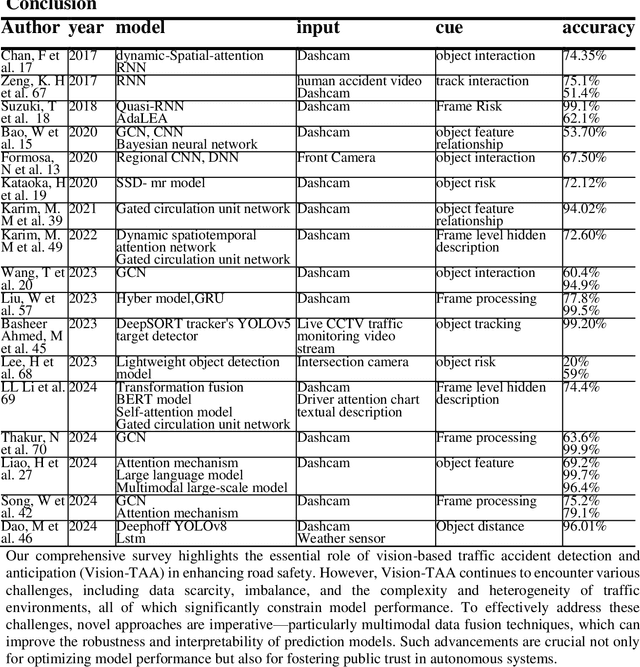
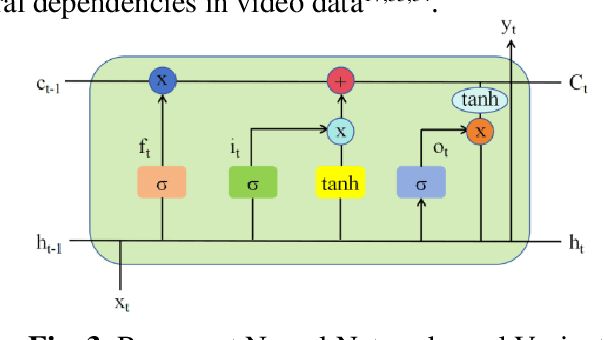
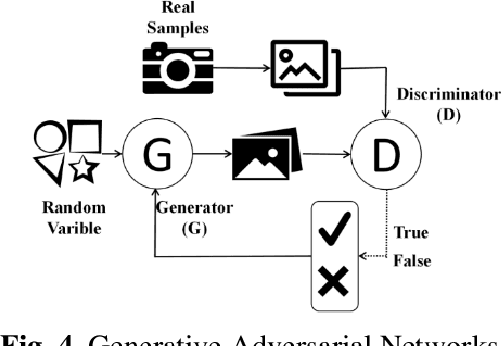
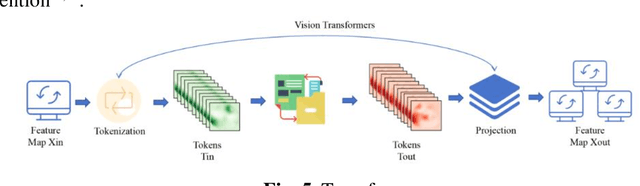
Traffic accident prediction and detection are critical for enhancing road safety,and vision-based traffic accident anticipation (Vision-TAA) has emerged as a promising approach in the era of deep learning.This paper reviews 147 recent studies,focusing on the application of supervised,unsupervised,and hybrid deep learning models for accident prediction,alongside the use of real-world and synthetic datasets.Current methodologies are categorized into four key approaches: image and video feature-based prediction, spatiotemporal feature-based prediction, scene understanding,and multimodal data fusion.While these methods demonstrate significant potential,challenges such as data scarcity,limited generalization to complex scenarios,and real-time performance constraints remain prevalent. This review highlights opportunities for future research,including the integration of multimodal data fusion, self-supervised learning,and Transformer-based architectures to enhance prediction accuracy and scalability.By synthesizing existing advancements and identifying critical gaps, this paper provides a foundational reference for developing robust and adaptive Vision-TAA systems,contributing to road safety and traffic management.
BrainSegDMlF: A Dynamic Fusion-enhanced SAM for Brain Lesion Segmentation
May 09, 2025The segmentation of substantial brain lesions is a significant and challenging task in the field of medical image segmentation. Substantial brain lesions in brain imaging exhibit high heterogeneity, with indistinct boundaries between lesion regions and normal brain tissue. Small lesions in single slices are difficult to identify, making the accurate and reproducible segmentation of abnormal regions, as well as their feature description, highly complex. Existing methods have the following limitations: 1) They rely solely on single-modal information for learning, neglecting the multi-modal information commonly used in diagnosis. This hampers the ability to comprehensively acquire brain lesion information from multiple perspectives and prevents the effective integration and utilization of multi-modal data inputs, thereby limiting a holistic understanding of lesions. 2) They are constrained by the amount of data available, leading to low sensitivity to small lesions and difficulty in detecting subtle pathological changes. 3) Current SAM-based models rely on external prompts, which cannot achieve automatic segmentation and, to some extent, affect diagnostic efficiency.To address these issues, we have developed a large-scale fully automated segmentation model specifically designed for brain lesion segmentation, named BrainSegDMLF. This model has the following features: 1) Dynamic Modal Interactive Fusion (DMIF) module that processes and integrates multi-modal data during the encoding process, providing the SAM encoder with more comprehensive modal information. 2) Layer-by-Layer Upsampling Decoder, enabling the model to extract rich low-level and high-level features even with limited data, thereby detecting the presence of small lesions. 3) Automatic segmentation masks, allowing the model to generate lesion masks automatically without requiring manual prompts.
3D Deep-learning-based Segmentation of Human Skin Sweat Glands and Their 3D Morphological Response to Temperature Variations
Apr 24, 2025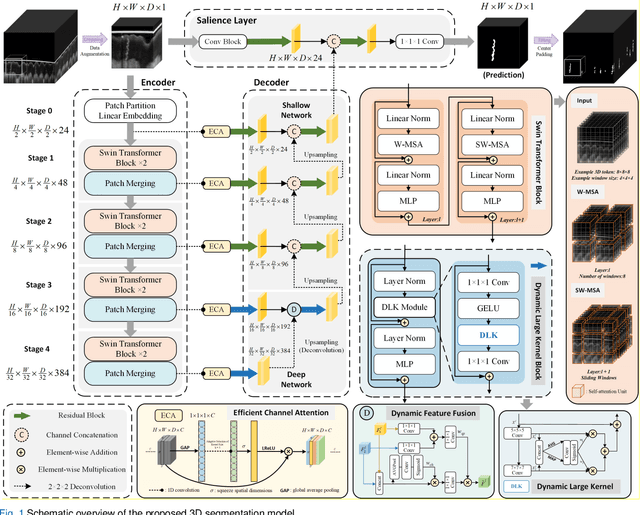
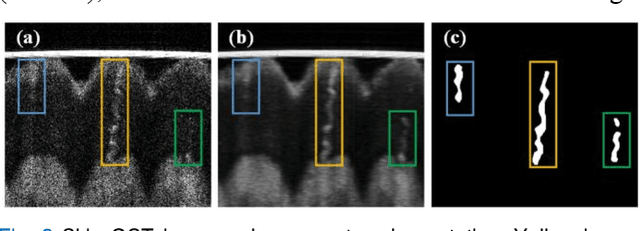
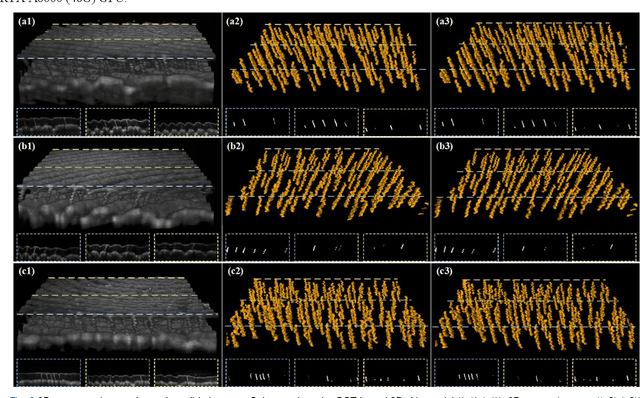

Skin, the primary regulator of heat exchange, relies on sweat glands for thermoregulation. Alterations in sweat gland morphology play a crucial role in various pathological conditions and clinical diagnoses. Current methods for observing sweat gland morphology are limited by their two-dimensional, in vitro, and destructive nature, underscoring the urgent need for real-time, non-invasive, quantifiable technologies. We proposed a novel three-dimensional (3D) transformer-based multi-object segmentation framework, integrating a sliding window approach, joint spatial-channel attention mechanism, and architectural heterogeneity between shallow and deep layers. Our proposed network enables precise 3D sweat gland segmentation from skin volume data captured by optical coherence tomography (OCT). For the first time, subtle variations of sweat gland 3D morphology in response to temperature changes, have been visualized and quantified. Our approach establishes a benchmark for normal sweat gland morphology and provides a real-time, non-invasive tool for quantifying 3D structural parameters. This enables the study of individual variability and pathological changes in sweat gland structure, advancing dermatological research and clinical applications, including thermoregulation and bromhidrosis treatment.
PCM-SAR: Physics-Driven Contrastive Mutual Learning for SAR Classification
Apr 13, 2025Existing SAR image classification methods based on Contrastive Learning often rely on sample generation strategies designed for optical images, failing to capture the distinct semantic and physical characteristics of SAR data. To address this, we propose Physics-Driven Contrastive Mutual Learning for SAR Classification (PCM-SAR), which incorporates domain-specific physical insights to improve sample generation and feature extraction. PCM-SAR utilizes the gray-level co-occurrence matrix (GLCM) to simulate realistic noise patterns and applies semantic detection for unsupervised local sampling, ensuring generated samples accurately reflect SAR imaging properties. Additionally, a multi-level feature fusion mechanism based on mutual learning enables collaborative refinement of feature representations. Notably, PCM-SAR significantly enhances smaller models by refining SAR feature representations, compensating for their limited capacity. Experimental results show that PCM-SAR consistently outperforms SOTA methods across diverse datasets and SAR classification tasks.
DGFamba: Learning Flow Factorized State Space for Visual Domain Generalization
Apr 10, 2025Domain generalization aims to learn a representation from the source domain, which can be generalized to arbitrary unseen target domains. A fundamental challenge for visual domain generalization is the domain gap caused by the dramatic style variation whereas the image content is stable. The realm of selective state space, exemplified by VMamba, demonstrates its global receptive field in representing the content. However, the way exploiting the domain-invariant property for selective state space is rarely explored. In this paper, we propose a novel Flow Factorized State Space model, dubbed as DG-Famba, for visual domain generalization. To maintain domain consistency, we innovatively map the style-augmented and the original state embeddings by flow factorization. In this latent flow space, each state embedding from a certain style is specified by a latent probability path. By aligning these probability paths in the latent space, the state embeddings are able to represent the same content distribution regardless of the style differences. Extensive experiments conducted on various visual domain generalization settings show its state-of-the-art performance.