 Add to Chrome
 Add to Firefox
 Add to Edge
MGDT: MLLM-Guided Diffusion Transformer with Relation-Adaptive Mixture-of-Experts for Multimodal Knowledge Graph Completion
Jul 17, 2026
Multimodal Knowledge Graph Completion (MKGC) requires inferring missing entities from structural, textual, and visual cues. Existing diffusion-based MKGC methods usually denoise directly on raw multimodal features. Such a design forces the denoiser to simultaneously perform relation-dependent cue selection, cross-modal semantic alignment, and structure-aware entity generation, which introduces noisy and semantically inconsistent conditions for diffusion and consequently leads to suboptimal completion performance. To address this limitation, we propose MGDT: MLLM-Guided Diffusion Transformer with Relation-Adaptive Mixture-of-Experts (MGDT), a novel MKGC framework built on an align-then-diffuse paradigm. MGDT first employs a Relation-Adaptive Semantic Routing Mixture-of-Experts (RASR-MoE) module to select relation-relevant multimodal semantic transformation paths and suppress irrelevant modality interference. MGDT then uses a frozen Multimodal Large Language Model (MLLM) as a semantic anchor to align the routed multimodal representations into a unified latent space and reduce cross-modal semantic heterogeneity. Finally, a Knowledge Graph Diffusion Transformer (KGDT) performs graph-conditioned denoising generation in the aligned space to produce the missing entity representation. Experiments on three benchmark datasets show that MGDT consistently outperforms strong baselines.

What Does Your Short-Answer VQA Score Actually Measure? Evaluator-Dependent Instability in Multimodal Short-Answer Benchmarks
Jul 11, 2026Short-answer VQA benchmarks conflate two distinct quantities: whether a model's answer is semantically correct, and whether that answer matches the surface form expected by the automatic evaluator. We study this conflation across six vision--language models and six benchmarks, using a human-validated semantic judge (97.6% precision) to audit over 37k official errors. A second text-only judge reproduces the same benchmark-level false-negative pattern, showing that the effect is not an artifact of a single audit model. On text-rich benchmarks, up to half of these errors are semantically acceptable answers penalized purely for surface-form mismatch. This instability is structured by answer type: extractive and multi-span answers are far more evaluator-sensitive than scalar answers. Benign prompt and context rewrites further destabilize official outcomes, flipping item-level correctness at substantial rates without changing the underlying task. A deterministic CPU-only contract repair confirms that the undercount is partially recoverable. These findings imply that official short-answer VQA scores should be accompanied by semantic audits and answer-type diagnostics to remain interpretable.
Beyond Metadata: CAPRA for Hidden Subgroup Analysis under Missing Metadata in Medical Imaging
Jul 10, 2026Medical imaging models are often deployed without the demographic, acquisition, and quality metadata needed for subgroup auditing. Once those metadata disappear, clinically critical failure modes can be masked by strong aggregate performance, and many robust-learning methods lose the group structure they rely on. We present CAPRA, a calibrated proxy-axis framework for hidden subgroup analysis under missing metadata. CAPRA predicts image-derived semantic axes, calibrates axis posteriors on a small metadata-labeled split via patient-level cross-fitting, and organizes those posteriors into a calibrated subgroup interface that supports both deployment-time failure analysis and downstream robust learning without requiring subgroup labels at deployment. Across fundus, dermoscopy, and chest radiography, CAPRA reveals disparity patterns missed by metadata-only slicing, remains informative under dataset shift, and produces subgroup partitions that align more closely with explicit failure axes than image-only or latent-slice baselines. The same interface can also be reused by downstream robust learners, although those gains are domain-dependent. Overall, CAPRA turns hidden subgroup analysis under missing metadata into a calibrated, interpretable, and reusable subgroup interface for deployment-time analysis and robust transfer.
DATA-WA: Demand-based Adaptive Task Assignment with Dynamic Worker Availability Windows
Mar 27, 2025With the rapid advancement of mobile networks and the widespread use of mobile devices, spatial crowdsourcing, which involves assigning location-based tasks to mobile workers, has gained significant attention. However, most existing research focuses on task assignment at the current moment, overlooking the fluctuating demand and supply between tasks and workers over time. To address this issue, we introduce an adaptive task assignment problem, which aims to maximize the number of assigned tasks by dynamically adjusting task assignments in response to changing demand and supply. We develop a spatial crowdsourcing framework, namely demand-based adaptive task assignment with dynamic worker availability windows, which consists of two components including task demand prediction and task assignment. In the first component, we construct a graph adjacency matrix representing the demand dependency relationships in different regions and employ a multivariate time series learning approach to predict future task demands. In the task assignment component, we adjust tasks to workers based on these predictions, worker availability windows, and the current task assignments, where each worker has an availability window that indicates the time periods they are available for task assignments. To reduce the search space of task assignments and be efficient, we propose a worker dependency separation approach based on graph partition and a task value function with reinforcement learning. Experiments on real data demonstrate that our proposals are both effective and efficient.
Contrastive Graph Condensation: Advancing Data Versatility through Self-Supervised Learning
Nov 26, 2024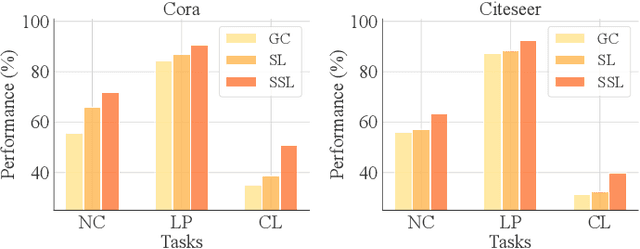
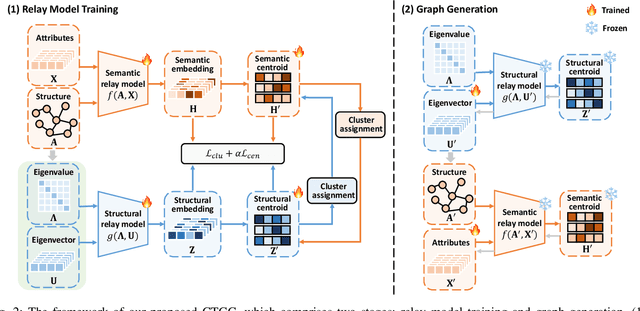
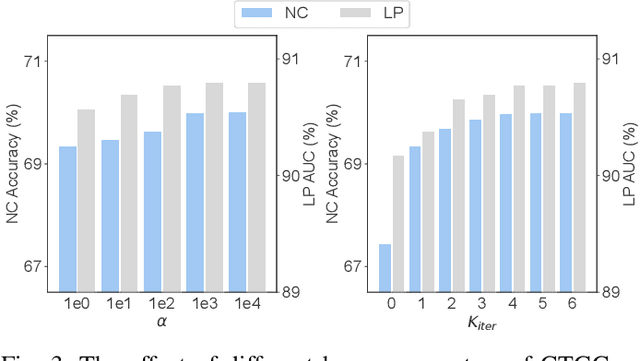

With the increasing computation of training graph neural networks (GNNs) on large-scale graphs, graph condensation (GC) has emerged as a promising solution to synthesize a compact, substitute graph of the large-scale original graph for efficient GNN training. However, existing GC methods predominantly employ classification as the surrogate task for optimization, thus excessively relying on node labels and constraining their utility in label-sparsity scenarios. More critically, this surrogate task tends to overfit class-specific information within the condensed graph, consequently restricting the generalization capabilities of GC for other downstream tasks. To address these challenges, we introduce Contrastive Graph Condensation (CTGC), which adopts a self-supervised surrogate task to extract critical, causal information from the original graph and enhance the cross-task generalizability of the condensed graph. Specifically, CTGC employs a dual-branch framework to disentangle the generation of the node attributes and graph structures, where a dedicated structural branch is designed to explicitly encode geometric information through nodes' positional embeddings. By implementing an alternating optimization scheme with contrastive loss terms, CTGC promotes the mutual enhancement of both branches and facilitates high-quality graph generation through the model inversion technique. Extensive experiments demonstrate that CTGC excels in handling various downstream tasks with a limited number of labels, consistently outperforming state-of-the-art GC methods.
Tackling Data Heterogeneity in Federated Time Series Forecasting
Nov 24, 2024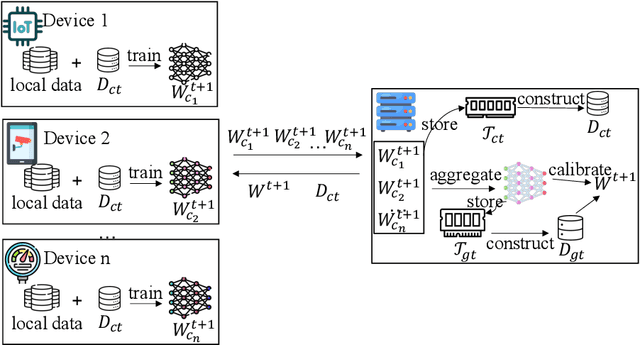


Time series forecasting plays a critical role in various real-world applications, including energy consumption prediction, disease transmission monitoring, and weather forecasting. Although substantial progress has been made in time series forecasting, most existing methods rely on a centralized training paradigm, where large amounts of data are collected from distributed devices (e.g., sensors, wearables) to a central cloud server. However, this paradigm has overloaded communication networks and raised privacy concerns. Federated learning, a popular privacy-preserving technique, enables collaborative model training across distributed data sources. However, directly applying federated learning to time series forecasting often yields suboptimal results, as time series data generated by different devices are inherently heterogeneous. In this paper, we propose a novel framework, Fed-TREND, to address data heterogeneity by generating informative synthetic data as auxiliary knowledge carriers. Specifically, Fed-TREND generates two types of synthetic data. The first type of synthetic data captures the representative distribution information from clients' uploaded model updates and enhances clients' local training consensus. The second kind of synthetic data extracts long-term influence insights from global model update trajectories and is used to refine the global model after aggregation. Fed-TREND is compatible with most time series forecasting models and can be seamlessly integrated into existing federated learning frameworks to improve prediction performance. Extensive experiments on eight datasets, using several federated learning baselines and four popular time series forecasting models, demonstrate the effectiveness and generalizability of Fed-TREND.
On-device Content-based Recommendation with Single-shot Embedding Pruning: A Cooperative Game Perspective
Nov 20, 2024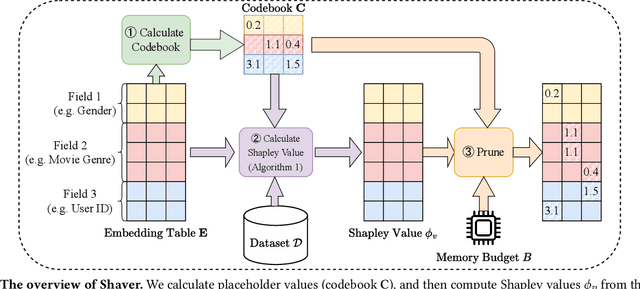


Content-based Recommender Systems (CRSs) play a crucial role in shaping user experiences in e-commerce, online advertising, and personalized recommendations. However, due to the vast amount of categorical features, the embedding tables used in CRS models pose a significant storage bottleneck for real-world deployment, especially on resource-constrained devices. To address this problem, various embedding pruning methods have been proposed, but most existing ones require expensive retraining steps for each target parameter budget, leading to enormous computation costs. In reality, this computation cost is a major hurdle in real-world applications with diverse storage requirements, such as federated learning and streaming settings. In this paper, we propose Shapley Value-guided Embedding Reduction (Shaver) as our response. With Shaver, we view the problem from a cooperative game perspective, and quantify each embedding parameter's contribution with Shapley values to facilitate contribution-based parameter pruning. To address the inherently high computation costs of Shapley values, we propose an efficient and unbiased method to estimate Shapley values of a CRS's embedding parameters. Moreover, in the pruning stage, we put forward a field-aware codebook to mitigate the information loss in the traditional zero-out treatment. Through extensive experiments on three real-world datasets, Shaver has demonstrated competitive performance with lightweight recommendation models across various parameter budgets. The source code is available at https://anonymous.4open.science/r/shaver-E808
Progressive Generalization Risk Reduction for Data-Efficient Causal Effect Estimation
Nov 18, 2024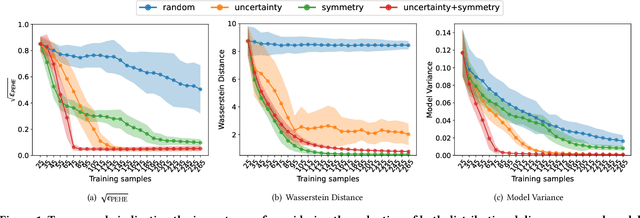

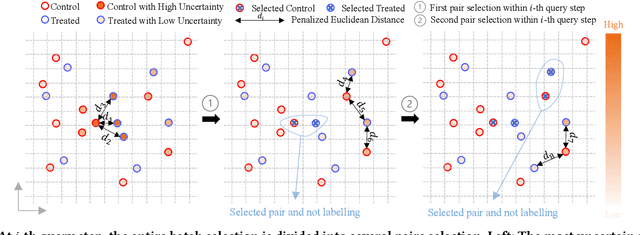

Causal effect estimation (CEE) provides a crucial tool for predicting the unobserved counterfactual outcome for an entity. As CEE relaxes the requirement for ``perfect'' counterfactual samples (e.g., patients with identical attributes and only differ in treatments received) that are impractical to obtain and can instead operate on observational data, it is usually used in high-stake domains like medical treatment effect prediction. Nevertheless, in those high-stake domains, gathering a decently sized, fully labelled observational dataset remains challenging due to hurdles associated with costs, ethics, expertise and time needed, etc., of which medical treatment surveys are a typical example. Consequently, if the training dataset is small in scale, low generalization risks can hardly be achieved on any CEE algorithms. Unlike existing CEE methods that assume the constant availability of a dataset with abundant samples, in this paper, we study a more realistic CEE setting where the labelled data samples are scarce at the beginning, while more can be gradually acquired over the course of training -- assuredly under a limited budget considering their expensive nature. Then, the problem naturally comes down to actively selecting the best possible samples to be labelled, e.g., identifying the next subset of patients to conduct the treatment survey. However, acquiring quality data for reducing the CEE risk under limited labelling budgets remains under-explored until now. To fill the gap, we theoretically analyse the generalization risk from an intriguing perspective of progressively shrinking its upper bound, and develop a principled label acquisition pipeline exclusively for CEE tasks. With our analysis, we propose the Model Agnostic Causal Active Learning (MACAL) algorithm for batch-wise label acquisition, which aims to reduce both the CEE model's uncertainty and the post-acquisition ...
LAC: Graph Contrastive Learning with Learnable Augmentation in Continuous Space
Oct 20, 2024Graph Contrastive Learning frameworks have demonstrated success in generating high-quality node representations. The existing research on efficient data augmentation methods and ideal pretext tasks for graph contrastive learning remains limited, resulting in suboptimal node representation in the unsupervised setting. In this paper, we introduce LAC, a graph contrastive learning framework with learnable data augmentation in an orthogonal continuous space. To capture the representative information in the graph data during augmentation, we introduce a continuous view augmenter, that applies both a masked topology augmentation module and a cross-channel feature augmentation module to adaptively augment the topological information and the feature information within an orthogonal continuous space, respectively. The orthogonal nature of continuous space ensures that the augmentation process avoids dimension collapse. To enhance the effectiveness of pretext tasks, we propose an information-theoretic principle named InfoBal and introduce corresponding pretext tasks. These tasks enable the continuous view augmenter to maintain consistency in the representative information across views while maximizing diversity between views, and allow the encoder to fully utilize the representative information in the unsupervised setting. Our experimental results show that LAC significantly outperforms the state-of-the-art frameworks.
WPFed: Web-based Personalized Federation for Decentralized Systems
Oct 15, 2024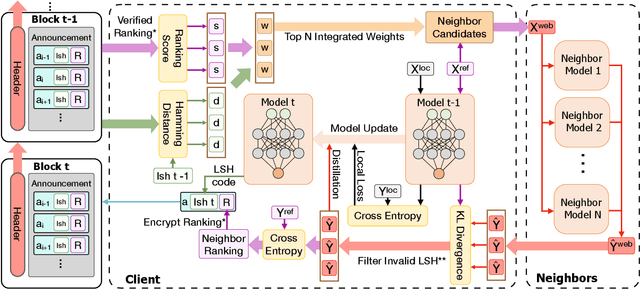

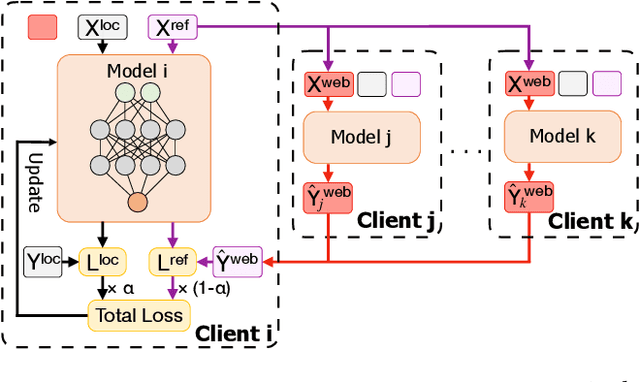

Decentralized learning has become crucial for collaborative model training in environments where data privacy and trust are paramount. In web-based applications, clients are liberated from traditional fixed network topologies, enabling the establishment of arbitrary peer-to-peer (P2P) connections. While this flexibility is highly promising, it introduces a fundamental challenge: the optimal selection of neighbors to ensure effective collaboration. To address this, we introduce WPFed, a fully decentralized, web-based learning framework designed to enable globally optimal neighbor selection. WPFed employs a dynamic communication graph and a weighted neighbor selection mechanism. By assessing inter-client similarity through Locality-Sensitive Hashing (LSH) and evaluating model quality based on peer rankings, WPFed enables clients to identify personalized optimal neighbors on a global scale while preserving data privacy. To enhance security and deter malicious behavior, WPFed integrates verification mechanisms for both LSH codes and performance rankings, leveraging blockchain-driven announcements to ensure transparency and verifiability. Through extensive experiments on multiple real-world datasets, we demonstrate that WPFed significantly improves learning outcomes and system robustness compared to traditional federated learning methods. Our findings highlight WPFed's potential to facilitate effective and secure decentralized collaborative learning across diverse and interconnected web environments.