 Add to Chrome
 Add to Firefox
 Add to Edge
OpenShape: Scaling Up 3D Shape Representation Towards Open-World Understanding
May 18, 2023
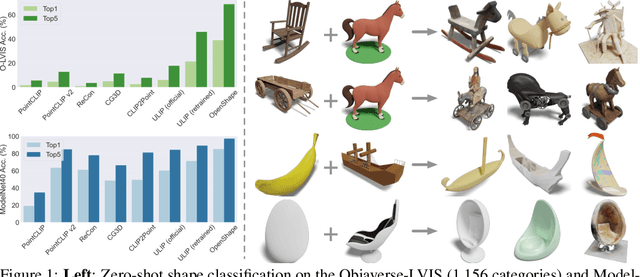
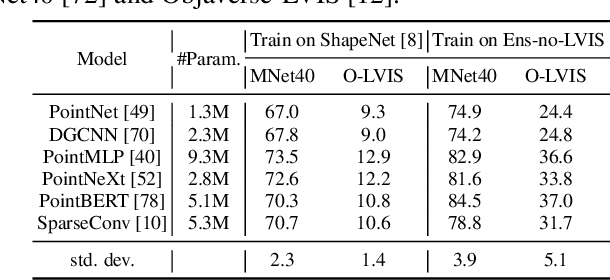
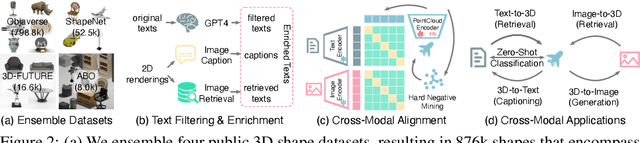
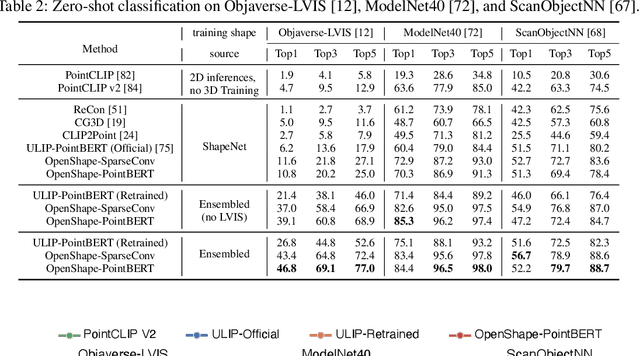
We introduce OpenShape, a method for learning multi-modal joint representations of text, image, and point clouds. We adopt the commonly used multi-modal contrastive learning framework for representation alignment, but with a specific focus on scaling up 3D representations to enable open-world 3D shape understanding. To achieve this, we scale up training data by ensembling multiple 3D datasets and propose several strategies to automatically filter and enrich noisy text descriptions. We also explore and compare strategies for scaling 3D backbone networks and introduce a novel hard negative mining module for more efficient training. We evaluate OpenShape on zero-shot 3D classification benchmarks and demonstrate its superior capabilities for open-world recognition. Specifically, OpenShape achieves a zero-shot accuracy of 46.8% on the 1,156-category Objaverse-LVIS benchmark, compared to less than 10% for existing methods. OpenShape also achieves an accuracy of 85.3% on ModelNet40, outperforming previous zero-shot baseline methods by 20% and performing on par with some fully-supervised methods. Furthermore, we show that our learned embeddings encode a wide range of visual and semantic concepts (e.g., subcategories, color, shape, style) and facilitate fine-grained text-3D and image-3D interactions. Due to their alignment with CLIP embeddings, our learned shape representations can also be integrated with off-the-shelf CLIP-based models for various applications, such as point cloud captioning and point cloud-conditioned image generation.

A Review of Deep Learning for Video Captioning
Apr 22, 2023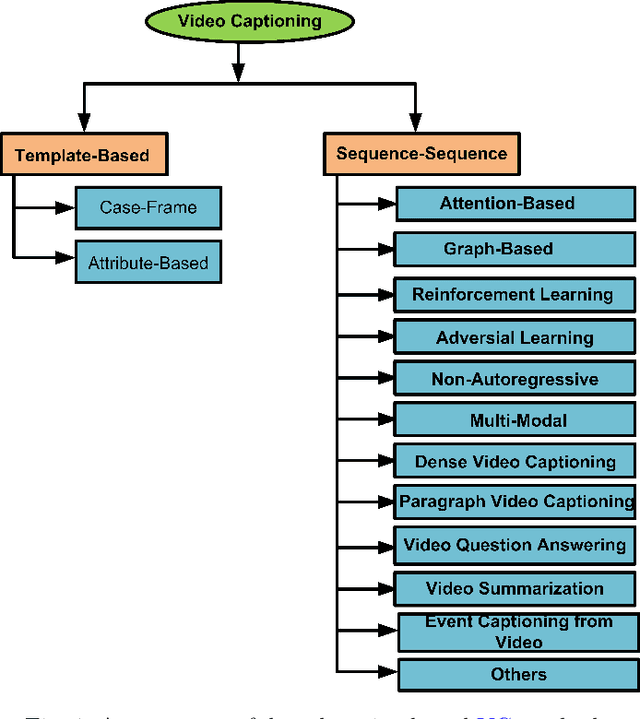
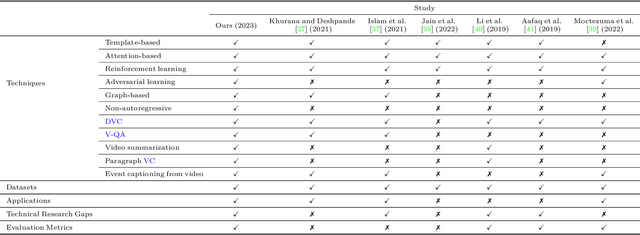
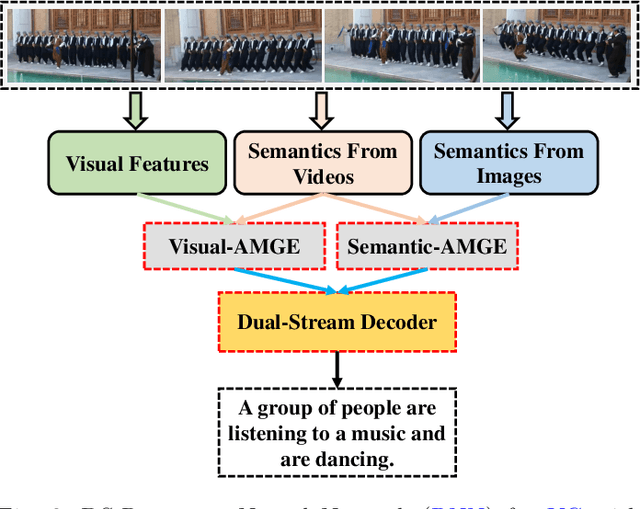
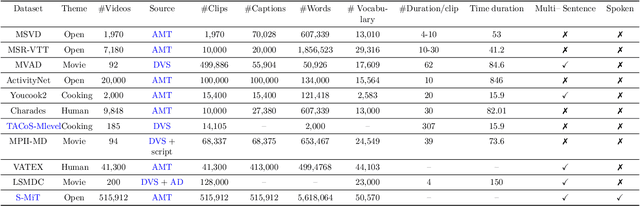
Video captioning (VC) is a fast-moving, cross-disciplinary area of research that bridges work in the fields of computer vision, natural language processing (NLP), linguistics, and human-computer interaction. In essence, VC involves understanding a video and describing it with language. Captioning is used in a host of applications from creating more accessible interfaces (e.g., low-vision navigation) to video question answering (V-QA), video retrieval and content generation. This survey covers deep learning-based VC, including but, not limited to, attention-based architectures, graph networks, reinforcement learning, adversarial networks, dense video captioning (DVC), and more. We discuss the datasets and evaluation metrics used in the field, and limitations, applications, challenges, and future directions for VC.
Factorized Inverse Path Tracing for Efficient and Accurate Material-Lighting Estimation
Apr 12, 2023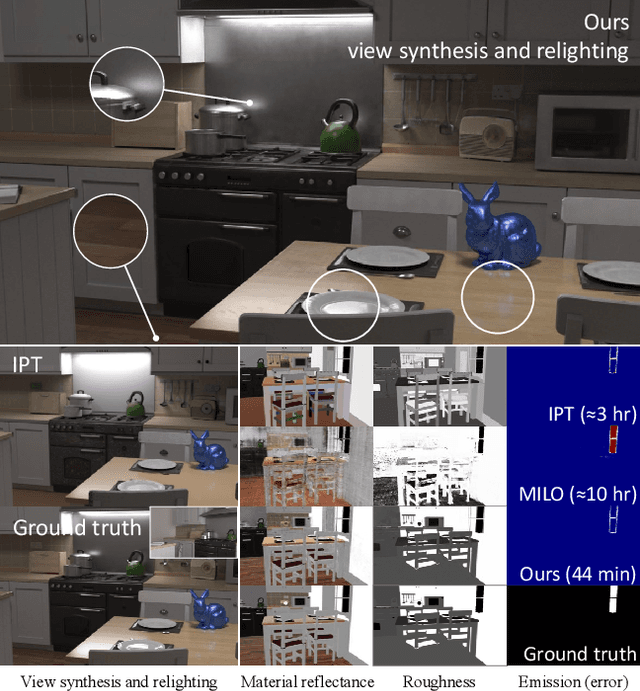
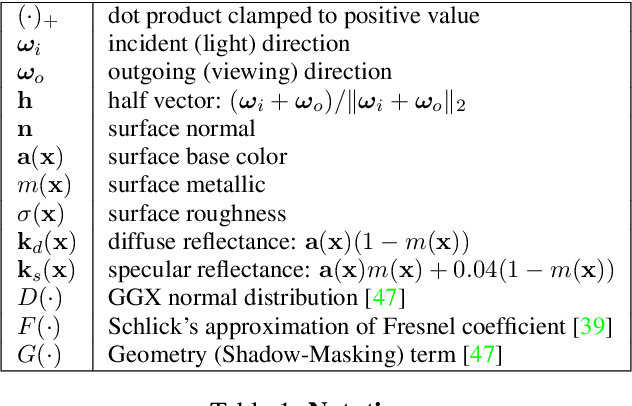
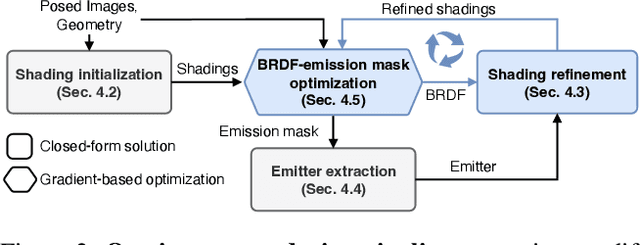
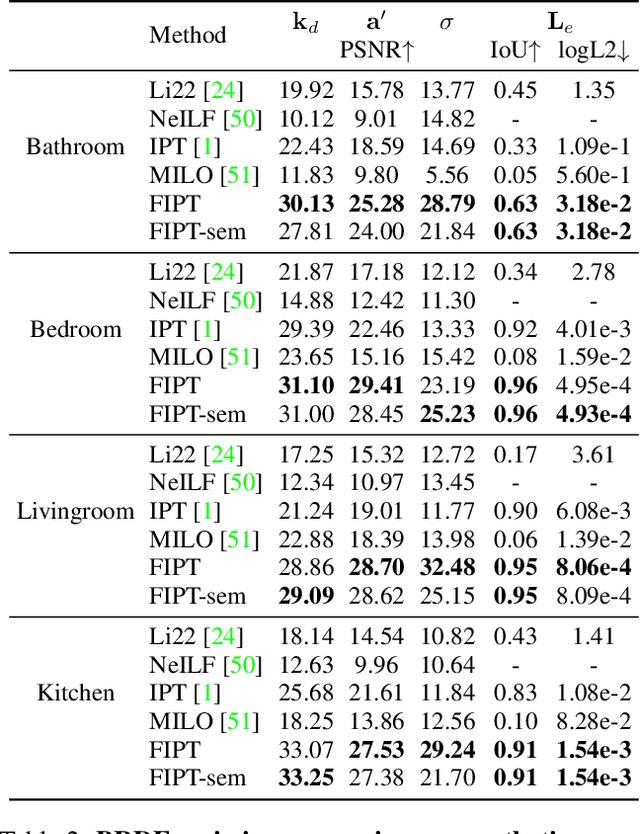
Inverse path tracing has recently been applied to joint material and lighting estimation, given geometry and multi-view HDR observations of an indoor scene. However, it has two major limitations: path tracing is expensive to compute, and ambiguities exist between reflection and emission. We propose a novel Factorized Inverse Path Tracing (FIPT) method which utilizes a factored light transport formulation and finds emitters driven by rendering errors. Our algorithm enables accurate material and lighting optimization faster than previous work, and is more effective at resolving ambiguities. The exhaustive experiments on synthetic scenes show that our method (1) outperforms state-of-the-art indoor inverse rendering and relighting methods particularly in the presence of complex illumination effects; (2) speeds up inverse path tracing optimization to less than an hour. We further demonstrate robustness to noisy inputs through material and lighting estimates that allow plausible relighting in a real scene. The source code is available at: https://github.com/lwwu2/fipt
EGA-Depth: Efficient Guided Attention for Self-Supervised Multi-Camera Depth Estimation
Apr 06, 2023The ubiquitous multi-camera setup on modern autonomous vehicles provides an opportunity to construct surround-view depth. Existing methods, however, either perform independent monocular depth estimations on each camera or rely on computationally heavy self attention mechanisms. In this paper, we propose a novel guided attention architecture, EGA-Depth, which can improve both the efficiency and accuracy of self-supervised multi-camera depth estimation. More specifically, for each camera, we use its perspective view as the query to cross-reference its neighboring views to derive informative features for this camera view. This allows the model to perform attention only across views with considerable overlaps and avoid the costly computations of standard self-attention. Given its efficiency, EGA-Depth enables us to exploit higher-resolution visual features, leading to improved accuracy. Furthermore, EGA-Depth can incorporate more frames from previous time steps as it scales linearly w.r.t. the number of views and frames. Extensive experiments on two challenging autonomous driving benchmarks nuScenes and DDAD demonstrate the efficacy of our proposed EGA-Depth and show that it achieves the new state-of-the-art in self-supervised multi-camera depth estimation.
4D Panoptic Segmentation as Invariant and Equivariant Field Prediction
Mar 28, 2023In this paper, we develop rotation-equivariant neural networks for 4D panoptic segmentation. 4D panoptic segmentation is a recently established benchmark task for autonomous driving, which requires recognizing semantic classes and object instances on the road based on LiDAR scans, as well as assigning temporally consistent IDs to instances across time. We observe that the driving scenario is symmetric to rotations on the ground plane. Therefore, rotation-equivariance could provide better generalization and more robust feature learning. Specifically, we review the object instance clustering strategies, and restate the centerness-based approach and the offset-based approach as the prediction of invariant scalar fields and equivariant vector fields. Other sub-tasks are also unified from this perspective, and different invariant and equivariant layers are designed to facilitate their predictions. Through evaluation on the standard 4D panoptic segmentation benchmark of SemanticKITTI, we show that our equivariant models achieve higher accuracy with lower computational costs compared to their non-equivariant counterparts. Moreover, our method sets the new state-of-the-art performance and achieves 1st place on the SemanticKITTI 4D Panoptic Segmentation leaderboard.
DistractFlow: Improving Optical Flow Estimation via Realistic Distractions and Pseudo-Labeling
Mar 24, 2023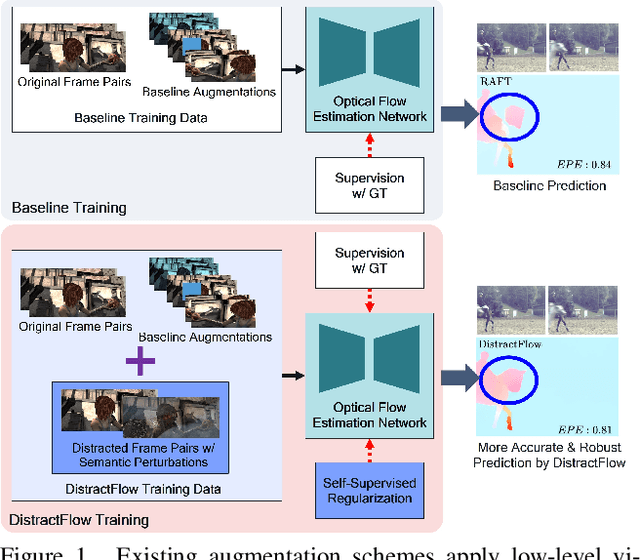
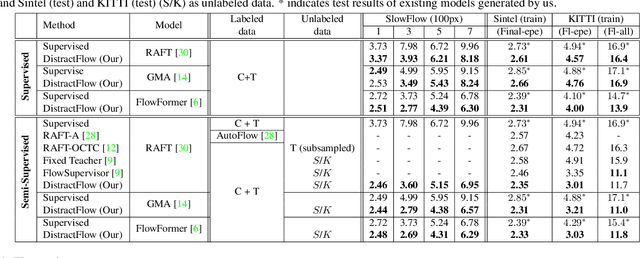
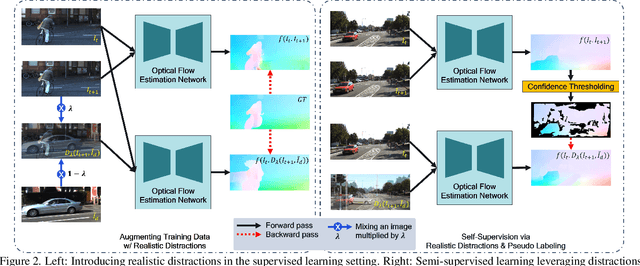
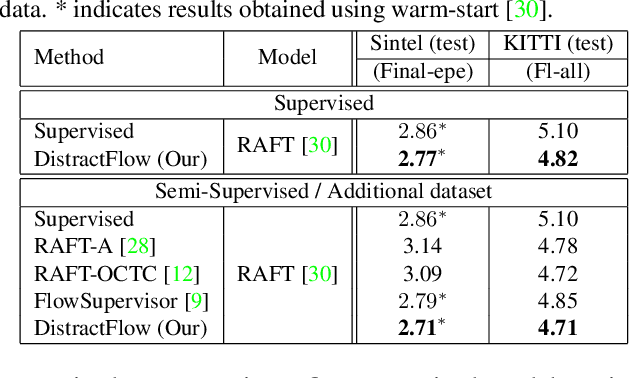
We propose a novel data augmentation approach, DistractFlow, for training optical flow estimation models by introducing realistic distractions to the input frames. Based on a mixing ratio, we combine one of the frames in the pair with a distractor image depicting a similar domain, which allows for inducing visual perturbations congruent with natural objects and scenes. We refer to such pairs as distracted pairs. Our intuition is that using semantically meaningful distractors enables the model to learn related variations and attain robustness against challenging deviations, compared to conventional augmentation schemes focusing only on low-level aspects and modifications. More specifically, in addition to the supervised loss computed between the estimated flow for the original pair and its ground-truth flow, we include a second supervised loss defined between the distracted pair's flow and the original pair's ground-truth flow, weighted with the same mixing ratio. Furthermore, when unlabeled data is available, we extend our augmentation approach to self-supervised settings through pseudo-labeling and cross-consistency regularization. Given an original pair and its distracted version, we enforce the estimated flow on the distracted pair to agree with the flow of the original pair. Our approach allows increasing the number of available training pairs significantly without requiring additional annotations. It is agnostic to the model architecture and can be applied to training any optical flow estimation models. Our extensive evaluations on multiple benchmarks, including Sintel, KITTI, and SlowFlow, show that DistractFlow improves existing models consistently, outperforming the latest state of the art.
QuickSRNet: Plain Single-Image Super-Resolution Architecture for Faster Inference on Mobile Platforms
Mar 08, 2023
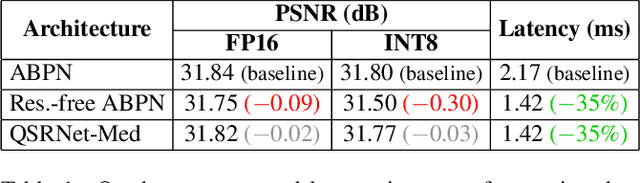

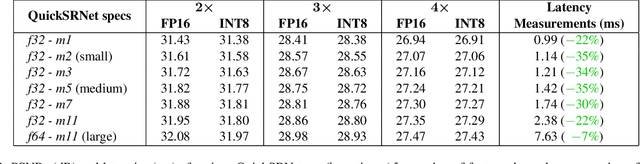
In this work, we present QuickSRNet, an efficient super-resolution architecture for real-time applications on mobile platforms. Super-resolution clarifies, sharpens, and upscales an image to higher resolution. Applications such as gaming and video playback along with the ever-improving display capabilities of TVs, smartphones, and VR headsets are driving the need for efficient upscaling solutions. While existing deep learning-based super-resolution approaches achieve impressive results in terms of visual quality, enabling real-time DL-based super-resolution on mobile devices with compute, thermal, and power constraints is challenging. To address these challenges, we propose QuickSRNet, a simple yet effective architecture that provides better accuracy-to-latency trade-offs than existing neural architectures for single-image super resolution. We present training tricks to speed up existing residual-based super-resolution architectures while maintaining robustness to quantization. Our proposed architecture produces 1080p outputs via 2x upscaling in 2.2 ms on a modern smartphone, making it ideal for high-fps real-time applications.
X$^3$KD: Knowledge Distillation Across Modalities, Tasks and Stages for Multi-Camera 3D Object Detection
Mar 03, 2023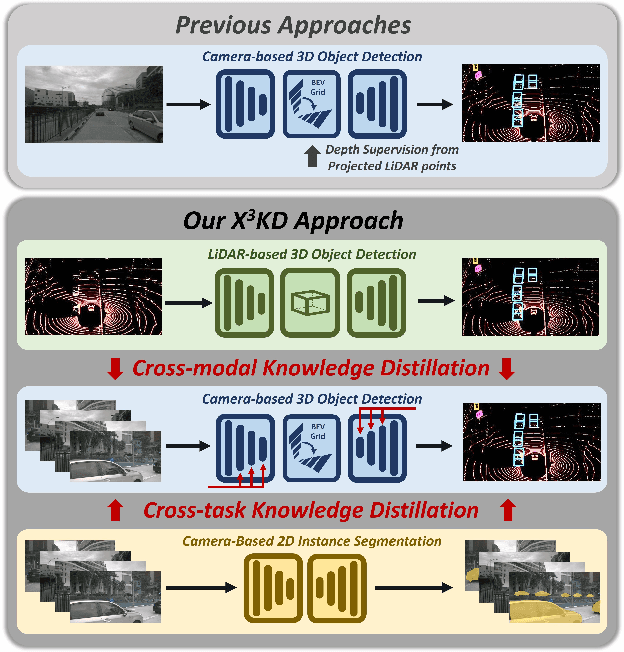
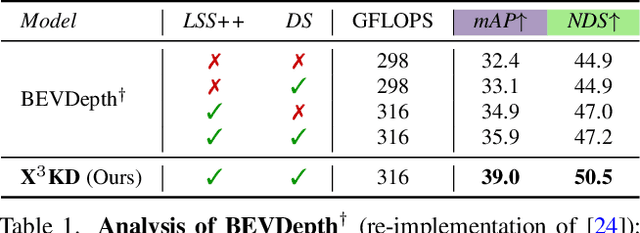
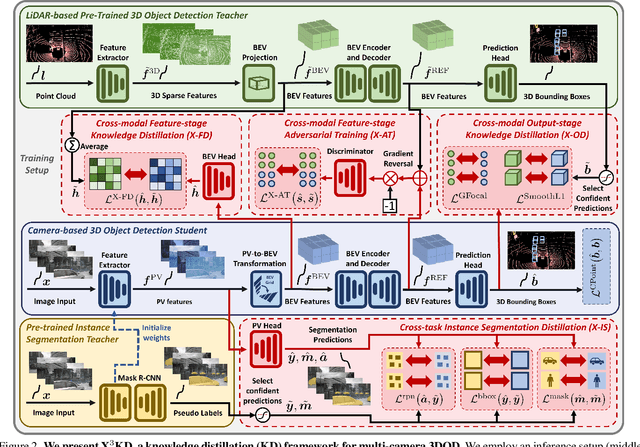
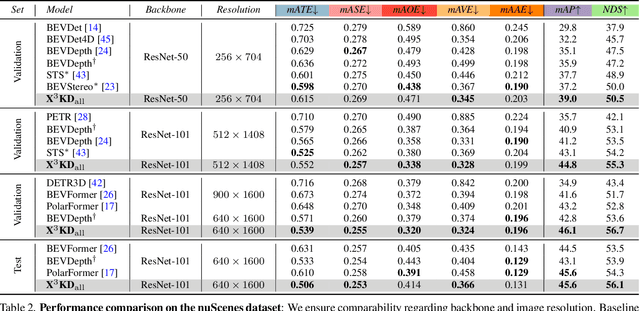
Recent advances in 3D object detection (3DOD) have obtained remarkably strong results for LiDAR-based models. In contrast, surround-view 3DOD models based on multiple camera images underperform due to the necessary view transformation of features from perspective view (PV) to a 3D world representation which is ambiguous due to missing depth information. This paper introduces X$^3$KD, a comprehensive knowledge distillation framework across different modalities, tasks, and stages for multi-camera 3DOD. Specifically, we propose cross-task distillation from an instance segmentation teacher (X-IS) in the PV feature extraction stage providing supervision without ambiguous error backpropagation through the view transformation. After the transformation, we apply cross-modal feature distillation (X-FD) and adversarial training (X-AT) to improve the 3D world representation of multi-camera features through the information contained in a LiDAR-based 3DOD teacher. Finally, we also employ this teacher for cross-modal output distillation (X-OD), providing dense supervision at the prediction stage. We perform extensive ablations of knowledge distillation at different stages of multi-camera 3DOD. Our final X$^3$KD model outperforms previous state-of-the-art approaches on the nuScenes and Waymo datasets and generalizes to RADAR-based 3DOD. Qualitative results video at https://youtu.be/1do9DPFmr38.
DejaVu: Conditional Regenerative Learning to Enhance Dense Prediction
Mar 02, 2023We present DejaVu, a novel framework which leverages conditional image regeneration as additional supervision during training to improve deep networks for dense prediction tasks such as segmentation, depth estimation, and surface normal prediction. First, we apply redaction to the input image, which removes certain structural information by sparse sampling or selective frequency removal. Next, we use a conditional regenerator, which takes the redacted image and the dense predictions as inputs, and reconstructs the original image by filling in the missing structural information. In the redacted image, structural attributes like boundaries are broken while semantic context is largely preserved. In order to make the regeneration feasible, the conditional generator will then require the structure information from the other input source, i.e., the dense predictions. As such, by including this conditional regeneration objective during training, DejaVu encourages the base network to learn to embed accurate scene structure in its dense prediction. This leads to more accurate predictions with clearer boundaries and better spatial consistency. When it is feasible to leverage additional computation, DejaVu can be extended to incorporate an attention-based regeneration module within the dense prediction network, which further improves accuracy. Through extensive experiments on multiple dense prediction benchmarks such as Cityscapes, COCO, ADE20K, NYUD-v2, and KITTI, we demonstrate the efficacy of employing DejaVu during training, as it outperforms SOTA methods at no added computation cost.
TransAdapt: A Transformative Framework for Online Test Time Adaptive Semantic Segmentation
Feb 24, 2023Test-time adaptive (TTA) semantic segmentation adapts a source pre-trained image semantic segmentation model to unlabeled batches of target domain test images, different from real-world, where samples arrive one-by-one in an online fashion. To tackle online settings, we propose TransAdapt, a framework that uses transformer and input transformations to improve segmentation performance. Specifically, we pre-train a transformer-based module on a segmentation network that transforms unsupervised segmentation output to a more reliable supervised output, without requiring test-time online training. To also facilitate test-time adaptation, we propose an unsupervised loss based on the transformed input that enforces the model to be invariant and equivariant to photometric and geometric perturbations, respectively. Overall, our framework produces higher quality segmentation masks with up to 17.6% and 2.8% mIOU improvement over no-adaptation and competitive baselines, respectively.