 Add to Chrome
 Add to Firefox
 Add to Edge
Ground, Cover, and Refine: Evidence-Centric Frame Selection for Long-Video Question Answering
Aug 03, 2026
Long-video question answering requires identifying sparse yet critical evidence from videos containing thousands of frames under a constrained visual-token budget. Existing methods either select query-aware frames in a single pass or rely on timestamped text solely as retrieval guidance, leading to two key limitations. First, selected frames tend to cluster around local relevance peaks, and once the budget is exhausted, omitted evidence cannot be recovered. Second, textual and visual evidence remain weakly aligned. We propose GCR, a training-free framework that casts fixed-budget frame selection as a joint evidence curation problem. Ground converts timestamped text into temporal events, selects query-relevant real frame anchors, and renders each event text onto its temporally aligned frame. Cover supplements grounded events with direct visual anchors for complementary visual evidence and applies global maximal marginal relevance to preserve diverse context. Refine revisits omitted temporal regions and replaces the weakest revisable context frame with a real-frame medoid---but only when the medoid offers greater evidence value. GCR maintains a fixed number of chronologically ordered frames and requires no VLM training or architectural modification. Experiments on LongVideoBench and Video-MME, across three 7B backbones and frame budgets of 8, 32, and 64, demonstrate consistent improvements in long-video QA. With the 7B LLaVA-OV backbone and 32 frames, GCR achieves 64.25% and 62.15% on the two benchmarks, outperforming the strongest reproduced baselines by 2.54 and 1.93 percentage points, respectively.

Hallucination Rates in Language Generation
Jul 25, 2026Language generation in the limit is an elegant model introduced by Kleinberg and Mullainathan [KM24] to formally study language generation by an algorithm that learns solely based on example strings. In this model, an algorithm is said to correctly generate from a language if it never makes an error after some finite time. In contrast, even sophisticated language models are known to regularly hallucinate in practice. In this paper, we initiate the study of language generation in the limit with (infinite) hallucination, i.e., the algorithm may generate incorrect strings infinitely often, but the errors occur at a limited rate (possibly even with 0-measure). We first show that hallucination, even at rate 0, makes generation in the limit strictly more powerful: there are language collections that cannot be generated with finite error but can be generated with infinite error, even when errors occur on a 0-measure set of time-steps. Furthermore, while all countable collections are generatable with finite error, we show a strict hierarchy of (uncountable) language collections characterized by the hallucination rate. This hierarchy extends to breadth, the fraction of the target language generated. While all countable collections can attain the optimal breadth of 1/2 [KW26b], we show strict separation at every breadth and hallucination rate. Finally, we study generation in the limit without repetition, where the algorithm may not repeat strings. This lets us compare the sets of correct and incorrect strings generated, rather than the fractions of correct and incorrect time-steps. Once again, we demonstrate a strict hierarchy at every hallucination rate and breadth. Taken together, these results reveal rich structure in language collections generatable in the limit with hallucination and establish hallucination rate as an important parameter in the theoretical study of language generation.
Attend, Transform, or Silence: Operator-Level Visual Skipping for Efficient Multimodal LLM Inference
Jun 30, 2026Multimodal large language models (MLLMs) increasingly process long visual-token sequences, increasing the overall inference computation. Existing acceleration methods usually remove visual tokens or skip visual-token updates in entire layers, but these coarse strategies may discard fine-grained evidence or suppress useful operators together with redundant ones. In this paper, we study visual-token computation from an answer-observable perspective and find that late visual-token updates can remain large while having little effect on answer-token representations. Motivated by this answer-silent redundancy, we decompose each Transformer layer into attention and FFN operators and show that useful visual computation is often operator-dominant and layer-dependent. We propose an operator-level visual-token skipping framework that preserves the full visual-token sequence while selectively bypassing redundant attention, FFN, or both. Experiments across three MLLM architectures and 10 VQA benchmarks show that our method achieves strong efficiency-accuracy trade-offs, reducing \textbf{33.7\%} TFLOPs on Qwen3-VL while retaining \textbf{99.5\%} of the vanilla model performance.
RXNRECer Enables Fine-grained Enzymatic Function Annotation through Active Learning and Protein Language Models
Mar 13, 2026A key challenge in enzyme annotation is identifying the biochemical reactions catalyzed by proteins. Most existing methods rely on Enzyme Commission (EC) numbers as intermediaries: they first predict an EC number and then retrieve the associated reactions. This indirect strategy introduces ambiguity due to the complex many-to-many mappings among proteins, EC numbers, and reactions, and is further complicated by frequent updates to EC numbers and inconsistencies across databases. To address these challenges, we present RXNRECer, a transformer-based ensemble framework that directly predicts enzyme-catalyzed reactions without relying on EC numbers. It integrates protein language modeling and active learning to capture both high-level sequence semantics and fine-grained transformation patterns. Evaluations on curated cross-validation and temporal test sets demonstrate consistent improvements over six EC-based baselines, with gains of 16.54% in F1 score and 15.43% in accuracy. Beyond accuracy gains, the framework offers clear advantages for downstream applications, including scalable proteome-wide reaction annotation, enhanced specificity in refining generic reaction schemas, systematic annotation of previously uncurated proteins, and reliable identification of enzyme promiscuity. By incorporating large language models, it also provides interpretable rationales for predictions. These capabilities make RXNRECer a robust and versatile solution for EC-free, fine-grained enzyme function prediction, with potential applications across multiple areas of enzyme research and industrial applications.
RS-Prune: Training-Free Data Pruning at High Ratios for Efficient Remote Sensing Diffusion Foundation Models
Dec 29, 2025Diffusion-based remote sensing (RS) generative foundation models are cruial for downstream tasks. However, these models rely on large amounts of globally representative data, which often contain redundancy, noise, and class imbalance, reducing training efficiency and preventing convergence. Existing RS diffusion foundation models typically aggregate multiple classification datasets or apply simplistic deduplication, overlooking the distributional requirements of generation modeling and the heterogeneity of RS imagery. To address these limitations, we propose a training-free, two-stage data pruning approach that quickly select a high-quality subset under high pruning ratios, enabling a preliminary foundation model to converge rapidly and serve as a versatile backbone for generation, downstream fine-tuning, and other applications. Our method jointly considers local information content with global scene-level diversity and representativeness. First, an entropy-based criterion efficiently removes low-information samples. Next, leveraging RS scene classification datasets as reference benchmarks, we perform scene-aware clustering with stratified sampling to improve clustering effectiveness while reducing computational costs on large-scale unlabeled data. Finally, by balancing cluster-level uniformity and sample representativeness, the method enables fine-grained selection under high pruning ratios while preserving overall diversity and representativeness. Experiments show that, even after pruning 85\% of the training data, our method significantly improves convergence and generation quality. Furthermore, diffusion foundation models trained with our method consistently achieve state-of-the-art performance across downstream tasks, including super-resolution and semantic image synthesis. This data pruning paradigm offers practical guidance for developing RS generative foundation models.
Language Generation and Identification From Partial Enumeration: Tight Density Bounds and Topological Characterizations
Nov 07, 2025The success of large language models (LLMs) has motivated formal theories of language generation and learning. We study the framework of \emph{language generation in the limit}, where an adversary enumerates strings from an unknown language $K$ drawn from a countable class, and an algorithm must generate unseen strings from $K$. Prior work showed that generation is always possible, and that some algorithms achieve positive lower density, revealing a \emph{validity--breadth} trade-off between correctness and coverage. We resolve a main open question in this line, proving a tight bound of $1/2$ on the best achievable lower density. We then strengthen the model to allow \emph{partial enumeration}, where the adversary reveals only an infinite subset $C \subseteq K$. We show that generation in the limit remains achievable, and if $C$ has lower density $α$ in $K$, the algorithm's output achieves density at least $α/2$, matching the upper bound. This generalizes the $1/2$ bound to the partial-information setting, where the generator must recover within a factor $1/2$ of the revealed subset's density. We further revisit the classical Gold--Angluin model of \emph{language identification} under partial enumeration. We characterize when identification in the limit is possible -- when hypotheses $M_t$ eventually satisfy $C \subseteq M \subseteq K$ -- and in the process give a new topological formulation of Angluin's characterization, showing that her condition is precisely equivalent to an appropriate topological space having the $T_D$ separation property.
Density Measures for Language Generation
Apr 19, 2025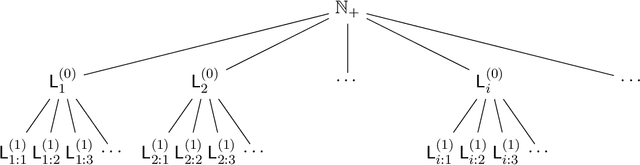
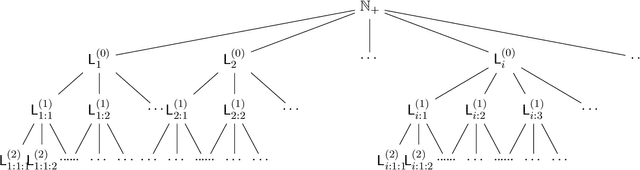
The recent successes of large language models (LLMs) have led to a surge of theoretical research into language generation. A recent line of work proposes an abstract view, called language generation in the limit, where generation is seen as a game between an adversary and an algorithm: the adversary generates strings from an unknown language $K$, chosen from a countable collection of candidate languages, and after seeing a finite set of these strings, the algorithm must generate new strings from $K$ that it has not seen before. This formalism highlights a key tension: the trade-off between validity (the algorithm should only produce strings from the language) and breadth (it should be able to produce many strings from the language). This trade-off is central in applied language generation as well, where it appears as a balance between hallucination (generating invalid utterances) and mode collapse (generating only a restricted set of outputs). Despite its importance, this trade-off has been challenging to study quantitatively. We develop ways to quantify this trade-off by formalizing breadth using measures of density. Existing algorithms for language generation in the limit produce output sets that can have zero density in the true language, and this important failure of breadth might seem unavoidable. We show, however, that such a failure is not necessary: we provide an algorithm for language generation in the limit whose outputs have strictly positive density in $K$. We also study the internal representations built by these algorithms, specifically the sequence of hypothesized candidate languages they consider, and show that achieving the strongest form of breadth may require oscillating indefinitely between high- and low-density representations. Our analysis introduces a novel topology on language families, with notions of convergence and limit points playing a key role.
Constructing a Norm for Children's Scientific Drawing: Distribution Features Based on Semantic Similarity of Large Language Models
Feb 21, 2025The use of children's drawings to examining their conceptual understanding has been proven to be an effective method, but there are two major problems with previous research: 1. The content of the drawings heavily relies on the task, and the ecological validity of the conclusions is low; 2. The interpretation of drawings relies too much on the subjective feelings of the researchers. To address this issue, this study uses the Large Language Model (LLM) to identify 1420 children's scientific drawings (covering 9 scientific themes/concepts), and uses the word2vec algorithm to calculate their semantic similarity. The study explores whether there are consistent drawing representations for children on the same theme, and attempts to establish a norm for children's scientific drawings, providing a baseline reference for follow-up children's drawing research. The results show that the representation of most drawings has consistency, manifested as most semantic similarity greater than 0.8. At the same time, it was found that the consistency of the representation is independent of the accuracy (of LLM's recognition), indicating the existence of consistency bias. In the subsequent exploration of influencing factors, we used Kendall rank correlation coefficient to investigate the effects of Sample Size, Abstract Degree, and Focus Points on drawings, and used word frequency statistics to explore whether children represented abstract themes/concepts by reproducing what was taught in class.
Computer Analysis of Architecture Using Automatic Image Understanding
Oct 17, 2018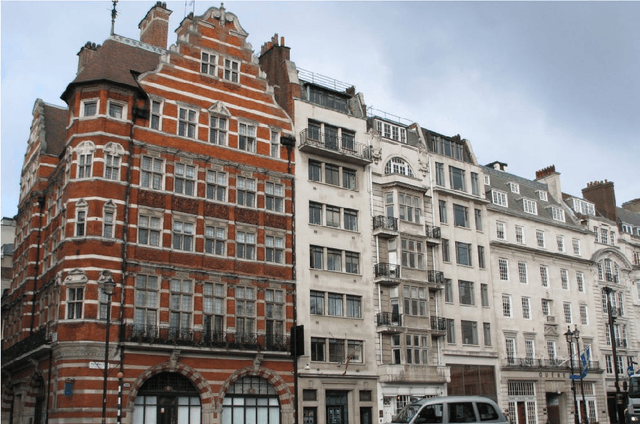


In the past few years, computer vision and pattern recognition systems have been becoming increasingly more powerful, expanding the range of automatic tasks enabled by machine vision. Here we show that computer analysis of building images can perform quantitative analysis of architecture, and quantify similarities between city architectural styles in a quantitative fashion. Images of buildings from 18 cities and three countries were acquired using Google StreetView, and were used to train a machine vision system to automatically identify the location of the imaged building based on the image visual content. Experimental results show that the automatic computer analysis can automatically identify the geographical location of the StreetView image. More importantly, the algorithm was able to group the cities and countries and provide a phylogeny of the similarities between architectural styles as captured by StreetView images. These results demonstrate that computer vision and pattern recognition algorithms can perform the complex cognitive task of analyzing images of buildings, and can be used to measure and quantify visual similarities and differences between different styles of architectures. This experiment provides a new paradigm for studying architecture, based on a quantitative approach that can enhance the traditional manual observation and analysis. The source code used for the analysis is open and publicly available.
Self-Paced Multi-Task Learning
Apr 03, 2017
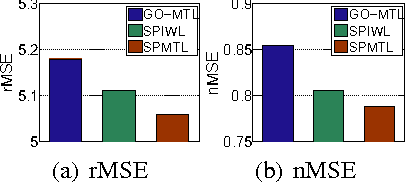

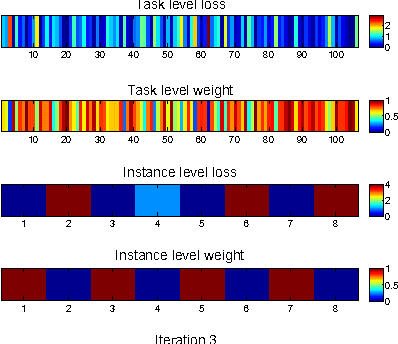
In this paper, we propose a novel multi-task learning (MTL) framework, called Self-Paced Multi-Task Learning (SPMTL). Different from previous works treating all tasks and instances equally when training, SPMTL attempts to jointly learn the tasks by taking into consideration the complexities of both tasks and instances. This is inspired by the cognitive process of human brain that often learns from the easy to the hard. We construct a compact SPMTL formulation by proposing a new task-oriented regularizer that can jointly prioritize the tasks and the instances. Thus it can be interpreted as a self-paced learner for MTL. A simple yet effective algorithm is designed for optimizing the proposed objective function. An error bound for a simplified formulation is also analyzed theoretically. Experimental results on toy and real-world datasets demonstrate the effectiveness of the proposed approach, compared to the state-of-the-art methods.