 Add to Chrome
 Add to Firefox
 Add to Edge
EnTri: Ensemble Learning with Tri-level Representations for Explainable Scene Recognition
Jul 23, 2023
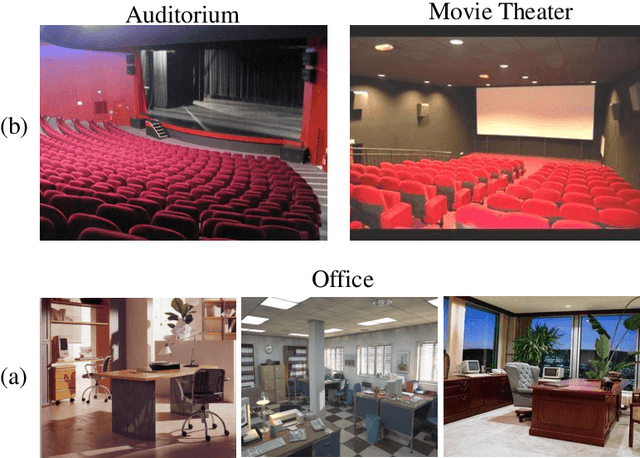
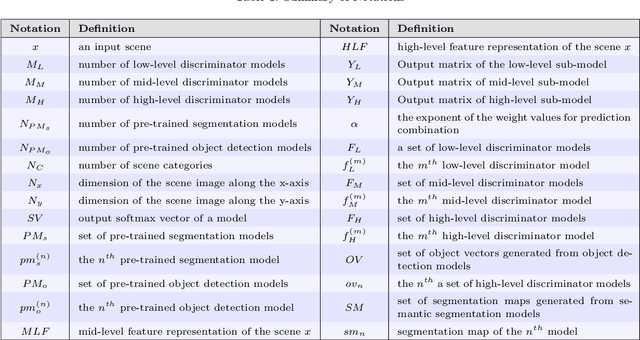
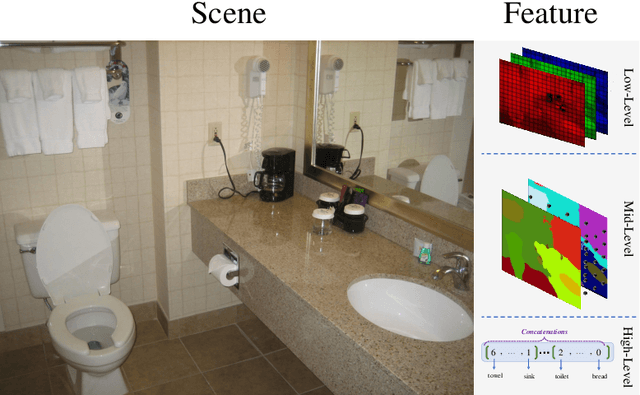
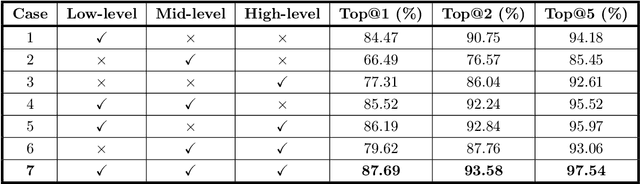
Scene recognition based on deep-learning has made significant progress, but there are still limitations in its performance due to challenges posed by inter-class similarities and intra-class dissimilarities. Furthermore, prior research has primarily focused on improving classification accuracy, yet it has given less attention to achieving interpretable, precise scene classification. Therefore, we are motivated to propose EnTri, an ensemble scene recognition framework that employs ensemble learning using a hierarchy of visual features. EnTri represents features at three distinct levels of detail: pixel-level, semantic segmentation-level, and object class and frequency level. By incorporating distinct feature encoding schemes of differing complexity and leveraging ensemble strategies, our approach aims to improve classification accuracy while enhancing transparency and interpretability via visual and textual explanations. To achieve interpretability, we devised an extension algorithm that generates both visual and textual explanations highlighting various properties of a given scene that contribute to the final prediction of its category. This includes information about objects, statistics, spatial layout, and textural details. Through experiments on benchmark scene classification datasets, EnTri has demonstrated superiority in terms of recognition accuracy, achieving competitive performance compared to state-of-the-art approaches, with an accuracy of 87.69%, 75.56%, and 99.17% on the MIT67, SUN397, and UIUC8 datasets, respectively.

TbExplain: A Text-based Explanation Method for Scene Classification Models with the Statistical Prediction Correction
Jul 19, 2023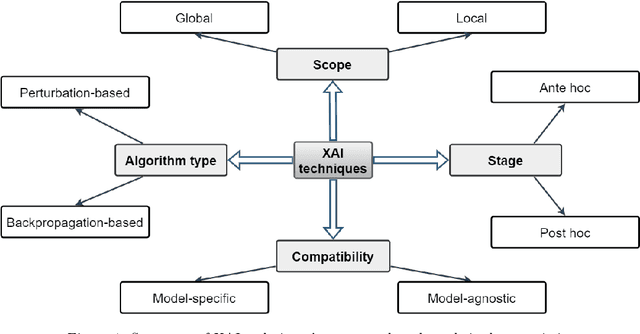

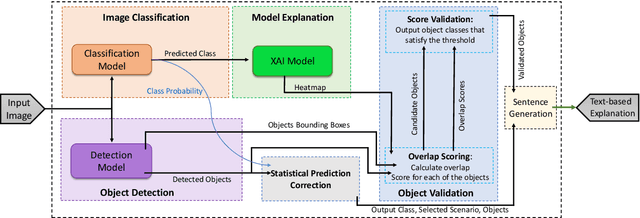
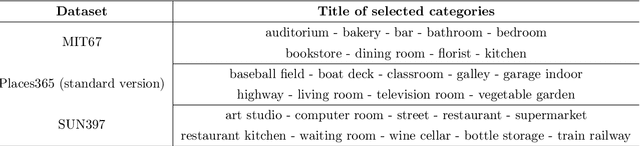
The field of Explainable Artificial Intelligence (XAI) aims to improve the interpretability of black-box machine learning models. Building a heatmap based on the importance value of input features is a popular method for explaining the underlying functions of such models in producing their predictions. Heatmaps are almost understandable to humans, yet they are not without flaws. Non-expert users, for example, may not fully understand the logic of heatmaps (the logic in which relevant pixels to the model's prediction are highlighted with different intensities or colors). Additionally, objects and regions of the input image that are relevant to the model prediction are frequently not entirely differentiated by heatmaps. In this paper, we propose a framework called TbExplain that employs XAI techniques and a pre-trained object detector to present text-based explanations of scene classification models. Moreover, TbExplain incorporates a novel method to correct predictions and textually explain them based on the statistics of objects in the input image when the initial prediction is unreliable. To assess the trustworthiness and validity of the text-based explanations, we conducted a qualitative experiment, and the findings indicated that these explanations are sufficiently reliable. Furthermore, our quantitative and qualitative experiments on TbExplain with scene classification datasets reveal an improvement in classification accuracy over ResNet variants.
Can ChatGPT's Responses Boost Traditional Natural Language Processing?
Jul 06, 2023The employment of foundation models is steadily expanding, especially with the launch of ChatGPT and the release of other foundation models. These models have shown the potential of emerging capabilities to solve problems, without being particularly trained to solve. A previous work demonstrated these emerging capabilities in affective computing tasks; the performance quality was similar to traditional Natural Language Processing (NLP) techniques, but falling short of specialised trained models, like fine-tuning of the RoBERTa language model. In this work, we extend this by exploring if ChatGPT has novel knowledge that would enhance existing specialised models when they are fused together. We achieve this by investigating the utility of verbose responses from ChatGPT about solving a downstream task, in addition to studying the utility of fusing that with existing NLP methods. The study is conducted on three affective computing problems, namely sentiment analysis, suicide tendency detection, and big-five personality assessment. The results conclude that ChatGPT has indeed novel knowledge that can improve existing NLP techniques by way of fusion, be it early or late fusion.
Recent Developments in Recommender Systems: A Survey
Jun 22, 2023
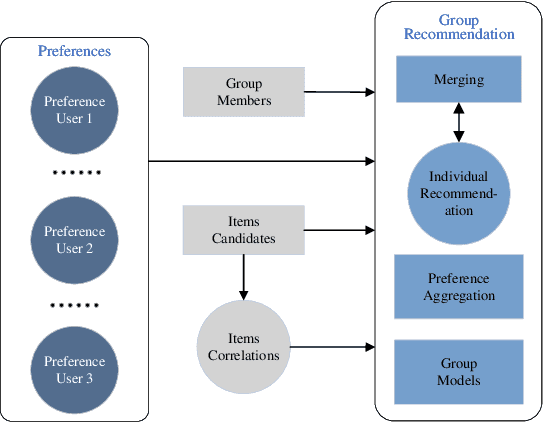
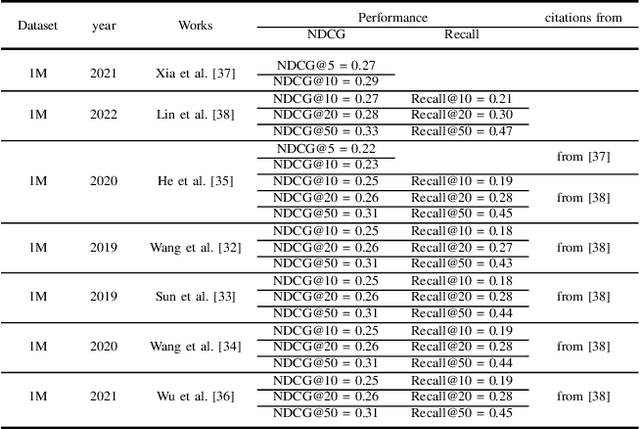
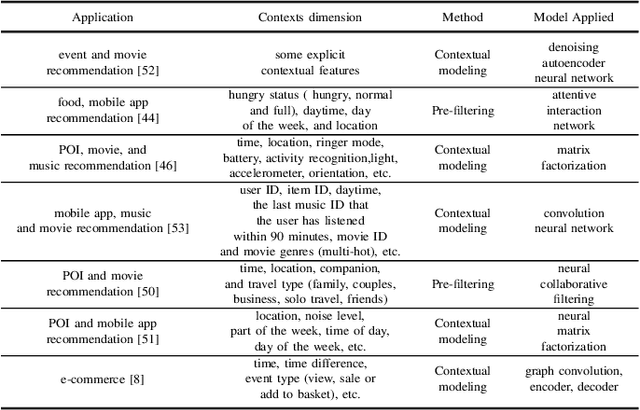
In this technical survey, we comprehensively summarize the latest advancements in the field of recommender systems. The objective of this study is to provide an overview of the current state-of-the-art in the field and highlight the latest trends in the development of recommender systems. The study starts with a comprehensive summary of the main taxonomy of recommender systems, including personalized and group recommender systems, and then delves into the category of knowledge-based recommender systems. In addition, the survey analyzes the robustness, data bias, and fairness issues in recommender systems, summarizing the evaluation metrics used to assess the performance of these systems. Finally, the study provides insights into the latest trends in the development of recommender systems and highlights the new directions for future research in the field.
Are Large Language Models Really Good Logical Reasoners? A Comprehensive Evaluation From Deductive, Inductive and Abductive Views
Jun 16, 2023Large Language Models (LLMs) have achieved great success in various natural language tasks. It has aroused much interest in evaluating the specific reasoning capability of LLMs, such as multilingual reasoning and mathematical reasoning. However, as one of the key reasoning perspectives, logical reasoning capability has not yet been thoroughly evaluated. In this work, we aim to bridge those gaps and provide comprehensive evaluations. Firstly, to offer systematic evaluations, this paper selects fifteen typical logical reasoning datasets and organizes them into deductive, inductive, abductive and mixed-form reasoning settings. Considering the comprehensiveness of evaluations, we include three representative LLMs (i.e., text-davinci-003, ChatGPT and BARD) and evaluate them on all selected datasets under zero-shot, one-shot and three-shot settings. Secondly, different from previous evaluations relying only on simple metrics (e.g., accuracy), we propose fine-level evaluations from objective and subjective manners, covering both answers and explanations. Also, to uncover the logical flaws of LLMs, bad cases will be attributed to five error types from two dimensions. Thirdly, to avoid the influences of knowledge bias and purely focus on benchmarking the logical reasoning capability of LLMs, we propose a new dataset with neutral content. It contains 3K samples and covers deductive, inductive and abductive reasoning settings. Based on the in-depth evaluations, this paper finally concludes the ability maps of logical reasoning capability from six dimensions (i.e., correct, rigorous, self-aware, active, oriented and no hallucination). It reflects the pros and cons of LLMs and gives guiding directions for future works.
Improving Self-training for Cross-lingual Named Entity Recognition with Contrastive and Prototype Learning
May 23, 2023In cross-lingual named entity recognition (NER), self-training is commonly used to bridge the linguistic gap by training on pseudo-labeled target-language data. However, due to sub-optimal performance on target languages, the pseudo labels are often noisy and limit the overall performance. In this work, we aim to improve self-training for cross-lingual NER by combining representation learning and pseudo label refinement in one coherent framework. Our proposed method, namely ContProto mainly comprises two components: (1) contrastive self-training and (2) prototype-based pseudo-labeling. Our contrastive self-training facilitates span classification by separating clusters of different classes, and enhances cross-lingual transferability by producing closely-aligned representations between the source and target language. Meanwhile, prototype-based pseudo-labeling effectively improves the accuracy of pseudo labels during training. We evaluate ContProto on multiple transfer pairs, and experimental results show our method brings in substantial improvements over current state-of-the-art methods.
Finding the Pillars of Strength for Multi-Head Attention
May 22, 2023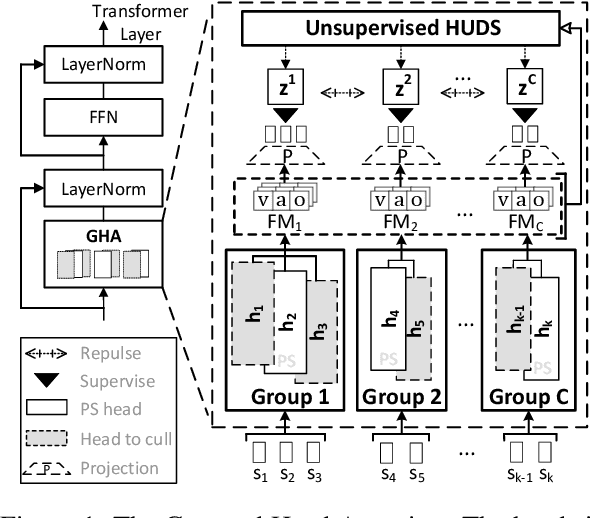
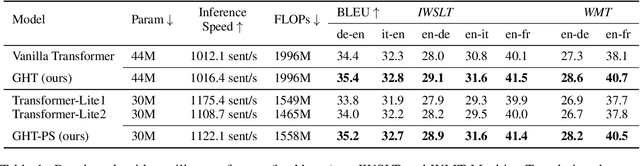
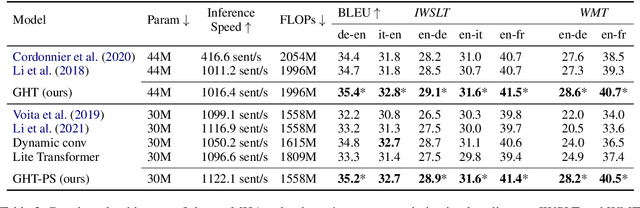
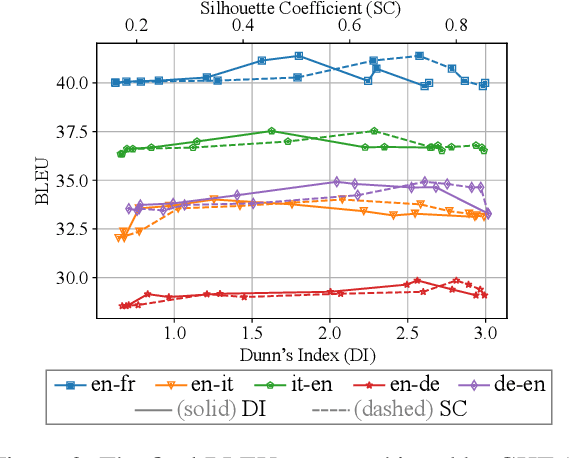
Recent studies have revealed some issues of Multi-Head Attention (MHA), e.g., redundancy and over-parameterization. Specifically, the heads of MHA were originally designed to attend to information from different representation subspaces, whereas prior studies found that some attention heads likely learn similar features and can be pruned without harming performance. Inspired by the minimum-redundancy feature selection, we assume that focusing on the most representative and distinctive features with minimum resources can mitigate the above issues and lead to more effective and efficient MHAs. In particular, we propose Grouped Head Attention, trained with a self-supervised group constraint that group attention heads, where each group focuses on an essential but distinctive feature subset. We additionally propose a Voting-to-Stay procedure to remove redundant heads, thus achieving a transformer with lighter weights. Moreover, our method achieves significant performance gains on three well-established tasks while considerably compressing parameters.
The MuSe 2023 Multimodal Sentiment Analysis Challenge: Mimicked Emotions, Cross-Cultural Humour, and Personalisation
May 05, 2023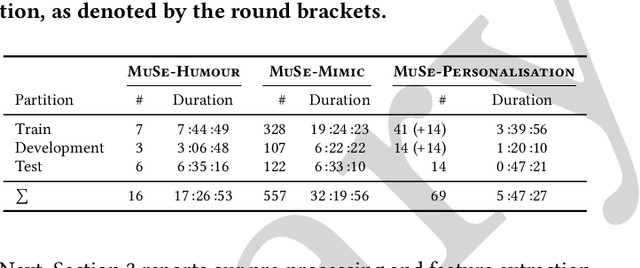
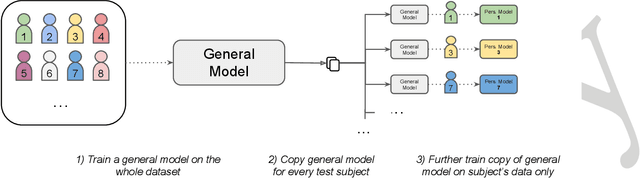
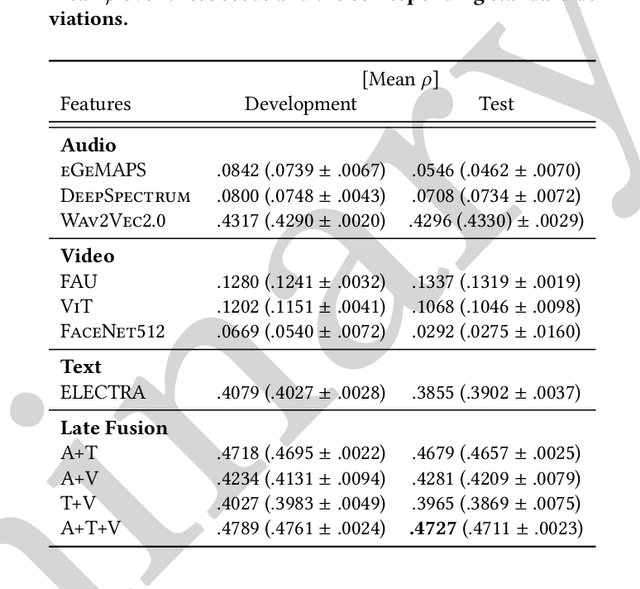
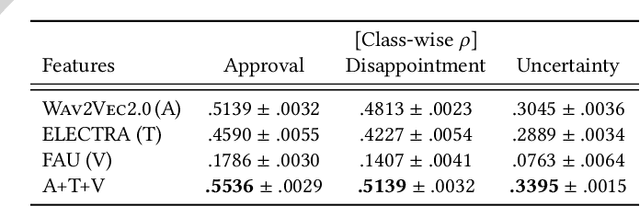
The MuSe 2023 is a set of shared tasks addressing three different contemporary multimodal affect and sentiment analysis problems: In the Mimicked Emotions Sub-Challenge (MuSe-Mimic), participants predict three continuous emotion targets. This sub-challenge utilises the Hume-Vidmimic dataset comprising of user-generated videos. For the Cross-Cultural Humour Detection Sub-Challenge (MuSe-Humour), an extension of the Passau Spontaneous Football Coach Humour (Passau-SFCH) dataset is provided. Participants predict the presence of spontaneous humour in a cross-cultural setting. The Personalisation Sub-Challenge (MuSe-Personalisation) is based on the Ulm-Trier Social Stress Test (Ulm-TSST) dataset, featuring recordings of subjects in a stressed situation. Here, arousal and valence signals are to be predicted, whereas parts of the test labels are made available in order to facilitate personalisation. MuSe 2023 seeks to bring together a broad audience from different research communities such as audio-visual emotion recognition, natural language processing, signal processing, and health informatics. In this baseline paper, we introduce the datasets, sub-challenges, and provided feature sets. As a competitive baseline system, a Gated Recurrent Unit (GRU)-Recurrent Neural Network (RNN) is employed. On the respective sub-challenges' test datasets, it achieves a mean (across three continuous intensity targets) Pearson's Correlation Coefficient of .4727 for MuSe-Mimic, an Area Under the Curve (AUC) value of .8310 for MuSe-Humor and Concordance Correlation Coefficient (CCC) values of .7482 for arousal and .7827 for valence in the MuSe-Personalisation sub-challenge.
A Review of Deep Learning for Video Captioning
Apr 22, 2023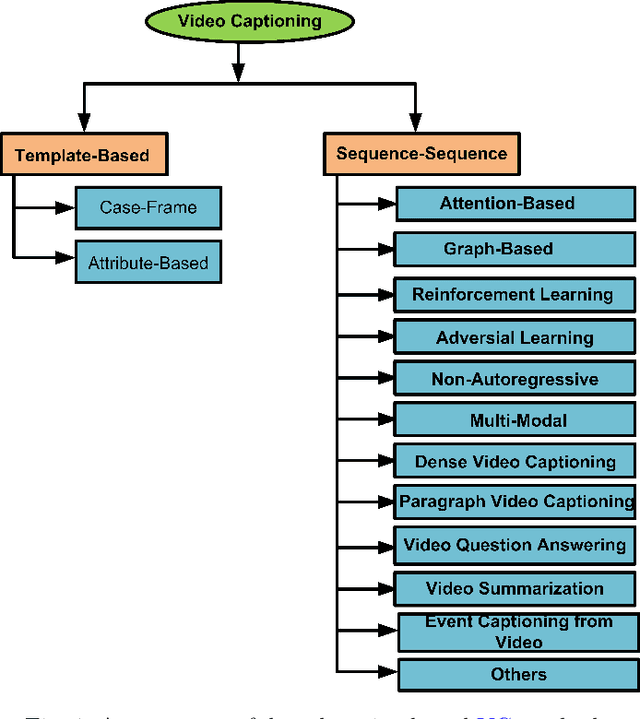
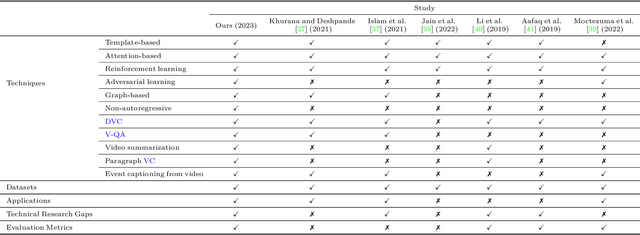
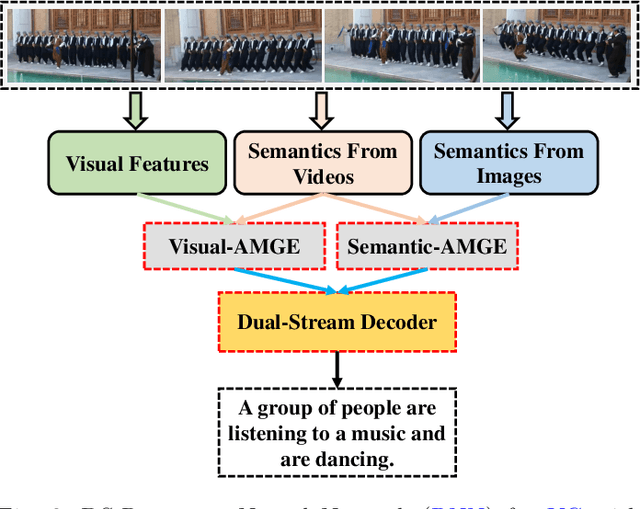
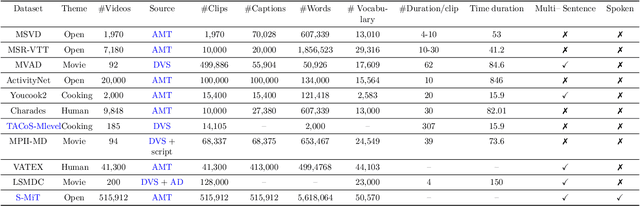
Video captioning (VC) is a fast-moving, cross-disciplinary area of research that bridges work in the fields of computer vision, natural language processing (NLP), linguistics, and human-computer interaction. In essence, VC involves understanding a video and describing it with language. Captioning is used in a host of applications from creating more accessible interfaces (e.g., low-vision navigation) to video question answering (V-QA), video retrieval and content generation. This survey covers deep learning-based VC, including but, not limited to, attention-based architectures, graph networks, reinforcement learning, adversarial networks, dense video captioning (DVC), and more. We discuss the datasets and evaluation metrics used in the field, and limitations, applications, challenges, and future directions for VC.
Domain-specific Continued Pretraining of Language Models for Capturing Long Context in Mental Health
Apr 20, 2023Pretrained language models have been used in various natural language processing applications. In the mental health domain, domain-specific language models are pretrained and released, which facilitates the early detection of mental health conditions. Social posts, e.g., on Reddit, are usually long documents. However, there are no domain-specific pretrained models for long-sequence modeling in the mental health domain. This paper conducts domain-specific continued pretraining to capture the long context for mental health. Specifically, we train and release MentalXLNet and MentalLongformer based on XLNet and Longformer. We evaluate the mental health classification performance and the long-range ability of these two domain-specific pretrained models. Our models are released in HuggingFace.