 Add to Chrome
 Add to Firefox
 Add to Edge
Overview of the PsyDefDetect Shared Task at BioNLP 2026: Detecting Levels of Psychological Defense Mechanisms in Supportive Conversations
May 24, 2026
We present an overview of PsyDefDetect, the shared task on detecting levels of psychological defense mechanisms in emotional support dialogues, co-located with BioNLP@ACL 2026. Grounded in the clinically validated Defense Mechanism Rating Scales (DMRS) framework, the task asks systems to classify a target seeker utterance, given its preceding dialogue context, into one of nine categories: seven hierarchical DMRS levels plus two auxiliary labels. Participants worked on PsyDefConv, a newly released corpus of 200 dialogues and 2336 help-seeker utterances annotated under DMRS with substantial inter-annotator agreement. The task attracted 172 participants on CodaBench who produced 563 submissions, with 21 teams officially registering their results for the final ranking. The best system achieved a macro F1-score of 0.420, surpassing the strongest fine-tuned baseline reported in the dataset paper by a notable margin, yet leaving clear headroom. Our analysis highlights (i) a persistent tendency to over-predict the majority High-Adaptive class, (ii) a widening gap between accuracy and macro-F1 that reveals class-imbalance sensitivity, and (iii) the value of theory-aware and LLM-based approaches for fine-grained defensive-function classification. We release all task materials and invite the community to continue work on this novel intersection of clinical psychology and NLP.

Psychologically-Grounded Graph Modeling for Interpretable Depression Detection
Apr 27, 2026Automatic depression detection from conversational interactions holds significant promise for scalable screening but remains hindered by severe data scarcity and a lack of clinical interpretability. Existing approaches typically rely on black-box deep learning architectures that struggle to model the subtle, temporal evolution of depressive symptoms or account for participant-specific heterogeneity. In this work, we propose PsyGAT (Psychological Graph Attention Network), a psychologically grounded framework that models conversational sessions as dynamic temporal graphs. We introduce Psychological Expression Units (PEUs) to explicitly encode utterance-level clinical evidence, structuring the session graph to capture transitions in psychological states rather than mere semantic dependencies. To address the critical class imbalance in depression datasets, we employ clinically approved persona-based data augmentation, enable robust model learning. Additionally, we integrate session-level personality context directly into the graph structure to disentangle trait-based behavior from acute depressive symptoms. PsyGAT achieves state-of-the-art performance, surpassing both strong graph-based baselines and closed-source LLMs like GPT-5, achieving 89.99 and 71.37 Macro F1 scores in DAIC-WoZ and E-DAIC, respectively. We further introduce Causal-PsyGAT, an interpretability module that identifies symptom triggers. Experiments show a 20% improvement in MRR for identifying causal indicators, effectively bridging the gap between depression monitoring and clinical explainability. The full augmented dataset is publicly available at https://doi.org/10.6084/m9.figshare.31801921.
CulturALL: Benchmarking Multilingual and Multicultural Competence of LLMs on Grounded Tasks
Apr 21, 2026Large language models (LLMs) are now deployed worldwide, inspiring a surge of benchmarks that measure their multilingual and multicultural abilities. However, these benchmarks prioritize generic language understanding or superficial cultural trivia, leaving the evaluation of grounded tasks -- where models must reason within real-world, context-rich scenarios -- largely unaddressed. To fill this gap, we present CulturALL, a comprehensive and challenging benchmark to assess LLMs' multilingual and multicultural competence on grounded tasks. CulturALL is built via a human--AI collaborative framework: expert annotators ensure appropriate difficulty and factual accuracy, while LLMs lighten the manual workload. By incorporating diverse sources, CulturALL ensures comprehensive scenario coverage. Each item is carefully designed to present a high level of difficulty, making CulturALL challenging. CulturALL contains 2,610 samples in 14 languages from 51 regions, distributed across 16 topics to capture the full breadth of grounded tasks. Experiments show that the best LLM achieves 44.48% accuracy on CulturALL, underscoring substantial room for improvement.
XCR-Bench: A Multi-Task Benchmark for Evaluating Cultural Reasoning in LLMs
Jan 20, 2026Cross-cultural competence in large language models (LLMs) requires the ability to identify Culture-Specific Items (CSIs) and to adapt them appropriately across cultural contexts. Progress in evaluating this capability has been constrained by the scarcity of high-quality CSI-annotated corpora with parallel cross-cultural sentence pairs. To address this limitation, we introduce XCR-Bench, a Cross(X)-Cultural Reasoning Benchmark consisting of 4.9k parallel sentences and 1,098 unique CSIs, spanning three distinct reasoning tasks with corresponding evaluation metrics. Our corpus integrates Newmark's CSI framework with Hall's Triad of Culture, enabling systematic analysis of cultural reasoning beyond surface-level artifacts and into semi-visible and invisible cultural elements such as social norms, beliefs, and values. Our findings show that state-of-the-art LLMs exhibit consistent weaknesses in identifying and adapting CSIs related to social etiquette and cultural reference. Additionally, we find evidence that LLMs encode regional and ethno-religious biases even within a single linguistic setting during cultural adaptation. We release our corpus and code to facilitate future research on cross-cultural NLP.
A Parallel Cross-Lingual Benchmark for Multimodal Idiomaticity Understanding
Jan 13, 2026Potentially idiomatic expressions (PIEs) construe meanings inherently tied to the everyday experience of a given language community. As such, they constitute an interesting challenge for assessing the linguistic (and to some extent cultural) capabilities of NLP systems. In this paper, we present XMPIE, a parallel multilingual and multimodal dataset of potentially idiomatic expressions. The dataset, containing 34 languages and over ten thousand items, allows comparative analyses of idiomatic patterns among language-specific realisations and preferences in order to gather insights about shared cultural aspects. This parallel dataset allows to evaluate model performance for a given PIE in different languages and whether idiomatic understanding in one language can be transferred to another. Moreover, the dataset supports the study of PIEs across textual and visual modalities, to measure to what extent PIE understanding in one modality transfers or implies in understanding in another modality (text vs. image). The data was created by language experts, with both textual and visual components crafted under multilingual guidelines, and each PIE is accompanied by five images representing a spectrum from idiomatic to literal meanings, including semantically related and random distractors. The result is a high-quality benchmark for evaluating multilingual and multimodal idiomatic language understanding.
You Never Know a Person, You Only Know Their Defenses: Detecting Levels of Psychological Defense Mechanisms in Supportive Conversations
Dec 17, 2025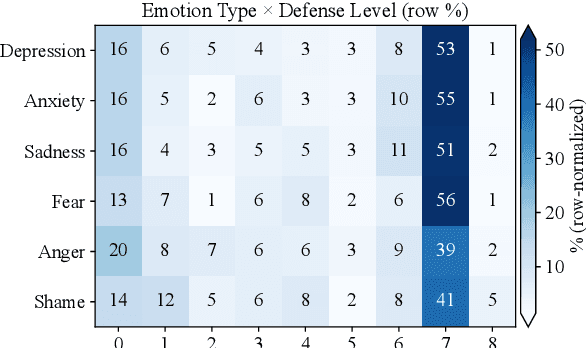
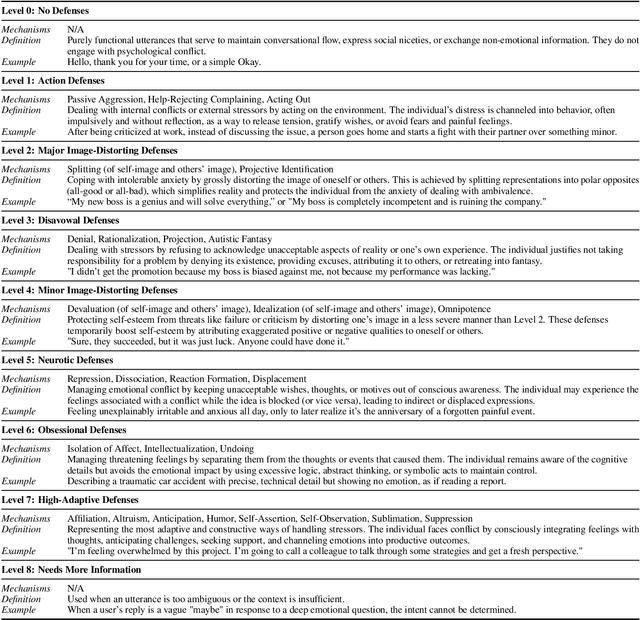
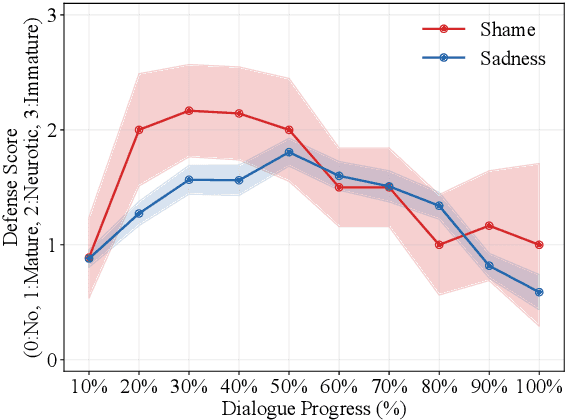
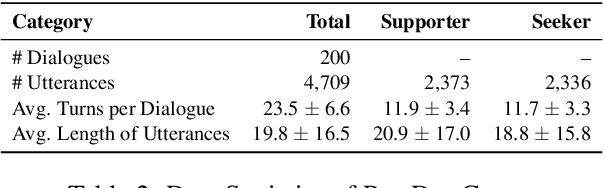
Psychological defenses are strategies, often automatic, that people use to manage distress. Rigid or overuse of defenses is negatively linked to mental health and shapes what speakers disclose and how they accept or resist help. However, defenses are complex and difficult to reliably measure, particularly in clinical dialogues. We introduce PsyDefConv, a dialogue corpus with help seeker utterances labeled for defense level, and DMRS Co-Pilot, a four-stage pipeline that provides evidence-based pre-annotations. The corpus contains 200 dialogues and 4709 utterances, including 2336 help seeker turns, with labeling and Cohen's kappa 0.639. In a counterbalanced study, the co-pilot reduced average annotation time by 22.4%. In expert review, it averaged 4.62 for evidence, 4.44 for clinical plausibility, and 4.40 for insight on a seven-point scale. Benchmarks with strong language models in zero-shot and fine-tuning settings demonstrate clear headroom, with the best macro F1-score around 30% and a tendency to overpredict mature defenses. Corpus analyses confirm that mature defenses are most common and reveal emotion-specific deviations. We will release the corpus, annotations, code, and prompts to support research on defensive functioning in language.
SemEval-2025 Task 3: Mu-SHROOM, the Multilingual Shared Task on Hallucinations and Related Observable Overgeneration Mistakes
Apr 16, 2025We present the Mu-SHROOM shared task which is focused on detecting hallucinations and other overgeneration mistakes in the output of instruction-tuned large language models (LLMs). Mu-SHROOM addresses general-purpose LLMs in 14 languages, and frames the hallucination detection problem as a span-labeling task. We received 2,618 submissions from 43 participating teams employing diverse methodologies. The large number of submissions underscores the interest of the community in hallucination detection. We present the results of the participating systems and conduct an empirical analysis to identify key factors contributing to strong performance in this task. We also emphasize relevant current challenges, notably the varying degree of hallucinations across languages and the high annotator disagreement when labeling hallucination spans.
Rethinking Multilingual Continual Pretraining: Data Mixing for Adapting LLMs Across Languages and Resources
Apr 05, 2025Large Language Models (LLMs) exhibit significant disparities in performance across languages, primarily benefiting high-resource languages while marginalizing underrepresented ones. Continual Pretraining (CPT) has emerged as a promising approach to address this imbalance, although the relative effectiveness of monolingual, bilingual, and code-augmented data strategies remains unclear. This study systematically evaluates 36 CPT configurations involving three multilingual base models, across 30+ languages categorized as altruistic, selfish, and stagnant, spanning various resource levels. Our findings reveal three major insights: (1) Bilingual CPT improves multilingual classification but often causes language mixing issues during generation. (2) Including programming code data during CPT consistently enhances multilingual classification accuracy, particularly benefiting low-resource languages, but introduces a trade-off by slightly degrading generation quality. (3) Contrary to prior work, we observe substantial deviations from language classifications according to their impact on cross-lingual transfer: Languages classified as altruistic often negatively affect related languages, selfish languages show conditional and configuration-dependent behavior, and stagnant languages demonstrate surprising adaptability under certain CPT conditions. These nuanced interactions emphasize the complexity of multilingual representation learning, underscoring the importance of systematic studies on generalizable language classification to inform future multilingual CPT strategies.
GlotEval: A Test Suite for Massively Multilingual Evaluation of Large Language Models
Apr 05, 2025Large language models (LLMs) are advancing at an unprecedented pace globally, with regions increasingly adopting these models for applications in their primary language. Evaluation of these models in diverse linguistic environments, especially in low-resource languages, has become a major challenge for academia and industry. Existing evaluation frameworks are disproportionately focused on English and a handful of high-resource languages, thereby overlooking the realistic performance of LLMs in multilingual and lower-resource scenarios. To address this gap, we introduce GlotEval, a lightweight framework designed for massively multilingual evaluation. Supporting seven key tasks (machine translation, text classification, summarization, open-ended generation, reading comprehension, sequence labeling, and intrinsic evaluation), spanning over dozens to hundreds of languages, GlotEval highlights consistent multilingual benchmarking, language-specific prompt templates, and non-English-centric machine translation. This enables a precise diagnosis of model strengths and weaknesses in diverse linguistic contexts. A multilingual translation case study demonstrates GlotEval's applicability for multilingual and language-specific evaluations.
Graph2text or Graph2token: A Perspective of Large Language Models for Graph Learning
Jan 02, 2025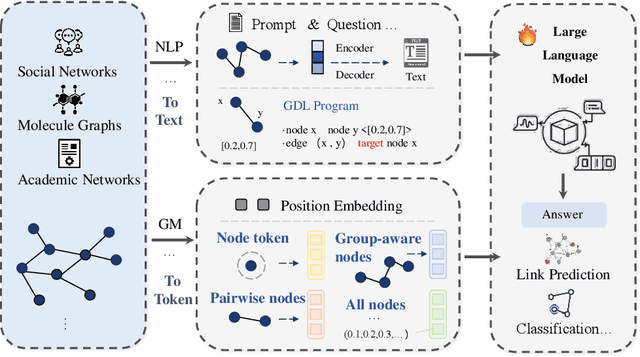
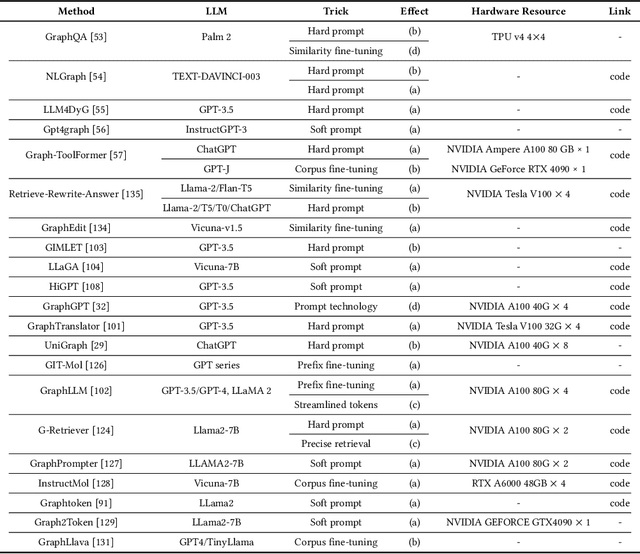

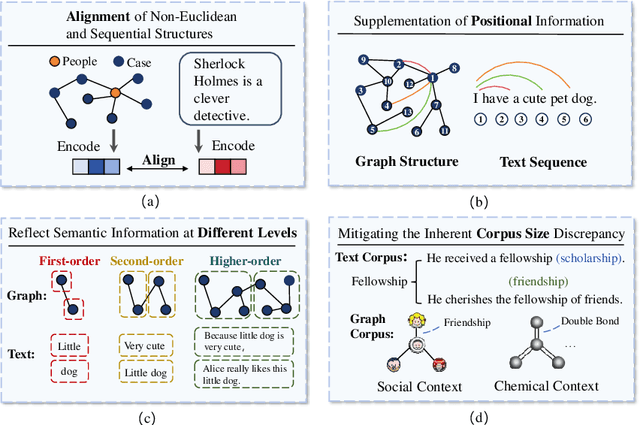
Graphs are data structures used to represent irregular networks and are prevalent in numerous real-world applications. Previous methods directly model graph structures and achieve significant success. However, these methods encounter bottlenecks due to the inherent irregularity of graphs. An innovative solution is converting graphs into textual representations, thereby harnessing the powerful capabilities of Large Language Models (LLMs) to process and comprehend graphs. In this paper, we present a comprehensive review of methodologies for applying LLMs to graphs, termed LLM4graph. The core of LLM4graph lies in transforming graphs into texts for LLMs to understand and analyze. Thus, we propose a novel taxonomy of LLM4graph methods in the view of the transformation. Specifically, existing methods can be divided into two paradigms: Graph2text and Graph2token, which transform graphs into texts or tokens as the input of LLMs, respectively. We point out four challenges during the transformation to systematically present existing methods in a problem-oriented perspective. For practical concerns, we provide a guideline for researchers on selecting appropriate models and LLMs for different graphs and hardware constraints. We also identify five future research directions for LLM4graph.