 Add to Chrome
 Add to Firefox
 Add to Edge
Intertwined Biases Across Social Media Spheres: Unpacking Correlations in Media Bias Dimensions
Aug 27, 2024
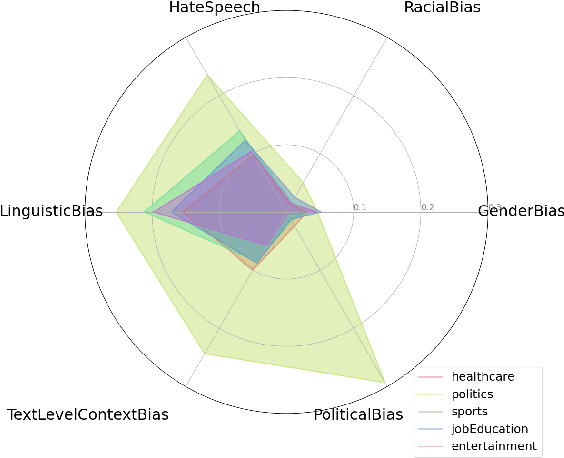


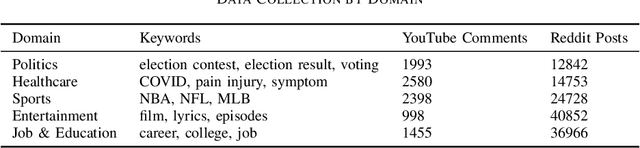
Media bias significantly shapes public perception by reinforcing stereotypes and exacerbating societal divisions. Prior research has often focused on isolated media bias dimensions such as \textit{political bias} or \textit{racial bias}, neglecting the complex interrelationships among various bias dimensions across different topic domains. Moreover, we observe that models trained on existing media bias benchmarks fail to generalize effectively on recent social media posts, particularly in certain bias identification tasks. This shortfall primarily arises because these benchmarks do not adequately reflect the rapidly evolving nature of social media content, which is characterized by shifting user behaviors and emerging trends. In response to these limitations, our research introduces a novel dataset collected from YouTube and Reddit over the past five years. Our dataset includes automated annotations for YouTube content across a broad spectrum of bias dimensions, such as gender, racial, and political biases, as well as hate speech, among others. It spans diverse domains including politics, sports, healthcare, education, and entertainment, reflecting the complex interplay of biases across different societal sectors. Through comprehensive statistical analysis, we identify significant differences in bias expression patterns and intra-domain bias correlations across these domains. By utilizing our understanding of the correlations among various bias dimensions, we lay the groundwork for creating advanced systems capable of detecting multiple biases simultaneously. Overall, our dataset advances the field of media bias identification, contributing to the development of tools that promote fairer media consumption. The comprehensive awareness of existing media bias fosters more ethical journalism, promotes cultural sensitivity, and supports a more informed and equitable public discourse.

Learning 2D Invariant Affordance Knowledge for 3D Affordance Grounding
Aug 23, 2024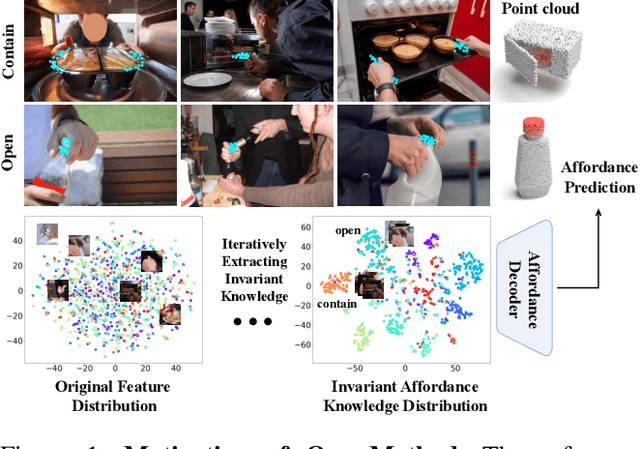


3D Object Affordance Grounding aims to predict the functional regions on a 3D object and has laid the foundation for a wide range of applications in robotics. Recent advances tackle this problem via learning a mapping between 3D regions and a single human-object interaction image. However, the geometric structure of the 3D object and the object in the human-object interaction image are not always consistent, leading to poor generalization. To address this issue, we propose to learn generalizable invariant affordance knowledge from multiple human-object interaction images within the same affordance category. Specifically, we introduce the \textbf{M}ulti-\textbf{I}mage Guided Invariant-\textbf{F}eature-Aware 3D \textbf{A}ffordance \textbf{G}rounding (\textbf{MIFAG}) framework. It grounds 3D object affordance regions by identifying common interaction patterns across multiple human-object interaction images. First, the Invariant Affordance Knowledge Extraction Module (\textbf{IAM}) utilizes an iterative updating strategy to gradually extract aligned affordance knowledge from multiple images and integrate it into an affordance dictionary. Then, the Affordance Dictionary Adaptive Fusion Module (\textbf{ADM}) learns comprehensive point cloud representations that consider all affordance candidates in multiple images. Besides, the Multi-Image and Point Affordance (\textbf{MIPA}) benchmark is constructed and our method outperforms existing state-of-the-art methods on various experimental comparisons. Project page: \url{https://goxq.github.io/mifag}
MambaVT: Spatio-Temporal Contextual Modeling for robust RGB-T Tracking
Aug 15, 2024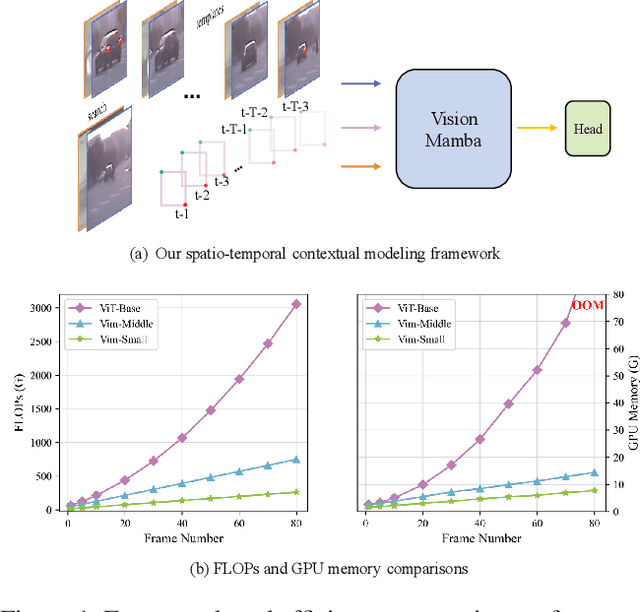
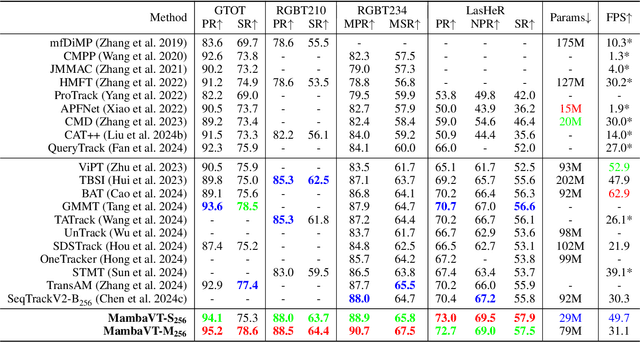
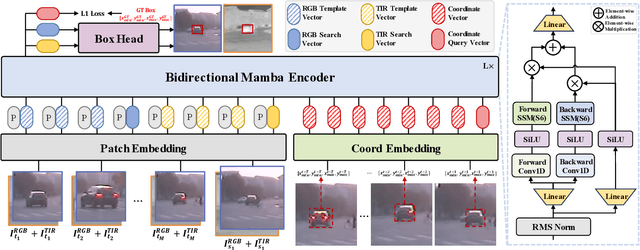
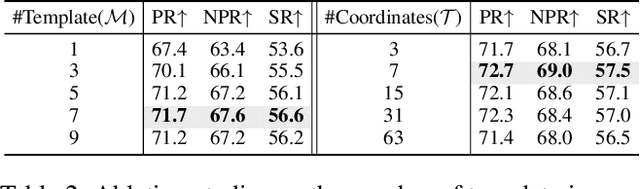
Existing RGB-T tracking algorithms have made remarkable progress by leveraging the global interaction capability and extensive pre-trained models of the Transformer architecture. Nonetheless, these methods mainly adopt imagepair appearance matching and face challenges of the intrinsic high quadratic complexity of the attention mechanism, resulting in constrained exploitation of temporal information. Inspired by the recently emerged State Space Model Mamba, renowned for its impressive long sequence modeling capabilities and linear computational complexity, this work innovatively proposes a pure Mamba-based framework (MambaVT) to fully exploit spatio-temporal contextual modeling for robust visible-thermal tracking. Specifically, we devise the long-range cross-frame integration component to globally adapt to target appearance variations, and introduce short-term historical trajectory prompts to predict the subsequent target states based on local temporal location clues. Extensive experiments show the significant potential of vision Mamba for RGB-T tracking, with MambaVT achieving state-of-the-art performance on four mainstream benchmarks while requiring lower computational costs. We aim for this work to serve as a simple yet strong baseline, stimulating future research in this field. The code and pre-trained models will be made available.
Depth Helps: Improving Pre-trained RGB-based Policy with Depth Information Injection
Aug 09, 2024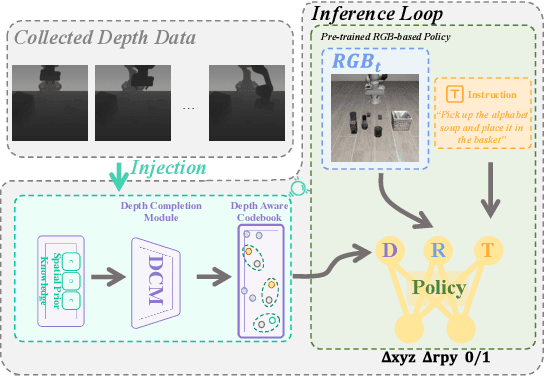
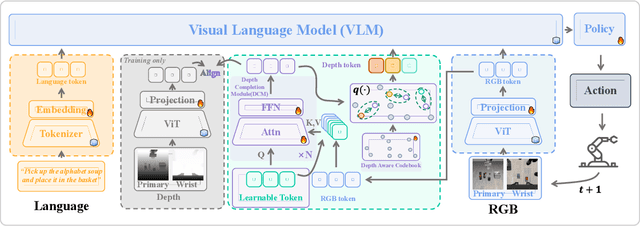
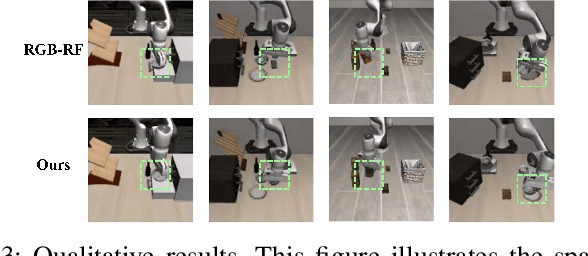
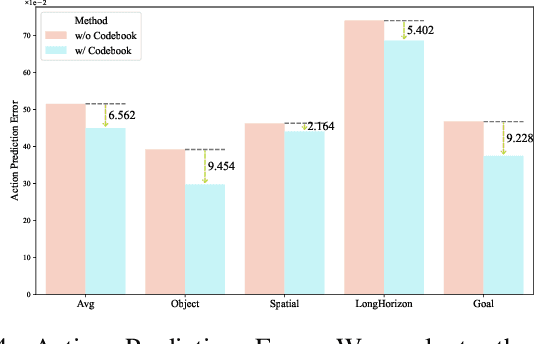
3D perception ability is crucial for generalizable robotic manipulation. While recent foundation models have made significant strides in perception and decision-making with RGB-based input, their lack of 3D perception limits their effectiveness in fine-grained robotic manipulation tasks. To address these limitations, we propose a Depth Information Injection ($\bold{DI}^{\bold{2}}$) framework that leverages the RGB-Depth modality for policy fine-tuning, while relying solely on RGB images for robust and efficient deployment. Concretely, we introduce the Depth Completion Module (DCM) to extract the spatial prior knowledge related to depth information and generate virtual depth information from RGB inputs to aid policy deployment. Further, we propose the Depth-Aware Codebook (DAC) to eliminate noise and reduce the cumulative error from the depth prediction. In the inference phase, this framework employs RGB inputs and accurately predicted depth data to generate the manipulation action. We conduct experiments on simulated LIBERO environments and real-world scenarios, and the experiment results prove that our method could effectively enhance the pre-trained RGB-based policy with 3D perception ability for robotic manipulation. The website is released at https://gewu-lab.github.io/DepthHelps-IROS2024.
KOI: Accelerating Online Imitation Learning via Hybrid Key-state Guidance
Aug 06, 2024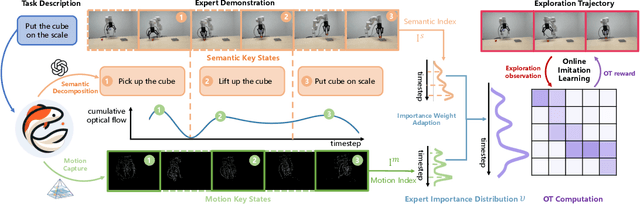
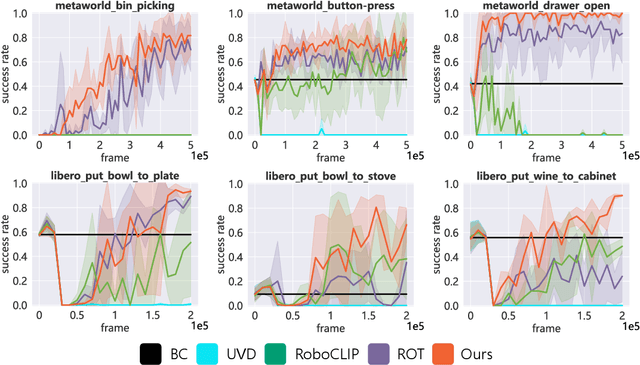
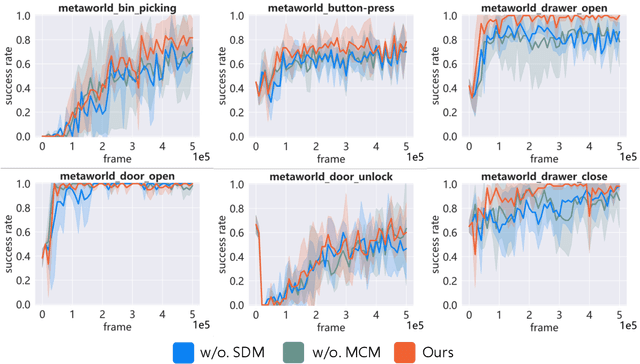
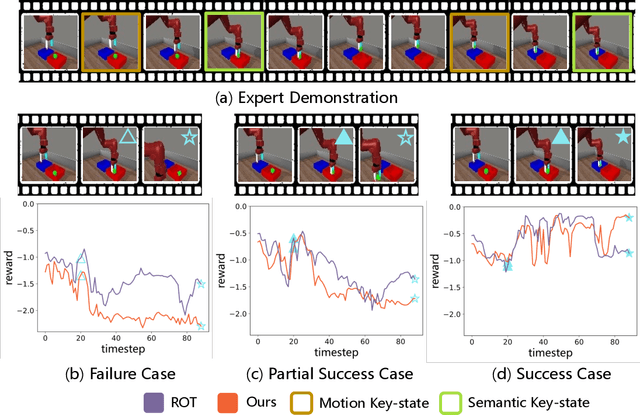
Online Imitation Learning methods struggle with the gap between extensive online exploration space and limited expert trajectories, which hinder efficient exploration due to inaccurate task-aware reward estimation. Inspired by the findings from cognitive neuroscience that task decomposition could facilitate cognitive processing for efficient learning, we hypothesize that an agent could estimate precise task-aware imitation rewards for efficient online exploration by decomposing the target task into the objectives of "what to do" and the mechanisms of "how to do". In this work, we introduce the hybrid Key-state guided Online Imitation (KOI) learning approach, which leverages the integration of semantic and motion key states as guidance for task-aware reward estimation. Initially, we utilize the visual-language models to segment the expert trajectory into semantic key states, indicating the objectives of "what to do". Within the intervals between semantic key states, optical flow is employed to capture motion key states to understand the process of "how to do". By integrating a thorough grasp of both semantic and motion key states, we refine the trajectory-matching reward computation, encouraging task-aware exploration for efficient online imitation learning. Our experiment results prove that our method is more sample efficient in the Meta-World and LIBERO environments. We also conduct real-world robotic manipulation experiments to validate the efficacy of our method, demonstrating the practical applicability of our KOI method.
Flexible Beam Coverage Optimization for Movable-Antenna Array
Aug 01, 2024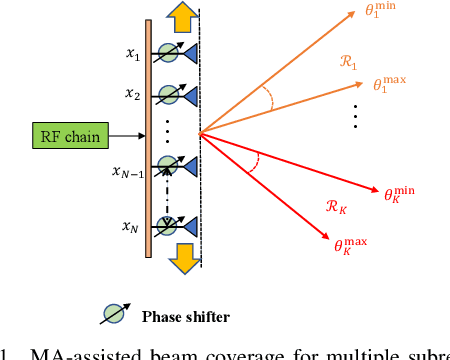
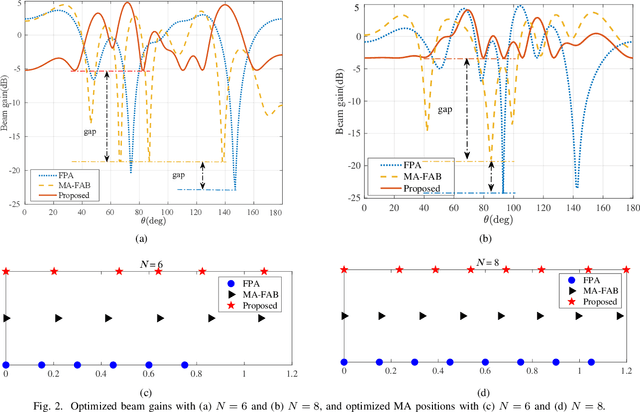
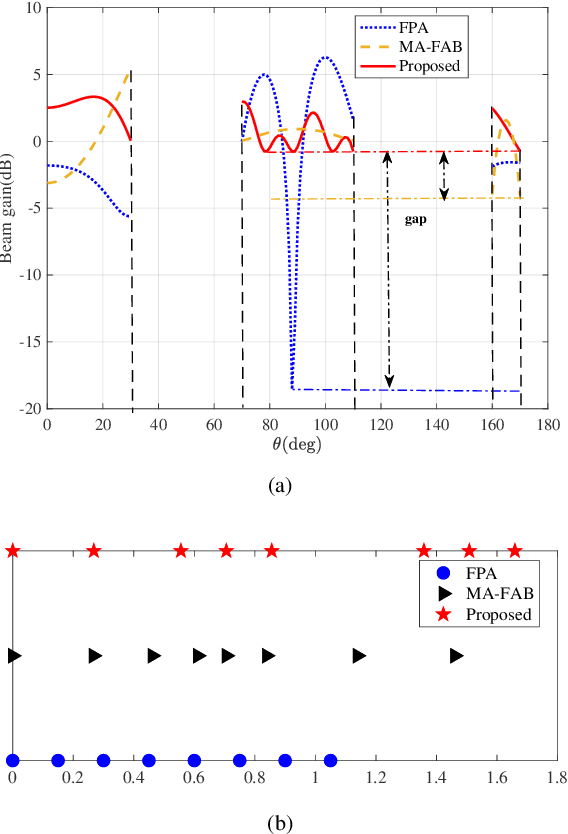
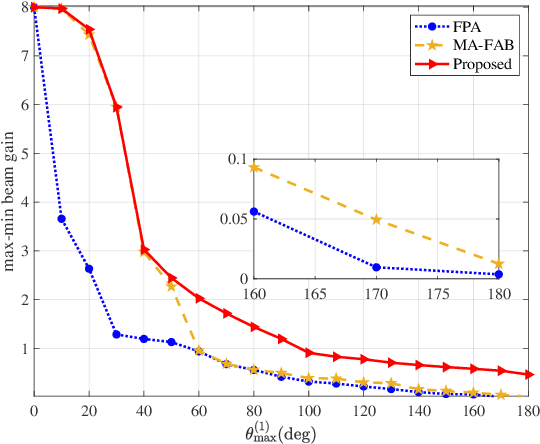
Fluid antennas (FAs) and movable antennas (MAs) have attracted increasing attention in wireless communications recently. As compared to the conventional fixed-position antennas (FPAs), their geometry can be dynamically reconfigured, such that more flexible beamforming can be achieved for signal coverage and/or interference nulling. In this paper, we investigate the use of MAs to achieve uniform coverage for multiple regions with arbitrary number and width in the spatial domain. In particular, we aim to jointly optimize the MAs weights and positions within a linear array to maximize the minimum beam gain over the desired spatial regions. However, the resulting problem is non-convex and difficult to be optimally solved. To tackle this difficulty, we propose an alternating optimization (AO) algorithm to obtain a high-quality suboptimal solution, where the MAs weights and positions are alternately optimized by applying successive convex approximation (SCA) technique. Numerical results show that our proposed MAbased beam coverage scheme can achieve much better performance than conventional FPAs.
Knowledge-driven AI-generated data for accurate and interpretable breast ultrasound diagnoses
Jul 23, 2024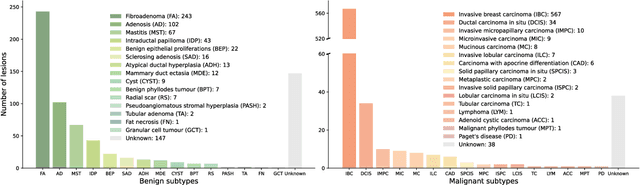
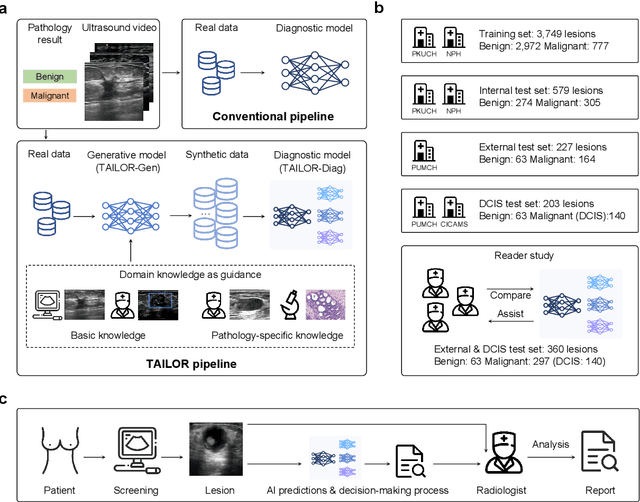
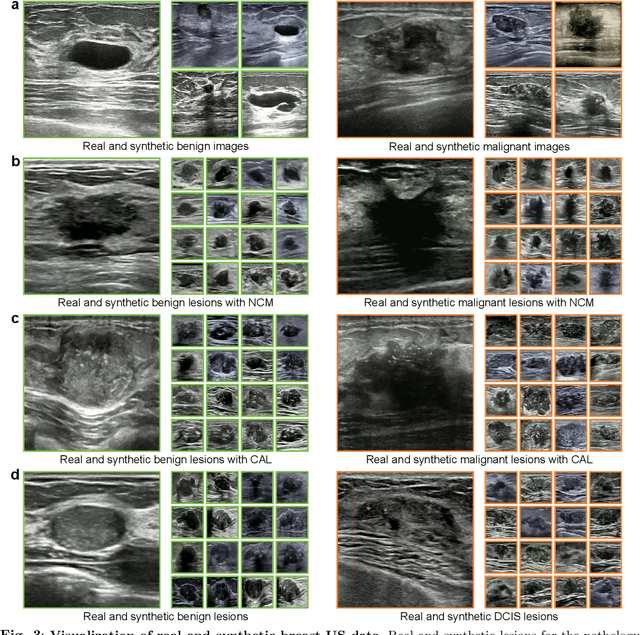
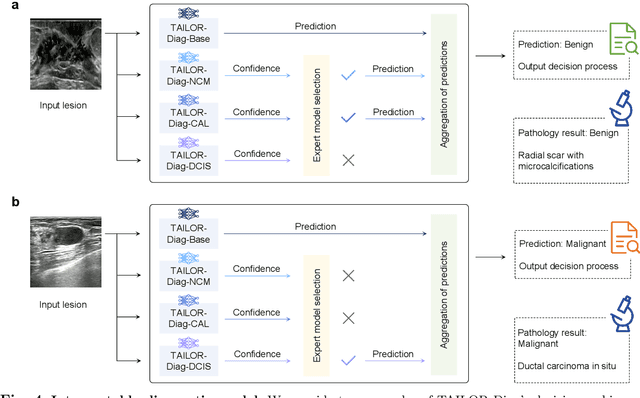
Data-driven deep learning models have shown great capabilities to assist radiologists in breast ultrasound (US) diagnoses. However, their effectiveness is limited by the long-tail distribution of training data, which leads to inaccuracies in rare cases. In this study, we address a long-standing challenge of improving the diagnostic model performance on rare cases using long-tailed data. Specifically, we introduce a pipeline, TAILOR, that builds a knowledge-driven generative model to produce tailored synthetic data. The generative model, using 3,749 lesions as source data, can generate millions of breast-US images, especially for error-prone rare cases. The generated data can be further used to build a diagnostic model for accurate and interpretable diagnoses. In the prospective external evaluation, our diagnostic model outperforms the average performance of nine radiologists by 33.5% in specificity with the same sensitivity, improving their performance by providing predictions with an interpretable decision-making process. Moreover, on ductal carcinoma in situ (DCIS), our diagnostic model outperforms all radiologists by a large margin, with only 34 DCIS lesions in the source data. We believe that TAILOR can potentially be extended to various diseases and imaging modalities.
EvSign: Sign Language Recognition and Translation with Streaming Events
Jul 17, 2024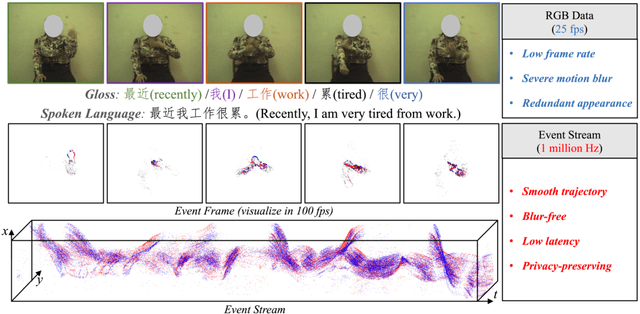


Sign language is one of the most effective communication tools for people with hearing difficulties. Most existing works focus on improving the performance of sign language tasks on RGB videos, which may suffer from degraded recording conditions, such as fast movement of hands with motion blur and textured signer's appearance. The bio-inspired event camera, which asynchronously captures brightness change with high speed, could naturally perceive dynamic hand movements, providing rich manual clues for sign language tasks. In this work, we aim at exploring the potential of event camera in continuous sign language recognition (CSLR) and sign language translation (SLT). To promote the research, we first collect an event-based benchmark EvSign for those tasks with both gloss and spoken language annotations. EvSign dataset offers a substantial amount of high-quality event streams and an extensive vocabulary of glosses and words, thereby facilitating the development of sign language tasks. In addition, we propose an efficient transformer-based framework for event-based SLR and SLT tasks, which fully leverages the advantages of streaming events. The sparse backbone is employed to extract visual features from sparse events. Then, the temporal coherence is effectively utilized through the proposed local token fusion and gloss-aware temporal aggregation modules. Extensive experimental results are reported on both simulated (PHOENIX14T) and EvSign datasets. Our method performs favorably against existing state-of-the-art approaches with only 0.34% computational cost (0.84G FLOPS per video) and 44.2% network parameters. The project is available at https://zhang-pengyu.github.io/EVSign.
WANCO: Weak Adversarial Networks for Constrained Optimization problems
Jul 04, 2024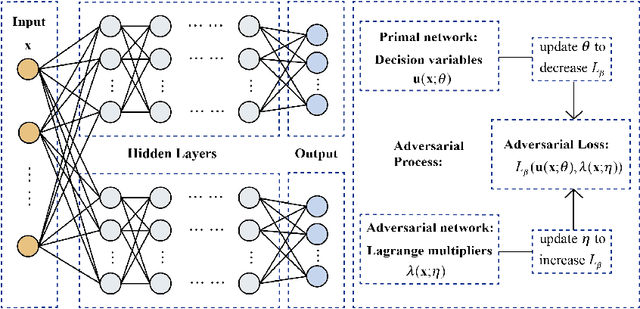
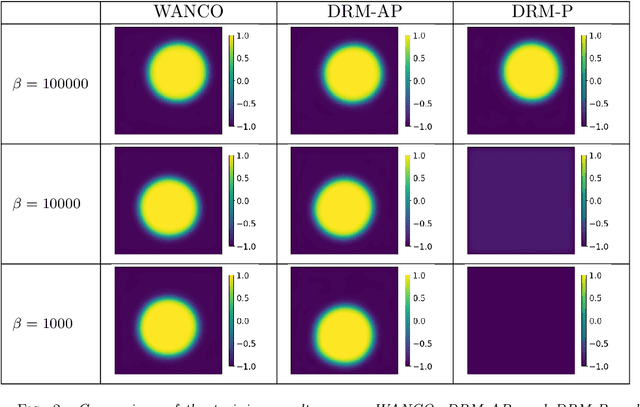


This paper focuses on integrating the networks and adversarial training into constrained optimization problems to develop a framework algorithm for constrained optimization problems. For such problems, we first transform them into minimax problems using the augmented Lagrangian method and then use two (or several) deep neural networks(DNNs) to represent the primal and dual variables respectively. The parameters in the neural networks are then trained by an adversarial process. The proposed architecture is relatively insensitive to the scale of values of different constraints when compared to penalty based deep learning methods. Through this type of training, the constraints are imposed better based on the augmented Lagrangian multipliers. Extensive examples for optimization problems with scalar constraints, nonlinear constraints, partial differential equation constraints, and inequality constraints are considered to show the capability and robustness of the proposed method, with applications ranging from Ginzburg--Landau energy minimization problems, partition problems, fluid-solid topology optimization, to obstacle problems.
Serialized Output Training by Learned Dominance
Jul 04, 2024Serialized Output Training (SOT) has showcased state-of-the-art performance in multi-talker speech recognition by sequentially decoding the speech of individual speakers. To address the challenging label-permutation issue, prior methods have relied on either the Permutation Invariant Training (PIT) or the time-based First-In-First-Out (FIFO) rule. This study presents a model-based serialization strategy that incorporates an auxiliary module into the Attention Encoder-Decoder architecture, autonomously identifying the crucial factors to order the output sequence of the speech components in multi-talker speech. Experiments conducted on the LibriSpeech and LibriMix databases reveal that our approach significantly outperforms the PIT and FIFO baselines in both 2-mix and 3-mix scenarios. Further analysis shows that the serialization module identifies dominant speech components in a mixture by factors including loudness and gender, and orders speech components based on the dominance score.